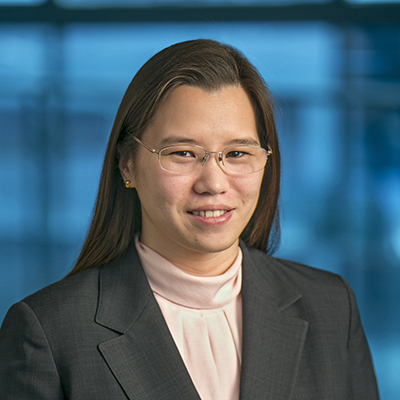
Dr. Lata Narayanan is a Professor in the Department of Computer Science and Software Engineering at Concordia University, Montreal, Canada. Her research spans theoretical and applied aspects of distributed systems, with a focus on algorithms for mobile agents, communication networks, and sensor networks. Department: Computer Science and Software Engineering University: Concordia University Research Interests Lata Narayanan specializes in algorithms for mobile robots and ad hoc networks , with expertise in routing on distributed networks , parallel algorithms , and social network analysis . Her work addresses challenges in sensor network optimization, barrier coverage, and time-energy tradeoffs for evacuation systems. Article Trends Her recent publications (2021-2025) emphasize game theory for network dynamics, cloud resource allocation , and temporal graph exploration . Key themes include strategic diversity, truck-drone delivery logistics, and energy-sharing protocols for mobile agents.
Eleonora Vacca is a PhD student and Research Fellow in the Department of Automatic Control and Computer Science (DAUIN) at the Polytechnic University of Turin. She holds a B.S. in Electronic Engineering from the University of Palermo (2018) and an M.S. in Electronic Engineering-Embedded Systems from Politecnico di Torino (2021). Her research focuses on digital hardware design, reliability engineering, reconfigurable devices, and AI applications in aerospace and safety-critical systems. She is a member of the Aerospace and Safety Computing Lab and the CAD - Electronic CAD & Reliability Group (DAUIN). Her work addresses challenges such as radiation effects mitigation in space missions, fault-tolerant AI accelerators, and real-time anomaly detection in satellite telemetry. She has contributed to projects like the RAMSES CubeSat-1 Development (2025-2026), funded by commercial contracts. In 2024, she won the Best Student Paper Award at the NEWCAS Conference for her research on radiation effects in space missions. Vacca collaborates on teaching, including assisting in the course 'Electronic Calculators' for Computer Engineering students. Her recent publications explore AI resilience in RISC-V ecosystems, radiation environment analysis for space missions, and gesture recognition systems for smart cities. She actively contributes to conferences such as the ACM International Conference on Computing Frontiers and the IEEE International Smart Cities Conference.
Prof. Slawomir Stanczak is a Full Professor in Network Information Theory at Technische Universität Berlin and Head of the Wireless Communications and Networks department at Fraunhofer Heinrich-Hertz-Institut (HHI). His expertise spans wireless communications, signal processing, and machine learning, with a focus on 5G/6G networks and reconfigurable intelligent surfaces. He has held visiting roles at RWTH Aachen University and Stanford University, and leads initiatives like the 6G Research & Innovation Cluster and the xG-Incubator project. Education: Dipl.-Ing. in Electrical Engineering, TU Berlin (1998) Dr.-Ing. (summa cum laude), TU Berlin (2003) Habilitation (venia legendi), TU Berlin (2006) Research & Awards: Recipient of the Best Paper Award from the German Communication Engineering Society (2014) Research grants from the German Research Foundation Co-authored over 200 peer-reviewed papers and two books Chair of the ITU-T Focus Group on Machine Learning for Future Networks (2017-2020) Leadership & Projects: Chairman of 5G Berlin association since 2020 Coordinator of 6G Research & Innovation Cluster and CampusOS flagship project Project lead of xG-Incubator (StartUpConnect initiative) Teaching: Offers courses on Machine Learning and Wireless Communication at TU Berlin.
M.Sc. Maximilian Mühlbauer is a researcher at the Chair of Sensor-Based Robot Systems and Intelligent Assistance Systems at Technische Universität München (TUM), part of the Faculty of Computer Science. His work focuses on robotics, artificial intelligence, and space robotics, particularly in areas like in-orbit manufacturing, virtual fixtures, and human-robot interaction. He contributes to projects such as the ACOR initiative and the AI-In-Orbit-Factory, exploring fault-tolerant processes and adaptive robotic systems for space applications. Research Interests: Maximilian’s research emphasizes AI-driven robotics , space robotics , and control systems . He develops methodologies for virtual fixtures , reconfigurable robotic systems , and teleoperation with shared control . His work integrates probabilistic models and machine learning for resilient systems in challenging environments like space. Publications: His recent work spans topics from in-orbit manufacturing and force-sensitive space manipulators to multi-modal haptic teleoperation , reflecting a focus on practical robotic applications in aerospace and industry. Grants/Advising: Maximilian oversees available theses on topics like mixture of experts fixture learning and virtual fixture adaptation , inviting collaboration on AI-driven robotics projects. He collaborates with Prof. Alin Albu-Schäffer and contributes to TUM’s research initiatives in autonomous systems. Labs: He is part of the Sensor-Based Robot Systems lab, advancing robotics for human-centric and space-oriented applications.
Professor Barry Porter is a faculty member at Lancaster University in the School of Computing and Communications . His research focuses on emergent software platforms that address software complexity through component models , meta-software platforms , and machine learning . Key areas include distributed systems, cloud integration with sensor nodes, green computing, and real-time visualization. Research Interests : Runtime adaptation in complex systems Self-assembling software architectures Machine learning for code optimization Distributed emergent systems at scale Green computing for multi-core environments Edge-cloud continuum integration Recent Publication Trends : His 2025 work explores genetic improvement for software using speciation algorithms , program geometry projection , and multi-agent decision frameworks . Earlier studies (2022-2024) investigate edge-cloud systems , neural transfer learning , and ecosystem curation in emergent software. Supervision & Projects : He supervises PhD student Ben Craine and leads projects like B-EGI (Bio-Enhanced Genetic Improvement) and BBC Prosperity Partnership for media delivery. Collaborations span environmental IoT, multi-agent learning, and fog computing. Labs & Groups : Affiliated with the Lancaster Intelligent, Robotic and Autonomous Systems Centre , Centre of Excellence in Environmental Data Science , and the Distributed Systems group.
Mark D. Gross is a Professor of Computer Science and Director of the ATLAS Institute at the University of Colorado Boulder. His research focuses on modular robotics, tangible interaction design, digital fabrication, and computational design. He co-founded Modular Robotics and Blank Slate Systems, leveraging his expertise in educational technology and maker culture. Education: PhD in Design Theory & Methods from MIT. Academic history includes roles at Carnegie Mellon University and University of Washington Seattle. His work spans architecture, robotics, and human-computer interaction. Research Interests: Modular robotics and computationally enhanced construction kits Tangible interaction and e-textiles Shape-changing interfaces and swarm robotics Sketch-based interaction and digital fabrication Publications highlight advancements in collaborative AR systems, shape-changing interfaces (e.g., LiftTiles, ShapeBots), and accessible technologies like FluxMarker. His work bridges computational tools and creative design processes. Advising: Guided students such as Ryo Suzuki (PhD '20). Entrepreneurial ventures include companies spun off from research. Labs/Teams: Leads projects at the ATLAS Institute, emphasizing interdisciplinary collaboration in robotics, design, and human-centered computing.
Vishesh Vikas is an Associate Professor in the Department of Mechanical Engineering at the University of Alabama, College of Engineering. He is based in the South Engineering Research Center (SERC) and leads the Agile Robotics Laboratory (ARL@UA), which focuses on bio-inspired, soft, and tensegrity robotics, as well as inertial sensing and estimation. Education: PhD, Mechanical Engineering, University of Florida, 2011 MS, Mechanical Engineering, 2008 B.Tech., IIT Guwahati, 2005 His research spans autonomous systems, wearable technologies, biomedical devices, guidance and control, intelligent systems, space robotics, and engineering education . The lab’s work integrates mechanical design, sensing, and advanced control to create agile, adaptive robotic systems for unstructured environments. The recent publications highlight a strong trend in soft and tensegrity robotics , with focus on gait synthesis, locomotion planning, shape and joint estimation, and dexterous manipulation. These works combine modeling, data-driven control, and sensor fusion, often using accelerometers, IMUs, and vision for real-time feedback. The research is published in top robotics venues such as IEEE TRO, RA-L, and ASME journals. Scientific Awards: No awards explicitly mentioned in the text. Vishesh Vikas actively advises graduate students, including PhD and Master’s candidates, and has successfully guided several to thesis and dissertation completion. His lab is affiliated with multiple research centers including the Alabama Center for the Advancement of AI, Center for Advanced Manufacturing, and Center for Advanced Public Safety. He is involved in outreach and education, including mechatronics workshops and seminar hosting. Current projects include exosuits for spine support and robotic systems for mobility in extreme environments. Laboratory and Team: The Agile Robotics Lab (ARL@UA) fosters interdisciplinary research in nature-inspired robotics, combining principles from biology, mechanics, and control. The team has hosted eminent scholars and is featured in university and college news for its innovative work on wearable robotics and soft manipulators.
Mark D. Gross is a Professor of Computer Science and Director of the ATLAS Institute at the University of Colorado Boulder, where he leads an interdisciplinary hub for creativity and invention. His academic journey began at MIT with BS and PhD degrees, followed by faculty roles at Carnegie Mellon University (2004-2013), University of Washington Seattle (1999-2004), and CU-Boulder (1990-1999, 2014-present). As co-founder of Modular Robotics Incorporated and Blank Slate Systems LLC, he bridges academia and entrepreneurship. Education: BS and PhD in Computer Science from MIT Gross’ research spans design methods, modular robotics, computational design tools, and tangible interaction. He pioneered sketch recognition software like 'The Electronic Cocktail Napkin' and explores physical computing through projects such as shape-changing interfaces, interactive construction kits, and augmented reality systems. His work integrates IoT, digital fabrication, and educational technology. Recent publications highlight innovations in AR/VR collaboration, shape-changing robotics, and interactive fabrication. Key themes include climate communication through data physicalization, AI-driven creative systems, and soft robotics for dynamic interfaces. Despite no explicit awards listed, his career demonstrates sustained impact through ACM conference leadership (Creativity and Cognition 2009, TEI 2011) and industry partnerships. Gross’ prior industry experience includes positions at Atari Cambridge Research and Logo Computer Systems. His lab at ATLAS fosters radical creativity through projects like PaperMech, DynaBlock, and WearAir, emphasizing hands-on learning and cross-disciplinary experimentation.
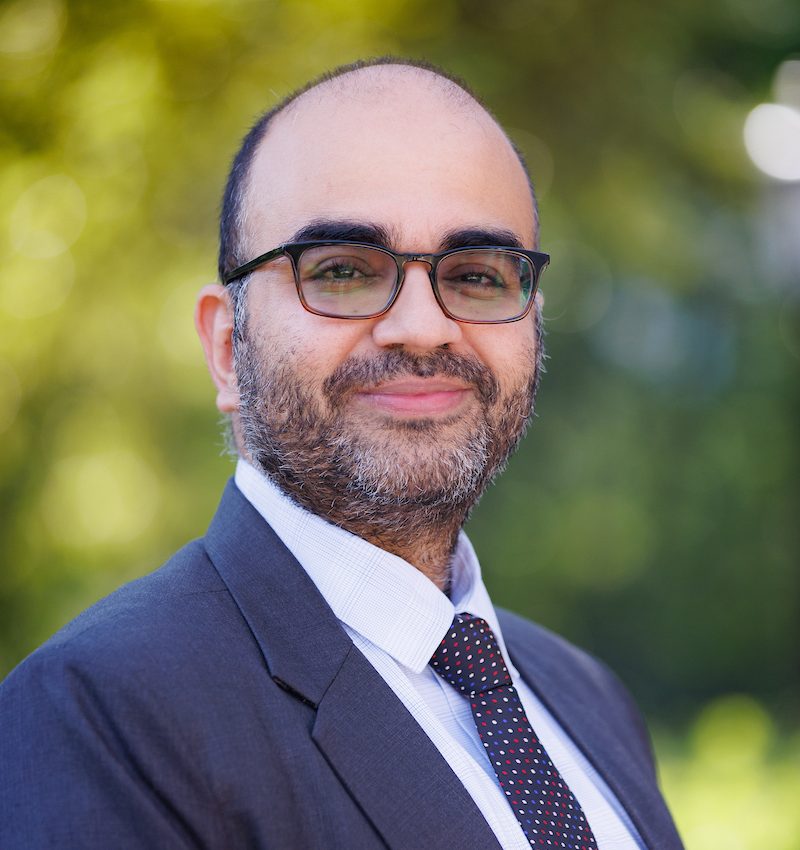
Petar Kormushev is a Senior Lecturer (Associate Professor) in Robotics at the Dyson School of Design Engineering, Imperial College London, and the founder/director of the Robot Intelligence Lab. He holds a PhD in Computational Intelligence from Tokyo Institute of Technology. His research focuses on robotics and machine learning, particularly reinforcement learning for autonomous robots. Key projects include the WALK-MAN humanoid robot for disaster response and contributions to the PANDORA and STIFF-FLOP EU projects. He has received the 2013 John Atanasoff Award for scientific excellence in ICT. His lab develops machine learning algorithms applied to humanoid robots like COMAN and iCub, with interests in robot learning, compliant control, and autonomous systems. He has supervised numerous PhD students and led research teams at IIT and Imperial College.
Huazhen Fang is an Associate Professor in the Department of Mechanical Engineering at the University of Kansas School of Engineering, where he joined in 2014. He leads the Information & Smart Systems Laboratory (ISSL) and holds a courtesy appointment in the Department of Electrical Engineering & Computer Science. His research focuses on enabling intelligence for complex systems through information-driven approaches. Dr. Fang received his Ph.D. in Mechanical Engineering from the University of California, San Diego in 2014, following an M.Sc. from the University of Saskatchewan and a B.Sc. in Computer Science & Technology from Northwestern Polytechnic University in China. He was a Visiting Faculty Fellow at Mitsubishi Electric Research Laboratories in 2022. His research interests span Systems and Control, Advanced Battery Management, Energy Storage Systems, and Robotics, with particular focus on system modeling, estimation, control design, machine learning and numerical optimization. Dr. Fang's work has significant applications in energy management, cooperative robotics, and environmental observing systems. His research has been supported by the National Science Foundation, Department of Energy, Army Research Laboratory, and Mitsubishi Electric Research Laboratories. His extensive publication record shows a clear trend toward increasingly sophisticated integration of physics-based modeling with machine learning approaches, particularly in battery management systems and autonomous vehicle control. Recent work demonstrates a growing emphasis on Bayesian inference methods, distributed control architectures, and safety-critical applications of intelligent control systems. Faculty Early Career Award from National Science Foundation (2019) University Scholarly Achievement Award (2024) Miller Professional Development Award (2022) Miller Faculty Scholar Award (2018, 2019, 2023) Wesley G. Cramer Outstanding Mechanical Engineering Faculty Award (2016) Big XII Faculty Fellowship (2015) IEEE Transactions on Transportation Electrification Prize Paper Award (2024) Dr. Fang has successfully mentored numerous graduate students through the Information & Smart Systems Laboratory, with many receiving awards for their research. His research has attracted significant funding from prestigious organizations including the National Science Foundation, Department of Energy, Army Research Laboratory, and Mitsubishi Electric Research Laboratories. He currently serves as an Associate Editor for multiple prestigious journals including Information Sciences, IEEE Transactions on Industrial Electronics, and IEEE Control Systems Letters. The Information & Smart Systems Laboratory (ISSL) under Dr. Fang's leadership has established itself as a center for cutting-edge research in information-driven smart systems. The lab focuses on pushing the frontiers of information extraction, analysis and exploitation for dynamic systems to deal with system complexity and enable system intelligence. The lab actively collaborates with industry partners and local communities, emphasizing research that serves societal needs.
Wesley McGee serves as Associate Professor of Architecture and Director of the Fabrication and Robotics Lab (FABLab) at the University of Michigan Taubman College of Architecture and Urban Planning. He co-founded Matter Design, a studio pioneering innovative applications of advanced manufacturing in architectural production across global contexts including the US, Europe, Middle East, and Australia. Education Bachelor of Science in Mechanical Engineering, Georgia Tech Master of Industrial Design, Georgia Tech McGee's research critically interrogates material production methods in architecture through robotics and digital fabrication, developing novel connections between design, engineering, and manufacturing processes. His work explores spatial-laminated timber systems, geometrically adaptive robotic workflows, and real-time fabrication-aware form finding to create material-efficient architectural solutions. His publications trend toward integrating computational design with physical construction, emphasizing topological optimization, adaptive robotic motion planning, and additive manufacturing techniques that reduce material usage by up to 46% compared to conventional systems. Scientific Awards Architectural League Prize for Young Architects & Designers Design Biennial Boston Award ACADIA Award for Innovative Research Architect Magazine R+D Award (multiple) McGee leads NSF Regional Innovation Engines semifinalist projects including Next-Generation Factory-Built Housing and secures University of Michigan grants for climate action initiatives. His Matter Design studio collaborates with architects, engineers, and artists on exhibitions like Climate Futures and SPLAM, advancing equitable city-making through material innovation. As FABLab Director, he operates a cutting-edge robotics facility where industrial tools are reconfigured for architectural production, mentoring students in courses like ARCH 581 (Advanced Robotics) and ARCH 702 (Robotic Engagement) while pushing boundaries in mass timber and glass fabrication.
Cynthia Sung is an Associate Professor in the Mechanical Engineering and Applied Mechanics department at the University of Pennsylvania's School of Engineering and Applied Science, with secondary appointments in Computer and Information Science and Electrical and Systems Engineering. She directs the Sung Robotics Lab, focusing on computational methods for robot design, origami robotics, planning for distributed systems, and fabrication of reconfigurable systems. Her lab is funded by NSF, ONR, ARO, NASA, and Penn Health-Tech. Her research spans four key areas: Computational co-design integrating mechanical, electronic, and software components Soft/origami robotics leveraging compliance for adaptable systems Distributed planning for multi-robot coordination Novel fabrication techniques for deployable structures Publications show consistent focus on robotic mechanisms with recent trends in magnetic origami reconfiguration (2025), underwater jet coordination (2025), educational robotics kits (2025), and tunable-stiffness actuators (2024). Article keywords predominantly fall in Robotics, Material Science, and Control Systems. Awards & Recognition ONR Young Investigator Award (2023) NSF CAREER Award (2019) Johnson & Johnson Women in STEM2D Scholars Award (2020) Popular Mechanics Breakthrough Award (2017) Research Teams & Advising Leads the GRASP Lab-affiliated Sung Robotics group. Current doctoral students include Zhiyuan Yang (jet propulsion), Daniel Feshbach (kinematic design), and Gabriel Unger (reconfigurable structures). Recent graduates include Yipeng Zhang (MSc, SALP robotics) and Christopher Kim (PhD, self-sensing actuators).
Jeff Zhang is an Assistant Professor in the School of Electrical, Computer and Energy Engineering at Arizona State University. He joined ASU in January 2023 after completing a postdoctoral fellowship at Harvard University. His research spans deep learning, computer architecture, embedded systems, and EDA, with particular emphasis on energy-efficient and fault-tolerant design for AI/ML systems and hardware accelerators. Education: Ph.D., New York University M.Eng., B.Eng., Hunan University Dr. Zhang's research bridges theoretical machine learning with practical hardware implementation, developing novel architectures that optimize performance, power consumption, and reliability. He has pioneered approaches for hardware acceleration of large language models, efficient sparse matrix operations, and novel memory technologies for AI workloads. His work has received multiple awards including IEEE Top Picks in Test and Reliability (2023) and IEEE Micro Best Paper Award (2022). His recent publications demonstrate a strong trend toward heterogeneous computing, with significant work in chiplet-based AI accelerators, photonic computing for AI, and 2.5D/3D integration techniques. The research spans from high-level compiler frameworks to circuit-level innovations, with a consistent theme of co-designing algorithms and hardware for optimal AI performance. His work on the SODA toolchain has been particularly influential in bridging Python to silicon. Scientific Awards: IEEE Top Picks in Test and Reliability, IEEE ITC, 2023 Best Paper Award, IEEE Micro, 2022 Best Paper Award Candidate, IEEE DATE, 2022 Best Presentation Award Nomination, ACM SIGDA DATE PhD Forum, 2020 Best Paper Award Nomination, IEEE VLSI Test Symposium, 2018 Ernst Weber Ph.D. Fellowship, New York University, 2015, 2016 Dr. Zhang actively mentors a diverse group of graduate and undergraduate students, with several alumni now working at leading technology companies including Apple, TSMC, and Ansys. His research is supported by prestigious grants from NSF, Sandia National Labs, and industry partners. He serves on technical program committees of numerous top conferences and has organized special sessions on emerging topics like Gen AI for Chip Design and LLM-Aided Design. Dr. Zhang leads a vibrant research group that collaborates extensively with industry partners and national laboratories. Current projects focus on next-generation AI hardware, including chiplet-based systems, photonic accelerators, and novel memory technologies for large language models. His group has developed several open-source tools and frameworks, including the SODA toolchain for bridging Python to silicon.
Laura Alvarez is a Junior Chair (Tenure Track) at the University of Bordeaux since 2022, conducting research at the Paul Pascal Research Center (CRPP), a joint CNRS-University of Bordeaux unit. Her office is located at B-224, 115 Avenue du Dr Albert Schweitzer, 33600 Pessac, France, with contact via (+33) 05 56 84 30 27 or laura.alvarez-frances@u-bordeaux.fr. She leads the BIO 2.0 team's research on active matter and colloidal systems. Her educational trajectory includes: PhD at University of Bordeaux and KU Leuven (2013-2016) under Prof. MP Lettinga and Dr. Eric Grelet Postdoctoral research at ETH Zurich (2017-2021) with Prof. Lucio Isa SNSF Spark postdoctoral fellowship (2020-2021) Her research centers on Active Matter , Chemical Communication , and Bio-inspired microsystems , investigating active liposome design, colloidal-lipid membrane interactions, and collective colloidal behavior. Key methodologies include optical tweezers and microfluidics for studying enzymatic particle navigation and colloidal lattice assembly. Her publication record (2017-2023) reveals a strong focus on programmable active colloids and microfluidic applications , with significant contributions to artificial microswimmers and reconfigurable systems appearing in Nature Communications, PNAS, and Physical Review Letters. Emerging trends show increasing emphasis on biomedical applications of active matter. Key recognitions include: Spark postdoctoral grant (SNSF, 2020) IdEx PhD fellowship (2013) She secured major grants including ANR JCJ Project MYMESYS (2023) and France-Berkeley Fund (2023), while her mentoring role involves graduate student supervision through University of Bordeaux's tenure-track framework. As BIO 2.0 team lead at CRPP, she directs experimental work on active colloidal particles using microfluidic platforms and optical manipulation, maintaining active collaborations with ETH Zurich, University of Bordeaux, and international partners across Europe.
Daniel J. Sorin is a Professor of Electrical and Computer Engineering at Duke University's Pratt School of Engineering, where he also serves as Associate Chair of Education. He holds joint appointments in both the Electrical and Computer Engineering department and Computer Science department, and is recognized as a Bass Fellow for his contributions to education and research. His research focuses on computer architecture with specific expertise in memory systems, cache coherence protocols, fault tolerance, and verification-aware design. Dr. Sorin's work bridges theoretical computer architecture with practical implementations, often incorporating coding theory to solve architectural challenges. His research group has made significant contributions to automated protocol generation, hardware acceleration, and robot motion planning systems. Dr. Sorin's publications reveal a consistent focus on memory consistency models, cache coherence protocols, and verification techniques. His recent work has expanded into robot motion planning acceleration, FPGA resource management, and novel error correction techniques for emerging memory technologies. The trend shows increasing interdisciplinary work connecting computer architecture with robotics and machine learning applications. Program Chair of HiPEAC 2017 Co-chair of IEEE Micro's Top Picks selection committee (2016) Lois and John L. Imhoff Distinguished Teaching Award (2011) NSF CAREER Award recipient IEEE Micro Top Pick awards (2011, 2015) ACM Senior Member As an advisor, Dr. Sorin has mentored numerous PhD students who have gone on to successful careers at leading technology companies including Google, Microsoft, Oracle, and Nvidia. His research group maintains strong industry connections and has produced influential work in cache coherence protocols, memory systems, and fault-tolerant architectures. He has also authored the widely-used textbook 'A Primer on Memory Consistency and Cache Coherence' (2nd edition). Dr. Sorin leads an active research laboratory focused on next-generation computer architecture challenges, with ongoing projects in hardware acceleration, memory systems, and robot motion planning. His group collaborates with researchers across multiple disciplines including robotics, coding theory, and semiconductor design.




/prod01/channel_3/media/migration/research-groups/Petar-Kormushev--tojpeg_1463870974521_x4.jpg)