Alberto Dassatti is a Full Professor at HES-SO University of Applied Sciences Western Switzerland and Director of the Reconfigurable & Embedded Digital Systems (REDS) Institute. He is affiliated with the School of Engineering and Management of the Canton of Vaud. His work focuses on embedded systems, FPGA applications, high-performance computing, and topological data analysis. He has led and collaborated on numerous projects funded by institutions like Innosuisse and HES-SO Rectorat, totaling over CHF 1.2 million in grants. His research spans computational storage systems, medical sensor technologies, and signal processing frameworks for wireless communication. Key projects include developing the CarbonViz energy visualization tool, advancing topological methods for AI reliability, and creating the BB-Sensors system for neonatal vital monitoring. He has contributed to open-source frameworks like giotto-tda and gr-dnn, emphasizing interdisciplinary collaboration between hardware and software domains. His publications span topics such as FPGA-GPU communication, real-time embedded systems optimization, and heterogeneous computing architectures. He actively participates in conferences like NeurIPS and IEEE SOC, showcasing innovations in reconfigurable computing and energy-efficient systems.
Thoma Yann is a Professor at the Haute école d'Ingénierie et de Gestion du Canton de Vaud (HEIG-VD), leading the Reconfigurable and Embedded Digital Systems (REDS) Institute. His work focuses on FPGA-based systems, hardware accelerators, and bio-medical applications. He holds a PhD in Computer Science from EPFL and has led multiple projects in therapeutic drug monitoring (TDM) and embedded systems. Research interests include FPGA design, bio-medical signal processing, and precision medicine. Notable projects include the SpikeOnChip neural activity analysis platform, TUCUXI TDM software, and the TheraPer POC system for drug dosage optimization. His work spans collaborations with institutions like CHUV, University of Geneva, and international partners. Funding includes projects like DNoC FPGA design (CHF 261,100), MOVABLE POC diagnostics (CHF 143,774), and therapeutic drug monitoring initiatives. Awards and recognitions are not explicitly listed in the provided text. Current roles include academic leadership at HEIG-VD and collaborative research in embedded systems and medical technology. No retirement status or former staff indication is present.
Cédric Bornand is an Associate Professor at the Haute école d'Ingénierie et de Gestion du Canton de Vaud (HEIG-VD), affiliated with the Reconfigurable & Embedded Digital Systems Institute. His research focuses on healthcare technology, music therapy integration in psychiatric care, and human-machine interfaces. He specializes in developing low-power embedded systems for applications in healthcare and sensor-based measurement techniques. Research Interests: Design of music listening devices for psychiatric seclusion rooms to improve patient well-being and reduce isolation effects. Development of user-friendly interfaces for high-risk environments, prioritizing patient autonomy and caregiver safety. Interdisciplinary collaboration between engineering, psychology, and nursing for innovation in mental health care. Key Projects: A decade-long action research project on musical listening devices in psychiatric hospitals, involving nurses, psychologists, and engineers. Exploration of artificial intelligence applications to personalize music playlists for patients based on emotional responses. Design of secure yet accessible interfaces for patients in seclusion, balancing therapeutic goals with safety. Awards: No scientific awards explicitly mentioned. Grants & Advising: No specific grants listed. Collaborations include institutions like HESAV (Health School Vaud) and CHUV (University Hospital of Vaud). Labs/Teams: Active in the ReDS Institute, focusing on embedded systems and healthcare technology innovations.
Quentin Boehler is a Senior Research Fellow at the Multi-Scale Robotics Lab at ETH Zurich, specializing in magnetic actuation for medical robotics. His research focuses on the development and analysis of electromagnetic navigation systems and soft magnetic robots for medical applications. Education: M.S. in Mechatronics from INSA Strasbourg (2013) Ph.D. in Robotics from ICube laboratory, University of Strasbourg (2016) Boehler's research interests span across medical robotics, with a particular emphasis on magnetic actuation techniques for minimally invasive procedures. His work combines principles from robotics, electromagnetism, and medical engineering to develop novel systems for clinical applications. Key areas include electromagnetic navigation systems, soft magnetic robotics, MR-compatible devices, and variable stiffness mechanisms. His research has significant implications for improving precision and safety in medical procedures such as endoscopy, catheterization, and surgical interventions. Analysis of his publications shows a consistent focus on translating theoretical robotics concepts into practical medical applications, with particular attention to navigation precision and device functionality in clinical settings. Dr. Boehler's scientific contributions have been recognized with the Best Thesis Award from the research commission of the University of Strasbourg and the First prize at the 2016 Ph.D. thesis awards from GDR Robotique. His work has resulted in numerous high-impact publications in journals such as Science Robotics, Nature Communications, and IEEE Transactions on Robotics. As a key member of the Multi-Scale Robotics Lab at ETH Zurich, Boehler contributes to advancing the field of medical robotics through innovative research and development. His work bridges the gap between theoretical robotics and practical clinical applications, with a focus on creating technologies that can be translated to real-world medical settings. His research demonstrates strong interdisciplinary collaboration with medical professionals and engineers to address clinical challenges through robotic solutions.
Prof. Stefano Mintchev is an Assistant Professor at ETH Zurich's Department of Environmental Systems Science, leading the Environmental Robotics Lab since 2020. His research focuses on developing robots to explore complex natural environments, particularly forest canopies for ecological data collection. He holds a Ph.D. in Biorobotics from Italy’s BioRobotics Institute and has extensive postdoctoral experience in aerial robotics at EPFL. His work bridges robotics engineering and environmental science, emphasizing multimodal locomotion, perception, and soft manipulation for ecosystem assessment. Education: B.Sc./M.Sc. in Mechanical Engineering from University of Pisa/Sant'Anna School (2005–2010), Ph.D. in Biorobotics (2014). Professional roles include CTO of Foldaway Haptics (2017–2020) and contributions to projects like Mercedes-Benz’s VISION AVTR concept car. Research collaborations span international initiatives like FP6/FP7 EU projects and Switzerland’s NCCR Robotics. Research interests include arboreal robot development, environmental DNA sampling via drones, and biodegradable robotic components. His articles highlight innovations in aerial-tethered robots, tactile sensing systems, and user-centric agricultural drone applications. Lab affiliations include ETH Zurich and WSL (Swiss Federal Institute for Forest, Snow and Landscape Research).
Mario Paolone is a Full Professor at the Swiss Federal Institute of Technology Lausanne (EPFL) , leading the Distributed Electrical Systems Laboratory (DESL) within the School of Engineering (STI). His work focuses on smart grid technologies, power system dynamics, and renewable energy integration. Chair of DESL Teaching roles in Electrical and Electronic Engineering PhD Program Committee Member, Doctoral Program Energy EPFL Academic Strategic Committee Member His research spans real-time monitoring , optimal grid operation , and advanced protection techniques for power systems. Key contributions include PMU-based situational awareness and convex optimization methods for Active Distribution Networks. Recent work explores hybrid AC/DC grids , linear induction motors for transportation, and machine learning applications in energy systems. Notable scientific awards include: IEEE Fellow (2022) Richard B. Schulz Best Paper Awards (2017, 2018, 2020) IEEE EMC Technical Achievement Award (2013) He has supervised numerous PhD theses on grid-aware control , synchrophasor technologies , and renewable energy systems , with research sponsored by the Swiss National Science Foundation , Swiss Electric Research , and the European Union .
Mark Pauly is a Full Professor at the École Polytechnique Fédérale de Lausanne (EPFL) School of Computer and Communication Sciences, where he directs the Geometric Computing Laboratory (GCM). His research focuses on computational design, geometry processing, and digital fabrication of material systems through efficient algorithms and mathematical abstractions. Education: PhD (ETH Zurich, 2003), MS (TU Kaiserslautern, 1999) Research spans geometric computing, deployable structures, programmable materials , and human performance capture , with applications in architecture, soft robotics, and digital fabrication. Recent publications emphasize inverse design of surface-based inflatables, flexible microstructures, and curved beam assemblies. Scientific contributions include 2016 Eurographics Outstanding Technical Contributions Award , 2010 ERC Starting Grant , and 2023 ACM SIGGRAPH Asia Best Paper Award Honorable Mention Co-founded EPFL spin-offs: Faceshift AG (real-time facial animation) and Rayform SA (computational caustic design) His work integrates mathematics, computer science, and materials engineering to solve geometric inverse problems. Articles show increasing focus on auxetic materials , elastic mechanisms , and computational design for advanced manufacturing .
Dimitri Van De Ville is a Full Professor of Bioengineering at École Polytechnique Fédérale de Lausanne (EPFL) and the University of Geneva (UniGE), affiliated with the School of Engineering at EPFL and the Faculty of Medicine at UniGE. He leads the Medical Image Processing Laboratory (MIP:Lab) at Campus Biotech in Geneva and is a key figure at the CIBM Center for Biomedical Imaging. His work bridges signal processing, computational neuroscience, and clinical neuroimaging. Education: M.S. and Ph.D. in Computer Science, Ghent University, Belgium (1998, 2002) Post-doctoral Fellow, Biomedical Imaging Group, EPFL (2002–2005) His research focuses on advancing non-invasive brain imaging through methodological innovations in signal and image processing. He investigates the dynamic and network aspects of brain function using fMRI and EEG, with a special emphasis on dynamic functional connectivity, graph signal processing, and real-time neurofeedback. His work has demonstrated that EEG microstate sequences exhibit scale-free dynamics, linking fast electrophysiological events to slow hemodynamic changes. He pioneered connectivity decoding and contributed to the development of sparsity-based deconvolution methods for fMRI. The recent articles reflect a strong trend toward modeling brain function as a dynamic network process. Key themes include graph signal processing on brain connectomes, decomposition of transient brain activity, and the use of machine learning to decode brain states. His work increasingly integrates structural and functional data to understand brain organization at multiple scales. Scientific Awards: Technical Achievement Award, IEEE EMBS (2024) Fellow, EURASIP (2023) Distinguished Lecturer, IEEE Signal Processing Society (2021–2022) Fellow, IEEE (2020) Leenaards Award (2016) NARSAD Independent Investigator Award (2014) NeuroImage Editors' Choice Award (2013) Pfizer Research Award (2012) Van De Ville has secured substantial research funding through grants such as the SNSF Professorship and has advised numerous researchers. He plays a major role in the scientific community as founding chair of the EURASIP BISA SAT and former chair of the IEEE BISP TC. He has held editorial roles in top journals including IEEE Transactions on Signal Processing , SIAM Journal on Imaging Sciences , and Imaging Neuroscience . He leads the Medical Image Processing Laboratory (MIP:Lab) at Campus Biotech, which specializes in developing advanced signal processing tools for neuroimaging. The lab is part of a broader collaborative ecosystem involving EPFL, UniGE, and the CIBM, fostering interdisciplinary research in biomedical imaging and brain science.
Uday Kusupati is a researcher at the Swiss Federal Institute of Technology Lausanne (EPFL), affiliated with the Geometric Computing Group (GCM) . His work focuses on computational frameworks for designing deployable, bending-active, and reconfigurable structures with applications in architecture, robotics, and fabrication. Doctoral thesis (2025) introduces Umbrella Meshes , a novel class of deployable structures using elastic beams and rigid plates. Co-authored publications in ACM Transactions on Graphics and Advances in Architectural Geometry explore inverse design algorithms, physics-based simulation, and sustainable fabrication techniques. Research Interests Uday specializes in computational design of deformable structures, integrating physics-based modeling , geometric optimization , and implicit surface representations to enable programmable material behavior. His work bridges theoretical mechanics with practical applications in 3D fabrication and soft robotics . Publications Overview Recent articles emphasize optimizing deployable systems for shape versatility, material efficiency, and reconfigurability. Key contributions include inverse design pipelines for bending-active structures, semantic editing of meshes via implicit templates, and homogenization techniques for inflatable systems. Collaborations and Grants Collaborated with Mark Pauly, Mathieu Gaillard, and other experts. Funded by the Swiss National Science Foundation (FNS) for computational design research.
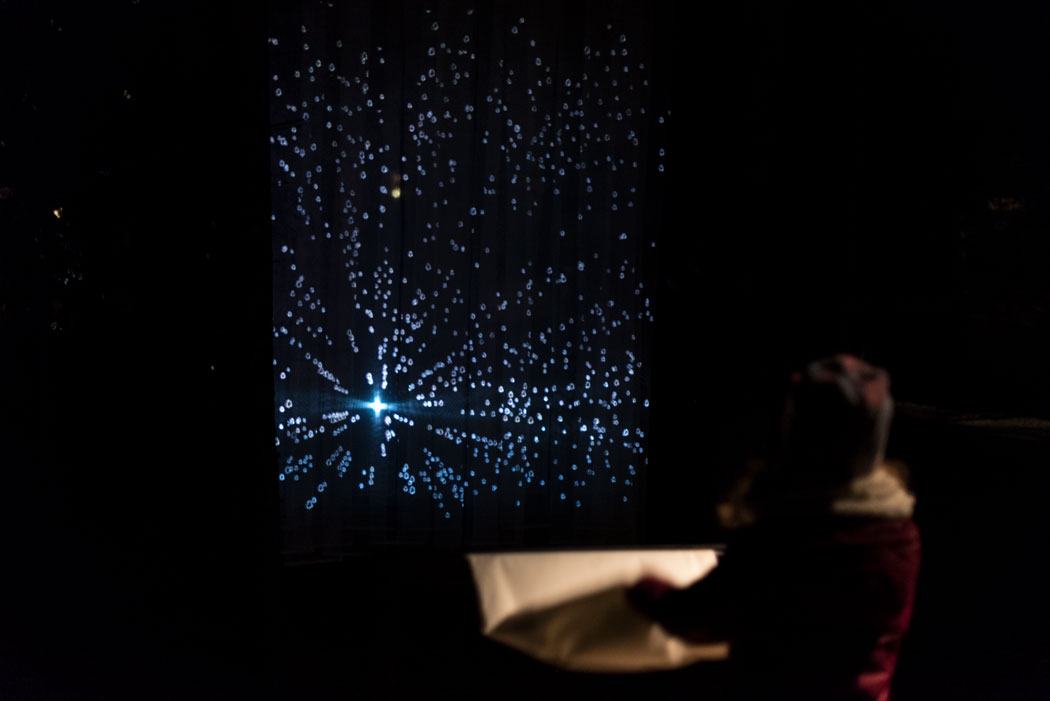
Fernando Obieta is a Lecturer at the Lucerne School of Design, Film and Art (HSLU) and a Senior Research Associate. He holds a PhD in media theory from the University of Arts Linz, funded by the Swiss National Science Foundation's Doc.CH program. His research critiques digital media systems, focusing on feminist ethics in machine design and the contingency of design practices. He is also a conceptual media artist, exploring themes like surveillance, data abstraction, and human-technology interaction through interactive installations and performances. Education: PhD in Media Theory, University of Arts Linz (ongoing) Master's in Interaction Design and Transdisciplinarity in the Arts, Zurich University of the Arts Computer Science Studies, Focus on Media Technologies Research Interests: Obieta interrogates how machines perceive humans and vice versa, emphasizing feminist critiques of technology. His work spans installations like blinded by the light (surveillance ethics), for your eyes only (data invisibility), and machines congregating (machine perception). He employs methods such as system error exposure, parameter reconfiguration, and medial translation to challenge technological norms. Projects & Collaborations: Co-founder of VoteLog (Swiss democracy contextualization platform) Initiator of so-da.space (Zurich cultural collaboration space) Member of intersections (digital diversity advocacy) Collaborations with Gregor Vogel on sound installations ( HERE/HEAR/WAVE ) Exhibitions & Grants: Featured in events like Ars Electronica Festival and the Jungkunst exhibition series. His work explores transient data, algorithmic bias, and the materiality of digital systems.
Overview Prof. Olivier Martin is a Full Professor of Nanophotonics and Optical Signal Processing at École Polytechnique Fédérale de Lausanne (EPFL), leading the Laboratory of Nanophotonics and Metrology. He holds academic roles in multiple departments including STI's Microengineering and Electrical & Electronics Engineering programs, and oversees doctoral training in Photonics and related fields. His research focuses on plasmonics, nonlinear optics, and metamaterials, with applications in biosensing, optical forces, and nano-manufacturing. Education PhD in Physical Sciences (EPFL, 1994) Engineering Degree (EPFL, 1989) Research Interests Dr. Martin’s work combines numerical simulations, advanced nanofabrication, and experimental techniques to study plasmonic nanostructures. Key areas include metasurface design, nonlinear optical effects, optical trapping, and heterogeneous catalysis. His lab has pioneered studies on anisotropic second-harmonic generation, tunable optical forces, and plasmonic-based security technologies. Publications & Awards With over 300 peer-reviewed articles and patents, his 2016 ERC Advanced Grant supported research into optical-force-driven nanofabrication. He is a Fellow of Optica and serves on editorial boards of Advanced Photonics and Frontiers in Physics . Advising & Leadership Directed 25+ PhD theses at EPFL Directed EPFL’s Doctoral Program in Photonics (2005–2017) Reformed Microtechnology curriculum, launching the Robotics Master’s program Labs & Groups He heads the Laboratory of Nanophotonics and Metrology, focusing on cutting-edge research in nanoscale optical systems and their practical implementations.
Prof. Dr. Lucio Isa is a Full Professor of Soft Materials and Interfaces at ETH Zurich's Department of Materials. His research focuses on colloidal systems, fluid interfaces, and active matter, with applications in soft materials engineering and nanotechnology. He holds leadership roles in initiatives like Swiss Soft Days to foster soft matter research in Switzerland. Education & Career: PhD in Soft Matter Physics (University of Edinburgh, 2008) Masters in Nuclear Engineering (Polytecnico di Milano, 2004) Postdoctoral roles at ETH Zurich (2008–2013), UC Santa Barbara (2012), and promotions to SNSF Assistant Professor (2013), Associate Professor (2019), and Full Professor (2024). Research Interests: Prof. Isa investigates colloidal particles, fluid interfaces, and responsive materials. Key areas include Colloidal gels and their mechanical properties Active matter dynamics in confined environments Surface-driven assembly of soft particles Applications in biocompatible materials and microfluidics Awards & Honors: Recognized with prestigious grants and awards such as the ERC Consolidator Grant (2020), Vernon Harrison Award (2008), and multiple Marie Curie fellowships. He is an EPJ Distinguished Referee (2017) and Soft Matter Lectureship awardee (2015). Teaching & Labs: Teaches courses in materials science, statistical thermodynamics, and surface science. Leads the Laboratory for Soft Materials and Interfaces, pioneering studies on microswimmers, adaptive systems, and colloidal assembly.