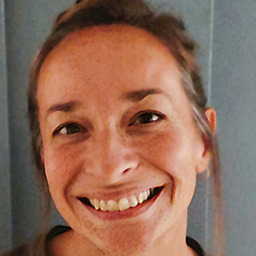
Yalong Yang is an Assistant Professor at the School of Interactive Computing at Georgia Institute of Technology. His research focuses on immersive analytics, virtual reality (VR), and augmented reality (AR) interfaces, with a particular emphasis on spatial interaction, hybrid user interfaces, and data visualization techniques. He explores how embodied interactions and immersive environments enhance understanding in domains like education, sports analytics, and collaborative decision-making. Key research themes include hybrid immersive systems (combining VR/AR with physical devices), asymmetric collaboration in mixed environments, and AI-driven tools for programming education. His work spans both theoretical frameworks and applied systems, such as SPHERE for scalable personalized feedback in coding classrooms and VizGroup for collaborative learning analytics. Yang’s recent publications highlight trends in spatial hybrid interfaces, navigation in immersive environments, and the integration of generative AI in educational technologies. His projects often involve evaluating interaction techniques (e.g., label placement in AR) and comparing performance across desktop and VR platforms. Notable contributions include the SportsXR initiative for immersive analytics in sports, and systems like CompositingVis for creating complex visualizations in 3D spaces. His work addresses challenges in situated analytics, wearable technologies for outdoor activities, and audience analysis in VR exhibitions.
Professor Craig Wheeler is a distinguished academic in the School of Engineering at the University of Newcastle, specializing in Mechanical Engineering with a focus on bulk solids handling and belt conveyor technology. As Associate Director of the Centre for Bulk Solids and Particulate Technologies and Deputy Chairman for the Australian Society for Bulk Solid Handling, he has established the university as a global leader in fundamental and applied research within this field. Wheeler's research interests primarily center on reducing the energy intensity and environmental impact of ore and mineral transportation globally. His work develops novel theoretical approaches to model and optimize belt conveyor and bulk handling systems, with significant contributions in energy-efficient transportation, dust emission control, and innovative conveying technologies like the Rail Conveyor system. His research bridges fundamental computational techniques with practical industrial applications, addressing real-world challenges in bulk material handling. His extensive publication record demonstrates trends toward increasingly sophisticated modeling techniques, combining continuum mechanics, discrete element methods, and computational fluid dynamics to solve complex problems in bulk material flow and energy consumption. Recent work shows particular emphasis on large-diameter idler rollers for energy savings, rail-running conveyor systems, and advanced dust control methodologies. 2023 Engineers Australia - Australian Society for Bulk Solids Handling 2017 Significant Contributions to Engineers Australia's Warman Design and Build Competition (Weir Minerals) 2017 Australian Council of Engineering Deans National Award for Engineering Education Excellence 2016 Innovative Technology Award (Australian Bulk Handling) 2010 Rising Star Award (Newcastle Innovation, The University of Newcastle) 2009 Pro-Vice Chancellor's Award for Research Excellence 2006 Best Research and Development Project (Australian Bulk Handling Review) 2000 A.W. Roberts Award (Australian Society for Bulk Solids Handling) Professor Wheeler has successfully led numerous Linkage Projects with major companies including Rio Tinto, Veyance Technologies, and Laing O'Rourke, securing significant cash and in-kind contributions for research projects. His industrial consulting experience, built on a 10-year engineering career with BHP, provides valuable insights that bridge fundamental research with practical applications. He actively supervises research students and contributes to professional development courses both within Australia and internationally. As a key member of the Centre for Bulk Solids and Particulate Technologies in association with TUNRA Bulk Solids, Wheeler leads research teams focused on developing eco-friendly conveying solutions. His work has resulted in new licensed technologies, internationally recognized testing methods, design guidelines, and Australian Standards that have transformed industry practices worldwide.
Kangkang Yin is an Associate Professor in the School of Computing Science at Simon Fraser University (SFU). His research focuses on computer animation, computer graphics, humanoid robotics, machine learning, and multimedia analysis. He teaches courses such as Computer Animation and Scientific Computing, and holds a PhD from the University of British Columbia (2007), MSc from Zhejiang University (2000), and BSc from Zhejiang University (1997). His work bridges robotics and animation through projects like physics-based character controllers, motion diffusion models, and robotic manipulation. Key contributions include the SIMBICON biped locomotion framework and research into emotion-driven dance animation. Recent efforts emphasize reinforcement learning applications in motion synthesis and robust visual navigation for unmanned ground vehicles. Yin's publications span over two decades, addressing challenges in motion control, physics-based simulation, and machine learning applications. His lab contributes to both academic advancements and practical robotics solutions. Current research trends show strong emphasis on combining generative AI with traditional animation techniques, as seen in recent work on auto-regressive motion models (AAMDM) and physics-augmented reinforcement learning (PARC).
Gita Reese Sukthankar is a Professor in the Department of Computer Science at the University of Central Florida (UCF) , where she directs the Intelligent Agents Lab . Her research focuses on activity and plan recognition , with applications in multi-agent systems, robotics, and human-robot interaction. She earned her Ph.D. from the Robotics Institute at Carnegie Mellon University and joined UCF in fall 2007. Research Interests: Her work spans activity recognition , intent inference , multi-agent coordination , and human-robot teams . She has applied these techniques to domains such as adversarial games (e.g., military simulations, Unreal Tournament), assistive technologies, and cooperative robotics. Her research integrates AI, machine learning, and probabilistic models to understand and predict complex team behaviors. Publication Trends: Her publications emphasize spatio-temporal modeling , probabilistic graphical models (e.g., HMMs, CRFs) , and multi-agent plan recognition . She frequently publishes in top venues like AAMAS, AAAI, and ICRA, with a focus on robust recognition of team behaviors, transfer learning, and real-world AI applications. Scientific Awards: NSF CAREER Award (2009) AFOSR Young Investigator (2009) ONR Summer Faculty Fellow (2008) UCF Faculty Excellence for Doctoral Mentoring (2012) CECS Dean's Research Professorship (2013) AAAI Senior Member (2021) ACM and IEEE Senior Member Advising and Grants: She mentors graduate students in AI and robotics and has led research funded by DARPA, AFOSR, and ONR. Her lab develops systems for intelligent agents that can understand and collaborate with humans. She has served on numerous program committees and editorial boards, including ACM Transactions on Autonomous and Adaptive Systems . She teaches courses such as Intelligent Systems , Robotics , and Machine Learning , and has been recognized for both research and teaching excellence. Labs and Teams: She leads the Intelligent Agents Lab at UCF, which focuses on data-driven social informatics and AI for human-agent teams. Her group collaborates with researchers in robotics, computer vision, and cognitive science to build adaptive, intelligent systems.
Sohail K. Mirza, MD, MPH is a Professor of Engineering at Dartmouth College's Thayer School of Engineering, specializing in biomedical engineering and orthopaedic surgery. His dual roles as a clinician and researcher focus on spinal biomechanics, surgical innovation, and healthcare policy. He received a BA in Physics from Colorado College (1985), an MD from the University of Colorado (1989), and an MPH from the University of Washington (2005). Research Interests: Dr. Mirza's work bridges clinical practice and engineering, with a focus on improving spinal surgery outcomes through advanced imaging techniques (e.g., intraoperative stereovision), reducing surgical overuse via policy analysis, and developing evidence-based guidelines for lumbar fusion procedures. His innovations include systems for pain measurement post-surgery and handheld stereovision tools for surgical navigation. Awards & Recognition: 2014 American Academy of Orthopaedic Surgeons Kappa Delta Award 2002/2008 University of Washington Service Excellence Award 1998 Cervical Spine Research Society Award Grants & Collaborations: His research has been supported by the National Institutes of Health and the Dartmouth College NSF I-Corps. He collaborates with biomedical engineers like Keith Paulsen and clinicians such as Roberts DW on projects like image-based registration for spine surgery. Labs & Teams: Leads the Spinal Surgery Innovation Lab at Thayer School, focusing on translating engineering solutions into clinical practices. Co-directs the Dartmouth Center for Surgical Innovation.
Dr. Zhao Na is a tenure-track Assistant Professor at the Singapore University of Technology and Design (SUTD), affiliated with the Institute of Sustainable Technology and Design (ISTD). She holds a Ph.D. in Computer Science from the National University of Singapore (NUS), where her thesis on 3D point cloud semantics earned the IMDA Excellence Prize. Her research bridges computer vision and machine learning, focusing on scene understanding, data-efficient learning, and domain generalization. Education: Ph.D. in Computer Science (NUS, 2021); Prior roles include Research Fellow at NUS. Research interests emphasize 3D scene analysis, object detection, semantic segmentation, and robust learning under noisy or limited data. Her work addresses challenges in multi-modal learning, continual learning, and open-world scenarios. Recent projects include geometry-semantics synergy in neural fields and cross-modal augmentation for visual grounding. Publications span top-tier venues like CVPR, ECCV, and ICCV, with a focus on 3D vision and AI. Key contributions include the PCTeacher framework for semi-supervised segmentation and Static-Dynamic Co-Teaching for incremental learning. Scientific Awards: IMDA Excellence Prize (2021). Active grants include a DSO Research Grant (2023–2026) and A*STAR MTC Grant (2023–2026). She leads the SUTD-ZJU Thematic Grant on 3D scene understanding (2022–2024). Laboratory/Team: Research group at ISTD/SUTD focuses on advancing AI-driven 3D perception and scene understanding systems.
Tania Cerquitelli is a Full Professor in the Department of Control and Computer Science (DAUIN) at Politecnico di Torino, where she leads research in data science, concept-drift management, and inclusive AI technologies. She is a member of SmartData@PoliTO, the GEDI Observatory for Gender Equality, and serves in leadership roles related to social affairs and community policies at the university level. She also acts as a scientific advisor for the partnership with Accenture. Her research interests span Data Science , Concept-Drift Management , Database Systems , Conversational Data Science , and Industry 4.0 . She applies AI and machine learning to industrial, societal, and ethical challenges, particularly in promoting inclusive communication and gender equality in research. The most recent publications highlight her work in explainable AI, concept drift detection, multimodal diagnostics, and AI for social good. Her research integrates machine learning, natural language processing, and computer vision to address real-world problems in manufacturing, healthcare, agriculture, and education. She is an Associate Editor for several prestigious journals including Expert Systems with Applications , Computer Networks , Future Generation Computer Systems , and Knowledge and Information Systems . She has served on the program committees of major conferences such as ECML PKDD, EDBT/ICDT, and ACM KDD, and has been a reviewer and selection committee member for ETH Zurich and EMPA. She actively supervises PhD students and teaches a wide range of courses including Data Science and Database Technologies, Business Intelligence for Big Data, and Gender and Diversity in Research. She is involved in multiple national and international research projects such as E-MIMIC, WEBFARE, and EnABLES, focusing on inclusive AI, smart data, and industrial applications. Her lab affiliations include the DBDM - Database and Data Mining Group (DAUIN) and the Interdepartmental Center SmartData@PoliTO - Big Data and Data Science Laboratory , where she contributes to advancing data science methodologies and their societal impact.
Mohamed Sarwat is an Associate Professor at Arizona State University specializing in databases , spatial data management , and recommender systems . His research focuses on GeoSpark —a cluster computing framework for spatial data—and its extensions like GeoSparkViz for visualization and GeoSparkSim for traffic simulation. Key Contributions: LARS* (Location-Aware Recommender System), Horton* (Graph Reachability), Sindbad (GeoSocial Platform), and Riso-Tree (Graph Database Indexing) Research Themes: Integration of spatial/temporal data with machine learning, efficient indexing for big geospatial datasets, and scalable frameworks for mobility data science His work spans collaborations with 23+ co-authors across institutions like University of Minnesota, University of Melbourne, and University of Salzburg. Current projects emphasize GeoTorchAI —a spatiotemporal deep learning system—and mobility data science infrastructure.
Emilia Barakova is an Associate Professor at the Industrial Design Department of Eindhoven University of Technology. She leads the Social Robotics Lab and Transdisciplinary Research & Design cluster, focusing on robotics for autism intervention and cognitive assistance. PhD in Mathematics & Natural Sciences (University of Groningen, 1999) MSc in Electronics & Automation Engineering (Technical University of Sofia, Bulgaria) Her research merges robotics, cognitive science, and AI to develop embodied agents for social skills training in autistic children and well-being enhancement for people with disabilities. She co-developed the TiViPE programming environment for customizable robot therapy scenarios. Key publication trends show emphasis on: Human-robot interaction for autism therapy Emotion recognition via movement analysis Visual programming frameworks for robot customization Multi-agent systems in social training She serves as Associate Editor for journals including International Journal of Social Robotics and Transactions of Human-Machine Systems , and has held academic positions at RIKEN Brain Science Institute and German-Japanese Robotics Research Lab.
Hsiao-Dong Chiang is a Professor in the School of Electrical and Computer Engineering at Cornell University. He holds a Ph.D. in Electrical Engineering from the University of California, Berkeley, and has made significant contributions to nonlinear system theory and power system stability. His research spans theoretical development and practical applications in electric power systems, nonlinear optimization, and machine learning. B.S., Electrical Engineering, National Taiwan University, 1979 M.S., Electrical Engineering, National Taiwan University, 1981 Ph.D., Electrical Engineering, University of California, Berkeley, 1986 Chiang's research interests focus on nonlinear system theory , power system stability and control , nonlinear optimization , and their applications to modern power grids with high penetration of inverter-based resources. He is renowned for developing the BCU method and TRUST-TECH methodology , which have enabled fast direct stability assessment and global optimization in complex systems. His work bridges fundamental theory with industrial deployment through his companies, Bigwood Systems, Inc. and Global Optimal Technology, Inc. His recent publications (2024–2025) reflect a strong trend toward integrating machine learning and deep neural networks with power system analysis , particularly in state estimation, optimal power flow, and voltage control. There is a clear emphasis on handling uncertainty, non-convexity, and multi-scale dynamics in active distribution networks and integrated energy systems . His work increasingly focuses on resilience , real-time control , and user-centered methodologies for modern grid operations. Chiang has received numerous scientific honors, including: IEEE Fellow (1997) United States Presidential Young Investigator Award (1989) Multiple DOE Grid Optimization Challenge Awards (2020–2023) Best Paper Awards from IEEE Transactions and Conferences Outstanding Education Award, Cornell University (1990) He has successfully managed over 100 research projects and holds 28 U.S. and international patents. As the founder of Bigwood Systems, Inc., he has commercialized advanced software for utility companies across the U.S. and Japan. His team has published over 480 refereed papers and received more than 17,500 citations. He advises a large research group and leads innovations in computational methods for energy systems. His lab is actively involved in developing next-generation tools for grid security, optimization, and machine learning integration.
Hannu Hyyppä is a Research Director and Project Employee at Aalto University's Department of Built Environment, affiliated with the MeMo research group. He leads the Research Institute of Measuring and Modelling for the Built Environment, focusing on advanced laser scanning, 3D modeling, and geoinformatics. His work spans interdisciplinary collaborations across engineering, geography, and arts, with a strong emphasis on applications in cultural heritage preservation, urban planning, and environmental monitoring. Education: Doctoral degree (D.Sc.) in Engineering and Technology, Helsinki University of Technology (2000) Licentiate degree in Engineering and Technology, Helsinki University of Technology (1989) Master's degree in Engineering and Technology, Helsinki University of Technology (1986) Research Interests: Laser scanning technologies, point cloud utilization in forestry and urban mapping, virtual reality for cultural heritage, and sustainable infrastructure modeling. His expertise includes photogrammetry, geographic information systems (GIS), and decision support systems for environmental management. Recent Contributions: Over 550 publications and 30+ active projects, including the Centre of Excellence in Laser Scanning Research (2014-2019) and the Pointcloud project (2015-2021). His work advances applications in autonomous road inspection, 3D cultural reconstructions, and smart city technologies. Awards: Recipient of the 2019 Kansallinen avoimen tieteen palkinto for innovative open science contributions. Grants & Leadership: Principal Investigator for projects like DICA (Digital Cultural Heritage) and ToToRo (Automatic Road Inspection). Active in organizing workshops and international conferences on 3D technologies and laser scanning. Labs/Teams: Oversees the MeMo group and collaborates with national organizations like the Finnish Geospatial Research Institute. Develops tools for real-time 3D mapping and virtual environments.
Tobias Ofner-Graff is a researcher at the Institute of Forest Growth within the Department of Ecosystem Management, Climate and Biodiversity at the University of Natural Resources and Life Sciences, Vienna (BOKU). Based at Peter-Jordan-Straße 82, 1190 Wien, his work focuses on advanced forest monitoring technologies. His research interests include: LiDAR and remote sensing applications in forestry Automated forest inventory systems Forest regeneration quantification Airborne Laser Scanning (ALS) data analysis Sustainable forest harvesting planning Recent project contributions include: Leading lidar-based forest monitoring systems development Developing spatial forest growth models Implementing digital inventory workflows His publications demonstrate expertise in: Quantifying forest resources through 3D point clouds Advanced timber stack measurement techniques ALS data integration for forest modeling Mobile laser scanning applications Forest climate adaptation strategies
Dr. Hakki Erhan Sevil is an Associate Professor in the Department of Intelligent Systems and Robotics at the University of West Florida, within the Hal Marcus College of Science and Engineering. He holds a Ph.D. in Mechanical Engineering from the University of Texas at Arlington and has extensive research experience in robotics, intelligent systems, and autonomous control. His work spans theoretical and applied domains, focusing on resilient and intelligent robotic systems. Ph.D., Mechanical Engineering, University of Texas at Arlington M.S., Mechanical Engineering, Izmir Institute of Technology B.S., Mechanical Engineering, Izmir Institute of Technology Dr. Sevil's research interests lie at the intersection of robotics, artificial intelligence, and control systems. He specializes in autonomous navigation, fault detection and isolation (FDI), multi-agent coordination, computer vision, and bio-inspired computational methods. His work emphasizes real-world implementation in unmanned and self-sustained systems, particularly in challenging environments. His recent publications and projects highlight a strong trend toward intelligent, resilient, and distributed robotic systems. Themes include entropy-based behavior modeling for UAV swarms, assistive robotics for household tasks, post-disaster damage assessment using aerial vision, and advanced guidance for GPS-denied navigation. These reflect a multidisciplinary approach combining machine learning, control theory, and robotics engineering. 2024 Faculty Excellence in Teaching Award, UWF 2024 Faculty Excellence in Undergraduate Research Mentoring Award, UWF DURIP Grant ($478,000) from ONR (with IHMC) USDA Grant ($728,000) with New Mexico State University US Air Force SBIR/STTR Grant ($110,000) with Catalano Aerospace AFWERX Funding for Distributed Behavior Research Dr. Sevil actively mentors Ph.D. and M.S. students and leads the Sevil Research Group, which has secured multiple internal and external grants from NSF, NASA, ARL, ONR, and USDA. He has served as PI and Co-PI on funded projects and advises student teams that have won national awards. His lab, the Intelligent Systems and Robotics Lab, is highlighted in university communications and national challenges. The group collaborates with IHMC, NMSU, and industry partners, fostering innovation in autonomous systems. The Sevil Research Group operates within the Intelligent Systems and Robotics Lab at UWF, conducting cutting-edge research in autonomous navigation, swarm intelligence, and resilient robotics. The lab collaborates with the Institute for Human and Machine Cognition (IHMC), New Mexico State University, and private aerospace firms. It supports student-led projects, participates in national robotics challenges, and maintains active GitHub repositories for open research dissemination.
Elena Tuzhilina is an Assistant Professor in the Department of Statistical Sciences at the University of Toronto, specializing in machine learning, applied statistics, and computational biology. Her research focuses on statistical tools for chromatin 3D spatial structure reconstruction and analyzing emotional disorders' impact on brain function. Ph.D. in Statistics from Stanford University Specialist's degree from Moscow State University Two-year Data Science program at Yandex School Her research spans high-dimensional data analysis , dimension reduction , and statistical modeling in biological contexts. She has developed novel algorithms for chromatin conformation reconstruction and pandemic trajectory modeling. Recent publications focus on canonical correlation analysis , low-rank matrix approximation , and 3D genome architecture , with applications in computational biology and neuroscience. Dorothy Shoichet Women Faculty in Science Award JSM Student Travel Award Outstanding Teaching Assistance at Stanford Stanford Teaching Assistant Award Elena supervises PhD students and postdoctoral fellows across disciplines including statistical sciences, biochemistry, and applied mathematics. She has secured multiple grants including a NSERC Discovery Grant and University of Toronto Accelerator Grant .
Sidonie Christophe is a Senior Researcher (Directrice de Recherche, DR1) at UMR LASTIG, a joint research unit of Université Gustave Eiffel, IGN-ENSG, and EIVP. She serves as co-director of the LASTIG laboratory and leads research in geovisualization, map design, and interactive spatial data exploration. She also holds a part-time advisory role (60%) at the French Ministry of Higher Education and Research in the domain of digital technology, environment, climate, and sustainable urban development. PhD in Geographic Information Sciences Senior Researcher, DR1, MTECT Co-Director, LASTIG Laboratory (since 2021) Former Team Leader, GEOVIS (Geovisualization, Interaction, and Immersion) Advisor, Environment and Urban Climate, French Ministry of Higher Education & Research Her research centers on innovative methods for 2D/3D and nD geospatial data visualization, with a focus on enabling spatio-temporal understanding through visual and non-visual spatial thinking. Her work integrates principles from geographic information science, human-computer interaction, and computer graphics. Key areas include urban climate visualization, tactile and augmented reality for accessibility, expressive cartographic rendering, and cognitive aspects of map design. She investigates how aesthetic and semiotic choices impact map comprehension and utility. The 15 most recent publications reflect a strong trend in interactive and accessible geovisualization, particularly for urban and environmental applications. Topics include neural map style transfer, 3D urban climate analysis, tactile maps for the visually impaired, augmented reality in geography, and visual analytics for crisis and climate data. There is a consistent emphasis on user-centered design, interdisciplinary integration, and the development of tools for decision-making under uncertainty. Scientific Recognition and Service: Invited speaker at major conferences (IEEEVIS, AGILE, ICC, CPGIS) Co-organizer of international workshops (e.g., GeoVIS, ISPRS AR/VR sessions) Leader of national research projects (ANR ORACLES, ANR ACTIVmap, ANR ECOCIM) Recipient of international mobility grants (AMICI I-SITE FUTURE) Contributor to national glossaries and research strategy (e.g., French photogrammetry glossary) Advising and Grants: Sidonie Christophe actively supervises PhD students and postdoctoral researchers, including Markie Jiang, Maria-Jesus Lobo, and Alexandre Mielniczek. She leads or participates in multiple funded research projects such as ANR ORACLES (marine flooding visualization), ANR ACTIVmap (tactile 3D maps), and ANR ECOCIM (eco-design of city information models). Her advisory role at the MESR involves shaping national research strategy in digital and environmental sciences. Labs and Research Teams: She is a core member of the GEOVIS team (Geovisualization, Interaction, and Immersion) at LASTIG and previously served as its leader. As co-director of LASTIG, she plays a central role in the leadership and strategic direction of the entire laboratory, which comprises over 100 researchers across four teams: ACTE, GEOVIS, MEIG, and STRUDEL.