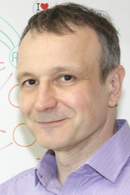
Jørgen Beck Hansen is an Associate Professor at the Niels Bohr Institute , University of Copenhagen, specializing in Experimental Subatomic Physics . His career spans roles at CERN and NBI, focusing on particle physics detectors, high-energy collisions, and computational methods. Education: Ph.D. in Particle Physics (1996) and M.Sc. in Physics (1993) from the University of Copenhagen. Research interests include two-boson physics at the ATLAS detector, precision measurements within the Standard Model, effective Lagrangian densities, and searches for new physics beyond the Standard Model (e.g., Higgsless theories, extra dimensions). He also works on GRID computing and distributed data analysis. Recent trends in his research involve Higgs boson studies, vectorlike top quarks, photonuclear collisions, and detector trigger optimization. Collaborative efforts with the ATLAS Collaboration and Danish NORDUGRID team highlight his interdisciplinary approach. Scientific awards : Skou Stipend (Assistant Professor) from the Danish Natural Science Council Teaching and supervision include mentoring 5 summer students, 2 Ph.D., 4 Master's, and 10 Bachelor's students. He has contributed to popular science through Danish Cosmic Rays at Schools and public lectures. Labs and teams : Actively involved in the ATLAS Collaboration and the Danish NORDUGRID team for distributed computing infrastructure.
Prof. Dr. Martin Paul Nawrot is a faculty member at the Institute of Zoology , University of Cologne . His research focuses on neural information processing , reinforcement learning , and synaptic plasticity in biological and artificial systems. He also develops large-scale brain simulations to study attractor dynamics for sensory-motor integration, motor control, and decision-making in primates and insects. Current research areas include neuromorphic computing , spiking neural networks , and computational neuroscience Key projects involve modeling insect behavior , neural coding , and cross-species AI applications His recent publications (2023-2025) explore Drosophila larva locomotion , synaptic plasticity mechanisms , and neuromorphic hardware for real-time simulations. These works span neural circuits , behavioral modeling , and computational tools like GeNN and NEST. Despite his academic prominence, no scientific awards are mentioned in the available texts.
Dr. Alex White is a Senior Lecturer in Thermofluids at the Department of Engineering, Cambridge University, and a Fellow and Director of Studies at Peterhouse. He earned his undergraduate and PhD degrees from King's College, Cambridge, and conducted postdoctoral research in Cambridge, Lyon, and Toulouse before returning to Cambridge in 2000 as part of the Energy Group. His research focuses on two-phase flow (vapour-droplet flows), thermodynamics of power generation, Computational Fluid Dynamics (CFD), and heat pumps. His work includes theoretical and numerical studies on warm dense matter, electron transport, and energy storage systems like pumped thermal and compressed air storage. Recent publications emphasize warm dense matter physics, inertial confinement fusion, and thermal energy storage innovations. His theoretical analyses and simulations span high-energy-density plasmas, nonlocal electron stopping power, and hybrid energy systems. While no scientific awards are documented, his contributions to thermofluids and extreme condition physics are significant.
Tarik Namas is a Senior Lecturer in the Department of Electrical and Electronics Engineering at the International University of Sarajevo's Faculty of Engineering and Natural Science. With over 15 years of academic experience, he has held roles including Teaching and Research Assistant (2006-2009), Technical and Industrial Instructor at Jubail Industrial College (2009-2011), and IT Assistant at Prince Sultan Military College. His expertise spans Electrical Engineering , Signal Processing , and Power Systems , with a focus on fault detection, impedance analysis, and augmented reality applications in healthcare.
Professor André Niemann at the University of Duisburg-Essen's Institute of Hydraulic Engineering and Water Management is a leading expert in water resources management, focusing on flood protection, dam control systems, and AI-driven hydrological forecasting. His work bridges practical engineering challenges with advanced data science applications. Academic Leadership: Coordinated projects like interSim (interactive simulation for vocational training) and PROWAVE (forecast-based dam control) Research Impact: Pioneered ensemble optimization methods for reservoirs and LSTM models for inflow forecasting Technological Innovation: Developed AI frameworks for sensor data quality control in water management His research addresses critical intersections between hydraulic engineering and climate resilience, with recent projects analyzing flood forecasting systems ( HÜProS ), urban drainage optimization, and sustainable hydropower solutions using legacy mining infrastructure. Collaborations span institutions like Harz Waterworks, Deltares, and international conferences (IAHR, ICOLD, EGU). Publications since 2012 cover topics from underground pumped storage feasibility to real-time control of urban reservoirs, with a growing emphasis on machine learning applications since 2023. He actively engages in fieldwork, including excursions to dams and control centers, and teaches modules ranging from hydromechanics to environmental monitoring.
Ilkka Seilonen serves as a Researcher in the Department of Electrical Engineering and Automation at Aalto University, actively contributing to the Information Technologies in Industrial Automation research group as a Postdoctoral Researcher. His work bridges theoretical control systems with practical implementations in agricultural technology and power infrastructure, maintaining consistent publication output from 2017-2022. Seilonen's research centers on industrial automation standards with particular expertise in OPC UA (Unified Architecture) implementations. He has pioneered task allocation algorithms for agricultural machinery control systems and developed distributed architectures for smart grid frequency regulation. His work integrates information and communication technologies (ICT) to solve critical challenges in energy resource optimization and real-time control systems, with significant contributions to ISOBUS-compliant tractor-implement automation. Publication analysis reveals three dominant research trajectories: (1) Agricultural automation using OPC UA for machinery control systems (2020-2022), (2) Smart grid applications including frequency containment reserves and demand response (2017-2019), and (3) Pandemic-era educational adaptations in automation laboratories (2021). His work consistently demonstrates cross-domain applicability of distributed control architectures while maintaining strong industry relevance through ISOBUS and IEC 61499 standards compliance. No scientific awards are documented in the provided materials. Seilonen maintains extensive collaborative relationships with researchers including Valeriy Vyatkin (frequent co-author on smart grid projects), Timo Oksanen (agricultural automation specialist), and Olli Kilkki (energy systems expert). While specific grant details remain unspecified, his publications in IEEE Transactions and Computers and Electronics in Agriculture indicate substantial research funding support. Student supervision information is not explicitly provided in the source text. As core member of Aalto's Information Technologies in Industrial Automation group, Seilonen contributes to developing next-generation industrial informatics solutions with particular focus on standardizing communication protocols for heterogeneous automation systems. Current projects appear to emphasize agricultural technology integration and smart grid flexibility services.
Prof. Dr. Yaşar Güneri ŞAHİN serves as the Dean of the Faculty of Engineering and Computer Sciences at Izmir University of Economics, where he also holds a professorship in the Department of Software Engineering. With over two decades of experience in both academia and industry, he has established himself as a prominent figure in software engineering, real-time systems, and educational technologies. His academic journey began with a Bachelor's degree in Computer Engineering from Middle East Technical University in 1994, followed by a Master's in Computer Education from Gazi University in 1999, and culminated with a Ph.D. in Industrial Technology from Gazi University in 2005. Prior to joining Izmir University of Economics in 2008, he served as a faculty member at Yaşar University starting in 2005, and before that, he gained nearly a decade of industry experience in high-level management roles overseeing numerous software projects for both public and private sectors. Prof. ŞAHİN's research spans several interconnected domains with a strong emphasis on practical applications. His work in software engineering focuses on project management methodologies, team building models for educational contexts, and database systems. In real-time systems, he has made significant contributions to forest fire detection technologies using innovative approaches like animal-based biological sensors and radio-acoustic sounding systems. His educational technology research addresses challenges in nursing education, special education for individuals with autism, and internet resource utilization by university students. Notably, his interdisciplinary approach bridges computer science with healthcare applications, particularly in medical informatics where he has developed public health information systems and tools for medical data entry. His scholarly output demonstrates a consistent trajectory of innovation across multiple domains, with particular concentration in the period from 2007-2013. While his early work focused on foundational software engineering concepts and database systems, his research evolved to address pressing societal challenges including forest fire detection, healthcare information systems, and educational technologies. This evolution reflects his ability to identify emerging technological needs and apply software engineering principles to diverse real-world problems. His contributions have been recognized through multiple prestigious awards: TÜBİTAK Scientific Publication Awards (2008-2012) İzmir University of Economics Scientific Publication Awards (2008-2011) As an academic advisor, Prof. ŞAHİN has supervised doctoral and master's theses on diverse topics including heart failure management, triage algorithms for multiple injuries, and software project selection metrics for small and medium enterprises. His administrative leadership extends beyond his deanship to include serving on juries for national art, design, and architecture competitions, as well as evaluating research projects for TEYDEB and TÜBİTAK. His grant activities include serving as a project reviewer and monitor for various technology development initiatives including "Bulut," "ARAGES," "SADE," and "SWH-ATLANTIS." Prof. ŞAHİN maintains an active research laboratory environment focused on real-time systems and software engineering applications. His work often involves interdisciplinary collaboration, particularly with medical professionals on health informatics projects and with education specialists on technology-enhanced learning initiatives. Current research directions appear to focus on the intersection of software engineering principles with healthcare applications and environmental monitoring systems.
Daniele Milanesio is an Associate Professor at the Department of Electronics and Telecommunications, Politecnico di Torino, and a member of the LACE (Antennas and Electromagnetic Compatibility) laboratory. His research focuses on nuclear fusion, particularly plasma-facing and ion heating antennas, radar technology, and antenna design/measurement. Education: Master of Science in Computer Engineering (University of Illinois, 2004), Laurea in Telecommunications Engineering (Politecnico di Torino, 2004), PhD in Electronics and Communications (Politecnico di Torino, 2008) His research spans electromagnetic fields, simulation engineering, and real-time antenna systems. Articles highlight his contributions to ITER project, DTT ICRF system development, and advancements in plasma heating simulation tools like TOPICA and SSWICH-SW. Scientific Award: Young Researcher Topical RF Conference Prize (2013) Milanesio supervises PhD students Simone Porporato and David Leonardo Galindo Huertas, and is involved in EU-funded projects (EUROfusion FP9) and commercial contracts for ITER antenna modeling. He teaches courses in Advanced Antenna Engineering and Applied Electromagnetism at the College of Electronic, Telecommunications and Physics Engineering.
Represa Pérez, César is a faculty member at the University of Burgos , affiliated with the School of Engineering . He has contributed extensively to computer science, parallel computing, and embedded systems through research articles, educational materials, and conference presentations. Education: Doctorate in Parallel & Hybrid Programming (2002). Research Areas: Parallel computing (MPI/CUDA), 3D virtual labs, sensor technology, Android applications, and embedded systems design. Key Collaborations: Co-authored works with José María Cámara Nebreda, Pedro L. Sánchez Ortega, and others on technical education and hardware-software integration. Recent Trends: Focus on smartphone-driven sensors, additive manufacturing monitoring, and educational tools for engineering students.
Roland Schmehl is an Associate Professor at the Department of Aerospace Engineering, Delft University of Technology (TU Delft). He is a founding member of Airborne Wind Europe (since 2019) and serves on the advisory board of Kitepower (since 2016). His work focuses on airborne wind energy (AWE) systems, including their application in Martian habitats, noise analysis, and aero-structural modeling. Key Research Areas: Wind energy innovation, aerospace engineering, Martian habitat power systems, and robotics-assisted design. The 15 most recent articles highlight his contributions to AWE system design, flight pattern optimization, noise annoyance studies, and extraterrestrial energy applications. His scientific awards include the 2021 Innovation stamps and the 2021 Rhizome project prize for off-Earth habitat development. Schmehl’s projects include MERIDIONAL (multi-scale wind farm design), Rhizome (autonomous Mars habitats), and EFRO (unmanned systems research). He has led editorial activities for journals like Wind Energy Science and Energies and participated in international conferences.
Dr. Jonas Biehler is a Research Fellow at the Chair of Numerical Mechanics within the Institute for Computational Mechanics at the Technical University of Munich (TUM). His work focuses on computational methods for biomechanical systems, with expertise in uncertainty quantification, high-performance computing, and machine learning applications in respiratory and cardiovascular modeling. Education: PhD in Mechanical Engineering, Technical University of Munich, 2016 His primary research spans Computational Biomechanics, Computational Solid Mechanics, and Experimental Biomechanics, with specialization in Inverse Problems and Uncertainty Quantification. He integrates High-performance parallel computing with Machine Learning and Bayesian Optimization to advance Respiratory Mechanics and Semantic Segmentation of medical images. His methodologies address complex challenges in patient-specific modeling where experimental validation is constrained. Analysis of his 2021-2025 publications reveals dominant themes in respiratory system modeling (35%), uncertainty quantification frameworks (30%), and cardiovascular biomechanics (25%). Key trends include the development of open-source tools like QUEENS for solver-independent analyses, physics-informed machine learning for drug delivery optimization, and multi-fidelity approaches that reduce computational costs by 40-60% in large-scale simulations. His work increasingly bridges computational models with clinical applications in ARDS and pulmonary fibrosis. No scientific awards were documented in the provided materials. Dr. Biehler has supervised 15+ student projects with emphasis on methodological innovation and experimental validation: Deep Neural Networks as Surrogate Models for Uncertainty Quantification Multi-Level Monte Carlo Schemes for Uncertainty Quantification Experimental and Numerical Analysis of Nonlinear Anisotropic Polymer Membranes Uncertainty Quantification for Human Respiratory System Models Biaxial Measurement of Porcine Aorta Mechanical Properties He operates within the LNM (Lehrstuhl für Numerische Mechanik) research ecosystem at TUM, which maintains high-performance computing clusters and biomechanics testing facilities. The group collaborates extensively with clinical partners at Klinikum rechts der Isar on translational projects involving abdominal aortic aneurysms and respiratory mechanics, with current efforts focused on integrating real-time patient data into computational frameworks.
Enrico Bibbona is an Associate Professor at the Department of Mathematical Sciences (DISMA) at Politecnico di Torino, where he contributes to the Interdepartmental Center SmartData@PoliTO - Big Data and Data Science Laboratory. His academic profile spans statistics, mathematical modeling, and data science applications across multiple engineering disciplines. His primary research interests include: Asymptotic statistics Bayesian inference Biostatistics Industrial statistics Mathematical biology and modeling in life sciences Statistical inference for stochastic processes Stochastic modeling His specific research lines focus on Reaction Networks approximation and inference, Statistical modeling of animal calls, Statistics and modeling for the SmartPad system (in collaboration with ITT), and Statistics for deterministic and stochastic dynamical models. His work bridges theoretical statistics with practical applications across various scientific domains, particularly in biological systems, industrial applications, and data science. His notable recognition includes the Elsevier/SPA Travel Award presented by Elsevier and Bernoulli Society, Denmark (2011). Professor Bibbona actively mentors PhD students across multiple programs, currently supervising Daniele Poggio and Saeed Sani in Mathematical Sciences, and has previously guided Elena Sabbioni (thesis: Statistical Methods for Complex Biological and Clinical Data) and Hiu Ching Yip (thesis: Statistical models for understanding biomedical data). His teaching spans Mathematical Engineering, Data Science and Engineering, and Communications Engineering programs, where he teaches courses including BioQuants, Statistical methods in data science, and Project: Software-defined communication systems. He is a key member of the Statistics and Data Science research group at DISMA and has contributed to practical applications through patents including "BRAKING SYSTEM TEMPERATURE ESTIMATOR" and "A method for estimating the wear of a vehicle brake element," demonstrating his ability to translate theoretical work into real-world solutions.
Dr. Iain Martin serves as a Senior Lecturer (Teaching and Research) in the School of Computing at the University of Dundee, specializing in space mission simulation technologies with emphasis on planetary surface modeling and autonomous landing systems. His academic credentials include: PhD in Virtual Planetary Surfaces for Testing Vision Guided Landers (University of Dundee, 2001) MSc in Applied Computing (University of Dundee, 1996) Research focuses on asteroid/planetary scene generation , thermal imaging simulation , and real-time navigation systems through the PANGU project. His work bridges computer graphics, spacecraft guidance engineering, and event-based sensor development, producing tools used by space agencies for mission validation. Key innovations include realistic lunar landing simulations and thermal inertia modeling for asteroid environments. Recent publications (2022-2024) demonstrate escalating integration of neural networks with space simulation, particularly in congestion control for space communication networks and event-driven sensor modeling. The research trajectory shows deepening collaboration with ESA on mission-critical testing frameworks. No scientific awards were documented in the source materials. Dr. Martin supervises research projects including the MASIVE fingerprint dataset for election security, and leads ESA-funded initiatives PANGU v5 (2018-2023) and PANGU-4 (2014-2017). His grant portfolio emphasizes practical tool development for space mission planning with direct industry applications. He co-leads the Dundee PANGU development team, which maintains active partnerships with ESA and international space agencies. The group regularly contributes to Clean Space initiatives and presents at International Astronautical Congresses, focusing on sustainable mission design and vision-guided landing validation.
Luigi Pomante is a tenured Assistant Professor at the University of L'Aquila, Italy, where he is affiliated with the Department of Engineering and Information Science and Mathematics (DISIM) and the DEWS Center of Excellence. His academic career focuses on research and teaching in embedded systems and hardware-software co-design methodologies. Dr. Pomante's primary research interest is Electronic System-Level Hardware-Software Co-Design of heterogeneous parallel dedicated systems. He is the principal developer of the HEPSYCODE framework, which provides comprehensive methodologies and tools for system-level design space exploration. His work addresses critical challenges in embedded systems development, including handling functional and non-functional requirements, heterogeneous architectures, and mixed-criticality constraints. He has published extensively in journals like IEEE Transactions on Computers and IET Computers & Digital Techniques, as well as at major international conferences. Analysis of Dr. Pomante's publication record reveals a consistent research trajectory focused on hardware-software co-design methodologies, with increasing attention to real-time constraints and mixed-criticality systems in more recent work. His publications demonstrate expertise in design space exploration techniques, system modeling using CSP-like approaches, and the development of metrics for evaluating hardware-software partitioning solutions. The HEPSYCODE framework represents his most significant contribution to the field. Dr. Pomante actively supervises student projects and theses related to electronic design automation and embedded systems. He has contributed to European research projects including EMC2 (Embedded Multi-Core systems for Mixed Criticality applications), where he was responsible for deliverables related to design methodologies, implementation approaches, and validation frameworks. His work has practical applications in aerospace and other safety-critical domains through collaborations with industry partners. He leads the HEPSYCODE research group at DEWS, which focuses on developing methodologies and tools for hardware-software co-design of heterogeneous parallel dedicated systems. The group's current work includes extensions for real-time and mixed-criticality systems, frameworks for embedded system monitoring, and techniques for handling approximate computing and energy/power constraints within the design space exploration process.
Maria Gini is a distinguished Professor in the Department of Computer Science and Engineering at the University of Minnesota's College of Science & Engineering. She holds the titles of CSE Distinguished Professor and Distinguished University Teaching Professor, reflecting her exceptional contributions to both research and education in computing. Dr. Gini's research focuses on artificial intelligence, robotics, and intelligent agents, with particular expertise in decision making for autonomous agents across various application domains. Her work spans swarm robotics, distributed methods for task allocation, robot exploration of unknown environments, navigation in dense crowds, and conversational agents. She leads the Next Generation Robotics Laboratory and has directed significant projects including MAGNET (Intelligent Agents for Electronic Commerce) and TAC-SCM (Autonomous Agents for Supply-Chain Management). Her recent publications demonstrate a consistent trajectory toward increasingly sophisticated autonomous systems capable of operating in complex, dynamic environments. The research shows strong interdisciplinary connections between robotics, artificial intelligence, and real-world applications in emergency response, environmental monitoring, e-commerce, and social interaction. A notable trend in her recent work is the emphasis on diversity and inclusion in AI research and education. Presidential Award for Excellence in Science, Mathematics and Engineering Mentoring (PAESMEM), 2025 Winner of the IJCAI Donald E. Walker Distinguished Service Award, 2024 ACM/SIGAI Autonomous Agents Research Award, 2022 ACM Fellow, IEEE Fellow, and AAAI Fellow Numerous university-level awards for teaching and service Dr. Gini has advised an impressive 34 PhD students throughout her career, demonstrating her commitment to mentoring the next generation of computer scientists. She has secured significant research funding through grants from NSF and other agencies, supporting projects like the Summer Computing Academy for high-school students and MinneWIC (the ACM-W Celebration of Women in Computing in the Upper Midwest). Her service contributions include leadership roles in major professional organizations including serving as President of the International Foundation on Autonomous Agents and Multi-Agent Systems (IFAAMAS) and General Chair of IJCAI 2021. In addition to her research laboratory, Dr. Gini has been instrumental in establishing several important initiatives including the Summer Computing Academy, MinneWIC, and DREU (Distributed Research Experiences for Undergraduates). Her work extends beyond traditional academic boundaries through collaborations with industry and government agencies focused on applying AI to real-world challenges in emergency response, commerce, and environmental sustainability.