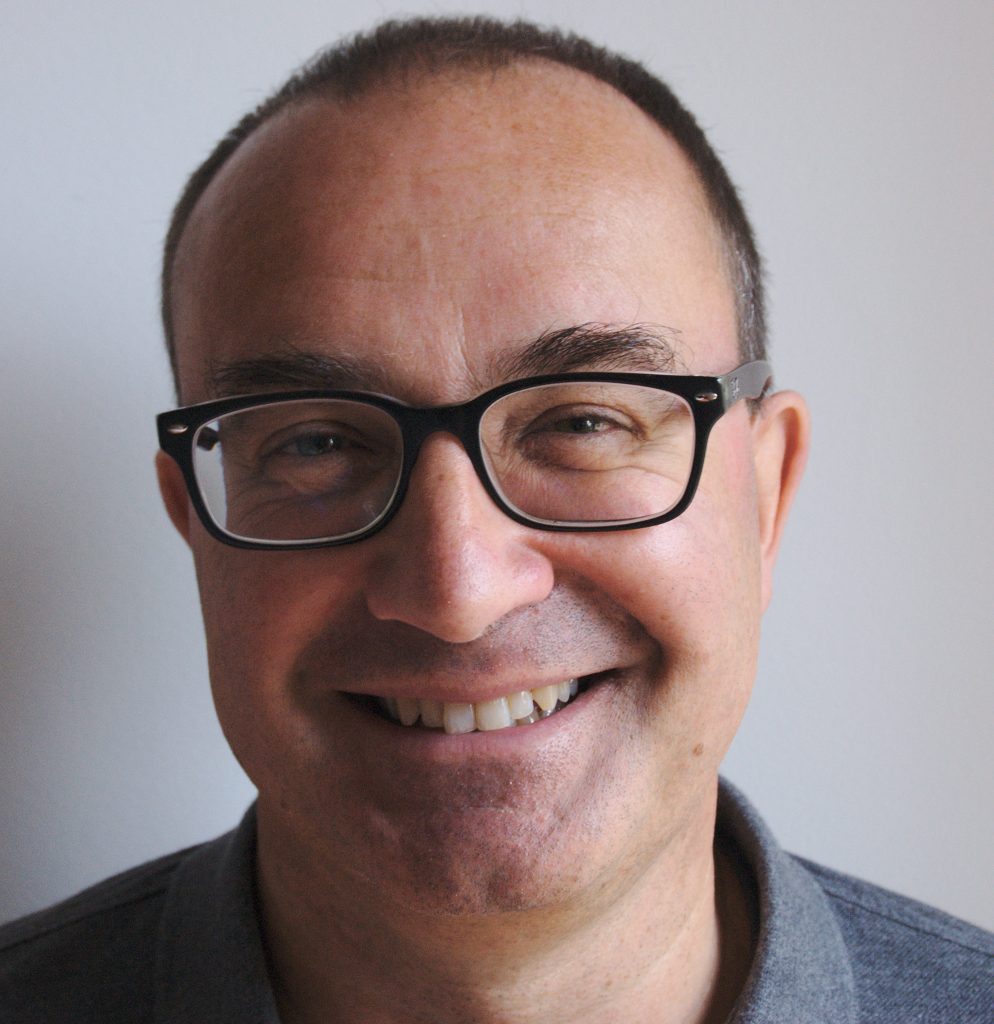
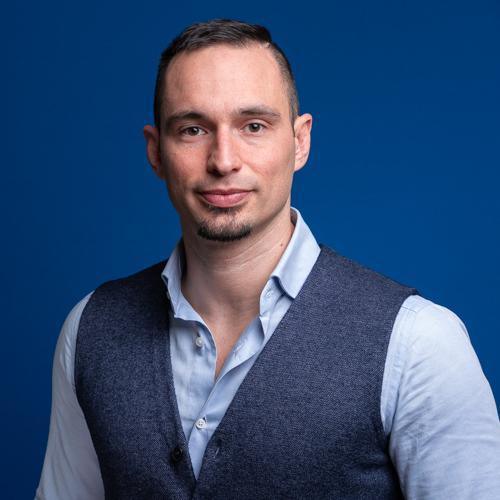
Vittorio Solina is a Researcher at the Department of Mechanical, Energy and Management Engineering (DIMEG) of the University of Calabria, specializing in industrial systems simulation and digital twin technologies. His work spans Industry 4.0/5.0 applications, supply chain optimization, and human-robot collaboration. Affiliation: University of Calabria Academic Role: Researcher (Legge 240/10) Research Focus: Digital twins, simulation modeling, sustainable manufacturing His research emphasizes advanced simulation tools for decision support, including applications in Industry 4.0 , Smart Manufacturing , and Agri-Food Supply Chains . Recent work explores adaptive simulation optimization for Industry 5.0 and 5G-enabled robotics. Key publication trends include: (1) Digital twin integration for supply chain resilience (2024-2025), (2) Simulation automation methodologies (2025), and (3) Human-robot collaboration frameworks (2024).
Michele Zorzi is a Professor of Telecommunications at the School of Engineering, University of Padova, Italy, where he has held a faculty position since 2003. He leads the SIGNET (Signal processing and Networking) Research Group, focusing on cutting-edge wireless networking challenges including mmWave communications and underwater networks. His extensive publication record exceeds 600 papers in top-tier journals and conferences, reflecting significant contributions to the field through both theoretical and experimental work. He received his Laurea Degree (1990) and Ph.D. (1994) in Electrical Engineering from the University of Padova. Prior academic appointments include Politecnico di Milano (1993-1996), University of California San Diego (1995-1998), and University of Ferrara (1998-2003), where he progressed from Associate Professor to full Professor. His educational trajectory demonstrates deep roots in Italian academia with international exposure. Professor Zorzi's research spans wireless communications and networking, with current emphases on mmWave networking for vehicular systems, underwater acoustic/optical communications, non-terrestrial networks, and AI-driven networking solutions. His group conducts experimental validations including at-sea trials for underwater systems and testbeds for vehicular networks. Key projects include PRATA for predictive QoS in autonomous driving and IoT-based environmental monitoring of the Venice Lagoon, demonstrating practical applications of theoretical work. Analysis of his 2022-2025 publications reveals strong trends in applying artificial intelligence to networking challenges across diverse environments. There is significant emphasis on vehicular networks (predictive QoS, teleoperated driving), underwater systems (acoustic/optical communications, AUV swarms), and satellite networks (Starlink integration, NTN security). Experimental validation in real-world scenarios like the Venice Lagoon monitoring project and underwater sea trials characterizes his applied research approach. His scientific accolades include: IEEE Fellow (2007) IEEE Communications Society Best Tutorial Paper Award (2008, 2019) Stephen O. Rice Best Paper Award (2018) Multiple best paper awards at IEEE conferences (2005-2020) As principal investigator for numerous European and US research projects plus 20+ industry-funded initiatives, Professor Zorzi has mentored over 35 PhD students and post-docs. Graduates now hold prominent positions at institutions including Stanford, UCSD, CTTC, and Huawei. His SIGNET group maintains active international collaborations and contributes to open-source networking tools via GitHub, demonstrating commitment to community engagement. The SIGNET Research Group, housed within the Department of Information Engineering, operates specialized experimental facilities for mmWave and underwater communications. Current initiatives include AI-based predictive QoS frameworks for vehicular networks, underwater optical communication systems using ultraviolet light, and large-scale IoT deployments for environmental monitoring. The group's GitHub presence indicates strong open-science practices, while recent sea trials confirm hands-on experimental capabilities beyond theoretical work.
Matteo Sonza Reorda is a Full Professor at the Polytechnic University of Turin, affiliated with the Department of Automatic Control and Computer Science (DAUIN). He holds roles such as Partnership Agreement Coordinator with SMAT and has served as Vice-Rector for Research (2021–2024). His research focuses on fault tolerance, hardware reliability, and AI acceleration, with contributions to GPU/CNN reliability, self-test libraries, and defect-oriented testing. Education: M.S. in Electronics Engineering, Politecnico di Torino (1986) Ph.D. in Computer Engineering, Politecnico di Torino (1990) Research Interests: His work spans automatic test equipment, circuit reliability, GPU fault tolerance, neural network hardening, and embedded systems safety . He leads the Electronic CAD & Reliability Group and collaborates with institutions like the ISI Foundation and the National Research Council (CNR). Publications & Impact: With over 180 publications, his recent work emphasizes AI accelerator reliability, fault injection techniques, and safety-critical systems. Key trends include GPU resilience for CNNs, self-test library optimization, and radiation fault modeling in neural networks. Awards & Recognition: IEEE Fellow (2016–) Multiple best-paper awards at IEEE conferences (DDECS, DATE, etc.) Grants & Collaborations: Coordinator of EU projects (RESCUE, TUTORIAL) Partnerships with EDF, Marelli Europe, and SMAT Lead on National HPC/Quantum Computing Spoke 1 (2022–2025) Labs/Teams: Leads the CAD Group and collaborates with the French-Italian LIA LAFISI lab on hardware-software integration.
Andrea Bonfiglio is an Associate Professor at the Department of Naval, Electrical, Electronic and Telecommunication Engineering (DITEN) within the School of Engineering at the University of Genoa. His work focuses on power systems, smart grids, and renewable energy integration with a particular emphasis on innovative control strategies and energy storage solutions. Teaching areas: Electrical Systems, Industrial Measurements, Energy Security Key research themes: Smart distribution networks, synthetic inertia, microgrid control, vehicle-to-grid technologies, battery energy storage Recent work explores virtual energy partitioning, load flow optimization, and inertia allocation in transmission networks Contact: a.bonfiglio@unige.it His publications highlight advanced control methodologies using machine learning and sliding mode control for both transmission and distribution networks, with applications to renewable integration and grid stability challenges.
Francesco Pilati is an Associate Professor at the Department of Industrial Engineering, University of Trento, where he serves as local coordinator for the scientific field ING-IND/17 (Industrial Plants and Logistic Systems). He chairs the research group on Industrial Plants, Production Systems, and Logistics, and teaches courses in Industrial Plants and Design of Digital Production and Assembly Systems. As coordinator of the Master's program in Management and Industrial Systems Engineering and University Coordinator for the EIT double degree in Zero-Defect Manufacture, Pilati bridges academic leadership with advanced manufacturing research. He has also served as Invited Lecturer at universities in Vienna and Göttingen. His research focuses on integrating environmental sustainability with technical-economic criteria through multi-objective optimization and impact assessment. Key areas include: Distribution networks and warehousing systems Manufacturing and assembly line design Hybrid energy production systems Digitization of manual production processes using depth cameras Recent publications highlight applications of Industry 4.0 technologies to pandemic safety, logistics optimization, and smart manufacturing. Pilati has received significant recognition including the Philip Morris Italia Empowering Research Award (2016) and Autostrade per l'Italia academic recognition. His editorial contributions include guest editing special issues on Digital Twins and Smart Factories in Q1 journals.
Marilena Vendittelli is a Professor at Sapienza University of Rome, affiliated with the Robotics group. Her research spans control systems, biomedical robotics, motion planning, and autonomous systems. Research Areas: Control systems for robotics and nonholonomic systems Biomedical applications (hyperthermia therapy, needle insertion) UAV navigation and obstacle avoidance Haptics and human-robot interaction Adaptive estimation algorithms Recent Publications focus on adaptive control of bio-heat equations, safe UAV motion planning, soft robotics actuation, and haptic feedback in medical procedures.
Sara Vinco is an Associate Professor at the Department of Control and Computer Engineering (DAUIN), Politecnico di Torino, Italy. She specializes in battery simulation, digital twins, and energy-efficient design automation for heterogeneous embedded systems, aligning with Industrial and Information Engineering (Area 0009) and ERC sectors including Computer Architecture and Machine Learning . Her research focuses on advancing cyber-physical systems through simulation frameworks like SystemC-AMS, enabling holistic modeling of analog, digital, and thermal domains. Key projects include data-driven digital twins for EV batteries and low-area digital circuits in industrial/medical applications, supported by commercial contracts such as C-based virtual prototyping. Her recent publications (2022-2023) emphasize machine learning for battery SOH/SOC estimation , energy monitoring in production lines , and multi-domain fault modeling . These works span journals like IEEE Transactions and conferences including DATE and ISLPED. Awarded the FFABR 2017 grant and IEEE FDL Best Paper Award 2011 , she also chairs editorial boards for IEEE Transactions on CAD and DATE Conference. She supervises PhD students Giovanni Pollo (Digital Circuits) and Khaled Alamin (EV Battery Twins), reflecting her leadership in smart systems design.
Federico Miretti is an Assistant Professor at the Polytechnic University of Turin, affiliated with the Department of Energy and the interdepartmental center Cars@PoliTo. His research focuses on hybrid and electric vehicles, with emphasis on energy management strategies, battery state estimation, and sustainable transport solutions. PhD in Energetics from Polytechnic University of Turin Research areas include: Optimization-based Energy Management Strategies for hybrid propulsion systems Simulation and digital twinning of hybrid systems Thermal management for electrified vehicles Techno-economic assessment of mobility solutions Recent publications highlight advancements in battery temperature anomaly detection, wireless power transfer feasibility, and control algorithms for energy efficiency. His work aligns with SDGs 7 (Clean Energy) and 9 (Innovation). Teaching roles include: Fluid Machinery (2019-2025) Energy Management in Hybrid/Electric Vehicles (2021-2025) Projects: PRoSIT (2025): Predictive thermal management demonstrator Consulting contract with MIDAC SpA (2025): Battery Digital Twin development EBOAT project (2025-2026): Technical support for Vulkan
Eleonora Vacca is a PhD student and Research Fellow in the Department of Automatic Control and Computer Science (DAUIN) at the Polytechnic University of Turin. She holds a B.S. in Electronic Engineering from the University of Palermo (2018) and an M.S. in Electronic Engineering-Embedded Systems from Politecnico di Torino (2021). Her research focuses on digital hardware design, reliability engineering, reconfigurable devices, and AI applications in aerospace and safety-critical systems. She is a member of the Aerospace and Safety Computing Lab and the CAD - Electronic CAD & Reliability Group (DAUIN). Her work addresses challenges such as radiation effects mitigation in space missions, fault-tolerant AI accelerators, and real-time anomaly detection in satellite telemetry. She has contributed to projects like the RAMSES CubeSat-1 Development (2025-2026), funded by commercial contracts. In 2024, she won the Best Student Paper Award at the NEWCAS Conference for her research on radiation effects in space missions. Vacca collaborates on teaching, including assisting in the course 'Electronic Calculators' for Computer Engineering students. Her recent publications explore AI resilience in RISC-V ecosystems, radiation environment analysis for space missions, and gesture recognition systems for smart cities. She actively contributes to conferences such as the ACM International Conference on Computing Frontiers and the IEEE International Smart Cities Conference.
Riccardo Raheli is a Full Professor at the University of Parma , Department of Engineering and Architecture, with a career spanning over three decades in Information and Communication Technologies (ICT). He has served as Chair of the Councils for Telecommunications and Communication Engineering programs, and as representative of the University of Parma in CNIT and its Members' Assembly. Education: Laurea in Electronic Engineering (University of Pisa, 1983), M.Sc. in Electrical and Computer Engineering (University of Massachusetts, 1986), Postgraduate Diploma (Scuola Superiore Sant'Anna, 1987) Key Roles: President of Degree Councils (2002-2018), CNIT Committee Member (2000-2005), Editorial Board member for IEEE Transactions, Springer and MDPI journals His research bridges telecommunications , digital signal processing , and healthcare applications , producing extensive international publications and industrial patents. He has co-authored monographs including Detection Algorithms for Wireless Communications (Wiley, 2004) and LDPC Coded Modulations (Springer, 2009). Recent article trends show interdisciplinary work in automotive stress monitoring (IoT/Matlab-based systems), video processing for healthcare (neonatal seizures, respiratory monitoring), and acoustic field control (microphone virtualization, personal sound zones). His work spans machine learning applications in automotive systems, stochastic acoustic modeling , and power-line communications . Scientific Leadership : Co-Chair for IEEE conferences (ICC 2010, GLOBECOM 2011, ISPLC 2020) Editorial roles in 7+ international journals Grants & Collaborations : Led industrial patents in communications systems Coordinated CNIT Technical Reports series (2025) He teaches Wireless Communications and Digital Signals Laboratory , emphasizing Matlab/Simulink proficiency. His laboratory sessions focus on practical implementation of signal processing algorithms, requiring full software installation on personal devices.
Gaetano Miraglia is a Fixed-term Assistant Professor in the Department of Structural, Building and Geotechnical Engineering (DISEG) at Politecnico di Torino, where he conducts research in structural health monitoring, seismic analysis, and computational modeling. He is a member of the Interdepartmental Center R3C – Responsible Risk Resilience Centre, contributing to interdisciplinary efforts in risk mitigation and infrastructure resilience. His work spans both theoretical and applied domains, with strong emphasis on heritage preservation and sustainable urban development. His research interests include Bayesian calibration of nonlinear models, hybrid simulation, peridynamics, masonry structures, and the integration of satellite interferometric (InSAR) data with in-situ measurements for structural monitoring. He applies advanced computational and machine learning techniques to improve the accuracy and reliability of structural assessments, particularly in historical and monumental buildings. His work supports UN Sustainable Development Goals 9, 11, and 13. His recent publications demonstrate a consistent focus on data fusion, digital twinning, domain adaptation, and real-time damage detection. He frequently collaborates with researchers such as Rosario Ceravolo and Erica Lenticchia, publishing in high-impact journals like Computer-Aided Civil and Infrastructure Engineering , Structures , and Scientific Reports , as well as at major conferences including EWSHM, SAHC, and EVACES. His research is applied in projects such as the monitoring of the Vicoforte Sanctuary and the development of the CAMELOT and HY-LEARN toolboxes. Research Projects: MONITORAGGIO VICOFORTE (2024–2026) – Member of Research Group CAMELOT – PoC Transition (2023–2024) – Member of Research Group HY-LEARN – Model Calibration via Hybrid Simulation and ML (2022–2024) – Scientific Manager (PNRR Mission 4) He teaches in various programs, including as a course collaborator in PhD, Master’s, and Bachelor’s level courses such as Earthquake Engineering , Structural Consolidation , and Seismic Risk of Cultural Heritage . He is also an inventor on national and international patents and software related to the CAMELOT toolbox, highlighting the translational impact of his research. He has no listed scientific awards or formal advisees in the provided text.
Marco Barla is a Full Professor of Geotechnical Engineering at the Department of Structural, Building and Geotechnical Engineering (DISEG) at the Polytechnic of Turin, where he also leads a research group focused on energy geostructures, tunneling, slope stability, and numerical modeling. He serves as Editor-in-Chief of the ASCE International Journal of Geomechanics and holds leadership roles in international organizations such as the International Society for Energy Geostructures (President, 2025–2029) and ELGIP (Past President). He is actively involved in multiple EU and national research projects, including GEOREFIT, REGENERATE, and FOLIAGE. Research Interests: Thermoactive geostructures for shallow geothermal energy Tunnel design and construction under challenging conditions Real-time detection of debris flows and snow avalanches using fiber optics Numerical modeling of geotechnical systems Energy retrofitting of existing underground infrastructure His recent publications (2024–2025) demonstrate a strong focus on sustainable urban development through geothermal energy integration, particularly in tunnels and buildings. Key themes include energy geostructures, thermal storage, landslide monitoring, and climate resilience, reflecting his commitment to SDGs 7, 9, 11, and 13. He frequently publishes in top venues such as Tunnelling and Underground Space Technology , Geothermics , and Landslides . Scientific Awards: Telford Premium, Institution of Civil Engineers (2016) IACMAG Excellent Contributions Award (2011) Best Paper, 11th ISRM Congress (2007) Iacmag Award (2005) Top 5 Project Nominee, European Geothermal Innovation Award (2018) Advising and Grants: He supervises multiple PhD students in civil and environmental engineering and has led over 70 research projects, securing more than 2 M€ in funding from national and international sources. His projects span fundamental research (e.g., PRIN, H2020) and applied consulting (e.g., tunnel safety, landslide risk, structural monitoring). He is the scientific responsible for numerous contracts with public and private entities, including Autostrade per l’Italia and regional governments. Labs and Teams: He leads the Rock Mechanics and Rock Engineering research group at Politecnico di Torino ( www.rockmech.polito.it ), which conducts laboratory testing, field monitoring, and numerical simulations. The team is active in international collaborations and coordinates the COST Action FOLIAGE, dedicated to scaling up energy geostructure deployment.
Giacomo Chiesa is a Full Professor at the Department of Architecture and Design (DAD) at Politecnico di Torino. He is a member of the Interdepartmental Center Ec-L - Energy Center Lab. His research focuses on Architectural Technology , Bioclimatic Design , Building Performance , and Urban Climate . Research Interests : Building Simulation, Passive Cooling, Smart Buildings, Digital Twin, Climate Change Adaptation Recent publications analyze urban weather datasets for energy simulations, shading control thresholds , and ventilation strategies in educational buildings. His work covers energy renovation roadmaps , thermal comfort , and climate-resilient building systems . Teaching : PhD courses in Human-Centric Methodologies and MSc courses in ICT in Building Design Research Leadership : Scientific Director for projects like Urban Generation and Prelude , EU-funded initiatives
Marco Toffolon is a Full Professor at the University of Trento's Department of Civil, Environmental and Mechanical Engineering, where he leads the Physical Limnology Laboratory. He serves as Deputy Director for International Relations and previously directed the Environmental Engineering programs. His research spans ecohydraulics, sediment transport, lake hydrodynamics, and environmental modeling. He investigates physical limnology, tidal morphodynamics, and stratified flows using analytical and numerical approaches. His work integrates field measurements with machine learning for water quality prediction and climate impact assessment. His publications focus on lake dynamics, river morphodynamics, and sustainable water management, with recent emphasis on climate-driven changes in alpine systems. Research demonstrates strong interdisciplinary linkages between hydraulics, ecology, and climate science. Awards: 2016 Coastal Engineering Journal Award 2013 Enrico Marchi Lecture invitation He leads international collaborations with institutions like EPFL and Sun Yat-sen University, and organizes conferences including the Physical Processes in Natural Waters workshop series.
Gabriella Casalino is an Assistant Professor at the University of Bari Aldo Moro, Department of Computer Science, and a key researcher at CILAB - Computational Intelligence Lab. Her work focuses on Computational Intelligence methods for interpretable data analysis, particularly in eHealth, Data Stream Mining, and eXplainable Artificial Intelligence (XAI) within medical and educational domains. She has contributed to innovative approaches in smartphone-based health monitoring, fuzzy logic applications, and remote vital sign detection via photoplethysmography. Education : Ph.D. in Computer Science, with advanced training at institutions like Universitat de Girona and Université de Mons. Research Trends : Recent publications highlight applications of evolving granular computing, neuro-fuzzy systems, and explainable AI in hypertension prediction, bipolar disorder monitoring, and educational data analysis. Key subfields include remote health monitoring, medical data streams, and hybrid AI models. Grants : Research funded by AIRC (Italian Cancer Research Foundation), focusing on computational methods for healthcare challenges. Labs & Collaborations : Active in CILAB, collaborating on projects involving mHealth solutions, cardiovascular risk assessment, and intelligent educational systems.