Simon Bauer is a Research Scientist at the Chair of Materials Engineering of Additive Manufacturing at the TUM School of Engineering and Design, Technical University of Munich. Research focus: Additive Manufacturing of Metals, Functionally Graded Structures, Multimaterial Transfer Printing, Computational Material Design Contact: Freisinger Landstraße 52, 85748 Garching bei München, Germany; Email: simonpatrick.bauer@tum.de His recent publications span networking and material science. In networking, he investigates TCP throughput monitoring , QUIC protocol , and CDN performance . In material science, his work centers on additive manufacturing and multimaterial structures .
Dr. Florian Rösel is a researcher affiliated with the Department of Data Science at Friedrich-Alexander-Universität Erlangen-Nürnberg (FAU). He works under the Professorship of Optimization under Uncertainty & Data Analysis led by Prof. Dr. Frauke Liers, focusing on data-driven optimization techniques and their applications in aviation logistics and complex system modeling.
Prof. Dr. Marcus Vögtle serves as Professor and Head of the Business Administration-Banking program within the Faculty of Economics at Baden-Württemberg Cooperative State University Villingen-Schwenningen since 2009, having joined the institution as Professor in 2003. His academic leadership spans over 15 years in dual higher education systems. His educational foundation includes a Diploma in Economics from Albert Ludwig University of Freiburg (1987-1992), banker training at Deutsche Bank AG (1985-1987), and research associate position at the same university (1992-1996), culminating in his 1996 PhD. Vögtle's research centers on empirical capital market analysis, investment banking practices, and corporate valuation methodologies. His work bridges theoretical finance with practical banking applications, particularly examining German/European market structures. Key investigation areas include shareholder value drivers, defensive M&A tactics, and innovative financial instruments like green bonds and catastrophe bonds. He emphasizes real-world case studies from eurozone transactions and regulatory environments. Publication trends reveal evolving focus from foundational banking information systems (1990s) to contemporary capital market instruments. Recent work analyzes crisis-response mechanisms (banking/catastrophe bonds), ESG finance (green bonds), and market microstructure (ETFs), consistently applying empirical methods to German/European contexts with strong practitioner relevance. No scientific awards were documented in the source materials. Regarding academic mentoring, no student lists or grant details were provided. His teaching portfolio includes Financial Markets, Corporate Finance, Mergers & Acquisitions, and Value-oriented Management, reflecting his research expertise. No dedicated research laboratories or teams were mentioned in institutional documentation.
Prof. Dr. Bernd Kaltenhäuser has been Professor of Technical Fundamentals at the Baden-Württemberg Cooperative State University (DHBW) Villingen-Schwenningen since 2014. Affiliated with the Faculty of Economics, he teaches a spectrum of courses spanning project management, quality and process management, financial mathematics, technical mechanics, electrical engineering basics, and physical principles. Education 1994-2003: Studies in Physics at Heidelberg, Ulm and Stuttgart Universities 2003-2007: Doctorate in Natural Sciences (Dr. rer. nat.), University of Stuttgart 2009-2014: M.Sc. in Economics, Fernuniversität Hagen Research Focus Prof. Kaltenhäuser’s research integrates system dynamics, blockchain technology in transportation, predictive modelling for autonomous vehicles, and empirical methods from applied social research and marketing. His interdisciplinary approach leverages physics, economics, and data science to address mobility challenges. He is particularly active in developing algorithms for fleet routing, ride-hailing optimisation, and evaluating market readiness for autonomous driving in Germany. Scientific Awards Artur Fischer Inventor Prize 2009 Heinrich Düker Prize 2004, Robert Bosch Foundation for Education and the Promotion of Disabled People Patents & Impact He holds two patents in flat-structure bioreactor design, demonstrating his earlier engagement with biofuel production technologies. His 2020 and 2018 market studies on autonomous driving provide key data for German transport policy stakeholders.
Nico Döttling is a faculty member at the CISPA Helmholtz Center for Information Security, where he leads research in cryptographic foundations. His work focuses on advancing theoretical and practical aspects of modern cryptography, with particular emphasis on homomorphic encryption, post-quantum cryptography, and secure multi-party computation. Dr. Döttling received his PhD in Computer Science from the Karlsruhe Institute of Technology in 2014 under the supervision of Jörn Müller-Quade. Prior to joining CISPA in 2018, he held positions as an Assistant Professor at Friedrich-Alexander University Erlangen-Nuremberg (2017-2018), a postdoctoral researcher at UC Berkeley (2016-2017) supported by a DAAD fellowship, and a postdoctoral researcher at Aarhus University's Cryptography Group (2014-2016) working with Ivan Damgård and Jesper Buus Nielsen. Dr. Döttling's research centers on the theoretical foundations of cryptography with practical applications. His work spans public-key encryption, communication-efficient secure multi-party computation, homomorphic encryption, and post-quantum cryptographic systems. He has made significant contributions to laconic cryptography, time-lock puzzles, and verifiable delay functions, with his ERC Starting Grant project 'Next Generation Laconic Cryptography (LACONIC)' driving innovation in communication-efficient cryptographic protocols. His research bridges theoretical computer science with practical security applications, addressing fundamental questions while developing usable cryptographic primitives. Analysis of Dr. Döttling's recent publications reveals a strong focus on efficient cryptographic primitives with particular attention to communication complexity, security proofs, and practical implementations. His work spans theoretical foundations of cryptography, post-quantum security, and novel applications of cryptographic techniques to real-world problems. A notable trend is his exploration of laconic cryptography - developing protocols with minimal communication overhead - which has applications in resource-constrained environments and large-scale distributed systems. Dr. Döttling's scientific achievements have been recognized with several prestigious awards: ERC Starting Grant for the project 'Next Generation Laconic Cryptography (LACONIC)' (2021) Best Paper Award at Crypto for 'Identity-Based Encryption from the Diffie-Hellman Assumption' (2017) Postdoctoral Fellowship at UC Berkeley sponsored by DAAD (2016) Best Paper Award at ProvSec 2015 for 'From Stateful Hardware to Resettable Hardware Using Symmetric Assumptions' (2015) Biennial dissertation award for best dissertation in computer science at Karlsruhe Institute of Technology (2014) As a faculty member at CISPA, Dr. Döttling leads an active research group focused on cryptographic foundations. His ERC Starting Grant provides significant research funding to advance laconic cryptography. While specific information about his advisees is not provided in the source material, his extensive publication record with multiple co-authors suggests active collaboration with students and researchers. His work bridges theoretical cryptography with practical security applications, making contributions that advance both academic understanding and real-world cryptographic implementations. Dr. Döttling leads the Algorithmic Foundations and Cryptography research group at CISPA, focusing on developing theoretically sound yet practically efficient cryptographic protocols. His team explores innovative approaches to longstanding cryptographic challenges, particularly in making cryptographic protocols more communication-efficient without sacrificing security. Current research directions include post-quantum cryptographic systems, verifiable delay functions, and novel applications of homomorphic encryption to privacy-preserving computation.
Samanta Scharmacher is a researcher at the Faculty of Computer Science , TU Dortmund University , affiliated with the Design Automation for Embedded Systems department. Her work focuses on systems-level design methodologies for embedded systems, emphasizing hardware-software co-design and timing predictability. University: TU Dortmund University School: Faculty of Computer Science Department: Design Automation for Embedded Systems Role: Researcher Research Interests : Real-Time Operating Systems Embedded Systems Hardware-Aware Programming Contact : Room E05, Otto-Hahn-Str. 16, 44227 Dortmund. Phone number is currently listed as TBA.
Alexander Pahr is a doctoral candidate and research associate at the Chair of Production & Supply Chain Management at the Technical University of Munich (TUM). He has been actively involved in academic research since March 2019, contributing to areas such as mathematical modeling, inventory optimization, and deep reinforcement learning applications in food industry contexts. B.Sc. in Information Systems (2019), TUM M.Sc. in Management and Technology (2019), TUM B.Sc. in Global Business Management (2016), University of Augsburg His research focuses on mathematical modeling and optimization , deep reinforcement learning , and food industry supply chains , particularly for managing ameliorating inventory in perishable product environments like port wine and cheese aging. Publications highlight trends in deep reinforcement learning for inventory systems, dynamic scheduling under uncertainty, and stochastic optimization in food industry applications. He has supervised numerous academic projects including Master’s theses on blood platelet inventory, constraint programming for biopharma, and reinforcement learning applications, as well as Bachelor’s theses on perishable inventory management and stochastic programming for assembly lines.
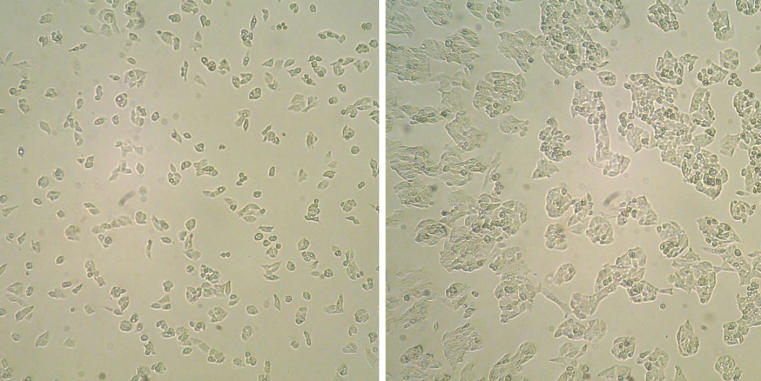
Dr. Katharina Achazi is a Group Leader at the Institute of Chemistry and Biochemistry , Freie Universität Berlin, specializing in Organic Chemistry . Her research focuses on cell-nanoparticle interactions using high-resolution microscopy and real-time live-cell imaging. Current affiliation: Freie Universität Berlin (Institute of Chemistry and Biochemistry, Department of Organic Chemistry) Contact: Altensteinstr. 23a, 14195 Berlin, Germany | katharina.achazi@fu-berlin.de Her work explores the biomedical potential of polyanionic nanoparticles, nanogels, and two-dimensional materials, particularly their anti-inflammatory, antiviral, and antibacterial applications. These studies leverage their high surface-area interactions with cellular and pathogenic systems. Key team members include postdoc Dr. Clemens Krage and doctoral students Seyma Adigüzel , Natalie Hanheiser , and Jingyi Tang . The group operates within the SupraFAB research building (BioSupraMol facility), utilizing advanced optical microscopy infrastructure.
Dominik Hujo is a researcher at the Chair of Automation and Information Systems at the Technical University of Munich (TUM). He holds a Master of Science degree and contributes to advanced research in industrial automation and AI integration. His research focuses on industrial cyber-physical systems , digital twins , human-machine interaction , and AI deployment in manufacturing environments . His work emphasizes real-time requirements, embedded systems, and data management for production processes. Dominik's publications from 2023-2025 demonstrate expertise in multi-agent coordination , predictive maintenance , edge-cloud architectures , and SysML modeling for mechatronic constraints . Key application areas include construction machinery, gear assembly, and logistics systems. He actively collaborates with researchers like Prof. Birgit Vogel-Heuser and Marius Krüger on projects such as KI.Fabrik (AI Factory) and OpAI4DNCS (Operator-AI Interaction for Distributed Control Systems).
Marc Heggen is a Researcher at the Physics of Nanoscale Systems (ER-C-1) within the Ernst Ruska Center for Electron Microscopy and Spectroscopy at Forschungszentrum Jülich. His work focuses on advanced characterization of nanomaterials for sustainable energy applications, utilizing cutting-edge electron microscopy techniques. His research specializes in nanocatalysts for green energy systems , with primary expertise in octahedral PtNi nanoparticles, in situ electron microscopy of catalyst nanoparticles, platinum-based alloys supported on hollow graphitic spheres, and quantitative STEM & EDX methodologies. His investigations target fundamental structure-property relationships in nanomaterials to enhance fuel cell efficiency and durability. The research contributes significantly to developing next-generation energy conversion technologies through atomic-scale material analysis. Marc operates within Forschungszentrum Jülich's world-class electron microscopy facilities, collaborating with interdisciplinary teams across the Nanomaterials for Green Energy initiative. His laboratory develops innovative methodologies for real-time observation of catalytic processes at the nanoscale, providing critical insights for designing high-performance energy materials.
Prof. Dr. Melanie Esselen is a Professor at the University of Münster, Germany, where she leads the Esselen research group focused on food chemistry and toxicology. Her work examines genotoxic plant substances, cell culture studies on toxicity and metabolism, and post-translational protein modifications by secondary plant compounds. She collaborates closely with Prof. Dr. Hans-Ulrich Humpf and other researchers in the field. Research Group Leader at University of Münster Active member of Food Chemistry Society (LChG) Member of German Society for Pharmacology and Toxicology (GT) Prof. Esselen's research interests center on the genotoxic and mutagenic effects of carcinogenic plant compounds, with particular focus on alkenylbenzenes like asarones and methyleugenol. Her group investigates how flavonoids influence cellular signaling cascades including the Nrf-2 pathway, apoptosis mechanisms, and DNA topology. A third research focus examines the cell toxicity of cyclopentenone prostaglandins. Her laboratory employs various test systems including the micronucleus test, comet assay, and HPRT test, along with advanced bioanalytical techniques such as ELISA, flow cytometry, Western blot, real-time PCR, and fluorescence microscopy. Analysis of Prof. Esselen's recent publications (2022-2025) reveals a strong research trajectory in food toxicology, with particular emphasis on plant-derived compounds, mycotoxins, and food additives. Her work spans multiple disciplines including analytical chemistry, molecular toxicology, and food safety assessment. A notable trend is the interdisciplinary nature of her research, bridging food chemistry with pharmacology and molecular biology to understand mechanisms of toxicity at the cellular level. 2017 Goldener Brendel – Chemistry Student Council of the University of Münster 2013 Kurt Täufel Prize for Young Scientists – Society of Food Chemistry (LChG) Prof. Esselen has supervised numerous doctoral students working on diverse topics including polyphenol metabolism, DNA damage response to plant compounds, and cellular mechanisms of food toxicants. Her research group actively collaborates with other institutions and receives funding for projects investigating food safety and toxicology. The lab maintains strong connections with professional societies including the Society for Environmental Mutation Research, German Chemical Society, and German Society for Pharmacology and Toxicology. The Esselen research group operates state-of-the-art facilities for cell culture studies, bioanalytical testing, and metabolic profiling. They maintain collaborations with other research groups both within the University of Münster and internationally, particularly in the areas of food toxicology and safety assessment.
Dr. Ir. Anh Vu Doan is a Lecturer at the Technical University of Munich (TUM) under the Chair of Integrated Systems and a Senior Project Leader at Infineon in Neubiberg, Germany. With a Belgian-Vietnamese background and prior residence in Japan, he has held academic roles including postdoctoral fellowships at Keio University and TUM, as well as teaching assistant and stand-in lecturer positions at Université libre de Bruxelles (ULB) and IÉSEG School of Management. Research Interests: Embedded systems design Combinatorial optimization Problem modeling and decision aiding Approximate computing and 3D-stacking memory Machine learning reliability and safety Network-on-Chip (NoC) optimization Recent Publications focus on neuromorphic systems, power optimization for multicore processors, adversarial attacks in ML, and multi-objective design strategies using genetic algorithms. His work bridges hardware-software co-design and sustainable mobility decision frameworks. Scientific Awards: Erasmus-Mundus Grant (EASED program) JST/CREST Research Program Education: MSc in Electrical Engineering (ULB, 2009) PhD in Engineering Sciences (ULB, 2015)
Prof. Dr. Selina Kathleen Jorch serves as a Professor in the Department of Anaesthesiology, Intensive Care and Pain Therapy at the University of Münster. She actively contributes to the Multiscale Imaging Centre as a member of its Management & Communication committee, driving collaborative research in advanced imaging technologies and inflammatory disease mechanisms. Her research program centers on immunological processes in sterile and infectious inflammation, with particular expertise in alarmin biology (S100A8/A9, MRP8/14), macrophage trafficking, and neutrophil extracellular traps. She pioneers intravital imaging approaches to visualize real-time immune dynamics in organ-specific contexts, investigating conditions ranging from sepsis and graft-versus-host disease to autoinflammatory disorders like Familial Mediterranean Fever. Her work bridges molecular mechanisms with translational applications, including peptide-based drug delivery systems for brain tumors. Analysis of her 15 most recent publications reveals consistent focus on Gasdermin-D-mediated alarmin secretion pathways (2022-2023), GATA6+ macrophage functions in bacterial dissemination and cardiac repair (2019), and chemokine axis regulation in inflammatory diseases (2024). The research demonstrates strong interdisciplinary integration of molecular immunology, advanced microscopy, and clinical pathophysiology with implications for novel therapeutic interventions. Prof. Jorch operates within the Multiscale Imaging Centre ecosystem, which provides cutting-edge microscopy resources and supports career development through Train Gain fellowships, travel awards, and graduate programs. The center facilitates collaborative projects across participating institutions while advancing women in science initiatives and hosting specialized seminars like the Inflammation & Imaging Lecture series.
Zhu Chen is a Researcher at RWTH Aachen University within the Faculty of Electrical Engineering and Information Technology, holding dual affiliations with the Chair of Imaging and Image Processing (led by Prof. Volkmar Schulz) and the Junior Professorship for Biomedical Image Processing (under Prof. Johannes Stegmaier). She operates from offices in ICT Cube 1 (Room 111) and ICT Cube 2 (Room 138), contributing to advanced research in medical and biological image analysis while holding an M.Sc. degree. Research Interests Chen's primary focus spans biomedical image processing, medical imaging, and computer vision with specialized applications in animal behavior tracking and embryonic development analysis. Her methodology integrates unsupervised learning for 3D temporal alignment of biological structures and foundation models for annotation streamlining, targeting efficiency improvements in developmental biology research through computational innovation. Publication Trends Analysis reveals a strategic pivot from energy management systems for hybrid transportation (2021-2022 publications on fuel cell trains/buses) to biomedical imaging (2023-2025). Current work emphasizes AI-driven solutions for biological image analysis, particularly in zebrafish embryo studies and automated animal tracking, demonstrating applied machine learning expertise across divergent scientific domains. Scientific Awards No documented scientific awards, fellowships, or honors were identified in available institutional records. Advising and Grants Public sources contain no verifiable information regarding student supervision, grant acquisitions, or funded research projects under Chen's direct leadership. Laboratory and Team Affiliations Chen actively collaborates within the Chair of Imaging and Image Processing's scientific team alongside researchers including Ankit Amrutkar and Henning Konermann. She utilizes specialized facilities such as optical systems research areas and MRI laboratories, contributing to the institute's mission in medical image processing and computational biology.
Prof. Dr. rer. nat. Sven Ingebrandt is Full Professor and Chair of Micro- and Nanosystems as well as Chair of Materials for Electrical Engineering I at RWTH Aachen University, Germany. He simultaneously directs the Institute of Materials for Electrical Engineering I (IWE-1) and holds a rectorate mandate for university co-operation with Japan. His affiliations further include the Profile Area Molecular Science & Engineering (MSE) steering committee. Research interests cover micro- and nanoelectronics, bioelectronics, neural interfaces, organic electrochemical transistors, 2-D materials, metal-organic frameworks, lab-on-a-chip systems, plasmonic biosensors and thermal characterisation of thin films. The group develops wearable textile sensors, high-density microelectrode arrays, impedance-based cellular assays, ion-selective organic sensors and point-of-care diagnostic platforms. Recent publications (2022-2025) emphasise multi-modal biosensors, graphene and MOF thin films, organic transistor arrays for neurotransmitter and ion monitoring, thermal metrology of conductive polymers, plasmonic enhancement for viral protein detection, and machine-learning assisted discovery of high-performance polymers. The work is highly interdisciplinary, merging microsystems engineering, surface chemistry, semiconductor nanotechnology and biomedical sciences.