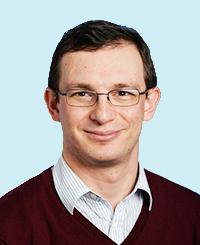
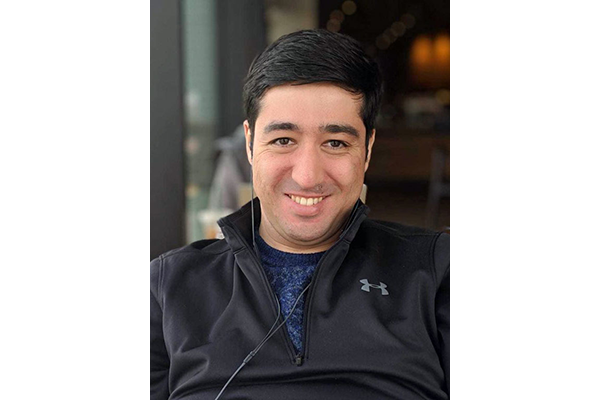
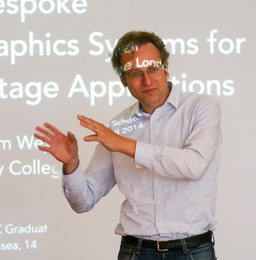
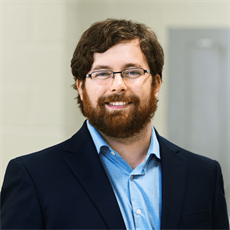
Onur Mutlu is a Professor of Computer Science at ETH Zurich, affiliated with the Department of Information Technology and Electrical Engineering. He also holds adjunct professorships at Carnegie Mellon University and Bilkent University. His research focuses on computer architecture, systems security, bioinformatics, and energy-efficient computing. He has pioneered work on memory-centric computing paradigms, RowHammer security vulnerabilities, and bio-inspired computing systems. He teaches courses such as Digital Design & Computer Architecture and supervises the SAFARI research group, which explores cutting-edge topics in memory systems, AI accelerators, and genomics. Recent activities include keynote talks at ISCA, HiPEAC, and IEEE conferences, emphasizing emerging hardware-software co-design principles. Key contributions include foundational work on memory reliability, cross-layer system design, and accelerating genomic data analysis. His research has been showcased in over 200 publications and industry collaborations with tech leaders like Intel, Huawei, and Micron.
Chris Bryan is an Assistant Professor in the School of Computing and Augmented Intelligence (SCAI) at Arizona State University (ASU), part of the Ira A. Fulton Schools of Engineering. He leads the Sonoran Visualization Laboratory (SVL @ ASU), focusing on data visualization, human-computer interaction, and advanced interfaces for data science. His research includes explainable AI, augmented/virtual reality, and privacy-preserving visualization techniques. Educations: Ph.D. Computer Science, University of California, Davis (2018) B.S. Computer Science, University of Arkansas (2008) Research Interests: Bryan’s work spans data visualization, human-computer interaction, explainable AI, and immersive visualization. He develops tools for collaborative analysis, privacy-aware systems, and visual analytics for complex data. Current projects involve VR/AR interfaces, bias reduction in NLP tasks, and educational visualization tools. Recent Achievements: Recipient of the 2024 and 2023 Top Five Percent Faculty Award at ASU’s Ira A. Fulton Schools of Engineering. NSF grants for privacy-preserving visualization (SaTC #2224066) and visualization education (IUSE #2216452). Multiple publications in top venues like IEEE VIS, CHI, and EuroVis, including work on differential privacy, mind wandering in visualization, and LLM prompt exploration. Advising & Grants: Advises Ph.D., MS, and undergraduate students on visualization and HCI research. Collaborates with institutions like Los Alamos National Laboratory, Phoenix Children’s Hospital, and Nankai University. Lab focuses on mentoring and preparing students for academic and industry roles in visualization and AI. Labs & Teams: Leads the SVL @ ASU, which uses advanced hardware (HTC Vive, HoloLens 2) and tools like D3.js, React, and LaTeX. The lab emphasizes interdisciplinary projects with domain experts in medicine, engineering, and security.
Alireza Ramezani is an Associate Professor of Electrical and Computer Engineering at Northeastern University, leading the SiliconSynapse Lab. He focuses on bio-inspired robotics, nonlinear systems, and robot locomotion, with a particular emphasis on morphological design and control inspired by biological systems. His work integrates control theory and experimental robotics to develop robots capable of navigating confined spaces, such as caves and ducts, using mechanisms derived from bat movements. Education : PhD, Mechanical Engineering, University of Michigan (2014) MS, Mechanical Engineering, ETH Zurich (2010) BSc, Mechanical Engineering, Iran University of Science and Technology (2007) Research Interests : Design of robots with non-traditional morphologies Nonlinear feedback control systems Legged and fluidic-based locomotion Bio-inspired robotics and biology-driven engineering Awards : 2024 ASME Rising Star Award 2024 NSF CAREER Award 2022 NASA Game Changing Program Award Science Magazine Top 5% Research Output (2020) Advising & Labs : Ramezani mentors students in projects like the NASA-funded “Crater Observing Bio-inspired Rolling Articulator” and oversees the SiliconSynapse Lab, which develops robots for space exploration and confined environments. Notable advisees include Henry Noyes, a NASA Space Technology Fellow. Labs/Teams : His lab collaborates with institutions like NASA’s Jet Propulsion Lab (JPL) on projects such as the Mars Multi-modal Morphing (M4) Rover and bio-inspired snake robots for lunar crater exploration.
Sageev Oore is an Associate Professor in the Faculty of Computer Science at Dalhousie University, a Research Faculty Member at the Vector Institute for Artificial Intelligence, and a Canada CIFAR AI Chair. He previously served as Associate Professor and Chairperson in the Department of Mathematics & Computer Science at Saint Mary’s University and spent 2016–2018 as a Visiting Research Scientist at Google Brain, working on the Magenta team. Faculty of Computer Science, Dalhousie University Vector Institute for Artificial Intelligence Google Brain (2016–2018) Saint Mary’s University (former) Sageev Oore's research centers on machine learning and deep learning, with a strong focus on creative applications in music, audio processing, and computational creativity. His work bridges the gap between technical innovation and artistic expression, developing systems that generate and interact with music using neural networks. He has made significant contributions to generative models for music, including the development of PerformanceRNN and other interactive systems. His recent publications highlight advancements in out-of-distribution detection (Gram-OOD), interactive music generation, and deep learning tools for creative domains. These works reflect a consistent trend toward building intelligent, user-centered systems that enhance human creativity through AI. Canada CIFAR AI Chair (2018) Best Paper Award, CVPR ISIC Workshop (2020) Outstanding Demonstration Award (Runner-up), NeurIPS (2020) Best Demonstration Award, AAAI (2017) Best Demonstration Award, NeurIPS (2016) Sageev Oore actively mentors graduate and undergraduate students, with well-funded research positions available for motivated candidates. His collaborations span academia and industry, including major projects with Google Brain and interdisciplinary work with artists. He leads research initiatives in AI-driven creativity and is deeply involved in the Canadian AI ecosystem through the Vector Institute and CIFAR. His work is supported by significant grants and affiliations, including the Canada CIFAR AI Chair program, which funds his research in foundational AI and its applications. He is also part of the Magenta project at Google, contributing to open-source tools for art and music generation. Sageev Oore leads a research group focused on deep learning for creative applications, with projects in music generation, audio synthesis, and human-AI interaction. His lab collaborates with musicians, artists, and healthcare researchers, fostering a transdisciplinary approach to AI innovation.
Vidar Hepsø is a Professor at the Department of Computer Technology and Informatics, Faculty of Information Technology and Electrical Engineering, Norwegian University of Science and Technology (NTNU). His work bridges anthropology of science and technology with practical challenges in digitalization, energy transition, and remote operations. Research focuses on digital infrastructures, socio-technical systems, and human factors in oil and gas industries Active in NTNU Applied Information Technology and NTNU Energy Transition Initiative Publications emphasize open-source ecosystems, autonomous systems, and environmental monitoring His scholarly output spans computer-supported collaborative work, IT infrastructure governance, and risk-informed anomaly detection in subsea systems. He leads projects connecting digital innovation with offshore wind and petroleum geoscience.
Tim Weyrich is Professor of Visual Computing (part-time) at University College London and Professor of Digital Reality at Friedrich-Alexander University Erlangen-Nürnberg. He leads the Digital Reality Lab and has affiliations with the Virtual Environments and Computer Graphics group at UCL, Eurographics, and the EPSRC Doctoral Training Centre (SEAHA). Previously, he held a Postdoctoral Teaching Fellowship at Princeton University. Research Interests: Content creation and computational photography Appearance modeling and fabrication Point-based graphics and cultural heritage analysis Digital humanities and 3D printing Article Trends: Recent work focuses on neural radiance fields (FruitNeRF++), 3D Gaussian splatting, mmWave radar inverse rendering, and texture anomaly detection. Applications span autonomous systems, cultural heritage, and medical imaging. Scientific Awards: Best Paper Honourable Mention (BMVC 2022) Best Student Paper Award (EG Workshop on GCH 2014) Honorable Mention (Eurographics 2011) Best Student Paper Honourable Mention (BMVC 2018) ACM SIGCHI Best Paper Honourable Mention (CHI 2013)
Emma Tegling is a Senior Lecturer (Associate Professor) at the Department of Automatic Control, Faculty of Engineering (LTH), Lund University, Sweden. She joined the department in January 2021 and holds a prestigious WASP (Wallenberg AI, Autonomous Systems and Software Program) professorship. Her research focuses on the analysis and control of large-scale networked systems, with applications in distributed electric power networks and socio-epidemiological networks. She is actively involved in multiple research projects, supervises several PhD students, and contributes to major academic events in control theory. Education: Ph.D. in Electrical Engineering, KTH Royal Institute of Technology (2019) M.Sc. in Engineering Physics, KTH Royal Institute of Technology (2013) B.Sc. in Engineering Physics, KTH Royal Institute of Technology (2011) Emma Tegling's research centers on the fundamental limitations of distributed control, particularly in large-scale and non-normal network systems. Her work addresses critical challenges in vehicular formations, power grids, and social networks. She develops scalable control designs, consensus protocols, and optimal control strategies for complex networked environments. Her recent publications highlight breakthroughs in string stability, transient performance, and distributed optimization. The trend in her articles shows a strong focus on mathematical control theory, network dynamics, and real-world applications in socio-technical systems. Scientific Awards: WASP professorship (Wallenberg AI, Autonomous Systems and Software Program) Emma Tegling leads and co-leads several significant research grants, including WASP NEST: Learning in Networks and Dynamics of Complex Socio-Technological Network Systems. She actively supervises PhD students such as Jonas Hansson and David Ohlin, whose work has led to novel consensus protocols and optimal control formulations. Her academic leadership extends to organizing the European Control Conference and co-organizing interdisciplinary workshops on power and democracy in modern societies. She is also involved in public engagement and academic service through supervision and project coordination. Emma Tegling is a key member of the Department of Automatic Control at Lund University, contributing to research teams focused on networked systems, control theory, and AI integration. She collaborates extensively within ELLIIT (the Linköping-Lund initiative on IT and mobile communication) and participates in cross-disciplinary labs working on AI, digitalization, and natural/artificial cognition. Her work is aligned with UN Sustainable Development Goals related to sustainable energy and resilient infrastructure.
Dr. Anna Baldycheva is a Senior Lecturer in Electronic Engineering at the University of Exeter, within the College of Engineering, Mathematics and Physical Sciences. She leads the interdisciplinary STEMM Laboratory, focusing on applied R&D in smart materials, photonics, AI, and IoT. With prior research experience at MIT, Trinity College Dublin, and Tyndall National Institute, she has established herself as an internationally recognized innovator and entrepreneur in emerging technologies. PhD in Electronic and Electrical Engineering, Trinity College Dublin (2008–2012) BSc (Hons) in Physics, St. Petersburg State University (2003–2008) Postgraduate Certificate in Academic Practice, University of Exeter (2016–2017) Postgraduate Certificate in Technology Management, Smurfit Business School (2009–2010) Her research spans Nano-Engineering, Opto-Electronics, Photonics, AI, and IoT , with a strong emphasis on real-world applications. She pioneers work in fluid opto-electronics , graphene nanocoatings , and AI-driven emotion recognition and early cancer detection . Her lab develops smart composite materials for flexible electronics, e-textiles, and structural applications, integrating machine learning into healthcare, education, and communications systems. The recent publications highlight a strong trend toward applied interdisciplinary innovation , combining materials science with AI and photonics for healthcare diagnostics, energy-efficient computing, and educational technology. Her work frequently bridges fundamental physics with commercialization potential, as seen in spin-out technologies like GSurf and the Electronic-Nose for lung cancer detection. Fellow, Royal Microscopical Society (RMS) Fellow, Higher Education Academy (FHEA) Expert, Future and Emerging Technologies, European Commission Featured in Forbes and Forbes Tech Council Editor-in-Chief, InSTEMM Journal Associate Editor, Nature Scientific Reports and Discover Nano Trustee, Royal Microscopical Society Founder, STEMM Global Scientific Society Founder, It’s Her! Women in STEMM Initiative Dr. Baldycheva actively supervises PhD students and has secured industrial collaborations with organizations such as Qinetiq and Lumentum. She leads multiple outreach initiatives, including STEMM Junior for underprivileged children, and serves on the committee for the Jocelyn Bell Brunel PhD Scholarship. She has raised significant research funding through national and international grants, though specific grant names are not listed. She leads the STEMM Laboratory , a multidisciplinary research group with divisions in Smart Composite Materials, Machine Learning & AI, and Opto-Electronics & Photonics. The lab emphasizes industry collaboration and technology transfer, having produced a university spin-out (GSurf) and multiple media-highlighted innovations.
Murali Mani is a Professor in the Department of Computer Science, Engineering, and Physics at the College of Innovation and Technology, University of Michigan-Flint. He is actively involved in teaching courses such as Database Design (CSC 384, CSC 584) and Independent Graduate Study in Computer Science (CSC 591), and serves as Principal Investigator on multiple research grants focused on computing education and data science. His research interests span database systems, data provenance, generative AI for data augmentation, computing education, and the societal impact of technology . He has developed educational tools including epidemiology calculators and market basket analysis modules to support interdisciplinary learning. His work emphasizes integrating computing skills across disciplines such as health sciences and management. The 15 most recent scholarly contributions reflect a strong focus on data management, AI-augmented data curation, educational technology, and the cognitive aspects of learning programming. These publications appear in venues such as VLDB, IEEE FIE, and ACM conferences, with several under review or in preparation for top-tier journals like Communications of the ACM and the VLDB Journal. Scientific Awards: No awards explicitly mentioned in the provided text. Advising and Grants: Murali Mani actively mentors students through independent graduate studies and collaborative research projects. He has secured funding from the National Science Foundation (SGER grant on provenance metadata) and internal university sources, including the CIT/CHS Joint Grant and the Office of Research at UM-Flint, supporting projects on civic literacy, computational skills integration, and AI for social science data archiving. Labs and Teams: While no formal lab name is mentioned, Murali Mani leads a research group focused on data systems and computing education, collaborating with colleagues across departments and institutions. He contributes to initiatives such as the Michigan Institute for Data & AI in Society (MIDAS) and the Academic Data Science Alliance (ADSA), and has presented at conferences including IASSIST, FIE, and ICCTAC.
Marcus Nohlberg is an Associate Professor in the Department of Information Technology at the University of Skövde, Sweden. His primary academic affiliation is with the School of Informatics where he serves as a course coordinator for multiple bachelor-level courses in information security. He maintains an active research profile with numerous publications in cybersecurity, particularly focusing on human aspects of security. His research interests center on cybersecurity training methods, social engineering, usable security, and information security management. Nohlberg has developed the Context-Based Micro-Training (CBMT) framework, which has become a significant contribution to security awareness training. His work frequently examines how cognitive factors impact security behaviors and how training can be designed to be more effective and accessible. His publication trends show a consistent focus on human-centered security approaches, with recent work expanding into automotive cybersecurity, digital inclusion for seniors, and relationship security aspects. His research demonstrates a strong interdisciplinary approach, bridging computer science with psychology, education, and organizational behavior. Nohlberg has received recognition through numerous publications in reputable journals and conferences including Information and Computer Security, Computers & Security, and various IFIP WG 11.12 symposiums. His work often appears in Human Aspects of Information Security and Assurance conferences. He has led several research projects including "Development of Decision Support for Users in Risky Online Situations" (2020-2022) and "Information Security Training with Context-Based Microtraining" (2019-2020), demonstrating his commitment to translating research into practical security solutions. His work frequently involves collaboration with Swedish municipalities, auto workshops, and other organizations to address real-world security challenges. Nohlberg maintains active engagement with the public through media appearances and popular science presentations at the University of Skövde, discussing topics like AI risks and opportunities, digital security in relationships, and BankID accessibility issues.
Dr. David R. Themens is an Associate Professor in Space Environment within the Space Environment and Radio Engineering (SERENE) group in the School of Engineering at the University of Birmingham. He specializes in modeling and mitigating the impacts of space weather on radio communications and navigation systems, with a particular focus on the ionosphere's effects on these technologies. Dr. Themens earned his academic credentials from Canadian institutions: BSc (Hons) in Physics from the University of New Brunswick (2011) MSc in Atmospheric and Oceanic Science from McGill University (2013) PhD in Physics from the University of New Brunswick (2018) His research primarily focuses on four interconnected areas: ionospheric modeling, ionospheric physics, measurement techniques, and radio propagation. Dr. Themens is particularly interested in the interaction between the ionosphere and the atmosphere, specifically how lower atmospheric forcing drives variability within the ionosphere and the interactions between the ionosphere and thermosphere. He is the principal developer of the Empirical Canadian High Arctic Ionospheric Model (E-CHAIM) , a high-latitude alternative to the International Reference Ionosphere (IRI) used for HF/UHF signal propagation modeling. His work includes exploring synergistic properties of different earth observation instruments, measurement technique development, data assimilation, and empirical modeling. Analysis of Dr. Themens' recent publication record reveals a strong emphasis on space weather phenomena, ionospheric modeling, and radio propagation. His work spans from fundamental ionospheric physics to practical applications in navigation and communication systems. Key themes include the development and validation of ionospheric models, analysis of space weather events (including the May 2024 geomagnetic superstorm), and the impact of solar phenomena on Earth's upper atmosphere. His research increasingly incorporates advanced data assimilation techniques and leverages multiple observational platforms including radar systems, GNSS networks, and satellite measurements. Dr. Themens holds significant leadership positions in the international space science community: Co-Chair of IAG-GGOS Joint Study Group on Understanding Ionospheric and Plasmaspheric Processes (2023-present) Chair of URSI Data Assimilation Working Group (2023-present) Co-Chair of IAGA Geospace Data Assimilation Working Group (2023-2027) URSI Commission G Early Career Representative (2023-2029) Chair of Canadian Association of Physicists Division of Atmospheric and Space Physics (2022-present) Dr. Themens actively mentors graduate students and is 'always looking for new Ph.D. students interested in the ionosphere, data assimilation, and radio propagation.' His research has been supported through contracts with Defence Research and Development Canada (DRDC) and various international collaborations. He leads the Canadian High Arctic Ionospheric Models (CHAIMs) project, which builds upon his doctoral work developing the E-CHAIM model. At the University of Birmingham, he teaches courses in Space System Engineering and Design, Space Mission Analysis and Design, and Space Environment.
Raju Vatsavai is an Associate Professor in the Department of Computer Science at North Carolina State University, affiliated with the Center for Geospatial Analytics. He joined NC State in 2014 as part of the Chancellor’s Faculty Excellence Program cluster hire in Geospatial Analytics. Education: PhD and MS in Computer Science from University of Minnesota Prior Roles: Lead Data Scientist at Oak Ridge National Lab, roles at University of Minnesota, IBM Research, AT&T Labs, and C-DAC (India) His research in geospatial analytics spans big data management , spatiotemporal data mining , deep learning for remote sensing , and high-performance computing , with applications in national security, climate change, and crop monitoring. Recent work includes deep learning frameworks for cloud imputation , multi-sensor satellite data harmonization , and transfer learning applications in crop classification . He has been a leading investigator on grants from the National Geospatial-Intelligence Agency, Department of Energy, and Department of Homeland Security. Labs: Associate Director of the Center for Geospatial Analytics Expertise: Spatial computing, Earth observation, nuclear proliferation detection via remote sensing
Annette R. Grilli is a Research Professor in the Department of Ocean Engineering at the University of Rhode Island , focusing on ocean renewable energy and coastal hazard assessment. Her work integrates numerical modeling and statistical analysis to study extreme events like tsunamis and storms. Ph.D. in Climatology, University of Delaware (2000) M.S. in Oceanography, University of Liege (1984) B.S. in Geography & Education, University of Liege (1983) Her research spans offshore wind farm siting optimization , tsunami propagation modeling , and coastal erosion dynamics . Recent publications highlight applications of phase-resolving wave models and machine learning to coastal resilience and marine renewable energy systems. Grants include collaborations with NOAA , Department of Energy , and NSF , focusing on coastal hazard visualization , tsunami detection algorithms , and design elevation mapping under climate change scenarios. She contributes to digitalCommons@URI with over 100 publications in Ocean Engineering and Civil Engineering domains.
Lorin D. Warnick is currently serving as the Austin O. Hooey Dean of Veterinary Medicine at Cornell University College of Veterinary Medicine. He is a tenured Professor in the Department of Population Medicine and Diagnostic Sciences, where his research focuses on the epidemiology of Salmonella infections and antimicrobial resistance in enteric bacteria affecting both domestic animals and humans. A key contributor to Cornell's response to the COVID-19 pandemic, he has led research on SARS-CoV-2 diagnostic testing and campus outbreak dynamics. Education : B.S. in Microbiology (1984) from Brigham Young University DVM (1988) from Colorado State University Ph.D. in Veterinary Medicine (Epidemiology) and Statistics from Cornell University (1994) Professional Experience : Assistant Professor (1994-1996) at Virginia-Maryland Regional College of Veterinary Medicine Assistant/Associate Professor (1996-2008) and Professor (2008-present) at Cornell University Section Chief in Ambulatory and Production Medicine (1997-1999) Research Interests span veterinary epidemiology, antimicrobial resistance, foodborne pathogens, and public health. His work connects animal and human health through One Health frameworks, particularly in Salmonella transmission dynamics between dairy cattle and humans. He has pioneered surveillance systems for infectious diseases, including the model used during Cornell's COVID-19 response. Scientific Awards include: Phi Zeta Veterinary Honor Society (1987) Phi Kappa Phi Honor Society (1988) Honorary Diploma from American Veterinary Epidemiology Society (2018) One Cornell Award for Leadership in Pandemic Testing (2021) Advising and Grants highlight his role in mentoring students and leading interdisciplinary research teams. His grants focus on antimicrobial resistance mitigation, dairy calf health, and pandemic response infrastructure. He has collaborated extensively with institutions like USDA and CDC on foodborne disease research. Labs and Collaborations include leadership in Cornell's Veterinary Diagnostic Laboratories and contributions to the American College of Veterinary Preventive Medicine. His work integrates epidemiological modeling, microbiome analysis, and policy development for sustainable agricultural practices.
Istvan David is an Assistant Professor in the Department of Computing and Software at McMaster University , with research expertise spanning Digital Twins , Model-Driven Engineering , and Sustainability . His work bridges theoretical and applied domains, focusing on smart ecosystems , collaborative modeling , and AI-driven simulation . Key contributions include frameworks for digital twin evolution and interoperability in sustainable systems. Education : BSc, MSc, and PhD in Computer Engineering and Computer Science from Budapest University of Technology and Economics, and University of Antwerp. Research Areas : Digital Twins, Model-Driven Engineering, Reinforcement Learning, Smart Ecosystems, Sustainability, Collaborative Modeling, Cyber-Biophysical Systems, and Software Architecture. Recent Article Trends emphasize AI integration with digital twins, collaborative modeling in industrial contexts, and sustainable systems engineering . His work often combines machine learning with formal modeling to address challenges in technical sustainability and smart agriculture .