Anton Akusok is a Part-time Lecturer in the Big Data Analytics Master's program at Arcada University of Applied Sciences. He holds a BSc in IT from Moscow (2011), MSc in ML and Data from Aalto University (2014), and a DSc in ML from the University of Iowa, USA (2016). His research focuses on Extreme Learning Machines (ELM), hardware acceleration for ML on mobile devices, and real-time geospatial predictions. He has developed libraries like HPELM and Scikit-ELM, and created the HaSuRiski app for acid sulfate soil prediction in Finland. Research Interests: ELM applications in environmental modeling, federated learning security, mobile edge computing, and geospatial visualization. Key projects include real-time mapping apps with iOS integration and open-source ML tools. Publications (2021-2024) highlight work on federated learning privacy, acid sulfate soil detection, signature verification, and distributed ELM algorithms.
Pietro Manzoni is a Professor of Computer Engineering at the Polytechnic University of Valencia (UPV), Spain. He holds a Master's from the University of Milan (1989) and a Ph.D. from Politecnico di Milano (1995). His research focuses on IoT, edge computing, and wireless networks, with emphasis on TinyML, LPWAN, and edge-cloud systems. He coordinates the Computer Networks Research Group (GRC) and is active in IEEE committees. Education includes a Master's in Computer Science (Università degli Studi di Milano, 1989) and a Ph.D. in Computer Science (Politecnico di Milano, 1995). He interned at Bellcore Labs (USA, 1992–1993) and ICSI (USA, 1994). Research interests span IoT applications, resource-constrained devices, and distributed systems. His work prioritizes empirical validation through prototypes. Teaching includes courses on Networks and Security, Intelligent IoT Systems, and IoT fundamentals in Spanish programs. Publications emphasize IoT protocols, UAV swarms, and TinyML. No scientific awards listed, but over 130 theses advised. Coordinates GRC projects and contributes to editorial boards and conferences.
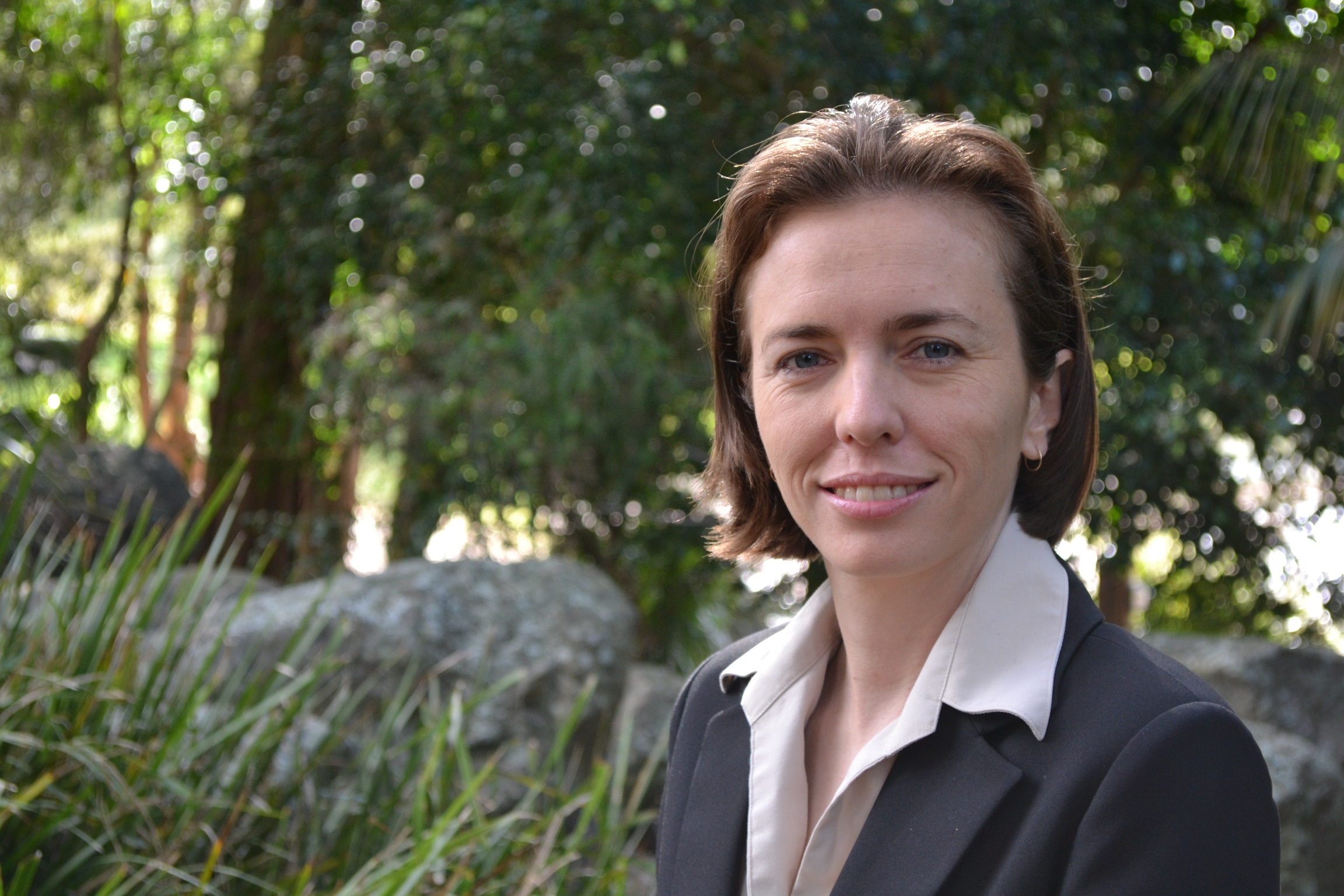
Montserrat Ros is an Associate Professor and Associate Dean (Education) at the School of Electrical, Computer and Telecommunications Engineering within the Faculty of Engineering and Information Sciences at the University of Wollongong, Australia. She has been with the university since 2006, initially joining as a Lecturer in Computer Engineering and progressing to her current senior academic and leadership roles. Her educational background includes: B.E.(Hons1)/B.Sc. double degree majoring in Computer Systems Engineering and Mathematics from the University of Queensland (2000) Ph.D. degree in Computer Engineering from the University of Queensland (2007) Professor Ros's research focuses on the intersection of embedded computing systems and practical engineering applications. Her work spans several key areas including embedded systems design, sensor network data fusion, cyber-physical systems development, and innovative approaches to engineering education. She has particular expertise in sensor-based localization techniques, computer architecture optimization, and code compression methodologies for resource-constrained environments. More recently, her research has expanded into machine learning applications for constrained systems and Internet of Things implementations. Analysis of her recent publication record reveals a strong emphasis on Internet of Things networks, UAV-based systems, and applications of artificial intelligence in both engineering education and manufacturing processes. Her work demonstrates a consistent pattern of bridging theoretical computer engineering concepts with practical real-world applications across diverse domains including healthcare, environmental monitoring, and industrial automation. Her significant contributions to academia have been recognized through numerous prestigious awards: 2019: AAUT Citation for Outstanding Contribution to Student Learning 2018: IEEE TALE 2018 Meritorious Service Award 2018: Featured in UOW Leadership in Education Booklet 2017: UOW Vice Chancellor's Award for Outstanding Contribution to Teaching and Learning 2016: UOW Women of Impact for inspiring young women in STEM 2015: UOW Vice Chancellor's Interdisciplinary Research Excellence Award 2012 & 2007: UOW Vice Chancellor's Awards for Teaching Excellence 2011: UOW Vice Chancellor's Award for Community Engagement Senior Fellow of WATTLE (Wollongong Academy for Tertiary Teaching & Learning Excellence) Professor Ros has secured substantial research funding across multiple projects spanning from 2006 to the present. Her grant portfolio demonstrates a consistent focus on engineering education innovation, sensor network development, and practical applications of embedded systems. Notable projects include "The AI Tutor: Enabling 24x7 student support across engineering" (2024), "AI/IoT-powered Airborne System for Monitoring Water Level and Tidal Floods" (2023), and "Smart Eye: Airborne and AI-Driven Assessment Solution of Sugarcane" (2022). She actively supervises HDR students and has completed multiple successful candidatures. Her leadership extends beyond research and teaching, as evidenced by her role as Associate Dean (Education) for the Faculty of Engineering and Information Sciences. She is also actively involved in community engagement through volunteering with the State Emergency Service (Wollongong SES) and Athletics Wollongong Club.
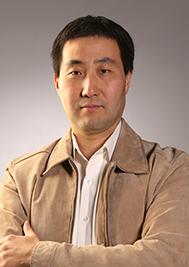
Yue Hu is an Assistant Professor at the University of Waterloo, affiliated with the Faculty of Engineering. His research focuses on Human-Robot Interaction (HRI), assistive robotics, and control systems with a particular emphasis on safety, adaptability, and user experience. Key areas include robot emotional expressions, physical interaction safety, and real-time systems for social robots. He leads the Active and Interactive Robotics Lab , developing solutions for mobility assistance, teleoperation systems, and cybersecurity in robotics. His work integrates biomechanical modeling, computer vision, and machine learning to create robots that better understand and adapt to human needs. Notable projects include real-time pose estimation for mobility support, encrypted network traffic analysis for robot security, and personality shaping in social robots. He emphasizes ethical design and human factors in robotics, conducting studies on refugee education and unanticipated robot actions. Yue Hu holds a full-time faculty position and collaborates with industry and academic partners to advance assistive technologies and interactive systems. His research bridges theoretical foundations with practical applications, aiming to improve quality of life through innovative robotic solutions.
Antoine Miech is a Researcher at DeepMind's Vision Group , with prior affiliations at Inria and Ecole Normale Supérieure where he completed his computer vision Ph.D. under Ivan Laptev and Josef Sivic . He has collaborated with researchers from Facebook AI and Google during his academic career. Research Interests span video understanding, weakly-supervised machine learning, and multimodal analysis. His work focuses on: Text-video embedding Self-supervised video representation Action localization Anticipatory video modeling Scalable multimodal learning Scientific Contributions include: HowTo100M - A massive dataset of narrated instructional videos MIL-NCE - A novel loss function for video-text alignment MEE - A model for handling heterogeneous data Context Gating - Learnable pooling architecture Awards & Recognition : Google Ph.D. Fellowship (2018) Technical Leadership : Created the LOUPE TensorFlow toolbox for feature pooling and maintained annotated video dataset catalogs. Organized the Data Science Game competition (2016-2017).
Paul Siebert is a Reader in Computing Science at the University of Glasgow, specializing in computer vision and robotics. He leads the Computer Vision and Graphics research group and teaches Digital Image Processing and Computer Systems. His research focuses on 3D vision systems, biologically inspired vision, and cognitive robot vision, with applications in clinical and media domains. He has pioneered commercial 3D surface scanning technology and collaborated with clinical groups such as Glasgow Dental School. Affiliations: University of Glasgow (Computing Science Department) Roles: Reader, Group Leader (Computer Vision and Graphics) Research interests include active binocular robot vision, 2D/3D sensing, and visual perception for robotics. Notable projects include work on driver attention monitoring, virtual character creation, and clinical anatomical imaging. Siebert previously directed the 3D-MATIC Faraday Partnership and served as Chief Executive of the Turing Institute, developing commercial vision systems. Publications span over 140 works, emphasizing applications like rain removal algorithms, continual learning in robotics, and foveated imaging. His work integrates deep learning, biological vision models, and real-world robotics challenges. Awards and recognitions are not explicitly listed, but his contributions to 3D vision commercialization and robotics research highlight significant impact in the field.
Dr. Jordan Shropshire is the Lawrence Minto Sylvestre Endowed Chair in Computing and a Professor in the Information Systems and Technology Department at the University of South Alabama's School of Computing. His academic journey includes a Ph.D. in Management Information Systems from Mississippi State University (2008) and a B.S. in Business Administration from the University of Florida (2004). Dr. Shropshire's research focuses on cybersecurity, data center management, cloud computing, IoT ecosystems, and systems architecture. His work addresses critical challenges such as post-quantum cryptography, embedded system vulnerabilities, and compliance frameworks for autonomous systems. He has also contributed to studies on developer platform risks, real-time operating system security, and AI-driven systems hardening. Education: Ph.D. – Management Information Systems, Mississippi State University, 2008 B.S. – Business Administration, University of Florida, 2004 His teaching career spans roles at the University of South Alabama (2008–present) and Georgia Southern University, where he held tenure (2008–2014). His publications emphasize practical cybersecurity solutions, including tools for drone compliance and frameworks for secure cloud infrastructure. He has also explored behavioral aspects of security policy adherence and IT professional retention. Dr. Shropshire's work often bridges theoretical research and real-world implementation, with a focus on mitigating emerging threats in cloud systems, IoT, and embedded devices. His research has been supported by grants such as the NSF TWC Small Grant for hypervisor security detection techniques.
Dr. David Laverty is a Reader at Queen’s University Belfast in the School of Electronics, Electrical Engineering and Computer Science. His research focuses on Smart Grids, Cyber Security of Critical Infrastructure, and Power System Instrumentation. He is the founder of the OpenPMU project, an open-source Phasor Measurement Unit, and has contributed to advancements in precision time transfer and software-defined networking in power systems. Dr. Laverty has secured over £3M in research funding and holds an h-index of 22 with over 100 publications. He actively supervises PhD students in areas such as smart grid telecommunications, distributed energy resources, and secure information systems. His work aligns with UN Sustainable Development Goals, particularly in clean energy and infrastructure. Awards include the 2017 Premium Award for Best Paper in IET Generation, Transmission & Distribution and the 2022 BEST PAPER AWARD. His research projects, such as the Fusion/Electricity Exchange DAC, address challenges in smart grid infrastructure and cyber-physical systems. Dr. Laverty also engages in public outreach through initiatives like the Electric DeLorean project.
Matthias Mnich is a Professor and Head of the Institute for Algorithms and Complexity at Hamburg University of Technology (TUHH), within the School of Electrical Engineering, Computer Science and Mathematics. He also serves as Deputy Dean International, reflecting his leadership in academic administration and international collaboration. He is a principal investigator at the Helmholtz Graduate School for the Structure of Matter, further emphasizing his interdisciplinary impact. His research lies at the intersection of theoretical computer science and practical algorithm design, focusing on parameterized algorithms , approximation algorithms , combinatorial optimization , scheduling , and algorithmic game theory . His work often bridges theoretical guarantees with real-world applications in energy systems, quantum computing, and logistics. The recent publications (2023–2025) highlight his sustained excellence in top-tier venues such as FOCS, ICALP, ESA, STACS, and journals like Mathematical Programming and ACM Transactions on Algorithms . These works explore foundational problems in vector bin packing , integer programming , graph algorithms , and kernelization , while also applying algorithmic techniques to microgrid energy optimization and quantum algorithm engineering . He is deeply embedded in the theoretical computer science community, having served on program committees of major conferences including: STACS 2023 ESA 2024 FOCS 2023 ICALP 2024 IJCAI 2019–2025 AAAI 2018 SWAT 2018 He has successfully supervised several PhD students to completion, including Matthias Kaul , Roland Vincze , and Alexander Göke , many of whom have taken postdoctoral positions at institutions like the University of Bonn and University of Augsburg. His current research projects include PATTERN (2025–2031) , Hamburg Quantum Computing (2024–2029) , and Kernelization for Big Data , indicating long-term funding and strategic research directions. He leads the Institute for Algorithms and Complexity (E-11) , fostering a research environment focused on high-impact algorithmic research.
Christian Haubelt is a Professor at the Institute of Computer and Network Engineering, School of Engineering, University of Rostock, Germany. He is actively engaged in research and teaching in the areas of embedded and cyber-physical systems, smart implants, and IoT. His work is supported by multiple national and international projects including ELAINE (SFB 1270), SmILE (EU), 6G-Health (BMBF), and GenerIoT (BMBF). His research interests include: Embedded and Cyber-Physical Systems Smart Sensors and Smart Implants System-Level Design Methodologies SystemC-based Modeling and Verification Design Space Exploration and Multi-Objective Optimization Industrial Internet of Things and 6G for Healthcare His recent publications focus on real-time communication protocols, 5G/6G localization, smart implants, and secure IoT systems. Trends show a strong emphasis on integrating embedded systems with medical and industrial applications, particularly leveraging TSN, MQTT-SN, and OPC UA for reliable and secure communication. His work bridges theoretical modeling with practical implementation in safety-critical domains. Christian Haubelt has supervised multiple researchers including Michael Nast, Benjamin Rother, Nico Kalis, and Nico Graumüller. He leads several funded research projects such as ELAINE, SmILE, 6G-Health, and SUSTAIN, which focus on smart implants, secure IoT, and next-generation medical systems. These projects involve collaboration with DFG, EU, and BMBF. He is involved in the following research labs and teams: Embedded Systems and Cyber-Physical Systems Group Smart Implants Research Team (SmILE, ELAINE) 6G-Health Localization Team Industrial IoT Security (SUSTAIN, CargoAssist)
Dr. Liang (Leon) Dong is an Associate Professor in the Department of Electrical and Computer Engineering at Baylor University, where he conducts research and teaches in the areas of signal processing, wireless communications, and artificial intelligence. He leads the Laboratory of Signal Processing, Communications, and Artificial Intelligence, fostering innovation in next-generation communication systems, IoT, and AI-driven applications. PhD, Electrical & Computer Engineering, The University of Texas at Austin (2002) MS, Electrical & Computer Engineering, The University of Texas at Austin (1998) BS, Applied Physics with Minor in Computer Engineering, Shanghai Jiao Tong University (1996) Dr. Dong's research focuses on advancing digital signal processing and wireless communications, with strong emphasis on artificial intelligence applications. His work spans NextG wireless systems , IoT and smart cities , cyber-physical system security , and AI in healthcare and industrial automation . He applies deep learning to domains such as autonomous driving and drug discovery, and investigates energy-efficient, secure, and reliable communication protocols. The recent publications highlight a strong trend toward integrating AI into traditional signal processing and communications. Topics include mRNA vaccine stability prediction , smart city infrastructures , secure cyber-physical systems , and deep learning for biomedical and industrial applications . His work bridges theoretical innovation with real-world impact in defense, transportation, and public health. Dr. Dong has earned recognition as a Senior Member of IEEE and a Member of the American Physical Society. He has also served as Faculty Advisor for Baylor University's InterVarsity chapter. Senior Member, Institute of Electrical and Electronics Engineers (IEEE) Member, American Physical Society (APS) He has successfully advised numerous graduate and undergraduate students, many of whom now hold academic and industry positions at institutions like Stanford, Intel, NASA, L3Harris, and Cummins. His research is generously supported by Baylor's VP for Research, the National Science Foundation, NASA, the Department of Defense (TARDEC), the Michigan Department of Transportation, and industry leaders including Intel, L3Harris, ExxonMobil, and Denso. He actively mentors students through research assistantships and senior design projects. Dr. Dong leads the Laboratory of Signal Processing, Communications, and Artificial Intelligence, which provides a collaborative environment for advancing research in signal processing, communications, and AI. The lab supports graduate and post-doctoral researchers and offers opportunities for undergraduate involvement in AI programming, circuit design, and embedded systems.
Włodzimierz Kasprzak is a Professor at the Institute of Control and Computation Engineering, Faculty of Electronics and Information Technology, Warsaw University of Technology. His research focuses on computer vision, robotics, human-computer interaction, and machine learning. He has contributed to advancements in human action classification, skeleton-based feature analysis, and multimodal interface design. Research Highlights: Development of lightweight classification models for human actions in video using skeleton-based features. Advances in multi-stream fusion techniques for image and video analysis. Design of embodied agent systems for cybersecurity event visualization and control. Awards and Recognition: 2024: Individual First Class Rector's Award for Scientific Achievements (2022-2023) 2021: Medal of the Commission of National Education 2011: Golden Cross of Merit His work integrates theoretical contributions with practical applications in robotics, surveillance systems, and human-centered technologies.
Hongxin Hu is a Professor and Associate Chair in the Department of Computer Science and Engineering at the University at Buffalo, State University of New York (SUNY). His research spans security, networking, and machine learning, with publications across top conferences including security (S&P, CCS, USENIX Security, and NDSS), networking (SIGCOMM and NSDI), machine learning (NeurIPS, ICML, and EMNLP), and human-computer interaction (CHI and CSCW). His work has been funded by NSF (SaTC, CNS, IIS, OAC, SOC), USDOT, VMware, Amazon, Google, and Dell. Dr. Hu earned his PhD in Computer Science and Engineering from Arizona State University in 2012. His academic journey has led him to become a prominent researcher in cybersecurity with a strong publication record and significant research impact. Dr. Hu's research interests encompass a wide range of topics at the intersection of security, networking, and artificial intelligence. His work focuses on Emerging Network Technologies and Security (5G/Future-G, NFV, SDN, Edge computing), Machine Learning for Security and Privacy , Security and Privacy in IoT and Cyber-Physical Systems , and AI for Social Good (addressing online abuse, unsafe children's games, and cyberbullying). His interdisciplinary approach has enabled him to tackle complex security challenges through innovative solutions that combine networking expertise with machine learning techniques. His recent publications demonstrate a strong trend toward applying large language models and advanced machine learning techniques to security challenges, particularly in content moderation, vulnerability detection, and privacy protection. The research spans multiple domains including voice assistant security, IoT security, network security, and social media safety, showing a consistent pattern of addressing real-world security problems with cutting-edge technical approaches. IEEE Big Data Security Senior Research Award (2025) ACM SACMAT Test-of-Time Award (2024) NSF CAREER Award (2019) Multiple Best Paper Awards from ACM ASIACCS (2022), ACSAC (2020), IEEE ICC (2020), and ACM SIGCSE (2018) Amazon Faculty Research Award (2022) First Place Award in ACM SIGCOMM 2018 Student Research Competition Dr. Hu has successfully advised multiple PhD students, including Nishant Vishwamitra who joined UT San Antonio as a tenure-track Assistant Professor. His research has been generously funded by major agencies and industry partners. As an active member of the academic community, he serves as Associate Editor for IEEE Transactions on Dependable and Secure Computing and Computers & Security, and has held numerous leadership roles in major security conferences including TPC Co-Chair for ASONAM 2025 and IWSPA 2024/2025. Dr. Hu leads a vibrant research group that has produced significant contributions in network security function virtualization, intrusion detection systems, and privacy-preserving technologies. Current projects include developing LLM-assisted vulnerability detection systems, defenses against jailbreak attacks on large language models, and security mechanisms for emerging networking technologies. His team's work on IoT security, voice assistant applications, and online content moderation has received wide recognition and press coverage.
Tamer Ölmez is a Professor in the Department of Electronics and Communication Engineering at Istanbul Technical University (ITU), College of Engineering, where he conducts cutting-edge research in biomedical signal processing, brain-computer interfaces (BCI), and deep learning applications in medical systems. His work bridges engineering and neuroscience, with a strong focus on EEG-based motor imagery classification, medical image analysis, and embedded deep learning systems. His research interests include motor imagery EEG signal processing , brain-computer interfaces , feature extraction , deep neural networks , classification algorithms , and medical image analysis . He applies machine learning and signal processing techniques to improve diagnostic accuracy and system performance in neuroengineering and healthcare technologies. The recent publications highlight a consistent trend in leveraging divergence-based deep neural networks , convolutional neural networks , and small-sized models for efficient and accurate classification in BCI and medical imaging. His work emphasizes performance improvement with reduced channel counts, noise elimination, and real-time applicability in embedded systems. Scientific Awards: Excellent Oral Presentation Certificate, June 1, 2015 Advising and Grants: He is actively supervising 26 theses in progress, indicating a strong mentoring role. He has led multiple funded research projects, including those funded by ITU’s Technology Transfer Office (TTO) and Scientific Research Projects (BAP), such as 'Classification of Medical Images with Deep Learning Method in Embedded Systems' and 'New Approaches to Finding Optimal Protein Folding'. Labs and Research Teams: While specific lab names are not mentioned, his collaborative fingerprint and project leadership suggest he leads or is a key member of a research group focused on biomedical signal processing, neural networks, and intelligent systems at ITU.
Antonio Maria Gonzalez Colas is a Full Professor at the Universitat Politècnica de Catalunya (UPC), affiliated with the Department of Computer Architecture within the Faculty of Computer Science of Barcelona (FIB). He leads the ARCO research group focused on Microarchitecture and Compilers and is actively engaged in high-impact research in computer architecture, GPUs, and energy-efficient computing. His collaborations extend to the Barcelona Supercomputing Center and various national and European research initiatives. Research Interests: His primary research areas include computer architecture, microarchitecture, compilers, GPUs, and processor design. He focuses on energy-efficient computing, deep neural network (DNN) accelerators, GPU simulation and optimization, memory systems, and architectural support for machine learning and autonomous systems. His work often integrates compiler techniques with hardware design for performance and efficiency. Scientific Production Trends: His recent publications demonstrate a strong focus on energy-efficient hardware for AI workloads, particularly DNN and speech recognition acceleration, GPU architectural innovations, memory optimization, and real-time rendering. He frequently publishes in top-tier venues such as ISCA, MICRO, HPCA, and IEEE/ACM journals. ICREA Academia Award 2024 HiPEAC 2024 Paper Award ACM Senior Member (2020) Advising and Grants: He has advised numerous PhD students whose theses cover topics like energy-efficient architectures for autonomous driving, speech recognition, and neural networks. He leads competitive R&D projects, including an ERC Advanced Grant and projects funded by the Spanish National Program and the ICREA Academia program, focusing on domain-specific architectures and cognitive computing units. Labs and Teams: He is the principal investigator of the ARCO (Microarchitecture and Compilers) research group at UPC, a leading team in computer architecture research in Spain. The group is part of a larger collaborative network within UPC and with international partners.