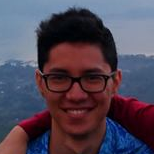
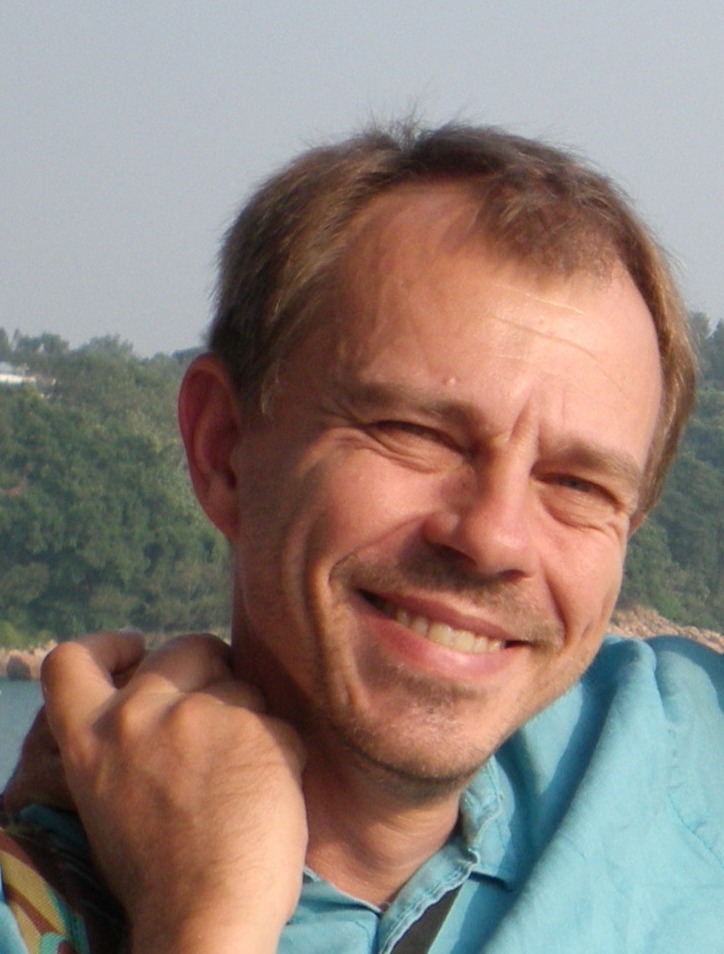
Antoine Miech is a Researcher at DeepMind's Vision Group , with prior affiliations at Inria and Ecole Normale Supérieure where he completed his computer vision Ph.D. under Ivan Laptev and Josef Sivic . He has collaborated with researchers from Facebook AI and Google during his academic career. Research Interests span video understanding, weakly-supervised machine learning, and multimodal analysis. His work focuses on: Text-video embedding Self-supervised video representation Action localization Anticipatory video modeling Scalable multimodal learning Scientific Contributions include: HowTo100M - A massive dataset of narrated instructional videos MIL-NCE - A novel loss function for video-text alignment MEE - A model for handling heterogeneous data Context Gating - Learnable pooling architecture Awards & Recognition : Google Ph.D. Fellowship (2018) Technical Leadership : Created the LOUPE TensorFlow toolbox for feature pooling and maintained annotated video dataset catalogs. Organized the Data Science Game competition (2016-2017).
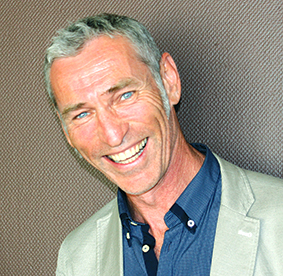
Noel Crespi is a Professor and Director of Studies at Telecom SudParis, part of Institut Polytechnique de Paris. He leads research in the NeSS group and is affiliated with SAMOVAR, a prominent research laboratory focusing on networks, systems, and services. His work spans multiple domains in telecommunications, networking, and smart systems. His primary research interests include digital twins for smart cities, blockchain technologies, Internet of Things (IoT) security and applications, 5G/6G networking, and machine learning applications in network management. He has published extensively on these topics, with over 100 publications in top-tier journals and conferences. His recent work shows a strong focus on digital twin applications for urban management, particularly in traffic and air quality monitoring. He has developed modular frameworks for smart city digital twins that integrate real-time data from multiple sources. His research also explores blockchain applications for network security, access control, and service provisioning in next-generation cellular networks. Dr. Crespi has received significant recognition for his work on digital twins, with his 2020 paper "Digital twin in the IoT context" in Proceedings of the IEEE being highly cited. His current research explores the integration of AI with digital twin technologies for sustainable urban development. He has supervised numerous PhD students and collaborates extensively with researchers across Europe and internationally. His work often involves interdisciplinary approaches, bringing together computer science, networking, urban planning, and environmental science. Dr. Crespi has been instrumental in developing frameworks for network digital twins, with applications in traffic management, air quality monitoring, and resource allocation in smart cities. His research demonstrates practical implementations in cities like Madrid, showing measurable improvements in urban management.
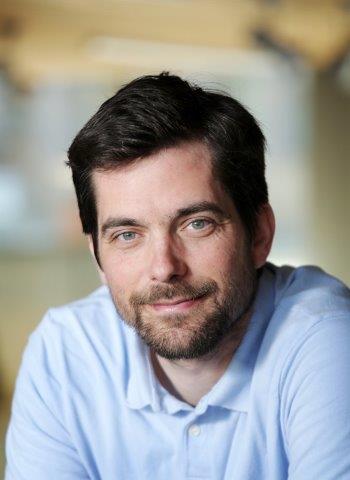
Xavier Décoret is a researcher at INRIA since October 2003, specializing in computer graphics with core expertise in real-time rendering, visibility algorithms, and level-of-detail techniques. He teaches courses at Grenoble (Master IVR program) and École Polytechnique, including Java programming, virtual image creation, and advanced image synthesis. His educational background includes: PhD in Computer Graphics under François Sillion Post-doctoral position at MIT under Frédo Durand Décoret's research spans non-photorealistic rendering, shadow computation, and GPU-accelerated algorithms. He develops practical graphics tools including XdkWRL (VRML parsing), Argstream (command-line arguments), and XdkBibTeX (BibTeX handling), emphasizing real-world implementation for interactive systems. His 2008 publications reveal trends toward efficient interactive rendering techniques, with contributions in dynamic stylization, label placement, soft shadows, and GPU voxelization—highlighting innovations in plausible visual effects for real-time applications. He is affiliated with the Artis research team at INRIA, focusing on virtual reality and computer graphics advancements.
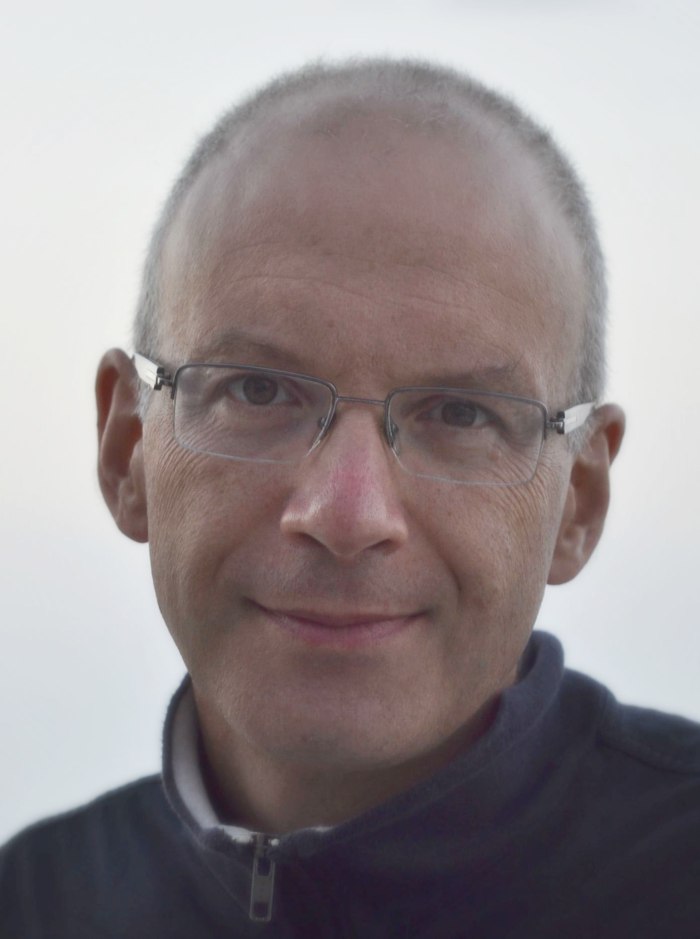
El Mustapha Mouaddib is a Professor in the Perception and Robotics department at Universite de Picardie Jules Verne, affiliated with Laboratory Heudiasyc (UMR CNRS 7253). His research bridges advanced robotics with cultural heritage preservation, focusing on developing novel computer vision techniques for complex documentation challenges. His primary research interests include omnidirectional vision systems , hyperspectral imaging , and 3D reconstruction methodologies , with significant emphasis on applications for cultural heritage documentation. Mouaddib's work particularly addresses challenges in temporal illumination compensation , laser scanning registration , and multi-scale digitization of historical structures, as evidenced by his extensive Notre-Dame de Paris cathedral research. Analysis of his 15 most recent publications reveals a consistent trajectory toward heritage robotics - developing specialized computer vision algorithms for cultural preservation. His work demonstrates increasing sophistication in integrating multi-modal sensor data (TLS, hyperspectral, RGB-D) solving illumination challenges in historical documentation developing adaptive robotic systems for complex environments Notably, his Notre-Dame research forms a cohesive body of work examining structural changes through advanced 3D analysis. Mouaddib actively participates in major interdisciplinary projects including SAMURAI , ASSIDUITAS , SCANBOT , ADAPT , and SUMUM , which focus on heritage digitization and robotic exploration. His collaborative approach is evident through extensive co-authorship with institutions like CNRS and international partners in Japan and Italy. His laboratory work centers on the E-Cathedrale initiative, creating comprehensive digital twins of Gothic cathedrals through multi-temporal and multi-scale documentation. This involves developing specialized hardware (like the HDROmni camera system) alongside novel algorithms for processing challenging heritage environments.
Alexandre BENOIT is a Professor at Polytech Annecy-Chambéry, Université Savoie Mont-Blanc, and a permanent member of the LISTIC laboratory. His research focuses on deep learning, federated learning, computer vision, remote sensing, and explainable AI, with applications in astrophysics, environmental monitoring, and healthcare. He leads projects on glacier modeling, federated learning bias mitigation, and satellite image analysis. His teaching activities include courses on deep learning (TensorFlow/PyTorch), image processing (Matlab/OpenCV), and programming (C/C++/Python) at undergraduate and graduate levels. He has supervised over 10 PhD students and collaborates with industries like Total, Renault, and startups on AI integration. Research highlights include developing the GammaLearn framework for Cherenkov Telescope Array data analysis and bio-inspired retina models integrated into OpenCV. He co-organized major conferences such as CBMI 2012 and EUSFLAT 2011, and serves on editorial boards for IEEE Transactions on Image Processing and other journals. Current projects address federated learning fairness, glacier thickness estimation via deep learning, and oil slick detection using SAR imagery. His work emphasizes frugal models, physically informed AI, and ethical AI practices in collaborative environments.
Philippe Poignet is a Professor at the University of Montpellier, affiliated with the Institut Universitaire de Technologie (IUT) and conducting research at the LIRMM (Laboratory of Informatics, Robotics, and Microelectronics of Montpellier). He served as Director of LIRMM from July 2015 to October 2023 and co-heads the IRP with Stanford University since 2025. His work focuses on Surgical Robotics, with a particular emphasis on medical device development, control systems, and biomedical applications. Co-founder of startup ACUSURGICAL (retinal surgery robotics) Scientific collaborator with STERLAB (flexible ureteroscopy robotics) Co-organized Summer School on Surgical Robotics (SSSR) for 20 years His research spans medical robotics , control theory , and biomedical imaging , with applications in needle steering, tissue interaction, and surgical precision. Recent publications highlight advances in soft tensegrity design , model predictive control , and multi-modality imaging registration . Scientific recognition includes: Best Paper Award at ARK’22 Prix de l’Innovation de l’I-Site MUSE (2020) Chevalier des Palmes Académiques (2019) He supervises doctoral students in projects related to flexible robotics , bioimpression , and robotic shoulder surgery , with collaborations across Europe and industry partners like CARANX Medical and CEDRAT Technologies.
Mathieu Brédif is a Permanent Researcher at LASTIG, Gustave Eiffel University, affiliated with the National School of Geographic Sciences (ENSG) and IGN. He serves as co-chair of ISPRS Working Group II/3 on Point Cloud Processing (2016-2020) and chaired ISPRS Working Group III/5 on Graphics and Remote Sensing (2012-2016). His academic appointments include Assistant Professor at École Polytechnique teaching Image Analysis and Computer Vision (INF573) and 3D Computer Graphics (INF443) since 2019-2020. Telecom ParisTech PhD (2005-2010) Stanford University Master in Computer Science (2004) École Polytechnique Engineering Degree (2000-2005) Brédif's research focuses on Lidar processing, 3D reconstruction, and geovisualization , with significant contributions to point cloud analysis, urban scene modeling, and historical image integration. His work bridges computer vision, photogrammetry, and geographic information systems, emphasizing practical applications in urban planning and cultural heritage. He has developed novel algorithms for point cloud inpainting, visibility estimation, and distributed 3D reconstruction. His publications reveal consistent focus on urban modeling through point cloud processing (58% of works), image-based rendering techniques (22%), and geovisualization systems (15%). The research trajectory shows increasing emphasis on deep learning applications for LiDAR data since 2016, alongside continued development of geometric algorithms for photogrammetric processing. ANR project leadership in geospatial data valorization (structurAtion et vaLorisation du patrimoinE géoGraphique - 9) iSpace&Time 4D web GIS development (5) European project participation in high-volume point cloud analysis (8) Brédif actively mentors doctoral candidates, currently supervising Melvin Hersent, Alexane Nghien, and Florent Geniet, with 8 completed PhDs including Pierre Biasutti and Murat Yirci. His laboratory work centers on the GEOVIS research team , developing the iTowns open-source framework for 3D geospatial visualization, which powers the Géoportail's 3D data engine and supports multiple ANR projects in cultural heritage visualization.
Romain Raveaux is an Associate Professor at the LIFAT Computer Science Laboratory, University of Tours, affiliated with Polytech Tours. His research focuses on Image Analysis, Machine Learning, Structural Pattern Recognition, Graph Matching, Graph Neural Networks, Discrete Optimization, Reinforcement Learning, and Transfer Learning . Email: romain.raveaux@gmail.com , romain.raveaux@laposte.net Address: 64 av. Jean Portalis, Tours, France, 37200 Phone: +33 (0)2 47 36 14 27 Research Interests Graph Matching and Neural Networks Discrete Optimization for Pattern Recognition Transfer Learning in Graph-Based Models Historical Document Analysis Scientific Trends His recent work bridges Graph Neural Networks with Mixed-Integer Programming , focusing on Image Semantic Segmentation and Graph Cycle Detection . Earlier studies emphasize Genetic Algorithms for graph classification and Graph Edit Distance optimization in pattern recognition.
Ahed Alboody is a Professor and Researcher at HESAM University Group, specifically affiliated with CESI and the Digital Innovation Laboratory for Businesses and Learning to Support Territorial Competitiveness (LINEACT) in Nice, France. He holds a specialized doctorate in computer science from the University of Toulouse 3 Paul Sabatier and has extensive experience in deep learning, computer vision, and remote sensing applications. His work bridges academic research with practical applications in environmental monitoring, human-computer interaction, and spatial reasoning systems. Education: Specialized Doctorate in Computer Science, University of Toulouse 3 Paul Sabatier (IRIT), 2011 Master 2 Research in Electronics, Automation and Systems Engineering, National Polytechnic Institute of Toulouse (INPT-ENSEEIHT), National School of Civil Aviation (ENAC), ISAE-SUPAERO, and University of Toulouse III, 2006 Engineering Diploma in Electronics and Telecommunications, University of Tishreen (Techrine), Lattakia, Syria, 2002-2003 Undergraduate studies in Electronics and Telecommunications, University of Tishreen (Techrine), Lattakia, Syria, 2002 Alboody's research focuses on advanced applications of deep learning and computer vision, particularly in the areas of 3D hand gesture recognition, hyperspectral and multispectral image processing, and semantic segmentation. His work combines theoretical advancements in mixture-of-experts architectures with practical applications in remote sensing and environmental monitoring. He has pioneered approaches in frugal learning and zero-shot learning for image segmentation tasks, with applications in digital twins and collaborative robot environments. His publication record demonstrates a clear evolution from foundational work in spatial reasoning systems (2008-2012) to current cutting-edge research in deep learning architectures for 3D gesture recognition and hyperspectral image analysis. Recent publications (2022-2024) show a strong focus on mixture-of-experts transformers, parallel architectures for efficient computation, and applications in environmental monitoring with drones and satellite imagery. Alboody actively supervises Master's level research projects (two M2 level projects mentioned) and serves as a reviewer for prestigious journals including IEEE Transactions on Neural Networks and Learning Systems and IEEE Transactions on Geoscience and Remote Sensing. He has also been a member of the Technical Program Committee for international conferences on databases and knowledge applications. His laboratory work centers around the Digital Innovation Laboratory for Businesses and Learning to Support Territorial Competitiveness (LINEACT), where he leads research in engineering and digital tools. Current projects include developing graph neural networks for 3D hand gesture recognition using depth and skeleton data, and implementing frugal learning approaches for semantic image segmentation in collaborative robot environments.
Madeleine EL ZAHER is a Researcher-Lecturer at CESI, affiliated with the Engineering and Numerical Tools research team. Her work focuses on Artificial Intelligence, Collaborative Robotics, Human-Machine Interaction, and Multi-Agent Systems. She holds a PhD in Computer Sciences from the University of Technology of Belfort-Montbéliard (2013) and a Master’s degree in Computer Sciences and Telecommunications from Paul Sabatier University (2010). Teaching responsibilities include Computer Sciences and Electronics at the Engineering program level, emphasizing project-based learning and training through research. She co-supervises PhD students in industrial robotics and cyber-physical systems, including Abdessalem ACHOUR (defending in 2024) and Badra Souhila GUENDOUZI (defending in 2025). Her research spans semantic mapping in mobile robotics, federated learning for industrial systems, and platooning algorithms for autonomous vehicles. Notable publications include work on semantic mapping with 3D models (2024), federated learning frameworks using genetic algorithms (2023), and verification of platooning systems (2012–2015). No scientific awards are explicitly listed, but her contributions reflect impactful work in autonomous systems and robotics. Grants and lab affiliations are not detailed in the provided text, though her team’s research aligns with CESI’s focus on engineering and numerical tools.
Dr. Paul Lerner is a researcher at the Institute for Intelligent Systems and Robotics (ISIR), affiliated with Sorbonne University (formerly Université Pierre et Marie Curie). His work focuses on machine translation, multimodal learning, and knowledge-based visual question answering systems. Research Interests: Machine translation for scientific neologisms and inclusive French Cross-modal retrieval in visual question answering Integration of knowledge bases into multimodal systems Development of NLP datasets for emerging tasks Publications: Active in top venues like COLING, ECIR, and SIGIR since 2019, with recent 2025 work on BPE segmentation limitations in LLMs and scientific translation challenges. Projects: Creator of datasets including ViQuAE (visual QA), Bazinga! (dialogue structuring), and INCLURE (inclusive translation toolkit).
George Drettakis is a Senior Researcher at INRIA Sophia-Antipolis and leads the GRAPHDECO research group. He has held professorial roles at institutions including MIT, University of Reims, University of Toronto, and École Normale Supérieure. His research focuses on rendering for computer graphics and sound, with emphasis on image-based rendering, perceptual rendering, and audio-visual cross-modal effects. He has also explored interactive illumination, shadows, relighting, and generative models. Current Students: G. Kopanas (Neural Rendering), N. Violante (Generative Models), A. Petitjean (co-supervised), Y. Poirier-Ginter (co-supervised), P. Panantonakis (starting fall 2023). Postdoctoral Researchers: A. Gauthier at INRIA. His recent work includes 3D Gaussian Splatting , Diffusion-based Relighting , and Neural Radiance Fields . He has received the Eurographics Outstanding Technical Contributions Award (2007) and was named an Eurographics Fellow . He manages projects like ERC Advanced Grant FUNGRAPH and has participated in H2020 EMOTIVE , ANR SEMAPOLIS , and CROSSMOD . His group collaborates internationally and has hosted researchers from institutions such as UC Berkeley, Imperial College London, and TU Wien.
Fabien Moutarde is a Full Professor and Director of the Center for Robotics at MINES ParisTech (PSL University, Paris, France). He holds a PhD in Physics and an Habilitation to Direct Research in Engineering Sciences. Dr. Moutarde coordinates French engineering education at ParisTech_Shanghai (SPEIT) in China. Research Areas Deep Learning & Reinforcement Learning Computer Vision for Intelligent Vehicles Collaborative Robotics Traffic Analysis & Forecasting Human Gesture Recognition Recent Article Trends His work focuses on autonomous driving using Deep Reinforcement Learning, pedestrian trajectory prediction with spatio-temporal attention, and multi-modal localization techniques combining vision with Wi-Fi. Key applications include urban traffic analysis, collaborative robotics, and end-to-end driving systems. Leadership & Teaching Co-created specialized Machine Learning courses Pioneered Deep Reinforcement Learning lectures Led French-Chinese academic coordination Former UML/Java curriculum developer Publications With 28 h-index, his research includes 30+ IEEE/ACM publications on autonomous vehicles, gesture recognition, and traffic mining. Representative conferences: CVPR, NeurIPS, IROS, ITSC.
François Chaumette is a Senior Research Scientist (Directeur de recherche) at Inria, affiliated with IRISA and the Centre Inria de l'Université de Rennes. He has been a key researcher in robotics and computer vision since 1990 and led the Lagadic research team from 2004 to 2017. His research interests are centered on robot vision, particularly visual servoing and active perception . He has made foundational contributions to image-based and position-based visual servoing, and his work integrates control theory, computer vision, and robotics. His research spans applications in mobile robotics, aerial systems, medical robotics, space robotics, and soft object manipulation. The recent publications highlight a consistent focus on visual servoing under complex constraints—such as motion blur, occlusions, and deformations—applied to drones, cable-driven robots, and space systems. There is a strong emphasis on robustness , stability analysis , and hybrid sensing (e.g., vision + proximity, vision + force). His work with the RemoveDebris mission demonstrates real-world impact in space robotics. AFCET/CNRS Prize for best Ph.D. in Automatic Control Best paper awards at RFIA 1996 & 2004 Best paper in IEEE T-RA (2002) Best paper in IEEE RA-L (2019) Best paper in IEEE RAM (2020) IEEE Fellow (2013) He has advised over 30 Ph.D. students, many of whom have become active researchers in robotics. He has served in editorial roles for top journals including IEEE Transactions on Robotics , IEEE Robotics and Automation Letters , and the International Journal of Robotics Research . He was elected to the IEEE RAS Administrative Committee (2016–2018) and served on ERC grant panels for robotics. Chaumette is the main developer of ViSP (Visual Servoing Platform), a widely used C++ library for visual tracking and servoing. His leadership in both theoretical advances and software tools has significantly shaped the visual servoing community.
Soon Myoung Chung is a computer science researcher with significant contributions in the areas of cloud computing security, parallel data clustering, and GPU-accelerated algorithms. The publications indicate long-standing research activity spanning from 2002 to at least 2022, suggesting sustained academic engagement. While no formal institutional affiliation is provided in the scraped content, the depth and consistency of work imply a faculty or research-oriented academic role. The research interests center around cloud security , especially hypervisor vulnerabilities and isolation breaches, parallel and distributed clustering algorithms for large-scale data, and 3D shape analysis using orthogonal moments. These fields reflect a strong focus on algorithmic efficiency, security in virtualized environments, and pattern recognition. The most recent articles show a trend toward leveraging GPU acceleration for real-time data processing in crisis management and enhancing anomaly detection in time series data. Earlier works emphasize foundational methods in association rule mining, text clustering, and combinatorial fusion for feature selection. Collectively, the publications demonstrate expertise in both theoretical algorithm design and practical implementation in high-performance computing contexts. Although no scientific awards are mentioned in the provided texts, the body of work has accumulated over 1,800 citations, indicating influence in the field. There is no information available about students advised, grants received, or leadership roles. No labs or collaborative teams are referenced in the scraped material.