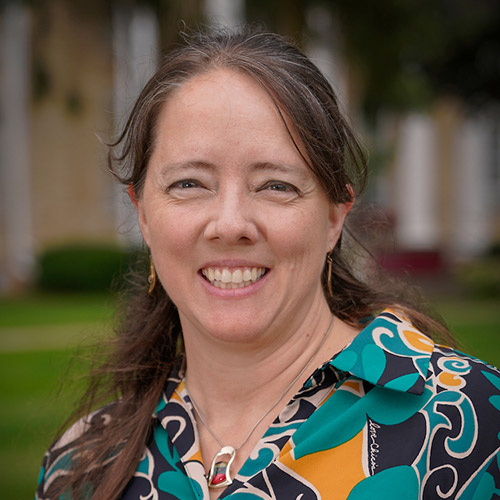
Sharon Ware, Ph.D., is an Associate Professor and Director of the Special Education Literacy Intern program (M.A.) at the University of Saint Joseph. She joined USJ in 2016. Her academic background includes a Ph.D. in Special Education from the University of Connecticut, an Ed.M. from Harvard University, an MBA from the University of Arizona, and a B.A. from Boston College. Dr. Ware’s research focuses on literacy development across the PK-12 spectrum, particularly for learners with diverse needs. Her work emphasizes vocabulary instruction, bilingual education, and multitiered systems of support. She has published extensively in journals like The Elementary School Journal and Exceptional Children , exploring topics such as vocabulary intervention efficacy, bilingual learners' language acquisition, and gifted education equity. Her articles highlight trends in early literacy interventions, the role of teacher-student interactions in vocabulary development, and strategies to address educational disparities. Dr. Ware’s contributions bridge theory and practice, aiming to improve outcomes for students with learning challenges and English language learners.
Dr. Stephanie Grote-Garcia is a Professor at the University of the Incarnate Word (UIW), specializing in literacy education. She previously served as a Visiting Professor at Texas A&M University-Corpus Christi (2009-2010) and held roles as an Elementary Reading Specialist and Dyslexia Coordinator in Texas public schools. Her leadership includes co-founding the Texas Literacy Collaborative for Educator Preparation (TXLCEP) and serving as past-president of the Specialized Literacy Professionals. Education: Ph.D. in Curriculum and Instruction (Reading specialization) from Texas A&M University-Corpus Christi, alongside M.S. and B.S. degrees in related fields. Research Interests: Dr. Grote-Garcia focuses on evidence-based literacy practices, teacher preparation in reading instruction, and addressing educational equity through inclusive curricula. Her work emphasizes the Science of Reading, diversity in literacy education, and policy implications affecting educators. Recent Scholarly Contributions: Her publications explore trends in literacy education, including book bans, diversity measures, and the intersection of explicit instruction with cultural responsiveness. She has contributed to journals like Literacy Research and Instruction and Reading Psychology . Awards and Recognition: Bishop Claude Marie Dubuis Award (2023) Exemplary Faculty Practices Recognition (2013) Mission Continues Award (2016) Sister Theophane Endowed Chair (2014–2017) Service and Leadership: Chair of UIW’s Quality Enhancement Plan Implementation Committee, Texas Association for Literacy Education (TALE) co-founder, and active member of organizations like the International Literacy Association (ILA). She also leads initiatives like the Charles Butt Scholar Program and Teacher Education Recruitment Task Force.
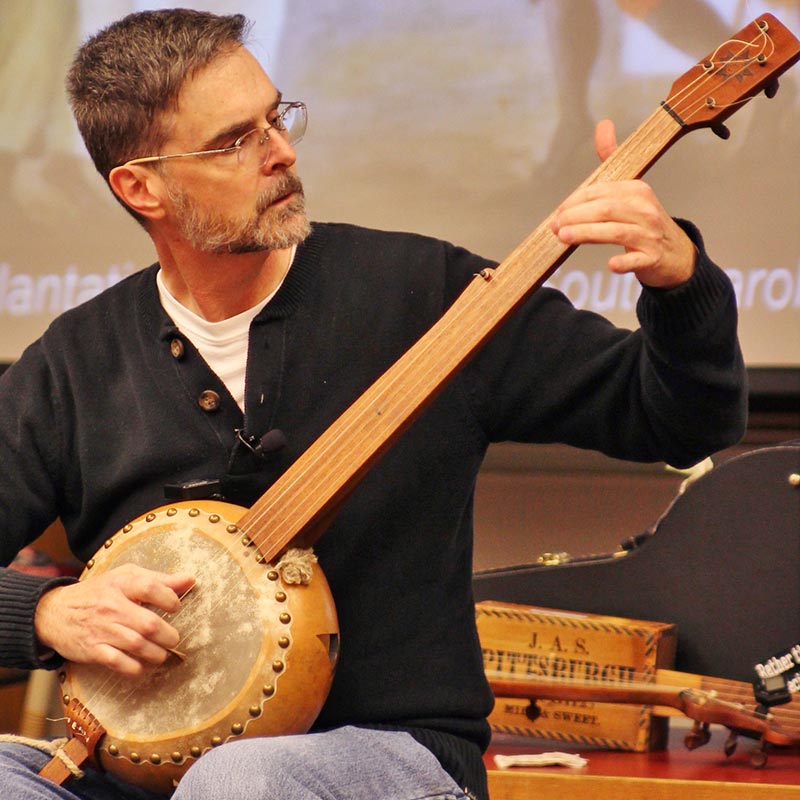
Dr. Julia Manor is an Associate Professor of Psychology and Director of Assessment at Ripon College. She specializes in animal cognition and neuroscience, leading a lab that studies species such as rats and dogs. Her courses include Learning and Behavior, Behavioral Neuroscience, and Sensation and Perception. Dr. Manor earned her Ph.D. from the University of Minnesota and a B.A. from Macalester College. Her research focuses on understanding animal thought processes, empathy, and behavioral responses. Notable areas include canine empathy, pain perception in fish, and memory in birds. She emphasizes interdisciplinary approaches, using comparative psychology to enhance educational curricula. Dr. Manor’s work bridges laboratory research with real-world applications, advocating for deeper connections between humans and animals. She has published widely on topics ranging from heart rate variability in dogs to the biological constraints of learning. Outside academia, she enjoys community theater and reading works by Fredrik Backman. She notably discarded her Apple Watch to prioritize human connections over technology.
Scott A. Sandage is an Associate Professor of History at Carnegie Mellon University's Dietrich College of Humanities and Social Sciences, specializing in nineteenth-century American cultural history and the evolution of American identity. He joined the Department of History in 1995 and has established himself as a leading scholar on the cultural history of failure in America. Professor Sandage's research focuses on how Americans have understood success and failure throughout history, with particular attention to race, identity, and cultural narratives. His work examines the intersections of capitalism, individualism, and cultural memory in shaping American historical consciousness. He has made significant contributions to understanding how historical figures like Abraham Lincoln have been memorialized and mythologized in American culture. His publications reveal consistent engagement with themes of historical memory, cultural narratives of success and failure, and the politics of commemoration. Sandage's scholarly work spans academic journals, mainstream publications like The New York Times Book Review and Smithsonian Magazine, and public history projects that bring historical insights to broader audiences. Distinguished Lecturer by the Organization of American Historians Elliot Dunlap Smith Award for Distinguished Teaching (2006) NEH Senior Faculty Fellowship (2007-2008) Jameson Fellowship from Library of Congress (1998) Named one of America's 'Top Young Historians' by History News Network (2007) As an educator, Sandage teaches undergraduate and graduate courses including 'The Roots of Rock & Roll,' which explores the genre's development through collaborative innovation across racial lines. He has advised numerous doctoral students and contributed significantly to public history through consultations with the Smithsonian Institution, National Archives, and National Park Service. Sandage's current research focuses on racial identity formation through his forthcoming book 'Laughing Buffalo in Paris: A Tall Tale of Race from the Half-Breed Rez.'
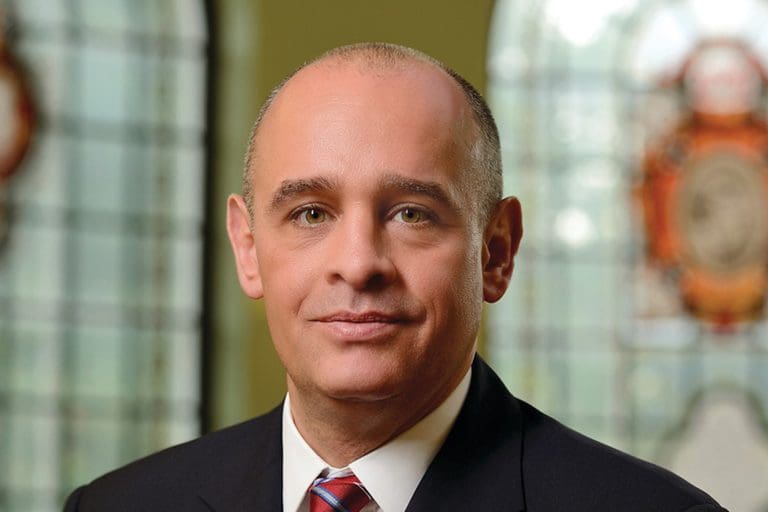
Christopher S. Celenza is the James B. Knapp Dean of the Krieger School of Arts and Sciences at Johns Hopkins University, and holds the rank of Professor in History and Classics. He previously served as Dean of Georgetown College and Vice Provost for Faculty Affairs at JHU. He earned dual doctorates in History (Duke University, 1995) and Classics/Neo-Latin Literature (University of Hamburg, 2001). His research focuses on Italian Renaissance intellectual culture, late medieval philosophy, and the history of classical scholarship. He has authored 12 books including The Italian Renaissance and the Origins of the Modern Humanities (2021) and The Intellectual World of the Italian Renaissance (2018). His work explores Latin literature, textual transmission, and the evolution of humanistic studies. Key awards include Guggenheim, Fulbright, and ACLS fellowships Founded JHU's Singleton Center for the Study of Premodern Europe Co-founded the Alexander Grass Humanities Institute As dean, he prioritizes diversity initiatives, faculty development programs, and cross-disciplinary collaboration. His administrative roles include overseeing 22 academic departments and advancing institutional strategic goals.
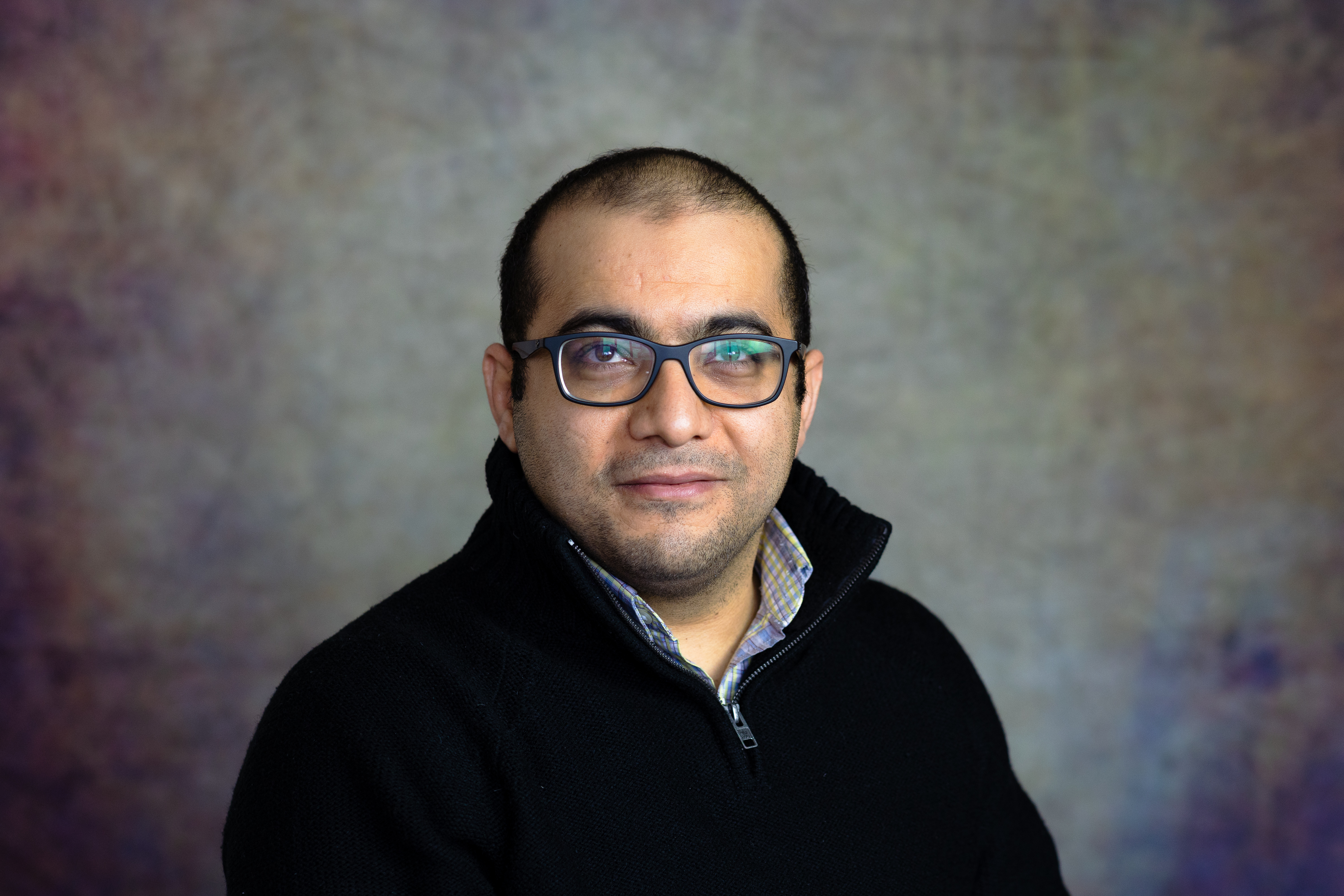
Dr. Hussein Hassan is a Lecturer in Economics at the University of Reading. He serves as the Director of Internationalisation for the MENA (Middle East and North Africa) region and acts as a Module Convenor for the Economic Analysis Research Group (EARG). His role involves academic leadership and curriculum development within the Department of Economics. Education details are not explicitly provided in the text, but his appointment as a Lecturer suggests advanced degrees in Economics or a related field. Specific academic qualifications, such as PhD or MA, are omitted due to lack of information. His research interests are linked to his departmental affiliation, focusing broadly on economics with potential specializations in international economic relations, regional policy analysis, and globalization impacts. Participation in EARG indicates a focus on applied economic research methodologies. Publications and scientific awards are not listed in the provided text; thus, these sections remain unpopulated. Grant details and advising activities are also not specified. Dr. Hassan collaborates with interdisciplinary teams spanning Philosophy, Politics and International Relations, and Geography, reflecting a cross-departmental engagement at the university.
Susannah Levi is an Associate Professor in the Department of Communicative Sciences and Disorders at New York University (NYU), where she also serves as Director of the Undergraduate Program. She holds a doctorate from the University of Washington's Department of Linguistics and completed a postdoctoral fellowship at Indiana University's Department of Brain and Psychological Sciences. Prior to NYU, she taught at the University of Michigan. Her research focuses on spoken language processing, particularly how listener characteristics (e.g., bilingualism, language ability) and speech properties (e.g., talker familiarity, semantic predictability) interact during perception. Key areas include talker recognition, bilingual advantages in voice processing, and applications to clinical populations with language or reading disorders. She directs the Acoustic Phonetics and Perception Lab and has published extensively in journals like the Journal of Speech, Language, and Hearing Research and the Journal of the Acoustical Society of America. Her work explores how familiarity with a speaker's voice enhances comprehension across languages and dialects, as well as acoustic correlates of gender expression in speech. She has investigated phonetic factors influencing talker discrimination and the role of training in improving perception of non-native speech. Levi is also committed to pedagogical innovation, developing undergraduate courses in acoustic phonetics for communication sciences and disorders students. Her research portfolio spans developmental studies (e.g., children's talker processing), clinical applications (e.g., improving speech intelligibility for disordered populations), and methodological advancements in speech perception research. She has contributed to understanding how phonological and lexical cues interact with indexical properties of speech, and her lab employs interdisciplinary approaches combining behavioral experiments, acoustic analysis, and computational modeling.
Sara Witmer is an Associate Professor of School Psychology at Michigan State University (MSU), holding a Ph.D. from the University of Minnesota and National Certified School Psychologist (NCSP) certification. She is affiliated with the College of Education’s Department of Counseling, Educational Psychology & Special Education (CEPSE). Her roles include Principal Investigator for Project ETUDE (funded by the Institute of Educational Sciences) and Project Director for Project Hi2LD (funded by the U.S. Office of Special Education and Rehabilitative Services), which focus on improving assessment practices and reducing graduate study costs for school psychology and special education students. Education: Dr. Witmer earned a Ph.D. in School Psychology from the University of Minnesota. She also holds an NCSP credential, reflecting her specialization in school-based psychological services. Research Interests: Her work centers on enhancing instructional decision-making through equitable assessment practices, particularly for at-risk students, students with disabilities, and English language learners. Key themes include validity and fairness in testing, accommodation use, and the integration of accessibility tools into large-scale accountability systems. She employs empirical and mixed-methods approaches to address disparities in educational measurement. Projects & Grants: Leading Project ETUDE (IES-funded) and Project Hi2LD (OSE-funded), she investigates testing accommodations’ effectiveness and develops interdisciplinary training programs. These initiatives aim to improve outcomes for K-12 students and reduce barriers to graduate education. Labs/Teams: While no specific lab is mentioned, her research aligns closely with MSU’s CEPSE department and interdisciplinary efforts within the College of Education, such as the CREATE for STEM Institute. She collaborates with national and international agencies to advance inclusive assessment policies.
Rachel Mayberry's Academic Profile Rachel I. Mayberry is a Professor in the Department of Linguistics at the University of California San Diego (UCSD), where she holds affiliations with the Center for Research on Language, Cognitive Science Program, and the Center for Academic Research and Training in Anthropogeny (CARTA). She holds a Ph.D. from McGill University, M.Sc. from Washington University, and B.A. from Drake University. Her work focuses on the critical period for language acquisition through sign language and deafness studies. Her research integrates psycholinguistic and neuroimaging methods to explore how delayed language exposure impacts syntactic processing, brain development, and reading proficiency in deaf individuals. Key areas include neurolinguistic processing differences between early and late first-language learners of ASL, the role of modality in syntactic comprehension, and the relationship between gesture and language development. Mayberry teaches courses such as Sign Language and Its Culture (Lign 7), Child Language Acquisition (Lign 171), and Biology and Environment in Language Acquisition (Lign 282). She has received grants from NIH, the Kavli Foundation, and the National Science Foundation. Her work has been published in high-impact journals like Developmental Science , Proceedings of the National Academy of Sciences , and Brain and Language . Notable contributions include demonstrating that critical period effects are stronger for first-language acquisition than second-language learning, and revealing how early language deprivation alters neural language pathways in adulthood. Her lab collaborates with institutions like the Salk Institute and UCSD's Neuroscience Program to bridge cognitive science and linguistics.
Professor Keith Shine is a leading academic in climate science, focusing on radiative forcing, atmospheric chemistry, and aviation's climate impacts. His work emphasizes greenhouse gas mechanisms, contrail effects, and climate modeling. He has contributed to over 150 peer-reviewed articles, including influential studies on CO2 decomposition, halocarbon impacts, and hydrogen economy climate effects. His research bridges climate physics, policy, and aviation sectors, with notable contributions to radiative transfer theory and climate metrics development. Research areas: Climate dynamics, radiative transfer, aerosol impacts, and aviation emissions. Key collaborations: Includes institutions like University of Reading and international climate modeling groups. Shine's work on water vapor continuum absorption and Fermi resonance mechanisms has advanced fundamental understanding of global warming processes. He also addresses policy-relevant issues like CO2-equivalence metrics for contrail management and hydrogen economy climate risks.
John Creighton is a Professor in the Department of Archaeology at the University of Reading, specializing in Roman archaeology and Iron Age studies. His research focuses on Romanization processes, numismatic analysis, geophysical survey techniques, and urban development in Roman and pre-Roman contexts. He has conducted fieldwork in Britain, France, and Germany, contributing significantly to understanding Roman Britain and Gallic-Roman transitions. Creighton's notable works include the book Britannia: The Creation of a Roman Province (2006) and co-authored studies on Silchester Roman town mapping. He has collaborated with institutions like Bibracte European Archaeology Centre and led projects such as the Silchester Mapping Project (2005-10). His research bridges archaeological methodology and historical analysis, with recent work emphasizing interdisciplinary approaches to Roman economic systems and undergraduate research pedagogy. His publications span peer-reviewed articles in journals like Britannia and European Journal of Archaeology , as well as edited volumes on Roman and Iron Age topics. Collaborations include work with the Institute for Archaeologists on accessibility initiatives for disabled archaeologists.
Professor Keshavan Niranjan is a faculty member at the University of Reading, serving as Director of the Global Engagement Office. His academic roles include leading international academic programs in teaching and research. He holds a BChem Eng, MChem Eng, and a PhD (tech), and is a Fellow of the Institute of Food Science and Technology (FIFST) and the International Academy of Food Science and Technology. His research focuses on food engineering, particularly in foam stability, sustainable food packaging, high-pressure food processing, and enzyme-assisted extraction. Notable projects include developing plant-based food systems, antimicrobial coatings, and reducing acrylamide in deep-fried products. He supervises PhD projects on topics like date fruit resource recovery and enzymatic protein modification for food processing. Professor Niranjan has authored numerous publications and book chapters, including contributions to Journal of Food Engineering and Food Hydrocolloids . His editorial roles include Editor-in-Chief of Foods and roles at Food and Bioproducts Processing and Scientific Reports . Awards include a Lifetime Achievement Award (2015) and Distinguished Service Award (2019) from the International Association of Engineering and Food.
Henning Fjørtoft is a Professor of Norwegian subject didactics at NTNU's National Center for Writing Education and Writing Research. His work bridges educational policy, teacher training, and international research collaboration. He holds a PhD in Nordic literature from NTNU and has extensive experience in primary, secondary, and vocational education. Currently leads the NFR-funded 'Going gradeless' project (2020-2025) and chairs the editorial board of the Nordic Journal of Education and Practice. Participates in research networks like AERA Division H and ICSEI. Education: PhD in Nordic Literature (NTNU), Teacher Education Key Projects: Leading 'Going gradeless', collaborating with Udir on assessment reforms, steering the PLAC research group Editorial Roles: Nordic Journal of Education and Practice (Editor-in-Chief), Assessment in Education, Educational Assessment Research interests focus on assessment innovation, literacy development, and school improvement. Has authored/co-authored over 50 publications since 2011, emphasizing multimodal assessment, grading alternatives, and disciplinary literacy across subjects like religious education and vocational training. Active in policy advisory roles for Norway's Ministry of Education and the Professional Council for Teacher Education 2025. His work addresses systemic challenges in education through participatory methods, advocating for authentic assessment practices and bridging theory/practice gaps. Coordinates doctoral training programs (NAFOL) and develops online resources for teachers on assessment and literacy.
Hilary Schor is a Professor of English, Comparative Literature, and Law at the University of Southern California. She serves as Co-Director of the USC Center for Law, History and Culture, a joint initiative between USC Dornsife College and the Gould School of Law. Previously, she held leadership roles including Chair of Gender Studies, President of the Academic Senate, and Dean of Undergraduate Programs for the College of Letters, Arts & Sciences. Her education includes a B.A. in British/American Literature from Scripps College (1980) and a Ph.D. in English from Stanford University (1986). Her research spans Victorian literature, feminist theory, law and literature, and narrative theory. She is particularly known for analyzing gender dynamics, legal frameworks in fiction, and adaptations of literary works into film. Her recent projects include a study of Jews, women, and legal fictions in Victorian literature, and an exploration of time-travel films through a historical lens. Her work frequently intersects disciplines like cinema studies, legal theory, and cultural history. She has been invited to present at institutions such as Harvard University, Cornell University, and King’s College London. Awarded prestigious fellowships including the Radcliffe Institute and Guggenheim Fellowships, her contributions to teaching were recognized with multiple USC Innovative Teaching Awards. She has developed innovative courses such as “Time Trials: Exhausting Time in the Novel and Narrative Cinema” and “Feminism and the Law.”
Anna Jackman is a Lecturer in Human Geography at the School of Archaeology, Geography and Environmental Science (SAGES), University of Reading. She serves as Director of Postgraduate Research Students in Human Geography and is a member of the SAGES Diversity and Inclusion leadership collective and Research Ethics Committee. Her research is situated at the intersection of feminist political geography, digital and robotic technologies, and critical militarism. Education: PhD in Human Geography, University of Exeter, 2017 Fellowship, Advance HE General Visual Line of Sight Certificate (GVC), UK A2 Certificate of Competency (A2 CofC), UK Anna Jackman’s research focuses on the political geographies of drones, particularly how drone technologies reshape airspace, urban life, and military practices. Her work critically engages with feminist geopolitics, volumetric space, and the gendered and embodied dimensions of drone use. She explores how drones are visualized, normalized, and naturalized in public, military, and commercial contexts, especially through media and tradeshows. Her research emphasizes the ethical, legal, and social implications of drone proliferation, including issues of surveillance, security, and harm. Her recent publications examine drone sensing, feminist understandings of volume, and the concept of 'everyday droning' as a mode of homing military technologies into civilian life. She has led an ESRC New Investigator Award project titled 'Diversifying Drone Stories' (2021–2023), which investigates aerial insecurities and harms in UK airspace. Her interdisciplinary work connects geography with law, gender studies, and security analysis. Scientific Awards and Recognition: Economic and Social Research Council (ESRC) New Investigator Award Advance HE Fellowship Specialist Adviser to the UK House of Commons Science and Technology Committee (2019) Expert witness for the Defence Committee on domestic drone threats Anna advises on postgraduate research in human geography and has contributed to collaborative projects such as the Royal Geographical Society and Antipode-funded 'States of Precarity' initiative. She has received research funding from the ESRC and is actively involved in public engagement, policy advising, and interdisciplinary collaboration. Her work is supported by her expertise in ethnographic methods, particularly event ethnography at defense tradeshows. She is affiliated with research centers including the Human Geography Research Cluster and the Global Development Research Division at the University of Reading. She also contributes to academic discourse through her roles on the editorial boards of Digital War and Defense & Security Analysis .