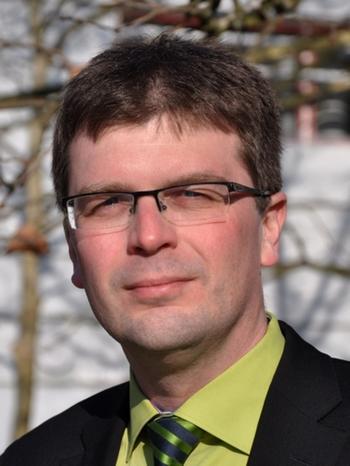
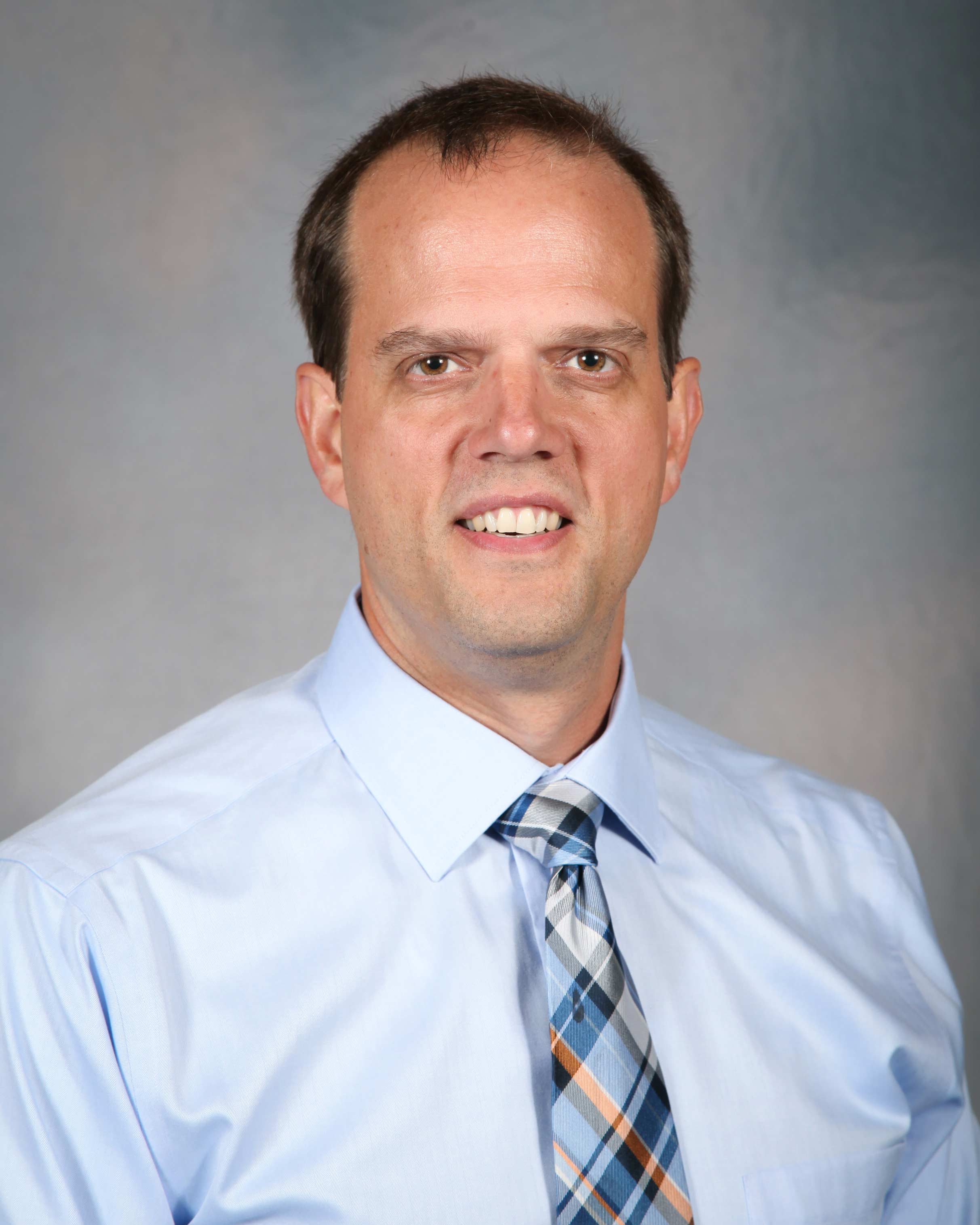
Prof. Dr. Mathias Christmann is a faculty member at the Institute of Chemistry and Biochemistry, Freie Universität Berlin , leading the research group in Organic Chemistry . His work focuses on strategic and methodological challenges in synthetic chemistry, particularly in total synthesis, organocatalysis, and renewable resource transformations. Position: Professor Contact: mathias.christmann@fu-berlin.de Location: Takustr. 3, Room 24.16, 14195 Berlin Research Interests include: Natural product-inspired small molecule synthesis for biological pathway modulation Minimizing C-C bond formations through selective functionalization of terpene building blocks Organocatalytic and metal-catalyzed reactions in multistep sequences Flow chemistry applications for scalable and sustainable synthesis Biological evaluation of TRPC channel agonists/antagonists for cancer therapy Publication Trends highlight expertise in total synthesis of complex terpenoids, organocatalysis for stereocontrolled reactions, flow chemistry for late-stage transformations, and TRPC4/5 channel modulation in renal cancer studies. His group pioneers asymmetric desymmetrization , photo-oxidation protocols , and electrosynthesis methods with minimal reagent waste. Advisees include PhD candidates Jan-Hendrik Dickoff , Mayar Elbendary , Nadine Kreidt , Tobias Olbrisch , Kamar Shakeri , and Zhen Wang , focusing on terpene-based drug discovery and catalytic reaction design.
Dr. Joshua Brinkerhoff is an Associate Professor in Mechanical Engineering at the University of British Columbia Okanagan Campus. He serves as the Associate Director for Research & Industrial Partnerships in the School of Engineering and leads the UBC-Okanagan Computational Fluid Dynamics Laboratory. His research spans computational fluid dynamics, turbomachinery, multiphase flows, hydrogen safety, wind energy, and biofluid mechanics. He teaches courses in mechanics of materials, alternative energy systems, turbulence, computational fluid dynamics, and aircraft design. PhD, Aerospace Engineering (Carleton University, Ottawa, ON) BEng, Aerospace Engineering (Carleton University) Dr. Brinkerhoff’s research interests include: Computational Fluid Dynamics (CFD) for laminar-to-turbulent transition and instability analysis Wind energy systems and turbine aerodynamics Hydrogen storage and safety protocols for transportation Biofluid mechanics for respiratory diseases and aneurysm modeling Multiphase flows in industrial and environmental contexts His publications focus on CFD simulations for: Aerosol dispersion and mitigation in indoor environments Wind farm interactions and atmospheric gravity waves Cavitation and phase transitions in cryogenic and LNG systems Heat transfer optimization in industrial and thermal systems Instability dynamics in buoyancy-driven and swept flows Turbulent structures in fluidized beds and reactors Dr. Brinkerhoff has no listed scientific awards in the provided data but has extensive contributions to renewable energy, hydrogen safety, and medical fluid dynamics. His laboratory develops open-source tools like TOSCA for large-eddy simulations and investigates practical applications in urban air quality, dental aerosol control, and turbine wake modeling.
Dr. Markus Piro is an Associate Professor in the Department of Engineering Physics at McMaster University, specializing in Nuclear Engineering and Energy Systems. He teaches ENG PHYS 3D04, focusing on fission/fusion energy systems, reactor design, and radiation interactions. His research emphasizes thermodynamic modeling of nuclear fuels, computational fluid dynamics (CFD), and severe accident analysis in reactors like CANDU and molten salt systems. Key projects include phase equilibrium studies of advanced fuels, corrosion mechanisms, and coupling CFD with thermodynamic simulations for reactor safety. He leads the Nuclear Fuels And Materials Group, developing tools like Thermochimica and collaborating on fuel design, cladding interactions, and accident mitigation strategies. Recent work includes investigations into Nd-C/Ce-C TRISO coatings, molten salt reactor chemistry, and FeCrAl cladding behavior under accident conditions. Dr. Piro’s computational expertise spans reactor hydraulics, thermal-hydraulic modeling, and material compatibility studies. He actively contributes to international initiatives like the TAF-ID database and engages in experimental validation of corium behavior. Current activities include accepting graduate students and advancing multiphysics simulation frameworks for next-gen reactors.
Satya Prakash Saraswat is a Postdoctoral Researcher at KTH Royal Institute of Technology's Nuclear Science and Engineering Unit in Stockholm, Sweden. He holds a Ph.D. from the Indian Institute of Technology Kanpur, with expertise in thermal-hydraulics, nuclear reactor safety, computational fluid dynamics (CFD), and system code development. His work spans fission and fusion reactor analysis, including contributions to the VALIDATIO project (University of Pisa) for fusion safety tools and the ATLAS project (Khalifa University) for advanced reactor safety enhancements. Research interests focus on computational modeling, AI integration in nuclear safety, and experimental validation of safety systems. He has developed skills in both experimental and numerical techniques, addressing challenges in multiphase flow, reactor core dynamics, and material compatibility. Key projects include validation of ASYST and SIMMER codes for condensation phenomena and lead-lithium interaction studies. Publications highlight advancements in burn-up wave characterization, code stability analysis (RELAP5/SIMMER), and thermal-hydraulic safety assessments for reactors like ESBWR and ITER systems. His work emphasizes enhancing safety tools through rigorous validation and innovative methodologies.
Naoki Shida is an Associate Professor in the Department of Functional Creation at the Graduate School of Engineering, Yokohama National University. He also holds a concurrent position as a JST PRESTO Researcher. His academic journey began with a BS from Yokohama National University, followed by MS and PhD degrees from Tokyo Institute of Technology, where he specialized in bipolar electrochemistry. He has held postdoctoral positions at Tokyo University of Agriculture and Technology, California Institute of Technology, and worked as a specially appointed assistant professor before joining Yokohama National University. Dr. Shida's educational background includes: BS, Yokohama National University, School of Engineering (2011) MS, Tokyo Institute of Technology, Graduate School of Science and Engineering (2013) PhD, Tokyo Institute of Technology, Graduate School of Science and Engineering (2016) Dr. Shida's research focuses on organic electrosynthesis and electrocatalysis, with particular expertise in flow electrochemistry, bipolar electrochemistry, and polymer electrochemistry. His work bridges fundamental electrochemical principles with practical applications in sustainable chemistry. His research group develops innovative electrochemical methodologies for organic synthesis, with emphasis on green and sustainable approaches that minimize waste and energy consumption. The team specializes in designing novel electrochemical reactors, particularly flow microreactors and membrane-based systems, to enable efficient and selective transformations. Analysis of Dr. Shida's recent publications reveals a strong focus on electrocatalytic hydrogenation processes, particularly for nitrogen-containing heterocycles like pyridines and quinolines. His work also explores the development of novel electrochemical methodologies for C-C and C-N bond formation, as well as the creation of advanced electrochemical reactors using solid polymer electrolytes. A significant portion of his research addresses the fundamental understanding of electrolyte effects on electrochemical reactions, aiming to develop rational design principles for electrolyte systems. Dr. Shida has received numerous prestigious awards recognizing his contributions to electrochemistry, including: Young Scientists Award from the Minister of Education, Culture, Sports, Science and Technology Electrochemical Society Business Creation Pitch Contest Grand Prize Progress Award from the Chemical Society of Japan Electrochemical Society Progress Award Sano Prize Electrochemical Society Best Paper Award As a mentor and researcher, Dr. Shida leads multiple significant research projects funded by the Japan Society for the Promotion of Science, including grants for developing innovative molecular transformation processes based on solid polymer electrolyte electrolysis technology and green catalytic reactions using electrochemically generated main group element radical cations. His collaborative work spans multiple institutions and disciplines, reflecting the interdisciplinary nature of modern electrochemistry research. Dr. Shida's laboratory at Yokohama National University focuses on developing next-generation electrified organic synthesis methods, with particular attention to reactor design, catalyst development, and fundamental mechanistic understanding of electrochemical transformations. The group actively collaborates with researchers across Japan and internationally to advance the field of electrochemical synthesis.
Alex Rashkovan is a Visiting Assistant Professor in the Department of Engineering Physics at McMaster University. His academic work focuses on computational fluid dynamics (CFD), nuclear reactor thermal hydraulics, and heat transfer, with a strong emphasis on modeling fluid behavior in reactor containment systems and experimental validation of CFD simulations. His research spans turbulent jet dynamics, stratified layer erosion, mixed convection, and vortex analysis, as evidenced by publications in journals such as Nuclear Engineering and Design , Physics of Fluids , and Progress in Nuclear Energy . Key trends in his scholarly activity include the optimization of gas-coolant channels, scaling considerations for reactor experiments, and the thermal and fluid dynamic analysis of complex geometries like wavy walls and rotating containers. His work often bridges numerical simulations with empirical validation to enhance reactor safety and efficiency.
Prof. Dr. Wolfgang Lippmann is a Senior Scientist at the Institute of Process Engineering and Environmental Technology, Chair of Hydrogen and Nuclear Energy at Technical University of Dresden. He has maintained continuous affiliation with TU Dresden since 1974, progressing from student to professorial status, with his current role beginning in 2021 after decades as Scientific Staff member. From 2017-2020, he served as Substitute Chair for Prof. Antonio Hurtado during Hurtado's tenure as Vice-Rector for University Development. His academic journey includes: 1974-1978: Studies of energy technology at Technical University of Dresden 1978-1983: Scientific assistant at Chair of Nuclear Energy Technology 1984: PhD on reactor containment stress analysis during cooling loss scenarios 1989: Post-doctoral thesis on pressurized-water reactor containment stress Lippmann's research bridges nuclear engineering with hydrogen technologies through innovative laser-based applications. His work spans reactor safety analysis, high-temperature ceramic materials, and nuclear-hydrogen system integration. He has pioneered laser joining techniques for silicon carbide ceramics in nuclear applications, developed laser decontamination systems for nuclear decommissioning, and conducted safety analyses of hydrogen systems coupled with nuclear power plants. His research integrates fundamental materials science with practical engineering solutions for next-generation energy systems. Analysis of his recent publications reveals three dominant research thrusts: nuclear-hydrogen integration (particularly PEM electrolysis coupled with nuclear plants), laser-based nuclear technologies (decontamination and ceramic joining), and advanced safety analysis of energy systems. His work demonstrates increasing focus on cross-sector energy integration while maintaining strong foundations in nuclear materials and safety engineering. Lippmann leads multiple significant research initiatives including TE-Cer (ceramic composites for thermo-electrical systems), F-Bridge (GEN IV fuel design), MANOLA (laser ablation systems), eJoin and CeraJoin (ceramic joining technologies), DELTA (integrated electrolyzer-hydrocarbon systems), LaDECO (laser decontamination), TE-K-SYSTEM (thermoelectric modules), and SYNKOPE-flex (energy carrier coupling). His laboratory at George-Bähr-Straße 3b in Dresden houses specialized equipment for laser processing, materials characterization, and thermal testing of nuclear components.
Dr. Chiara Pischetola is a researcher at the Paul Scherrer Institute (PSI), specializing in catalysis and sustainable chemistry. She is affiliated with the Laboratory for Catalysis and Sustainable Chemistry, focusing on advanced catalytic processes for environmental and energy applications. Her research spans CO2 hydrogenation, methanol production, selective hydrogenation of alkynols, and tandem catalytic reactions. Key methodologies include gas-phase processing, bimetallic catalysts, and hydrogen transfer systems. Recent work explores LDH memory effects, perovskite-supported copper catalysts, and biomass-derived feedstocks. Notable findings include the role of alumina in Ag/ZnO catalysts, mechanistic insights into benzylideneacetophenone synthesis, and innovations in hydrogenation without external H2 supply. Publications emphasize eco-friendly processes using Au-Cu, Pd-Ni, and Fe-ZSM-5 catalysts. Her work addresses carbon capture utilization, sustainable chemical synthesis, and pollution control through heterogeneous catalysis. Current projects focus on optimizing catalyst structures and reaction conditions for industrial scalability.
Thambiayah Nitheanandan is an Industry Professor in the Department of Engineering Physics at McMaster University . His research focuses on nuclear reactor safety, thermal hydraulics, materials science, and computational modeling for severe accident scenarios. Notable areas of expertise include: Generation-IV nuclear energy systems Severe accident prevention in PHWRs Thermal and mechanical behavior of reactor components Aging management for nuclear infrastructure High-temperature material properties Emergency heat sink design Recent scholarly activity trends highlight work in severe accident management, computational modeling of reactor components, and materials research for pressure tubes in CANDU reactors. Publications also cover historical contributions to nuclear safety through organizations like OECD-WGAMA and IAEA ICSP.
Dorin Boldor holds the Charles P. Siess Jr. Professorship at Louisiana State University's Department of Biological and Agricultural Engineering. His research specializes in microwave heating, bioprocessing, and bioenergy systems. He teaches BE 4303: Engineering Properties of Biological Materials and holds a Ph.D. from North Carolina State University. Research encompasses microwave-assisted biomass conversion, pyrolysis kinetics, and sustainable fuel production, with emphasis on reactor design and catalytic processes. Recent publications (2022-2025) explore lignin pyrolysis, biodiesel co-formulants, and oil containment technologies, reflecting applied engineering solutions for energy and environmental challenges.
Dr. Pedro Villuendas is a researcher affiliated with Newcastle University , focusing on catalysis, sustainable chemistry, and green solvents. His work primarily addresses the synthesis of cyclic carbonates using bimetallic aluminium(salen) complexes and other catalytic systems. His research spans multiple subfields including: Asymmetric synthesis with organocatalysts Carbon dioxide utilization in chemical reactions Design and optimization of catalytic systems Solvent effects in reaction mechanisms Industrial-scale reactor applications
Kamalesh K. Sirkar is a Distinguished Professor in the Department of Chemical & Materials Engineering at the New Jersey Institute of Technology (NJIT), internationally recognized for pioneering membrane separation technologies including the commercialized membrane-based solvent extraction process and foundational work on membrane contactors and contained liquid membranes. His educational background includes: Ph.D. in Chemical Engineering from the University of Illinois at Urbana-Champaign (1969) M.S. in Chemical Engineering from the University of Illinois at Urbana-Champaign (1966) B.Tech. from the Indian Institute of Technology, Kharagpur (1963) Professor Sirkar's research revolutionizes separation processes across pharmaceuticals, water treatment, and energy sectors. His work integrates membrane science with nanotechnology to develop continuous manufacturing systems for drug nanocrystals, high-efficiency desalination via membrane distillation, and advanced gas separation using MOF-based membranes. He has transformed theoretical concepts into industrial applications, particularly in anti-solvent crystallization and protein purification systems. Recent publications (2023-2025) demonstrate accelerating innovation in continuous pharmaceutical manufacturing, smart membrane materials (graphene oxide, MOFs), and sustainable desalination. His work increasingly focuses on process intensification, FAIR data standards for membrane research, and scaling membrane technologies for industrial implementation while addressing challenges like fouling resistance and thermal efficiency. His scientific awards include: Alan S. Michaels Award for Innovation in Membrane Science and Technology (2017) Fellowships in AIChE (2020), NAI (2017), NAMS (2016), and AAAS (2008) Clarence Gerhold Award from AIChE Separations Division (2008) AIChE Institute Award for Excellence in Industrial Gases Technology (2005) Honorary M. Eng. from Stevens Institute (1987) Professor Sirkar has mentored 40 PhD students, 47 MS students, and 28 postdoctoral researchers, establishing a global network of membrane scientists. His research leadership includes directing the NSF-funded Membrane Science, Engineering, and Technology Center (MAST) from 2010-2015, securing major industry collaborations and advancing membrane technology commercialization through this Industry/University Cooperative Research Center. He leads the MAST research consortium and maintains active laboratory operations focused on membrane development, while serving on editorial boards for leading journals including Journal of Membrane Science. His current work bridges academic research with industrial implementation through continuous process development and next-generation membrane materials.
Victor Snell is an Industry Professor in Engineering Physics at McMaster University with 50 years of experience in nuclear reactor safety, licensing, and computer code validation. His work focuses on CANDU reactor technology, severe accident management, and regulatory compliance for advanced nuclear systems. Research interests span Nuclear Engineering , Reactor Safety , Licensing Procedures , and Thermal Hydraulics . His recent publications analyze power reactor reactivity coefficients , severe accident programs , and computer code validation in nuclear contexts. Key trends in his 15 most recent articles (2000-2020) include reactor design safety ( ACR-1000 ), licensing harmonization across international markets, computer simulation for thermalhydraulic phenomena, and PIRT methodology for accident analysis. Collaborative efforts with institutions like UNENE and CNS are recurrent themes. As an instructor, he taught the course Nuclear Reactor Safety Design - UN 803 in 2019 and 2022. His career includes extensive work with the Canadian Nuclear Society and Atomic Energy of Canada Limited.
Mark Kimber is an Associate Professor in the Department of Nuclear Engineering at Texas A&M University. He serves as Director of the Undergraduate Program and has a research focus on experimental and computational thermal hydraulics, uncertainty quantification in turbulent flows, and two-phase heat transport systems. Ph.D., Mechanical Engineering, Purdue University – 2008 M.S., Mechanical Engineering, Brigham Young University – 2004 B.S., Mechanical Engineering, Brigham Young University – 2002 His research interests include: Experimental and computational thermal hydraulics Uncertainty quantification in isothermal and non-isothermal turbulent flows Two-phase heat transport Turbulence modeling Heat transfer optimization Nuclear reactor design Recent publications focus on nuclear reactor thermal management systems, turbulence modeling validation, and advanced heat exchanger design. Key trends include: CFD analysis of nuclear components Multiphysics modeling Thermal safety systems Neutronics coupling Energy transition applications Validation protocols Scientific awards: Faculty Development Award, Nuclear Regulatory Commission – 2009-2011
Dale E. Klein is the Cockrell Family Dean's Chair in Engineering Excellence and Professor of Nuclear and Radiation Engineering at the University of Texas at Austin. He rejoined the university in 2022 after serving as a Presidential Appointee and as Associate Vice Chancellor for Research at the University of Texas System (2011–2022). Previously, he was Chairman of the U.S. Nuclear Regulatory Commission (2006–2009), Commissioner of the NRC (2009–2010), and Assistant to the Secretary of Defense for Nuclear, Chemical, and Biological Defense Programs under President George W. Bush. His academic roles include Director of the Nuclear Engineering Teaching Laboratory and Deputy Director of the Center for Energy Studies. Dr. Klein holds a doctorate in Nuclear Engineering from the University of Missouri-Columbia. His research focuses on thermal hydraulics, nuclear waste management, and radiation safety, with over 100 technical publications and presentations. He serves on corporate boards including Southern Company and Pinnacle West/Arizona Public Service, and chairs the Nuclear Reform Monitoring Committee for Tokyo Electric Power Company post-Fukushima. His awards include Fellowships from the American Society of Mechanical Engineers and American Nuclear Society, Engineer of the Year for Texas, and the University of Missouri Honor Award for Distinguished Service. His recent publications analyze natural convection in spent fuel storage, magnetohydrodynamic flow, and thermal property measurement techniques.