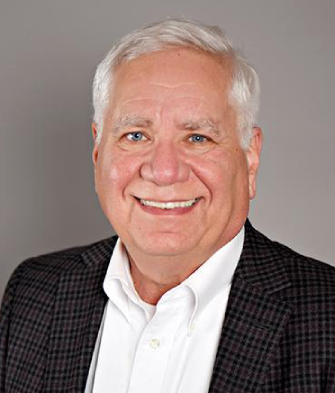
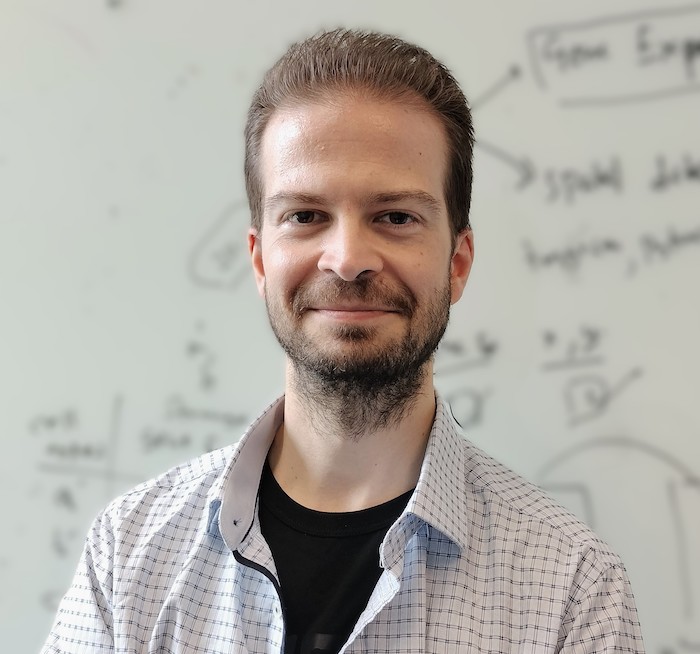
Professor Joseph Powers is a faculty member in the Department of Aerospace and Mechanical Engineering at the University of Notre Dame's College of Engineering. His research focuses on computational fluid dynamics of high-speed reacting flows, particularly in hydrogen-air and hydrocarbon systems. He has held visiting appointments at prominent institutions, including Los Alamos National Laboratory and NASA. Education: Ph.D., Mechanical Engineering, University of Illinois at Urbana-Champaign M.S., Mechanical Engineering, University of Illinois at Urbana-Champaign B.S., Mechanical Engineering, University of Illinois at Urbana-Champaign His research explores ignition, extinction, flame stability, and multiscale modeling strategies for reactive flows. He develops reduced-order models for complex combustion dynamics and emphasizes simulation accuracy. Publications highlight applications in materials synthesis, detonation dynamics, and reaction-diffusion systems. Scientific Awards and Roles: 2025 AIAA Fellow Associate Fellow of AIAA Editor-in-Chief, AIAA Journal of Propulsion and Power
Robert Góra is an Associate Professor at the Faculty of Chemistry, Wrocław University of Science and Technology, specializing in theoretical chemistry with a focus on molecular aggregates, electro-optical properties, and photochemistry of organic molecules. His research bridges prebiotic chemistry and chemical origins of life through computational studies of excitation energy transfer and nonadiabatic deactivation mechanisms. Ph.D. (2002) and D.Sc. (2014) in theoretical/physical chemistry from Wrocław University of Science and Technology M.Sc. (1998) in computational chemistry His work explores photorelaxation pathways in DNA base pairs, solvent effects on photochemistry, and electron-driven proton transfer processes. Recent publications highlight collaborations with international researchers on prebiotic nucleoside formation and photodamage mechanisms in nucleobases. Key article trends include theoretical insights into UV-induced reactions, solvent effects on excited states, and computational modeling of prebiotic molecular systems. His expertise spans ab initio methods, nonadiabatic dynamics, and quantum simulations of intermolecular interactions. Awards: Recurrent Rector's prizes, Foundation for Polish Science scholarships, team awards, and TEMPUS Mobility Grant Administrative roles: Dean's Plenipotentiary for eLearning (2007–2020), Deputy Head of Department of Physical and Quantum Chemistry (2019–2020) Grant reviews: National Science Center (since 2017), Czech and Croatian agencies He contributes to journals like Nature and Physical Chemistry Chemical Physics , with a focus on prebiotic photostability and quantum dynamics of biological systems.
Dr. Miguel Pans Castillo is a Researcher at Loughborough University, focusing on sustainable energy systems and chemical engineering. He holds a PhD in Chemical and Environmental Engineering from the University of Zaragoza, Spain, and a MEng in Chemical Engineering from the University of Valencia. His research emphasizes hydrogen production with CO2 capture, chemical-looping combustion (CLC), and biomass combustion in fluidized bed systems. He has explored the use of low-cost iron-based oxygen carriers and additives to mitigate agglomeration during biomass combustion. During his postdoctoral fellowship at the University of Nottingham (2015–2018), he investigated oxy-fuel combustion, fluidized bed dynamics, and emission control strategies. His work addresses challenges in renewable energy integration, carbon capture technologies, and sustainable industrial processes. Key research themes include optimizing CLC systems for H2 production, evaluating bed additives for biomass combustion efficiency, and advancing material science for corrosion-resistant coatings in high-temperature environments. His publications span experimental and modeling approaches to energy systems, emphasizing practical applications in decarbonization. Collaborations include the Low Carbon Energy and Resources Technologies Research Group at the University of Nottingham. His expertise bridges fundamental chemical engineering principles with applied solutions for environmental sustainability.
Ronald Kluger is a Professor of Organic and Biological Chemistry at the University of Toronto's Department of Chemistry. His research focuses on protein modification, particularly hemoglobin, to develop acellular oxygen carriers for medical applications. Kluger's work includes site-specific cross-linking of hemoglobin using 'click chemistry' and investigating mechanisms of carbon dioxide release in decarboxylation reactions. His group also explores thiamin-derived intermediates and lanthanide-catalyzed reactions in water. Affiliations: University of Toronto, Department of Chemistry; Collaborations with Toronto General Hospital's surgery department. Labs: Laboratories in Davenport Building 450/451. Research Interests: Hemoglobin modification for oxygen therapeutics, decarboxylation mechanisms, protein-protein coupling, and biomimetic synthesis. Key projects include creating non-vasoactive oxygen carriers from cross-linked hemoglobin and studying carbonic acid intermediates in decarboxylation. Grants & Awards: Not explicitly listed, but sustained research output indicates sustained funding. Collaborations include industry partnerships (e.g., lung transplant research).
Ilias Papailias, Ph.D., is a Research Assistant Professor in the Department of Mechanical Engineering at Southern Methodist University's Lyle School of Engineering. He holds a Ph.D. in Materials Science and Engineering from the National Technical University of Athens (NTUA) and has conducted postdoctoral research at both the University of Illinois at Chicago and the Institute of Nanoscience and Nanotechnology at NCSR 'Demokritos.' Education: Ph.D.: Materials Science and Engineering, NTUA M.Sc.: Chemical Engineering, NTUA Postdoctoral Research: University of Illinois at Chicago (Mechanical Engineering) Postdoctoral Research: NCSR 'Demokritos' (Institute of Nanoscience and Nanotechnology) Research Interests: Dr. Papailias focuses on energy storage systems (e.g., Li-CO₂ and Li-O₂ batteries), photocatalytic air and water purification, CO₂ conversion via electrocatalysis and metallothermic methods, and advanced functional nanomaterials. His work emphasizes sustainability, renewable energy applications, and environmental remediation. He has secured over $2.8M in grants for projects involving solid-state batteries, electrocatalytic CO₂ reduction, and photocatalytic coatings. Publications Trends: His recent work highlights advancements in Li-CO₂ battery stability, photocatalytic CO₂-to-fuel conversion, and novel g-C₃N₄-based nanomaterials. These studies often integrate experimental and computational methods to optimize material performance for real-world applications. Awards and Honors: Marie Sklodowska-Curie Actions Global Postdoctoral Fellowship (2022) Iakovos Giourounlian Prize for Best Industrial Thesis (2020) Virginia Manasaki Award for Environmental/Energy Research (2019) Thomaidion Award for Top Publications (2017, 2019, 2020) Advising and Grants: Dr. Papailias has secured multi-million-dollar grants for collaborative projects and actively contributes to research teams developing next-generation energy storage and environmental technologies. His work bridges fundamental materials science with industrial applications. Labs and Teams: His research is conducted in SMU's Lyle School labs and international collaborations, focusing on nanomaterial synthesis, electrochemical characterization, and environmental catalysis.
Pierre Vogel is an Honorary Professor at the Swiss Federal Institute of Technology Lausanne (EPFL), affiliated with the School of Basic Sciences and the Department of Chemistry. Born in Cully, Switzerland, he earned his Ph.D. in Organic Chemistry from the University of Lausanne in 1969 under Prof. H. Prinzbach. His career includes postdoctoral research at Yale University, roles as a Research Chemist at Syntex S.A., and professorships at the University of Lausanne and École Polytechnique de Palaiseau. He has held leadership roles in academic and research institutions, including Vice-Chairman of the Institute of Organic Chemistry at the University of Lausanne and membership in the Swiss National Council of Research. Education: Ph.D., University of Lausanne (1969) Postdoctoral: Yale University (1969–1971), Princeton University (1970), with Prof. Martin Saunders and others His research focuses on organic chemistry, catalysis, and natural product synthesis. Notable contributions include work on glycosidase inhibitors, asymmetric synthesis, and the development of novel synthetic methodologies. Key achievements include the synthesis of complex polyketides, the design of IDO1 inhibitors, and the use of sulfur dioxide in stereoselective reactions. Vogel has authored over 200 publications and supervised numerous students, including Claudia Bello and Dean Markovic. His awards include the Swiss Chemical Society's Werner Medal (1976) and the Novartis Lectureship (2002–2003). He has been a central figure in European research programs, coordinating projects like COST D2 and COSRD13. Awards: Pacific Coast Lecturer (1992), Boehringer Ingelheim Distinguished Lecturer (2004–2005) Roles: Member of the Conseil Scientifique du Département des Sciences Chimiques, CNRS (2001–present) His work bridges fundamental organic chemistry with applied research, particularly in drug discovery and cancer therapeutics. Vogel's legacy includes pioneering efforts in catalytic reactions and the synthesis of bioactive molecules.
Prof. Dr.-Ing. Hendrik Dubbe is a Professor of Application and Process Technology at Esslingen University of Applied Sciences, leading the Application Technology Laboratory. His expertise spans catalysis, automotive emissions control, and battery cell production. He holds a Dr.-Ing. from the University of Stuttgart (2018) and has extensive industry experience at Daimler AG/Mercedes-Benz, including roles as a Computational Engineer and Technical Project Leader for battery cell production lines. Education: Study of Process Engineering at University of Stuttgart (2007–2013). PhD on 'Experimental and Simulative Investigation of Diesel Oxidation Catalysts' (2018). Industry Experience: 2017–2020: Digital Powertrain Development at Daimler; 2020–2022: Project Leader for Battery Cell Production. His research focuses on catalytic systems for automotive emissions, low-temperature combustion technologies, and battery manufacturing. He has authored/co-authored over 10 peer-reviewed articles and holds numerous patents in automotive exhaust systems. Teaching roles include part-time lecturerships in Financial Mathematics, Statistics, and Process Engineering across multiple German universities since 2010. Currently leads the Application Technology Laboratory and teaches at Esslingen's Continuing Education Academy.
PD Dr. Anne Schüler is a Researcher and Deputy Head of the Multiple Representations Lab at the Leibniz Institute for Knowledge Media (IWM) in Tübingen, Germany. She holds a PhD (summa cum laude) and habilitation in Psychology from Eberhard Karls University of Tübingen, with a focus on cognitive foundations of multimedia learning. Her work explores how multimedia principles enhance learning, particularly addressing validation processes, cross-modal integration, and the correction of misconceptions through instructional strategies like refutation videos. She has been an Equal Opportunities Officer at IWM since 2018. Her research spans cognitive psychology, educational technology, and instructional design, with a strong emphasis on empirical studies using eye-tracking and EEG. Key projects include investigating reactivation mechanisms during multimedia processing, the impact of digital distractions, and the design of adaptive multimedia systems. Her findings contribute to improving multimedia learning environments in education and professional contexts. Publications highlight themes such as text-picture integration dynamics, boundary conditions of multimedia effects, and the role of visual cues in comprehension. She has collaborated extensively with institutions like the University of Tübingen and international researchers, advancing theoretical frameworks for multimedia learning through experimental studies and data-driven insights.
Jane Hvolbæk Nielsen is the Head of Department and Professor at the Department of Physics, Technical University of Denmark (DTU). Her research focuses on nanoscale materials properties, catalysis, and sustainable energy solutions. She leads the Danish National Research Foundation's Center for Individual Nanoparticle Functionality (DG-CINF) and is part of the VILLUM Center for Sustainable Fuels (V-SUSTAIN). Education: PhD in Physics, Technical University of Denmark (1995–1998) MSc in Electrical Engineering, Technical University of Denmark (1990–1995) Research Interests: Exploring nanoparticle functionality, surface physics, and catalytic processes at the nanometer scale. Her work bridges fundamental research with applications in sustainable energy and materials science. She emphasizes hands-on education through initiatives like Nanoteket DTU and contributes to science outreach in Danish schools. Grants & Projects: Supervised over 24 PhD projects, including studies on nanoparticle dynamics, catalytic reactions, and CO2 electroreduction. Led major initiatives like the Danish National Research Foundation’s Center for Molecular Movies (2005–2013). Labs/Teams: DG-CINF and V-SUSTAIN centers, focusing on nanoparticle functionality and sustainable fuels. Active in national and international research infrastructure panels, including the Danish Roadmap for Research Infrastructure.
Valery Okatenko is a Postdoctoral Researcher at Rice University's Department of Chemical & Biomolecular Engineering, working under Professor Haotian Wang in the Wang Group ("CAT" Group). His research focuses on advanced electrochemical systems for CO₂ recycling, leveraging novel materials like liquid metal nanoparticles and nanocatalysts. Prior to Rice, he earned his Ph.D. from EPFL (Swiss Federal Institute of Technology Lausanne) and degrees from Skoltech and Lomonosov Moscow State University. Education: Ph.D., Chemistry and Chemical Engineering, EPFL (2023) M.S., Materials Science, Skoltech (2018) B.S., Materials Science, Lomonosov Moscow State University (2016) Research Interests: Electrochemical CO₂ reduction, nanomaterial synthesis, catalyst stability, and energy conversion. His work explores how material composition, morphology, and surface functionalization influence catalytic activity and selectivity in CO₂-to-fuel processes. Key Research Trends in Articles: Recent studies emphasize voltage-driven synthesis of liquid metal nanoparticles, alloying strategies for copper-based catalysts, and spatial distribution effects in tandem catalytic systems. Themes include enhancing selectivity for C₂ products (e.g., ethylene) and improving catalyst durability under electrochemical conditions. Labs/Teams: Active member of the Wang Group, specializing in carbon-neutral technologies through electrochemical approaches.
David Simakov is an Associate Professor in the Department of Chemical Engineering at the University of Waterloo. His research focuses on CO2 conversion technologies, catalysis, and renewable energy systems. He holds a PhD and MSc from the Technion-Israel Institute of Technology. Education: Doctorate (2010) and Master's (2004) in Chemical Engineering from Technion. Research interests include thermocatalytic CO2 conversion via reverse water-gas shift and Sabatier reactions, catalyst synthesis (e.g., reverse microemulsion methods), and reactor design for biogas upgrading. Recent work emphasizes improving catalyst stability, thermal management in reactors, and system integration for renewable natural gas production. Publications span topics like nanostructured catalysts, reactor optimization, and CO2 valorization. Notable contributions include autothermal Sabatier reactor designs and methanation processes. No awards explicitly stated, but contributions to CO2 utilization are impactful. Currently not accepting graduate students, though past teaching includes courses on physical chemistry and chemical reaction engineering.
Prof. Dr. RJM (Bert) Klein Gebbink serves as Vice Dean of Science and Professor of Organic Chemistry and Catalysis at Utrecht University's Faculty of Science. His research focuses on sustainable chemistry, emphasizing non-noble metal catalysts and biomass conversion. Key areas include bio-inspired catalysis, homogeneous catalysis, and circular economy pathways. He leads the Organic Chemistry and Catalysis department within the Institute for Sustainable and Circular Chemistry (ISCC). His research group develops molecular catalysts based on manganese, iron, and cobalt to replace noble metal catalysts. They explore bio-mimetic systems inspired by metalloenzyme active sites, particularly iron and manganese complexes for oxidation reactions. Recent work includes cobalt-based H₂ production catalysts and biomass-derived diol deoxygenation to olefins. Publications highlight advancements in electrocatalysis, enantioselective oxidation, and biomass valorization. Over 200 peer-reviewed articles underscore his contributions to catalytic methodologies, ligand design, and sustainable chemical processes. Klein Gebbink’s work bridges fundamental catalysis research with industrial applicability, aiming to address global challenges in resource efficiency and sustainability.
Dr. Matt Grayson is a Senior Lecturer in the Department of Chemistry at the University of Bath, where he leads the Grayson Group within the Institute of Sustainability and Climate Change. His research program focuses on integrating computational methods with experimental chemistry to address challenges in sustainable synthesis and drug design. Dr. Grayson received his academic training at the University of Cambridge, earning a Bachelor of Arts in Natural Sciences (2006-2009), followed by a Master of Natural Science in Chemistry (2009-2010), and completing his Doctor of Philosophy in Chemistry (2010-2014). He held prestigious postdoctoral positions including a Junior Research Fellowship at the University of Cambridge (2014-2018) and a Lindemann Trust Fellowship at UCLA (2015). His research centers on the innovative application of machine learning and molecular modeling to solve problems in synthetic chemistry, catalysis, and toxicology. The Grayson Group develops computational approaches to predict chemical reactivity, design catalysts, and understand reaction mechanisms without requiring extensive experimental data or computationally expensive quantum mechanical calculations. Their work bridges the gap between theoretical predictions and practical synthetic applications, with particular emphasis on sustainable chemistry approaches that align with UN Sustainable Development Goals. Analysis of Dr. Grayson's publication record reveals a clear trajectory toward increasingly sophisticated integration of machine learning techniques with computational chemistry. His recent work demonstrates expertise in developing data-efficient algorithms for reaction prediction, with particular focus on transition state modeling, catalytic reaction design, and applications in drug discovery and environmental toxicology. The research shows strong interdisciplinary connections between computational chemistry, artificial intelligence, and experimental organic synthesis. Dr. Grayson has received several prestigious awards recognizing his contributions to the field: Royal Society of Chemistry's Analytical Science Horizon Prize: Sir George Stokes Prize (2025) Royal Society of Chemistry's Hickinbottom Prize for Organic Chemistry (2023) MGMS Frank Blaney Award (2023) University of Bath Doctoral Recognition Award (2021) As an active supervisor, Dr. Grayson mentors numerous doctoral students and postdoctoral researchers, with several successful PhD completions to date. His research is supported by substantial funding from UK research councils including EPSRC, with multiple active projects totaling millions of pounds in research investment. The Grayson Group maintains strong industrial collaborations with pharmaceutical companies including AstraZeneca and academic partnerships across the UK and internationally. The Grayson Group operates as a vibrant interdisciplinary research environment that brings together computational chemists, machine learning specialists, and synthetic organic chemists to tackle complex problems at the interface of these fields. The group regularly hosts visiting researchers, organizes workshops to foster collaboration between experimental and computational chemists, and maintains state-of-the-art computing resources for molecular modeling and machine learning applications.
Gabriele Kociok-Kohn is a Researcher affiliated with the Material and Chemical Characterisation (MC2) group at the University of Bath. Her research focuses on crystallography, catalysis, and sustainable materials science, contributing to UN Sustainable Development Goals through advancements in polymerization, catalytic mechanisms, and recycling technologies. She collaborates internationally on projects involving metal complexes, electrocatalysts, and organic synthesis. Key research interests include: Crystal structure analysis via X-ray diffraction and computational refinement Design of catalysts for polymerization and medicinal chemistry applications Development of sustainable recycling methods for commodity polymers Investigation of metal-organic frameworks and supramolecular interactions Recent work highlights include studies on ruthenium-mediated vitamin synthesis, zirconium-based polymerization catalysts, and zinc complexes for plastic recycling. Her research outputs (328+ publications) emphasize mechanistic insights in catalysis and materials science. Notable contributions include datasets on lactide polymerization (DOI:10.15125/BATH-00220) and crystal structure determinations (e.g., CCDC 2093033). Her lab's work bridges fundamental chemistry with industrial applications, particularly in renewable materials and energy storage systems.
Carl T. Lira is an Associate Professor in the Department of Chemical Engineering and Materials Science at Michigan State University (MSU), within the College of Engineering. He specializes in thermodynamics of complex systems, molecular simulations, and bio-derived fuels research. His work focuses on experimental measurements and modeling of phase equilibria, adsorption behavior, and separation design for renewable chemicals. He co-authored the textbook Introductory Chemical Engineering Thermodynamics and collaborates with the MSU Reactive Distillation Facility. Education: PhD (1986), MS (1984), and BS (1981) in Chemical Engineering from the University of Illinois, Urbana-Champaign and Kansas State University. Research Interests: Thermodynamic properties of bio-derived fuels, liquid metals, supercritical fluids, and adsorptive separations. His methods include infrared spectroscopy, association theory modeling (e.g., Wertheim’s theory), and molecular simulations. Awards: Multiple Withrow Teaching Excellence Awards (2022, 2004, 1992), Outstanding Professor of the Year (1999, 1998, 1991), and the Amoco Excellence in Teaching Award. Grants & Collaborations: NSF-funded research on association models for bio-based separations (2016–2021), and US Army-funded jet fuel development (2020). His work bridges thermodynamic fundamentals with industrial applications in the bioeconomy. Labs & Facilities: Leads the Thermodynamic Properties Facility at MSU and collaborates on reactive distillation processes for biofuel synthesis.