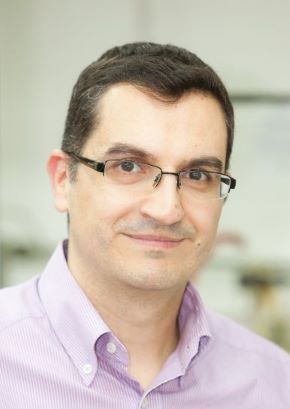
Gregory A. Voth serves as Haig P. Papazian Distinguished Service Professor in the Department of Chemistry at the University of Chicago, where he leads a highly productive research group focused on theoretical and computational approaches to complex biophysical and chemical systems. His work bridges multiple disciplines through innovative methodology development. Dr. Voth's research program centers on: Developing multiscale theoretical frameworks connecting quantum to classical mechanics Creating advanced coarse-graining techniques for biomolecular and materials systems Simulating charge transport phenomena in biological and synthetic systems Modeling viral infection mechanisms with atomic-level detail His group has pioneered computational approaches that reveal fundamental mechanisms in biological processes, most notably how HIV capsids exploit electrostatic ratcheting to enter cell nuclei. The Voth Group has also created the first comprehensive computational model of the entire SARS-CoV-2 virus. Recent methodological advances include entropy-based coarse-graining, machine learning integration with statistical mechanics, and the RAPTOR software package for proton transport simulations. Dr. Voth's scientific impact is recognized through numerous prestigious awards including the 2025 ACS Award in Theoretical Chemistry, the S F Boys-A Rahman Award (2019), and a Festschrift in The Journal of Physical Chemistry B celebrating his 65th birthday. His research is consistently funded by NIH and NSF, supporting a vibrant group of students and postdocs who regularly receive competitive fellowships and awards. Through extensive collaborations with experimental groups worldwide, Dr. Voth's theoretical work provides critical insights that guide experimental design and interpretation across virology, biophysics, and materials science.


.jpg)