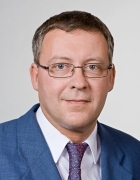
Tom Huiskampمشاهده پروفایل
دانشیار
- High-Voltage Pulsed Power Technology
- Transient Plasma Generation
- Environmental Applications (Air Purification, Sustainable Agriculture)
- +۳ مورد دیگر
Tom Huiskamp is an Associate Professor at the Department of Electrical Engineering, Eindhoven University of Technology (TU/e), specializing in high-voltage pulsed power technology for transient plasma generation. His research focuses on environmental applications such as air purification and sustainable alternatives to pesticides in agriculture through plasma-activated water. He is affiliated with the Electrical Energy Systems research group and the High Tech Systems Center, with external collaborations at institutions like the University of Southern California and Leibniz Institute for Plasma Science. MSc and PhD in Electrical Engineering from TU/e (cum laude, 2011 and 2015) Postdoctoral researcher at TU/e (2015-2016), later appointed as Assistant Professor Visiting Scientist at INP Greifswald (2016), Research Associate at USC (2017-2018) His work spans nanosecond pulsed power circuits, CO2 plasma technology, and programmable high-voltage systems. The 15 most recent publications highlight advancements in solid-state Marx generators, plasma diagnostics for NOx removal, industrial emission control, and CO2 dissociation for future fuels. These align with UN Sustainable Development Goals, particularly environmental protection and sustainable agriculture. Notable scientific awards include the NWO Veni Prize (2018), Hidde Nijland Prize (2024), NWO Vidi Prize (2024), and the Kenneth J. Germeshausen Award (2024). He has led projects like "Plasma for Plants" and "Making plasma-assisted combustion efficient" and teaches courses on high-voltage and pulsed power technology. NWO Veni Prize: Flexible, Fast High-Voltage Pulses for a Better Environment (2018) NWO Vidi Prize: High-Voltage on the Rocks (2024) Hidde Nijland Prize: Scientific Excellence (2024) Kenneth J. Germeshausen Award: Career Achievement (2024) Tom actively contributes to conferences and organizing events like the HAKONE XVII symposium. His research integrates theoretical and experimental approaches, emphasizing real-time diagnostics, impedance matching, and sustainable applications.