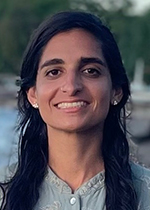
Preeya Khannaمشاهده پروفایل
استادیار
Preeya Khanna is an Assistant Professor in the Department of Bioengineering within the College of Engineering at the University of California, Berkeley, with affiliations at the Helen Wills Neuroscience Institute. Her research integrates sensorimotor neuroscience, computational modeling, and neurotechnology development to restore movement in damaged sensorimotor systems. Her educational background includes: PhD in Bioengineering from UC Berkeley (2017) BSE in Bioengineering & Mathematics from the University of Pennsylvania (2012) Dr. Khanna's research focuses on uncovering neural principles of dexterous movement control through studies of sensorimotor learning, brain-machine interfaces, and rehabilitation engineering. She develops neurophysiologically-grounded therapies including neurofeedback and neuromodulation approaches for stroke rehabilitation, bridging computational neuroscience with clinical translation. Her recent publications (2022-2025) reveal a strong trajectory in decoding motor cortex dynamics, particularly beta oscillations and ensemble reactivations, for therapeutic applications. Key themes include closed-loop BMI systems for severe stroke patients, low-frequency stimulation protocols, and kinematic-based impairment assessment, demonstrating convergence of computational modeling, neural engineering, and clinical rehabilitation. Her scientific recognition includes: Sloan Research Fellow (2024) Google Faculty Research Award (2024) NIH Director's New Innovator Award (2024) As Principal Investigator of the Sensorimotor Neural Engineering Lab, Dr. Khanna leads NIH and Google-funded research on neurotechnology for motor rehabilitation. Her lab actively recruits researchers to develop next-generation brain-machine interface therapies targeting sensorimotor restoration. The Sensorimotor Neural Engineering Lab investigates how sensory and motor brain signals coordinate dexterous behaviors, leveraging these principles to design neurotechnology for damaged sensorimotor networks. Current work focuses on closed-loop neurostimulation systems and real-time neural decoding for stroke rehabilitation.