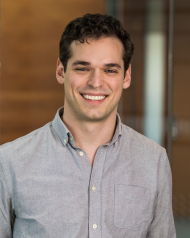
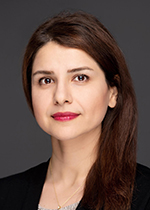
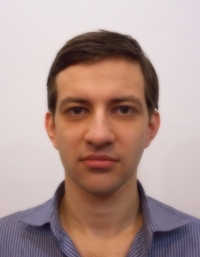
Krishnendu Chatterjee is a Professor at the Institute of Science and Technology Austria (IST Austria) , Department of Computer Science. His research spans formal verification, probabilistic systems, game theory, and evolutionary dynamics, with over 300 peer-reviewed publications in top venues such as DISC, AAAI, LICS, PNAS, Nature , and Journal of the ACM . His research focuses on developing theoretical foundations and practical algorithms for analyzing complex systems, including Markov decision processes, stochastic games, probabilistic programs, and evolutionary models. He has made significant contributions to topics such as reachability analysis, termination of probabilistic programs, synthesis of controllers, and evolutionary game dynamics. Chatterjee's work is highly interdisciplinary, bridging computer science, mathematics, and biology. He has collaborated extensively with leading researchers worldwide and has been involved in editorial roles and program committees for major conferences in formal methods and theoretical computer science.
Malte Helmert is a Professor at the University of Basel in the Department of Mathematics and Computer Science. He previously worked at the University of Freiburg's Research Group on the Foundations of Artificial Intelligence from 2001 to 2011. His research focuses on intelligent problem-solving , particularly in automated planning , combinatorial search , constraint satisfaction , and NP-hard graph problems . Helmert has made significant contributions to classical planning, including the development of the Fast Downward planning system and its derivatives. Education : Diploma in Computer Science (M.Sc.) from the University of Freiburg (2001) Ph.D. in Computer Science from the University of Freiburg (2006) Research interests encompass the theoretical and practical aspects of automated planning, including heuristic search , optimal planning , abstraction techniques , and domain-independent planning . His work explores merge-and-shrink abstractions , landmark progression , and cost partitioning algorithms for classical planning systems. Recent publications analyze advancements in pseudo-Boolean proof logging , higher-dimensional potential heuristics , and correlation complexity in planning domains. These works often integrate mathematical modeling, algorithm design, and empirical benchmarking. Scientific awards include the AAAI Fellow (2021), EurAI Fellow (2020), multiple Best Paper Awards at ICAPS and SoCS conferences, and the Computers and Thought Award (2011). He also received the VDI-Förderpreis for his Master’s thesis. Software contributions include the Fast Downward planning system, MIPS (now maintained by Stefan Edelkamp), and COVER (a vertex cover solver). Helmert has organized tutorials at ICAPS and AAAI conferences on topics like landmark progression , abstraction heuristics , and LP-based heuristics .
Zachary Kincaid is an Associate Professor in the Department of Computer Science at Princeton University. His research focuses on program analysis , logic , and programming languages , with emphasis on making analysis compositional and robust . PhD, University of Toronto (2016) BSc, Western University Research Interests Dr. Kincaid develops algebraic program analysis frameworks combining symbolic methods with abstract interpretation. His work addresses challenges in: Compositional analysis of concurrent and recursive programs Termination analysis for loops with complex control flow Non-linear numerical invariant generation Strategy synthesis for logical games Parameterized program verification Publication Trends His research output spans program analysis (2024-2010), formal verification (2018-2010), concurrency (2016-2010), and automated synthesis (2013-2012). Recent work (2024) explores polynomial ideals and nonlinear ranking functions , while foundational contributions include vector addition systems and recurrence-based invariants . Scientific Engagement Dr. Kincaid contributes to the academic community through: Program Committee service (PLDI, POPL, CAV, IJCAI, LICS, FMCAD, ESOP, etc.) Co-developing the Duet analyzer for unbounded concurrency Collaborative work with leading researchers (Tom Reps, Azadeh Farzan, Jason Breck) Advising & Grants He advises PhD students and leads research funded by the ONR grant N00014-19-1-2318 . Current advisees include Jake Silverman and Shaowei Zhu, while former student Charlie Murphy (PhD 2023) now holds a postdoctoral position at University of Wisconsin-Madison. Labs & Teams Dr. Kincaid co-developed the Duet program analyzer and contributes to tools like Srk and SimSat . His work integrates SMT solvers (MathSAT, Z3) and mathematical frameworks (rational vector addition systems, recurrence relations) for robust program analysis.
Dr. Philipp Braun is a Senior Lecturer in the School of Engineering at The Australian National University (ANU), Canberra. He holds a Diploma in Mathematics from Technical University Kaiserslautern (2012) and a Ph.D. in Mathematics from the University of Bayreuth (2016). Prior to ANU, he served as an Assistant Professor at the University of Bayreuth (2016–2018) and a Senior Research Associate at the University of Newcastle, Australia (2016–2020). His research focuses on applied dynamical systems and control theory , including nonsmooth control Lyapunov functions, numerical construction of control Lyapunov functions, obstacle avoidance, distributed optimization, and smart grid applications. Recent projects include work on hybrid systems, pursuit-evasion algorithms, and sensor-based navigation for robots. Dr. Braun has contributed to over 20 peer-reviewed articles and led projects such as Control at What Cost? One-Shot Real-Time Dual Inverse Optimal Control (2025–2027) and Solution Concepts and Performance Guarantees in Partial Information Multi-Player Games (2024–2027). His work bridges theoretical advancements with practical applications in robotics, energy systems, and environmental modeling. Key awards and recognitions are not explicitly listed, but his extensive publication record reflects significant contributions to control theory and robotics. Supervision of research students is ongoing, though specific advisee names are not documented in the provided texts.
Chris Köcher is a Researcher at the Max Planck Institute for Software Systems (MPI-SWS) in Kaiserslautern, Germany. His work focuses on theoretical computer science, with a strong emphasis on formal methods, automata theory, and verification of complex systems. He leads research in areas such as algorithms, programming languages, cyber-physical systems, and security. His research bridges foundational theory and practical applications, addressing challenges in distributed systems, mobile systems, and privacy-preserving technologies. His research interests span formal language theory, verification of concurrent systems, and the analysis of storage mechanisms in automata. Notably, he has contributed to the study of queue automata, multi-pushdown systems, and the decidability of reachability problems in lossy systems. His work often intersects with theoretical computer science and algebraic structures, exploring topics like monoids and trace languages. Chris’s publications reflect a deep engagement with foundational questions in computer science, including the verification of cooperating multi-pushdown systems, the complexity of semilinear set separability, and the formal analysis of hard attention mechanisms in transformers. His research has implications for improving the reliability and security of software systems through rigorous mathematical foundations. He is affiliated with MPI-SWS, a leading research institution in software systems, and contributes to the institute’s mission to advance theoretical and applied research in computer science. His work is supported by collaborations within the institute and the broader academic community.
Somayeh Sojoudi is an Associate Professor in the Departments of Electrical Engineering & Computer Sciences and Mechanical Engineering at UC Berkeley, affiliated with the Berkeley Institute for Data Science (BIDS). Her research focuses on Artificial Intelligence, Control Systems, Optimization Theory, and Power and Energy systems. She teaches courses like EECS 127 and EECS 227AT on optimization models in engineering. Education: PhD in Control & Dynamical Systems from the California Institute of Technology (2013). Research Interests : AI and Machine Learning, particularly neural network robustness and generative models Optimization methods for non-convex and low-rank problems Control systems, power grids, and distributed energy resources Game-theoretic approaches in dynamic systems Awards : NSF CAREER Award (2021) ONR Young Investigator Award (2021) INFORMS Optimization Society Prize for Young Researchers (2015) IEEE PES Best-of-the-Best Conference Paper Award (2022) Her work bridges theoretical advancements in optimization with practical challenges in energy systems and AI, emphasizing robustness and safety-critical applications.
Michael Raskin is a Lecturer (maître de conferences) at LaBRI, University of Bordeaux, where he conducts research in theoretical computer science with a focus on distributed systems and formal methods. His work bridges theoretical foundations with practical implementations, particularly in population protocols, temporal graphs, and Petri nets. His research interests span Theoretical Computer Science , Distributed Systems , Algorithms , and Formal Methods , with specific expertise in population protocols, temporal graph analysis, vector addition systems, and verification techniques for parameterized systems. His publications demonstrate a consistent focus on computational complexity, state complexity, and threshold phenomena in distributed models. Recent publication trends show a strong emphasis on temporal graph theory (with multiple papers on random temporal graphs and giant components), population protocol analysis (including modular protocols and leaderless rendez-vous systems), and verification techniques for parameterized systems. His work often combines mathematical rigor with practical implementation insights. Raskin has developed significant software projects including: Agnostic Lizard - A portable code walker for Common Lisp QueryFS - A filesystem defined through compiled queries His technical contributions span both theoretical advances and practical systems implementation, with a recurring theme of applying programming language techniques to systems problems. His work on Common Lisp tools demonstrates a commitment to practical language implementation alongside theoretical research.
Alexandre Vigny is a junior professor at University Clermont Auvergne, France, where he conducts research at the intersection of logic, algorithms, and graph theory. His work focuses on theoretical computer science, particularly in model checking, query enumeration, and distributed algorithms on sparse graph classes. Research Interests: Theoretical Computer Science Logic in Computer Science Parameterized and Distributed Algorithms Graph Theory and Structural Sparsity Database Query Evaluation Reconfiguration Problems His recent publications explore algorithmic meta-theorems, first-order logic with connectivity, elimination distance, and distributed domination, primarily on sparse and structurally constrained graphs. His work appears in top venues such as LICS, ICALP, PODS, and JACM. Scientific Awards: No awards explicitly mentioned. Advising and Grants: Co-supervising Jona Dirks, PhD student since October 2024, with Mamadou Kanté. No specific grants mentioned, but active in collaborative research with prominent figures like Sebastian Siebertz, Luc Segoufin, and Patrice Ossona de Mendez. Labs and Teams: Previously part of Sebastian Siebertz’s team at the University of Bremen. Collaborates with researchers across Europe, including in Warsaw and Paris. Involved in the theoretical computer science community, co-organizing the PODC-DARE workshop.
Slawek Lasota is a Professor at the Automata Theory Group within the Faculty of Mathematics, Informatics and Mechanics, University of Warsaw. His research focuses on automata theory, concurrency theory, formal verification, and systems biology, with a strong emphasis on computational complexity and algorithmic analysis of systems with infinite-state spaces. Research Interests : Automata theory (infinite alphabets, nominal sets), concurrency theory (timed automata, vector addition systems), formal verification (reachability problems, model checking), systems biology (computational models of biological systems). Grants : Coordinator of NCN grants on data-enriched models and automatic analysis of concurrent systems; participant in ERC projects Lipa and FOX . Community Service : Managing editor of Fundamenta Informaticae (2018-), member of EATCS Council (2019-), and Rada Doskonalosci Naukowej (2019-). His work has received recognition including the STOC'19 Best Paper Award and EATCS BEST ETAPS PAPER AWARD . He supervises PhD students in topics ranging from Petri nets to timed automata and has contributed extensively to advancing verification techniques for systems with data, timed models, and concurrency.
B Srivathsan is an Associate Professor in the Computer Science Department at the Chennai Mathematical Institute . His research focuses on formal verification of real-time systems , automata theory , game theory , and concurrency . He has a dual degree in Computer Science and Engineering from IIT Bombay (2004-2009), a PhD from LaBRI, University of Bordeaux (2012), and post-doctoral experience at RWTH Aachen (2012-2013). Education: B.Tech + M.Tech, IIT Bombay Ph.D., University of Bordeaux Post-doc, RWTH Aachen Research Interests: He specializes in formal verification techniques for real-time systems using timed automata, with applications in critical systems like pacemakers. His work explores automata theory, game-theoretic approaches, and efficient algorithms for verification tasks, including zone-based abstractions and handling diagonal constraints. Publication Trends: His recent work (2024-2025) addresses event-clock automata simulations, MITL model-checking, and deterministic suffix-reading automata. Earlier publications (2019-2022) focus on local-time semantics, negotiation modeling, and scalable verification algorithms for timed systems. PhD Supervision: He advises five current students, including part-time student R. Keerthan at TCS Pune, and co-advises others with researchers from IIT Bombay and ENS Paris-Saclay. Three students have completed their PhDs under his guidance. Professional Service: He serves as President of IARCS (2024-present), previously as Secretary (2017-2023), and chairs program committees for conferences like ATVA 2025. He organizes workshops including the IARCS Verification Seminar and Games Workshop 2020 .
Dr Richard Hepworth-Young is a Reader in the School of Natural and Computing Sciences at the University of Aberdeen, where he has been a faculty member since 2011. His research is centered in algebraic topology, with significant contributions to homological stability and magnitude homology. He teaches advanced courses such as MX4540 Knots and MX4546 Algebraic Topology, employing a flipped classroom model. He is an active member of the mathematical community, organizing the Scottish Topology Seminar. His research interests include: Algebraic Topology Homological Stability Magnitude Homology String Topology Diagram Algebras (Temperley-Lieb, Brauer, Partition) Orbifolds and Stacks His recent publications demonstrate a strong trend in applying homological methods to algebraic and combinatorial structures, particularly diagram algebras and directed graphs. He has pioneered work on magnitude homology—a categorification of Tom Leinster's magnitude—with applications in metric geometry and curvature. His work often involves deep collaborations with researchers such as Simon Willerton, Rachael Boyd, and Emily Roff. Richard Hepworth-Young has not received any explicitly mentioned scientific awards in the provided text. He has supervised or collaborated with several researchers, though no formal list of PhD or Master’s students is provided. He has been involved in multiple research grants through his publications and collaborations, though specific grant details are not listed. He is not known to lead a formal lab or research team, but his collaborative network includes prominent figures in topology.
Stefano Quer is an Associate Professor at the Department of Control and Computer Science (DAUIN), Politecnico di Torino. He holds a PhD in Electronic Engineering from the same institution and has been affiliated with DAUIN since 1996. Researcher (1996-2000) Associate Professor (2000-present) Visiting Faculty at UC Berkeley (1994-1995) Research Interests His work spans Formal Verification BDD/SAT Techniques Embedded Systems Hardware/Software Co-Verification Parallel Computing with applications in VLSI CAD, industrial IoT, and energy-efficient systems. Recent articles focus on GPU-accelerated graph algorithms, wireless sensor calibration, and AI-driven test optimization. Scientific Awards Best Paper Award, IEEE EURO-DAC'94 Academic Contributions Supervised PhD students Lorenzo Cardone and Andrea Calabrese Member of DATE, ICSOFT Technical Program Committees Topical Advisor for Sensors MDPI 60+ publications in IEEE/ACM venues
Grégoire Sutre is a CNRS Research Fellow at LaBRI, University of Bordeaux, specializing in formal verification and model checking of infinite-state and concurrent systems. His research includes theoretical and practical aspects of verification, with applications ranging from systems code to biological models. Research Interests: Model-checking of safety properties Infinite-state and distributed systems Abstraction refinement techniques Vector addition systems and Petri nets Software verification and concurrent systems Teaching: He currently teaches Software Verification at the Master 2 level, with lab sessions in OCaml focusing on abstract interpretation and static analysis techniques. Students: He supervises several PhD students working on reachability, concurrency, and binary analysis. Projects: He has led or participated in multiple ANR-funded projects such as BraVAS, ReacHard, VACSIM, and SPaCIFY, focusing on formal methods and verification of critical systems.
Andrew Clark is an Associate Professor in the Department of Electrical & Systems Engineering at Washington University in St. Louis (WashU), part of the McKelvey School of Engineering. Previously, he served as an Associate Professor at Worcester Polytechnic Institute (WPI). He holds a PhD from the University of Washington (2014) and degrees from the University of Michigan (BSE 2007, MS 2008). His research focuses on control, security, and resilience of cyber-physical systems (CPS) and complex networks, leveraging game theory, control theory, and optimization to ensure safety in adversarial environments. Key areas include secure control frameworks for autonomous systems, power grids, and submodular optimization for scalable algorithms. Education: PhD, Electrical Engineering, University of Washington, 2014 MS, Mathematics, University of Michigan, 2008 BSE, Electrical Engineering, University of Michigan, 2007 Research Interests: Clark’s work emphasizes resilience engineering, game-theoretic security modeling, and cyber-physical system security. He develops methods for robust control under attacks, including controlled islanding for power systems, stochastic control barrier functions for safety, and submodular optimization for resource allocation. His research also addresses challenges in autonomous systems, smart grids, and adversarial machine learning. Articles Trends: Recent publications focus on safety-critical control under adversarial conditions, secure CPS design, and submodular optimization for network resilience. His work bridges theoretical advancements with practical applications in energy systems and autonomous vehicles. Scientific Awards: NSF CAREER Award (2020) AFOSR Young Investigator Program (YIP) Award (2022) Multiple best paper awards at venues like WiOpt, GameSec, and ICCPS Grants & Advising: Clark has secured grants from NSF, AFOSR, and ONR totaling over $1.6M. He advises PhD students (e.g., Luyao Niu, Zhouchi Li) and MS students, focusing on CPS security and resilience. His lab has won awards at VehicleSec and other conferences. Labs & Teams: His research group at WashU collaborates on projects like resilient CPS design, with a focus on real-world applications such as autonomous systems and smart grids.
Lorenzo Ntogramatzidis is an Associate Professor in the School of Electrical Engineering, Computing and Mathematical Sciences at Curtin University, where he has been a full-time staff member since 2009. His academic journey began with a Laurea degree in Computer Engineering from the University of Bologna, followed by a Ph.D. in Control and Operations Research from the same institution. He has held positions as an ARC Australian Postdoctoral Fellow and Senior Lecturer at Curtin University before becoming an Associate Professor in 2016. His educational background includes: Laurea degree in Computer Engineering, University of Bologna (2001), with honors (magna cum laude) Italian Professional Engineering Degree (2002) Ph.D. in Control and Operations Research, University of Bologna (2005) Ntogramatzidis's research focuses on dynamical systems and control theory, with particular emphasis on geometric control theory, optimal control problems with constraints, multidimensional systems, and signal processing. His work has significant applications in various engineering domains including power electronics and electric vehicle charging systems. He has developed novel approaches to controller design, disturbance decoupling, and eigenstructure assignment in linear systems. His recent publications demonstrate a strong focus on geometric control methods, disturbance decoupling techniques, and applications to power electronics. His research shows a consistent pattern of applying theoretical control concepts to practical engineering problems, particularly in the areas of electric vehicle charging and power converter control. Among his notable achievements are: Magna cum laude honors in his Laurea degree Ph.D. scholarship from the Italian Ministry for University and Scientific Research (2002-2004) Australian Post-Doctoral Fellowship (2009-2012) Curtin Research Fellowship (2012-2016) WA Young Tall Poppy Award 2011 Australian Research Council Future Fellowship (2012-2016) Ntogramatzidis has been actively involved in research supervision and teaching, with notable contributions to the field through his editorship roles for Systems & Control Letters and Multidimensional Systems and Signal Processing. His research has been supported by multiple ARC Discovery Projects and other national research grants.