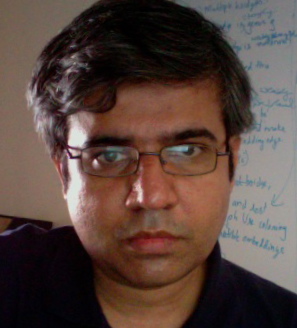
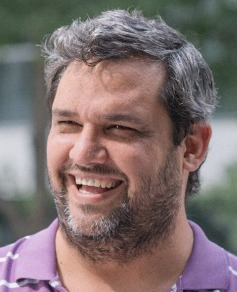
Andrew D. Lewis is a Professor and Associate Head of the Department of Mathematics & Statistics at Queen's University, Kingston, Canada. His research focuses on geometric control theory, global analysis, and geometric mechanics, with applications to mechanical systems and dynamical systems. He holds a Ph.D. from Caltech, along with M.Sc. and B.Sc. degrees from Caltech and the University of New Brunswick, respectively. His research explores the intersection of geometric methods, topology, and algebra in solving structural problems in control theory and mechanics. He actively mentors graduate students and emphasizes mathematical rigor combined with applied perspectives. Lewis teaches advanced courses in control theory, differential equations, and geometric mechanics, and has developed extensive lecture notes and software tools for academic use. He has organized numerous research events, including the CRM Trimester on Control Geometry and Engineering and the Meeting on Nonlinear Control Theory and its Applications. His work spans theoretical contributions to control systems, geometric mechanics, and applied mathematics, with a focus on controllability, stabilization, and system dynamics. Education: Ph.D., California Institute of Technology M.Sc., California Institute of Technology B.Sc., University of New Brunswick Awards/Honors: None explicitly mentioned in the provided texts. Grants/Advising: Supervised numerous graduate students and postdoctoral researchers, fostering interdisciplinary work in control theory and mechanics.
Sonwabile Mafunda is an Assistant Professor of Mathematics at Soka University. His research focuses on graph theory, algebraic graph theory, and discrete mathematics, with a particular emphasis on distance measures in graphs and their applications to cryptography and combinatorial optimization. He holds a PhD and is affiliated with the Department of Mathematics. Dr. Mafunda's work explores extremal graph theory, proximity and remoteness in graphs, and structural properties of graphs such as tree structures and free graphs. His research bridges theoretical mathematics with practical applications in algorithm design and network analysis. His recent publications (2020–2025) highlight advancements in understanding graph distance parameters, spanning trees, and optimization problems. Earlier work (2015) demonstrates contributions to applying algebraic graph theory in cryptographic systems. No scientific awards or grants are explicitly listed. Advising records are not detailed in the provided texts. He is reachable at smafunda@soka.edu.
Greg Bodwin is an Assistant Professor in the Department of Computer Science and Engineering at the University of Michigan, College of Engineering. His research focuses on theoretical computer science, particularly in algorithms, graph theory, and fault-tolerant network design. He emphasizes mentoring PhD students through structured weekly meetings, aiming for them to identify their research niche and produce peer-reviewed publications. His advising style evolves as students progress, transitioning from guided problem-setting to encouraging independent research direction. Research expectations include active participation in conferences (with travel funding) and maintaining productivity through flexible work arrangements. Authorship follows alphabetical convention in CS Theory. Students may occasionally serve as Graduate Student Instructors, contingent on funding. Bodwin encourages internships, though uncommon in theory-focused roles, and vacation time with advance notice near submission deadlines. Key research areas include spanners, fault-tolerant networks, shortest path algorithms, and graph sparsification. Over 30 publications since 2011 reflect his contributions to these fields. Funding and grants are tied to his research projects, though specifics are not detailed here.
Bala Ayikudi Ramachandrakumar is a post-doctoral researcher at the Max Planck Institute for Software Systems (MPI-SWS), working under Rupak Majumdar. He holds a Ph.D. from the Technical University of Munich, advised by Prof. Javier Esparza. His research focuses on parameterized verification, automata theory, and formal methods applied to cyber-physical systems and distributed computing. Key interests include the analysis of threshold automata, VASS models, and well-quasi orders. Education: Ph.D. in Computer Science (2019–2024), Technical University of Munich; Prior academic background not explicitly detailed. Research Interests: Parameterized Verification, Automata Theory, Formal Verification, Theoretical Computer Science, Cyber-Physical Systems, and Distributed Systems. His work bridges foundational theory with practical verification challenges in concurrent and networked systems. Publications (2024–2018): Recent work includes decidability results for affine continuous VASS and complexity analyses of threshold automata. Over 15 peer-reviewed articles in top venues like LICS, POPL, and CONCUR. Grants and Awards: None explicitly listed in provided texts.
Stephen E. McKeown is an Assistant Professor of Mathematics at the University of Texas at Dallas (UT Dallas). He specializes in differential geometry, geometric analysis, and partial differential equations (PDEs), with a focus on conformal geometry, singular domains, and applications in theoretical physics, particularly the AdS/CFT correspondence. He actively organizes the UTD Geometry, Topology, and Dynamics seminar and co-organized the 2022 conference “Conformal Geometry, Analysis, and Physics” in Seattle. His research bridges geometric PDEs on singular domains and connections to physics, emphasizing the study of cornered manifolds and asymptotically hyperbolic Einstein metrics. He collaborates with leading institutions like the University of Washington and has participated in the Texas Geometry and Topology Conference. McKeown’s work often addresses boundary regularity, renormalized volume, and scattering theory in geometric contexts. He has no explicitly listed scientific awards but maintains an active research program with ongoing projects suitable for graduate and undergraduate students. His office is located in Founder’s 2.604B, and he is reachable via phone at (972) 883-4684.
Jürgen Giesl is a Professor at the Teaching and Research Area Computer Science 2 within the Department of Computer Science at RWTH Aachen University , Germany. He leads research in programming languages, formal verification, automated deduction, and term rewriting systems. Research Interests: Automated Termination and Complexity Analysis of Programs Dependency Pairs and Term Rewriting Systems Verification of Probabilistic and Integer Programs Static Analysis and Symbolic Execution Model Checking and Constrained Horn Clauses Development of Automated Tools (AProVE, LoAT) His recent research, reflected in the latest publications, focuses on termination and complexity analysis for probabilistic programs, polynomial loops, and integer programs, using advanced techniques such as dependency pairs, loop acceleration, and semiring semantics. He also contributes to SMT solving and transitive relation learning for infinite-state model checking. Scientific Awards: Best Tool Paper Award at iFM 2017 Silver Medal (Second Best Paper) at SEFM '16 Best Paper Honourable Mention at IJCAR 2024 Best Student Paper Honourable Mention at IJCAR 2024 Advising and Grants: Giesl has supervised numerous PhD and Master’s students, including prominent researchers such as Fabian Frohn, Jens Hensel, Nils Lommen, and Marcel Hark. He leads a large research group focused on automated verification and has contributed extensively to international verification competitions. His work is supported by ongoing research grants and collaborations with leading institutions in formal methods. Labs and Teams: He leads the Programming Languages and Verification research group at RWTH Aachen, which develops and maintains the AProVE and LoAT tools. These tools are central to automated termination and complexity analysis and are regularly submitted to international competitions such as TERMCOMP and VBS.
Prof. J. Rod Franklin, PhD is a Full Professor of Logistics and Academic Director of Executive Education at Kühne Logistics University (KLU) in Hamburg, Germany. With an extensive background spanning both academia and industry, Professor Franklin brings deep practical experience to his academic role. He has held significant leadership positions at KLU, including Dean of Programs, and was instrumental in the university's planning stages as he states: "KLU is near and dear to my heart, because I was one of the individuals that helped plan the university." His unique blend of academic rigor and industry expertise makes him a central figure in KLU's mission of providing world-class logistics education and research. Professor Franklin's academic foundation is impressive: Doctorate of Management, Case Western Reserve University, USA (2000) Master of Business Administration, Harvard Graduate School of Business, USA (1979) Master of Science in Mechanical Engineering, Stanford University, USA (1975) Bachelor of Science in Mechanical Engineering, Purdue University, USA (1974) His research focuses on applying modern management techniques to supply chain operations, with pioneering work in sustainable business models, green logistics, corporate social responsibility, and cloud-based supply chain management. Professor Franklin is a leading authority on the Physical Internet concept, which seeks to revolutionize logistics through interconnected systems inspired by the digital internet. His research consistently bridges theoretical frameworks with practical industry applications, addressing critical challenges in modern logistics networks while promoting sustainability and efficiency. Professor Franklin's publication record over the past two decades reveals a clear evolution from traditional logistics service innovation toward cutting-edge research on the Physical Internet, predictive analytics, and big data applications in supply chains. His recent work demonstrates increasing emphasis on urban logistics solutions, sustainability challenges, and the integration of digital technologies with physical logistics networks. His seminal 2020 paper "From the Digital Internet to the Physical Internet" has significantly advanced the conceptual framework for this emerging field, while his 2024 protocol design work continues to push the boundaries of practical implementation. Professor Franklin leads significant research initiatives including "Accelerating the Path Towards Physical Internet - SENSE," "Internet of Food and Farm 2020," and "URBANE - Upscaling innovative green urban logistics solutions." His work has been published in top-tier journals including Journal of Business Logistics, IEEE Transactions on Systems, Man and Cybernetics, and International Commerce Review, demonstrating substantial scholarly recognition. While specific individual awards aren't detailed in available information, his leadership in major funded research projects indicates significant institutional support for his work. As Academic Director of Executive Education at KLU, Professor Franklin oversees programs that effectively bridge academic theory with industry practice. His teaching portfolio includes MBA courses on Critical Thinking, Design Thinking, Managing Multiple Complex Expectations, and Systems Thinking - all emphasizing practical application of theoretical concepts. His extensive industry background, including executive roles at Kühne + Nagel and other major logistics firms, directly informs his approach to academic supervision and executive education. Professor Franklin has successfully secured research funding for multiple projects focused on sustainable logistics innovation, demonstrating his ability to translate theoretical concepts into impactful research initiatives. Professor Franklin leads collaborative research teams focused on the Physical Internet concept and its applications in modern logistics. Through projects like SENSE and URBANE, he works with international researchers, industry partners, and policymakers to develop innovative solutions for sustainable urban logistics. His research integrates expertise from computer science, operations research, and business management to address complex supply chain challenges. The BizSLAM App, developed as part of his work on multi-level SLA management, exemplifies his team's ability to create practical tools with direct industry applications, demonstrating the real-world impact of his research vision.
Kitty Meeks is a Reader in the School of Computing Science at the University of Glasgow, having transitioned from the School of Mathematics and Statistics in 2016. Her research focuses on algorithm design, particularly parameterized and counting complexity, with applications in graph theory and precision medicine. She holds an EPSRC Fellowship (2021–2026) and previously a Royal Society of Edinburgh Personal Research Fellowship (2016–2021). Education: MMath in Mathematics and Computer Science (Oxford, 2009), DPhil in Mathematics (Oxford, 2013). Postdoctoral research at Queen Mary University of London (2012–2014). Research: Explores efficient algorithms for network analysis, including structural properties of real datasets and applications in precision medicine. Current projects address combinatorial optimization for multiple solution spaces. Awards: Royal Society of Edinburgh Fellowship, EPSRC Fellowship. Grants: EPSRC projects on multilayer algorithmics and precision medicine, plus Scottish Crucible Seed Funding. Students: Supervises Peace Ayegba (Student-Project Allocation Problems) and Laura Larios-Jones (Temporal Graph Algorithms).
Abhishek Halder is an Associate Professor in the Department of Aerospace Engineering at Iowa State University and an Associate Adjunct Professor in the Department of Applied Mathematics at the University of California, Santa Cruz. He is also a member of the Translational AI Center at Iowa State University. His academic journey includes joining Iowa State University as an Assistant Professor in July 2023 and previously serving as faculty at UC Santa Cruz starting from October 2017. Dr. Halder's educational background includes studies at IIT Kharagpur and Texas A&M University, where he developed expertise in systems and control theory with applications to matrix analysis, probability, and optimization. His research has been recognized with prestigious awards including the O. Hugo Schuck Best Application Paper Award from the American Automatic Control Council, Applied Mathematics Research Award from UC Santa Cruz, Outstanding Doctoral Student Award from Texas A&M, and Best Dual Degree Thesis Award from IIT Kharagpur. His research focuses on stochastic systems, control and optimization with applications to large scale cyber-physical systems. Dr. Halder has made significant contributions to the fields of optimal transport, Schrödinger Bridge theory, distributional control, and uncertainty propagation in dynamical systems. His work bridges theoretical developments with practical applications in power systems, aerospace engineering, and machine learning. He has secured multiple research grants from NSF, including a CPS Frontier project on Computation-Aware Algorithmic Design for Cyber-Physical Systems. Dr. Halder has demonstrated leadership in the control systems community through editorial roles including Associate Editor for IEEE Transactions on Automatic Control (2025-present), ASME Journal of Dynamic Systems, Measurement, and Control (2025-present), Systems & Control Letters (2022-present), and previously for IEEE Control Systems Society Conference Editorial Board (2019-2025) and IEEE Transactions on Aerospace and Electronic Systems (2019-2022). He is a Senior Member of IEEE and a member of IFAC, SIAM and ASME. His research group has produced numerous publications in top-tier journals and conferences, with recent work focusing on connections between optimal transport theory, stochastic control, and machine learning. The publication trends show increasing integration of Schrödinger Bridge formulations with machine learning techniques for distributional control problems across various domains including power systems, aerospace applications, and resource allocation. O. Hugo Schuck Best Application Paper Award (2024) Applied Mathematics Research Award from UC Santa Cruz (2022) IEEE Senior Member (2021) Outstanding Doctoral Student Award from Texas A&M Best Dual Degree Thesis Award from IIT Kharagpur Dr. Halder has mentored numerous PhD students including Alexis, Georgiy, Iman, Shadi, and Kenneth, many of whom have received prestigious fellowships. His research group maintains strong collaborations with national laboratories including Lawrence Livermore National Lab and Los Alamos National Lab, as well as industry partners. Dr. Halder is also committed to education and outreach, having created and taught the 'Feedback Control' course for high school students in the California State Summer School for Mathematics and Science (COSMOS), introducing complex control theory concepts without calculus or linear algebra.
Prof. Dr. Alexander Strohmaier is a Professor at the Institute of Analysis, part of the Faculty of Mathematics and Physics at Leibniz University Hannover. He serves on the Executive Board of the university, the Riemann Center for Geometry and Physics, and various committees such as the Faculty Council and Admissions Board for Mathematics. His research focuses on mathematical physics, quantum field theory, spectral geometry, and partial differential equations, with a particular emphasis on scattering theory and geometric analysis. He has contributed significantly to topics like Casimir energy computation, microlocal analysis, and the application of spectral methods in curved spacetimes. Prof. Strohmaier’s work bridges theoretical physics and mathematics, addressing foundational questions in quantum field theory on curved spacetimes and the interplay between geometry and analysis. His recent articles explore trace formulas in electromagnetic scattering, Lorentzian manifolds, and numerical methods for spectral problems. While no specific awards are listed, his prolific publication record reflects his influence in these fields. He is actively involved in academic governance and mentorship within the university.
Sara Grundel is a leading researcher at the Max Planck Institute for Dynamics of Complex Technical Systems in Magdeburg, Germany. Her work focuses on computational methods in systems and control theory, particularly in model order reduction, gas network simulation, and optimization of energy systems. Education: Diplom in Mathematics, ETH Zurich (2005) PhD in Mathematics, Courant Institute of Mathematical Sciences, New York University (2011) Research Interests: Sara’s research encompasses mathematical control theory, stability analysis, and numerical methods for differential-algebraic equations. She applies these techniques to gas and energy networks, epidemic modeling, and multi-agent systems. Her interdisciplinary work bridges computational mathematics with real-world engineering and public health challenges. Recent Publications: Her 15 most recent articles (2024–2012) demonstrate expertise in parametrized PDEs, model reduction for coupled systems, and control strategies for SARS-CoV-2 containment. Key subtopics include adaptive meshing, stability-preserving algorithms, and optimization of nonlinear network dynamics. Scientific Contributions: Developed clustering-based model reduction techniques for networked systems Investigated hyperbolic discretization methods using Riemann invariants Advanced polynomial root radius optimization with affine constraints Collaborations: Sara frequently collaborates with researchers like Peter Benner and Martin Gersen on energy grid simulations and control theory. She participates in international conferences (GAMM, IEEE CDC, MTNS) and contributes to edited volumes in applied mathematics.
Erik Frisk is a Professor and Deputy Head of Department at Linköping University's Department of Electrical Engineering (ISY), where he also serves as Head of the Vehicular Systems division. This division operates under the Wallenberg Autonomous Systems Program (WASP) and focuses on control, diagnosis, and supervision of vehicle functions. His research spans fault diagnosis, vehicle control systems, autonomous vehicles, electric vehicle routing, and vehicle dynamics. Key projects include route planning for heavy-duty electric vehicles developed with Scania and Ragn-Sells, and the Fault Diagnosis Toolbox—a Matlab-based platform for analyzing and designing fault diagnosis systems for dynamical systems. Analysis of his 2024-2025 publications reveals a concentrated effort on robust motion planning under uncertainty, predictive control for autonomous vehicles, and naturalistic driving data analysis for heavy vehicle performance. His work consistently bridges theoretical control systems with practical applications in electrified and autonomous transportation. Frisk leads a multidisciplinary research team within the Vehicular Systems division, fostering academic-industrial collaborations that advance vehicle technology through real-world problem solving and innovation.
Samir Datta is a Professor at the Chennai Mathematical Institute, where he conducts research in Theoretical Computer Science with a focus on Computational Complexity Theory. His work spans foundational graph problems, circuit complexity, and interdisciplinary applications in logic and numerical analysis. His research interests include: Bounded space complexity in restricted graph classes (planar graphs, bounded tree-width, H-minor free graphs) Reachability, graph isomorphism, matching, and Steiner Tree problems Characterizations and properties of arithmetic circuits Complexity aspects of game theory, proof theory, and numerical analysis His publications reflect a deep engagement with structural complexity and algorithmic graph theory. While specific titles are referenced, a detailed list is not provided in the source text. He has advised both current and past students, though their names are not listed. No scientific awards are mentioned in the available information. He is actively involved in research and academic mentoring at CMI, with no indication of part-time status, retirement, or former affiliation.
Nathanaël Fijalkow is a Researcher at CNRS in LaBRI (Bordeaux) and a Research Fellow at The Alan Turing Institute in London. His primary research fields include games , machine learning , automata theory , and dynamical systems , with a focus on synthesizing programs from logical specifications and probabilistic models. Research Interests span program synthesis (programming by example), controller synthesis (temporal logic specifications), games on graphs (parity/mean payoff games), probabilistic automata (bounded ambiguity), and invariants for linear dynamical systems. He bridges formal methods with machine learning through projects like DeepSynth . Scientific Contributions include: Undecidability results for probabilistic automata Advances in parity game algorithms (quasi-polynomial lower bounds) Foundations of probabilistic modal logics Efficient synthesis techniques using SMT solvers and distributional learning Supervision involves guiding postdocs and PhD students such as Guillaume Lagarde, Antonio Casares, and Pierre Ohlmann. He has secured grants like the Momentum DeepSynth project (2019-2021) , aiming to merge formal methods with ML for program synthesis.
Gonzalo Navarro is a Full Professor at the Department of Computer Science (DCC) , within the Faculty of Physical and Mathematical Sciences at the University of Chile . His academic roles include coordinating the PhD Program , serving as Research Coordinator , and being a member of the Department Council . Co-created the Pizza&Chili site for compressed text indexes Co-authored two books: Compact Data Structures and Flexible Pattern Matching in Strings Research Interests: He focuses on algorithm design , compressed data structures , text/graph databases , and information retrieval . His work bridges theoretical and practical efficiency in problems like approximate pattern matching, regular expression searching, and dynamic data structure optimization. Recent Publications Trends: His 2025-2024 works emphasize space-time optimal data structures , graph database joins , trajectory compression , and regular expression indexing , often combining algorithmic theory with real-world implementation benchmarks. Scientific Awards: 7 Best Paper Awards in conferences 4 Google Research Awards Highest Cited Paper Award (Elsevier) Scopus Chile Award ACM Fellow (2022) Advising: He has advised 8 postdocs, 22 PhD students, 17 MSc students, and 29 undergraduate theses. His Algorithmic Wednesdays Group fosters collaborative research in algorithms. Labs & Projects: He participates in the Milennium Institute for Foundational Research on Data (IMFD) and the Basal Center for Biotechnology and Bioengineering (CeBiB) , advancing compressed data structures for biological and web-scale applications.