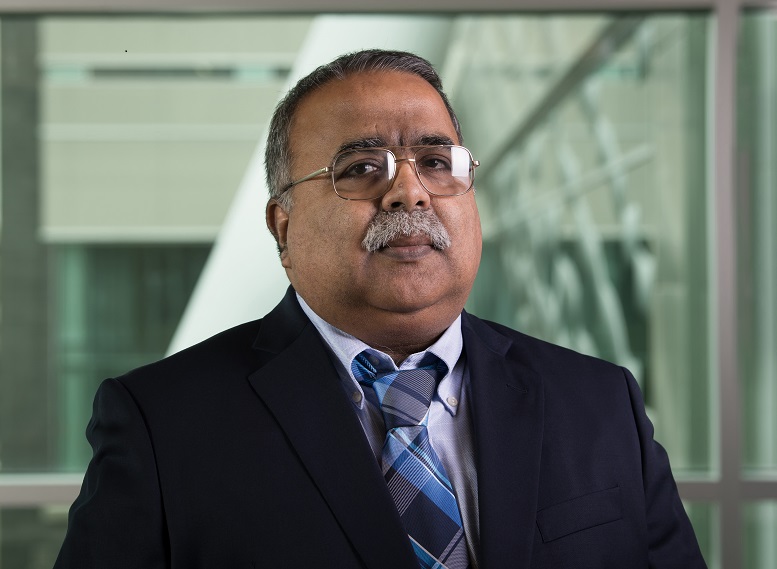
Andrej Bogdanov is a Professor in the Department of Computer Science at the Weizmann Institute of Science's Faculty of Mathematics and Computer Science. With a prolific publication record spanning over two decades from 2002 to 2025, he has established himself as a leading researcher in theoretical computer science and cryptography. His research interests span multiple areas of theoretical computer science, with a particular focus on cryptography, computational complexity, pseudorandomness, and secret sharing. His work often bridges theoretical foundations with practical cryptographic applications, exploring the mathematical underpinnings of secure computation and cryptographic primitives. His research has evolved to address contemporary challenges in quantum computing security and machine learning evaluation. Bogdanov's publication record shows consistent contributions to top-tier conferences including FOCS, STOC, CRYPTO, TCC, and ITCS. His work demonstrates deep theoretical insights while maintaining relevance to practical cryptographic applications. Recent publications indicate expanding interests into quantum computing security and machine learning evaluation frameworks. Bogdanov has collaborated extensively with leading researchers in theoretical computer science, most notably with Alon Rosen (31 joint publications), as well as Siyao Guo, Yuval Ishai, and Chin Ho Lee. His collaborative work spans multiple institutions and reflects the interdisciplinary nature of modern theoretical computer science research. His academic contributions include foundational work on pseudorandom generators, secret sharing schemes, hardness amplification, and more recently, contributions to post-quantum cryptography and quantum security. His research has been supported by multiple grants that have enabled his team to explore the theoretical boundaries of cryptographic security.
Zikai Alex Wen is an Assistant Professor in the Department of Computer Science and Engineering at the Hong Kong University of Science and Technology. Previously, he earned his PhD from Cornell University in 2021 with a dissertation on educational video games and intelligent tutoring systems. His research bridges multiple domains including privacy-preserving technologies, educational technology, cybersecurity, and accessibility. Wen's primary research interests focus on differential privacy, educational technology for students with learning disabilities, phishing detection and prevention, and game design for accessibility. His work uniquely combines theoretical privacy foundations with practical applications in education and security. He has made significant contributions to understanding how privacy mechanisms can be effectively explained to users and how to design systems that protect sensitive data while maintaining utility. His publication record demonstrates consistent output in top venues including IEEE S&P, CHI, ASSETS, and VLDB. Recent work shows increasing focus on generative AI applications for household safety, enhanced differential privacy mechanisms, and continued innovation in educational technology for diverse learners. His research often involves interdisciplinary collaboration across computer security, human-computer interaction, and educational psychology. Wen has received recognition through publications in prestigious venues but specific awards aren't documented in the available records. His work has been supported by research grants focused on privacy technologies and educational accessibility, though specific grant details aren't provided in the source material. He maintains active collaborations with researchers worldwide, particularly with Changyu Dong, Wei Cai, and Shiri Azenkot. His research group focuses on developing practical privacy-preserving systems and accessible educational technologies, with ongoing projects exploring the intersection of AI, security, and inclusive design.
Jagruti Pattadkal is a Research Fellow at the Center for Perceptual Systems within the College of Liberal Arts at the University of Texas at Austin. Her research focuses on understanding neural mechanisms underlying sensory processing, particularly in visual systems and oculomotor behaviors. She employs advanced neurophysiological techniques and comparative approaches in rodents and primates to investigate neural circuit dynamics. Her work bridges basic neuroscience with applied neurotechnology, emphasizing long-term neural recording methods and functional characterization of neuronal subtypes. Current projects include studying interactions between eye movement control systems in marmosets and exploring how sensory amplification mechanisms operate in primate neocortex. Past work has examined visual system development in mice and functional organization of motion-sensitive neurons using 2-photon imaging. Key research themes include: neural synchrony dynamics, primate oculomotor behavior, sensory plasticity, and cross-species comparisons of visual processing. This multidisciplinary approach integrates experimental neuroscience with computational modeling to uncover fundamental principles of brain function. Pattadkal's publications since 2015 reflect her sustained focus on sensory systems, with recent emphasis on neural recording technology advancements and understanding how cortical circuits process complex visual information. She collaborates across disciplines to advance our understanding of perceptual systems in both health and disease contexts.
Julieanna Powell-Turner is Professor of Environmental Organisational Sustainability and Associate Dean for Research and Innovation at the University of Chester's Faculty of Science, Business and Enterprise. She leads the Centre for Research into Environmental and Sustainable Transitions (CREST), driving interdisciplinary work on climate resilience, resource security, and social cohesion aligned with UN SDGs. With 20+ years in sustainability research, she has secured significant UKRI funding and supervised doctoral projects in decarbonization and green skills. Her recent publications focus on climate action governance (2025), corporate sustainability barriers (2025), and semantic access controls for healthcare systems (2022-2024). Powell-Turner oversees institutional research frameworks including REF/KEF and manages postgraduate programs, emphasizing participatory action research and cross-sector partnerships.
Prof. Drew Dimmery is the Professor of Data Science for the Common Good at the Hertie School's Data Science Lab. He holds a PhD in Politics from New York University (2016), with a focus on causal inference and machine learning. Prior to joining Hertie, he served as Scientific Coordinator at the University of Vienna’s Data Science Research Network (2021–2023) and worked on Facebook’s Core Data Science team (2016–2020), developing experimentation tools and methods. His research emphasizes methodological innovation in causal inference and machine learning, particularly applied to social media and internet studies. Key areas include experimental design, algorithmic transparency, and policy applications of data science. He has published in top-tier journals like ICML, KDD, and Science, and his work bridges computational methods with societal challenges such as electoral integrity, digital governance, and public welfare provision. Recent publications analyze the impact of social media platforms on elections, user behavior, and mental health, leveraging large-scale experimentation and causal analysis. His endowed professorship, supported by the Dieter Schwarz Foundation, includes scholarships for the Master of Data Science for Public Policy program, reflecting his commitment to applying data science for societal benefit.
Utpal Dutta is a full Professor in the Civil Engineering department at the University of Alaska Anchorage . He holds a Ph.D. in Applied Geophysics from the Indian School of Mines (1992) and has over 25 years of academic experience, including teaching roles at Guru Nanak Dev University (1992-1998) and research positions at the University of Alaska systems since 1998. His career includes joint appointments between the University of Alaska Anchorage and the Geophysical Institute, UAF. Education: Ph.D. (1992) from Indian School of Mines, M.Sc(Tech) (1988) from same institute, B.Sc(Physics Hons) from Calcutta University (1984) Professional Roles: Member of American Geophysical Union, Seismological Society of America, Earthquake Engineering Research Institute, Society of Exploration Geophysicists, and NEES network Research Interests focus on Earthquake Engineering , Engineering Seismology , and Seismic Microzonation with specific emphasis on permafrost and frozen ground effects on seismic responses. His work addresses urban earthquake hazards , seasonal ground freezing , and climate change impacts on Arctic infrastructure. Key Article Trends show 20 years of publications in earthquake engineering , geophysics , and cold-region engineering , with recent focus on nonlinear site effects (2021), shear wave velocity mapping (2021), and Alaska-specific seismic studies (2020-2014). Earlier works include international collaborations in the Middle East (2015), high-rise building dynamics (2008), and seismic zonation (2000-2004). Grants & Projects (2003-2020): Secured over $400k in funding from U.S. Geological Survey, ConocoPhillips, Alaska Space Grant, and internal university sources for seismic monitoring, permafrost studies, and structural analysis Professional Service (2002-2021): Co-Chair of 2021 IAGA-IASPEI conference, Technical Committee member for multiple earthquake engineering conferences, and served on editorial boards of major journals
Rafael Sánchez Sánchez is a Senior researcher at the Institute of Advanced Materials (INAM) within Universitat Jaume I in Castelló, Spain. His office is located in NB4012DI, and he can be reached at rasanche@uji.es or by phone at 964387010. As a member of Research Group 4 (Advanced semiconductors), Dr. Sánchez focuses on the development of novel semiconductor materials for optoelectronic applications. Dr. Sánchez earned his M.Sc. degree in Chemistry in 2006 and his Ph.D. degree in 2011, both from the Universitat Autònoma de Barcelona, Spain. His academic journey includes research positions at: Universitat Jaume I (2012-2017) University of Liverpool (2017-2018) Henkel Ibérica-UAB (2018-2019) Université de Bordeaux (2019-2020) Dr. Sánchez's research primarily centers on the synthesis and electro-optical characterization of functional materials and semiconductors for light generation, photovoltaics, and water splitting applications. His current work focuses on the chemical design and synthesis of quaternary diazaaromatic dications for developing novel 2D metal halide perovskite semiconductors. These materials aim to enable the preparation of low-cost, highly efficient, and durable optoelectronic devices. His expertise spans materials chemistry, semiconductor physics, and device engineering, with particular emphasis on perovskite-based technologies that offer promising alternatives to conventional semiconductors in various optoelectronic applications. Analysis of Dr. Sánchez's recent publications reveals a strong focus on perovskite materials for light-emitting diodes (LEDs) and solar cells. His work demonstrates expertise in nanocrystal synthesis, surface engineering, and device fabrication techniques. A significant portion of his research addresses stability challenges in perovskite devices, particularly through chemical engineering approaches and interface modifications. His publications span high-impact journals across materials science, chemistry, and engineering disciplines, reflecting the interdisciplinary nature of his work. The research shows a clear trajectory toward practical applications, with increasing attention to scalable manufacturing processes and environmental sustainability considerations in perovskite technology development. Dr. Sánchez has established a strong publication record with 1 book chapter and 27 publications in peer-reviewed international journals, all in Q1 journals with 18 in D1 journals having impact factors greater than 6.9. His work has garnered 2733 citations and maintains an h-index of 21, indicating significant impact in his field. While specific awards aren't mentioned in the provided information, his consistent publication in top-tier journals and substantial citation count suggest recognition within the scientific community. With extensive international research experience across multiple institutions in Spain, the UK, and France, Dr. Sánchez has developed a robust network of collaborations. His work often involves interdisciplinary teams addressing complex challenges in semiconductor materials. Although specific grant information isn't provided, his publication record suggests successful funding for research projects focused on advanced materials development. His expertise in both fundamental materials science and practical device engineering positions him well for future research directions exploring commercial applications of perovskite technologies. As a member of the Advanced Semiconductors research group at INAM, Dr. Sánchez contributes to the institute's mission of developing cutting-edge materials for energy and electronic applications. His work with perovskite semiconductors aligns with INAM's strategic research program focusing on sustainable materials and technologies. The collaborative nature of his publications indicates active participation in research teams working on various aspects of perovskite optoelectronics, from fundamental material properties to device integration and performance optimization.
Barbara Campbell Thomas is a Professor of Art and current Director of the School of Art at the University of North Carolina Greensboro (UNCG). She holds an MFA from the University of California, Berkeley (2000) and a BFA from The Pennsylvania State University (1998). With a career spanning over two decades, Campbell Thomas balances her expertise in studio practice with academic leadership roles, including Director of the Gatewood Gallery and Director of Undergraduate Studies at UNCG. Her research explores geometric abstraction through a matrilineal lens , integrating ancestral domestic handwork into contemporary painting. This focus has led to national recognition, including the North Carolina Arts Council Artists Fellowship (2018) and the Elizabeth Murray Artist Residency Fellow (2020) . Her studio practice was highlighted in Art of The State: Celebrating the Visual Art of North Carolina (UNC Press, 2022). Recent exhibitions include the 2024 Heart of Space solo show at Studio Break Gallery, Chicago, and the 2023 Edna’s Diamonds solo series at Hidell Brooks Gallery. She has participated in over 30 group exhibitions since 2013, and maintains active residencies at institutions like the Virginia Center for Creative Arts and Skowhegan School . Her work appears in permanent collections such as the Weatherspoon Art Museum and North Carolina Museum of Art .
Riccardo Sapienza is a Professor of Physics at Imperial College London and Deputy Head of Department for Research in the Department of Physics (Faculty of Natural Sciences). His research focuses on light manipulation in nanoscale architectures, metamaterials, and time-varying systems. He leads the Centre for Plasmonics and Metamaterials and is affiliated with the Quantum Engineering, Science and Technology Hub and the Physics Permanent Researchers group. Education history includes roles as Reader at Imperial College London (2017–present), Lecturer at King’s College London (2012–2017), and postdoctoral research across institutions in Italy, Spain, and France. His expertise spans optical physics, photonics, and materials engineering with applications in neuromorphic computing and quantum optics. Research interests include ultrafast optical processes, nanophotonic lasers, and coherent perfect absorption/amplification in dynamic media. His group explores metamaterials for time-varying phenomena, nonlinear optics, and biocompatible random lasing systems. Key achievements include pioneering work on epsilon-near-zero materials and network laser architectures. His lab (sapienzalab.org) combines theoretical modeling with experimental nanofabrication, focusing on applications like retinomorphic machine vision and synthetic motion in metasurfaces. Collaborations span interdisciplinary fields including biophotonics and quantum engineering.
Filip Obradović is an Assistant Professor of Economics at UCLA , with a PhD from Northwestern University (expected 2025). His work bridges econometrics, applied microeconomics, and medical research, focusing on identification and inference under partial data imperfections. Education Ph.D., Economics, Northwestern University (2025, expected) MA, Economics, Northwestern University (2020) M.Sc., Econometrics/Finance, University of Belgrade (2019) B.Sc., Economics (with honors), University of Belgrade (2015) His research addresses foundational econometric challenges, including dilation effects in binary classifiers and imperfect reference tests , while applying these methods to medical research (e.g., cirrhosis cost analysis, hospitalization trends). He develops tools for experimental design optimization and robust treatment effect estimation under real-world data constraints. Collaborations with the Northwestern University Transplant Outcomes Research Collaborative (NUTORC) highlight his interdisciplinary impact in hepatology and transplant outcomes. He also contributes to statistical inference frameworks for interval-identified parameters and non-i.i.d. data in randomized trials.
Kamesh Munagala is a Professor in the Computer Science Department at Duke University's Pratt School of Engineering. His academic career spans theoretical computer science with a focus on approximation algorithms, online algorithms, and computational economics. He has made significant contributions to resource allocation, decision making, and provisioning problems across various applications including data networks, facility location, data center scheduling, ad slot allocation, ride-share scheduling, and civic budgeting. Professor Munagala's research interests span several key areas in theoretical computer science: Theoretical foundations of approximation algorithms and online algorithms Computational economics and market design Resource allocation with fairness constraints Algorithmic game theory and mechanism design Persuasion and information revelation in optimization contexts Group fairness based on proportionality and stability His recent publications demonstrate a strong focus on fairness in algorithmic decision-making, particularly in societal contexts like school assignment and participatory budgeting. He has also made significant contributions to the theory of Bayesian persuasion and information disclosure in competitive settings. His work bridges theoretical computer science with practical applications in social choice, economics, and policy-making. Notable scientific achievements include: Best paper award at WINE 2018 for 'A simple mechanism for a budget constrained buyer' Multiple publications in top theoretical computer science conferences including STOC, SODA, and FOCS Significant contributions to the understanding of fairness in resource allocation Innovative work on metric distortion in social choice Professor Munagala has advised numerous students and collaborators, with recent work involving researchers such as Govind S. Sankar, Yiheng Shen, and Kangning Wang. His research has been supported by various grants, though specific grant details aren't provided in the available information. He teaches advanced courses in algorithms, including Algorithm Design, Randomized Algorithms, and Algorithmic Game Theory, shaping the next generation of theoretical computer scientists. His work has implications for real-world systems requiring fair and efficient decision-making, from school assignment algorithms to data exchange markets and civic budgeting platforms. He is actively engaged in both theoretical advancements and practical implementations of his research.
Dr. John Flannery is an Assistant Lecturer in the Department of Pharmaceutical Science and Biotechnology at the Faculty of Science and Health. His research focuses on virology and molecular diagnostics, particularly in livestock diseases such as African Horse Sickness, Peste des Petits Ruminants, and African Swine Fever. He has contributed to vaccine development, rapid diagnostic assay design, and epidemiological studies of emerging pathogens. Collaborations include work with the Pirbright Institute, addressing critical issues in veterinary virology and public health. His expertise spans molecular techniques like LAMP and PCR, with a strong focus on improving diagnostic accuracy and vaccine efficacy in livestock health. Key research themes include anti-viral immunity mechanisms, vector transmission dynamics, and outbreak investigation methodologies. His work aligns with UN Sustainable Development Goals related to health and environmental sustainability.
Cem Demirkiran is a Postdoctoral Associate at the Yale School of Medicine , affiliated with the Department of Obstetrics, Gynecology & Reproductive Sciences . His research focuses on Gynecologic Oncology and Translational Medicine , particularly investigating molecular mechanisms and targeted therapies in endometrial cancers and uterine serous carcinoma . Collaborators: Alessandro Santin, Stefania Bellone, Yang Yang, Mitchell Clark, Gloria Huang, Natalia Buza Recent Research: Preclinical evaluation of antibody-drug conjugates (e.g., datopotamab deruxtecan), genomic drivers (MAP2K4, ATRX), and clinical implementation of circulating tumor DNA biomarkers. His work has been published in journals including Gynecologic Oncology , Cancer Research Communications , and Molecular Cancer Therapeutics , with a focus on improving treatment response monitoring and developing precision therapies for chemotherapy-resistant gynecologic malignancies.
Dr. Padraig Ó Cathain is a Lecturer in the School of Enterprise and Irish at Dublin City University, where Irish is the primary language of instruction. His academic career includes roles as a postdoc at the University of Queensland (2012–2015), Aalto University (2015–2016), and as an Assistant Professor at Worcester Polytechnic Institute (2016–2021). He holds a PhD in Mathematics (Algebraic Combinatorics) from the University of Galway (2012). His research focuses on algebra, combinatorics, and their applications, including design theory, signal processing, and private communication systems. Notable contributions include work on Hadamard matrices, compressed sensing, and combinatorial cryptography. He was awarded the 2015 Kirkman Medal by the Institute of Combinatorics and its Applications for his early-career achievements. Dr. Ó Cathain’s teaching spans discrete mathematics and algebra across undergraduate and postgraduate levels. His research collaborations include projects with Prof. Darryn Bryant (design theory), Prof. Petteri Kaski (computational complexity), and Prof. Camilla Hollanti (mathematics for secure communication).
Dr Máté Farkas is a Lecturer in Mathematics and Quantum Technologies at the Department of Mathematics, University of York, appointed in 2023. His research focuses on the mathematical foundations of quantum information processing, specializing in device-independent protocols and quantum nonlocality phenomena. His educational background includes: MSc in Physics from Budapest University of Technology and Economics (supervised by Péter Vrana) PhD in Physics from University of Gdansk/National Quantum Information Centre (supervised by Marcin Pawłowski) Postdoctoral research at ICFO, Barcelona, including a Marie Skłodowska-Curie COFUND PROBIST Fellowship Research interests center on quantum phenomena with no classical counterparts, including Bell non-locality, contextuality, and measurement incompatibility. His work develops mathematical frameworks for quantum advantage in information processing, with applications in device-independent quantum key distribution, certified random number generation, and quantum device certification using observable measurement statistics. Recent publications demonstrate trends toward high-dimensional quantum systems, loophole-free nonlocality demonstrations, and practical implementations of device-independent protocols. Key themes include optimizing quantum key rates from minimal nonlocality, characterizing intrinsic quantum randomness, and developing convex optimization tools for quantum information. Scientific recognition includes: Marie Skłodowska-Curie COFUND PROBIST Postdoctoral Fellowship Dr Farkas actively contributes to the quantum research community through invited talks at international conferences on topics including quantum randomness generation, self-testing protocols, and device-independent security. He supervises PhD projects in Bell inequalities, quantum key distribution, and high-dimensional quantum measurements within York's Mathematical Physics and Quantum Information Research Group.