معرفی
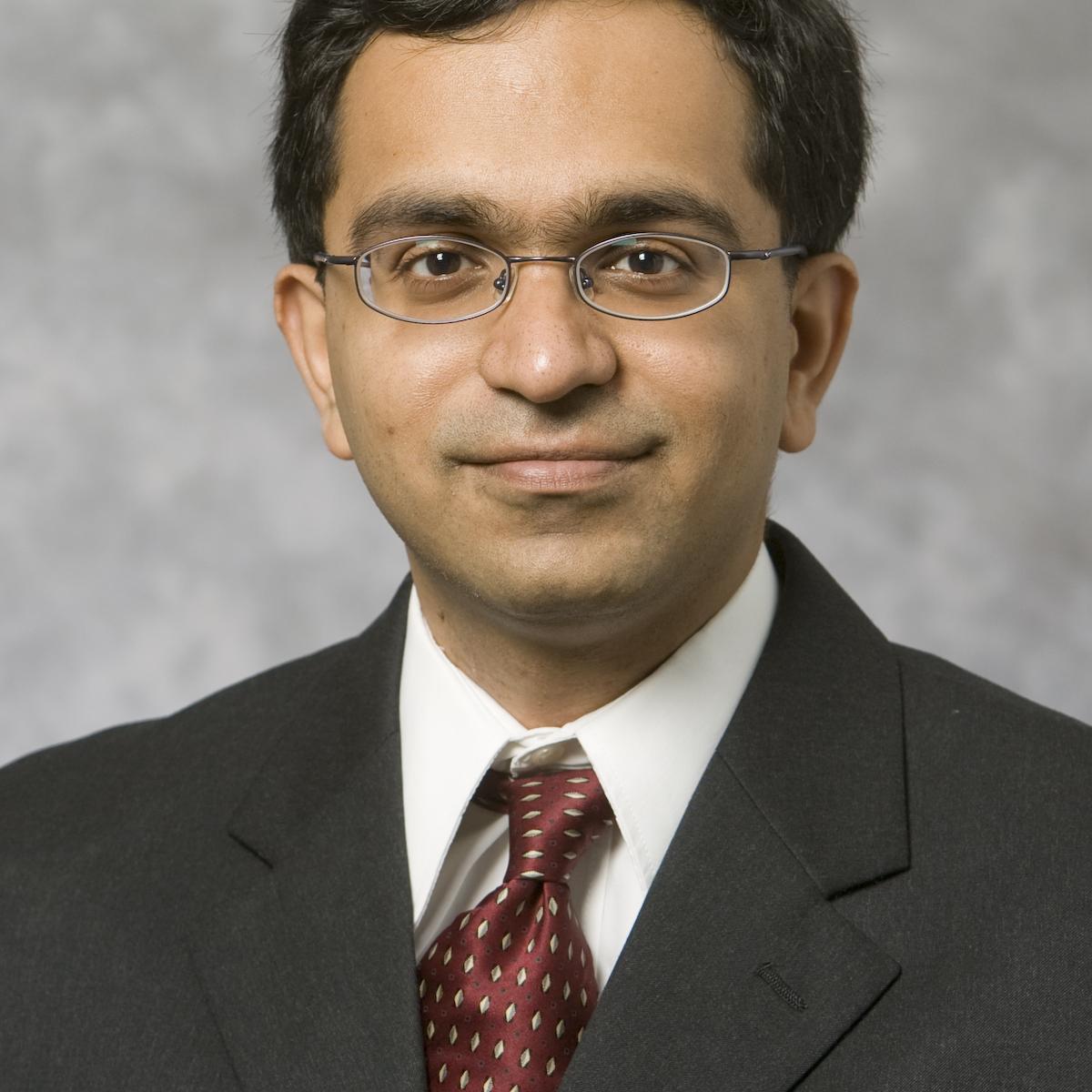
Kamesh Munagala is a Professor in the Computer Science Department at Duke University's Pratt School of Engineering. His academic career spans theoretical computer science with a focus on approximation algorithms, online algorithms, and computational economics. He has made significant contributions to resource allocation, decision making, and provisioning problems across various applications including data networks, facility location, data center scheduling, ad slot allocation, ride-share scheduling, and civic budgeting.
Professor Munagala's research interests span several key areas in theoretical computer science:
- Theoretical foundations of approximation algorithms and online algorithms
- Computational economics and market design
- Resource allocation with fairness constraints
- Algorithmic game theory and mechanism design
- Persuasion and information revelation in optimization contexts
- Group fairness based on proportionality and stability
His recent publications demonstrate a strong focus on fairness in algorithmic decision-making, particularly in societal contexts like school assignment and participatory budgeting. He has also made significant contributions to the theory of Bayesian persuasion and information disclosure in competitive settings. His work bridges theoretical computer science with practical applications in social choice, economics, and policy-making.
Notable scientific achievements include:
- Best paper award at WINE 2018 for 'A simple mechanism for a budget constrained buyer'
- Multiple publications in top theoretical computer science conferences including STOC, SODA, and FOCS
- Significant contributions to the understanding of fairness in resource allocation
- Innovative work on metric distortion in social choice
Professor Munagala has advised numerous students and collaborators, with recent work involving researchers such as Govind S. Sankar, Yiheng Shen, and Kangning Wang. His research has been supported by various grants, though specific grant details aren't provided in the available information. He teaches advanced courses in algorithms, including Algorithm Design, Randomized Algorithms, and Algorithmic Game Theory, shaping the next generation of theoretical computer scientists.
His work has implications for real-world systems requiring fair and efficient decision-making, from school assignment algorithms to data exchange markets and civic budgeting platforms. He is actively engaged in both theoretical advancements and practical implementations of his research.