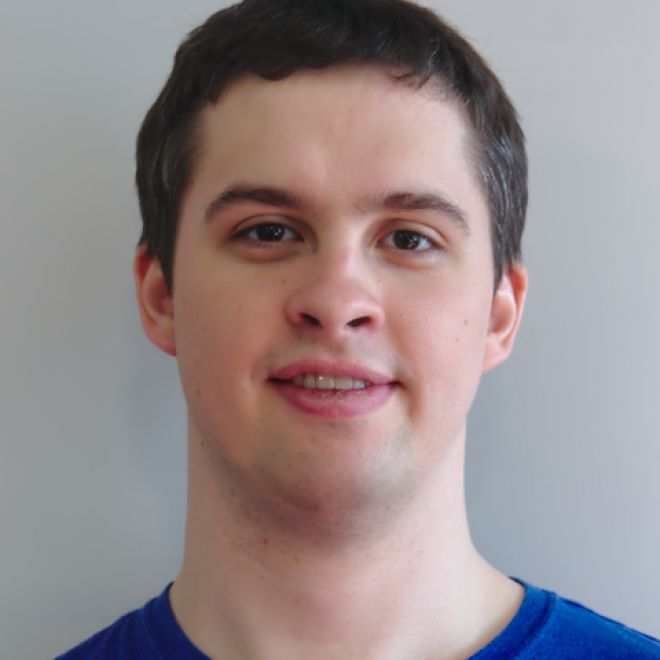
İlker Temizer is a Professor and Chair of Mechanical Engineering at Bilkent University, where he leads the Computational Multiscale Mechanics Laboratory (CMML). His research focuses on computational mechanics, multiscale-multiphysics modeling of heterogeneous materials, and interface behaviors. Research interests include computational homogenization techniques for materials and interfaces, thermomechanical contact problems, and isogeometric analysis. His work bridges theoretical mechanics with applied engineering solutions. Recent publications emphasize multiscale modeling in density functional theory, hydrodynamic lubrication texture optimization, and smart material design, demonstrating consistent innovation in computational mechanics methodologies.
Yimin Zhong is an Assistant Professor of Mathematics and Statistics at Auburn University. He holds a Ph.D. from the University of Texas at Austin (2017). His research focuses on applied mathematics, scientific computing, and machine learning, with expertise in inverse problems, radiative transfer, and nonlinear optics. He leads undergraduate research initiatives and collaborates on projects involving biomedical imaging and transport models. Key research areas include PDE learning, neural networks for high-frequency approximation, intrinsic complexity of datasets, and imaging with physical models. Zhong's work bridges theoretical analysis with computational methods, addressing challenges in data-driven modeling and inverse problem uniqueness/stability. He has contributed to fast algorithms for radiative transport and implicit boundary integration techniques for macromolecular electrostatics. His projects span collaborations with industry (e.g., Boeing) and academic networks, emphasizing interdisciplinary applications. Current interests also include graph theory, randomized algorithms, and geometric measure theory. Despite no explicit awards listed, his extensive publication record reflects recognition in computational and applied mathematics fields. Education: Ph.D. in Mathematics, University of Texas at Austin (2017) Advising: Mentored undergraduate research in inverse problems and numerical methods Labs/Teams: Leads Auburn's Undergraduate Research Network in Mathematics Open Problems: Active in transport equation analysis, nonlinear diffusion, and geometric measure theory challenges
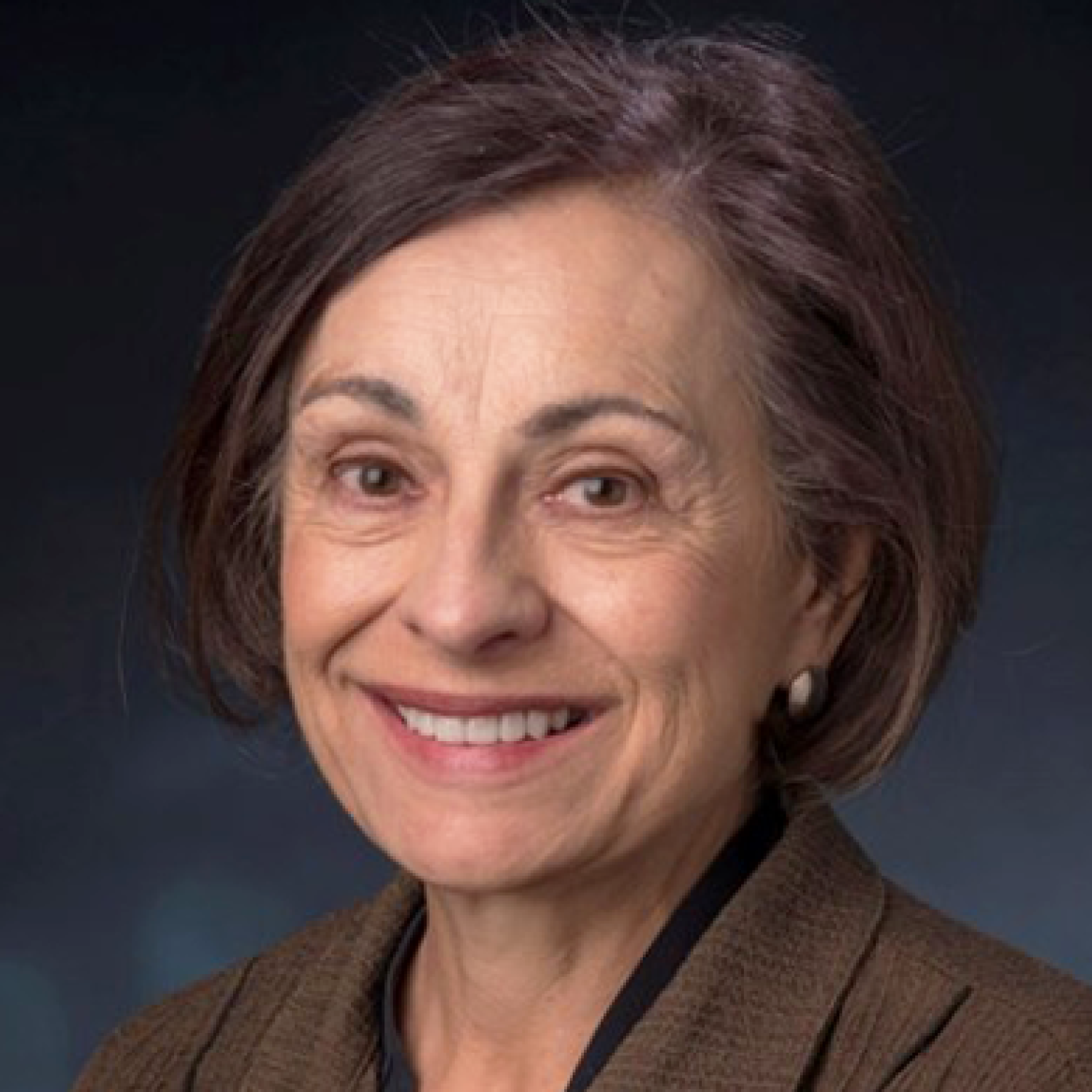
Edith Zagona is a Research Professor in the Department of Civil, Environmental and Architectural Engineering at the University of Colorado, Boulder, where she also serves as Director of the Center for Advanced Decision Support for Water and Environmental Systems (CADSWES). With a career spanning over three decades at the university, she has made significant contributions to water resources management through research, software development, and international collaboration. Her educational background includes a Ph.D. in Civil and Environmental Engineering from the University of Colorado, Boulder (1992), an M.S. in Civil Engineering from Colorado State University, Fort Collins (1983), a B.S. in Civil Engineering from the University of Arizona, Tucson (1978), and a B.A. in Philosophy from the University of Arizona, Tucson (1975). Dr. Zagona's research focuses on water resource systems and modeling, with particular emphasis on planning and operations of multi-objective river and reservoir systems. Her work integrates hydropower modeling and optimization with development of decision support tools for water resources management under conditions of climate uncertainty. She has pioneered approaches to decision making under deep uncertainty, helping water managers navigate complex trade-offs between competing objectives such as water supply, hydropower generation, environmental flows, and recreational uses. Her expertise extends to analysis and adaptive management for climate change impacts on water systems. Her recent publications reveal a strong focus on the Colorado River Basin, where she applies advanced decision science techniques to address long-term planning challenges under climate change. She has also made significant contributions to understanding transboundary water issues, particularly regarding the Grand Ethiopian Renaissance Dam on the Nile River. Her work bridges technical water resources engineering with policy-relevant decision support, creating tools that help stakeholders evaluate trade-offs and identify robust management strategies across multiple sectors. Dr. Zagona's scientific recognition includes: Principal Inventor of RiverWare ® , a river, reservoir and hydropower management software licensed by CU Office of Technology Transfer and used by hundreds of water managers globally Release of RiverWare 9.4 in January 2025 Development of associated tools including RiverSMART, RiverWISE, and Demand Input Tool As Director of CADSWES, she leads a team that has secured approximately $2 million per year in research funding from agencies including the Tennessee Valley Authority, Bureau of Reclamation, U.S. Army Corps of Engineers, and Bonneville Power Administration. She has advised numerous graduate students and has developed and taught courses on water resources management, optimization, and fluid mechanics. Her technical expertise has been sought internationally, with training workshops conducted in India, Mexico, China, Sudan, and Armenia, demonstrating the global impact of her work on water resources management practices. CADSWES, under Dr. Zagona's leadership, has become a premier center for developing and applying decision support systems for river basin planning and management. The center's work with RiverWare ® has transformed how water managers approach complex operational decisions across river systems worldwide, integrating engineering principles with decision science to address contemporary water challenges.
Esty Kelman is a Research Fellow jointly affiliated with the Massachusetts Institute of Technology (CSAIL) and Boston University, working in theoretical computer science. Her research focuses on computational complexity, sublinear algorithms, property testing, and Boolean function analysis. She was previously a PhD student at Tel Aviv University advised by Muli Safra and participated in the Simons Institute's Causality program at UC Berkeley. Her work has been recognized through the Simons Research Fellowship. Research interests span probabilistically checkable proofs, combinatorics, and adversarial models in algorithm design. Publications demonstrate consistent focus on theoretical computer science foundations, with recent advances in property testing methods and combinatorial mathematics. Collaborative work frequently appears in top venues including FOCS, ITCS, and SODA.
Dr. Petros Gaganis is an Assistant Professor in the Environmental Engineering and Science Sector at the University of the Aegean's Department of Environmental Studies. He holds a PhD in Stochastic-Contaminant Hydrogeology from the University of British Columbia (2000), an M.Sc. in Contaminant Hydrogeology (1997), and a B.S. in Geology from Aristotle University (1986). His research focuses on numerical modeling of groundwater flow and contaminant transport in heterogeneous soils, stochastic methods for risk assessment, and decision models for water resource management. Education: Ph.D., 2000: University of British Columbia, Earth and Ocean Sciences M.Sc., 1997: University of British Columbia, Earth and Ocean Sciences B.S., 1986: Aristotle University of Thessaloniki, Geology Research Interests: Dr. Gaganis specializes in groundwater flow modeling, contaminant transport simulation, stochastic hydrogeology, and climate change impacts on water resources. He develops decision models to integrate multidisciplinary data for risk-cost-benefit analyses and optimal management strategies. His work emphasizes reliability quantification in hydrogeological models and participatory approaches for environmental policy. Key Article Trends: Recent work includes climate change impacts on Mediterranean river hydrology, arsenic contamination in volcanic Lesvos aquifers, and participatory flood risk management in coastal regions. His research bridges hydrology, geostatistics, and policy to address water scarcity and pollution challenges. Teaching: Responsible for courses like Environmental Geology and Water Resources Management. Instructs Environmental Hydrogeology and Special Topics in Environmental Science under the Socrates Program. Lab/Tech Focus: Active in hydrological modeling using advanced geostatistical techniques and numerical simulations, with field studies in Greece and internationally.
Professor Kate O'Donnell is Professor of Primary Care Research and Development at the University of Glasgow's School of Health & Wellbeing, with a joint appointment in the School of Social & Political Sciences. She leads research on health service organization, migrant health, and policy implementation, particularly focused on vulnerable populations. Her work employs mixed-methods approaches including Normalization Process Theory to examine healthcare access barriers. Professor O'Donnell's research examines primary care delivery systems, migrant health experiences, dementia and cardiovascular prevention in deprived communities, and digital health interventions. She maintains particular expertise in cross-cultural healthcare communication and asylum seeker health needs. Her publication record demonstrates consistent focus on health inequalities, with recent work examining COVID-19 impacts on healthcare access and digital exclusion. Research spans qualitative investigations of marginalized groups' experiences and quantitative analyses of health outcomes. Honors include the Honorary Fellowship of the Royal College of General Practitioners – their highest distinction for non-clinical academics. She chairs the Society for Academic Primary Care and advises the Scottish Government's New Scots Integration Strategy and EUR-HUMAN project. Professor O'Donnell actively mentors early-career researchers and has supervised numerous PhD and MD students to completion. She established the Glasgow Refugee, Asylum and Migration Network, fostering collaboration between academics, NGOs, and policymakers.
Luke Schaeffer is an Assistant Professor at the University of Waterloo, affiliated with the Cheriton School of Computer Science and the Institute for Quantum Computing (IQC). His academic journey includes a BMath and MMath from Waterloo, a PhD from MIT under Scott Aaronson, and postdoctoral positions at Waterloo and UMD. His research bridges quantum computing and theoretical computer science, with focuses on quantum circuit complexity, classical simulation of quantum systems, and combinatorics on words. Notable projects include studying the Clifford group's structure, low-depth quantum vs. classical circuits, query complexity of regular languages, and fermion-to-qubit encodings. He also explores non-quantum areas like combinatorial game theory and cellular automata. His work on interactive quantum advantage protocols demonstrated separations between quantum and classical circuit models, including results against AC⁰[p] and NC¹ classes. He co-developed sample-optimal classical shadow algorithms for pure states and classified Clifford gates over qubits into 57 distinct classes. Education: BMath and MMath, University of Waterloo PhD in Computer Science, MIT (advisor: Scott Aaronson) Key Research Themes: Quantum advantage and circuit complexity Automata and combinatorics on words Classical simulation techniques for quantum systems Algorithmic foundations of quantum computing He advises students in the Cheriton School of Computer Science, emphasizing quantum computing and theoretical computer science. His contributions include foundational results in quantum-classical separations and decidability of word properties via first-order logic.
Maxime Breden is a tenured Assistant Professor in the Department of Applied Mathematics at Ecole Polytechnique, France, where he is part of the CMAP research center. His work focuses on the analytical and numerical study of nonlinear PDEs and dynamical systems, with a particular emphasis on combining both approaches to develop computer-assisted proofs. Breden holds a PhD in Mathematics from ENS Cachan (France) and Université Laval (Canada), co-supervised by Laurent Desvillettes and Jean-Philippe Lessard. Prior to his current role, he completed a postdoctoral fellowship at the Technical University of Munich under Christian Kuehn's supervision. His research interests span nonlinear partial differential equations, dynamical systems, and numerical analysis. A key theme is leveraging computational methods to rigorously validate solutions and analyze complex systems, such as reaction-diffusion models in biology and physics, pattern formation, and fluid dynamics. His work frequently integrates advanced numerical techniques with theoretical analysis to ensure mathematical rigor. Breden's recent work emphasizes computer-assisted proofs for nonlinear systems, including studies of Turing instability in heterogeneous media, bifurcation analysis in stochastic flows, and validated numerical methods for PDEs. He has presented his research at leading conferences such as SIAM DS 23 and FoCM 2023. While no specific student or grant information is detailed in the provided text, his academic trajectory reflects a strong focus on interdisciplinary research at the intersection of pure and applied mathematics.
Charles-Edouard Bréhier is a Professor at the University of Pau and the Pays de l'Adour, specializing in numerical methods for stochastic systems. His research spans stochastic PDEs, multiscale modeling, metastable processes, and geometric numerical integration. He leads investigations into error analysis and computational efficiency for complex stochastic systems. Bréhier's work develops advanced numerical schemes for high-dimensional problems, including splitting integrators, Galerkin approximations, and structure-preserving algorithms. His recent publications focus on error bounds for SPDE discretizations, turbulence modeling, and stochastic geometric mechanics. Articles consistently demonstrate rigorous mathematical foundations for computational methods, with applications spanning fluid dynamics, plasma physics, and optimization. The research provides tools for simulating complex systems with inherent randomness across multiple temporal and spatial scales.
Cihan Bayındır is an Associate Professor at Istanbul Technical University's Faculty of Civil Engineering, Department of Civil Engineering, specializing in fluid mechanics, coastal engineering, and computational methods. His research integrates advanced mathematical techniques with practical engineering applications across multiple disciplines. His primary research areas include Fluid Mechanics, Coastal Sciences and Engineering, Numerical Modeling, Fluid Physics, Acoustics and Vibrations, Nonlinear Dynamics, and Quantum Hydrodynamics. Bayındır's work demonstrates a strong interdisciplinary approach, bridging traditional civil engineering with cutting-edge computational methods and quantum phenomena. His research has significant applications in coastal protection, renewable energy systems, disaster management, and infrastructure resilience. Analysis of his recent publications reveals a clear trend toward applying artificial intelligence and machine learning techniques to traditional civil engineering challenges. His work increasingly focuses on using compressive sensing, deep learning (particularly LSTM networks), and fuzzy logic systems to solve complex problems in wave dynamics, vibration analysis, and tsunami prediction. The integration of quantum computing concepts with classical fluid mechanics represents another distinctive aspect of his research portfolio. ITU Doctoral Special Award-2024-Advisor (2025) ITU 2023 Academic Performance Award (2024) Turkish Academy of Sciences (TUBA) Outstanding Young Scientist Award (GEBİP) (2022) Elsevier Frontiers Article Award (2020) Kaleidoscope Award (American Physical Society, 2016) Bayındır leads multiple research projects funded by ITU's Scientific Research Projects Unit (BAP), including studies on dam break wave propagation using fractional equations, optimization of wave energy concentrators with AI methods, and three-dimensional vibration control in marine structures. His work involves collaborations with international institutions, including previous engagement with CERN on accelerator design. He maintains an active research laboratory focused on hydraulics and coastal engineering, with specialized equipment for wave and vibration analysis in the Hydraulics Laboratory HL 216 at ITU.
Res.Asst.Dr. Bahar Ayhan is affiliated with the Department of Civil Engineering at Istanbul Technical University (ITU). Her research focuses on structural mechanics, solid body mechanics, and fracture mechanics. She holds a Ph.D. from École Normale Supérieure de Cachan (2009–2013) and completed a postdoctoral fellowship at Johns Hopkins University (2015–2016). She has been a Research Assistant at ITU since 2007 and has contributed to advanced computational models for material behavior, including damage-plasticity coupling and fracture analysis. Her work spans multiscale analysis, constitutive modeling, and structural failure mechanisms. Educational Background: Ph.D., École Normale Supérieure de Cachan (2013) Master's in Structural Engineering, Istanbul Technical University (2013) Bachelor's in Civil Engineering, Istanbul Technical University (2003) Research Highlights: Her publications address topics such as gradient-enhanced damage models, strain rate effects on concrete, and finite element analysis of composite structures. She collaborates internationally and has presented at conferences like the World Congress on Computational Mechanics (WCCM).
Prof. Dr. Peter Bürgisser is a Professor at the Technical University of Berlin, affiliated with the Institute of Mathematics and the Algorithmic Algebra research group within Faculty II - Mathematics and Natural Sciences. His research focuses on algebraic complexity theory, computational algebra, and geometric methods in computer science. Bürgisser has made significant contributions to topics including invariant theory, numerical analysis of algorithms, and the computational complexity of algebraic problems. He has authored influential books such as *Algebraic Complexity Theory* and has published extensively in top-tier journals like the Journal of the ACM and SIAM Journal on Computing. His work includes developing polynomial-time algorithms for problems in invariant theory, analyzing the condition numbers of algebraic varieties, and studying the computational aspects of semialgebraic sets. Bürgisser's research also intersects with probability theory, particularly in understanding the statistical properties of zeros of random polynomials and the geometry of random algebraic varieties. Recent trends in his publications emphasize geometric complexity theory, non-commutative optimization, and the application of numerical methods to algebraic problems. He has collaborated with researchers such as Felipe Cucker, Michael Walter, and Avi Wigderson on foundational topics in computational mathematics and theoretical computer science. Bürgisser's office is located in room EB 116, and his contact information includes the email pbuerg@math.tu-berlin.de. His research has been supported through grants and collaborations, though specific grant details are not explicitly mentioned in the provided texts.
Professor Majid Nazem is a faculty member in the School of Engineering at RMIT University, specializing in Geotechnical Engineering. His research focuses on Computational Geomechanics, Finite Element Methods, Meshless Analysis, and Offshore Geomechanics. He has contributed to advancements in numerical modeling, soil-structure interaction, and dynamic soil behavior. Professor Nazem holds several notable awards, including the Manby Prize (2012) and the D.H. Trollope Medal (2006). His teaching expertise spans Geomechanics, Finite Element Analysis, and Engineering Mechanics. He actively supervises PhD and Master's students in areas like AI-driven geotechnical analysis and multi-phase media modeling. His work integrates machine learning with traditional geotechnical methods, addressing challenges in infrastructure maintenance and slope stability. Awards and Fellowships: Manby Prize by the Institution of Civil Engineers, UK (2012) Outstanding Reviewer Award by Elsevier (2012) Research Fellowship, The University of Newcastle, Australia (2009) The D.H. Trollope Medal by Australian Geomechanics Society (2006) Research Prize by Faculty of Engineering and Built Environment, The University of Newcastle (2005) Teaching and Supervision: Professor Nazem teaches courses in Geomechanics, Stress Analysis, and Engineering Computations. He supervises research projects focusing on computational geomechanics, meshless methods, and AI applications in geotechnical engineering. Recent projects include predicting soil behavior under dynamic conditions and optimizing tram track maintenance using machine learning. Research Trends: His recent articles emphasize machine learning integration in geotechnical analysis, dynamic seabed penetrators, and slope stability predictions. Key themes include surrogate modeling for tunnel stability, seismic collapse load analysis, and parameter identification using AI frameworks.
Associate Professor In-Young Yeo is a distinguished academic at the University of Newcastle's School of Engineering, where she serves as an Associate Professor in Civil, Surveying, and Environmental Engineering. With over 15 years of academic experience, she previously held positions at Ohio State University, Cornell University, and University of Maryland. Her work focuses on the critical intersection between landscapes and water resources, using sophisticated remote sensing and modeling tools to improve natural resource management and sustainability. Her research spans the nexus of land and water systems where human and physical systems interact. She pioneers integrative approaches using remote sensing, in-situ data, and process-based models to understand emergent land surface properties and hydrologic processes. Her work addresses water cycle changes across scales, soil moisture-stream flow connectivity, soil and water quality implications of conservation practices, and optimal land use management strategies for environmental sustainability under climate change pressures. Professor Yeo's publication record demonstrates a clear trajectory toward more sophisticated multi-sensor integration approaches and practical applications for agricultural water management. Her recent work increasingly combines machine learning with traditional remote sensing methods, focusing on soil moisture profiling, wetland dynamics monitoring, and developing integrated systems for resource management decision support. Her scientific contributions have been recognized with numerous prestigious awards: 2024 Best Research Paper of 2024, The Soil and Water Conservation Society 2021 Science Note - USDA NRCS Conservation Effects Assessment Project 2018 International Research Visiting Fellowship, University of Newcastle 2017 Women in Research Fellowship, University of Newcastle 2009 Editor's Highlights - AGU Geophysical Research Letters Professor Yeo actively mentors graduate students and offers PhD scholarship opportunities focused on land surface variables and ecosystem health monitoring. She has secured significant research funding from diverse sources including ARC, NASA, NOAA, USDA, Soil CRC, and Sydney Water. Her collaborative approach has led to leadership roles in international research initiatives including NASA-LCLUC and NASA-GRACE programs, the G20 initiative for agricultural monitoring, and the CRC for High Performance Soils. She leads a dynamic research team collaborating with Soil CRC, CSIRO, Australian Universities, and international space agencies. Her work with the US Conservation Effects Assessment Project (CEAP) and US Environmental Protection Agency has been particularly influential in demonstrating the effectiveness of conservation practices for improving soil productivity and water quality. She serves on the educational committee with the Surveying & Spatial Sciences Institute (SSSI) NSW and has contributed significantly to program development at the University of Newcastle.
Prof. Mathieu Luisier is a Full Professor of Computational Nanoelectronics at ETH Zurich's Department of Information Technology and Electrical Engineering. He earned his PhD in 2007 from ETH Zurich, followed by postdoctoral research there and a role as Research Assistant Professor at Purdue University (2008–2011). His research focuses on nanoscale device modeling, including nanowire transistors, memristors, and 2D semiconductors, with a strong emphasis on quantum transport and high-performance computing. ERC Starting Grant (2013) SNSF Advanced Grant (2022) ACM Gordon Bell Prize (2019) His work integrates advanced simulation techniques like GW approximations and parallel algorithms to address challenges in nanoelectronics. He teaches courses on digital circuits and integrated systems, and leads research groups exploring next-generation devices for applications in quantum computing and neuromorphic systems.