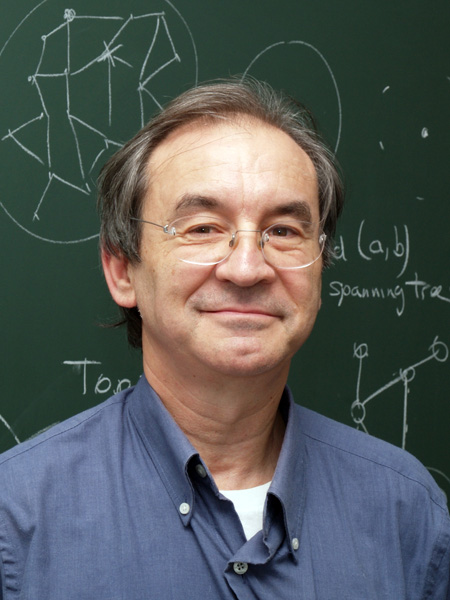
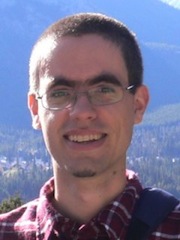
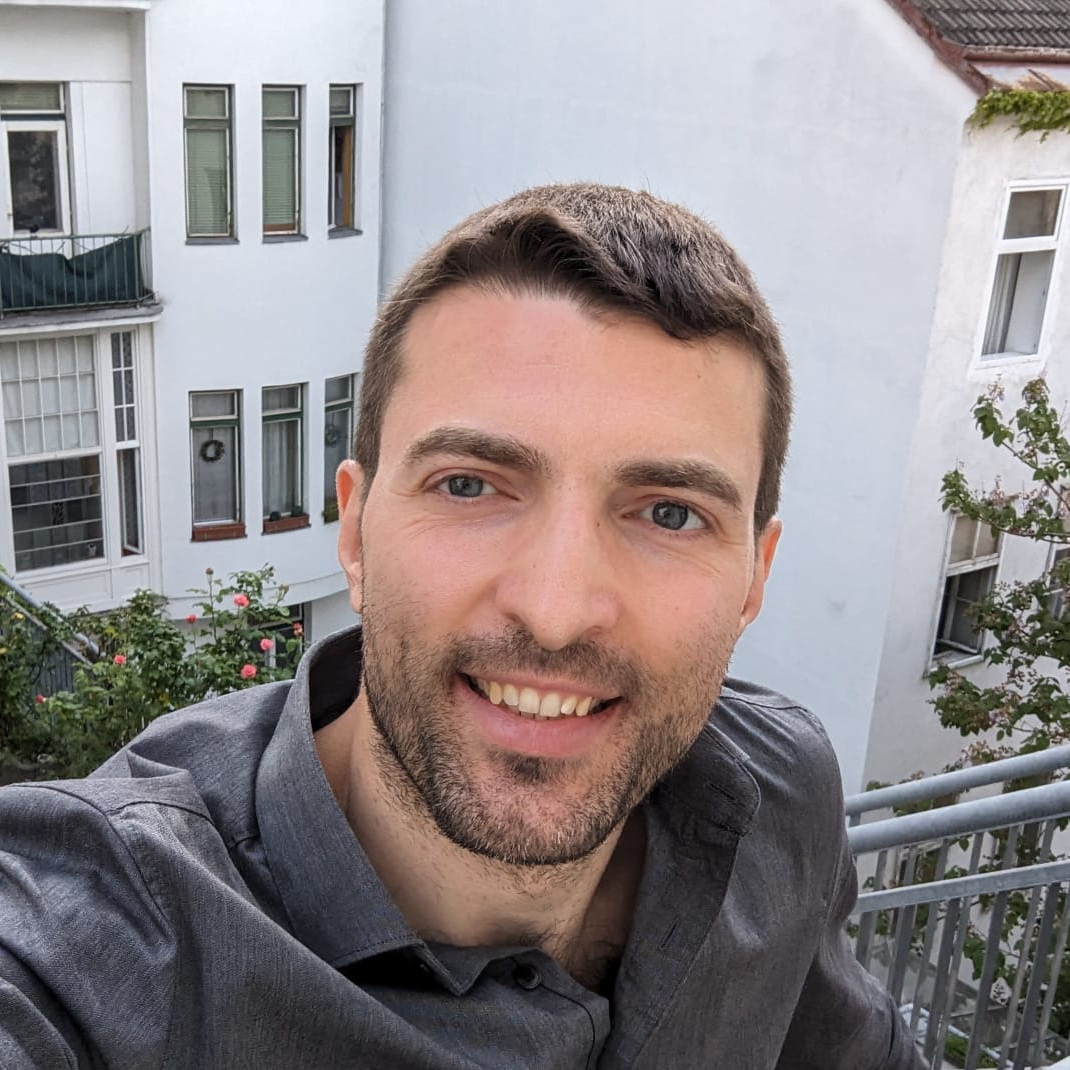
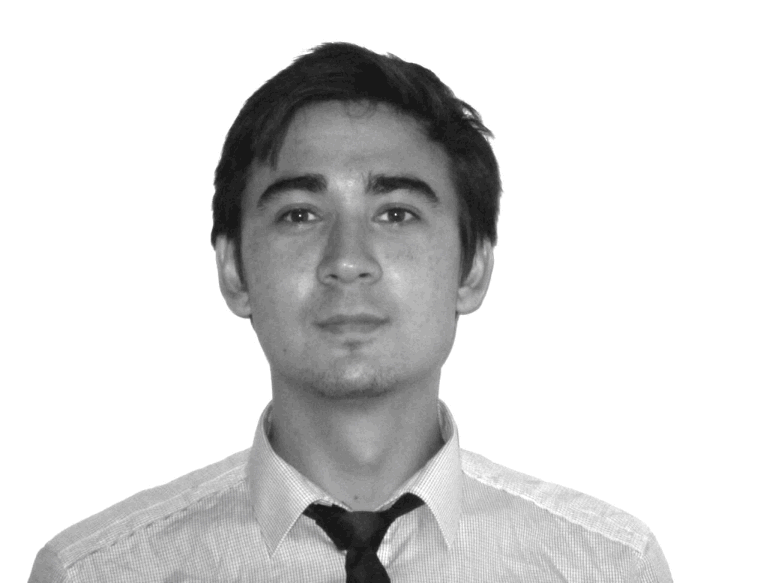
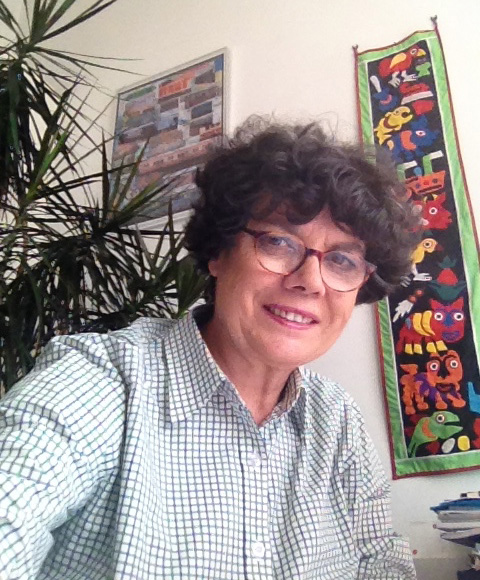
Manuel Sorge is a Research Fellow in the Faculty of Informatics at Vienna University of Technology, affiliated with the Algorithms and Complexity group (E192-01). His research focuses on parameterized algorithms, graph theory, and computational complexity, with particular emphasis on graph modification problems, clustering algorithms, and combinatorial optimization. His work spans several areas including graph drawing, algorithmic game theory, and machine learning. Research interests include: Parameterized complexity and kernelization Graph algorithms and combinatorial optimization Algorithmic graph theory and discrete mathematics Computational geometry and graph drawing Supervises master's students in algorithm design and complexity theory. Current projects include Parameterized Graph Drawing (2023–2027).
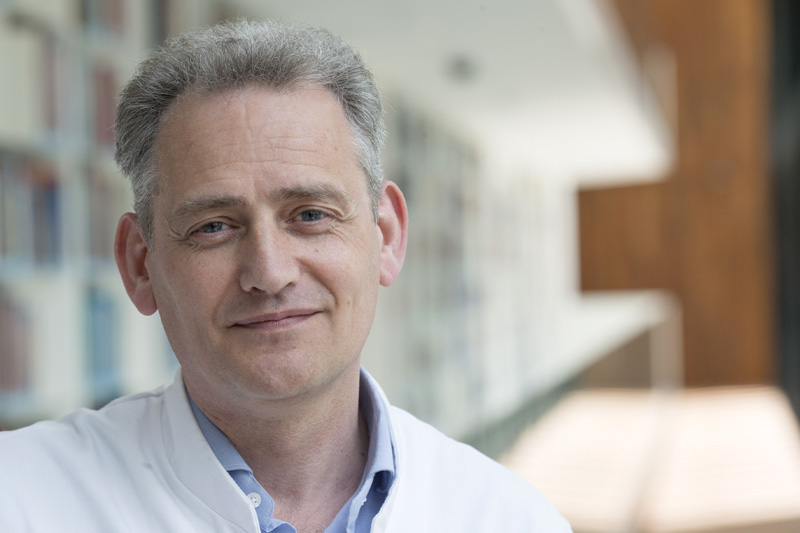
Bruno Marco is a Professor of Gastroenterology & Hepatology and Head of the Department of Gastroenterology & Hepatology at Erasmus Medical Center in Rotterdam, Netherlands. He has held leadership roles since 2013, including serving as Head of the department and overseeing gastroenterological oncology and endoscopy programs. His research focuses on pancreatic diseases, endoscopy, and clinical trials, particularly in acute pancreatitis, pancreatic cancer surveillance, and interventional techniques. His career includes roles at the Academic Medical Center in Amsterdam, leading the Hepato-Pancreato-Biliary (HPB) research unit (2004–2008) and contributing to multidisciplinary studies on pancreatic and biliary pathologies. His work emphasizes evidence-based interventions and translational research in gastrointestinal oncology and critical care. Key publications address optimal treatments for acute pancreatitis, management of necrotizing pancreatitis, and early detection strategies for pancreatic cancer. He collaborates with international consortia like the Dutch Pancreatitis Study Group and the CAPS consortium. No scientific awards are explicitly listed in the provided texts. His academic contributions span clinical practice, research leadership, and educational roles in gastroenterology and hepatology.
Josep Díaz is a Professor in Computer Science at the Polytechnic University of Catalonia (UPC), where he has been a Full Professor since 1984. He earned his PhD (Doctor en Ciencias) in 1982 from Universidad de Valencia and has held academic roles such as Lecturer (1979-1984) and Instructor of Mathematics at Riverside City College (1977-1979). His research spans theoretical computer science, focusing on randomized techniques in combinatorics, complexity theory, approximation algorithms, and game theory. Education: PhD in Mathematics from Universidad de Valencia (1982) Díaz's work involves theoretical models for wireless networks, graph theory, and algorithms for dynamic data spreading. His contributions have been recognized with prestigious awards, including Spain's highest computer science honor and a six-year Catalan Government research distinction. He has led major European research projects like COMBSTRU and participated in advisory committees for the Kyoto Prize and the Japanese New Horizons in Computing initiative. Scientific Awards: Distinció per a la promoció de la recerca (Catalan Government, 2002-2008) Spanish National Prize in Computer Science (2011) Member of Academia Europaea (2012) Díaz has held significant editorial roles as Editor-in-Chief of Computer Science Reviews (Elsevier) since 2006 and on the editorial board of Theoretical Computer Science (Elsevier) since 1998. He has coordinated multiple European research projects (COMBSTRU, WISEBED, FRONTS, DELIS) and served on program committees for top conferences (ICALP, ESA, RANDOM).
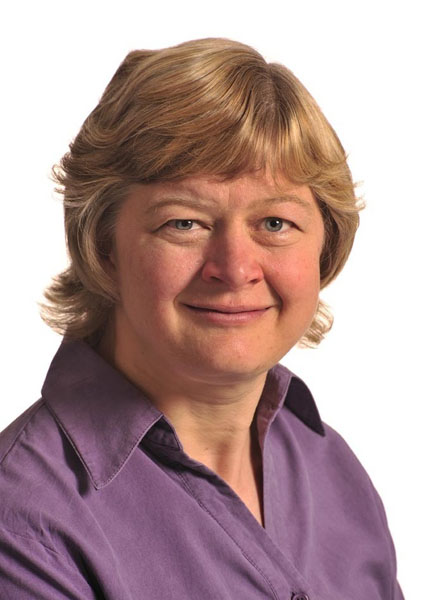
Leslie Ann Goldberg is Professor of Computer Science at the University of Oxford and Senior Research Fellow at St Edmund Hall. She has held academic positions at the University of Liverpool (2006-2013) and the University of Warwick (1995-2006), and previously worked at Sandia National Labs (1992-1995). Currently serving as Head of Department (sabbatical planned for 2025-26), she leads research in theoretical computer science with focus on algorithms and complexity theory. Her research interests span algorithms for approximately counting and randomly sampling combinatorial structures , analysis of Markov-chain based sampling algorithms , complexity of counting , and stochastic processes in computer science . She specializes in randomized algorithms, particularly their mathematical analysis regarding runtime and accuracy. Current projects include contentions resolution via backoff protocols, random sampling and approximate counting algorithms, counting complexity theory, and analyzing processes on networks like the Moran process. Professor Goldberg has published over 100 papers in top theoretical computer science venues, with recent work focusing on spin systems, graph homomorphisms, subgraph counting, and network processes. Her publications show consistent output in premier venues including ICALP (where she has won three Best Paper Prizes), SODA, STOC, and RANDOM. ERC Advanced Grant 'Mapping the Complexity of Counting' (2014-2019) Best Paper Prize at ICALP 2012, 2010, and 2006 UK Distinguished Dissertations in Computer Science (1991-1992) She actively supervises PhD students and collaborates with researchers including Andreas Galanis, Marc Roth, John Lapinskas, and Paulina Smolarova. Her work bridges theoretical computer science with statistical physics, combinatorics, and network theory, with applications to database systems, evolutionary dynamics, and communication protocols.
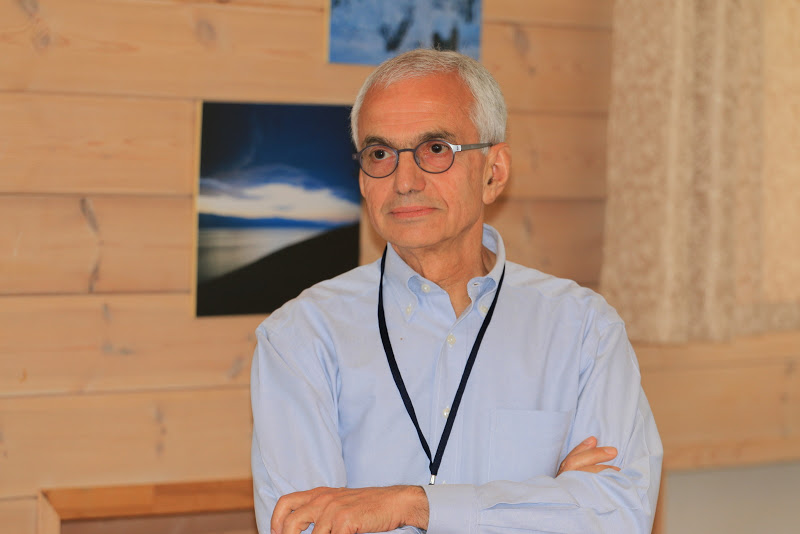
Phokion Kolaitis is a Professor of Computer Science at the University of California Santa Cruz (UC Santa Cruz) and a Principal Research Staff Member (part-time) at the IBM Almaden Research Center. He has held leadership roles as Chair of UC Santa Cruz's Computer Science Department (1997-2001, 2014-2015) and Senior Manager at IBM's Computer Science Principles and Methodologies Department (2004-2008). His research bridges database systems, computational complexity, and logic in computer science, with significant contributions to schema mappings, data exchange, and constraint satisfaction problems. His work spans foundational studies in database theory, logic, and algorithms, influencing both academic research and industrial applications. Kolaitis has received numerous accolades, including two ACM PODS Alberto Mendelzon Test-of-Time Awards, IBM Research Division Outstanding Innovation and Technical Achievement Awards, and Best Paper Awards at top conferences like ICDT and FCT. He is a Fellow of AAAS and ACM, a Foreign Member of the Finnish Academy of Science and Letters, and holds an Honorary Doctorate from the University of Athens, Greece. 2017 Best Paper Award (FCT 2017) 2015 IBM Outstanding Innovation Award 2014 Honorary Doctorate (University of Athens) 2008 IBM Outstanding Technical Achievement Award Fellow of AAAS and ACM Foreign Member, Finnish Academy of Science Kolaitis collaborates extensively, co-authoring with researchers like D. Burdick, R. Fagin, and M.Y. Vardi. At UC Santa Cruz, he advises on database systems and logic, while his part-time role at IBM focuses on theoretical advancements in data management and complexity.
Prof. Wolfgang Slany is a Professor in the Institute of Software Technology at Graz University of Technology, Austria, leading the department since 2018. His research focuses on algorithms for optimization, mobile learning systems, and visual programming education. He spearheads the open-source Catrobat/Pocket Code project, enabling children to create mobile apps via visual programming. Active in gender mainstreaming initiatives and computational thinking education, he emphasizes agile software practices and open-source collaboration. Teaching includes courses on software development and project management, with a strong emphasis on practical, industry-relevant training. Research Interests Optimization algorithms for scheduling and resource allocation Mobile-based educational technologies Gender-inclusive STEM education Agile software development methodologies Open-source ecosystems and collaboration frameworks Recent Work Trends Recent publications highlight mobile learning applications in Ghana, gender equity in STEM, and innovative STEAM education through embroidery programming. His work bridges technical innovation with educational accessibility, emphasizing interdisciplinary approaches. Advising & Projects Oversees student theses across bachelor/master levels in areas like app development, cybersecurity, and educational technology. Leads the Catrobat project involving over 100 contributors, focusing on FOSS development and educational impact.
Philipp Sprüssel is a Senior Lecturer at Graz University of Technology's Institute of Discrete Mathematics. His research focuses on Random Graphs , Enumerative Combinatorics , and Phase Transitions , with particular emphasis on graphs on surfaces, hypergraphs, and simplicial complexes. He has organized conferences like the Random Structures and Algorithms and contributed to workshops on enumerative combinatorics and phase transitions. His academic career includes roles as a Postdoctoral Researcher at the University of Haifa and the University of Oxford, and a DAAD-funded position at the University of Hamburg. He holds a PhD from the University of Hamburg (2010). Teaching responsibilities span courses in Analytic Combinatorics , Discrete Mathematics , and Mathematics for Engineering , with recent activities in 2023. Research grants include an FWF-funded project on graphs on surfaces. Key contributions include studies on cohomology groups of random simplicial complexes, phase transitions in graph evolution, and symmetry characterization of unlabelled triangulations. His Erdős number is 2.
Bernhard Gittenberger is an Associate Professor at the Institute of Discrete Mathematics and Geometry at TU Wien. His research focuses on enumerative combinatorics, analysis of algorithms, and probability theory, particularly stochastic processes in combinatorial structures. He has advised numerous Master's and PhD students, contributing to advancements in discrete mathematics and algorithmic analysis. Affiliation: TU Wien, Institute of Discrete Mathematics and Geometry Roles: Academic Researcher, Educator, PhD Advisor His work encompasses lattice paths, tree structures, phylogenetic networks, and analytic combinatorics. He has been involved in multiple research projects, including FWF-funded initiatives and collaborations with institutions like Université de Versailles and Academia Sinica. Key contributions include studies on asymptotic enumeration, probabilistic methods in combinatorics, and algorithmic analysis of discrete structures. His scientific achievements include the Jubiläums-Studienpreis from the Austrian Mathematical Society in 1996.
Prof. Benedikt Stufler is a Professor of Mathematics at Technische Universität Wien's Institute of Discrete Mathematics and Geometry. His research focuses on the interplay between combinatorics and probability, particularly the analysis of random structures such as graphs, trees, and maps. He holds a Habilitation in Mathematics (2022) and a Doctorate from Ludwig-Maximilians-Universität München (2015). Education: Habilitation in Mathematics, TU Wien (2022) Doctorate in Mathematics, LMU Munich (2015) Master's (Diplom-Mathematiker), LMU Munich (2013) Study abroad at Universidad de Buenos Aires (2011) Research Interests: His work combines stochastic methods with combinatorial constructions to study models of random structures. Key areas include: Limits of random structures (Gromov-Hausdorff-Prokhorov convergence) Branching processes and random maps Enumerative combinatorics and Gibbs partition models Phase transitions in weighted graphs Algorithmic sampling of combinatorial structures Recent Grants: FWF Project 'Limits of random networks' (2024–2027, €435k) Principal Investigator in SFB 'Discrete Random Structures' (2024–2028, €3.9M total) Lab/Group: Current members include postdoc Dr. Colin Desmarais and PhD students Niccolò Bosio and Philipp Beltran. He supervises master's theses in probability theory.
Markus Kuba is a Professor (FH-Professor) at FH-Technikum Wien in Vienna, Austria, where he leads the Department of Applied Mathematics and Physics. He holds a habilitation (Privatdozent) from TU Wien's Faculty of Mathematics and Geoinformation, granting him the venia docendi. He is also a teacher at HTL-Spengergasse, a higher technical institute, specializing in mathematics and computer science. His academic journey includes a PhD in Mathematics from TU Wien (2006) and a habilitation in 2013. His research focuses on theoretical computer science, analysis of algorithms, analytic combinatorics, and random structures. Notable specializations include tree structures, urn models, multiple zeta values, and SAT-problems. His work bridges combinatorial theory with practical applications in network analysis and stochastic processes. Key contributions include studies on urn models, tree growth models, and interdisciplinary projects like integrating traffic simulation tools. His publications span prestigious journals such as Theoretical Computer Science , Combinatorics, Probability and Computing , and Journal of Combinatorial Theory . Teaching spans secondary schools and universities of applied sciences since 2009, with a focus on mathematics and programming. Collaborations include co-authors from institutions worldwide, reflecting his active role in international academic networks.
Robert Tichy is a full Professor at the Institute of Analysis and Number Theory, Technische Universität Graz. His research spans number theory, stochastic analysis, and computational mathematics. He has held significant administrative roles including Department Head (1994-2000), Dean of Mathematical and Physical Sciences (2003-2009), and Vice-Dean (2010-2017). Tichy is a Corresponding Member of the Austrian Academy of Sciences and has served on editorial boards for journals like the Journal of Number Theory and The Ramanujan Journal .
Lorenz Alexander Gilch is a Researcher at the Chair of Stochastics and its Applications , University of Passau, and a Lecturer at Graz University of Technology (since 2018). He holds a Habilitation in Mathematics (2016) from TU Graz and has held positions including DFG Stipendium, University Assistant, and Substitute Professor roles at institutions like University of Geneva, University of Bayreuth, and Technische Hochschule Deggendorf. Educational Background: Diplom-Mathematiker (2004) from University of Passau, with a focus on Algebra, Stochastics, and Applied Statistics. Research Interests: Random Walks on Graphs and Groups, Asymptotic Entropy, Free Products, Branching Random Walks, and Statistical Data Analysis. Notable Awards: Faculty Prize, University of Passau (2004); DFG Research Stipendium (2008-2010, 2010-2011). His publications span journals like Electronic Journal of Probability , Mathematische Zeitschrift , and Random Structures & Algorithms , with articles focusing on asymptotic properties of random walks, branching processes, and group theory applications. He has presented at international workshops and conferences in Austria, Germany, Switzerland, Australia, and the US.
Brigitte Gicquel is a distinguished Professor at the Pasteur Institute where she has held multiple leadership positions since 1978. She currently serves as Head of the Mycobacterial Genetics Unit at the Pasteur Institute in Paris and Head of the Emerging Bacterial Pathogens Unit at the Pasteur Institute of Shanghai. She previously served as interim scientific co-Director of the Institut Pasteur of Shanghai in 2015 and has been a Professor at the Institut Pasteur since 1998. Dr. Gicquel's research focuses on Mycobacterium tuberculosis genetics and pathogenesis. Her laboratory has developed groundbreaking genetic tools for studying tuberculosis, including the first PCR tests and genotyping methods for rapid tuberculosis diagnosis. Her team determined the first complete DNA sequence of a mycobacterial replicon, developed shuttle vectors for genetic manipulation of mycobacteria, discovered the first mycobacterial transposon, and established procedures for random mutagenesis and allelic replacement. They constructed the first M. tuberculosis mutant library using transposons and identified key virulence genes. Her most significant contributions include discovering DC-SIGN as the major receptor for M. tuberculosis entry into dendritic cells, identifying mechanisms of multi-drug resistance in tuberculosis, and constructing a promising vaccine candidate against tuberculosis currently undergoing clinical trials in collaboration with the University of Saragoza, Spain. Her publication record spans from 1989 to 2012, showing consistent contributions to tuberculosis research with several highly cited papers in molecular microbiology and infectious disease journals. Her scientific achievements have been recognized with prestigious awards: 2008 Canetti Award, France 2006 Award Sustainable Development from the Foundation Ecology and Development, Spain 2004 Chevalier de la Légion d'Honneur 2002 Award Alexandre Joannides from the French Academy of Science Dr. Gicquel's laboratory has participated in implementing rapid tuberculosis diagnostic tests in low-income countries and has made significant contributions to understanding multi-drug resistance mechanisms in M. tuberculosis. Her team discovered that 50% of MDR isolates and over 90% of those resistant to fluoroquinolones also show resistance to pyrazinamide, highlighting the rapid accumulation of additional resistances in MDR strains. Her research unit continues to develop new drug screening approaches for antibacterials targeting M. tuberculosis and has designed algorithms for utilizing remnants from GeneXpert samples for results confirmation and case tracing.
Rainer Blatt is a University Professor at the University of Innsbruck , affiliated with the Department of Experimental Physics . He also contributes to research at the Institute for Quantum Optics and Quantum Information of the Austrian Academy of Sciences. His work focuses on quantum computing, quantum simulation, and quantum optics using trapped ions. Research Interests: Blatt specializes in advancing quantum technologies through trapped ion systems. His research encompasses quantum gate operations, entanglement engineering, and simulation of complex many-body physics. He explores error-corrected architectures and topological phases for scalable quantum computing. Recent Publications: His articles highlight a strong emphasis on trapped ion quantum processors, lattice gauge theories, and entanglement dynamics. Topics include fault-tolerant error correction, symmetry-protected phases, and suppression of spontaneous emission, reflecting cutting-edge contributions to quantum information science. Collaborations: Blatt is associated with the Department of Experimental Physics and the Institute for Quantum Optics and Quantum Information , both based in Innsbruck, Austria. His research integrates experimental and theoretical quantum technologies.
Gunther Reisinger is a Lecturer at the Institute for Architectural Theory, Art and Cultural Studies at Graz University of Technology since April 2017. He studied art history and musicology in Graz and Karlsruhe, completing a diploma thesis on internet-based art historical information (2003), a dissertation on digital source studies in humanities (2006), and a habilitation thesis on historical avant-garde manifestos (2017). Current role: Private Lecturer (Venia in Art History) Past roles: University assistant (2007–2011), Academic assistant (2010–2012), and teaching assignments at multiple institutions. His research focuses on modern/contemporary art and architecture, source theories, digital art forms, net art, and the intersection of media constitution with art-historical methodology. He has contributed to digital source criticism, archival practices, and the preservation of cultural heritage. His publications include monographs under preparation on digital sources and artists' manifestos as art-historical material. He has co-edited volumes on net-based art, museum multimedia, and art criticism history.