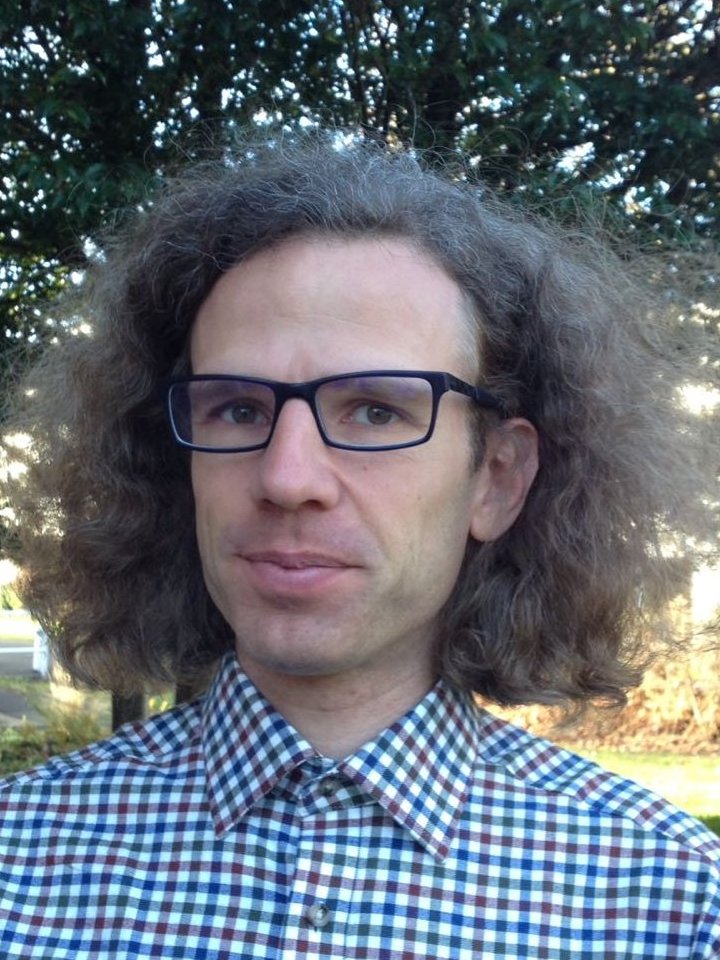
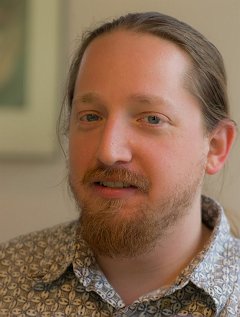
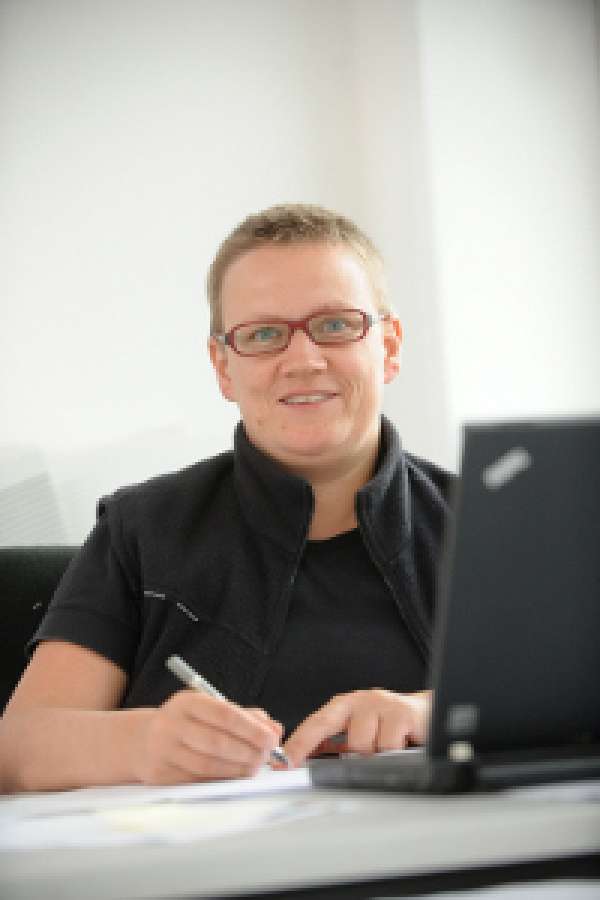
Dr. Thorsten Auth is a researcher at Forschungszentrum Jülich GmbH, affiliated with the Institute for Advanced Simulation (IAS) and its Theoretical Physics of Living Matter (IAS-2) division. His work bridges physics and biology, focusing on lipid-bilayer membranes, active matter, and cellular mechanics. Research Interests : Biological Physics, Active Matter, Soft Condensed Matter, Membrane Biophysics, and Computational Biophysics. He investigates membrane interactions with nano/microstructures and simulates active matter dynamics in cellular environments. Publications Trends : His recent work emphasizes active matter modeling, membrane-particle interactions, and computational approaches to non-equilibrium biological systems. Keywords include Biophysics , Nanotechnology , Non-equilibrium Physics , and Soft Matter . Contact : Available via phone (+49 2461/61-1735) or online profile ( Link ). ORCiD: 0000-0002-6618-2316 . Labs/Teams: Theoretical Physics of Living Matter (IAS-2), Forschungszentrum Jülich
Hongjin Liang is an Associate Professor at the School of Computer Science , Nanjing University , China. He is an active researcher and educator in the fields of programming languages and formal verification, with a strong focus on concurrency theory, mechanized proofs, and memory models. Education: PhD in Computer Science (May 2014), dissertation titled Refinement Verification of Concurrent Programs and Its Applications . Research Interests: His research spans formal verification , concurrent programming , memory models , and mechanized reasoning . He is particularly known for his work on verifying concurrent data structures, program logics for concurrency, and certified compilation. He is a member of the PLaX research group . Publications and Impact: Liang has published extensively in top-tier venues such as POPL, PLDI, ESOP, TOPLAS, and CSL-LICS. His work often involves formalizing and verifying complex concurrent systems using interactive theorem provers like Rocq/Coq. Notable contributions include verifying compiler optimizations under weak memory models and developing program logics for randomized concurrent programs. Scientific Awards: Distinguished Paper Award , PLDI 2019 for "Towards Certified Separate Compilation for Concurrent Programs" Teaching and Advising: He teaches undergraduate and graduate courses including Formal Semantics of Programming Languages , Concurrency: Algorithms and Theories , and Compiler Design . He has supervised graduate students and served on numerous program committees for international conferences. Affiliations: He is affiliated with the PLaX research group at Nanjing University and has collaborated with researchers such as Xinyu Feng, Zhong Shao, and Jan Hoffmann.
Benjamin C. Pierce is the Henry Salvatori Professor of Computer and Information Science in the School of Engineering and Applied Science at the University of Pennsylvania. As a Fellow of the ACM, he has made significant contributions to programming language theory and formal methods. His academic leadership includes previous editorial roles as co-Editor in Chief of the Journal of Functional Programming and Managing Editor for Logical Methods in Computer Science. His research spans multiple interconnected domains in programming language theory, with particular emphasis on type systems and their applications to security and verification. Pierce's work bridges theoretical foundations with practical implementations, most notably through his development of the Unison file synchronization tool and contributions to the Clowdr virtual conference platform. His research interests form a cohesive trajectory from foundational type theory to applied security and verification techniques. Pierce's scholarly output shows consistent focus on property-based testing, type systems, and formal verification methods. His recent publications demonstrate evolving interests in differential privacy verification, synchronization technologies, and the practical challenges of implementing formal methods in real-world systems. The progression of his work reflects both theoretical depth and practical relevance to software development challenges. Fellow of the ACM Author of influential textbooks Types and Programming Languages and Software Foundations Lead designer of the Unison file synchronizer Co-developer of the Clowdr virtual conference platform Former editorial leadership for multiple prominent programming languages journals As an educator and mentor, Pierce has contributed to the Programming Languages Mentoring Workshop (PLMW) and has served on numerous conference program committees. His academic service extends to SIGPLAN leadership roles including SIGPLAN Vice Chair and Steering Committee membership. His textbook Software Foundations has become a standard resource for teaching formal methods and proof assistants.
Jan Novák is a researcher in computer graphics with a focus on physically-based rendering and global illumination. He completed his PhD at Karlsruhe Institute of Technology (KIT) in 2014 under Carsten Dachsbacher, with prior degrees from Czech Technical University in Prague and academic experience at Union College (US) and Nanyang Technological University (Singapore). He has held research internships at Disney Research Zurich (2011) and Pixar Animation Studios (2012), before joining Walt Disney Animation Studios in 2013 and returning to Disney Research Zurich in 2014. Education : B.Sc. and M.Sc. from Czech Technical University in Prague (2007-2009) PhD in Computer Science at Karlsruhe Institute of Technology (2014) Research Interests include global illumination, participating media, ray tracing acceleration techniques, and GPU computing. His work addresses challenges in realistic light transport simulation for scenes with complex volumetric effects and glossy materials. Publication Trends reveal a consistent focus on light transport optimization through GPU-accelerated techniques. Key contributions span visibility caching, path-space manipulation, beam/light representations for volumetric effects, and bias compensation methods. His research bridges theoretical advancements with practical implementations for scalable rendering systems. Teaching Experience includes multiple practical courses on GPU computing and graphics programming at KIT between 2010-2013. He also served as a reviewer for prestigious venues including ACM Transactions on Graphics, Eurographics, and SIGGRAPH conferences. Student Supervision covers bachelor and diploma theses on advanced rendering topics, including visibility caching techniques, virtual spherical lights, subsurface scattering algorithms, and 2D path tracing implementations.
John Hughes is a Professor at Chalmers University of Technology. His research focuses on functional programming, software testing, and formal methods. He is a co-author of the Haskell programming language and a pioneer of QuickCheck, a property-based testing tool. His work bridges foundational theory with practical applications in software engineering. Research Interests: Development of functional programming paradigms and their applications Property-based testing and automated software validation Type systems and compiler optimization techniques Concurrency and parallelism in functional languages His publications span influential works like Why Functional Programming Matters (1989) and A History of Haskell (2007). He has contributed to open-source tools and frameworks widely used in academia and industry.
Alessandro Gulberti is a Research Fellow in the Department of Neurology at the Universitätsklinikum Eppendorf (UKE) in Hamburg, affiliated with the Faculty of Medicine. His work focuses on the neurophysiological and clinical aspects of Parkinson’s disease, particularly the effects of deep brain stimulation (DBS) on motor and cognitive functions. He investigates neural mechanisms underlying gait disorders, speech impairment, and cognitive deficits in Parkinson’s patients, leveraging advanced techniques like electrophysiology, neuroimaging, and computational modeling. Key research interests include DBS efficacy in modulating cortical and subcortical networks, the role of beta oscillations in Parkinsonian symptoms, and the application of virtual reality for gait rehabilitation. His studies often involve collaborations with neurologists, neurosurgeons, and engineers to optimize DBS protocols and understand disease mechanisms. Gulberti’s work has contributed to understanding the anatomical and functional targets of DBS, such as the subthalamic nucleus and substantia nigra, and their impact on axial symptoms, speech, and cognitive performance. Publications highlight his exploration of DBS-induced changes in neural networks, including studies on gait symmetry, pupil fluctuations in progressive supranuclear palsy, and the use of theta-burst stimulation. He has also evaluated the perioperative effects of safinamide in DBS patients and developed frameworks for improving eye-tracking data quality. His research bridges clinical neurology with translational neuroscience, aiming to enhance therapeutic outcomes through precision stimulation and personalized medicine.
Jan Wilhelm is a Researcher and leader of the Emmy Noether Independent Junior Research Group at the University of Regensburg's Institute for Theoretical Physics. His work focuses on ultrafast electron dynamics and computational methods for electronic structure theory, addressing gaps between experimental capabilities and theoretical predictions in ultrafast processes. He develops low-scaling algorithms for GW calculations to simulate systems with thousands of atoms, enabling studies of materials like 2D heterobilayers and moiré structures. His research intersects quantum technologies, photovoltaics, and nonlinear optics, with collaborations on high-harmonic generation and ultrafast microscopy. Funded by the German Research Foundation (DFG), his work bridges theory and experiment, aiming to understand femtosecond-scale phenomena in materials. Education: Studied physics and mathematics at Karlsruhe Institute of Technology, with a doctorate in theoretical chemistry from the University of Zurich. Prior industry experience in chemical optimization provided insights into applied vs. fundamental research. Research highlights include the development of CUED software for ultrafast dynamics simulations and contributions to the CP2K package. Key projects include ultrafast laser-driven electron dynamics, topological insulator studies, and collaborations with experimental groups at RUN. Future directions involve leveraging the Regensburg Center for Ultrafast Nanoscopy (RUN) to explore uncharted phenomena at atomic scales. Teaching: Lectures on computational methods for nanoscience and condensed matter excitations. Supervised students like Max Graml, who received the Brigitta and Oskar Braumandl Prize.
Jorge-Arnulfo Quiané-Ruiz is a researcher at Qatar Computing Research Institute , with affiliations at institutions like Technical University of Berlin and University of Nantes (PhD, 2008). His work focuses on data analytics , distributed systems , and query optimization , particularly in cross-platform environments and trusted execution frameworks . Research Interests : Data analytics across heterogeneous platforms Secure and compliant data processing in trusted environments Efficient query allocation and optimization Scalable algorithms for big data and streaming graphs Machine learning in data management Table extraction and data cleaning Publications : Recent work includes benchmarks for TEE-based joins and cross-database query frameworks (2023). Explores space-efficient graph algorithms and ML-driven revenue optimization (2022). Developed RHEEMix , a cost-based optimizer for cross-platform systems (2018). Collaborations : Regularly partners with Volker Markl and Zoi Kaoudi on unified analytics frameworks. Contributed to projects like Apache Wayang and AgoRA .
Professor Melanie Schmidt is a faculty member in the Department of Computer Science at Heinrich-Heine-Universität Düsseldorf, where she leads the Algorithms and Data Structures research group. Previously, she was affiliated with the University of Bonn's Institute of Computer Science, where she completed her PhD under Prof. Dr. Heiko Röglin and headed a subgroup on "clustering for big data" within his research group. Current Position: Professor at Heinrich-Heine-Universität Düsseldorf Previous Position: Researcher and lecturer at University of Bonn PhD Advisor: Prof. Dr. Heiko Röglin Her research focuses on geometric data analysis, particularly k-means clustering in data streams, combinatorial optimization, and approximation algorithms. Her work bridges theoretical computer science with practical applications in big data processing. She has made significant contributions to understanding the theoretical foundations of clustering algorithms while developing efficient implementations for real-world applications. Professor Schmidt's publication record shows a consistent evolution from theoretical analysis of k-means to practical implementations for big data environments. Her recent work explores fairness in clustering, privacy-preserving techniques, and efficient algorithms for high-dimensional data. She has published in top-tier conferences including SODA, ICALP, ESA, and ITCS, demonstrating both theoretical rigor and practical relevance. Best Student Paper Award at ESA 2012 (joint work with Martin Groß, Jan-Philipp W. Kappmeier, and Daniel Schmidt) She actively supervises numerous Master's and Bachelor's students, with current advisees including Lena Carta, Lukas Drexler, and Anna Arutyunova. Her research group includes members such as Anja Rey, Julian Wargalla, and Annika Hennes. She teaches advanced courses in algorithms and data structures, with a focus on randomized algorithms and efficient algorithm design for big data problems. Professor Schmidt leads the Algorithms and Data Structures research group at Heinrich-Heine-Universität Düsseldorf, which focuses on developing and analyzing efficient algorithms for fundamental computational problems, with particular emphasis on clustering, geometric data analysis, and big data applications.
Laurent Doyen is a CNRS Researcher at the Laboratoire Méthodes Formelles (LMF), ENS Paris-Saclay. He holds a PhD from the Université Libre de Bruxelles (2006) and an HDR from ENS Cachan (2012). His research focuses on formal methods, game theory, automata, and verification of quantitative and probabilistic systems. PhD: Université Libre de Bruxelles, 2006 HDR: ENS Cachan, 2012 Research Interests: Laurent's work centers on algorithms and tools for the verification and synthesis of reliable software, hardware, and embedded systems. His primary areas include game and automata theory, with a focus on discrete quantitative and probabilistic systems, timed and hybrid systems. He investigates synchronization, mean-payoff objectives, and imperfect information in games, contributing significantly to theoretical foundations and practical tools. The recent publications highlight a strong trend in stochastic games, synchronization in Markov decision processes, and quantitative verification. His work spans theoretical computer science, formal methods, and practical applications in system design, often appearing in top venues like LICS, ICALP, and CONCUR. Scientific Awards: No specific awards mentioned in the provided text. Advising and Grants: Laurent has advised several PhD students including Mahsa Shirmohammadi, Julien Reichert, Thomas Soullard, and Pranshu Gaba. He leads and participates in multiple research projects such as QuaVerif (PI), IFCPAR SMILeS (coPI), Cassting, ARiSE, and Quasimodo. He has been a Rutherford Visiting Fellow at the University of Warwick and is involved in various academic communities like GAMES, CFV, and GDR-IM. Labs and Teams: He is a key member of the Laboratoire Méthodes Formelles (LMF) at ENS Paris-Saclay and has been associated with the LSV (Laboratoire Spécification et Vérification) in the past. He contributes to the development of tools like Alaska and Alpaga for automata analysis and model checking.
Cameron Freer is a Research Scientist in the MIT Probabilistic Computing Project , with prior roles including Instructor in Pure Mathematics at MIT, Postdoctoral Fellow at CSAIL, and Project Associate Professor at Keio University. His work bridges probabilistic computing, logic, and theoretical computer science. Education PhD in Mathematics, Harvard University, 2008 (Thesis: Models with High Scott Rank ) Research Interests Freer's research explores the deep interplay between randomness and computation , focusing on: Foundations of probabilistic programming languages and systems Efficient samplers for discrete and continuous distributions Mathematics of random structures like graphons and exchangeable processes Computability in measure theory and probabilistic inference Publications Overview His recent work (2020–2024) advances probabilistic programming systems (e.g., GenSQL), theoretical frameworks for random graphs via Markov categories, and computable approaches to PAC learning. Earlier contributions include exact sampling algorithms, computable exchangeability, and algorithmic barriers in conditional probability. Academic Service Steering Committee Member, LAFI (formerly PPS) workshop series (2017–2025) Program Committee Chair/Co-chair, PPS 2017–2018 Session Chair, POPL 2017 (PPS track) Industry & Visiting Roles Chief Scientist, Remine (2017–2018) Research Scientist, Gamalon Labs (2013–2016) Lyric Labs Visiting Fellow, Analog Devices (2013–2014) Project Associate Professor, Keio University (2021–2024) Labs & Collaborations Freer collaborates extensively with the MIT Probabilistic Computing Project, Harvard Logic Group, and international partners in Oxford, CMU, and Keio University. His work integrates theoretical insights with practical systems in AI and probabilistic inference.
Paul Breiding is a Professor for Mathematical Methods in Data Science at the University of Osnabrück, within the Faculty of Mathematics/Computer Science/Physics. He is part of the Applied Algebra and Data Analysis working group and the Research Unit Data Science. His research focuses on nonlinear algebra, metric algebraic geometry, and their applications in numerical methods and data science. He is a Fellow of the Junge Akademie Mainz and co-authored the book 'Metric Algebraic Geometry' with Kathlen Kohn and Bernd Sturmfels. His work includes developing the software HomotopyContinuation.jl (v.2.11), which is widely used for numerical algebraic geometry. His research interests span algebraic geometry, tensor decompositions, and computational methods. Recent publications investigate geometric properties of algebraic varieties, condition numbers in tensor approximations, and probabilistic aspects of algebraic structures. Key contributions include studies on the reach of algebraic manifolds, typical ranks of random tensors, and sensitivity analysis in numerical algorithms. His work bridges theoretical algebraic geometry with practical computational tools for data science applications. Software: HomotopyContinuation.jl (v.2.11) Labs/Teams: Applied Algebra and Data Analysis, Research Unit Data Science
Shay Golan is a Senior Lecturer in the Computer Science department at Ariel University, where he teaches core algorithms and data structures courses. Previously, he held postdoctoral positions at Reichman University, Haifa University (hosted by Shay Mozes and Oren Weimann), and was a Fulbright Postdoctoral Fellow at UC Berkeley's EECS department (hosted by Jelani Nelson). He earned his Ph.D. in Computer Science from Bar-Ilan University under the supervision of Ely Porat and Tsvi Kopelowitz. Dr. Golan's primary research focuses on string algorithms with emphasis on streaming, small space, and dynamic settings. His work spans multiple subfields including data structures, graph algorithms, and discrete algorithms. He has made significant contributions to pattern matching, edit distance problems, and string compression techniques, with applications extending to bioinformatics for DNA sequence analysis. His recent publication trajectory (2022-2026) reveals a strong focus on string algorithmic challenges across multiple dimensions: theoretical complexity analysis (LZ77 compression, string covers), specialized string problems (2D string matching, hairpin structures), graph algorithm applications (planar graph distance oracles), and bioinformatics implementations (DNA minimizers). His work consistently appears in top theoretical computer science venues including STOC, SODA, and CPM, demonstrating both theoretical depth and practical relevance. Fulbright Postdoctoral Fellow at UC Berkeley As an educator, Dr. Golan has consistently taught foundational computer science courses including Algorithms 1, Algorithms 2, Data Structures, and Computability since 2016. His research is supported through collaborations with leading institutions including Reichman University, Haifa University, and UC Berkeley. He maintains active research partnerships with prominent computer scientists including Itai Boneh, Ely Porat, and Tsvi Kopelowitz. Dr. Golan participates in the broader theoretical computer science community through conference presentations and workshop participation, with recorded talks available for several of his publications. His work bridges theoretical computer science with practical applications, particularly in computational biology and genomic sequence analysis.
Prof. Dr. Anita Winter is a Professor at the University of Duisburg-Essen within the Faculty of Mathematics. Her research focuses on Probability Theory, Stochastic Processes, and their applications in areas like Mathematical Biology and Statistical Physics. She holds a prominent position in the field, with extensive contributions to branching processes, measure-valued processes, and tree-valued stochastic dynamics. Her work integrates algebraic and geometric structures with probabilistic methods, such as algebraic measure trees and pruning processes. She has published extensively in leading journals like *Stochastic Processes and their Applications* and *The Annals of Probability*. Her research often explores the interplay between population dynamics and spatial structures, including studies on coalescent processes, random graphs, and evolutionary models. Anita Winter has taught advanced courses in Probability Theory, Levy processes, and stochastic analysis across multiple semesters, reflecting her deep engagement with both research and education. Her team assistance, led by Dagmar Goetz, supports her academic activities and administrative coordination.
Termeh Shafie is a full-time Professor in the Department of Politics and Public Administration at the University of Konstanz, specializing in Computational Social Science and Data Science. With a strong statistical foundation, she develops advanced methodologies for analyzing multivariate social networks while bridging archaeological network reconstruction with modern data science techniques through projects like NEXUS 1492. Key Research Areas: Multigraph modeling, network entropy analysis, isotope geoprovenance, and hypergraph representations Projects: NEXUS 1492 archaeological network reconstruction Her 15 most recent publications demonstrate significant contributions to network methodology (random multigraph models, centrality index analysis), archaeological applications (Caribbean attack networks, Iroquoian settlement patterns), and data privacy frameworks. Articles span 2012–2025 with interdisciplinary focus on statistical sociology, archaeological theory, and computational modeling. Current teaching includes courses on social network analysis, data science, and statistical learning. Office hours available via ILIAS booking system. Contact details provided for both academic and administrative correspondence.