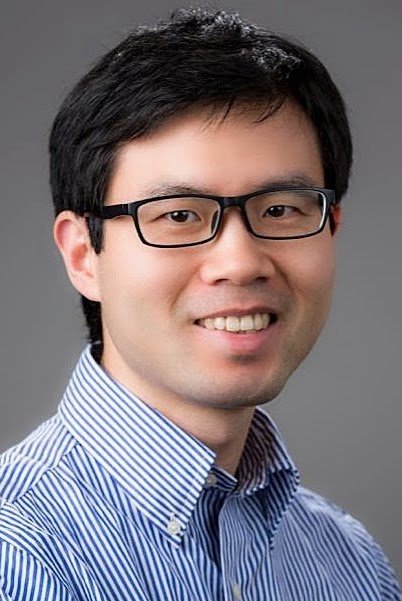
Chee Wei Wong is a Professor in the Department of Electrical and Computer Engineering at the University of California, Los Angeles , holding the Carol and Lawrence E. Tannas, Jr. Endowed Term Chair in Engineering. He leads the Mesoscopic Optics and Quantum Electronics Laboratory, focusing on advanced optical and quantum systems. Nonlinear optics Quantum optics Ultrafast optics Precision measurements His research spans quantum photonic phenomena, with notable work on Anderson localization, optomechanical oscillators, and graphene-based devices. Recent publications (2015–2009) highlight innovations in microresonator technologies, photonic crystal superlattices, and electromagnetically induced transparency analogues. 2019 UCLA Innovation Fund Award 2018 NIH Early Scientist Trailblazer Award Fellow of IEEE, SPIE, ASME, OSA, and MRS 2008 NSF CAREER Award 2007 DARPA Young Faculty Award
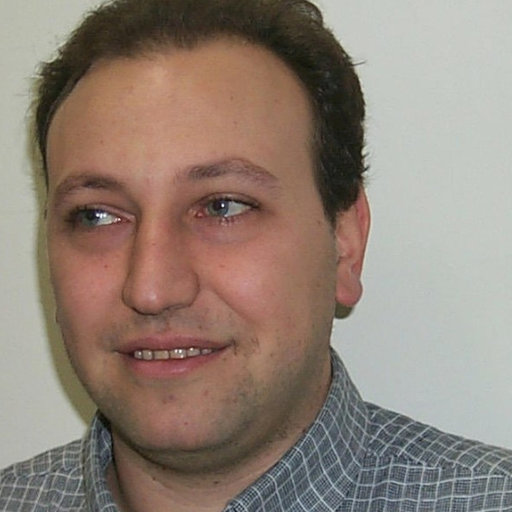
Dr. Emily Bilek is a Clinical Associate Professor in the Department of Psychiatry at the University of Michigan. Board-certified in clinical psychology (ABPP), she specializes in youth anxiety disorders and obsessive-compulsive disorder with a focus on improving access to evidence-based treatments. Her educational background includes a B.A. from Washington University in St. Louis, a Ph.D. from the University of Miami, and postdoctoral training at the University of Michigan. Dr. Bilek's research focuses on youth anxiety, OCD, transdiagnostic treatments, and mechanisms of cognitive behavioral therapy. She examines underlying mechanisms of pediatric anxiety and depression while developing strategies to enhance treatment efficacy and reduce barriers to accessing care. Her recent work emphasizes implementation science, particularly school-based delivery of CBT. Her publication record shows consistent output in high-impact journals, with recent articles (2022-2025) focusing on school-based implementation of CBT, treatment fidelity, OCD mechanisms, and therapeutic innovations for youth anxiety. Her work demonstrates a clear trajectory from basic treatment research toward real-world implementation challenges. Board-certified Clinical Psychologist (ABPP) Dr. Bilek supervises trainees across disciplines through the Child OCD and Anxiety Disorders Program. Her active grant portfolio includes implementation research examining adaptive strategies for school-based CBT delivery (ASIC trial), with multiple publications emerging from this work on provider adherence, student outcomes, and implementation barriers. Her research bridges clinical science and practical application in community settings. As a key member of the Child OCD and Anxiety Disorders Program, Dr. Bilek contributes to clinical service delivery, research, and training in pediatric anxiety disorders. Her work extends beyond traditional academic boundaries through community trainings, media engagement, and development of accessible treatment programming for youth.
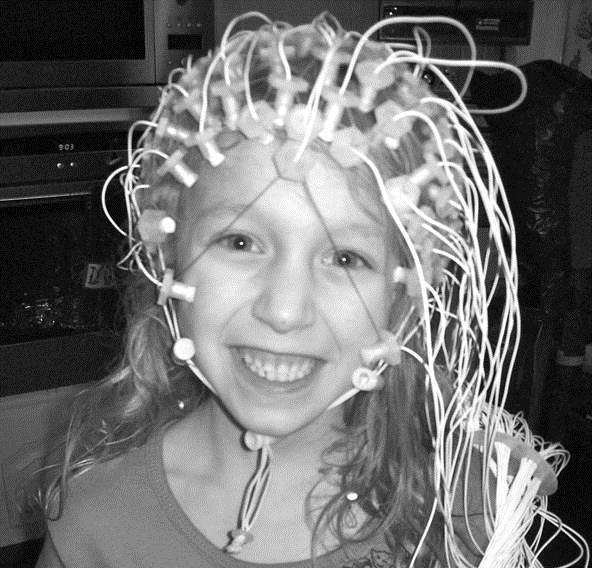
Michelle De Haan is Professor in Infant and Child Development at the University College London (UCL) Great Ormond Street Institute of Child Health, where she leads the Cognitive Neuroscience and Neuropsychiatry group. She also serves as Director of UCL's MSc in Infancy and Early Childhood Development and is Editor in Chief of the journal Developmental Science. Her academic journey began with a PhD in Child Psychology and Neuroscience from the University of Minnesota in 1996, following a BA from McMaster University. Since joining UCL, she has progressed through the academic ranks from Lecturer (1999) to Professor (2018). Professor de Haan's research focuses on the neural underpinnings of cognitive and social development in infants and children, with particular emphasis on understanding typical and atypical development. Her work employs neuroimaging and neuropsychological methods to examine brain-behavior relationships in various conditions including infant-onset epilepsy, sickle-cell disease, congenital visual impairment, and preterm birth. She conducts research both in the UK and internationally, including collaborations in Kenya and The Gambia. Her recent publications reveal a strong focus on developing innovative assessment tools, particularly tablet-based measures for early cognitive screening, and investigating neural markers of cognitive development across diverse populations. Her work bridges basic neuroscience with clinical applications, aiming to identify early markers of risk and develop interventions for children with developmental challenges. Distinguished International Alumni Award (2012, University of Minnesota) Editor in Chief of Developmental Science (since 2012) Professor de Haan is actively involved in mentoring the next generation of researchers, having supervised numerous PhD students who have gone on to academic positions and research careers. She also collaborates extensively with clinical teams at Great Ormond Street Hospital, ensuring her research has direct relevance to clinical practice. Her work extends to public engagement through media appearances and educational initiatives like Wondermind, an online game developed with the Tate Gallery to teach children about neuroscience. She leads the London Babylab, which provides opportunities for parents and children to participate in research on early development, located within the Developmental Neuroscience Programme at UCL GOS Institute of Child Health.
Dr. Pei Zhang is an Honorary Research Fellow at the School of Civil Engineering, Faculty of Engineering, Architecture and Information Technology at the University of Queensland. With expertise spanning computational fluid dynamics, particle-fluid interactions, and environmental engineering, Dr. Zhang contributes significantly to research in sediment transport, porous media flow, and microplastics research. Dr. Zhang's research focuses on the intersection of computational methods and environmental fluid mechanics, particularly in: Development and application of advanced computational models (Lattice Boltzmann Method, Discrete Element Method) Particle-fluid interactions with complex morphologies Microplastic transport and retention in porous media Constructed wetland systems for wastewater treatment Sediment-water interface processes and nutrient transport Analysis of Dr. Zhang's recent publications reveals a strong trend toward increasingly sophisticated computational methods for modeling fluid-particle systems. The research spans fundamental fluid mechanics of particle settling to applied environmental engineering problems like microplastic contamination and wastewater treatment. A notable pattern is the development of the "metaball" approach for handling complex particle shapes, which has been applied to various environmental systems with growing complexity from 2021 to 2025. Dr. Zhang is available for supervision of graduate students, indicating active involvement in mentoring the next generation of researchers in computational environmental engineering. The research appears to be conducted within collaborative frameworks involving multiple institutions, as evidenced by co-authorship patterns spanning Australian and Chinese research groups. Dr. Zhang's work is conducted within the computational and experimental facilities of the School of Civil Engineering at the University of Queensland, likely collaborating with research groups focused on environmental fluid mechanics, computational modeling, and water treatment technologies. The research has direct applications to contemporary environmental challenges including microplastic pollution mitigation and optimization of engineered water treatment systems.
Sridhar Seshadri is the Alan J. and Joyce D. Baltz Endowed Professor and Professor of Business Administration at the University of Illinois at Urbana-Champaign. He has served as Area Chair of Information, Operations, Supply Chain, and Analytics (2018-2022) and Health Innovation Professor at the Carle Illinois College of Medicine. His affiliations span operations management, supply chain analytics, and healthcare innovation. Educational Background: PhD in Management Science, University of California at Berkeley (1993) Postgraduate Diploma in Management, Indian Institute of Management Ahmedabad (1980) Bachelor of Technology in Mechanical Engineering (with distinction), Indian Institute of Technology Madras (1978) Research Interests focus on stochastic modeling and its applications in queueing systems , supply chain management , and revenue management . His work addresses dual sourcing inventory systems, epidemic modeling for supply chains, AI-augmented healthcare workflows, and the intersection of operations and financial markets. Recent publications include analyses of commodity trading under uncertainty , AI in neurology , and pandemic response strategies . Key Scientific Contributions are recognized through: 2022 INFORMS Revenue Management and Pricing Section Practice Award Fellow of the Production and Operations Management Society (2018-present) James F. Towey Faculty Fellow (2018) Grants and Leadership include projects on Health Access Points in Rural Illinois (2024-2026), Business Analytics Collaboratory (2021-2023), and Dynamic Resource Management for Pandemics (2020-2021). He has served as Department Editor for Production & Operations Management and Associate Editor for Management Science .
Stanislav A. Molchanov is a Full Professor in the Department of Mathematics at the University of North Carolina at Charlotte. He previously held academic positions at Moscow State University (MSU) from 1966 to 1998, including Assistant Professor (1966-1971), Associate Professor (1971-1998), and Full Professor (1988-1998). He has also served as a Visiting Professor at institutions such as the University of California, Irvine; University of Southern California; EPFL (Switzerland); and Ruhr University (Germany), among others. Ph.D. in Mathematics (Candidate of Sciences, 1967) from MSU Doctor of Sciences (1983) from MSU His research focuses on probabilistic and spectral theories, particularly diffusion processes on Riemannian manifolds, localization in random media, and wave processes in disordered structures. He has applied these theories to geophysics, astrophysics, oceanography, optics, population dynamics, and biochemistry. His work includes collaborations with institutions like the Isaac Newton Institute and the International Laboratory of Stochastic Analysis at the Higher School of Economics in Russia. Molchanov has participated in numerous international visiting fellowships and summer schools, including extended engagements at the University of Bielefeld (Germany) and Cambridge University (UK). Notably, he has been a key advisor for the International Laboratory of Stochastic Analysis since 2015.
Paul Lescot is a Professor at the University of Rouen Normandy, affiliated with the Raphaël Salem Mathematics Laboratory (UMR 6085 CNRS-University of Rouen Normandy). His office is located at M.2.24, floor 2, University Avenue, BP.12, F76801 Saint-Étienne-du-Rouvray, with contact email paul.lescot@univ-rouen.fr. His research spans Group Theory, Stochastic Analysis, Partial Differential Equations, Algebra, and Mathematical Finance. Early work (1980s-1990s) focused on finite groups, including commutativity degrees, Thompson factorization, and CA-groups. From the 1990s onward, he expanded into stochastic analysis, studying Wiener functionals, fractional derivatives, and stochastic PDEs. Recent work (2010s-2020s) emphasizes symmetry analysis of PDEs in finance (Black-Scholes equation, interest rate models), Bernstein processes, and absolute algebra. Analysis of his 15 most recent publications reveals a clear evolution: Group Theory foundations transitioned into Stochastic Analysis applications, with increasing focus on Mathematical Finance (40% of recent works) and Algebra (30%). Key trends include symmetry methods for financial PDEs, connections between stochastic processes and quantum mechanics, and structural algebraic theories like absolute algebra and semiring ideals. Dr. Lescot has maintained active collaborations with prominent researchers including Michael Röckner, Jean-Claude Zambrini, Vladimir Bogachev, and Laurène Valade. His work appears in high-impact journals such as Journal of Pure and Applied Algebra, Communications in Partial Differential Equations, and Nagoya Mathematical Journal. Based at the Raphaël Salem Mathematics Laboratory, he continues to contribute to both pure mathematics (group theory, algebra) and applied fields (stochastic finance, mathematical physics), with recent conference presentations including Verona (March 2019) and 2016.
Alexandre Popier is a Professor at Le Mans University, where he serves as Director of the Mathematics Department since 2019 and Deputy Director of the Manceau Mathematics Laboratory since 2022. He holds accreditation to supervise research since June 2021 and is a member of the Institute of Risk and Insurance. Popier received his PhD from Université de Provence under the supervision of Étienne Pardoux, with his thesis titled "Equations différentielles stochastiques rétrogrades avec condition finale singulière." He completed his DEA (Master's degree) at Université de Rennes 1 and achieved the Agrégation in Mathematics with rank 76. His academic journey includes postdoctoral work at Humboldt University in Berlin with Professor Peter Imkeller and a teaching position at École Polytechnique. Popier's research focuses on Backward Stochastic Differential Equations (BSDE) , particularly those with singular terminal conditions, and their connections to partial differential equations. His work extends to optimal stochastic control and financial mathematics , including portfolio liquidation problems and switching problems. He is also active in homogenization theory for random media and fractional diffusion with statistical applications. His research bridges theoretical stochastic analysis with practical applications in finance and risk management. His recent publications (2021-2025) demonstrate a continued focus on BSDEs with singular terminal conditions, exploring continuity properties, numerical methods, and connections to partial differential equations. His work also addresses optimal portfolio liquidation within mean field game frameworks and homogenization problems for random parabolic operators. Popier is a member of the ANR projects RELISCOP (focusing on switching problems) and DREAMeS (studying dynamic utilities). As Director of the Mathematics Department and Deputy Director of the Manceau Mathematics Laboratory, Popier plays a significant role in academic administration. His HDR (Habilitation à Diriger des Recherches) obtained in 2021 enables him to supervise PhD students. His teaching activities span both undergraduate and graduate levels, with courses in stochastic calculus, financial mathematics, and numerical methods. Popier is actively involved in the mathematical research community, with numerous conference presentations and collaborations with researchers across France and internationally. His work bridges theoretical stochastic analysis with practical applications in finance and risk management.
Jerome Lacan is a Professor at the Higher Institute of Aeronautics and Space (ISAE) and Head of the Department of Complex Systems Engineering (DISC). He leads the BLEND research group focused on blockchains for aerospace systems and contributes to the Sysco team. PhD in Computer Science from Paul Sabatier University (Toulouse, France) Accreditation to supervise research (2008) His research spans security and cryptography, with emphasis on: Blockchains for embedded systems (drones, satellites) Threshold cryptography and post-quantum cryptography Secure satellite communications (nano-satellites, authentication) Erasure codes and network coding (TETRYS protocol) His 15 most recent supervised theses (2012–2020) demonstrate expertise in cryptographic protocols, satellite communication reliability, and coding theory. Key themes include blockchain integration in aerospace, erasure coding for multimedia, and cross-layer network optimization. He has supervised 23 theses since 2008, covering topics like physical-layer security, transport protocol interactions, and high-throughput satellite systems.
Emilio Leonardi is a Full Professor at the Department of Electronics and Telecommunications (DET) of Politecnico di Torino, Italy, since 2015. His research focuses on communication systems, complex networks, epidemic spreading, and online social networks. He has held visiting roles at INRIA (2016-2017), NEC Laboratories Europe (2012), and collaborated with institutions like UCLA, Bell Labs, and Stanford. Key research areas: Telecommunications and network engineering Stochastic processes in network modeling AI-driven caching and content delivery Social network temporal dynamics Epidemic propagation on graphs Recent publication trends highlight his expertise in similarity caching algorithms, federated learning, re-identification attacks, and generative AI applications in information retrieval. His work spans both theoretical modeling and practical implementation in real-world networks. Scientific recognition: Best Paper Award at IEEE Globecom (2002) Multiple IEEE/ACM conference awards (2006, 2012) Guest Editor for IEEE special issues Editorial board member of IEEE Transactions Teaching and mentoring: Main teacher for PhD courses in Electrical, Electronic and Communications Engineering, including Stochastic processes and queuing theory and Operational research . Supervised PhD student Franco Galante (2020-2024) on social interaction modeling. Labs and collaborations: Member of TNG research group at DET. Participated in European projects like NAPA-WINE (FP7), COOPERATION-ICT, and national PRIN initiatives. Industry collaborations with Lucent, IBM, Microsoft Research, and NEC.
Tom Alberts is an Associate Professor in the Department of Mathematics at the University of Utah, where he has been a faculty member since 2013, achieving the rank of Associate Professor in 2020. His research focuses on probability theory, particularly two-dimensional conformally invariant systems and Schramm-Loewner Evolution (SLE). His educational background includes: PhD in Mathematics (2008) from the Courant Institute of Mathematical Sciences at New York University BS in Mathematics (2002) from the University of Alberta Professor Alberts' research spans multiple areas within probability theory and statistical mechanics. His primary focus is on two-dimensional conformally invariant systems, which can be understood as the natural extension of one-dimensional random paths to two-dimensional random surfaces. This work has potential applications across various fields including physics, finance, and artificial intelligence. He also maintains active research in statistical mechanics, random walks in random environments, directed polymer models, last passage percolation, and random matrix theory. His work often bridges theoretical mathematics with physical applications, demonstrating how abstract probability concepts can illuminate real-world phenomena. His recent publications (2022-2025) demonstrate a sophisticated evolution of his research program, moving from foundational work on SLE boundary behavior to more complex explorations of conformal field theory in multiply connected domains. The trajectory shows increasing mathematical sophistication while maintaining connections to physical systems. His work on directed polymers and last passage percolation reveals deep connections to the Kardar-Parisi-Zhang universality class, which describes interface growth in diverse physical systems. Professor Alberts has presented his research at prestigious venues including the Fields Institute, Mathematical Sciences Research Institute, Institut Mittag-Leffler, and Korean Institute of Advanced Study. His recent talks have focused on conformal field theory in multiply connected domains and the interplay between random geometry and conformal field theory, indicating where his research program is heading. His ORCID identifier is 0000-0002-1696-853X, reflecting his established scholarly presence.
Iiris Tuvi (born December 22, 1975) is a Research Fellow in Psychology at the University of Tartu's Faculty of Social Sciences, Institute of Psychology, holding a full-time position since September 2024. She previously served as a Post-doctoral Research Fellow at Tampere University (2020-2023) and has maintained continuous research appointments at the University of Tartu since 2001, progressing through various research positions in psychology and criminology. Her educational background includes a Doctoral Degree in Psychology (2007) and Master's Degree in Psychology (2003), both from the University of Tartu, with her doctoral dissertation focusing on "Interaction of Object Perception and Visual Attentional Selection Processes" supervised by Talis Bachmann. She also completed post-doctoral studies at Tampere University (2020-2023). Tuvi's research spans cognitive psychology with specialization in visual perception, children's mental health, cybersecurity education (particularly for girls through the CyberTigers project), and the intersection of psychology with digital environments. Her work demonstrates strong interdisciplinary connections between psychology, education, and digital technology. Her recent publications (2022-2024) reveal a clear research trajectory focusing on cybersecurity education for girls, children's mental health studies in Estonia, and learning analytics in digital environments. These works demonstrate methodological diversity including ethnography, focus groups, experiments, and questionnaire-based surveys. University of Tartu Social Sciences Joint Publication Award (2020) for research on attention distractibility Estonian Centre of Behavioral and Health Sciences publication award (2005) Tuvi actively supervises Master's students and has served on research projects related to children's mental health, cybersecurity education, and digital learning environments. She is a member of the Estonian Psychologists Union and previously served on its Council (2012-2020) and as editor of its newspaper (2009-2020). She has developed and taught courses including "Introduction to Applications of Psychophysiology" and regularly contributes expert commentary to media on children's mental health issues in Estonia.
Alicea Lieberman is an Assistant Professor of Marketing and Behavioral Decision Making at the UCLA Anderson School of Management , focusing on interdisciplinary approaches to improve societal health through behavioral research. She holds a PhD in Marketing from UC San Diego, an MPH in Health Behavior from UNC-Chapel Hill, and a BA in International Relations from The George Washington University. Research Areas: Behavior change, health psychology, social influence, motivational processes Awards: AMA CBSIG Rising Star, MSI Young Scholar, Hellman Fellow Publications: 15+ peer-reviewed articles in journals like Journal of Consumer Research and Organizational Behavior and Human Decision Processes Her work explores interventions for health behaviors (exercise, cancer screening), psychological impacts of auditory technologies, and behavioral economics applications in policy. She has collaborated with institutions like UC San Diego and UNC-Chapel Hill.
Yulong Lu serves as an Assistant Professor at the School of Mathematics, University of Minnesota, and holds affiliated faculty status with the Data Science Initiative in the College of Science and Engineering. His research bridges theoretical mathematics and practical applications in data science, with active recruitment of undergraduate and graduate researchers. Lu earned his Ph.D. in Mathematics and Statistics from the University of Warwick under Andrew Stuart and Hendrik Weber. His academic trajectory includes an Assistant Professorship at the University of Massachusetts Amherst (2020-2023) and a Phillip Griffiths Research Assistant Professorship at Duke University (2017-2020) mentored by Jonathan Mattingly and Jianfeng Lu. His research spans mathematical foundations of machine learning , applied probability , stochastic dynamics , applied analysis , PDEs , Bayesian statistics , and uncertainty quantification . Recent work demonstrates deep integration of diffusion models, transformers, and operator learning to solve complex physical systems while establishing theoretical convergence guarantees. Analysis of his 15 most recent publications reveals dominant trends in physics-informed generative modeling for PDEs, in-context learning for dynamical systems, and theoretical analysis of deep learning approximations. His work consistently connects abstract mathematical frameworks with concrete scientific computing applications across fluid dynamics, quantum mechanics, and optimization. No scientific awards were documented in the provided materials. Lu actively mentors researchers through open positions for Ph.D. students (Fall 2026 intake), postdocs via Mathjobs, and UMN internships focused on deep learning theory and scientific applications. His group emphasizes self-motivated collaboration on theoretical and applied challenges in machine learning. He leads a research group developing theory for deep learning applications in scientific computing, with current projects including diffusion-based PDE solvers, transformer architectures for dynamical systems, and uncertainty quantification for inverse problems.
Dr. Y. Ken Wang serves as Associate Professor, Chair of the Division of Management and Education, and Director of Asian Collaborations at the University of Pittsburgh, Bradford Campus. He leads the Computer Information Systems & Technology program within the Division of Management and Education, focusing on bridging theoretical research with practical business applications through interdisciplinary approaches. His academic credentials include: Ph.D. in Business Administration from Washington State University (2008) M.B.A. in Information Systems and Finance from Washington State University (2006) B.E. in Telecommunication Engineering and Intellectual Properties Laws from Shanghai University, China (1996) Dr. Wang's research investigates behavioral and organizational dimensions of information systems, with core interests in data analysis methodologies, human-computer interaction, and technology continuance. His work examines how digital tools reshape learning environments, organizational processes, and healthcare delivery, particularly through social media integration and knowledge management systems. Recent studies explore cognitive impacts of mobile technology in classrooms and innovative applications of digital twins in infrastructure management. Analysis of his publication trajectory (2020-2023) reveals expanding interdisciplinary collaboration, with significant contributions to civil engineering (digital twin frameworks for tunnel maintenance), oncology (biomarker analysis for immunotherapy), and artificial intelligence (multimodal emotion recognition systems). This evolution demonstrates his strategic pivot toward high-impact applications of information systems in critical societal domains while maintaining foundational work in technology adoption and user behavior. As an active scholar, Dr. Wang contributes to the academic community through memberships in the Association of Information Systems (AIS), Academy of Management (AOM), Decision Sciences Institute (DSI), and INFORMS. His service as reviewer for JOCEC, CHB, and JOEUC underscores his standing in the field, while his teaching portfolio spanning systems analysis, data analytics, and emerging technologies reflects commitment to developing industry-ready competencies in students.