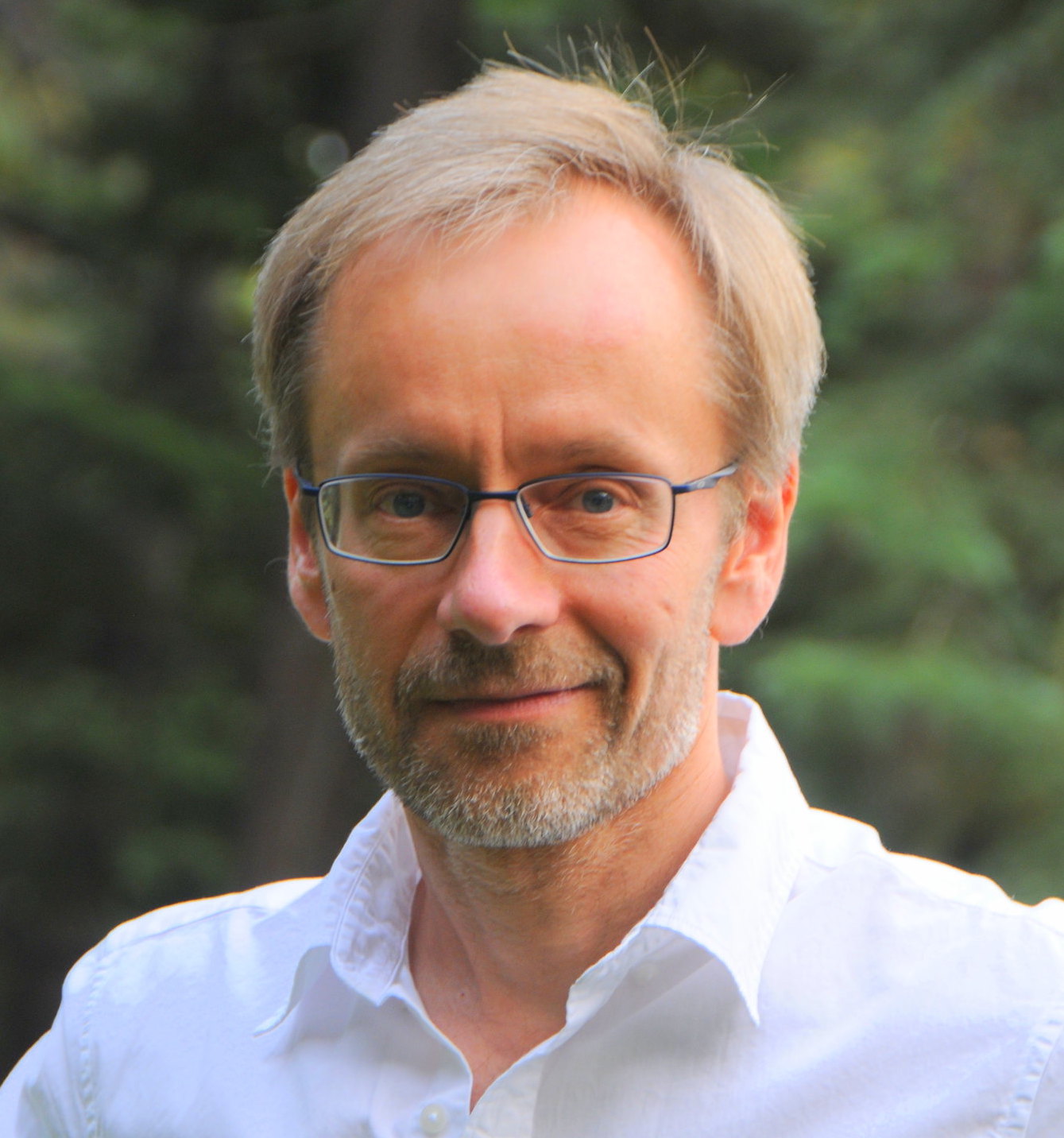
Daniel Ventus is a Project Leader at Åbo Akademi University's Faculty of Education and Welfare Studies, specializing in interdisciplinary research across Psychology, Sexual Health, and Educational Technology. He leads the Experience Lab Health-related solutions and contributes to EU-funded projects like INTAKT and APOLLO2028 , focusing on academic procrastination interventions and healthcare worker resilience. Key research areas: Premature Ejaculation, High-Intensity Interval Training, Resilience Processes, Educational Robotics, and Mental Health interventions Recipient of the 2024 Best Poster Presentation Award at SWESrii for internet interventions His recent publications (2024-2025) examine: HIIT's impact on ejaculation control Real-time resilience assessment tools LLM-powered language learning systems for vulnerable children Physiological and psychological factors in sexual dysfunction As a peer reviewer for journals including Andrology and Scientific Reports , he contributes to multiple disciplines. Media visibility includes coverage in Finland-Swedish educational initiatives and sexual health research outreach (2018-2025).
Caroline Ketcham is a Professor of Exercise Science and the Associate Dean of Elon College, the College of Arts and Sciences at Elon University. Her research focuses on movement neuroscience, neurodiversity, concussions, and mental health, with expertise in neuromusculoskeletal control and rehabilitative strategies across diverse populations including children, elderly, neurological patients, and athletes. Education: PhD in Exercise Science/Motor Control, Arizona State University (2003) MS in Exercise Science/Motor Control, Arizona State University (1999) BA in Biology/Psychology, Colby College (1996) Her work spans motor control, concussion management, and mental wellness, with over 87 undergraduate mentees and 65+ publications. She co-edited Concussion in Athletics and Cultivating Capstones , and co-directs the Elon BrainCARE Research Institute, which advocates for concussion awareness and mental health. Recent research trends include concussion baseline testing as mental health screening, dual-task gait analysis, and global mentoring frameworks. Scientific awards highlight her contributions: Distinguished Scholar (2023), Ward Family Mentoring Award (2017), and multiple teaching distinctions. Scientific Awards: Distinguished Scholar Award (2023), Elon University Ward Family Excellence in Mentoring Award (2017), Elon University Elon College Service Award (2014), Elon University School of Education Excellence in Scholarship Award (2010), Elon University Teacher of the Year (2007), Texas A&M University She actively mentors students in concussion advocacy and neurodiverse movement research, with hundreds advised in health professions. Her labs focus on neuromuscular control and mental wellness initiatives.
Professor Oliver Johnson is a faculty member at the School of Mathematics, University of Bristol, UK, where he serves as Head of School and holds the Professor of Information Theory position. His research bridges information theory, probability, and statistics, focusing on entropy convergence, group testing, and fundamental limits in data analysis. Current PhD students: Kieran Morris, Conor Crilly Ex-PhD students: Matt Aldridge, Leonardo Baldassini, Dan Cowley, Vaia Kalokidou, Tom Kealy, Jennifer Chakravarty, Zichen Gui, Chrys Paschou Ex-postdoc: Erwan Hillion His work includes ORCiD profile and collaborations across information theory, cybersecurity, and ecological modeling.
Peter D. Ditlevsen is a Professor at the Niels Bohr Institute , University of Copenhagen, specializing in Physics of Ice, Climate and Earth (PICE) . With a background in theoretical physics, he transitioned to climate dynamics and turbulence. Dr. Scient (2004), University of Copenhagen PhD (1991), Technical University of Denmark Research Interests : Focuses on Tipping Points in the Earth System , especially AMOC collapse , using stochastic dynamical systems , alpha-stable processes , and nonlinear climate modeling . His work bridges climate physics , dynamical meteorology , and time series analysis . Recent Publications : 2025 work on ice-core-based Dansgaard–Oeschger event modeling , 2024 studies on AMOC multistability and complex system predictability , and 2023 Nature Communications paper on AMOC collapse early warning (cited 4000+ times in media). Scientific Leadership : Leads CriticalEarth H2020 (2021-24) and contributed to TiPES (2019-23). Holds Carlsberg Fellowship and Ole Rømer Prize . Outreach : Produces weekly climate science podcast with David Trads, delivers 4-6 public lectures/year, and has appeared in 40+ media outlets. Teaches Electrodynamics , Thermodynamics , and Turbulence courses.
Dmitry Dolgopyat is a Professor of Mathematics at the University of Maryland, affiliated with the Department of Mathematics and the Institute for Physical Science and Technology (IPST). His primary research focuses on chaotic dynamics, averaging techniques, and motion in random media. He explores complex dynamical systems, including hyperbolic flows, billiards, and random walks, with applications to statistical physics and ergodic theory. Affiliations: University of Maryland Department of Mathematics, IPST Research Interests: Chaotic systems, mixing rates, limit theorems, random walks, and applications to statistical mechanics His work bridges pure mathematics and applied fields, with contributions to understanding ergodic properties, correlation decay, and probabilistic behavior in dynamical systems. He has published extensively in leading journals such as Annals of Mathematics, Duke Mathematical Journal, and Communications in Mathematical Physics.
Michalis Vazirgiannis is a Professor at LIX, École Polytechnique in France, where he leads the Data Science and Mining group (DaSciM). He holds a degree in Physics and a PhD in Informatics from Athens University (Greece), and a Master's degree in AI from Heriot Watt University, Edinburgh (UK). His academic career spans multiple prestigious institutions including Fraunhofer and Max Planck MPI in Germany, INRIA/FUTURS in Paris, AUEB in Greece, Telecom-Paristech, ENS in France, Tsinghua and Jiaotong Shanghai in China, and Deusto University in Spain. Professor Vazirgiannis's research focuses on machine and deep learning methods for graph analysis, including community detection, graph clustering, node embeddings, and influence maximization. His work in text mining encompasses Graph of Words, word embeddings with applications to web advertising and marketing, event detection, and summarization. He has active collaborations with industrial partners in analytics and machine learning for large-scale data repositories across various application domains such as recommendations, meeting summarization, influence metrics for scientific and social networks, and predictive maintenance. His recent publications demonstrate a strong emphasis on Graph Neural Networks, multilingual NLP (particularly for French and Arabic), and applications of deep learning to diverse domains including social networks, legal text, and biomedical data. There's a clear trajectory toward developing more efficient, explainable, and specialized models that address real-world challenges in data analysis. ERCIM fellowship Marie Curie EU fellowship Tencent "Rhino-Bird International Academic Expert Award" (2017) Best Paper Award at IJCAI 2018 Best Paper Award at CIKM 2013 Professor Vazirgiannis has supervised 29 completed PhD theses and has attracted significant R&D funding from national and international sources, including research agencies and industrial partners such as Google, Airbus, Huawei, Deezer, BNP, and LVMH. He leads or has led several academic research chairs including DIGITEO (2013-15), ANR/HELAS (2020-25), and AXA (2015-2018). The DaSciM research group, which he leads at École Polytechnique, has extensive experience in real-world R&D projects involving large-scale data mining. The team maintains active collaborations with major industrial partners including AIRBUS, Google, BNP, Tencent, and Tradelab, working on cutting-edge machine learning projects. The group has co-organized major conferences such as ECML PKDD 2011 and ECML/PKDD 2017 and participates in the senior organization of AI and data mining events like AAAI and IJCAI.
Professor Talia Isaacs is a leading academic in Applied Linguistics and TESOL at University College London's Faculty of Education & Society. She serves as Head of Research and Inclusion Co-Lead in the Department of Culture, Communication and Media, with a focus on language assessment, health communication, and educational equity. Previously, she was an Associate Professor at UCL-IOE (2016–2024) and Lecturer/Senior Lecturer at Bristol University (2011–2016), where she founded the EU-funded Second Language Speech Lab. Education: PhD in Second Language Education from McGill University (2011) Appointments: Co-Editor of Language Testing (2023–present), Expert Member of EALTA and TOEFL Committee of Examiners Her research spans language assessment , speech sciences , and health communication , with groundbreaking work on pronunciation assessment and clinical trial inclusivity. Recent articles analyze accent fairness in Duolingo testing, trial monitoring frameworks, and health communication practices. She champions Open Science and was awarded the 2023 UCL Open Science Award. Her research trends show interdisciplinary engagement across educational linguistics , clinical trial methodology , and health equity , often employing mixed methods and evidence synthesis . She has supervised 7 PhD students to completion, including funded projects by ESRC, MRC, and British Council. Scientific Awards: UCL Open Science and Scholarship Award (2023) Fellow of the Royal Society of Arts (2023) Fellow of the Higher Education Academy (2014) She leads the Second Language Speech Lab and collaborates with the MRC-NIHR Trials Methodology Research Partnership. Her work addresses language barriers in academic and healthcare settings, with a focus on under-served communities.
Stefanie Sequeira is an Assistant Professor in the Department of Psychology at the University of Virginia, focusing on clinical psychology, adolescent mental health, and neuroimaging. Her research explores how social threat and reward processes develop during childhood and adolescence, linking these mechanisms to psychopathology such as anxiety disorders and suicidal thoughts and behaviors (STBs). Integrates ecological momentary assessment (EMA), fMRI, and eye-tracking into her work Pursues three research lines: novel measures for social threat/reward, brain-behavior links in psychopathology, and associations between reward functioning, anxiety, and STBs in adolescence Lab: Brains, Emotions, and Adolescent Relationships (BEAR) Lab Her recent publications examine social media impacts on adolescent affect, neuroimaging in ADHD, climate change anxiety, and cultural humility in psychology training. She is recruiting graduate students for Fall 2024.
Sebastian Schulz is an Associate Professor at the University of Waterloo, specializing in advanced photonics research. His work focuses on nanophotonics, plasmonics, and metasurfaces, particularly exploring epsilon-near-zero (ENZ) materials and their applications in optical sensors, integrated photonics, and augmented reality systems. He is affiliated with the Quantum Nano Centre (QNC 4601), indicating a strong involvement in cutting-edge nanotechnology research. His research interests encompass nonlinear optical phenomena, metamaterials design, and the development of novel optical components such as flexible holographic metasurfaces and tunable photonic devices. Schulz has contributed significantly to understanding the coupling dynamics between ENZ materials and plasmonic structures, as well as the optimization of photonic crystal waveguides for low-loss signal transmission. Recent work includes advancements in temperature-controlled polymer-based lasers, high-throughput speckle spectrometers, and dynamically tunable optical systems. His publications frequently address the integration of nonlinear effects and nanostructured materials to achieve breakthroughs in optical performance metrics like time-bandwidth product limits. While no specific grants or awards are explicitly listed, his prolific output in top-tier photonics journals underscores his influential role in the field. Schulz collaborates on interdisciplinary projects at the intersection of materials science and optical engineering, driving innovations in sensor technologies and next-generation photonic systems.
Dr. Clare Hume is a Senior Lecturer in the School of Public Health at the University of Adelaide, within the Faculty of Health and Medical Sciences. She serves as Program Director for the Honours program in the School and teaches courses in Infant, Child and Adolescent Health, and Communication for Health Sciences. Her research focuses on sustainable environments and children’s health, emphasizing physical activity promotion, reducing sedentary behaviors, and improving nutrition through innovative interventions in family, school, and community settings. She is an Editorial Board member for the American Journal of Health Promotion and Associate Editor for the Health Promotion Journal of Australia . Currently supervising two MPH students and an Honours student, her work bridges environmental sustainability and public health, particularly addressing waste reduction and healthy eating strategies. Key research themes include the impact of built environments on physical activity, interventions targeting screen-time reduction, and policy analysis for health and environmental co-benefits. Dr. Hume’s publications highlight school lunchbox innovations, community garden effects, and the Transform-Us! trial’s impact on children’s cardiometabolic health. Her contributions emphasize translational research to translate evidence into actionable strategies for healthier lifestyles and sustainable practices among children and families.
Timo Seppäläinen is a Professor and the John and Abigail Van Vleck Chair of Mathematics at the University of Wisconsin-Madison since 2005. He is affiliated with the Mathematics Department under the College of Letters & Science. Education: Ph.D. in Mathematics (1991) from the University of Minnesota M.Sc. in Industrial Engineering and Management (1986) from Aalto University High School Diploma (1980) from Helsinki I Normal School Research Interests: His work primarily focuses on probability theory , encompassing topics such as motion in random media, first- and last-passage percolation, interacting particle systems, and large deviation theory. He has contributed to graduate-level stochastic analysis and authored lecture notes on the corner growth model , exclusion processes, and renewal theory. His research has been supported by the National Science Foundation and the Wisconsin Alumni Research Foundation. Scientific Awards and Honors: 2000 Prix Institut Henri Poincaré-Gauthier Villars 2010 Fellow of the Institute of Mathematical Statistics 2011 Van Vleck Research Prize 2014 IMS Medallion Lecturer and Invited Speaker at International Congress of Mathematicians 2015 Vilas Faculty Mid-Career Investigator Award 2015-2016 and 2023-2024 Simons Fellow in Mathematics 2016 Van Vleck Chair of Mathematics 2017 Fellow of the American Mathematical Society Teaching and Editorial Work: He teaches undergraduate and graduate courses in probability theory and stochastic processes, including Math 632 , Math 733-734 , and Math 735 . He has served on editorial boards and organized probability seminars.
Anthony W. Pereira is a Visiting Professor at King’s College London’s Brazil Institute within the School of Global Affairs and the Director of the Kimberly Green Latin American and Caribbean Centre at Florida International University. He holds a B.A. in Politics from Sussex University and an M.A. and Ph.D. in Government from Harvard University. His research focuses on authoritarianism, democracy, human rights, public security, and Brazilian political development. He has held academic positions at institutions including the New School for Social Research and Tulane University. Professor Pereira’s work includes over 20 books and articles, such as Right-Wing Populism in Latin America and Beyond and Modern Brazil: A Very Short Introduction . He has received grants from organizations like the Fulbright Foundation and FAPESP. His research groups examine Brazil’s democratic transition, anti-corruption efforts, and the rise of authoritarianism and populism. He frequently contributes to media discussions on Brazilian politics and has been affiliated with institutions like Canning House. His leadership roles include directing the Brazil Institute and serving as President of the Brazilian Studies Association (BRASA).
Hiroshi Toyoizumi is a Professor at Waseda University's Faculty of Commerce and Graduate School of Accountancy, with a Ph.D. in Mathematical Physics from Waseda University. His work bridges Applied Probability , Operations Research , and Computational Biology , focusing on stochastic modeling across biological and network systems. Research Interests Stochastic Models in Biology : Analyzing social queues in hover wasps and meiotic DSB regulation using quasi-birth-death processes and survival analysis. Network Security : Modeling computer virus spread on scale-free networks and proposing active defense strategies. Queueing Theory : Developing analytical frameworks for on-demand streaming, quantum merging, and blockchain-based systems. Article Trends Recent work (2020-2024) explores nonlocal diffusion , quantum queueing , and swarm behavior in financial markets . Mid-2010s studies focus on cooperative breeding and DNA recombination dynamics . Early papers (pre-2010) examine computer virus ecology , secure group communication , and deterministic queue analysis . Scientific Awards Biotechno 2013 Best Paper Award IEICE Switching Workshop SSE Research Award (1999) IEICE Young Research Engineer Award (1997) Teaching Activities Graduate-level courses in Operations Research and Financial Engineering . Undergraduate and graduate seminars in Applied Mathematics and Probabilistic Models .
Tyler McCormick is a Professor in the Departments of Statistics and Sociology at the University of Washington . He also holds core faculty positions at the Center for Statistics and the Social Sciences (CSSS), is a Senior Data Science Fellow at the eScience Institute, and a research affiliate at the Center for Studies in Demography and Ecology (CSDE). McCormick earned his Ph.D. in Statistics from Columbia University in 2011. His research focuses on statistical methodology for social and health sciences, including network analysis, causal inference, and uncertainty quantification in predictive models. Research interests include: Modeling social networks and peer influence Estimating causes of death using verbal autopsy data Improving global health decision-making through better uncertainty communication Methodological advancements in causal inference and experimental design under network interference He has received significant recognition, including the NIH Director’s New Innovator Award (2019) and election as a Fellow of the American Statistical Association (2023) . McCormick has contributed to influential projects such as the OpenVA toolkit for verbal autopsy analysis and has published widely in Journal of Computational and Graphical Statistics and other top venues. Grants and funding include support from the Simons Foundation. Current research includes postdoctoral openings focusing on spillover effects in networks and robust statistical methods for factorial data. His work has been featured in the Wall Street Journal and Washington Post .
Agnieszka Roginska is a Professor of Music Technology at the Steinhardt School, New York University, specializing in immersive audio, spatial sound, and auditory displays. Her work integrates acoustic science with virtual reality and medical applications, including postural stability studies for vestibular rehabilitation. She holds leadership roles as AES President-Elect and co-edited the authoritative book 'Immersive Sound'. Education: B.A. in Piano Performance and Computer Applications in Music (McGill University, 1996); M.M. in Music Technology (NYU, 1998); Ph.D. in Music Technology (Northwestern University, 2004). Research focuses on 3D audio technologies, auditory displays for virtual environments, and sensory integration studies. She leads NYU's Music and Audio Research Lab (MARL) and advises the Society for Women in TeCHnology (SWiTCH) at NYU. Awards include AES Fellowship and leadership in international audio engineering societies. Recent publications emphasize audio's role in postural control, distributed music performance frameworks (Holodeck), and VR sound design. Her work bridges technical innovation with artistic applications, including collaborative music systems in mixed reality.