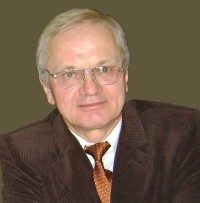
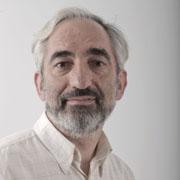
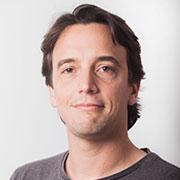
Zhipeng Liu is an Associate Professor in the Department of Mathematics at the University of Kansas (KU), where he also served as Associate Chair and Director of Undergraduate Studies from July 2022 to December 2023. His research focuses on probability and mathematical physics, particularly on the analysis of random growth models, KPZ universality class phenomena, and their connections to integrable systems. He holds a PhD in Mathematics from the University of Michigan (2014), preceded by an MS from Peking University (2008) and a BS from Peking University (2004). Research Interests: Random growth models (TASEP, KPZ equations, last passage percolation) Universality in stochastic systems Integrable probability and asymptotic analysis Grants and Funding: NSF DMS-2246683 ($296,885, 2023-2026) NSF DMS-1953687 ($168,627, 2020-2024) Simons Collaboration Grant ($42,000, 2019-2024) AIM’s SQuaREs program (2024-2027) Professional Activities: Organizer of the KU Probability and Statistics Seminar Contributed to conferences such as the Mathematics in Industry Careers workshop
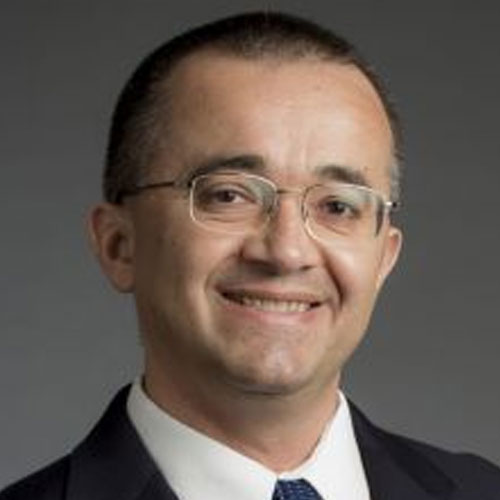
CHRISTOPHER THOMPSON is an Assistant Professor in the Department of Educational Psychology at Texas A&M University, part of the College of Education & Human Development. He directs the Educational Research and Evaluation Laboratory (EREL). His expertise lies in methodological advancements, particularly meta-analysis and Bayesian data analysis, with applications in educational technology and public health. Education: Ph.D. in Measurement and Statistics, Florida State University (2016) M.S. in Measurement and Statistics, Florida State University (2011) B.S. in Secondary Mathematics Education, Florida State University (2009) Research focuses on video games in education, large-scale testing trends, and statistical education integration. Methodological work includes Bayesian meta-analysis, multivariate synthesis, and nonparametric statistics. Recent publications emphasize meta-analytic techniques applied to health, education, and social behaviors. His grants include Bayesian Methods Training for Educational Research ($800,000 pending) and a TAMU-funded project on bridging meta-analysis and applied research. No awards listed, but grants highlight his impact. Advised two doctoral students: Ashley Majzun (2023) and Brandie Semma (2020). The EREL lab focuses on quantitative research methodologies.
Linda Keen is a Professor of Mathematics at Lehman College, City University of New York (CUNY), where she has been teaching since 1968. Promoted to full professor in 1974, she has held leadership roles including President of the Association for Women in Mathematics (1992–1993) and Vice-President of the American Mathematical Society (1992–1995). Her research focuses on complex analysis and dynamical systems, with notable contributions to the study of Riemann surfaces, Kleinian groups, and transcendental dynamics. She has delivered invited addresses at major conferences, including the AMS and MAA, and received prestigious awards such as the AWM Noether Lecture (1993) and election to the AMS Fellows (2012). Her academic career includes a Ph.D. from New York University’s Courant Institute (1964) under Lipman Bers, with a thesis on canonical polygons for Fuchsian groups. Keen’s work bridges complex analysis and geometry, with over 70 peer-reviewed publications and contributions to textbooks like Hyperbolic Geometry from a Local Viewpoint . She collaborates with researchers globally, exploring topics from parameter spaces of meromorphic functions to geometric group theory. Keen’s awards and recognitions highlight her leadership and scholarship, including the AWM Emmy Noether Lecture profile and zbMATH author ID: keen.linda. Her research spans theoretical advances and applications, with recent focus on transcendental maps, dynamical systems, and geometric structures.
Liza Sopina is an Associate Professor at the Danish Centre for Health Economics (DaCHE), Department of Public Health, University of Southern Denmark. Her work bridges health economics and public health policy, with a focus on cost-effectiveness, healthcare delivery, and population health interventions. PhD in Health Economics, Department of Public Health, University of Southern Denmark (2018) Her research centers on health economics , particularly cost-effectiveness analysis , health care costs , and economic evaluation of public health programs . She has extensively studied cervical screening , HPV vaccination , Alzheimer's disease , and quality of life metrics. Her work often employs cohort analysis and randomized controlled trials to assess health outcomes and resource use. The recent publications reflect a consistent focus on policy-relevant economic evaluations in healthcare. Themes include value for money in vaccination programs , emergency department efficiency , and feedback mechanisms in education . These span disciplines such as public health , oncology , infectious disease control , and higher education assessment . Liza Sopina has contributed to public discourse through multiple media appearances, discussing topics like the societal cost of osteoporosis and behavioral science behind everyday phenomena. She is actively involved in research and teaching, including a course on Economic Evaluation . Chair of PAUSD (2017) She is a key participant in the ongoing PREPARE project (2022–2026), which focuses on personalized risk estimation and prevention of cardiovascular disease, indicating her engagement in large-scale, interdisciplinary health research. While no formal students are listed, her supervisory role in teaching suggests academic mentorship activities.
Anamika Pandey is a Postdoctoral Researcher at the Chair for Mathematics for Uncertainty Quantification at RWTH Aachen University, where she has been working since November 2018. Prior to this position, she began collaborating with Prof. R. Tempone at King Abdullah University of Science and Technology in Saudi Arabia in 2017. She earned her PhD from Universität Kaiserslautern under the supervision of Prof. A. Klar. Her research focuses on uncertainty quantification, Bayesian inference, deterministic and stochastic fluid dynamics, and numerical methods for differential equations. She specializes in meshfree numerical methods, which provide flexible computational approaches for complex physical systems where traditional grid-based methods face limitations. Her work bridges theoretical mathematics with practical applications in fluid dynamics and mathematical biology. Dr. Pandey's publications demonstrate expertise in developing and analyzing numerical methods for systems involving randomness and uncertainty. Her research shows particular strength in applying meshfree techniques to fluctuating hydrodynamics, Brownian dynamics, and biological aggregation models. The trend in her work moves from foundational meshfree methods toward increasingly complex applications involving uncertainty quantification and multiscale phenomena. Her collaborative work spans multiple institutions and disciplines, reflecting the interdisciplinary nature of modern computational mathematics. She has contributed to research in mathematical biology through her analysis of the Keller-Segel system, which models chemotaxis (cell movement in response to chemical signals), and in geophysics through her work on seismic wave propagation under uncertainty. Dr. Pandey maintains active research collaborations with mathematicians and scientists across Germany and internationally, contributing to the vibrant research community in computational mathematics and uncertainty quantification.
Dr. Juliusz Grabski serves as a Senior Lecturer and Research Fellow in the Division of Dynamics at the Technical University of Lodz, Poland. His academic work centers on theoretical and experimental mechanics, with specialized focus areas including nonlinear dynamics, chaos in mechanical systems, and deterministic modeling of seemingly stochastic phenomena. Grabski's research explores foundational aspects of analytical mechanics, particularly through investigations into pendulum networks, die/coin dynamics, and thermally loaded structures. His approach integrates mathematical modeling with experimental validation, emphasizing predictability in complex mechanical systems. Publication trends reveal consistent focus on chaotic dynamics and mechanical predictability, with recent articles examining synchronized pendulum motion (2016) and thermal effects on structural components (2013). Earlier works established frameworks for understanding randomness in mechanical systems through coin/die experiments.
Assoc. Prof. Dr. Seçil Karatay is an Associate Professor at Kastamonu University's Faculty of Engineering and Architecture, Department of Electrical-Electronics Engineering. She holds a PhD in Physics from Fırat University (2010), an MSc in Physics (2005), and a BSc in Physics (2001). Her academic career spans roles including Department Head (2013-2017), Dean Assistant (2013-2016), and Director of Research Application Center (2016-2021). PhD: Physics, Fırat University, 2005-2010 MSc: Physics, Fırat University, 2002-2005 BSc: Physics, Fırat University, 1997-2001 Her research focuses on Signal Processing and Ionospheric Physics , particularly analyzing ionospheric disturbances related to seismic activity and space weather phenomena. She has pioneered algorithms like IONOLAB-FFT and Differential Rate of TEC (DROT) for detecting geophysical effects in ionospheric data. Her work spans machine learning applications for earthquake prediction, GPS-TEC analysis , and seasonal atmospheric variability studies. Recent publications highlight her expertise in 2023 Kahramanmaraş earthquakes ionospheric impact analysis, LSTM algorithm for disturbance classification, and Random Forest models for seismic precursor detection. With over 60 publications and citations exceeding 230, her research has significant SCI/SSCI indexing presence. Collaborations include Feza Arıkan (29 joint works), Ali Çınar (19), and Orhan Arıkan (14).
Manolis Tomadakis is a full Professor of Chemical Engineering at the Florida Institute of Technology, where he has taught since 1993 and currently serves as the Chemical Engineering Program Chair within the College of Engineering and Science. A registered Professional Engineer (Greece) and active member of AIChE, ACS, and ASEE, he has accumulated a rich portfolio of teaching, research, and professional service accomplishments. Education & Professional Preparation Registered Professional Engineer, Technical Chamber of Greece (TEE) Research Interests Dr. Tomadakis is internationally recognized for analytical and numerical studies of transport, reaction, and nuclear magnetic resonance (NMR) in porous, composite, and biological media . His work spans: Effective transport properties (diffusion, permeability, conductivity) of fibrous and capillary structures Fuel-cell gas-diffusion layers and multiphase transport in energy systems Pressure-swing adsorption for acid-gas separation (H₂S, CO₂, CH₄) NMR relaxation correlations with microstructure and transport Reaction–diffusion interactions across bulk, transition, and Knudsen regimes Stochastic simulation and Monte-Carlo modeling of evolving porous media Scientific Awards & Honors AIChE Fellow (2017) Future Educators of America Excellence in Teaching Award Florida Tech Most Valuable Panther (MVP) Award Florida Tech Service Excellence Award Florida Tech Student Organization Advisor of the Year Award Florida Tech AIChE Teacher of the Year Award Florida Tech Admissions Outstanding Recruiter Award College of Engineering Student-Elected Teacher of the Year Award College of Engineering Teaching Excellence Award Grand Marshal, Florida Tech Commencement Ceremonies (1999, 2021, 2022) Teaching, Advising & Service Over three decades Dr. Tomadakis has taught undergraduate and graduate courses in Fluids, Heat and Mass Transfer, and Separation Processes . He has served as Faculty Advisor to the Florida Tech Student Chapter of AIChE and as an officer of the East Central Florida Local Section of AIChE. His service extends to organizing committees for the International Conference on Porous Media and the AIChE Southern Regional Conference.
Sotiris Nikoletseas is a Full Professor and Founding Director of the Internet of Things Laboratory (IoT-Lab) at the Computer Engineering and Informatics Department of Patras University, Greece. He also serves as a Senior Researcher of the Algorithms Group at the Computer Technology Institute and Press "Diophantus" (CTI), Greece, with previous Visiting Professor appointments at the Universities of Geneva, Ottawa and Southern California (USC). His research spans five major domains: algorithmic aspects of wireless sensor networks and IoT; AIoT applications in digital health and smart manufacturing; wireless energy transfer protocols and electromagnetic radiation control; probabilistic algorithms and random graphs; and psychoanalysis driven computing applied to social networks. His work bridges theoretical foundations with practical implementations, particularly evident in recent publications focusing on indoor air quality monitoring, temporal graph theory, and AI-driven health diagnostics. His most recent publications (2023-2025) demonstrate strong trends toward practical AIoT applications in healthcare, with multiple papers on respiratory disease diagnosis, indoor air quality monitoring, and gesture recognition for health monitoring. Theoretical work continues on temporal graph properties and random intersection graphs, showing his dual commitment to both theoretical foundations and practical applications. His significant scientific recognition includes: Best Paper award at the 18th International Conference on Distributed Computing and Networking (ICDCN), Hyderabad, India, 2017 Best Paper Award at the 6th IEEE International Conference on Distributed Computing in Sensor Networks (DCOSS), Santa Barbara, USA, 2010 Inclusion in the list of highly cited computer scientists based on Google Scholar metrics Professor Nikoletseas has supervised over 50 Diploma Theses and numerous graduate students, including 10 PhD students who have gone on to academic and industry positions worldwide. His externally funded research portfolio includes multiple EU projects (SynAir-G, zPasteurAIzer, SAINT), industry collaborations (Pfizer), and national innovation projects (PAT, Smart Photovoltaic Plants), demonstrating strong connections between academic research and real-world applications. He leads the IoT-Lab at Patras University, which focuses on cutting-edge research in wireless networks, energy transfer, and AIoT applications. Current team members include Prof. Christoforos Raptopoulos (random graphs), Dr. Gavrilis Filios (energy-efficient buildings), and Dr. Pantelis Tzamalis (AIoT in digital health), working on projects ranging from industrial IoT to physiological data analysis.
Guido Violano serves as an Assistant Professor in the Department of Mechanics, Mathematics & Management at Politecnico di Bari, specializing in ING-IND/14 Mechanical design and machine construction. His academic profile indicates active engagement in mechanical engineering research with particular focus on contact mechanics and adhesion phenomena. Dr. Violano's research spans the complex interplay between surface topography, viscoelastic materials, and adhesion mechanisms. His recent work examines friction hysteresis in wavy contacts, the role of viscoelasticity in bio-inspired pillar structures, and the fundamental question of how surface roughness affects adhesion. The research demonstrates strong theoretical foundations combined with practical applications in mechanical design and machine construction. Analysis of his publication trends reveals a consistent focus on contact mechanics with increasing emphasis on viscoelastic materials and surface topography characterization. His recent publications (2022-2025) show progression from fundamental adhesion mechanics to more complex multi-laboratory benchmark studies addressing surface topography challenges. The work bridges theoretical mechanics with practical engineering applications, particularly relevant to machine component design and performance.
Juan Manuel Losada is a researcher affiliated with the University of Tromsø , specializing in plasma physics and stochastic modeling. His work focuses on the dynamics of magnetically confined plasmas, particularly in the scrape-off layer (SOL), where he develops statistical frameworks to analyze transport phenomena driven by uncorrelated localized structures. Research Interests : Losada's research bridges plasma physics, turbulence analysis, and signal processing. He investigates blob-like plasma filaments, their velocity distributions, and damping mechanisms, contributing to understanding chaotic systems in fusion research. Recent Publications : His 2023-2024 articles and thesis explore stochastic models for plasma transport, emphasizing pulse amplitude correlations, cross-correlation velocity estimation, and theoretical foundations for blob dynamics.
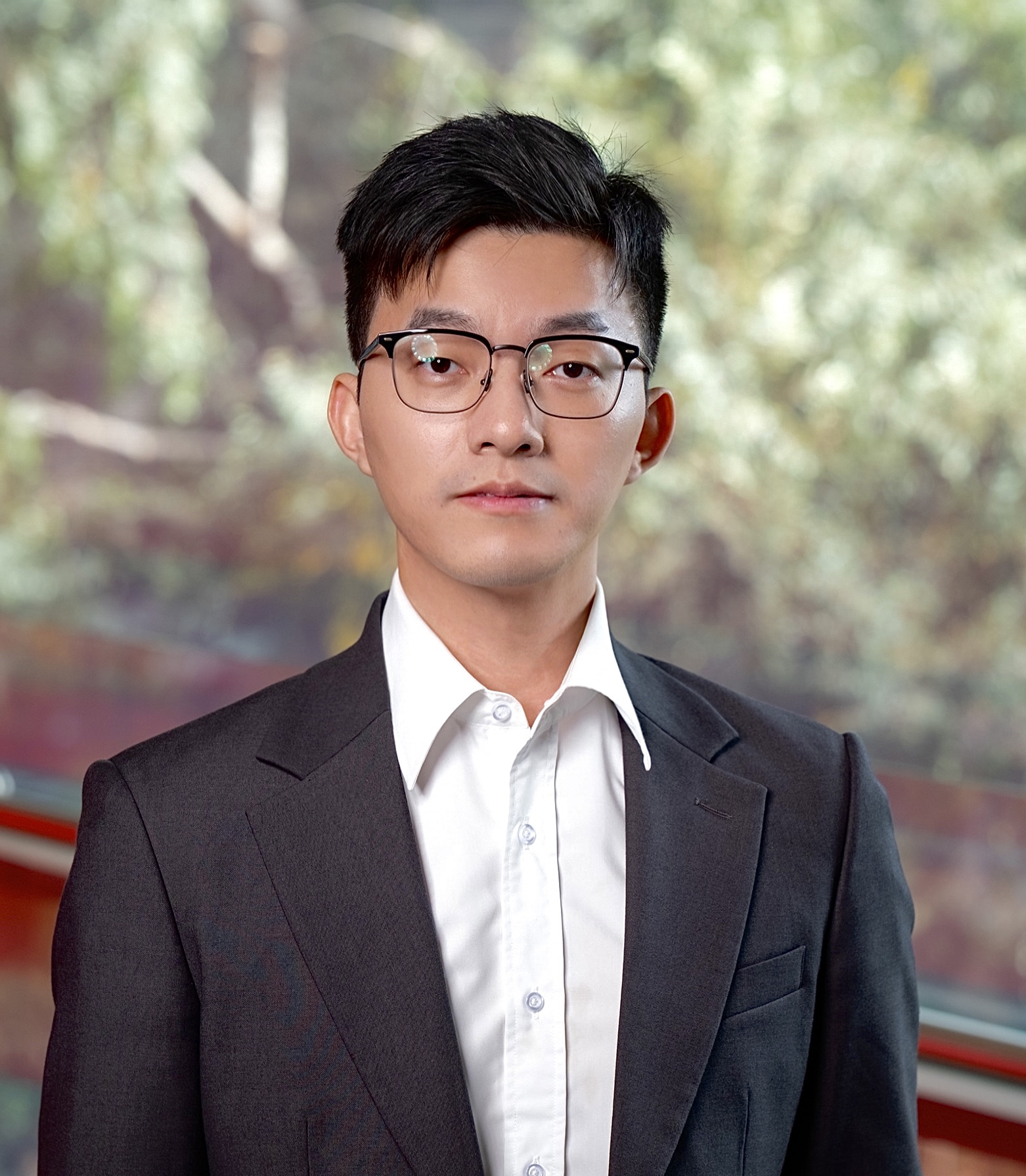
Dr. Zhouzun Xie is a Postdoctoral Fellow in Chemical Engineering at the University of New South Wales (UNSW), Australia. His research focuses on photovoltaic module recycling, process metallurgy, CFD-DEM modeling, nanomedicine delivery, and machine learning applications in engineering systems. Ph.D., Chemical Engineering, UNSW (2022) MEng, Northeastern University, China (2018) BEng, Northeastern University, China (2015) Research activities span: End-of-life management of photovoltaic modules High-fidelity multi-resolution modeling of industrial processes Multiphase reacting flow simulations Machine learning integration for process optimization Nanoparticle penetration in tumor microenvironments Key projects include: ARC Research Hub for Photovoltaic Solar Panel Recycling and Sustainability (PVRS) with $5M funding UNSW small equipment scheme grant (2023) for AI-based 3D PIV system (A$40k) CASS Travel Grant (2025) for computational research (A$4000) NCI Adapter Scheme grant (2023) for tumor penetration modeling (160 KSU) Scientific recognition includes: Dean’s Award for Outstanding PhD Theses (2023) UNSW Scientia PhD Scholarship (2018) Technical expertise encompasses: Hybrid CFD-DEM simulation frameworks Machine learning in process engineering Nanoparticle transport modeling Industrial-scale metallurgical process analysis Multi-resolution computational techniques Experimental validation of particulate systems
Prof. Michael Krivelevich is the Baumritter Chair in Combinatorics at the School of Mathematical Sciences , Tel Aviv University , Israel. His research focuses on probabilistic and extremal combinatorics, random graphs, positional games, and theoretical computer science. He has authored foundational work on Hamiltonicity, Ramsey theory, and pseudo-random graphs. Email: krivelev@tauex.tau.ac.il Phone: +972 3 6405366 Office: Schreiber, 301, Tel Aviv University Research Interests Prof. Krivelevich's work bridges probabilistic methods with deterministic graph properties, particularly in Hamilton cycles , extremal combinatorics , and position games . His research explores the structural properties of random and pseudo-random graphs , including connectivity, coloring, and subgraph packing. Recent studies focus on percolation thresholds, cycle distributions, and hereditary graph properties in random settings. Article Trends His recent publications emphasize Hamiltonian cycles in perturbed graphs, site percolation on hypercubes, and Turán-type problems for random subgraphs. Key themes include expanders , random graph processes , and game-theoretic graph resilience . Collaborations with leading researchers in combinatorics and algorithms underpin his interdisciplinary approach. Scientific Awards Baumritter Chair in Combinatorics, Tel Aviv University Teaching & Collaborations He has taught courses including Random Graphs , Positional Games , and Graph Theory since 2002. Co-authored books and seminal papers with researchers like Noga Alon, Benny Sudakov, and Dan Hefetz have shaped modern combinatorics.
Asaf Nachmias is a Professor at the Department of Theoretical Mathematics within the Tel Aviv University 's Faculty of Exact Sciences . His research focuses on Probability theory and Statistical physics , particularly on problems involving random walks , percolation , uniform spanning trees , and planar graphs . Scientific contributions: Studied critical percolation and scaling limits in high-dimensional graphs and hypercubes Explored circle packing theorem applications to random walks and graph theory Investigated unimodular random maps , electrical resistance in branching random walks Co-authored foundational works on noise sensitivity , cover time analysis, and random graph components Editorial roles: Associate editor, Annales de l'Institut Henri Poincaré (B) (2016–present) Associate editor, Annals of Probability (2021–present)
Assoc. Prof. Stoyan Mishev, PhD is affiliated with New Bulgarian University in the Department of Informatics . He teaches courses including Physical Methods in Biology , Atmosphere and Climate , and Physics and Astrobiology . Education PhD in Theoretical and Mathematical Physics (Sofia University, 2002) Bachelor's in Mathematics and Informatics (National Natural Science High School, 1997) Work Researcher at Joint Institute for Nuclear Research (Dubna, Russia, 2004–2016) New Bulgarian University (since 2017) Research focuses on quantum mechanics (many-body problems in nuclear physics), machine learning , and computational physics . His publications address nuclear structure, phonon states, and beta decay phenomena. Scientific work trends include theoretical modeling of nuclear systems, application of computational methods, and interdisciplinary connections between physics and informatics. Office hours: Mondays 9:30–11:30, Wednesdays 16:00–18:00 (Room 315, Building I).