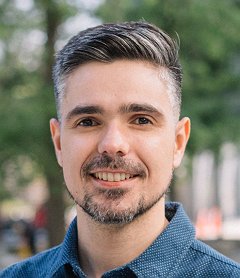
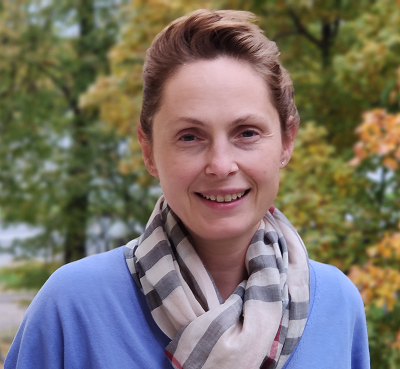
Federico Olmedo is an Assistant Professor at the Computer Science Department of the University of Chile, where he teaches courses like Program Analysis and Verification ( CC4101 ) and Discrete Mathematics for Computer Science ( CC3101 ). His research focuses on the semantics and verification of probabilistic programs , with applications in language-based security , differential privacy , and formal verification of cryptographic systems . Previously, he was a postdoctoral researcher at RWTH Aachen University and earned his PhD from the Technical University of Madrid in 2014. Research Interests : Program Verification Probabilistic Programming Language-Based Security Theorem Provers Quantum Computing Cryptographic Proofs Publications span formal methods for probabilistic programs, including weakest precondition calculi , runtime analysis of quantum programs , and machine-checked proofs for cryptographic protocols . Notable works include the Best Theory Paper Award at ECOOP 2016 and foundational research on conditioning in probabilistic programming . He co-developed the CertiCrypt and CertiPriv frameworks for verifying cryptographic proofs and differential privacy in Coq. Scientific Awards : ECOOP 2016 Best Theory Paper Award
Katarina Karić is an Assistant Professor at the Department of Information Technologies, Faculty of Technical Sciences Čačak, University of Kragujevac. She holds a Master of Science in Information Technology and is currently pursuing her PhD in Information Technologies. Her academic roles include teaching Databases Database Practicum Database Programming Introduction to Programming courses. Her research focuses on data mining , machine learning , information systems , and educational technology , with applications in healthcare, tourism, and academic performance prediction. She has published extensively in international conference proceedings and served on organizing committees for events like TIE2022 and TIE2024. Key scientific contributions include Automated kidney stone detection via YOLO algorithm Entrepreneurial education analysis in Serbia ML models for hotel reservation cancellation prediction Comparative standards analysis for IoT and AI Database pedagogy tools like CATAPEX She was awarded the Vuk Karadžić Diploma for academic excellence and holds certifications in Oracle technologies, European Horizon Project writing, and EDIT summer school. Her work spans collaborations with institutions in Bulgaria, Montenegro, and Serbia.
Scott Aaronson is a Professor of Computer Science at the University of Texas at Austin, holding the David Bruton, Jr. Centennial Professorship. Prior to joining UT, he was a faculty member in Electrical Engineering and Computer Science at MIT for nine years. His research focuses on theoretical computer science, particularly the capabilities and limits of quantum computers and computational complexity theory. Professor Aaronson's research spans a wide range of topics in quantum computing , computational complexity theory , and quantum information . His work explores fundamental questions about what problems quantum computers can solve efficiently, how they compare to classical computers, and the theoretical limits of quantum computation. He has made significant contributions to areas such as quantum algorithms, quantum complexity classes, quantum cryptography, and the theoretical foundations of quantum mechanics. Analysis of Aaronson's recent publications reveals a strong focus on establishing quantum advantage and understanding the separation between quantum and classical computation. His work spans theoretical foundations (such as complexity class relationships and query complexity) to more applied aspects (like quantum randomness generation and quantum cryptography). A recurring theme is using computational complexity theory to address fundamental questions in quantum mechanics and quantum gravity, particularly through connections to the AdS/CFT correspondence. 2018 - Tomassoni-Chisesi Award 2016 - Vannevar Bush Faculty Fellowship 2015 - IT from Qubit: Simons Collaboration on Quantum Fields, Gravity, and Information 2012 - Alan T. Waterman Award of the National Science Foundation 2011 - Best Paper, International Computer Science Symposium in Russia 2010 - US Presidential Early Career Award for Scientists and Engineers 2009 - Junior Bose Teaching Award, MIT 2009 - DARPA Young Faculty Award 2009 - TIBCO Career Development Chair, MIT 2009 - Sloan Research Fellowship Aaronson has supervised numerous PhD students who have gone on to successful careers in academia and industry. His research has been supported by major grants from the National Science Foundation, Department of Defense, and private foundations. His work on quantum supremacy experiments, particularly related to random circuit sampling and certified randomness, has had significant impact in both theoretical and experimental quantum computing communities. Professor Aaronson maintains an active research group at UT Austin focused on quantum computing and theoretical computer science. His group collaborates with both theoretical physicists working on quantum gravity and experimental quantum computing groups. He is also known for his influential blog "Shtetl-Optimized," where he discusses technical topics in quantum computing as well as broader issues in science and academia.
Rongmao Chen is a Professor at the College of Computer Science and Technology , National University of Defense Technology , China. He earned his Ph.D. from University of Wollongong, Australia (2016), following B.Eng and M.Eng at NUDT (2011, 2013). As a visiting researcher at COSIC, KU Leuven (2019-2020), he collaborated with Prof. Bart Preneel . Research Focus: Public-key cryptography, network security, and privacy-preserving protocols Key Contributions: Subversion-resilient encryption, reverse firewalls, and leakage-resilient key exchange Editorial Roles: IEEE TDSC (2024-), IACR Communications in Cryptology (2025), JCST Young Editorial Board (2023-) His recent works explore quantum-resistant cryptography (CRYPTO 2025, ASIACRYPT 2024), privacy-preserving machine learning (S&P 2025), and blockchain security (IEEE TIFS 2025). He serves on program committees of ACM CCS , PKC , and CT-RSA conferences. Awards & Recognitions: NSFC Excellent Young Scholar (2021) ACM SIGSAC China Rising Star (2020) Best Student Paper Award, ACISP 2018 Outstanding Advisor (National College Student Information Security Contest, 2017 & 2023) Young Elite Scientists Sponsorship, CAST (2018)
Ignacio Cascudo is an Associate Research Professor at the IMDEA Software Institute in Madrid, Spain. Previously, he held positions at Aalborg University (Denmark) as Associate and Assistant Professor, and at Aarhus University and CWI (Netherlands) as a postdoc. He earned his Ph.D. in Mathematics from the University of Oviedo (Spain). His research focuses on cryptography, particularly secure multiparty computation, secret sharing, and cryptographic protocols. He explores connections to error-correcting codes, finite fields, algebraic number theory, and algebraic complexity. He has advised PhD students such as Jaron Skovsted Gundersen and co-supervised Diego Mirandola. Recent projects include leadership in Spain's SecuRing grant and collaborations on Confidential6G (Horizon Europe), as well as research on verifiable computation, homomorphic encryption, and secure randomness generation. His work appears in top venues like CRYPTO, EUROCRYPT, and ASIACRYPT. Teaching includes courses on cryptographic protocols, computer security, and algebraic foundations at universities in Spain and Denmark. He contributes to interdisciplinary projects like SECURE at Aalborg University.
Morgan Shirley is a postdoctoral researcher in theoretical computer science at the University of Victoria, hosted by Professors Sajin Koroth and Bruce Kapron. Previously, he completed his PhD at the University of Toronto under the supervision of Toni Pitassi and a Masters degree at Oregon State University advised by Mike Rosulek. His educational background includes: PhD in Computer Science, University of Toronto Masters in Computer Science, Oregon State University Shirley's research focuses on computational complexity, with particular emphasis on communication complexity, proof complexity, and the interplay between theoretical computer science and additive combinatorics. His work often involves proving lower bounds and developing new techniques in matrix analysis and Boolean function theory, driven by fundamental questions about computational limits. His publications from 2018 to 2025 reveal a consistent trajectory in communication complexity, featuring breakthroughs in factorization norms, equality oracles, and multi-party protocols. A unifying thread is the application of combinatorial and algebraic methods—particularly matrix analysis—to establish tight lower bounds and structural insights across diverse computational models. No scientific awards were mentioned in the provided text. There is no information available regarding student advising or research grants, reflecting his current postdoctoral status focused on independent research rather than mentorship or funded projects.
Jesper Buus Nielsen is a Professor at the Department of Computer Science, Aarhus University. He specializes in cryptography, blockchain technology, and secure multiparty computation. His research focuses on cryptographic protocols, privacy-preserving systems, and theoretical computer science. He has contributed to advancements in anonymous payments, consensus algorithms, and fault-tolerant distributed systems. Notable research interests include blockchain security, threshold cryptography, and formal verification of cryptographic protocols. His work often addresses challenges in achieving privacy, security, and scalability in decentralized systems. Selected publications include innovations in OCash (anonymous blockchain payments), CRAFT (secure MPC protocols), and formalizing network security under adaptive corruptions. He has participated in numerous international conferences and serves as a peer reviewer for leading cryptographic venues.
Wen-Jan Tuan is an Assistant Professor in the Department of Family and Community Medicine. His research focuses on leveraging health data analytics, telehealth technologies, and machine learning to improve healthcare delivery efficiency and equity. He specializes in opioid therapy management, population health strategies, and virtual care platform usability. Education: DHA from Medical University of South Carolina, MPH and MS from University of Wisconsin Skills: SAS programming, Oracle PL/SQL, Raspberry Pi IoT development Affiliations: Member of CENSAI (Center for Artificial Intelligence Foundations and Scientific Applications) His work addresses clinician and patient responses to health IT adoption, with notable contributions to opioid pain management algorithms and primary care panel workload metrics. Collaborative efforts include developing Common Data Model frameworks for reproducible research and IoT-based connected health solutions. Recent studies explore impacts of healthcare system changes on chronically ill patients and long-term opioid users, using predictive analytics and cohort analyses. His innovations aim to enhance care accessibility and reduce health disparities through technology.
Ron Steinfeld is an Associate Professor at Monash University's Faculty of Information Technology, where he leads research in cryptography and cybersecurity. His work focuses on lattice-based cryptography, post-quantum algorithms, and secure multiparty computation. Dr. Steinfeld has made significant contributions to NIST's post-quantum cryptography standardization process through his Titanium proposal. Recent research includes efficient discrete Gaussian samplers (FACCT, COSAC), zero-knowledge proof optimizations, and blockchain security protocols. He received the Best Paper Award at ASIACRYPT 2015 for improved security proof techniques using Renyi divergence. Dr. Steinfeld serves on program committees for major cryptography conferences including CRYPTO and ASIACRYPT. His laboratory develops practical cryptographic solutions for quantum-resistant systems, with applications in secure communications and privacy-preserving protocols. Professional activities include coordinating Monash's Cybersecurity Reading Group and collaborating with international research teams.
Qihang Lin is a Professor and the Gary C. Fethke Research Professor in Business Analytics at the Tippie College of Business, University of Iowa, where he also serves as Faculty Director of the part-time Master of Science in Business Analytics (MSBA-PT) program. His academic leadership and research excellence position him at the forefront of optimization and data science. Dr. Lin holds a PhD in Algorithms, Combinatorics, and Optimization from Carnegie Mellon University and a BS in Mathematical Science from Tsinghua University. His research spans continuous optimization, machine learning, and fairness in AI, with a focus on developing efficient and provable algorithms for complex decision-making problems. Continuous Optimization First-Order Methods Distributed Optimization Error Bound Conditions Machine Learning and Predictive Analytics Fairness in AI Markov Decision Processes His recent publications, appearing in venues like Mathematics of Operations Research , NeurIPS , and Management Science , emphasize theoretical advances in optimization under constraints, fairness-aware learning, and scalable methods for large-scale data. The work consistently bridges theory and application, particularly in healthcare and AI ethics. Dr. Lin has been recognized with multiple awards, including: Best Paper Award - INFORMS Workshop on Data Science (2017) Runner-up, Best Paper Award - INFORMS Workshop on Data Science (2019) Early Career Faculty Research Award, Tippie College of Business (2018) MBA Business Analytics Professor of the Year (2018–2019) He has secured significant research funding from the National Science Foundation and the University of Iowa, focusing on fairness-aware machine learning and federated learning in healthcare. His grants demonstrate strong collaboration with interdisciplinary teams and a commitment to solving real-world problems through algorithmic innovation. He has also contributed to the academic community as a reviewer for top journals such as Mathematical Programming , SIAM Journal on Optimization , and IEEE Transactions on Signal Processing . Dr. Lin has been involved in research initiatives related to federated learning for medical imaging (ImagiQ) and fairness in AI systems, often working within collaborative frameworks involving data science and healthcare equity. His role as Faculty Director and research fellow underscores his leadership in shaping analytics education and research at the University of Iowa.
Shuichi Hirahara is an Associate Professor at the National Institute of Informatics (NII), Japan, within the Principles of Informatics Research Division. He holds a Ph.D. from the University of Tokyo and has held research positions at the University of Warwick and Nagoya University. His work lies at the intersection of theoretical computer science and cryptography, focusing on foundational questions in computational complexity. Educational Background: Ph.D. in Computer Science, Department of Computer Science, Graduate School of Information Science and Technology, The University of Tokyo (2016–2019) His research centers on meta-complexity , a field probing the complexity of problems about computational complexity itself, such as the Minimum Circuit Size Problem (MCSP). He investigates average-case complexity , Kolmogorov complexity , and circuit minimization , aiming to understand the limits of efficient computation and to establish secure cryptographic foundations. His work often reveals unexpected hardness results and bridges worst-case and average-case complexity. The recent publications highlight a strong trend toward using meta-complexity to understand cryptographic primitives such as one-way functions and to unify hardness conjectures like the Planted Clique problem. His results have significant implications for proving the security of cryptography based on average-case hardness. Scientific Awards: Young Scientists' Award from MEXT (2024) Yamato Scientific Award (2024) Microsoft Informatics Research Award (2024) Complexity Result of the Year 2022 Funai Research Encouragement Award (2022) Machtey Award (FOCS 2018) Academic Encouragement Award (IEICE, 2019) Hirahara has been actively involved in research funding and academic service. He is the principal investigator of a JSPS Challenging Research (Pioneering) grant on average-time NP-completeness and has participated in several JST and JSPS projects on complexity theory and quantum algorithms. He serves on the program committees of major conferences including STOC, FOCS, and CCC. He is a frequent invited speaker at international workshops and seminars, contributing to the global discourse on computational complexity and cryptography. While no formal advisees are listed, his leadership in research projects suggests an active mentoring role. Labs and Research Teams: He is affiliated with the Informatics Principles Research Division at NII, a leading center for theoretical informatics in Japan. His work is highly collaborative, involving researchers from institutions like JST, University of Tokyo, and international partners.
Christian Schaffner is a Researcher at the University of Amsterdam and Centrum Wiskunde & Informatica (CWI) in the Algorithms and Complexity department, focusing on quantum cryptography and post-quantum secure protocols. He leads projects like 'Taming Quantum Adversaries' and holds a Veni Grant from NWO (2010). His work emphasizes cryptographic protocols resilient to quantum computing threats, including zero-knowledge proofs, secure multi-party computation, and verifiable delay functions. Key research areas include quantum-resistant cryptographic schemes, homomorphic encryption, and protocols in the quantum random oracle model. Notable contributions include advancements in NIZKs, oblivious transfer in noisy-storage models, and quantum secure computation frameworks. He has authored over 40 publications in top venues like CRYPTO, EUROCRYPT, and Nature Communications. His grants include funding for research on quantum cryptography and homomorphic encryption. Schaffner collaborates with institutions like CWI and presents regularly on quantum computing security at international conferences.
Olga Klopp is a Professor of Statistics at ESSEC Business School and a permanent member of the CREST research center. Her work focuses on nonparametric estimation, high-dimensional inference, network models, and matrix completion. Research spans theoretical and applied statistics Specializes in sparse/high-dimensional data and network analysis Develops algorithms for matrix completion and graphon estimation Recent research includes tensor decomposition for economic networks, detection of change-points in dynamic networks, and handling missing data in epidemic modeling. She has received ERC and ANR grants for innovative projects. PhD Students: Solenne Gaucher, Mokhtar Alaya, Guillermo Martin Key methodological contributions in low-rank modeling and robust estimation
Professor Eike Kiltz is a faculty member at Ruhr-University Bochum, serving as Professor and Head of the Cryptography department within the Faculty of Computer Science. His primary research focuses on theoretical cryptography, the design and analysis of cryptographic protocols, and complexity theory. He teaches courses including Post-Quantum Cryptography, Elliptic Curves and Cryptography, and Bachelor/Master Seminars in Cryptography. Prof. Kiltz's research spans numerous areas within modern cryptography, with particular emphasis on post-quantum cryptography, lattice-based cryptographic systems, and the theoretical foundations of cryptographic protocols. His work addresses critical challenges in cryptographic security including tight security proofs, multi-user security models, and the transition to quantum-resistant cryptographic algorithms. He has made significant contributions to understanding the security of digital signature schemes, key exchange protocols, and lattice-based constructions that form the basis for many post-quantum cryptographic standards. Analysis of Prof. Kiltz's recent publications (2021-2024) reveals a strong focus on post-quantum cryptography, with particular attention to NTRU instantiations, lattice-based key encapsulation mechanisms, and the security of digital signature schemes in the quantum era. His research also addresses fundamental questions in cryptographic theory including the limits of provable security, generic models for group actions, and tightly-secure authenticated key exchange protocols. A significant portion of his recent work contributes to the standardization efforts for post-quantum cryptography, particularly with regard to the NIST PQC standardization process. Member of BITSI (Bochumer Verein zur Förderung der IT-Sicherheit und Informatik) Member of CASA (DFG Excellence Cluster) Member of QSI (EU Marie Curie Network) Member of HGI (Horst Görtz Institute) Member of IACR (International Association for Cryptologic Research) Prof. Kiltz has supervised numerous PhD students to completion, with graduates spanning from 2010 to 2024. His supervision record demonstrates a consistent contribution to training the next generation of cryptographers, with recent graduates working on cutting-edge topics in post-quantum cryptography and advanced cryptographic protocols. His research has been supported through various institutional affiliations and collaborations with leading cryptographic research groups worldwide. Prof. Kiltz is actively involved with the Horst Görtz Institute for IT Security at Ruhr-University Bochum, contributing to one of Europe's leading centers for cryptographic research. His work intersects with multiple research teams focusing on both theoretical foundations and practical implementations of cryptographic systems, particularly those addressing the challenges posed by quantum computing.
Professor Sanjiang Li is affiliated with the University of Technology, Sydney (UTS) as a Professor in the Faculty of Engineering and Information Technology , specifically within the Centre for Quantum Software and Information . With a PhD in Mathematics from Sichuan University and a BSc from Shaanxi Normal University, his research spans quantum computation , knowledge representation and reasoning , and formal verification of quantum systems . His recent work focuses on quantum circuit transformation , including novel methods like adaptive divide-and-conquer and Monte Carlo Tree Search frameworks. He has advanced symbolic verification techniques using tensor decision diagrams and explored classical-quantum hybrid algorithms for resource-efficient training. Dr. Li has received prestigious awards such as the ARC Future Fellowship and Alexander von Humboldt Research Fellowship . He supervises PhD students including Calum Holker and Guangxi Li , and contributes to quantum software development through funded projects like the Sydney Quantum Academy and ARC Discovery Projects .