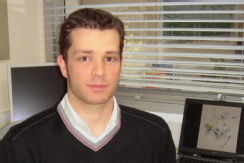
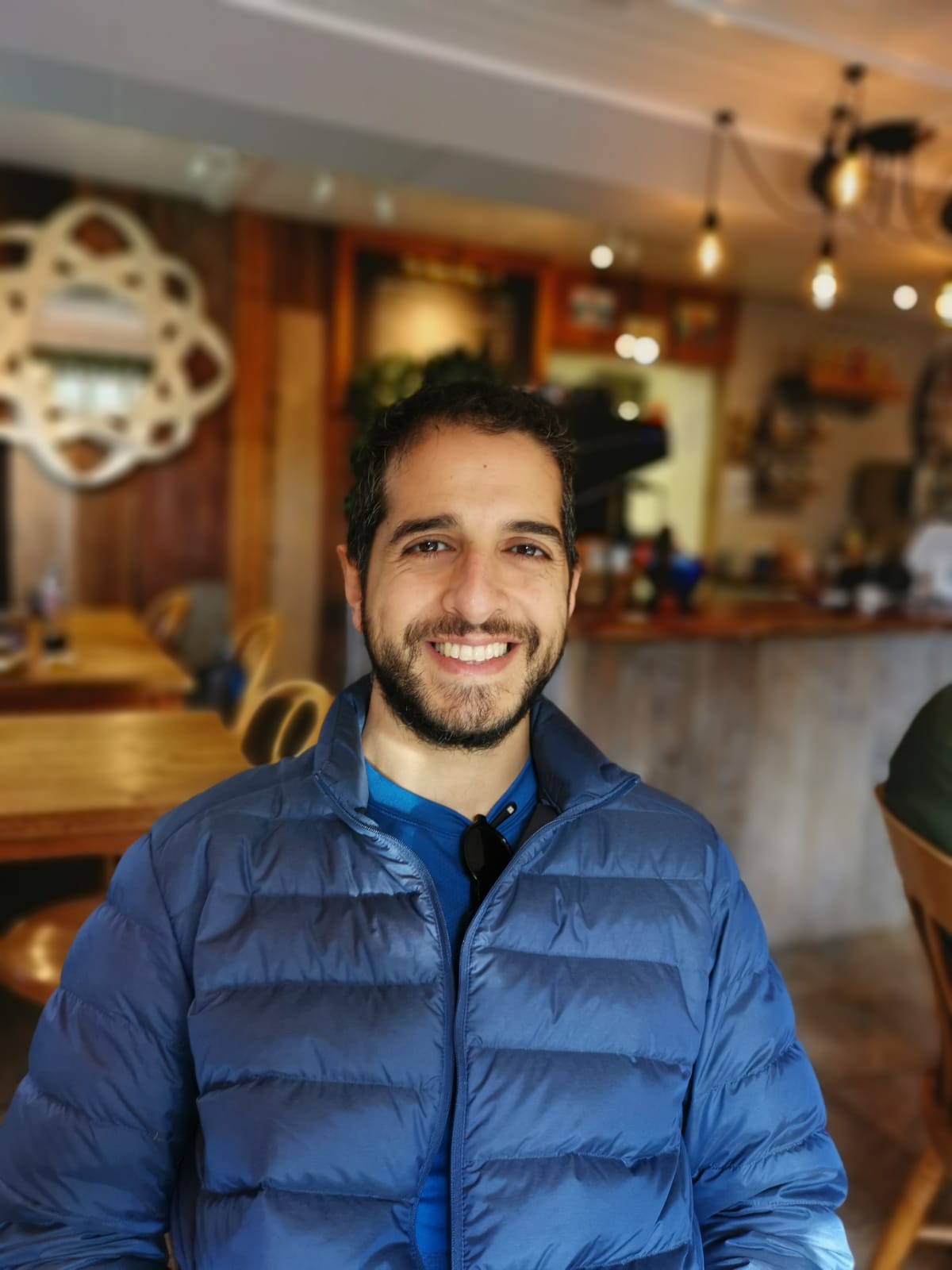
Ervin Dervishaj is a PhD Fellow at the Machine Learning Section of the Department of Computer Science, University of Copenhagen. His research spans theoretical and applied machine learning, with a focus on recommendation systems, medical imaging, and computational modeling. The Machine Learning Section engages in interdisciplinary work across Information retrieval Medical data analysis Remote sensing Sustainability Biological data modeling Recent publications highlight expertise in Recommendation system interpretability (2025) GAN-based collaborative filtering (2022) Linguistic typology through language embeddings (2018) Medical imaging applications in osteoarthritis and neurodegenerative diseases (2016-2018) Optimization algorithms for adversarial learning (2016-2017) He contributes to projects involving the SCIENCE AI Centre and the TreeSense Centre for remote sensing applications.
Floske Spieksma is an Associate Professor at the Mathematical Institute (Probability Theory) of Leiden University , where she has worked since 1985 in various roles including PhD researcher, Postdoc, Assistant Professor, and Associate Professor. Her research focuses on Stochastic Processes , Markov Decision Processes , and Operations Research , particularly in Queueing Theory and Network Optimization . She has supervised multiple PhD students including Herman Blok and Laurens Smit and co-organized international workshops. Education : PhD in Mathematics (1990), Leiden University MSc (cum laude) in Mathematics (1985), Leiden BSc in Mathematics (1981), Leiden BA in Spanish (1981), Leiden Research Trends : Her recent publications analyze unbounded jump rate Markov processes , graph resistance metrics , and stochastic decision frameworks . Key collaborations include work with M.N. Katehakis, L. Smit, and H. Blok. Scientific Awards : KNAW 5-year fellowship (1993) C.J.Kok prize (1991) Shell travel grant (1991) Two book grants (1984) Advising : Supervises PhD students and research projects, with past advisees including Herman Blok and Laurens Smit. Organized the H.E.T. Symposium (2012) connecting students with alumni in industry.
Prof. Patrik Ferrari is a Professor of Probability Theory and Stochastic Analysis at the Institute for Applied Mathematics, University of Bonn, where he has been employed since October 2008 and became a professor in April 2009. His research primarily focuses on stochastic processes, random matrix theory, and the Kardar-Parisi-Zhang (KPZ) universality class. His educational background includes: Physics studies at EPFL (Swiss Federal Institute of Technology in Lausanne) from 1996 to 2001 Diploma thesis at Rutgers University under Prof. Joel L. Lebowitz PhD at Technische Universität München (TUM) completed in 2004 under Prof. Herbert Spohn Ferrari's research interests span Probability Theory, Stochastic Analysis, Random Matrix Theory, KPZ Universality Class, and Interacting Particle Systems. His work often explores the connections between stochastic growth models, random matrices, and determinantal processes. He has made significant contributions to understanding the Airy processes, which describe the limit behavior of various stochastic models in the KPZ universality class. His publications from the last five years reveal a consistent focus on the theoretical aspects of exclusion processes, last passage percolation, and KPZ-related models. The research demonstrates deep mathematical analysis of correlation structures, fluctuation properties, and universality phenomena in these systems. His notable awards include: Alexanderson Award from the American Institute of Mathematics (2018) Heinz Maier-Leibnitz prize from the German National Foundation (2009) EPFL Award for second best general exams average (2001) Ferrari has served on editorial boards for several prestigious journals including The Annals of Applied Probability (2013-2018), Mathematical Physics, Analysis and Geometry (2013-2022), and Electronic Journal of Probability (2018-2023). His research has established important connections between probability theory, statistical mechanics, and random matrix theory, particularly in the context of the KPZ universality class.
Paul Beame is a Professor and Associate Director for Facilities at the Paul G. Allen School of Computer Science & Engineering (University of Washington). He earned his B.Sc. in Mathematics (1981) , M.Sc. in Computer Science (1982) , and Ph.D. in Computer Science (1987) from the University of Toronto, followed by postdoctoral work at MIT (1986-87). His research spans computational complexity , proof complexity , quantum computing , and formal verification , with applications to databases and AI. Research Interests : Computational complexity theory, proof complexity, SAT-solving, quantum algorithms, time-space tradeoffs, communication complexity, circuit complexity, knowledge representation, probabilistic inference. Recent Publications : Focus on quantum time-space tradeoffs, multiparty communication complexity, formal verification of nonlinear arithmetic, and lower bounds for circuit and proof systems. Articles appear in ACM Transactions on Computation Theory , SIAM Journal on Computing , and conferences like STOC, FOCS, and NeurIPS. Teaching & Service : Active in theoretical computer science education and professional service, including program committee roles and tutorials. Personal : Engages in sports like squash and softball.
Timoteo Carletti is a Full Professor in the Department of Applied Mathematics at the University of Namur, Belgium, and a leading researcher at the Namur Institute for Complex Systems (naXys). He has been with the University of Namur since 2005, progressing from lecturer to professor in 2008 and Full Professor in 2011. Carletti co-founded the Namur Center for Complex Systems in 2010 and directed it until 2014. His academic journey includes postdoctoral research at Paris XI, IMPA in Rio de Janeiro, Scuola Normale Superiore in Pisa, and the University of Padova. Carletti earned his Master's degree in Physics from the University of Florence in 1995 and completed his Doctorate in Mathematics there in 2000 with a thesis on "Stability of orbits and Arithmetics for some discrete dynamical systems." His research spans diverse fields including biology, celestial mechanics, chaos detection, complex networks, control of systems, dynamic systems, economics, particle accelerators, and social dynamics. With over 150 publications and an h-index of 26 (2,450 citations), his work demonstrates significant impact in the field of complex systems. His research focuses on complex networks , synchronization phenomena , higher-order interactions , and pattern formation . Recent work explores synchronization in matrix-weighted networks, chimera states on directed hypergraphs, topological Dirac synchronization, and control strategies for desynchronizing Kuramoto oscillators. His publication record shows a clear evolution from traditional network analysis toward increasingly complex higher-order structures and topological approaches to understanding dynamical systems. Carletti has led numerous significant research projects including EMOTIONS (Emergent MOTifs in IntercONnected Systems), Be-neXst (Belgian advanced studies on compleX systems), and UNDER-NET (underground fungal networks). He served as President of the Graduate School FNRS "Non-linear phenomena, Complex Systems and Statistical Mechanics" from 2011-2017 and has organized major international conferences including ECCS12 in Brussels. As an educator, Carletti has supervised numerous PhD and Master's theses across mathematics, economics, biology, and computer science. His upcoming activities for 2025 include hosting researchers, delivering invited talks on global synchronization, and organizing the Perspectives in Nonlinear Dynamics conference and the International School and Conference on Network Science.
Joscha Henheik is a Postdoctoral Researcher at the Institute of Science and Technology Austria (IST Austria), transitioning to the University of Geneva in September 2025 under Antti Knowles. He completed his M.Sc. (Physics, 2020) and B.Sc. (Mathematics/Physics, 2019) at the University of Tübingen, followed by a Ph.D. in Mathematics at IST Austria (2025). He co-organizes the MIX Colloquium at IST Austria. His research focuses on mathematical physics, emphasizing random matrices, quantum many-body systems, and BCS theory. Key contributions include studies on the Loschmidt echo, universality in BCS models, and adiabatic theory for quantum spin systems. His work bridges theoretical physics and rigorous mathematical analysis, addressing topics like prethermalization, eigenvector decorrelation, and integrable systems. Publications span random matrix theory, superconductivity, and adiabatic processes, with methods rooted in statistical mechanics and quantum dynamics. His collaborations include László Erdős, Giorgio Cipolloni, and Antti Knowles. Future work will explore quantum lattice systems and low-dimensional BCS phenomena at Geneva.
Murat A. Erdogdu is an Assistant Professor at the University of Toronto, holding joint appointments in the Department of Computer Science and the Department of Statistical Sciences. He is a faculty member of the Machine Learning Group and the Vector Institute, and holds a CIFAR Chair in Artificial Intelligence. Prior to this, he was a postdoctoral researcher at Microsoft Research New England. He earned his Ph.D. in Statistics from Stanford University, advised by Andrea Montanari and Mohsen Bayati, and holds an M.Sc. in Computer Science from Stanford. His research focuses on Machine Learning Theory, High-dimensional Statistics, Optimization, and Sampling. Erdogdu explores foundational aspects of these fields, with contributions to Langevin Monte Carlo methods, feature learning, and optimization algorithms in high-dimensional settings. His work bridges theoretical guarantees with practical applications, addressing challenges in non-convex optimization and sampling from non-log-concave distributions. Erdogdu's recent publications highlight advancements in robust feature learning, minimax linear regression, and analysis of sampling algorithms under functional inequalities. His research often intersects with statistical theory, algorithmic design, and computational efficiency. He has advised numerous PhD students and postdocs, contributing to the training of future researchers in machine learning and statistics. His affiliations with top-tier institutions and roles in prestigious programs like the CIFAR Chair reflect his impact in advancing artificial intelligence and statistical methodologies. Erdogdu's work is supported by grants and awards, though specific grants are not detailed in the provided materials.
Werner Schachinger is an Associate Professor in the Department of Statistics and Operations Research at the Faculty of Business, Economics and Statistics. His research focuses on optimization theory, mathematical analysis, and game theory, with particular emphasis on completely positive matrices, quadratic optimization, and evolutionary dynamics. He has authored over 18 publications since 2007, exploring topics such as CP-rank bounds, combinatorial asymptotics, and algorithmic methods in optimization. Education background not explicitly stated but inferred through research focus and academic rank. His research interests span operations research, mathematical optimization, probability theory, and combinatorics. Notable contributions include studies on the complexity of optimization models, equilibrium analysis in game theory, and the application of copositive programming techniques. Publications highlight trends in optimization theory, with recent works addressing geometric distribution analysis (2023) and Plancherel averages (2023). Earlier contributions include work on moral play equilibrate (2021) and cp-rank lower bounds (2015–2020). No scientific awards explicitly mentioned in the texts. Advising and grants details are not provided in the text. However, activities include organizing the 2018 Workshop on Optimization, Game Theory, and Data Analysis, and contributing to talks on copositive optimization and duality in conic programming. Labs or research teams are not explicitly mentioned, though collaborations with researchers like Immanuel Bomze and Jörgen Weibull suggest active participation in interdisciplinary projects.
Alberto Rodríguez González is a Research Professor at the Albert-Ludwigs-Universität Freiburg, Germany, affiliated with the Quantum Optics and Statistics Group. He holds a PhD in Quantum Physics from the Universidad de Salamanca (2005), with a dissertation on one-dimensional disordered quantum systems. His research focuses on disorder-induced phenomena in quantum systems, including Anderson localization, multifractal analysis, and many-body interactions in cold atoms and condensed matter. Key research areas include quantum chaos, Bose-Hubbard model dynamics, and the interplay between disorder and interactions. He has contributed to understanding critical parameters at Anderson transitions and engineered extended states in disordered systems. His work spans theoretical and computational approaches, with applications to graphene, optical lattices, and ultracold bosons. Publications highlight advancements in multifractal finite-size scaling, symmetry-induced tunneling in disordered potentials, and quantum transport phenomena. His research has been published in journals like Physical Review B, Phys. Rev. Lett., and Ann. Phys. No scientific awards are explicitly mentioned, but his contributions reflect sustained excellence in theoretical physics. Labs/Teams: Active member of the Quantum Optics and Statistics Group at Freiburg, collaborating internationally on quantum materials and nonlinear physics. Research facilities include advanced computational tools for simulating disordered systems and many-body quantum dynamics.
Ofer Busani is a Lecturer at the University of Edinburgh, specializing in probabilistic models with strong ties to statistical physics. His research primarily focuses on the Kardar-Parisi-Zhang (KPZ) universality class, encompassing random growth processes, interacting particle systems, random polymers, and stochastic PDEs. He explores phenomena such as universality, scaling limits, and hydrodynamic behavior in these systems. Busani's work spans theoretical analysis of stochastic processes, including geodesics in directed landscapes, invariant measures in exclusion processes, and correlation decay in Airy processes. His contributions address fundamental questions in non-equilibrium statistical mechanics and stochastic geometry. His publications (2016–2025) reflect a sustained focus on the KPZ universality class, with recent advancements in multi-lane exclusion processes, bi-infinite polymer measures, and semi-infinite geodesic structures. Collaborations with leading researchers such as Timo Seppäläinen and Patrik L. Ferrari highlight interdisciplinary engagement in probability theory and mathematical physics. No scientific awards are explicitly mentioned. His advising record is not detailed here, though collaborations with students like Evan Sorensen suggest active mentorship. Research is centered at the University of Edinburgh with no lab-specific mentions in the provided text.
Harm Askes is a Full Professor in the Department of Civil and Structural Engineering at the University of Sheffield. His research focuses on computational mechanics of multiscale materials, particularly in gradient elasticity, homogenization, and metamaterials. He holds degrees from Delft University of Technology (MSc, PhD) and a DEng from the University of Sheffield. His work contributes to UN Sustainable Development Goals through advanced material modeling and structural analysis. Key research areas include wave propagation in heterogeneous media, dynamic homogenization, and fracture mechanics. Collaborations span international institutions, with notable contributions to lattice material mechanics and finite element methodologies. His publications reflect expertise in multiscale modeling, with a focus on bridging microstructural details to macroscale behavior. Dr. Askes has an h-index of 20 and over 1,108 citations. His research integrates computational techniques with experimental validation, addressing challenges in material characterization and structural integrity. Ongoing projects explore stochastic material behavior and the design of advanced composite systems. His academic contributions include editorial roles, supervision of postgraduate research, and development of innovative numerical methods for engineering applications. Theoretical frameworks developed by his team, such as gradient-enriched continuum models, are widely applied in computational mechanics.
Dr. Luca Zanetti is a Lecturer at the University of Bath's Department of Mathematical Sciences and a member of the Institute for Mathematical Innovation (IMI). His research focuses on the intersection of machine learning, discrete probability, and theoretical computer science, with an emphasis on designing efficient network analysis algorithms. He holds a PhD and is affiliated with multiple research institutions. Key research interests include algorithm design for unsupervised/supervised learning on graphs, Markov chain analysis, graph clustering, and spectral methods. His work bridges theoretical foundations with practical applications in network science and computational mathematics. Zanetti's recent publications explore topics like Boltzmann transport algorithms, Elo rating systems via Markov chains, and geometric bounds for mixing times. He leads the EPSRC-funded project 'Balanced Allocation Meets Queueing Theory' (2024–2025), demonstrating expertise in both theoretical and applied research. He is actively supervising doctoral students on network analysis and machine learning topics. His research has been recognized with Open Access publications and collaborations across mathematics, computer science, and engineering disciplines.
Prof. Dr. Caren Tischendorf is a Professor of Applied Mathematics at Humboldt University of Berlin's Institute of Mathematics. Her research focuses on differential-algebraic equations, numerical analysis, and mathematical modeling with applications in electrical circuits, energy networks, and physical systems. She investigates modeling, numerical analysis, and solution methods for differential equations with algebraic constraints, including applications in circuit simulation, gas network optimization, and biological systems. Her work spans theoretical foundations and practical implementations. Recent publications cover numerical methods for differential equations, machine learning foundations, gas network modeling, and uncertainty quantification. Her work demonstrates consistent innovation in computational mathematics with applications across engineering and physics domains. As Dean of the Faculty of Mathematics and Natural Sciences (2022-2025), she provides institutional leadership. She serves as Chair of the MATH+ Council, represents DMV in ICIAM, and contributes to scientific committees for SCEE Foundation and KoMSO.
Dr. Christopher Joyner is a Postdoctoral Research Fellow at Queen Mary University of London's School of Electronic Engineering and Computer Science. His research bridges quantum physics and medical informatics, focusing on applications of Bayesian networks in clinical decision support and spectral analysis of quantum systems. He holds an email address at c.joyner@qmul.ac.uk and is based in the Peter Landin building (room CS 437). Core research interests include quantum chaos, statistical methodologies for medical data, and algorithmic decision tools for healthcare. His work combines theoretical approaches from random matrix theory with practical implementations in clinical environments, emphasizing tools for low back pain management and spinal pathology assessment. Notable contributions include the BENDi Bayesian network decision support system for pain management and foundational studies on symmetries in quantum graphs. His recent publications (2021–2024) reflect dual expertise in quantum systems and healthcare technology development. No academic awards or grants are explicitly listed in available materials. His research group affiliation is with the School's Electronic Engineering and Computer Science division, with potential collaborations across medical and engineering faculties.
Sergei Balakin is a Research Fellow at Impact Labs, Monash University, with active research output spanning two decades from 2003 to 2025. His work bridges theoretical mathematics with practical applications in finance and computing systems. His research focuses on Applied Mathematics, Probability and Statistics, Financial Mathematics, Operator Theory, and Computer Science. Key contributions include combinatorial analysis of Markov sequences, stochastic modeling for computing systems, and dynamic optimization for energy storage trading, demonstrating strong interdisciplinary connections between pure mathematics and real-world problems. Publication trends show evolution from foundational operator equations (2008-2009) to combinatorial probability (2011) and stochastic computing models (2013), culminating in recent financial mathematics applications (2025). His work consistently applies advanced mathematical techniques to solve complex problems across multiple domains. Based at Impact Labs, Monash University, Balakin contributes to interdisciplinary research initiatives where mathematical modeling intersects with economic and computational challenges.