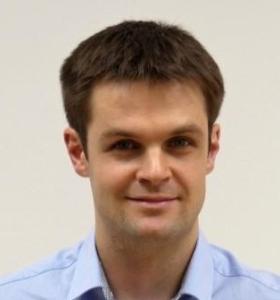
Paul Peter Hager serves as an Assistant Professor in the Department of Statistics and Operations Research at the University of Vienna, where he teaches courses including Linear Algebra and Applied Optimization. Previously, he held a junior research group leader position at Technische Universität Berlin. His research centers on: Mathematical Finance Machine Learning Stochastic Control Mean-Field Games Fractional Processes Gaussian Multiplicative Chaos Volatility Modeling Hager pioneers applications of rough path signatures in financial mathematics, developing novel frameworks for stochastic control and calibration problems. His work bridges theoretical probability with practical machine learning implementations, particularly in volatility modeling using fractional processes and log-correlated fields. Recent publications reveal a dominant trend in signature-based methods for optimal stopping and mean-field games, with significant contributions to fractional Brownian motion theory. His collaborative work with leading researchers like Peter Friz and Christian Bayer consistently targets high-impact journals in applied probability and financial mathematics. Dr. Hager maintains active research collaborations and has delivered invited talks at institutions including KAUST, focusing on computational implementations of signature methods in finance.
Dr. Christian Hulzebos is an active faculty member at the University of Groningen's Faculty of Medical Sciences, specifically within the Reproductive Origins of Adult Health and Disease (ROAHD) research group at the University Medical Center Groningen (UMCG). With over 105 research outputs to his name, he is a prominent researcher in neonatal medicine, focusing on critical issues affecting preterm infants and newborns. Dr. Hulzebos's research spans several key areas in neonatology, with particular emphasis on neonatal hyperbilirubinemia management, necrotizing enterocolitis prevention and treatment, phototherapy applications, and optimal care practices for preterm infants. His work integrates clinical research with practical healthcare implementation, addressing both physiological mechanisms and healthcare delivery challenges in neonatal care. His recent publications (2025) demonstrate a strong focus on improving neonatal outcomes through evidence-based interventions, including studies on cord clamping techniques, respiratory support strategies, home phototherapy implementation, and blood product management. These works appear in high-impact journals including The Lancet Regional Health - Europe and Scientific Reports, indicating the significance of his contributions to the field. Dr. Hulzebos actively collaborates with numerous researchers across the Netherlands and internationally, as evidenced by his multi-center studies and datasets. His supervised work indicates mentorship of emerging researchers in neonatology, though specific student names are not listed in the available information. His research contributes significantly to UN Sustainable Development Goals related to health and wellbeing, particularly through improving survival and health outcomes for vulnerable newborn populations. The fingerprint analysis of his work shows strong connections to bilirubin metabolism (100%), hyperbilirubinemia (95%), neonatal care (74%), and necrotizing enterocolitis research (74%).
Michael Dinitz is an Associate Professor in the Department of Computer Science at Johns Hopkins University with a secondary appointment in the Department of Applied Mathematics and Statistics . He is a member of the Algorithms and Complexity group and the Mathematical Institute for Data Science . His research focuses on Theoretical Computer Science , with emphasis on approximation algorithms , online algorithms , and distributed algorithms , particularly in applications to computer networking , distributed systems , and machine learning . His recent work involves differential privacy , dynamic networks , and resilient network design . His publications cover diverse topics in graph theory , privacy-preserving algorithms , and online optimization , with a focus on practical applications of theoretical results. He has received multiple NSF grants including a CRII award and Algorithms in the Field funding, and was honored with the Professor Joel Dean Excellence in Teaching Award . He advises a research group with PhD, MSE, and undergraduate students , and serves on program committees for leading theory conferences like FOCS , STOC , and ICALP . Education PhD in Computer Science, Carnegie Mellon University (2010), advised by Anupam Gupta AB in Computer Science, Princeton University (2005), advised by Sanjeev Arora Grants & Awards NSF CRII Grant (2015) NSF Algorithms in the Field Grant (2016) Multiple NSF Algorithmic Foundations grants (2019, 2022, 2025) NSF Graduate Research Fellowship (2005-2010) ARCS Foundation Scholarship (2005-2010) Best Paper Awards at ICDCS (2014) and DISC (2017)
James West is the W.H. Smith Professor of Economics at Baylor University, where he joined the faculty in 2011. He holds a PhD in Economics from the University of Michigan (1994) with fields in public finance and econometric theory and is a Research Associate at the National Bureau of Economic Research (NBER). Prior to Baylor, he served at the U.S. Air Force Academy (1997–2011) and Seattle University (1994–1997). His research interests span Economics of Education Peer Effects Public Policy Applied Microeconomics Social Network Formation Public Economics Applied Econometrics James’s recent publications focus on peer dynamics, economic behavior, and policy implications. Key trends include Gender Equality in Labor Markets Minimum Wage Impact Analysis Clustered Errors in Econometric Models College Diversity and Social Attitudes Retirement Policy Economics Health Behavior Contagion . Contact Information: Email: J_West@baylor.edu Phone: (254) 730-0102 Office: Foster Business and Innovation 320.05
Cheran Elangovan, MD, is an Assistant Professor at the University of Tennessee Health Science Center's College of Medicine – Memphis, Department of Neurology. He is dual-certified in Neurology and Vascular Neurology, with clinical expertise in stroke management, anticoagulation therapy, and mechanical thrombectomy. His research focuses on stroke prevention, recurrence analysis, and telemedicine applications in neurology. MD/MBBS, Government Stanley Medical College (2014) Fellowship, Vascular Neurology, University of Tennessee Health Science Center (2020–2021) Residency, Neurology, Penn State College of Medicine (2017–2020) Internship, Internal Medicine, Penn State College of Medicine (2016–2017) His recent work explores stroke recurrence after cervical artery dissection, antithrombotic strategies for embolic stroke of undetermined source (ESUS), and machine learning applications in predicting intracranial hemorrhage post-thrombectomy. Collaborative studies include the STOP-CAD and CASPR registries, emphasizing diagnostic accuracy and treatment optimization. Key trends in his publications include comparative analyses of anticoagulation vs. antiplatelet therapy for stroke prevention, telestroke care models, malignancy-stroke associations, and pharmacological outcomes. Sub-fields span ESUS, vascular imaging, thrombectomy protocols, and neurovascular emergencies. Dr. Elangovan contributes to clinical education through peer review acknowledgment in Academic Medicine and Neurology journals. His affiliations include the CASPR and STOP-CAD studies, focusing on evidence-based stroke care and risk stratification.
Anne Mette Kjeldsen serves as Associate Professor at Aarhus University's Department of Political Science, where her research bridges public administration, public management, and leadership theory with practical applications in public sector organizations across health, education, and social services. Her research portfolio centers on public service motivation, public values, and professionalism, with current investigations into distributed leadership models, change management dynamics, and collaborative governance structures. She examines professional learning communities in public schools and sector-specific differences in employee motivation, utilizing methodological diversity including qualitative, quantitative, experimental, and mixed methods approaches to address complex public management challenges. Recent publications (2020-2024) reveal concentrated scholarly activity in distributed leadership within healthcare quality improvement and educational settings, crisis leadership responses in public organizations, and longitudinal analyses of public service motivation's impact on organizational outcomes. Her work consistently employs robust empirical designs including randomized field experiments and panel studies to examine leadership-employee relationships and organizational change processes. Her research program includes significant grant-funded projects: Learning from errors in public digitalization (2021-2024) Inclusion of novices in public digitalization (2021-2022) SAMFO: New collaboration and organizational forms to promote learning, well-being, and development in Danish public schools (2020-2024) King Frederiks Center for Public Leadership (2018-present) Distributed leadership (2012-2016) Kjeldsen maintains active collaboration with the King Frederiks Center for Public Leadership, contributing to its mission of advancing evidence-based leadership practices in Denmark's public sector through research-practice integration and organizational development initiatives.
Laurent Pfeiffer is a researcher at the Signals and Systems Laboratory , focusing on Optimization and Control Theory . His work bridges theoretical advancements in mean field games, stochastic optimization, and numerical methods with practical applications in energy systems and fluid dynamics. Research Interests: Optimal Control, Mean Field Games, Stochastic Optimization, Nonlinear Programming Recent Publications: Explore mean field games, nonconvex optimization, and control theory applications in nuclear energy, gas portfolios, and fluid dynamics. Labs: Signals and Systems Laboratory, specializing in control systems and mathematical modeling.
Federico Vigolo is a Junior Professor in pure mathematics at the University of Göttingen's Mathematical Institute and a Principal Investigator of RTG 2491 - Fourier Analysis and Spectral Theory. He also serves as one of the Equal Opportunities Officers (Gleichstellungsbeauftragte) of the Mathematical Institute. His work bridges several areas of mathematics including coarse geometry, operator algebras, and geometric group theory. Dr. Vigolo completed his PhD at the University of Oxford in 2018 with a thesis titled "Geometry of actions, expanders and warped cones". His academic journey has led him to become a prominent researcher in coarse geometry and its interactions with other mathematical fields. His primary research focuses on Coarse Geometry and its rich interactions with operator algebras, index theory, and group theory. Specific topics he has extensively worked on include Roe algebras, Expander Graphs, coarse Baum–Connes conjecture, actions on metric and measure spaces, and CAT(0) and Hyperbolic Cube Complexes. His work often explores the connections between large-scale geometric properties and algebraic structures, with significant contributions to understanding coarse groups and warped cones. An analysis of his publication record reveals a strong focus on the intersection of coarse geometry with operator algebras and group theory. His work consistently explores how coarse geometric properties manifest in algebraic structures like Roe algebras, and how these connections can be used to prove rigidity results or construct counterexamples to important conjectures. A notable trend is his development of frameworks that unify previously disparate concepts in coarse geometry, such as his work on coarse geometric modules and rigidity frameworks for Roe-like algebras. His 2023 monograph "An Invitation to Coarse Groups" represents a foundational contribution to this emerging field. Professional Activities Organizer of the "Autumn School on Large Scale Geometry" (2023, Göttingen) Organizer of the "Random walks and related random topics" workshop (2022, Göttingen) Organizer of the YMC*A conference (2021, Münster) Organizer of the "Interactions between expanders, groups and operator algebras" mini-workshop (2021, Münster) Dr. Vigolo actively supervises students, with Christos Kitsios currently pursuing a PhD under his guidance. He welcomes bachelor's and master's students interested in topics related to coarse geometry, geometric group theory, group actions on measure spaces, and operator algebras. He teaches a variety of courses including "Analytische Geometrie und Lineare Algebra," "Introduction to algebraic topology," and specialized seminars on topics like "Gender and Mathematics" and "topological K-theory." His research has led to significant contributions in multiple areas, particularly in developing the theory of coarse groups and exploring the connections between coarse geometry and C*-algebras. His work on warped cones and asymptotic expanders has provided new counterexamples to the coarse Baum-Connes conjecture and advanced our understanding of coarse geometric invariants.
Oleg Pikhurko is a Professor of Mathematics at the University of Warwick, affiliated with both the Mathematics Institute and DIMAP (the Centre for Discrete Mathematics and its Applications). His office is located in room B2.12 at the University of Warwick in Coventry, UK. Pikhurko has established himself as a prominent researcher in combinatorics with significant contributions to extremal combinatorics, graph theory, and related fields. His research interests span a wide range of topics in discrete mathematics including extremal combinatorics and graph theory, descriptive combinatorics, graph limits, random structures, and algebraic, analytic and probabilistic methods in discrete mathematics. Pikhurko's work bridges theoretical foundations with practical applications, often employing sophisticated mathematical techniques to solve challenging problems in combinatorial structures. The analysis of Pikhurko's recent publications reveals a consistent focus on extremal combinatorics, particularly Turan-type problems, hypergraph theory, and graph limits. His work demonstrates increasing sophistication in handling complex combinatorial structures, with recent papers exploring connections to measure theory, geometry, and coding theory. Notably, his research shows a progression from classical combinatorial problems toward more abstract and interdisciplinary approaches, including measurable versions of combinatorial theorems and applications to high-dimensional spaces. ERC Advanced Grant 'Finite and Descriptive Combinatorics' (2022-2026) Pikhurko has successfully supervised numerous PhD students including Teresa Sousa (2006), David Offner (2009), Zelealem Yilma (2011), Matthew Fitch (2019), and Matteo Mazzamurro (2023). He currently co-advises Irene Gil Fernández and Zhuo Wu, both expected to complete their PhDs in 2025. His research group focuses on 'Finite and Descriptive Combinatorics,' reflecting his dual interest in finite combinatorial structures and their descriptive (measurable) counterparts. The ERC Advanced Grant awarded in 2022 has provided significant funding to support this research program through 2026. Beyond traditional research, Pikhurko founded the Hedgehog Fund, which encourages innovative proofs of mathematical results presented in his lectures. He also maintains an Erdos Lap Number of 2, having sat on the lap of Barbie Freidin (Erdos Lap Number 1) who herself sat on Paul Erdos's lap.
Ioannis Andreadis is a Professor in the Department of Electrical and Computer Engineering at the School of Engineering, Democritus University of Thrace. He has been a faculty member since 1993, following his appointment as a Visiting Professor at the School of Technological Applications of TEI Kavala (1991-1992). His academic journey began with a Diploma in Electrical Engineering from Democritus University of Thrace (1983), followed by an M.Sc. in Electrical Engineering & Electronics (1985) and a Ph.D. in Instrumentation & Analytical Science (1989), both from the University of Manchester. Professor Andreadis's research spans the Design and Implementation of Electronic Systems with particular emphasis on Intelligent Systems and Machine Vision . His work has resulted in over 230 publications in international journals, book chapters, and conference proceedings. He has made significant contributions to image processing, particularly in mathematical morphology, color image processing, and real-time implementation of image processing algorithms. His research has practical applications in seismic signal processing, crowd management systems, and 3D reconstruction technologies. The analysis of his recent publications reveals a strong focus on advanced image processing techniques, with increasing integration of deep learning approaches. His work spans both theoretical foundations (such as entropy estimation and moment calculations) and practical applications (including image stabilization, multi-focus image fusion, and crowd management systems). The interdisciplinary nature of his research connects electrical engineering, computer vision, and signal processing with applications in safety engineering, structural analysis, and robotics. Among his notable achievements are the IET Image Processing Premium Award (2009) , Best Paper Award at PSVIT 2007 , and Best Paper Award at EUREKA 2009 . He was elected Fellow of the Institute of Engineering & Technology (IET) in 2006 and Fellow of the Institute of Measurement & Control (InstMC) in 2021. He has also served as Subject Editor of the IET Electronics Letters and as Guest Editor for special issues of Pattern Recognition journal. Professor Andreadis has supervised 14 PhD theses , 21 Master's theses , and 88 Diploma works , demonstrating his commitment to academic mentoring. His research has been supported by significant grants including the EDUnet project (€280,000), wireless network implementation (€37,000), laboratory infrastructure development (€120,000), school information systems support (€478,000), the RESCUER project (€350,000 as Deputy P.I.), and the EDUSAFE project (Marie Curie Actions). He leads the Electronics Laboratory at Democritus University of Thrace, which has undergone significant infrastructure development through multiple funding sources. His work on the RESCUER project demonstrates collaboration with European partners on emergency risk management systems, while his EDUSAFE involvement shows commitment to advanced AR/VR safety systems development. His research group applies computational intelligence techniques to diverse challenges from seismic analysis to pedestrian evacuation modeling.
Gernot Akemann is a Professor at the Faculty of Physics, University of Bielefeld, with a focus on Random Matrix Theory and its applications in high energy physics and statistical mechanics . His work spans topics such as QCD Dirac spectra, effective field theory, orthogonal polynomials, asymptotic analysis, and universality. He has held leadership roles in projects like SFB 1283 and IGK 2235, emphasizing singular and random systems. 2025 : Subproject manager in SFB 1283 2024 : Leverhulme Trust Visiting Professorship at University of Bristol 2019 : Visiting Professor at KTH Stockholm His research includes random matrix theory for applications in quantum chromodynamics, statistical mechanics, and mathematical physics. Recent articles explore complex eigenvalue statistics, Ginibre ensembles, and their connections to Coulomb gases and territorial behavior in ecology. He has contributed to understanding universality in spectral statistics and non-Hermitian systems. Notable scientific awards include the Leverhulme Trust Visiting Professorship , Knut and Alice Wallenberg Foundation support, and DFG Research Grants . His work has been funded through projects like SFB 1283 and RTG 2235.
Petteri Kaski is an Associate Professor at the Department of Computer Science, School of Science, Aalto University , and a member of the Helsinki Institute for Information Technology (HIIT) . His research focuses on theoretical computer science, particularly in algorithm design, exact and parameterized algorithms, algebraic algorithms, and combinatorics. Doctoral Degree in Engineering and Technology, Helsinki University of Technology (2005) Licentiate Degree in Engineering and Technology, Helsinki University of Technology (2002) Master's Degree in Engineering and Technology, Helsinki University of Technology (2001) His recent work explores tensor scaling, Johnson-Lindenstrauss transforms, Hamiltonian cycles, and computational complexity, with contributions to polynomial-time algorithms, finite field computations, and combinatorial optimization. Notable awards include the Best Paper Award at ICALP 2017 , an ERC Starting Grant (2014) , and the Kirkman Medal (2007) . He has served on scientific committees for conferences like STACS 2025 and ICALP 2024 , and collaborated with institutions such as the IT University of Copenhagen and Universität Regensburg . Key Research Areas : Theoretical Computer Science, Algorithm Design, Exact Algorithms, Algebraic Computation, Graph Theory, Combinatorics
Professor T. Hugh Jones is an Honorary Professor of Andrology at the School of Medicine and Population Health, University of Sheffield, and serves as a Consultant Physician in Diabetes and Endocrinology at Barnsley Hospital NHS Trust and as an Honorary Consultant Endocrinologist at the Royal Hallamshire Hospital in Sheffield. With over four decades of clinical and research experience, Professor Jones is recognized as a world leader in the field of testosterone deficiency research, particularly regarding its role in heart disease and diabetes pathogenesis. Professor Jones completed his Biochemistry BSc(Hons) from 1972-1975 and his medical degree from 1975-1980 at Sheffield University. He attained MRCP(UK) in 1984 and served as a Clinical Research Fellow in the Department of Human Metabolism and Biochemistry from 1985-1988 before becoming a Lecturer in Medicine at the University of Sheffield from 1988-1993. His clinical career includes service as a Consultant Physician with special interest in Diabetes and Endocrinology at the Royal Hallamshire Hospital from 1984-1998 and at Barnsley Hospital from 1998 to the present. Professor Jones's research has made significant contributions to understanding testosterone's role in metabolic health, being first to demonstrate that testosterone reduces insulin resistance, improves glycemic control (HbA1c), and quality of life in men with type 2 diabetes and hypogonadism. His work identified that 40% of men with Type 2 Diabetes have symptomatic testosterone deficiency. His recent publications focus on testosterone replacement therapy's effects on cardiovascular risk, bone health, inflammatory markers, and glycemic control in hypogonadal men with diabetes. His research demonstrates consistent themes of testosterone's cardioprotective effects, anti-inflammatory properties, and metabolic benefits. President of the Androgen Society (International) 2021-2023 Vice President of Androgen Society 2019-2021 Treasurer of Androgen Society 2017-2019 Chair Academic Sub-committee Association of British Clinical Diabetologists 2014-2020 Guideline committee Member for European Association of Urology 2015-2024 Guideline Committee Member British Society for Sexual Medicine 2017-2023 Professor Jones has led numerous clinical trials including the TIMES2 study on testosterone replacement in hypogonadal men with metabolic syndrome and diabetes, and the STRIDE study on testosterone therapy in hypogonadal men with uncontrolled type 2 diabetes. He has served as Training Programme Director for SpR's in Diabetes and Endocrinology in South Yorkshire (1999-2010) and chaired specialist education committees for diabetes and endocrinology training. His laboratory work has investigated testosterone's mechanisms of action on vascular function, inflammation, and metabolic pathways using both clinical studies and animal models.
Agnethe Eltoft serves as an Associate Professor at the Department of Clinical Medicine, UiT The Arctic University of Norway, and concurrently holds the position of senior consultant at the Neurology Section of the University Hospital of Northern Norway. She is an active member of the Brain and Circulation Research Group, contributing significantly to stroke research and clinical practice in northern Norway. Her primary research interests focus on stroke and cerebrovascular diseases, with specialization in stroke epidemiology, acute stroke treatment protocols, biomarker discovery, and neuroimaging applications in stroke management. Her work extends to carotid atherosclerosis, pre-hospital thrombolysis, and the emerging field of artificial intelligence applications in stroke care. This multidisciplinary approach bridges clinical practice with population-based research, particularly through the Tromsø Study and the Norwegian Stroke Registry. Analysis of her recent publications reveals a strong emphasis on wake-up stroke management, thrombolytic therapy optimization, and the implementation of evidence-based stroke treatments across Norway. Her work demonstrates consistent contributions to large-scale clinical trials like TWIST and NOR-TEST 2, with increasing focus on AI applications in stroke diagnosis and treatment. As an educator, Dr. Eltoft teaches clinical neurology and contributes to professional and scientific communication modules ("profkom" and "vitkom") in medical education. She serves as a supervisor for master's and PhD students, mentoring the next generation of neurologists and stroke researchers. Her research projects include Acute Stroke Treatment - TWIST, Carotid Atherosclerosis studies, Pre-hospital Thrombolysis initiatives, AI in Stroke Care development, and comprehensive Stroke Epidemiology investigations. Dr. Eltoft maintains an active clinical presence while contributing to healthcare improvement through publications addressing systemic challenges in stroke care, such as geographical disparities in treatment access and post-stroke monitoring protocols. Her work with the Norwegian Stroke Registry provides critical data for national stroke care quality improvement initiatives.
Dr. Yanan Fan is a Senior Principal Research Scientist at CSIRO's Data61 and an Adjunct Professor of Statistics at the University of New South Wales (UNSW). His research focuses on Bayesian models, computational methods for real-world problems, and interdisciplinary applications in fields like medical imaging, cosmology, and climate science. He holds a PhD in Statistics from the University of Bristol and has over 20 years of academic experience at UNSW's School of Mathematics and Statistics. Education: PhD in Statistics, University of Bristol, UK Undergraduate Degree in Mathematics, University of Melbourne Research Interests: Fan develops Bayesian semiparametric models, approximate Bayesian computation (ABC), and scalable computational methods for medical imaging (e.g., PET), cosmology, and climate modeling. He also investigates gender bias in educational evaluations and leads initiatives like the Data4Good stream of UDASH. His work emphasizes practical problem-solving through advanced statistical techniques. Leadership & Contributions: As Team Leader of Bayesian Computational Methods and Applications at Data61, he drives innovation in statistical methodologies. He has served on the Scientific Committee of MATRIX research institute and as an Associate Editor for major statistical journals. His projects include probabilistic climate projections and bias analysis in student evaluations. Labs & Groups: Active member of the StatML Group and leader of the Bayesian Computational Methods team, focusing on integrating machine learning and statistical computing.