Oliver Riordan is a Professor of Discrete Mathematics at the University of Oxford , affiliated with the Mathematical Institute . His research focuses on random graphs , particularly inhomogeneous random graphs and phase transitions , as well as percolation in random environments . His work bridges theoretical mathematics with probabilistic models and combinatorial structures, contributing to understanding threshold phenomena , graph diameter , and network clustering . Recent publications highlight advancements in random cliques , chromatic number variations , and Tutte polynomial properties , appearing in journals like Random Structures and Algorithms and Electronic Journal of Combinatorics . Scientific Awards : London Mathematical Society Whitehead Prize (2007)
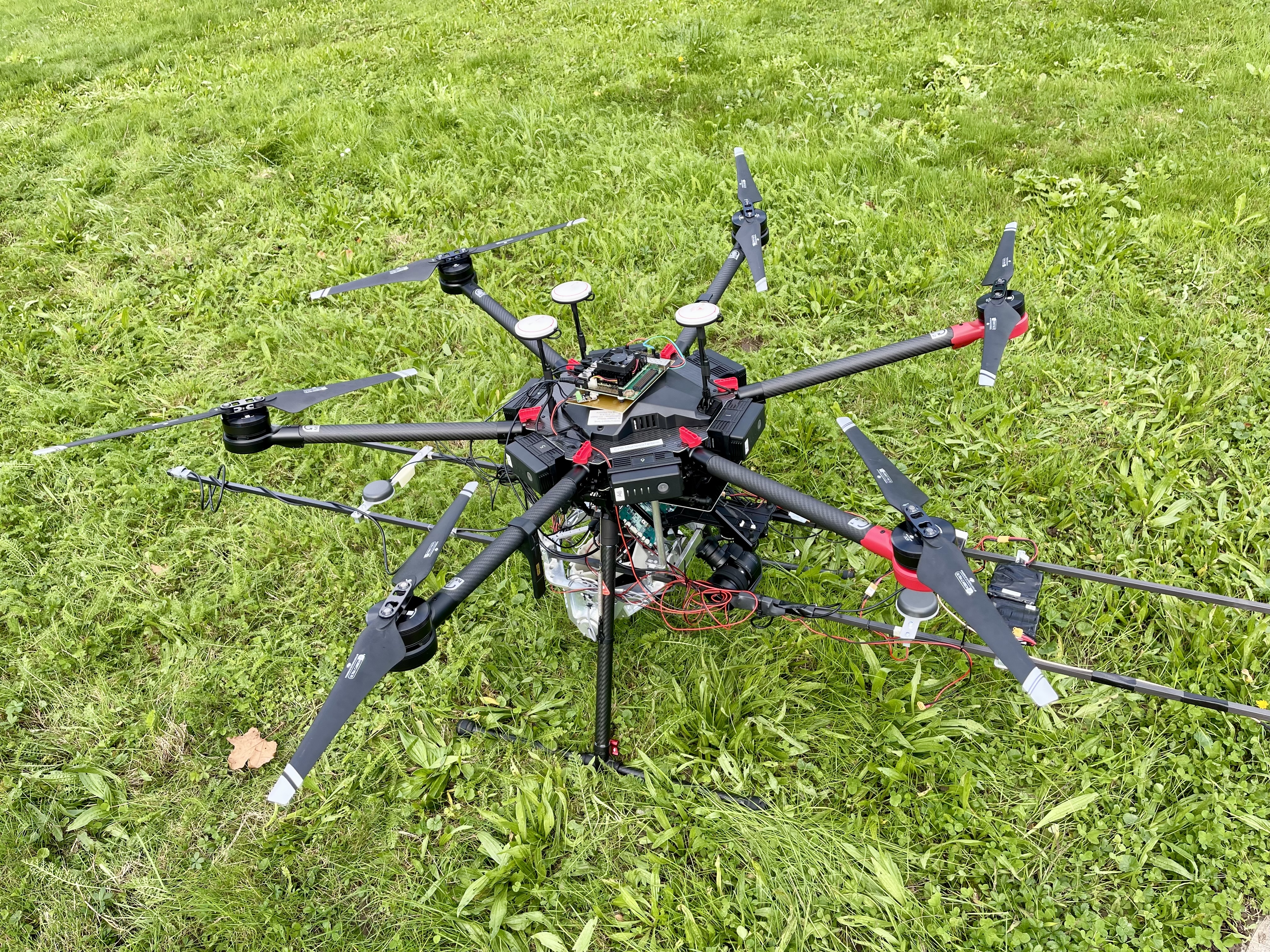
Prof. Dr. Christoph Wildfeuer is a Professor for Sensor Technology at the University of Applied Sciences and Arts Northwestern Switzerland (FHNW) School of Engineering and Environment. He leads the Quantum Technologies working group and module, focusing on quantum sensors, cryptography, and secure communication systems. Doctorate in Quantum Technologies from University of Siegen (2003) Diploma in Physics from University of Siegen (1999) Postdoctoral research at Louisiana State University, NIST, and Duke University His research spans Quantum Cryptography , Post-Quantum Cryptography , Optical Sensors , and Quantum Communication in aerospace contexts. Projects include: Developing quantum-safe encryption for corporate networks Simulating quantum communication via drones and stratospheric balloons Demonstrating entanglement and post-quantum key exchange on nano-satellites He contributes to secure satellite communications and integrates quantum technologies into embedded systems and wireless security .
Priyanka Verma is a Research Fellow at the Department of Electronic and Computer Engineering , Faculty of Science and Engineering , University of Limerick, Ireland. Her work focuses on advanced cybersecurity methodologies for cloud computing, IoT, and Industrial 4.0/5.0 systems. Current research spans AI-driven threat detection , blockchain-based security models , and privacy-preserving federated learning . Specializes in mitigating DDoS attacks and enhancing cyber resilience across distributed architectures. Recent publications analyze security trends in multi-cloud environments, HTTP flooding detection, and transfer learning applications in smart manufacturing. Contact: priyanka.verma@ul.ie
Professor Eva R. Kimonis is a Clinical Psychologist and Professor of Psychology at the University of New South Wales in Sydney, Australia. She serves as Director of the UNSW Parent-Child Research Clinic, which specializes in providing state-of-the-art assessment and treatment for children with oppositional-defiant, destructive, and aggressive behaviors. Her research expertise spans several critical areas in child psychology: Clinical child psychology Callous-unemotional traits Psychopathy Conduct disorders Aggression and antisocial behavior Assessment methodologies Early intervention strategies Parenting interventions Professor Kimonis's program of research focuses on the development, assessment, and treatment of callous-unemotional traits, empathy deficits, conduct disorders, and aggressive behavior in youth. Her scholarly contributions include numerous publications in top peer-reviewed journals in clinical, developmental, and forensic psychology, as well as several book chapters on antisocial behavior in youth. Her research portfolio demonstrates strong trends in: Longitudinal studies tracking the development of psychopathic traits in children Neurocognitive profiles associated with callous-unemotional traits Adaptation and evaluation of evidence-based treatments like Parent-Child Interaction Therapy (PCIT) Cross-cultural assessment of antisocial behaviors Genetic and environmental influences on the development of conduct disorders Professor Kimonis has received significant recognition for her work: 2023 Eric Taylor 'Translational Research Into Practice' Award from the Association for Child and Adolescent Mental Health (ACAMH) Fulbright Scholar Grant from the J. William Fulbright Foreign Scholarship Board 2015 Distinguished Career Contributions Award from the Society for the Scientific Study of Psychopathy As an experienced clinician, Professor Kimonis is a certified therapist and Australia-wide trainer of Parent-Child Interaction Therapy (PCIT), which she has adapted to target the unique deficits of children with conduct disorders and callous-unemotional traits. She has supervised numerous graduate students in developmental psychopathology, child clinical psychology, and forensic psychology, with a focus on the development, assessment, and treatment of callous-unemotional traits, conduct disorders, empathy deficits, and aggressive behavior in youth. Professor Kimonis leads the UNSW Parent-Child Research Clinic and is affiliated with the UNSW Salivary Bioscience Research Centre, where interdisciplinary teams work to advance understanding of child psychopathology through innovative research methodologies.
Li Chen is an Associate Professor at the Department of Mathematics , Aarhus University . Their research focuses on the intersection of harmonic analysis, probability, and partial differential equations, particularly investigating interactions between randomness and analytic/geometric structures in smooth or rough environments. Key research areas include applications of heat semigroups and heat kernels, with a focus on hypoelliptic operators, fractional Laplacians, and stochastic processes on fractal and metric measure spaces. Recent work involves the Parabolic Anderson model, Dirichlet spaces, and geometric analysis on Lie groups. Articles highlight trends in stochastic PDEs, functional analysis on fractals (e.g., Vicsek set, Sierpinski gasket), and degenerate elliptic operators in weighted spaces. Co-authored works with F. Baudoin and others demonstrate interdisciplinary approaches to sub-Riemannian geometry and probabilistic methods in analysis.
Professor Fiona Coyer is a distinguished academic and researcher serving as Head of Discipline for Nursing at the University of Queensland's School of Nursing, Midwifery and Social Work. With extensive experience as a leader in academic and research programs, she established the Intensive Care Nursing Professorial Unit at the Royal Brisbane & Women's Hospital in August 2012, where she has developed a comprehensive program focused on evidence-based approaches to nursing care and management of skin integrity in critically ill patients. Professor Coyer's research interests span critical care nursing, pressure injury prevention, skin integrity management, and incontinence-associated dermatitis. Her work emphasizes developing evidence-based protocols to improve patient outcomes in intensive care settings, particularly focusing on vulnerable skin conditions among critically ill patients. She has pioneered research in medical device-related pressure injuries and skin protection strategies that have influenced clinical practice guidelines. Her substantial publication record includes over 190 journal articles, with recent work examining pressure injury prevention strategies, skin integrity monitoring tools, and innovative approaches to managing incontinence-associated dermatitis. Current research trends show her expanding into health economic analyses of wound care interventions, development of classification tools for skin impairments, and investigations into nurse wellbeing within intensive care environments. Professor Coyer's leadership extends to mentoring numerous researchers and clinicians through her role at the University of Queensland and her collaborative work with the Royal Brisbane & Women's Hospital. Her research program has secured significant funding for studies examining pressure injury prevention, skin integrity management, and critical care nursing practices across multiple healthcare settings. She directs the Intensive Care Nursing Professorial Unit, which serves as a hub for translational research, where evidence-based interventions are developed, tested, and implemented to improve skin care practices in intensive care units. The unit collaborates with multidisciplinary teams to address complex challenges in critical care nursing and patient safety.
Merete Møller is an Associate Professor in the Department of Sports Medicine at the Norwegian School of Sport Sciences. She is a physiotherapist and PhD from Aarhus University in Denmark, driven by her experience as an elite handball player to focus on reducing injury burdens through prevention. Her research prioritizes risk factors and prevention of shoulder and knee injuries in handball, with additional work on groin injuries in Norwegian women’s football and youth sports safety via projects like #ReadyToPlay and HAPPY. Key Research Areas: Injury prevention, sports epidemiology, load management, and youth athlete health. Teaching: Epidemiology, biostatistics, and sports injuries. Publication Trends: Recent articles emphasize longitudinal studies of youth athletes, biomechanics of injury prevention exercises, and sociocultural factors in sports injury dynamics. Keywords include Sports Medicine, Pediatrics, and Strength Training, with sub-fields like ACL injury disparities, hip adduction protocols, and analgesic use ethics. Collaborations: Active in the Skadefri team and multidisciplinary projects involving football and handball injury prevention.
Pedro García Fernández is a Researcher with a dual academic background in Electrical Engineering and Healthcare Design from the University of Granada (2000) and Polytechnic University of Madrid (1983). His work spans two distinct domains: early contributions in discrete cosine transform architectures and hospital systemic design , followed by a decades-long focus on chronic wound care , pressure ulcers , and patient safety . PhD , University of Granada (2000) – Efficient architectures for the discrete cosine transform using the residue numerical system PhD , Polytechnic University of Madrid (1983) – New methodology for the integral design of hospital centers: systemic approach His recent research emphasizes dependency-related skin injuries , nursing-led interventions , and healthcare policy , including collaborations with the Red de Profesorado en Heridas and GNEAUPP . Key areas include: Chronic wound epidemiology (e.g., national prevalence surveys in Spain) Clinical practice guidelines for pressure ulcer prevention and treatment Evidence-based nursing (e.g., advanced practice nurse effectiveness) Healthcare technology (e.g., data management plans, wound classification tools) The 15 most recent publications highlight trends in diabetic foot ulcers , incontinence-associated dermatitis , and innovative wound care education for nursing curricula. While no scientific awards are explicitly listed, his work has driven transcultural adaptations of risk assessment scales and multidisciplinary wound clinics .
Zhang Ming is a Professor in the Department of Aerospace, Physics and Space Sciences within the College of Engineering and Science at the Florida Institute of Technology. His office is located in F.W. Olin Physical Sciences (Room 349), and he can be contacted via email at mzhang@fit.edu or phone at (321) 674-8891. Professor Zhang's research centers on space physics phenomena spanning from the Sun to the local interstellar medium. His primary expertise includes cosmic radiation dynamics, energetic particle interactions with plasmas and magnetic fields, wave-particle coupling mechanisms, solar energetic particle acceleration, and cosmic ray modulation processes. He employs advanced computational techniques such as data-driven transport models, 3D numerical simulations, and machine learning to investigate these areas. His recent publications (2023–2025) demonstrate a strong focus on solar particle events, heliospheric boundary physics, and cosmic ray transport. Key trends include the development of machine learning frameworks for space weather prediction, high-fidelity modeling of coronal mass ejection shocks, and innovative studies on turbulence in the interstellar medium. This body of work integrates multi-spacecraft observations with theoretical approaches to advance understanding of particle behavior in complex plasma environments.
Adeline Delavande is a Professor of Economics at the University of Technology Sydney (UTS) and the Nova School of Business and Economics. She holds affiliations with institutions such as the ESRC Research Centre on Micro-Social Change (MiSoC) at the University of Essex and the Population Studies Center at the University of Pennsylvania. Her research focuses on subjective beliefs and expectations in Development Economics, Health Economics, Education Economics, and Labour Economics. She investigates how individuals’ perceptions of future events influence decisions in health, education, and labor markets, with notable contributions to survey methodology for eliciting beliefs and analyzing their behavioral impacts. Adeline has secured over $13 million in external funding from agencies like the ESRC (UK), the US National Institute on Aging, and the Higher Education Funding Council for England. Her work spans topics including maternal investments in child development, mortality risk communication during epidemics, and policy uncertainty effects on pension reforms. She serves as an Associate Editor for the Journal of Economic Behavior & Organization and Frontiers in Behavioral Economics , and holds leadership roles in professional societies such as the European Society for Population Economics and the Asian and Australasian Society of Labour Economics. Her research portfolio reflects a strong emphasis on methodological innovation and real-world policy applications, with publications in top journals such as the Review of Economic Studies , Journal of Political Economy , and Proceedings of the National Academy of Sciences . Key themes include the interplay between information, expectations, and decision-making across diverse contexts, from maternal health behaviors to university student outcomes. Adeline’s funded projects include evaluations of educational interventions, health warning efficacy, and the socioeconomic impacts of mortality risk information. She collaborates widely, leading interdisciplinary teams and contributing to global policy discussions on development, health, and labor market dynamics.
Professor David Batty is a leading epidemiologist at University College London (UCL), holding the title of Professor of Epidemiology in the Department of Epidemiology & Public Health. He also serves as a Visiting/Honorary Professor at the Universities of Glasgow, Edinburgh, and Oregon State. His research focuses on understanding how psychological, biological, and behavioral factors across the life course influence mortality risks, with an emphasis on prevention strategies. He employs diverse methodologies including cohort studies, Mendelian randomization, and big data analysis, and is a key investigator on major studies such as the English Longitudinal Study of Ageing (ELSA) and the National Child Development Study (NCDS/1958 birth cohort). Education includes a Doctor of Science from the University of Edinburgh (2014), a PhD from the University of Bristol (1999), and prior degrees from London School of Hygiene & Tropical Medicine and Bristol. His work spans cardiovascular disease, dementia, obesity, homelessness mortality, and adverse childhood experiences. He collaborates globally, having worked in Brazil, Denmark, and Australia. Research interests include the interplay of social determinants and health outcomes, cognitive epidemiology, and the use of large-scale datasets to address public health challenges. His recent studies highlight risks associated with contact sports participation, climate change impacts on mortality, and the long-term effects of childhood adversity. Key Research Areas: Cardiovascular epidemiology, cognitive aging, health inequalities, Mendelian randomization Current Roles: Principal Investigator on ELSA, Program Lead for Cognitive Epidemiology (Edinburgh) Grants & Funding: Wellcome Trust Career Development Fellowships, MRC collaborations He advises doctoral students and actively contributes to policy-relevant research addressing global health challenges such as obesity, mental health, and climate change impacts.
Muhammad Umar is a Teaching Assistant Professor in the Department of Geography & Geographic Information Science at the University of Illinois, Urbana-Champaign, affiliated with the School of Earth, Society & Environment. He holds a Ph.D. and M.S. in Geography and Meteorology, respectively, and completed a postdoctoral fellowship in Civil and Environmental Engineering. His research focuses on fluvial dynamics, remote sensing, process modeling, and GIS applications, with particular emphasis on river confluences, landslide susceptibility, and agricultural environmental management. Education: Postdoc: University of Illinois, Department of Civil and Environmental Engineering Ph.D.: University of Illinois, Department of Geography and GIS M.S.: COMSATS University Islamabad, Department of Meteorology Research interests span fluvial hydrology, remote sensing for environmental monitoring, and geospatial tool development. Recent work includes analyzing river confluence mixing dynamics, landslide susceptibility in Pakistan’s upper Indus Basin, and crop health assessments using satellite data. He has developed online platforms for soil nitrogen tracking and precision agriculture. His publications (2012–2025) reflect expertise in hydrology, geohazards, and climate-agriculture interactions. Notable contributions include studies on U.S. river confluences, Pakistan’s precipitation datasets, and evapotranspiration trends in South Korea. Teaching includes advanced GIScience and high-performance geospatial computing courses. No scientific awards are explicitly listed, but his work demonstrates significant academic and applied impact. Advising and grants details are not provided in the text. He is affiliated with the university’s Geography department and contributes to interdisciplinary research teams addressing environmental challenges through geospatial technologies.
Justin Wormald is an NIHR Academic Clinical Lecturer and Specialist Registrar in Plastic and Reconstructive Surgery at the University of Oxford's Nuffield Department of Orthopaedics, Rheumatology and Musculoskeletal Sciences (NDORMS). He serves as Deputy Director of the Surgical Interventional Trials Unit (SITU) and holds roles as Trainee Lead for the Reconstructive Surgery Trials Network and Associate Surgical Specialty Lead for Plastic and Hand Surgery at the Royal College of Surgeons. His research focuses on surgical trials, antimicrobial interventions, and hand trauma reconstruction, with 112+ peer-reviewed publications. He has received major awards from NIHR, RCS, BSSH, and BAPRAS. Dr. Wormald completed a DPhil in Musculoskeletal Sciences (2023) and an NIHR Academic Clinical Fellowship in Plastic Surgery. He holds teaching roles at Jesus College, Merton College, and Christ Church, Oxford. His research interests include burns management, surgical site infection mitigation, and skin cancer outcomes. He leads the HAWAII trial evaluating antimicrobial sutures in hand surgery and chairs the BSSH Patient and Public Involvement committee. Key achievements include developing the HAND-Q outcome measure and co-authoring over 100 studies on surgical techniques, clinical guidelines, and healthcare sustainability. His work spans epidemiology (e.g., necrotizing fasciitis studies), methodological innovations (e.g., meta-analysis frameworks), and global health policy (e.g., pandemic impact analyses).
Sayan Das is a Dickson Instructor in the Department of Mathematics at the University of Chicago. He received his PhD in Mathematics from Columbia University in 2023 under the supervision of Ivan Corwin, focusing on probability theory and its applications. His research explores stochastic processes, statistical physics, and combinatorial structures, with emphasis on KPZ universality, polymer models, and large deviation principles in random environments. Recent publications demonstrate consistent focus on stochastic analysis and mathematical physics, particularly examining scaling limits of polymer models and fluctuation behaviors in KPZ-type systems across diverse initial conditions and boundary effects.
Prof. Sandjai Bhulai is a Full Professor at Vrije Universiteit Amsterdam's Faculty of Science (Department of Mathematics) and holds affiliations with the Network Institute. He specializes in machine learning, operations research, and their applications in telecommunications, healthcare, and optimization. His research addresses real-world challenges such as suicide prevention through AI-driven systems, signal processing in underwater acoustics, and dynamic dispatch algorithms for logistics. Key research interests include machine learning algorithms for classification and prediction, reinforcement learning for optimization problems, and data-driven decision-making in healthcare and transportation. He has pioneered methods like the 'Dutch Draw' baseline for binary classification and contributed to ambulance dispatch systems and power grid topology optimization. Prof. Bhulai has published over 137 research outputs, including high-impact articles in International Journal of Medical Informatics , Ocean Engineering , and Transportation Science . He received the Best Paper Award (2018) and led projects such as the AI-BIPTO initiative for integrated production optimization. He advises on technical and ethical committees, including roles at NWO and the Mondriaanfonds. His teaching spans advanced courses in machine learning, algebraic geometry, and linear programming.



.jpg)