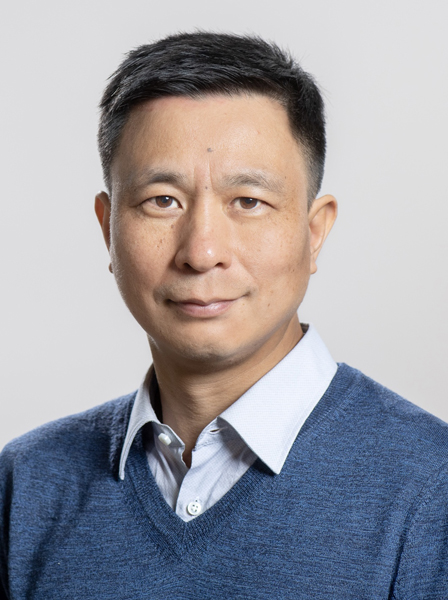
Affiliations and Roles Professor Wang holds dual appointments as Professor of Physics and Mechanical and Aerospace Engineering at Cornell University. She is affiliated with the Sibley School of Mechanical and Aerospace Engineering and the College of Arts and Sciences. Education B.S. in Physics, Fudan University, Shanghai, China (1989) Ph.D. in Physics, University of Chicago (1996) NSF-NATO Postdoctoral Fellow, Theoretical Physics, Oxford University (1997) Visiting Member, Courant Institute of Mathematical Sciences, NYU (1997-1999) Research Her research focuses on the physics of living organisms, particularly insect flight dynamics , biophysics , and computational modeling . Key projects include: Dragonfly righting reflex mechanisms Neuro-mechanical control in fruit flies Unsteady aerodynamics and fluid-structure interactions Awards and Honors Simons Fellowship in Theoretical Physics (2020) Radcliffe Fellowship (2007) Cornell Provost's Award for Distinguished Scholarship (2005) David and Lucile Packard Fellowship (2002) Labs and Collaborations Her work integrates experimental and computational approaches, often conducted in collaboration with institutions like the Janelia Research Campus (HHMI) and the Joint Texas Experimental Tokamak (J-TEXT).
Ghyslain Gagnon is a Professor in the Department of Electrical Engineering at École de technologie supérieure (ÉTS) in Montreal, Canada. He leads research activities within the LACIME – Communications and Microelectronic Integration Laboratory, focusing on cutting-edge developments in microelectronics, sensors, and communication systems. His work bridges theoretical research and practical applications across multiple domains including health technologies, wireless communications, and quantum engineering. Education: B.Ing. from École de technologie supérieure M.Ing. from École de technologie supérieure Ph.D. from Université de Carleton Professor Gagnon's research spans several interconnected domains with emphasis on Radiofrequency circuits and antennas, Microelectronics, Wireless communications, Sensors and monitoring systems, Machine learning applications, Health technologies, and Quantum engineering. His work demonstrates a strong commitment to translating theoretical concepts into practical solutions with real-world impact, particularly in the areas of health monitoring systems and advanced communication technologies. His recent publications reveal a clear trajectory toward increasingly interdisciplinary research, combining traditional electrical engineering with machine learning, health monitoring, and quantum technologies. The trend shows growing emphasis on practical applications in automotive safety systems, wireless communications for next-generation networks, and health monitoring technologies that leverage flexible electronics and novel sensor designs. Professor Gagnon has successfully supervised numerous graduate students through their doctoral and master's research, with recent theses focusing on smart hearing protection devices, machine learning applications, energy monitoring systems, and flexible sensor technologies. His supervision record demonstrates consistent productivity and relevance to contemporary engineering challenges. He is an active member of the LACIME research laboratory, which focuses on six key areas: Functional materials, Micro- and nanofabrication processes, Conception and design of integrated circuits, Design and fabrication of hybrid components, Photonic and electronic microsystems, and Signal processing and communication. This environment provides students with access to cutting-edge tools and fosters innovation through interdisciplinary collaboration.
Dr. Mingyan Li is an Adjunct Research Fellow at The University of Queensland's School of Electrical Engineering and Computer Science. Their research focuses on advanced imaging and sensing technologies with applications in biomedical engineering, particularly in MRI system development, RF coil design, and medical signal processing. They hold a PhD from The University of Queensland (2015). Research interests include high-field MRI systems, rotating RF coil technologies, MRI-Linac integration, and electrical properties tomography (EPT). Key contributions include innovations in MRI-Linac distortion correction, RF shielding for SAR reduction, and deep learning approaches for cardiac arrhythmia classification. Publications span MRI hardware optimization, image reconstruction algorithms, and biomedical signal analysis. Collaborations include work on metamaterial-inspired RF shielding and multi-modal antenna systems for body MRI.
Rebecca Feldman is an Assistant Professor in Medical Physics and Physics at the Irving K. Barber Faculty of Science, University of British Columbia Okanagan. Her research integrates MR physics, engineering, and medical research to advance MRI pulse sequences and hardware for clinical translation, particularly in neurological disorders. University: University of British Columbia Okanagan Academic Rank: Assistant Professor PhD: University of Western Ontario Research Interests: Dr. Feldman specializes in technical innovation in MRI (accelerated imaging, spectroscopic imaging, non-proton imaging) and translational research applying MRI to neurological disease detection, characterization, and treatment. Her work leverages ultra-high-field (7T) MRI for enhanced resolution of brain structures like hippocampal subfields and perivascular spaces. Publications: Recent work includes advancements in self-supervised medical imaging backbones (MedMAE), segmentation of venous structures in epilepsy, automated MRI pulse design via neural networks, and clinical applications of 7T MRI in neurosurgical planning and psychiatric disorders like major depressive disorder. Teaching: Currently teaches courses in physics, including physics of waves.
Edward Gerstenfeld, MD, MS, is the Melvin Scheinman Endowed Professor of Medicine and Chief of the Section of Cardiac Electrophysiology at UCSF School of Medicine. He specializes in complex cardiac arrhythmias, including atrial fibrillation ablation, ventricular tachycardia management, and inherited arrhythmia syndromes. His clinical practice focuses on advanced electrophysiology procedures, such as catheter ablation and device therapy. Gerstenfeld holds editorial roles at multiple cardiology journals and contributed to the 2017 and 2024 HRS/EHRA ablation guidelines. Education & Training: BSE in Biomedical/Electrical Engineering from Duke University (1988) M.D. and M.S. in Biomedical Engineering from Northwestern University (1993) Internal Medicine residency at Beth Israel Hospital (1996), Cardiology fellowship at University of Massachusetts (1999), and Cardiac Electrophysiology fellowship at University of Pennsylvania (2001). Research Interests: His lab investigates atrial fibrillation mechanisms using signal processing and swine models of pacing-induced cardiomyopathy. Key areas include pulsed field ablation efficacy, ventricular tachycardia ablation techniques, and atrial remodeling from premature beats. Publications: Over 200 peer-reviewed articles, with recent focus on pulsed field ablation outcomes (ADVANTAGE AF trial), coronary safety, and consensus guidelines. His work bridges clinical trials and preclinical models to advance arrhythmia treatments. Labs/Teams: Leads UCSF's cardiac electrophysiology research team, collaborating on device innovation (e.g., HiFU ablation) and translational studies in arrhythmia pathophysiology.
Joseph V. Rispoli serves as Assistant Professor of Biomedical Engineering in Purdue University's College of Engineering, joining the faculty in 2015 after completing his Ph.D. at Texas A&M University. His prior industry experience includes high-speed digital design development for multiprocessor server motherboards at Dell. Educational background: B.S. in Electrical Engineering, University of Virginia, 2002 B.S. in Computer Engineering, University of Virginia, 2002 Ph.D. in Biomedical Engineering, Texas A&M University, 2015 His research program pioneers hardware innovations for high-field magnetic resonance imaging, with three core thrusts: Anatomically-tailored radiofrequency coil design for 7-tesla human studies In vivo spectroscopy of multiple NMR-active nuclei (proton/carbon-13) for biomarker detection Electromagnetic modeling frameworks for patient safety validation During doctoral research, he engineered over 20 specialized RF coils to investigate breast cancer biomarkers through advanced spectroscopy techniques. Scientific recognition: No awards specified in source documentation. Academic mentorship and funding activities remain undocumented in the provided institutional profile.
Johan Jansson is an Associate Professor in Scientific Computing at KTH Royal Institute of Technology and BCAM (Basque Center for Applied Mathematics). He leads research in predictive Direct FEM Simulation (DFS) for aerodynamics and multiphase flows, and co-founded Icarus Digital Math as CEO. His work includes the FEniCS open-source finite element software project and MOOC-HPFEM educational initiatives. He holds roles as Director of the Center for Digital Math and collaborates internationally in computational science. Research focuses on high-performance computing (HPC), fluid-structure interaction (FSI), biomedical modeling, and renewable energy systems. Notable contributions include adaptive FEM frameworks for turbulent flow, vocal fold simulations, and wave energy converter modeling. His work bridges academic research with industrial applications, leveraging FEniCS-HPC and Unicorn solvers. Key achievements include election to the IVA Royal Swedish Academy of Sciences 100-list and securing the Severo Ochoa Center of Excellence Award. He has pioneered open-source tools like SimTek and contributed to major projects like the Salter Sink and vocal production modeling. Teaching responsibilities include courses on database technology, computational fluid mechanics, and research methodology. He actively engages in large-scale simulation projects involving marine energy, cardiac ablation protocols, and aerodynamic optimization.
Dr. Daniel Sodickson is a Professor of Radiology, Neuroscience and Physiology, and Biomedical Engineering at New York University. He serves as Vice Chair for Research in Radiology and directs the Bernard and Irene Schwartz Center for Biomedical Imaging and the Center for Advanced Imaging Innovation and Research. His work focuses on advancing biomedical imaging techniques to improve healthcare, particularly in MRI, PET, and CT technologies. He leads multidisciplinary teams developing methods for rapid, continuous imaging leveraging parallel imaging, compressed sensing, and AI. Dr. Sodickson’s research interests include AI-driven medical imaging, low-field MRI applications, and novel imaging sensors. He co-directs Tech4Health, fostering translational healthcare technologies. Notably, he pioneered the fastMRI initiative, an open dataset and benchmarks for accelerated MRI using machine learning. Key achievements include developing the fastMRI public dataset for knee and prostate imaging, and contributions to global AI events like the World’s Largest AI for Business Summit. His work addresses challenges in imaging speed, cost, and accessibility, with a focus on clinical translation. Dr. Sodickson has received prestigious recognition, including being named a Fellow of the National Academy of Inventors. His lab collaborations and grants emphasize interdisciplinary innovation, aiming to bridge imaging technology with clinical practice.
Kelly Nash is a Professor in the Department of Physics and Astronomy at the University of Texas at San Antonio (UTSA), within the College of Sciences. She also serves as the Vice Provost for Faculty Success, a leadership role reflecting her commitment to academic excellence and faculty development. Previously, she was Associate Dean for Faculty Success (2019–2023) and Director of the Kleberg Advanced Microscopy Center (2018–2020). Education: Ph.D. in Physics, University of Texas at San Antonio M.S. in Applied Physics, University of Michigan B.S. in Physics, Dillard University Prof. Nash's research lies at the intersection of physics, materials science, and biology. Her work focuses on functional nanomaterials , particularly their synthesis, optical properties, and interactions with biological systems. Key areas include biophotonics , nanoparticle synthesis via laser ablation , photoacoustic sensing , and nanotransducers for biomedical applications . Her lab develops nanoparticles for photodynamic therapy, on-demand drug release, antimicrobial treatments, and environmental sensing. Her recent publications reveal a strong trend in leveraging light-matter interactions for biomedical diagnostics and therapy. She pioneers all-optical photoacoustic techniques that eliminate bulky transducers, enabling high-resolution, high-frequency detection. Her work spans fundamental biophysics to translational applications, with materials including gold, selenium, and dichalcogenide nanoparticles. Scientific Awards and Recognition: Air Force Office of Scientific Research Young Investigator Program Award APS Women Physicist of the Month (July 2016) Dillard University Alumni 40–Under-40 San Antonio Business Journal 40-Under-40 UTSA President’s Distinguished Diversity Award UTSA COS Excellence in Community Service Award Prof. Nash is a dedicated mentor and advocate for diversity in STEM. She has served as UTSA-APS Bridge Program Coordinator and chair of the APS Conferences for Undergraduate Women in Physics National Organizing Committee. Her lab, the Functional Nanomaterials Laboratory , receives funding from AFOSR, NIH, NSF, DOE, and NNSA. She is actively involved in grants focused on biophysics, antimicrobial nanomaterials, and STEM education. She welcomes graduate and undergraduate students interested in nano-bio interfaces and translational research. The lab collaborates extensively with institutions such as the University of Texas Health Science Center, Southwest Research Institute, AFRL, and international partners, forming a robust interdisciplinary research network.
Prof. Wen Dongsheng is the Chair Professor and Head of the Institute of Thermodynamics at Technical University of Munich (Germany). He holds adjunct professorships at the University of Leeds (UK) and Beihang University (China). His research focuses on multiscale heat transfer mechanisms in nanomaterials, with applications in energy and aerospace engineering. Key areas include solar energy systems, nanofuel combustion, and nanoparticle interactions with electromagnetic radiation. Education: BEng in Aeronautics (Beihang University), MSc in Thermophysics (Tsinghua University), DPhil in Engineering Science (University of Oxford). Research Interests: Heat production/transport/storage, multiscale experimentation/simulation, nanomaterial-based energy solutions. Specific applications include solar energy optimization, nanomedicine, and oil/gas engineering innovations via nanoparticle-driven technologies. Editorial Roles: Editor-in-Chief of Advance in Aerodynamics , Associate Editor of Applied Thermal Engineering . Awards include Fellowships from the Royal Society of Chemistry and Energy Institute, and the MIC-Particuology Award. Publications: Over 350 referred papers, 20 patents, with an H-index of 65. Research emphasizes cross-disciplinary applications of nanotechnology in energy systems and aerospace.
Megan K. Mills, MD , is an Associate Professor and Associate Vice Chair for Clinical Operations at the University of Utah's Department of Radiology and Imaging Sciences. She specializes in Musculoskeletal Imaging and serves as Chief of the Musculoskeletal section. Education: B.S. in Business Administration from Utah State University MD from University of Utah Residency in Diagnostic Radiology at University of Utah, School of Medicine Fellowship in Musculoskeletal Radiology at University of Colorado Research Interests : Dr. Mills focuses on innovating training techniques for medical students and radiology residents, particularly in windowing and perceptual training for diagnostic imaging. Her work spans musculoskeletal disorders, image-guided procedures, and orthopedic radiology. Recent Publications : Her research covers musculoskeletal imaging, pain management via radiofrequency ablation, AI integration in diagnostics, and educational methodologies. Key areas include hip stability assessment, foot and ankle imaging, and improving diagnostic accuracy through perceptual training. Professional Contributions : Dr. Mills is board-certified by the National Board of Medical Examiners and leads in clinical operations within her department. She has co-authored reviews on postoperative imaging, pediatric orthopedics, and stress injuries in athletes.
Daniel Coman is an Associate Professor of Radiology and Biomedical Imaging and of Biomedical Engineering at Yale School of Medicine. His primary appointment is in the Department of Radiology & Biomedical Imaging with additional affiliations in Bioimaging Sciences, DNA Damage and Genome Integrity, Magnetic Resonance Research Center, and the Yale Cancer Center. Dr. Coman's research focuses on developing molecular imaging methods to reveal physiological and chemical alterations underlying disease in preclinical models and clinical applications. His laboratory utilizes advanced Magnetic Resonance techniques including multi-nuclear MR Spectroscopy (1H, 13C, 31P, 19F, 23Na) and multi-modal MR Imaging approaches such as Biosensor Imaging of Redundant Deviation in Shifts (BIRDS), Chemical Exchange Saturation Transfer, calibrated fMRI, Diffusion Tensor Imaging, and Arterial Spin Labeling. His primary research interest centers on developing new MR imaging biomarkers for cancer to better understand resistance mechanisms and design novel therapies. His recent publications demonstrate a strong emphasis on tumor microenvironment imaging, particularly pH gradients and sodium levels in cancer models. Dr. Coman has made significant contributions through the development of the BIRDS technique for mapping the acidic microenvironment of cancer. His work spans multiple disease areas including brain neoplasms, liver neoplasms, and Alzheimer's disease, with applications in understanding metabolic alterations, immune responses to therapies, and developing advanced imaging biomarkers. Dr. Coman has received the Peterson Fellowship for graduate study in biochemistry from Yale University and maintains extensive collaborations with leading researchers including D. S. Fahmeed Hyder, Sandeep Kumar Mishra, and Julius Chapiro. His research bridges the gap between basic science and clinical applications with a strong translational focus on improving cancer diagnosis and treatment monitoring.
Patrizia Savi is a Tenured Associate Professor at the Polytechnic University of Turin within the Department of Electronics and Telecommunications. She actively participates in the Power Electronics Innovation Center (PEIC) and serves as a Senior Member of IEEE and the International Union of Radio Science . Teaching: She has been the Titolare del corso for 'Campi Elettromagnetici' (Electromagnetic Fields) since 2019-2021 at the Polytechnic University of Turin. Key Collaborations: Works with researchers across Italy and international institutions on projects involving GNSS-R for environmental monitoring. Research Interests: Her work focuses on GNSS Reflectometry for soil moisture retrieval, carbon-based composites (graphene, biochar, nanotubes) for microwave applications, and graphene tunable devices including biosensors. She also explores electromagnetic shielding using sustainable materials. Recent Publication Trends: Recent work emphasizes machine learning integration with GNSS-R data, biochar composite shielding in construction materials, and graphene-based biosensors for glucose and HRP detection. Key applications span climate action , environmental monitoring , and medical diagnostics . Scientific Awards: IEEE Fellow (2016-) IEEE Senior Member (2016-) International Union of Radio Science Senior Member (2024-) Advising: Supervises PhD students Simone Gaetano Ballaera and Fabio Peinetti , focusing on graphene sensors and tunable devices.
Rani Kronenberger is a researcher affiliated with Vrije Universiteit Brussel (VUB) and the Universitaire Ziekenhuizen Brussel (UZB). She holds roles in Observational Clinical Sciences within Heart Rhythm Research and serves as a Physician in the Faculty of Medicine and Pharmacy. She completed a Doctorate in Surgery and a Master after Master in the Faculty of Medicine and Pharmacy. Her research focuses on cardiac electrophysiology, including atrial fibrillation treatment, sinus tachycardia mechanisms, radiofrequency ablation techniques, and applications of 3D printing in surgical procedures. She has pioneered studies on hybrid ablation approaches and synthetic data generation for biomedical research. Recent articles highlight her work on echocardiography mechanics in atrial fibrillation patients, synthetic data algorithms, and anatomical insights from sinus node mapping. Her research has been cited 41 times, reflecting impactful contributions to cardiology and biomedical innovation. Rani received the 'Best BAST Trainer-Trainee Paper Presentation' award in 2022. She actively participates in academic activities, including lectures at VUB's 'Kinderuniversiteit', conferences on arrhythmia management, and collaborative projects in Belgium and internationally. Her affiliations include roles in surgical ablation teams and collaborations with institutions like the Heart Rhythm Research group. She contributes to media outreach, explaining cardiac conditions like POTS and IST through platforms like Science Figured Out.
Angela Maria Coves Soler is a Professor in the Department of Communications Engineering at Miguel Hernández University of Elche. She serves as Deputy Director of the University Institute for Engineering Research and is a member of the Radiofrequency System Group. Her professional contact details include office location in Elche (Alicante), Spain, and phone numbers +34 648891403 (mobile) and +34 966658415 (landline). Teaching: Guided Transmission Media (2024/2025, 2023/2024, 2025/2026) Teaching: Radio Systems Design and Applications (2024/2025, 2023/2024, 2025/2026) Research Focus: Specializing in microwave devices and radiofrequency systems within signal theory and communications. Office Location: Avda. Universidad, s/n., 03202 Elche (Alicante), Spain