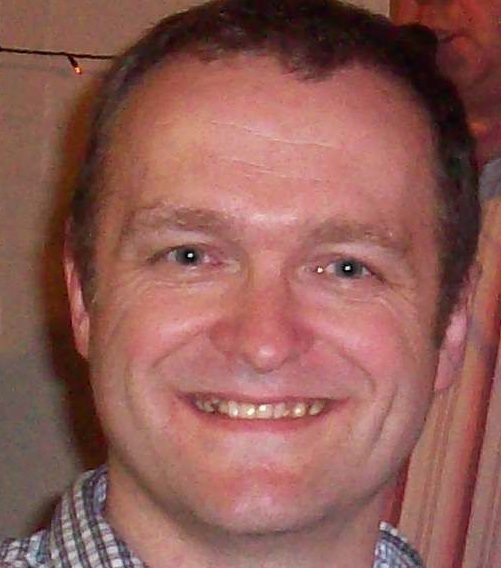
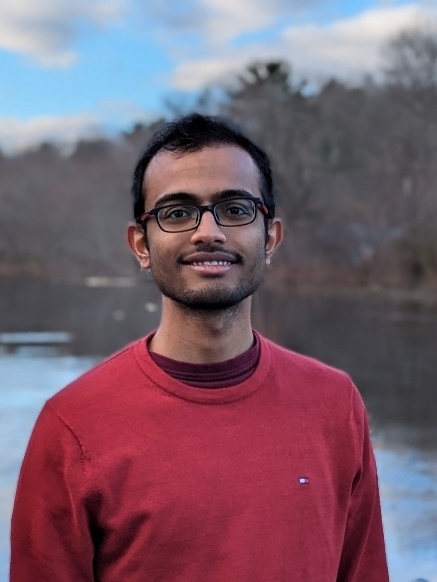
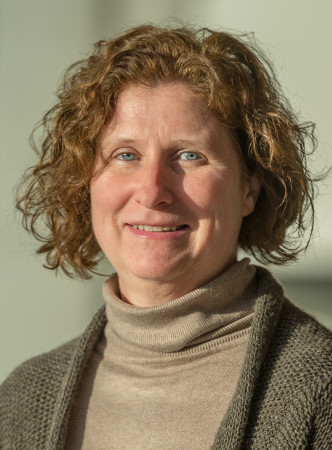
Johan Sidén is a Lecturer and Associate Professor at Mid Sweden University , employed in the Department of Computer and Electrical Engineering (DET) . His work focuses on RFID technology , antenna design , and printed/flexible electronics , with a particular emphasis on industrial IoT and welfare technology applications. Research Keywords : Radio Frequency Identification, Antenna Design, Flexible Electronics, Wireless Sensor Networks, Microwave Engineering, Electronic Design Key Projects : DRIVEN (data-driven industrial transformation), SmartArea (functional surfaces), Pressure (ulcer monitoring), MakeSense! (welfare technology) Publications : 15+ recent works on wearable antennas, smart packaging, UWB antenna design, and RFID sensor integration Collaborations include partnerships with industrial and academic institutions, focusing on sustainable electronics, sensor systems, and smart infrastructure. His technical expertise spans antenna optimization , printed circuits , and edge computing for harsh environments.
Dr. Muhammad Basir is a Researcher in the Department of Mechanical Engineering at the University of Bath, affiliated with The Foundry: Centre for Digital, Manufacturing & Design. He holds a Doctor of Philosophy in Business Informatics from the University of Reading (Awarded April 2023). His research focuses on digitalization, e-learning, and technology implementation in manufacturing and education sectors. Key research interests include semantic technologies, e-learning barriers, device preferences in education, and factors influencing technology adoption. He contributed to the Made Smarter Innovation: People-Led Digitalisation Engagement and Impact Acceleration project, funded by the Engineering and Physical Sciences Research Council (EPSRC), exploring digitalization’s role in value creation and firm size considerations. His work spans peer-reviewed articles on semantic technologies, e-learning quality, and device preferences. Recent publications (2021–2024) highlight themes like digitalization in manufacturing, e-learning implementation barriers, and technology adoption in regulated sectors. Collaborations include institutions like NUST Islamabad and projects involving nuclear decommissioning and transdisciplinary engineering. Basir’s research bridges theoretical frameworks (e.g., Servqual model) with practical applications, emphasizing learner-centric and institution-led digital strategies. His findings inform policy and practice in educational technology and manufacturing innovation.
Dina Katabi is the Thuan and Nicole Pham Professor of Electrical Engineering and Computer Science at MIT, leading the Katabi Lab and directing the MIT Center for Wireless Networks and Mobile Computing. Her research bridges AI, wireless systems, and digital health, focusing on non-invasive health monitoring via wireless signals and machine learning. She is a MacArthur Fellow and holds the Andrew & Erna Viterbi Professorship. Key research areas include emotion recognition (EQ-Radio), sleep posture monitoring (BodyCompass), and through-wall human pose estimation. Her lab develops AI systems for biosensors, leveraging RF signals to detect diseases like Parkinson's and Alzheimer's. Notable awards include the ACM Prize in Computing and SIGCOMM's Lifetime Achievement Award. Publications span wireless networks, computer vision, and health tech, with impactful work in CVPR, ECCV, and Nature Medicine. She advises over 20 students/postdocs and collaborates on technologies like in-body backscatter communication and AI-driven drug development monitoring. Labs: Katabi Lab (MIT CSAIL) and the MIT Wireless Center. Ongoing work explores digital biomarkers, self-supervised learning, and scalable health monitoring systems for chronic diseases.
Dr Ivan Petrunin is a Research Professor in Signal Processing for Autonomous Systems and a DARTeC Fellow at Cranfield University's School of Aerospace, Transport and Manufacturing. His work focuses on advancing sensor technologies, data fusion, and decision-making systems for Cyber-Physical Systems, with applications in aerospace, ground-based autonomous systems, and urban air mobility. Key areas include Position, Navigation and Timing (PNT), vehicle health management, and AI-driven fault detection. He leads research at facilities like the Muti-User Environment for Autonomous Vehicle Innovation (MUEAVI) and collaborates with industry partners like Airbus, Rolls-Royce, and Thales. Education: BSc and MSc in Design of Electronic Equipment from National Technical University of Ukraine (1996–1998), followed by a PhD in Signal Processing for Condition Monitoring from Cranfield University (2013). Prior to Cranfield, he was a Lecturer in Digital Signal Processing at NTU Ukraine (2001–2005). Research Interests: Autonomous Systems & Sensor Fusion Machine Learning in Navigation and Safety GNSS Integrity & Urban Air Mobility Condition Monitoring & Structural Health Multi-Agent Reinforcement Learning Publications: Over 100 journal/conference articles and book chapters, with recent works emphasizing hybrid sensor fusion, resilient navigation architectures, and AI-driven solutions for GNSS-denied environments. Notable contributions include multi-sensor fusion frameworks for UAVs and Bayesian filter innovations. Awards: FRIN Fellowship, SMAIAA Membership, IEEE and ION Fellowships, and FHEA recognition. His work is supported by ESA, Innovate UK, and EPSRC. Advising & Labs: Supervises PhD students in UAV navigation and machine learning. Leads Cranfield's facilities for autonomous systems experimentation and advanced timing node infrastructure.
Liu Hongmei is a Researcher and Master's Supervisor at Southern University of Science and Technology's Department of Biomedical Engineering. Holding a Ph.D. from the Chinese Academy of Sciences, she specializes in micro-nano robotics and tissue engineering for tumor therapy, with over 66 publications and 12 patents. Her work bridges biomedical engineering and nanotechnology for precision cancer treatments. B.S., Biological Sciences, Harbin Normal University (2005) M.S., Botany, Northeast Agricultural University (2008) Ph.D., Biochemical Engineering, Chinese Academy of Sciences (2015) Her research focuses on biomaterials engineering , nanoparticle drug delivery , and microenvironment-responsive hydrogels . Key areas include glioma therapy, traumatic brain injury recovery, and intervertebral disc degeneration treatments. Recent work explores pH/ROS/inflammation-triggered hydrogels and bioengineered bacteria for disease modulation. Article trends show a strong emphasis on nanoparticle design (2014-2025) for glioma, hydrogel development (2017-2025) for tissue repair, and biomimetic material synthesis (2023-2025) inspired by spider silk and meniscus structures. Sub-fields span pyroptosis inhibition, epigenetic reprogramming, and microbiome engineering. Jiangsu Science and Technology Award (2020) Jiangsu Medical Science and Technology Award (2020) Jiangsu Educational Science Research Award (2021) Chinese Medical Doctor Association's Outstanding Young Scientist (2018) Liu has supervised numerous projects including National Natural Science Foundation of China grants, Jiangsu Province Key R&D Program funding, and Shenzhen City General Projects. She holds 12 Chinese invention patents and collaborates with institutions like the UNESCO Centre for Higher Education Innovation.
Dennis Akos is a Professor in the Department of Aerospace Engineering Sciences at the University of Colorado Boulder. He is affiliated with the Research and Engineering Center for Unmanned Vehicles (RECUV) and the Colorado Center for Astrodynamics Research (CCAR). His research focuses on RF signal processing, RF interference mitigation, integrated navigation systems, and VHF modulation. He holds a Ph.D. in Electrical and Computer Engineering from Ohio University (1997), with earlier degrees from the same institution. His professional experience includes roles at Stanford University’s GPS Laboratory and the Lulea Institute of Technology. He has received notable awards such as the Institute of Navigation Fellow (2022), Thurlow Award (2009), and multiple best paper awards. His work emphasizes GNSS security, spoofing detection, and low-cost receiver solutions. Recent articles highlight advancements in GNSS RFI localization, Android device navigation, and software-defined radio applications. His lab explores innovations in space situational awareness, multi-sensor PVT solutions, and interference-resistant systems. Collaborative projects leverage crowdsourced smartphone data to enhance GNSS reliability. Awards: Fellow of the Institute of Navigation, Thurlow Award, Samuel M. Burka Award, and FAA Excellence in Aviation Research. Grants/Advising: Advising on GNSS security and Android-based navigation systems; involved in federally funded research on interference mitigation and satellite clock stability. Labs/Teams: Leads research at RECUV and CCAR, focusing on unmanned systems and astrodynamics challenges.
Prof. Tim Lockley is Head of the Department of History at the University of Warwick, holding the rank of Professor since 2015. He specializes in colonial and antebellum southern history, with a focus on slavery, class dynamics, medical history, and cultural studies like cricket and classical music broadcasting. His academic journey includes a Master's from the University of Edinburgh (1993) and a PhD from the University of Cambridge (1996), with subsequent roles from Lecturer to Professor at Warwick. Research interests span slavery's social impacts, maroon communities, and health disparities. Notable works include Military Medicine and the Making of Race (2020) and Lines in the Sand (2001). He has secured grants like the AHRC-funded 'Africa's Sons Under Arms' and the AHRB's 'Southern Charities Project'. Lockley supervises PhD and MA research on topics such as disability among enslaved men, antebellum literary culture, and transatlantic antislavery networks. He actively contributes to academic communities through editorial roles (e.g., Slavery & Abolition ) and public engagement via BBC Radio's In Our Time .
Rachel Johnson is a Lecturer in Film Studies at the School of Languages, Cultures and Societies, University of Leeds. Her research and teaching focus on film institutions, particularly film festivals, exhibition, curation, and cinephilia, with a strong commitment to decolonial and critical theoretical frameworks. She actively collaborates with local and international film organizations, including Leeds International Film Festival and Festival Films Femmes Afrique. Educational Background: PhD in Film Studies, University of Leeds MA in European Culture and Thought: Culture, University College London BA in English Literature and Italian, University of Leeds Her research explores cinematic justice, African cinemas, migration cinema, and Italian cinema through decolonial lenses such as pluriversality and the colonial matrix of power. She is particularly interested in how film institutions like festivals and archives value, share, and mobilize cinema, often challenging dominant hierarchies and canons. Her recent work emphasizes marginalized perspectives in cinephilia and co-curation as a decolonial practice. Her publications reveal a consistent trajectory in analyzing ideological structures within European A-list film festivals, especially regarding the representation of migration and Italian cinema. She has developed a method of ideology critique rooted in Lacanian and Žižekian theory, examining festival apparatuses, paratexts, and film texts to uncover power dynamics. Her work spans monographs, peer-reviewed articles, policy reports, and public writing, reflecting a commitment to both scholarly and public engagement. Scientific Contributions and Recognition: Author of Film Festivals, Ideology and Italian Art Cinema (Amsterdam University Press, 2023) Co-investigator on Canada Research Council-funded project Decolonizing Film Festival Research in a Post-Pandemic World Co-founder of the New Voices in Cinephilia network with Professor Stephanie Dennison Active member of NECS, BAFTSS, and IAMHIST Rachel Johnson supervises PhD students on topics including Pan-African film history, puzzle films, and decolonial cinema, and mentors practice-based research in videographic criticism and podcast documentaries. She is deeply involved in public film culture as co-director of Leeds Cineforum and collaborator with Hyde Park Picture House. Her grants and collaborative projects reflect a strong commitment to social justice, institutional critique, and empowering marginalized voices in global film culture. Research Labs and Teams: Centre for World Cinemas and Digital Cultures, University of Leeds New Voices in Cinephilia network (co-founded) Italian Cinemas/Italian Histories project (collaborator) Practice Research SIG, BAFTSS
Akarsh Prabhakara is an Assistant Professor in the Department of Computer Sciences at the University of Wisconsin–Madison, with an additional affiliation in the Department of Electrical and Computer Engineering. He earned his Ph.D. from Carnegie Mellon University in 2024, where he worked under Professors Anthony Rowe and Swarun Kumar. Ph.D., Electrical and Computer Engineering, Carnegie Mellon University, 2024 B.Tech, Electronics and Communication Engineering, National Institute of Technology Karnataka, 2018 His research focuses on building high-fidelity wireless systems for perception and communication, particularly in cyber-physical and robotic applications. He explores machine learning-driven RF systems, novel communication paradigms, wireless-robotics integration, and embedded wireless sensing. His work aims to enable robust perception in challenging environments such as smoke or fog using millimeter wave radar and deep learning. His recent publications in CVPR, ICRA, MobiCom, and ICCV demonstrate a strong trend in using neural methods for radar simulation, super-resolution, and wireless intelligence. Key themes include implicit neural rendering for radar, end-to-end learning for perception, and high-resolution point cloud generation from low-cost sensors. His scientific contributions have been recognized through publications in top-tier venues, though specific awards are not mentioned in the provided text. He is actively involved in mentoring and recruiting students for research in wireless and robotics. He teaches courses such as Intro to Computer Networks and Big Ideas in Wireless: Perception and Communication . He leads research projects like RadarHD, which enables lidar-like perception from mmWave radar, and is developing tools and datasets for community use. His lab emphasizes practical, real-world applications of wireless systems in robotics and autonomous systems.
Mauricio Bustamante is an Assistant Professor at the Niels Bohr Institute , University of Copenhagen, specializing in theoretical high-energy astrophysics, astroparticle physics, and neutrino phenomenology. His research bridges cosmic phenomena with fundamental particle physics, focusing on ultra-high-energy neutrinos, cosmic rays, gamma-ray bursts, and new physics beyond the Standard Model. PhD in Physics (2012-2014) M.Sc. in Physics (2007-2010) B.Sc. in Physics (2001-2006) His work explores neutrino oscillations, self-interactions, and decay in extreme astrophysical environments. He contributes to major international collaborations like GRAND (Giant Radio Array for Neutrino Detection) and IceCube-Gen2, developing simulation pipelines and forecasting detection methods for EeV-scale neutrinos. Recent publications highlight energy-dependent flavor transitions, Lorentz invariance testing, and constraints on long-range neutrino interactions via DUNE and T2HK experiments. He actively participates in peer review for journals such as Physical Review D , Physical Review Letters , and Astrophysical Journal , and has attended conferences like TeV Particle Astrophysics (2017). His research emphasizes detector design, cosmic ray reconstruction via graph neural networks, and multi-messenger astronomy.
Prof. Dr. Haris Gačanin is a faculty member at RWTH Aachen University, affiliated with the Institute for Distributed Signal Processing under the College of Electrical Engineering. His research focuses on integrating machine learning with wireless communication systems, particularly in industrial IoT, edge computing, and network optimization. Current academic rank: Professor Contact: harisg@dsp.rwth-aachen.de Research Interests: Wireless systems, machine learning, signal processing, and network optimization. Key contributions include: Adaptive resource allocation in IIoT and vehicular networks AI-driven channel estimation and feedback mechanisms Security-oriented emitter identification via metric learning Federated/transfer learning for edge environments Hardware-efficient deep learning models for mmWave and THz communications Methodological Focus: Combines reinforcement learning, attention mechanisms, and robust neural architectures with practical implementations on FPGA and vehicular systems.
**Daniel Romero** is a **Professor** in the **Department of Information and Communication Technology** at the **University of Agder**, Norway. His research focuses on UAV communications, time-series analysis using machine learning and network science, and decentralized processing for sensor networks. He holds a Ph.D. in Signal Theory and Communications from the University of Vigo (2015), an M.Sc. in Signal Theory (2011), and a Telecommunication Engineering degree (2009). **Education**: Ph.D. in Signal Theory and Communications, University of Vigo (2015) M.Sc. in Signal Theory and Communications, University of Vigo (2011) Telecommunication Engineering, University of Vigo (2009) **Research Interests**: His work spans UAV communication systems (focusing on low-latency, high-reliability networks), time-series analysis for complex systems (using ML and network science), and decentralized computation in sensor networks to improve robustness and hardware efficiency. Recent projects include radio map estimation for mmWave beam alignment, spoofing detection via graph neural networks, and aerial base station placement optimization. **Publications**: Over 30+ peer-reviewed articles in top venues like IEEE Transactions on Wireless Communications and ICC. Recent trends emphasize radio map estimation (2023–2024), UAV-enabled spectrum surveying (2022), and robust D2D communications (2022). **Advising & Grants**: Teaches PhD courses (Statistical Signal Processing, Advanced Optimization) and leads the **Advanced Signal Processing Lab (ASL)**. Collaborates with the **CIEM (Center for Integrated Emergency Management)** on crisis-related communication systems. **Labs/Teams**: Directs the Advanced Signal Processing Lab (ASL.uia.no) and contributes to CIEM, applying ML and signal processing to emergency management challenges.
Ingrid Moerman is a part-time Professor at Ghent University and a staff member at the Internet Technology and Data Science Lab (IDLab), a core research group of imec embedded within Ghent University and the University of Antwerp. She coordinates mobile and wireless networking research and leads a team of over 30 researchers at Ghent University, with extensive involvement in European and national funding initiatives. She received her Electrical Engineering degree (1987) and Ph.D. (1992) from Ghent University. Her research spans collaborative networks, cognitive radio, software-defined radio, IoT, LPWAN, and high-density wireless access, emphasizing experimentally-supported development of next-generation wireless systems with practical implementations in spectrum management and real-time control. Recent publications (2024-2025) reveal a strong pivot toward AI-integrated wireless networking, featuring OFDMA scheduling innovations, Wi-Fi 6/7 interference mitigation, and time-sensitive networking for industrial applications. Key trends include 5G/6G convergence, vehicular communication enhancements, and digital twin frameworks for network observability, reflecting her focus on mission-critical industrial use cases. Her accolades include: 9 Best Paper Awards 2 FWO Prizes (Research Foundation - Flanders) IMEC Prize of Excellence 2001 MSc Thesis Award (as promoter) Best Demo/Exhibit Award at ICT 2013 DARPA Spectrum Collaboration Challenge Prize ($750,000) She has coordinated major EU projects (FP7/H2020: CREW, WiSHFUL, eWINE, ORCA) with industry partners, securing substantial funding for experimental wireless research. Her grant portfolio emphasizes collaborative innovation in spectrum sharing and neutral-host architectures for multi-operator environments. At IDLab, she directs advanced wireless testbeds supporting real-world validation of technologies like openwifi and White Rabbit, with active experimentation in time-sensitive networking and spectrum collaboration for industrial IoT deployments.
Dhammika Jayalath is an Associate Professor at Queensland University of Technology (QUT) in the School of Electrical Engineering & Robotics within the Faculty of Engineering. He has been with QUT since 2007, initially as a Senior Lecturer and later promoted to Associate Professor. Prior to joining QUT, he worked as a Senior Researcher at National ICT Australia Ltd and held a Fellowship at the Australian National University. His educational background includes a PhD in Wireless Communications from Monash University and a Graduate Certificate in Higher Education from QUT. He is a Senior Member of IEEE and active in multiple IEEE societies including Communications, Signal Processing, and Vehicular Technology. Research Interests: Dhammika's research focuses on Smart Systems with particular expertise in wireless communications and networking. His work spans Physical Layer Security, Massive MIMO Systems, Internet of Things, Optimum Resource Allocation, Cooperative communications, Cognitive radio, and Vehicular communications. He has made significant contributions to 5G New Radio, Chaotic Communications, Orthogonal Frequency Division Multiplexing (OFDM), and Space-Time Signal Processing. Publication Trends: His recent publications demonstrate a strong focus on 5G/6G networking technologies, physical layer security for IoT devices, and optimization of wireless communication systems. His work bridges theoretical communications theory with practical implementation challenges, particularly in vehicular networks, secure communications, and resource allocation for heterogeneous networks. The articles show increasing interdisciplinary work, combining machine learning techniques with traditional communications engineering approaches. Scientific Awards: 2007: Early Career Academic Recruitment and Development (ECARD) award from QUT 2009: Elevated to Senior Member Grade of IEEE 2000: IEEE travel grant Multiple scholarships during graduate studies at Monash University Supervision and Grants: Professor Jayalath has supervised numerous PhD students to completion with research topics including chaotic communication systems, resource allocation in heterogeneous networks, and vehicular communication systems. He has secured multiple research grants totaling over AU $300,000, including projects from ARC, QUT internal grants, and industry partnerships with Queensland Fire and Emergency Services. His current research includes physical layer security frameworks for IoT devices and optimization of massive MIMO systems for dense mobile networks. Laboratory and Team Work: He has been instrumental in establishing wireless communications research capabilities at QUT, including securing equipment grants for Software Defined Radio platforms. His work often involves interdisciplinary collaboration with researchers in signal processing, cybersecurity, and transportation systems.
Dr.-Ing. Nico Palleit is affiliated with the University of Rostock's Institute of Communications Engineering, part of the Faculty of Computer Science and Electrical Engineering. His research focuses on MIMO (Multiple-Input Multiple-Output) systems, channel estimation, and prediction techniques to enhance spectral efficiency. He holds a PhD titled Channel Prediction in Multi-Antenna Systems (2011) and has contributed to advancements in MIMO channel analysis, including frequency/time prediction and interference management. Research Interests: Nico's work addresses challenges in modern radio transmission systems, emphasizing the development of robust channel estimation strategies. Key areas include MIMO channel modeling, non-line-of-sight (NLOS) positioning, and optimizing transmitter-side channel state information. His research bridges theoretical frameworks with practical implementations in wireless communication systems. Publications Overview: His 15+ publications (2006–2012) span topics like MIMO channel prediction, antenna array design, and interference channel optimization. Recent work emphasizes frequency/time-domain channel prediction and power allocation strategies for maximizing system capacity. These contributions highlight interdisciplinary approaches combining signal processing with electrical engineering principles. Affiliations & Labs: As part of the Radio Communication Research Group, he collaborates on projects within the Institute's advanced wireless communication initiatives. His work supports next-generation radio systems through innovative solutions for MIMO-FDD and OFDM-based architectures.