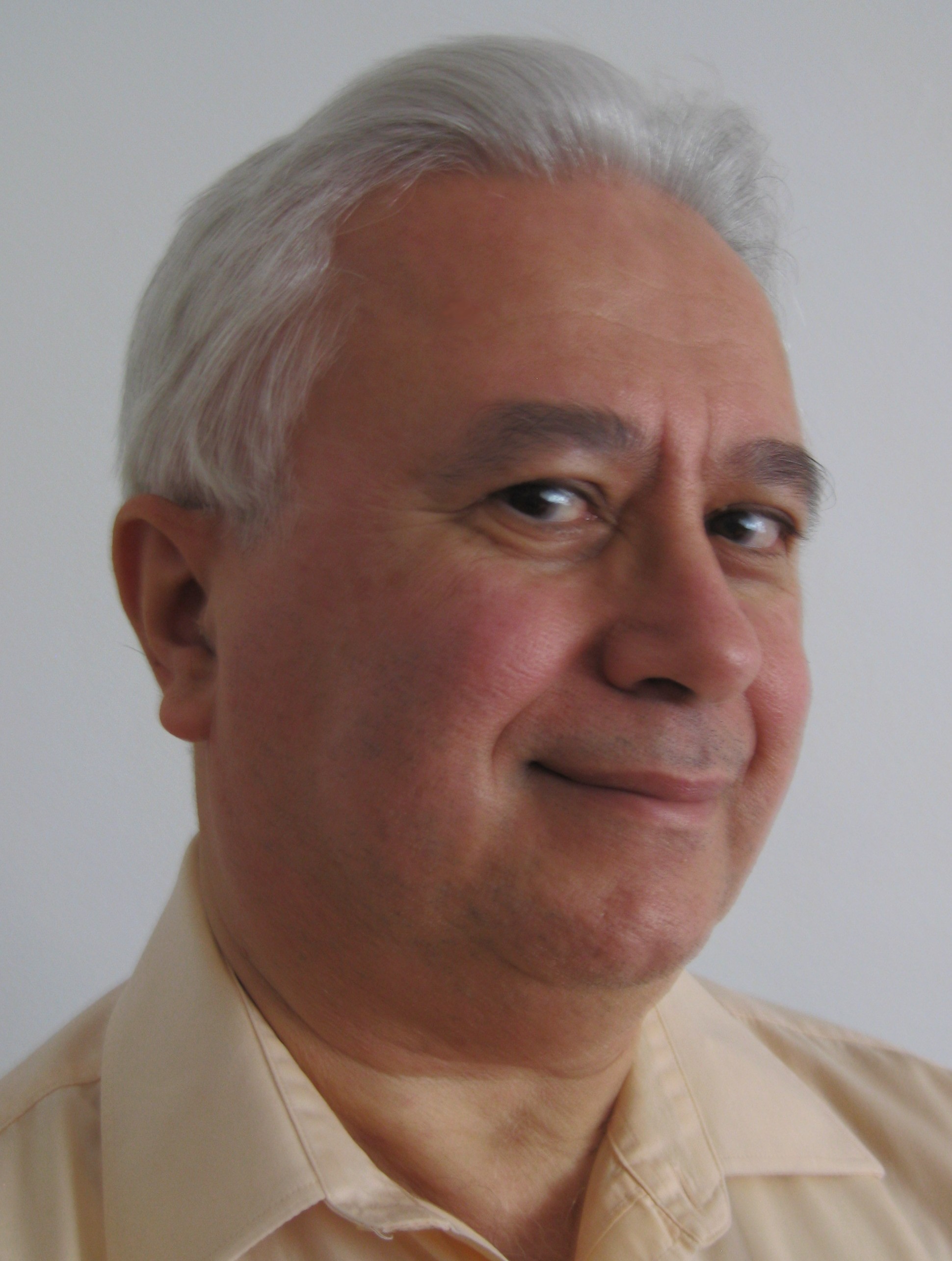
Dr. Ioan Baldea is a Professor at the University of Heidelberg's Physikalisch-Chemisches Institut, specializing in Theoretical Chemistry. He holds a PhD from the Institute of Physics and Nuclear Engineering, Bucharest. His career includes roles at the National Institute for Lasers, Plasmas, and Radiation Physics (since 1999) and research at the University of Heidelberg since 1994. Research interests span condensed matter physics, molecular electronics, nanoscience, astrochemistry, and electrochemistry. Notable contributions include studies on molecular junctions, quantum transport, and astrochemical molecule characterization. His work on pandemic mitigation strategies, including group intermingling suppression, highlights interdisciplinary impact. Recent articles focus on molecular tunnel junctions, radical scavenging mechanisms, and astrochemical modeling. Awards include DAAD and Alexander von Humboldt Fellowships. He serves on the editorial board of 3D Research and referees for high-impact journals like Nature Communications and Physical Review Letters. Grants include DFG projects on transition voltage spectroscopy and gated molecular junctions. His research integrates theoretical and experimental approaches, bridging quantum chemistry with nanotechnology applications.
Dr. Bai Renbi is an Associate Professor and Deputy Head for Postgraduate Studies in the Division of Environmental Science & Engineering at the National University of Singapore (NUS). He holds a PhD from the University of Dundee (UK), an M.Eng. from Chongqing University (China), and a B.Sc. from Chongqing University (China). His career includes roles as a Regional Technology Manager at EIMCO Process Equipment, Adjunct Senior Researcher, and Postdoctoral Fellow at NUS. His research focuses on: Adsorption, filtration, and novel separation materials Functional membranes and anti-fouling technologies Nanoparticle-membrane hybrid systems and visible-light photocatalysts Water/wastewater treatment and environmental remediation His publications emphasize adsorption mechanisms, membrane fabrication, heavy metal removal, and biodegradation, with consistent applications in environmental engineering and materials science. Awards & Honors: Featured Plenary Lecture, IWA Particle Separation Congress (2007) Keynote Speaker, International Seminar on Water Strategy (2006) Post-Doctoral Fellowship, National Science and Technology Board (1994) Multiple research prizes from Chongqing University and Chinese scientific bodies (1987–1989) As Deputy Head for Postgraduate Studies, he oversees academic programs and mentors students. He also serves on editorial boards for Separation and Purification Technology and Recent Patents on Biotechnology .
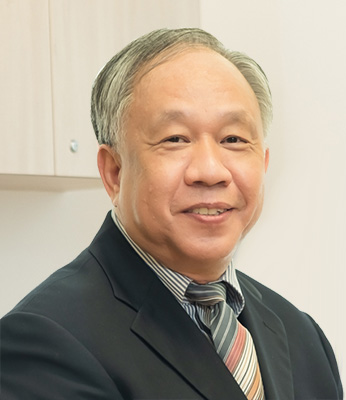
Professor Richard WONG Ming Wah is a faculty member in the Department of Chemistry at the National University of Singapore (NUS). He holds roles such as Co-Director of the Applied Materials-NUS Corporate Lab (2018–present) and has served as President of the Singapore Catalysis Society (2011–2014). He has received prestigious awards including the Fukui Medal (2018) and the NUS Outstanding Researcher Award (2002). Education: Postdoc at Yale University (1991), IBM Kingston (USA, 1990), PhD from Australian National University (1989), and B.Sc. & B.Math from University of Newcastle (1985). Research focuses on computational quantum chemistry, organocatalysis, materials design, and AI-driven chemical informatics. Key contributions include organocatalytic synthesis of axially chiral compounds and computational studies on corrosion inhibitors and drug design. His work bridges theory and application, with publications in Nature Communications , JACS , and Chemical Science . He advises students in advanced chemistry and teaches CM5239 Cheminformatics . Lab affiliations include the Richard Wong Computational Laboratory, which develops computational methods for drug design and materials innovation. His research highlights dynamic non-covalent interactions and bioinspired antibacterial therapies.
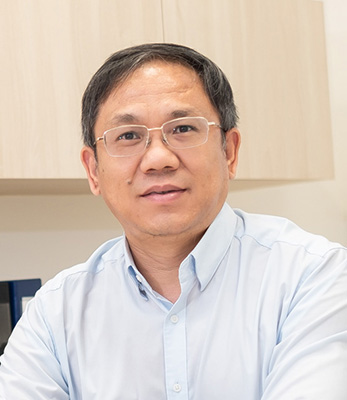
Professor WU Jishan holds the Provost's Chair Professorship at the National University of Singapore's Department of Chemistry. His research focuses on diradicaloids, aromaticity, and topological molecular carbons, with notable contributions to Möbius carbon nanobelt synthesis and chiral resolution techniques. He leads a highly productive research group, publishing in top journals like Nature Synthesis and Angewandte Chemie . Education: PhD (2004, Max-Planck Institute for Polymer Research), Postdoc (2005-2007, UCLA), MSc (2000, Chinese Academy of Sciences), BSc (1997, Wuhan University). Research highlights include the first triply twisted Möbius carbon nanobelt synthesis (2023) and design of entangled polyradical nanographenes. He was awarded the NRF Investigatorship (2019) for his contributions to molecular design. Teaching: Advanced Organic Materials (CM5268), Graduate Seminar Module (CM5198) Labs/Teams: Focus on synthetic organic chemistry and materials innovation
Montserrat Fargas is a Research Fellow at Queen's University Belfast, affiliated with the School of Social Sciences, Education and Social Work and the Centre for Children's Rights. She holds a PhD in Education (completed part-time in 2012) from Queen's University, alongside a BSc in Sociology and an MA in Women's Studies. Research Focus: Her work centers on children's rights, conflict legacy, trauma-informed approaches, rural education, and care systems. Notable projects include the RADICAL initiative (exploring respect in children's lives), the Care Pathways and Outcomes Study (longitudinal tracking of children in care), and evaluations of post-adoption services and mentoring programs for care leavers. Teaching: She taught the Sociology for Social Work module in 2023. Recent Research: Her recent work includes studies on small rural schools in Northern Ireland, trauma-informed care implementation, and qualitative analyses of rural schooling in Europe. These projects emphasize policy implications and community resilience. Grants & Collaborations: Collaborates with institutions like the University of Strathclyde and Ulster University on interdisciplinary projects. Active in policy-oriented research, such as the Framework for Integrated Therapeutic Care (2020–present). Labs/Teams: Core member of the Centre for Children's Rights, fostering interdisciplinary research on children's rights and social justice.
Xiaosong Wang is a Professor at the University of Waterloo, specializing in Polymer and Supramolecular Functional Nanomaterials. His research focuses on nanotechnology, polymer chemistry, and supramolecular chemistry, with particular emphasis on self-assembly processes, functional nanomaterials, and organometallic polymers. He leads the Wang Group , exploring advanced materials for applications in catalysis, drug delivery, and optoelectronics. His work spans synthesis and characterization of novel polymers, including metal-containing block copolymers, cellulose nanocrystals, and colloidal systems. Key contributions include studies on aqueous self-assembly of hydrophobic molecules, metal-carbonyl vesicles (MCsomes), and stimuli-responsive materials. His research integrates principles from organic, inorganic, and polymer chemistry, often employing techniques like atom transfer radical polymerization (ATRP) and miniemulsion polymerization. Over 50 peer-reviewed articles since 2015 highlight his exploration of nanotubes, supramolecular gels, and functionalized nanoparticles with applications in catalysis, drug delivery, and imaging. His group has pioneered methods for synthesizing organometallic nanomaterials with tunable properties and enhanced stability. While no formal education details are provided, his prolific publication record reflects advanced expertise in materials chemistry. No awards or grants are explicitly mentioned, though his work’s complexity suggests potential recognition in technical communities.
Robert Beer is an Associate Professor and Associate Dean for STEM and Pre-Health Education at Fordham University's Department of Chemistry. His research focuses on Coordination Chemistry, Bioinorganic Chemistry, and STEM Education. He leads a lab (JMH 508) and teaches Inorganic and General Chemistry courses. Research Interests Coordination chemistry of transition metals Bioinorganic mechanisms of DNA/RNA cleavage Development of STEM education curricula Design of novel ligands for chemical synthesis Solid-state characterization of polyoxometalates His publications span 20+ years, emphasizing molecular mechanisms (e.g., Fenton chemistry), structural analysis via NMR/X-ray crystallography, and educational innovations in STEM fields. No notable awards were listed. Lab & Office Conducts research in JMH 508 and maintains an office in JMH 634.
David A. Colby is a Professor of Medicinal Chemistry and Research Professor at the University of Mississippi's School of Pharmacy, leading the Department of BioMolecular Sciences. He directs the Colby Lab, focusing on drug design using natural products and fluorine chemistry to address unmet medical needs in neurodegenerative disorders and addiction. His work includes developing synthetic methods for complex organic molecules and dietary supplements. Dr. Colby previously held positions at Purdue University and has earned a Pharm.D. from the University of Iowa and a Ph.D. in Organic Chemistry from the University of California, Irvine. His research integrates medicinal chemistry, natural products isolation, and fluorine chemistry to create novel drug candidates. Notable areas include the synthesis of difluorinated compounds for pharmaceutical applications, structural analogues for activity studies, and the use of trifluoroacetate-release strategies for molecular remodeling. His lab collaborates with NIH and industry partners, commercializing discoveries through major international companies. Key achievements include the synthesis of eburnamonine derivatives targeting cancer stem cells and brain tumors, and the development of GABAB receptor agonists for addiction therapy. His methods for α-fluorination and difluoromethylation have advanced organic synthesis. Grants and industry funding support his work on drug stability, metabolic pathways, and neuropharmacological agents. Education: Pharm.D. (University of Iowa, 2001), Ph.D. (UC Irvine, 2006) Labs/Teams: Colby Lab, Research Institute of Pharmaceutical Sciences Grants: NIH-funded projects, private industry partnerships Commercialization: Patented difluorinated compounds and synthesis methods Current efforts focus on translating bioactive natural products into clinical therapies and advancing fluorine-based drug discovery platforms.
Ya-Ping Sun is the Frank Henry Leslie Chair Professor of Natural and Physical Sciences in the Department of Chemistry at Clemson University. He has held this position since 1992, following his postdoctoral training with Professors Josef Michl and Marye Anne Fox at the University of Texas at Austin. Dr. Sun earned his Ph.D. in Chemistry from Florida State University in 1989 under the supervision of Prof. Jack Saltiel. His research focuses on Materials Chemistry and Nanotechnology , with a particular emphasis on carbon-based nanomaterials such as carbon dots, boron nitride nanosheets, and their applications in energy conversion, photocatalysis, and biomedical technologies. Key areas include the design of functionalized carbon dots for antimicrobial applications, the development of high-performance thermal conductive nanocomposites, and mechanistic studies of photoinduced redox processes. Recent work highlights advancements in carbon dot synthesis, their antibacterial/antiviral efficacy under visible light, and their integration into polymer matrices for optoelectronic devices. His publications also address the structural-functional relationships of carbon-based nanomaterials and their potential for environmental and medical solutions. No scientific awards are explicitly listed in the provided materials. His research group has explored collaborations in nanomaterials design and thermal management systems, contributing to both fundamental and applied science.
Dr. Ana C. Alba-Rubio is an Associate Professor in the Department of Chemical and Biomolecular Engineering at Clemson University. She earned her Ph.D. from the Autonomous University of Madrid and B.S. from the University of Malaga. She leads the Alba-Rubio Research Group focusing on nanomaterials for catalysis and sensing. Her research encompasses heterogeneous catalysis, sustainable processes, CO2 capture/conversion, polymer catalysts for biomass valorization, and nanocomposites for free radical detection. Major projects include developing dual-function materials for CO2-to-methanol conversion and reusable polymer catalysts for biomass-derived chemicals. Recent publications (15 shown) demonstrate a focus on catalyst design for sustainable chemistry: 40% target CO2 conversion/reduction, 33% focus on biomass valorization catalysts, and 27% on electrochemical sensors for environmental/health monitoring. The work integrates nanomaterials synthesis, reaction engineering, and advanced characterization. She has received significant recognition including: ACS Editors' Choice (2020) Influential Researchers - Class of 2020 Her research is supported by grants including NSF CAREER Award for CO2 capture/conversion materials and NSF EAGER for catalyst stability studies. She mentors graduate students in catalysis and materials research at Alba-Rubio Group laboratories in Earle Hall.
Elisabeth Carter is a Senior Lecturer in Politics at Keele University's School of Social Sciences. She serves as Programme Director for the Masters in Politics and International Relations and the MSc in International Diplomacy. Her expertise spans Comparative European Politics, Political Parties, and Right-Wing Extremism. She holds a PhD from the University of Manchester, focusing on electoral success of extreme right parties in Western Europe. Her research has been published in leading journals like the European Journal of Political Research and West European Politics . She has held roles including School Research Director, REF Lead, and Associate Dean for Research in the Faculty of Humanities and Social Science. She convenes the Centre for Comparative Politics and Policy at Keele. Her teaching includes modules on comparative politics, political parties, elections, and research methods. She has supervised doctoral research in her specialist areas. Her publications explore electoral institutions, party systems, and the ideological evolution of political parties in Europe. Her recent work addresses right-wing populism and electoral system design globally.
Dr. Michelle Taylor is a Senior Lecturer in Medicinal Chemistry at the University of New England's School of Science and Technology. She coordinates postgraduate courses in Chemistry & Physics and serves as the convenor for Teaching and Learning. Her qualifications include an MSci in Forensic and Analytical Chemistry and a PhD in synthetic inorganic chemistry from the University of Strathclyde. Dr. Taylor's research spans coordination chemistry, redox-tuned metal complexes, profluorescent nitroxide radical sensors, and forensic chemistry. She focuses on developing imaging agents for oxidative stress detection and synthesizing fluorescent drug analogues to study drug-receptor interactions. Her recent publications (2010-present) predominantly explore inorganic complex synthesis, electrochemical properties of macrocycles, and applications in biomedical sensing. Key themes include hydrogen bonding in metal complexes, redox behavior studies, and novel receptor antagonist development. Dr. Taylor actively engages in outreach through programs like Far Out Science and contributes to teacher professional development in spectroscopy education.
John A.W. Harkless is an Associate Professor of Chemistry at Howard University specializing in quantum Monte Carlo methods and computational chemistry. An award-winning educator, he balances high-accuracy computational research with STEM advocacy. Education: Ph.D. Theoretical Chemistry, University of California, Berkeley (2001) B.S. Mathematics and Chemistry, Morehouse College (1995) Research develops quantum Monte Carlo techniques for electronic structure prediction in transition metal systems and reactive intermediates. Current projects investigate sulfur-containing compounds and nanomaterials. Publications focus on computational approaches to molecular energetics, with recent work examining enaminone derivatives and beryllium dimer dissociation. Awards: Henry C. McBay Outstanding Teacher Award NIST/NRC Postdoctoral Fellowship Advises graduate students in computational chemistry and leads NSF-sponsored collaborations. Pioneers science communication through educational YouTube content covering general and physical chemistry concepts.
Dr. Rebecca Fuller is a Senior Lecturer in Chemistry at the School of Natural Sciences, University of Tasmania, specializing in the development of magnetic molecules and materials for diverse applications including medical imaging, information storage, and environmental remediation. Her educational background includes a BSc(Hons) from the University of Western Australia (2002) followed by a PhD in Synthetic Chemistry and Condensed Matter Physics (UWA 2011). She undertook postdoctoral research before securing an independent UWA Research Fellowship (2014-2018), then worked as an ARC DECRA recipient at Curtin University (2018-2019) prior to her appointment at UTAS in September 2019. Dr. Fuller's research expertise spans Inorganic Chemistry, Magnetism, Coordination Chemistry, Lanthanoids, Synthesis of Materials, NanoChemistry, and Organic Radicals. Her work focuses on systematically varying molecular systems to understand how structural features affect magnetic or catalytic properties, with applications ranging from medical imaging contrast agents to environmental remediation technologies. She employs advanced synthesis techniques to develop novel materials with tailored properties for specific applications. Analysis of her recent publications reveals a strong emphasis on molecular magnetism, particularly with rare earth and transition metal complexes, organic radicals, and their applications in energy storage, environmental remediation (particularly microplastic removal), and medical imaging technologies. Her work demonstrates interdisciplinary collaboration across chemistry, materials science, and environmental engineering. 2021 RACI Rita Cornforth award 2014 UWA Research Collaboration Award 2012 Cancer Council WA Early Career Investigator Award 2012 UWA Research Development Award 2011 Graduate Women (WA) Jillian Bradshaw Award 2002 A.R.H. Cole Prize in Chemistry (Physical and Inorganic) Dr. Fuller currently supervises four doctoral students on projects related to organic radical polymers, advanced magnetic materials, and nanocomposites for environmental applications. Her research is supported by multiple grants including an ARC Magnetometry Facility grant ($620,000) and an ARC Discovery Early Career Researcher Award ($348,575). She teaches advanced courses including Catalysis and Advanced Inorganic Chemistry, Structure and Materials, and Organic and Inorganic Chemistry. Her research group maintains strong collaborative networks across Australian institutions, focusing on magnetic materials synthesis, characterization, and application development. Current projects include developing new radical-based polymers, magnetic nanocomposites for environmental remediation, and advanced materials with tailored magnetic properties for information storage applications.
MICHAEL MICHAEL is a Professor in the Department of Finance at the University of Cyprus, affiliated with the School of Economics and Management. He holds a PhD in Economics from SUNY Buffalo and has held academic roles at the University of Connecticut and University of Cyprus since 1987. His research focuses on environmental engineering, particularly antibiotic resistance mitigation in wastewater systems and advanced oxidation technologies. He serves as a Research Fellow at Germany's CESifo and has contributed to editorial roles for Ekonomia and Review of Development Economics. Educations: BA Economics (Athens University, 1980), MA Economic Statistics (1982), PhD Economics (SUNY Buffalo, 1987) Administrative Roles: Department Chair (1997-2002, 2006-2012), University Senate Member (1997-2017) Research interests emphasize wastewater treatment innovation, antibiotic resistance dynamics, and environmental sustainability. His recent work explores solar-driven oxidation processes, ozone treatment efficacy, and sewage-based epidemiological monitoring. Over 50 publications since 2010 address pharmaceutical pollution, ARG database development, and eco-toxicological assessment methodologies. Key Projects: NORMAN ARB&ARG database initiative, UV-C/H2O2 oxidation studies, ozone disinfection optimization His research bridges environmental chemistry and public health, with applications in sustainable water treatment and pandemic response systems.