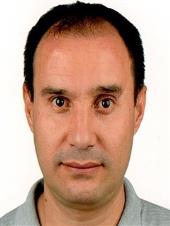
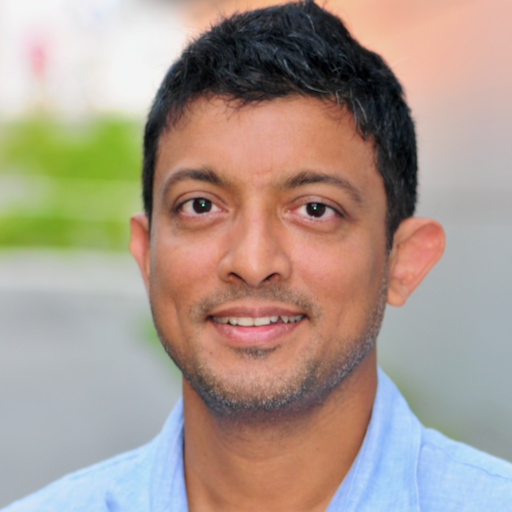
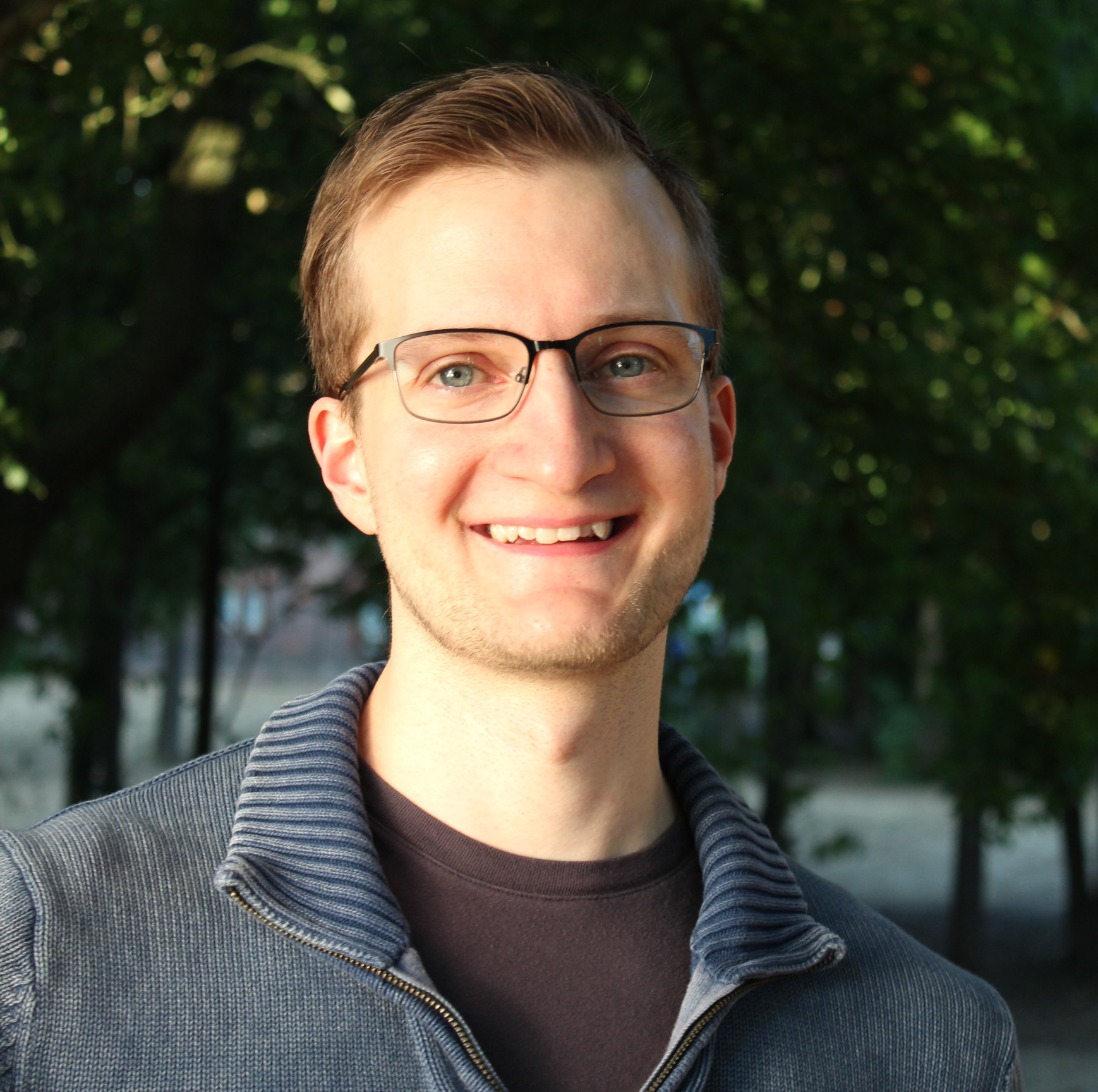
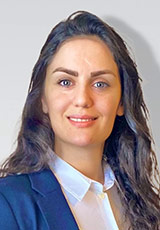
Dr. M. Jason Hinek is an Associate Professor in the Teaching Stream and Associate Director of Recruitment/Outreach at Carleton University's School of Computer Science. He holds a PhD from the University of Waterloo (2007). His research focuses on cryptology, computer security, and computer science education, with earlier work in wood polymer studies via NMR analysis. He teaches courses such as Introduction to Computer Science, Discrete Structures, and Applied Cryptography. Dr. Hinek’s scholarly work emphasizes RSA cryptosystem variants, cryptanalysis techniques, and cryptographic protocol security. His publications explore vulnerabilities in multi-prime RSA, attribute-based encryption, and modular arithmetic optimizations. He has contributed to understanding key exposure attacks, encryption efficiency trade-offs, and lattice-based cryptographic attacks. His teaching responsibilities include foundational computer science courses at both undergraduate levels. No scientific awards are explicitly mentioned in his profile. His research spans theoretical cryptography with practical applications in security systems.
Rongmao Chen is a Professor at the College of Computer Science and Technology , National University of Defense Technology , China. He earned his Ph.D. from University of Wollongong, Australia (2016), following B.Eng and M.Eng at NUDT (2011, 2013). As a visiting researcher at COSIC, KU Leuven (2019-2020), he collaborated with Prof. Bart Preneel . Research Focus: Public-key cryptography, network security, and privacy-preserving protocols Key Contributions: Subversion-resilient encryption, reverse firewalls, and leakage-resilient key exchange Editorial Roles: IEEE TDSC (2024-), IACR Communications in Cryptology (2025), JCST Young Editorial Board (2023-) His recent works explore quantum-resistant cryptography (CRYPTO 2025, ASIACRYPT 2024), privacy-preserving machine learning (S&P 2025), and blockchain security (IEEE TIFS 2025). He serves on program committees of ACM CCS , PKC , and CT-RSA conferences. Awards & Recognitions: NSFC Excellent Young Scholar (2021) ACM SIGSAC China Rising Star (2020) Best Student Paper Award, ACISP 2018 Outstanding Advisor (National College Student Information Security Contest, 2017 & 2023) Young Elite Scientists Sponsorship, CAST (2018)
Elisabeth Oswald is a University Professor at the Alpen-Adria-Universität Klagenfurt, affiliated with the Institut für Artificial Intelligence und Cybersecurity. Her research focuses on cryptographic security, side-channel attacks, and leakage detection in hardware and software implementations. She is a key contributor to advancements in cryptographic resilience, countermeasures against side-channel vulnerabilities, and the development of efficient security evaluation frameworks. Her work spans theoretical and applied cryptography, with a strong emphasis on practical security challenges in embedded systems and cryptographic protocols. Notable areas include the analysis of masking techniques, multi-task learning applications in AES implementations, and the certification of leakage-resistant systems. She also explores statistical methods for evaluating cryptographic systems' robustness, such as mutual information estimation and distinguisher-based approaches. Her articles from 2021–2025 highlight contributions to post-quantum cryptography (e.g., FrodoKEM optimization), leakage model completeness, and the practical implications of side-channel countermeasures. While no specific awards are listed, her extensive publication record underscores her influence in the field. She is actively involved in academic governance, including membership in the Curricularkommission Informatik.
Ran Canetti is a distinguished Professor of Computer Science at Boston University, where he directs the Center for Reliable Information System and Cyber Security (RISCS). He also serves as the director of the Check Point Institute for Information Security at Tel Aviv University. Canetti is a Fellow of both the International Association for Cryptologic Research (IACR) and the Association for Computing Machinery (ACM), and was awarded the prestigious RSA Award for Excellence in Mathematics in 2018. Canetti received his academic foundation at the Technion in Haifa, earning a BA in Computer Science (1989), a BA in Physics (1990), and an M.Sc. in Computer Science (1991). He completed his PhD in 1995 at the Weizmann Institute under the supervision of Prof. Oded Goldreich. Following post-doctoral training at MIT under Prof. Shafi Goldwasser, he joined IBM's T.J. Watson Research Center, where he worked until 2008 before moving to Boston University. His research spans multiple aspects of cryptography and information security, with particular emphasis on the design, analysis and use of cryptographic protocols. Canetti's seminal contributions include the development of the HMAC message authentication protocol and the formulation of the Universally Composable (UC) security framework, which revolutionized how cryptographic protocols are analyzed for security in complex environments. More recently, his work has expanded into the co-design of law, policy and algorithms, focusing on accountability, transparency of algorithms, and data privacy. Canetti's publications demonstrate a consistent focus on foundational cryptographic principles that have evolved to address contemporary security challenges. His early work established critical standards for message authentication and secure communication, while his more recent research explores the intersection of cryptography with societal concerns like privacy regulations and algorithmic accountability. His work bridges theoretical cryptography with practical implementations that have become internet standards. RSA Award for Excellence in Mathematics (2018) Fellow of the IACR and ACM Multiple IBM Research Awards including Outstanding Innovation Award (2006), Corporate Award (2005), and Research Division Award (1999) Rothschild post-doctoral scholarship (1995-96) Kennedy Thesis Award from the Weizmann Institute (1996) As director of the Center for Reliable Information System and Cyber Security at Boston University and the Check Point Institute for Information Security at Tel Aviv University, Canetti leads significant research initiatives in cybersecurity. His work has resulted in multiple patents and internet standards, including HMAC (RFC 2104), TESLA multicast authentication, and Group Key Management Architecture. Canetti has also been active in the cryptographic community as co-organizer of major workshops and as Program Committee chair for the Theory of Cryptography Conference. Canetti maintains strong connections with both academic and industry research communities, evidenced by his past work at IBM Research and ongoing collaborations with organizations like Identiq, where he serves as an advisor. His research continues to influence both theoretical cryptography and practical security implementations worldwide.
Prof. Avishai Wool is a faculty member at Tel Aviv University, serving as Head of the Systems Department in the School of Electrical and Computer Engineering and Deputy-Director of the Interdisciplinary Cyber Research Center. He received his B.Sc. (1989), M.Sc. (1992), and Ph.D. (1997) in Mathematics/Computer Science from Tel Aviv University and the Weizmann Institute. His career includes co-founding cybersecurity companies AlgoSec and Lumeta Corp. Research Interests: His work focuses on computer security , network security , SCADA systems , side-channel cryptanalysis , and firewall technology . Recent publications explore GPU overclocking faults , vehicular radar spoofing , power grid protocol diversity , and password strength estimation . Recent Article Trends: His 2024-2025 research spans SCADA network modeling , DDoS detection via stream analysis , password security via data-driven recommendations , vehicular camera spoofing , and RSA vulnerabilities from GPU faults . Earlier work includes cache attacks on TrustZone , Wi-Fi direction finding , and encrypted IoT traffic classification . Labs & Teams: He leads the Systems Department and contributes to the Interdisciplinary Cyber Research Center, focusing on practical cybersecurity solutions for industrial systems, wireless networks, and embedded devices.
Mehmet Merkepçi serves as an Assistant Professor in the Department of Computer Engineering at Gaziantep University's Faculty of Engineering, Turkey. Holding a Doctorate in Electrical and Electronic Engineering (2017), he has maintained continuous academic affiliation with the university since 2007 through progressive roles from Research Assistant to his current position. Academic Background: Doctorate (2017): Gaziantep University, Institute of Science, Electrical and Electronic Engineering Master's (2009): Gaziantep University, Institute of Science, Electrical and Electronics Engineering Bachelor's (2000): Karadeniz Technical University, Faculty of Engineering, Electrical-Electronic Engineering Merkepçi's research demonstrates exceptional interdisciplinary breadth with core emphasis on Cryptography and Artificial Neural Networks . His recent work pioneers neutrosophic number theory applications in public key cryptography, significantly advancing RSA and El Gamal algorithms. Parallel research trajectories include biomedical signal processing using photoplethysmography for non-invasive monitoring systems, and textile engineering innovations in fabric porosity and air permeability analysis. This multifaceted approach bridges theoretical mathematics with practical engineering solutions across diverse domains. Publication analysis reveals 10 journal articles concentrated in 2022-2025, with cryptographic research constituting 60% of recent output. The remaining publications demonstrate sustained engagement in biomedical engineering (20%) and textile science (20%), indicating strategic diversification while maintaining cryptographic expertise as the research cornerstone. This distribution reflects deliberate specialization in security-critical applications alongside targeted explorations of neural network implementations in physical systems. Merkepçi teaches advanced courses including Security Engineering and Occupational Safety at graduate level, and foundational undergraduate instruction in Computer Programming, Database Management, and Engineering Mechanics. His administrative service includes Department Vice Chairman (2020-present) and former Department Head (2020-2024), demonstrating institutional leadership alongside research and teaching responsibilities.
Ass.-Prof. Arnab Roy is an Assistant Professor (tenure track) at the Security and Privacy Lab, University of Innsbruck, Austria. His research focuses on cryptography and cryptanalysis, secure computation, and information security. He has held academic and research roles at institutions such as Alpen-Adria-Universität Klagenfurt, University of Bristol, and Technical University of Denmark. Education: Ph.D. in Computer Science (2014), University of Luxembourg M.Tech. in Computer Science (2007), Indian Statistical Institute M.Sc. in Mathematics (2004), IIT Kanpur B.Sc.(Hons.) in Mathematics (2002), University of Calcutta Research Interests: Dr. Roy’s work addresses advanced cryptographic systems, including post-quantum cryptography, side-channel resistance, and zero-knowledge proofs. He designs efficient cryptographic primitives for constrained environments and explores leakage certification methods. His contributions span cryptanalysis of block ciphers, hash functions, and protocol security. Professional Activities: Serving on program committees for ACNS 2024, CT-RSA 2024, and Eurocrypt 2019 Reviewer for major conferences including CRYPTO, Eurocrypt, and Asiacrypt Organizer of ALPSY (2024) and SILC (2021) Lab & Team: The Security and Privacy Lab focuses on foundational and applied research in cryptography, with ongoing projects on algebraic systems for cryptographic permutations and leakage-resilient designs.
Shafi Goldwasser is the RSA Professor (Post Tenure) of Electrical Engineering and Computer Science at the Massachusetts Institute of Technology (MIT) and holds a professorship in the Electrical Engineering and Computer Sciences (EECS) department at the University of California, Berkeley. She is a core member of MIT’s Computer Science and Artificial Intelligence Laboratory (CSAIL), particularly within the Theory of Computation Group and Complexity Theory Group. Her work focuses on advancing cryptographic foundations, computational complexity, and algorithmic security. Goldwasser has pioneered research in areas such as zero-knowledge proofs, homomorphic encryption, and secure multiparty computation, with applications in privacy, cybersecurity, and AI alignment. Research Interests: Goldwasser’s research spans cryptography, complexity theory, and the intersection of computer science with societal challenges. Her work emphasizes: Designing provably secure cryptographic systems Algorithmic robustness and adversarial machine learning Privacy-preserving technologies for healthcare and data collaboration Formal verification of AI models Cross-disciplinary applications in law and biology Scientific Contributions: A 2017 ACM Fellow, Goldwasser has led major initiatives like the Homomorphic Encryption Standard project. Her research groups at MIT and CSAIL explore foundational problems in computational complexity while addressing real-world challenges such as securing emerging communication systems and reconciling legal secrecy with transparency through cryptographic tools. Collaborations & Teams: She co-leads the Cryptography and Information Security Group and Complexity Theory Group at MIT, collaborating with experts like Vinod Vaikuntanathan and Yael Kalai. Her work integrates theoretical breakthroughs with practical applications, such as secure genomic analysis and AI alignment frameworks.
Samuel Jaques is an Assistant Professor in the Department of Combinatorics and Optimization at the University of Waterloo (since 2023). His research focuses on cryptography (particularly privacy/anonymity) and quantum computing, with notable work on quantum algorithms for cryptanalysis and the Landscapes of Quantum Computing blog. He completed a PhD at the University of Oxford and holds degrees from the University of Waterloo and University of Regina. Education: PhD, University of Oxford (supervised by Simon C. Benjamin and Christophe Petit) MMath, University of Waterloo (co-supervised by Alfred Menezes and Michele Mosca) B.Sc. in Math and Biology, University of Regina Research Interests: Jaques explores quantum computing's impact on cryptography, including post-quantum security, lattice-based algorithms, and quantum error correction. His work critiques quantum RAM assumptions and analyzes resource costs for breaking cryptographic systems like RSA and ECC. Recent projects include accumulator schemes for digital credentials and dynamic group signatures. Awards and Recognition: Best Young Researcher Paper (2019) for quantum claw-finding attacks on SIKE Advising & Grants: Jaques supervises graduate students and postdocs in cryptography/quantum computing. His lab focuses on real-world privacy solutions with a post-quantum lens. Recent advisees include Mojtaba Fadavi (postdoc) and Jérôme Guyot (visiting student). Labs/Teams: Active in the Institute for Quantum Computing (IQC) at Waterloo, collaborating on quantum algorithms and cryptographic security. Maintains open-source projects like the Q# quantum crypto library and surface code cost calculators.
Fatemeh Khoda Parast is an Assistant Professor in the Department of Computer Science at the University of New Brunswick (UNB). She previously served as an Assistant Professor at the University of Guelph from September 2023 to September 2024. Her PhD in Computer Science from UNB (2019–2023) focused on the security of large-scale distributed storage systems. She currently researches transforming cyber threat intelligence into rapid defense mechanisms. Education: PhD in Computer Science, University of New Brunswick (2019–2023) Her research interests span cybersecurity, cyber threat intelligence, digital forensics, and cloud storage security. She explores cryptographic solutions for distributed systems and AI-driven threat detection. Recent work includes CephArmor (secure Ceph storage interfaces) and neural network-based RSA cryptanalysis. Her publications address cutting-edge topics like AI in threat intelligence automation and privacy-preserving machine learning for distributed data. No scientific awards are explicitly mentioned. No advising or grant details are provided. Her work contributes to advancing secure cloud infrastructure and cryptographic protocols.
Eran Tromer is a Professor of Computer Science at Boston University, specializing in cryptography and information security. His research focuses on building secure distributed systems, cryptographic tools like zero-knowledge proofs, and mitigating side-channel attacks. He co-founded the Zcash blockchain, Sealance for privacy-preserving financial regulation, and led the ZKProof Standardization Effort. Education: PhD from the Weizmann Institute of Science Prior affiliations: Columbia University, Tel Aviv University, MIT, and Microsoft Research Research Interests Tromer's work bridges theoretical cryptography with practical implementations, emphasizing: Privacy-preserving technologies (blockchain, zero-knowledge) Cryptographic protocol security Side-channel attack mitigation Hardware vulnerabilities Recent articles explore topics like snake-eye resistant encryption, optical cryptanalysis, and adversarial machine learning attacks on perceptual hashing. Professional Contributions Founder of Zcash and Sealance, Tromer has also contributed to open standards through ZKProof. His research often intersects hardware security and software resilience, with a focus on real-world deployable solutions.
Laurent Sauvage is a Lecturer at Télécom Paris and a member of the Secure and Safe Hardware (SSH) research team within the Information Processing and Communication Laboratory (LTCI) and Communications and Electronics (Comelec) department. His work focuses on hardware security, fault injection attacks, and side-channel analysis in cryptographic systems. Research Interests: Hardware security, fault injection attacks, side-channel analysis, and embedded systems. Laboratory: LTCI (Information Processing and Communication Laboratory), Télécom Paris. Publications: Recent works include advancements in masked implementations, EM fault injection models, and countermeasures against cryptographic vulnerabilities.
Professor Alexander Chefranov is a distinguished faculty member in the Department of Computer Engineering at Eastern Mediterranean University's Faculty of Engineering in Famagusta, North Cyprus. He has been serving at EMU since 2002, initially as a Visiting Associate Professor until 2009, then as Associate Professor until 2021, and has held the position of Professor since 2021. Originally from Russia/USSR, he earned his Engineer-Mathematician diploma from Taganrog Radio-Engineering Institute in 1978, followed by his PhD (Candidate of Engineering Sciences) in Computer Engineering in 1984, and later his Doctor of Engineering Sciences in 1998. Professor Chefranov's research spans multiple interdisciplinary fields with remarkable breadth. His primary research interests include fluid dynamics and hydrodynamics (particularly vortex dynamics, flow instability, and Navier-Stokes equations), cryptography and information security (with numerous publications on Hill cipher modifications and NTRU-like cryptosystems), image processing and steganography, and machine learning applications in scene recognition and medical imaging. His work demonstrates exceptional versatility across both theoretical mathematics and practical computer science applications. His recent publications through 2025 reveal a continued active research trajectory across all his interest areas, with particular emphasis on hydrodynamic instability theories, advanced cryptographic techniques, and deep learning applications. His work bridges fundamental mathematical physics with cutting-edge computer science applications, demonstrating unusual interdisciplinary range. Professor Chefranov is actively supervising graduate students, currently overseeing two PhD candidates (OLALEKAN EBENEZER IHINKALU and BEHNAM BOJNORDI ARBAB) and one Master's student (AMIRALI HATAMI), whose work focuses on steganalysis using deep learning approaches.
Martin Bunder is an Honorary Fellow at the School of Mathematics and Applied Statistics, University of Wollongong, Australia, a position he has held since 2022. His academic career spans several decades with a focus on pure mathematics, particularly in number theory and discrete mathematics. Professor Bunder's research interests center around pure mathematics, with specific expertise in continued fractions, Fibonacci sequences, paperfolding sequences, and their applications in cryptography. His work bridges theoretical mathematics with practical applications in areas such as cryptanalysis of RSA-type cryptosystems. He has made significant contributions to understanding the properties of generalized Fibonacci sequences, harmonic continued fractions, and binary signed-digit representations. His publication record demonstrates a consistent research trajectory with recent work focusing on two-sided generalized Fibonacci sequences, paperfolding sequences, and continued fractions. These publications span prestigious journals in mathematics and cryptography, indicating his standing in these academic communities. His collaborative work with researchers like Tonien, Bates, and Tognetti suggests an active research network in discrete mathematics and number theory. Martin Bunder has supervised at least one PhD student on "Continued fractions and their applications" from 2015 to 2018, demonstrating his commitment to academic mentoring. While specific grant information isn't provided in the available text, his extensive publication record suggests successful research funding throughout his career.
Ágnes Kiss is a Researcher at the Department of Computer Science, Technical University of Darmstadt, Germany. She earned her PhD in 2021 with a thesis titled Efficient Private Function Evaluation . Her research focuses on cryptographic protocols, privacy-preserving technologies, and secure computation, with applications in distributed systems and real-world security challenges. Her work spans topics such as private function evaluation (PFE), universal circuit design, and privacy-preserving location proximity schemes. She has contributed to advancing secure computation efficiency and resistance against side-channel attacks. Her publications appear in top venues like Journal of Cryptology , EUROCRYPT , and USENIX Security Symposium . Key areas of interest include cryptography, algorithmic countermeasures, and the practical implementation of secure protocols. Her recent work addresses security risks in scripting languages and explores trustworthy AI inference systems, reflecting her commitment to both theoretical and applied cryptography.