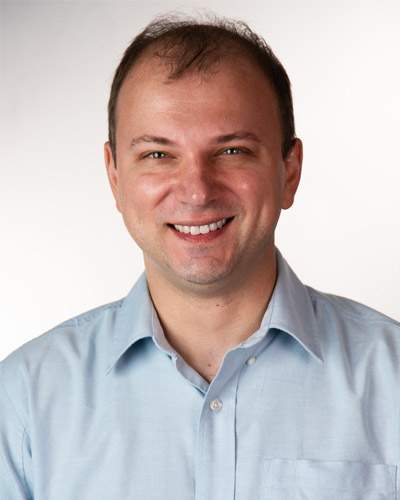
Rachel Arey, Ph.D. , is an Assistant Professor at Baylor College of Medicine in the Department of Molecular and Cellular Biology and Center for Precision Environmental Health. Her lab investigates molecular mechanisms of learning, memory, and cognitive aging using C. elegans models. College: Graduate School of Biomedical Sciences Location: Alkek Building N1317.02, Houston, TX Research Focus: Combines C. elegans genetics, RNA-seq, and behavioral assays to identify conserved regulators of synaptic function and age-related memory loss. Targets pathways to develop cognitive enhancers and understand synaptic aging. Education: BA, Austin College (Sherman, TX) PhD, University of Texas Southwestern Medical Center (Dallas, TX) Postdoc, Princeton University (Neuroscience) Key Grants: Whitehall Foundation ($225k, 3-year) Glenn Foundation & AFAR Grants NIH New Innovator Award Lab Members: Includes PhD student Emily Leptich. Affiliated with the Center for Precision Environmental Health and Society for Neuroscience.
Dr. Marjorie Brand is an Adjunct Professor in the Department of Cell and Regenerative Biology at the University of Wisconsin, Madison , affiliated with the School of Medicine and Public Health. Her academic training includes an MSc and DEA in Biochemistry and Cellular/Molecular Biology from University Louis Pasteur, followed by a PhD in Molecular Biology from the same institution. MSc Biochemistry, University Louis Pasteur DEA Cellular and Molecular Biology, University Louis Pasteur PhD Molecular Biology, University Louis Pasteur Dr. Brand specializes in the regulation of gene expression during hematopoiesis , focusing on chromatin dynamics and transcriptional networks in hematopoietic stem cells. Her work investigates how disruptions in these mechanisms contribute to blood disorders like leukemia and β-thalassemia, using interdisciplinary approaches such as: Quantitative proteomics (isotope tagging) Single-cell multi-omics (CITE-seq, TEA-seq, sc-CUT&Tag, sc-RNA-seq) Xenotransplantation models for leukemia Murine models of leukemia
Alexey A. Soshnev, M.D., Ph.D., is an Assistant Professor in the Department of Neuroscience, Developmental and Regenerative Biology at The University of Texas at San Antonio (UTSA) within the College of Sciences. His research focuses on chromatin structure, gene regulation, and histone biology in development and disease. He leads an active lab investigating epigenetic mechanisms using biochemical, genomic, and imaging approaches. His research interests include: Chromatin structure and function Gene regulation in development and disease Histone biology and biochemistry Epigenetic regulation in stem cells and cancer Linker histone dynamics Transcriptional misregulation The lab's recent publications and ongoing projects span epigenetics, developmental biology, cancer biology, and metabolism. Using tools like proximity labeling, single-molecule imaging, and functional genomics, the team explores how chromatin organization influences cell identity and disease. Their work has implications for understanding cancer, neurodegeneration, and developmental disorders. Award highlights from trainees include: Best poster award at PSU Summer Symposium (Cameron) Departmental research award (Amina) Poster awards at NDRB retreat (Leo, Ashley) Acceptance into prestigious graduate programs (Cameron to Rockefeller University, Gauri to UT Southwestern) Dr. Soshnev has secured external funding from the Cancer Prevention and Research Institute of Texas (CPRIT) and the American Cancer Society. His lab mentors numerous undergraduate and graduate students, including Amina Jumamyradova, Cameron, Dustin Fetch, Gauri Raje, and others. He collaborates with researchers at UT Health San Antonio and beyond, including Dr. Mingjiang Xu. The lab is also involved in multiple national conferences such as ASBMB, NCUR, and DiscoverBMB. Current lab initiatives include: Studying H1 histone loss in B-cell malignancies Developing in vivo single-molecule imaging platforms Investigating lipid-metabolism-epigenetics crosstalk Exploring transcription factor occupancy using biotinylation tagging
Dr. Yutao Liu is a Professor at Augusta University's Medical College of Georgia where he holds appointments in the Department of Cellular Biology and Anatomy, The Graduate School, and the Center for Biotechnology and Genomic Medicine. He also serves as Director of the CBA Graduate Program and Basic Science Co-Director of the James & Jean Culver Vision Discovery Institute. Education: MD, Beijing Medical University, Beijing, China (1990-1995) MS, Biology/Biological Sciences, Truman State University, Kirksville, MO (1999-2001) PhD, Genome Sciences/Genomics, University of Tennessee, Knoxville, TN (2001-2006) Postdoctoral Associate, Duke University Medical Center, Durham NC (2006-2010) Dr. Liu is a human geneticist specializing in the genetic etiology of glaucoma and keratoconus. His research laboratory employs high-throughput sequencing, genotyping, and integrative genomic technologies to investigate age-related vision disorders. The lab has extensive experience in human genetics, bioinformatics, and functional genomics using human samples, cell culture, and mouse models. Current research focuses on understanding the molecular mechanisms of keratoconus and glaucoma, with particular interest in exosomes and their miRNA/protein contents in aging-related disorders. Dr. Liu's publication record demonstrates consistent productivity in ocular genetics, with recent work emphasizing exosome research in vision disorders. His publications span high-impact journals including Nature Genetics, PLoS Genetics, AJHG, PNAS, HMG, IOVS, EER, and Molecular Vision. Collaborative efforts extend to researchers across California, Iowa, Illinois, Saudi Arabia, Israel, and Duke University. Scientific Awards: Experimental Eye Research Top Cited Article (2008-2010) Thomas R. Lee Award for National Glaucoma Research (2010-2013) Annual Educator Award from Duke University (2013) Basic Science Research Distinguished Faculty Award (2021) ARVO Fellow (Silver, 2022; Gold, 2024) Distinguished Service Award from The Graduate School (2023) Dr. Liu serves as Director of the CBA Graduate Program and has mentored numerous graduate students to completion of their PhDs with distinction. His research has been supported by multiple organizations including the National Eye Institute at NIH, The Glaucoma Foundation, the Glaucoma Research Foundation, BrightFocus Foundation, and Research to Prevent Blindness. As a Co-Investigator of the NEIGHBORHOOD glaucoma genetics consortium, he has contributed to identifying several glaucoma-associated genes. The Liu laboratory maintains active collaborations and employs cutting-edge technologies including whole exome/genome sequencing, RNA-Seq, DNA genotyping, PCR techniques, and nanoparticle tracking analysis. The team is highly collaborative and trainee-friendly, with a focus on translational research to improve understanding and treatment of vision disorders.
Eugene Katsevich is an Assistant Professor at the University of Pennsylvania's Wharton Department of Statistics and Data Science. His research spans statistical theory, methodology, and applications in genomics and computational biology. Education: Ph.D. in Statistics (Stanford, 2019), A.B. in Mathematics (Princeton, 2014) His work focuses on: High-dimensional variable selection and multiple testing Conditional independence testing and computational efficiency Applications to genetics and genomics Development of statistical software for biological discovery Recent publications address: Robust differential expression analysis in single-cell CRISPR screens Theoretical advances in false discovery rate control Multi-resolution causal variant localization CRISPRi-based enhancer-gene mapping Scientific awards include: Wharton Undergraduate Teaching Excellence Award (2021) He teaches courses in modern data mining (STAT4710/5710) and statistical methodology (STAT9610), and leads the Katsevich Lab at UPenn, funded by NSF and Analytics at Wharton. His research develops methods like KnockoffZoom and SCEPTRE for genome-wide analysis and single-cell CRISPR data.
Inés Canosa Perez-Fragero is a Tenured University Professor in the Department of Molecular Biology and Biochemical Engineering at Universidad Pablo de Olavide. She is affiliated with the Centro Andaluz de Biología del Desarrollo (CABD) and leads research in the "Expresión Génica en Bacterias de Interés Medioambiental" group. PhD in Molecular Biology (Universidad Autónoma de Madrid, 1997) Research focus on microbial gene regulation and environmental biotechnology Her work spans Microbiology , Molecular Genetics , and Biochemical Engineering , with particular emphasis on: Two-component signal transduction systems in Pseudomonas putida ECF sigma factors and stress responses Environmental biodegradation mechanisms Photocatalytic water treatment technologies Gene expression networks under nutrient stress Recent publications highlight her contributions to environmental microbiology (antibiotic-resistant bacteria removal), genetic regulation (CbrAB system characterization), and industrial biotechnology (zeolite modification for water disinfection). Her research integrates molecular genetics with ecological applications, particularly in bacterial adaptation to environmental stressors.
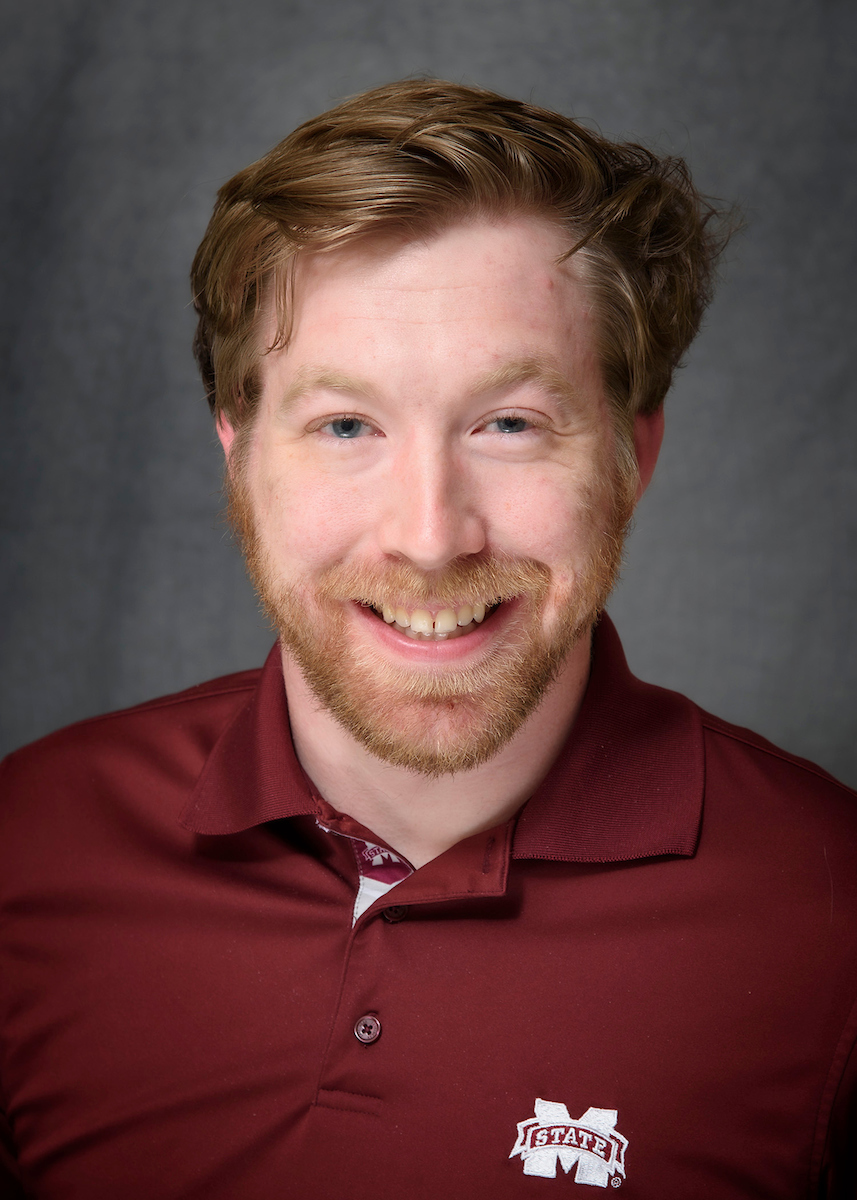
William Crosby is a Clinical Assistant Professor at the College of Veterinary Medicine of Mississippi State University , focusing on veterinary pharmacology and bovine health. His research integrates transcriptomics and genomic mechanisms to address inflammatory regulation in cattle. Key Research Areas: Veterinary Medicine, Pharmacology, Genomics, Bovine Respiratory Disease, Transcriptomics. Publication Trends: Recent work applies RNA-Seq to study tulathromycin's genomic effects in reducing bovine respiratory disease risk, highlighting translational pharmacogenomic approaches.
Rituparna Goswami is a Research Fellow at the Sainsbury Laboratory, University of Cambridge, focusing on intercellular and inter-individual variability in gene expression under stress conditions in Arabidopsis . Her work bridges single-cell mechanics with organism-level stress responses, particularly in drought and temperature stress scenarios tied to the climate crisis. University of Cambridge Sainsbury Laboratory Department of Plant Sciences Her research explores how non-genetic variability in stress response genes influences plant survival. Current projects examine cellular-level gene expression changes using confocal microscopy and RNA-seq, while prior work on nuclear mechanics during stress response was highlighted in Plantae Plant Science Research Weekly . Key publications investigate chromatin dynamics and mechanosensitivity in plant nuclei. Support for her research comes from institutions such as the Biotechnology and Biological Sciences Research Council (BBSRC) and the European Research Council (ERC), which fund the Sainsbury Laboratory’s broader activities.
Margaret R. Starostik is a postdoctoral fellow in the laboratory of Rajiv McCoy at Johns Hopkins University. She completed her Ph.D. in the Cell, Molecular, Developmental Biology & Biophysics Program at Johns Hopkins University, with co-advisement from John Kim in the Department of Biology and Mike Schatz in the Department of Computer Science. Her research integrates computational and experimental approaches to investigate gene regulation mechanisms, with particular focus on piRNA pathways and transcription factors in C. elegans. Technical expertise includes: ChIP-seq analysis for protein-DNA interactions Small RNA-seq data processing Computational genomics pipeline development Analysis of male-specific transcription factors Dr. Starostik maintains active scholarly presence through GitHub repositories containing analytical tools and course materials, demonstrating strong technical capabilities in Python-based genomic analysis. Her collaborative work bridges biological experimentation with computational methodology development in the genomics field.
Valerie Arboleda is an Assistant Professor at the David Geffen School of Medicine, University of California, Los Angeles, affiliated with the Departments of Pathology and Laboratory Medicine, Human Genetics, and Computational Medicine. Her research bridges clinical and genomic perspectives to interpret how genetic variation influences disease diagnosis, therapeutics, and prognosis. Research Interests: Dr. Arboleda’s lab explores causal relationships between genetic variation and human disease, utilizing functional genomic approaches (RNA-seq, ATAC-seq, ChIP-seq, methylation-seq) and patient-derived samples to model rare neurodevelopmental disorders and common diseases. The lab also investigates genetic ancestry’s role in disease risk and the shared genetic basis of monogenic and complex diseases. Scientific Awards: NIH Director’s Early Independence Award (DP5) Daljit S. and Elaine Sarkaria Fellowship Charles J. Epstein Pre-doctoral Award for Excellence in Human Genetics Research John H. Walsh Young Investigator Award (2021) Education: Dr. Arboleda earned her MD and Ph.D. in Human Genetics from the UCLA Medical Student Training Program (MSTP) in 2014. She completed residency training in clinical pathology with an emphasis on molecular genetic pathology at UCLA.
Leonhard Wachutka is a Postdoctoral Researcher in the Chair of Computational Molecular Medicine at the Technical University of Munich (TUM) since 2020, having previously completed his PhD in the same chair from 2016 to 2020. Education: Dr. rer. nat. in Computational Molecular Medicine, Technical University of Munich, 2020 M.Sc in Physics, LMU Munich, 2013-2015 B.Sc in Physics, LMU Munich, 2009-2012 His research integrates computational biology, genomics, and molecular medicine with a focus on RNA metabolism, splicing kinetics, and cancer genomics. He develops machine learning and statistical methods for analyzing high-throughput sequencing data, particularly RNA-seq, to investigate gene regulation mechanisms, mitochondrial function, and disease pathways. His interdisciplinary approach bridges physics, molecular biology, and computer science to address complex biomedical questions. Publication trends reveal consistent innovation in computational genomics tools, including methods for cancer driver gene detection, RNA-seq aberration analysis, splicing kinetics modeling, and mitochondrial respiration quantification. His work spans cancer genomics, RNA biology, and systems biology, with strong emphasis on translational applications for understanding disease mechanisms. Scientific Awards: No awards, fellowships, or medals are mentioned in the provided text. Advising and Grants: No information is available regarding student advising or independent research grants. As a postdoctoral researcher, he contributes to projects led by principal investigator Prof. Julien Gagneur within the research group. Labs and Teams: Wachutka is embedded in Prof. Julien Gagneur's research group within the Chair of Computational Molecular Medicine at TUM. The team actively teaches courses including "Machine Learning for Regulatory Genomics" and "Computational Modelling for System Genetics," while conducting cutting-edge research at the intersection of machine learning, regulatory genomics, and molecular medicine.
Vicente Yépez is a Postdoctoral Researcher and Lab Scientific Manager at the Chair of Computational Molecular Medicine within the Department of Informatics at the Technical University of Munich (TUM), and has served as a Tutor for Data Analysis and Visualization and Statistical Methods for System Genetics courses at TUM since 2016. He currently holds dual roles as Chief Scientific Officer at OmicsDiscoveries GmbH and Clinical Research Network project manager at ERDERA. His educational background includes a Dr. rer. nat. in Computational Molecular Medicine from TUM (2021), an M.Sc in Mathematical Modeling in Engineering from the University of L'Aquila, Italy (2011-2013), and a B.Sc in Industrial Engineering from Tecnologico de Monterrey, Mexico (2006-2010). Additional training includes a Numerical Analysis semester at the University of Nice and an International Business Administration program in France. Yépez specializes in computational genomics with focus on RNA-seq analysis for rare disease diagnostics. His research develops methods for detecting aberrant splicing and gene expression events, integrating multi-omics data through machine learning to improve diagnostic rates for Mendelian disorders. Key contributions include FRASER and PROTRIDER computational frameworks applied in large consortia like Solve-RD. His 15 most recent publications demonstrate consistent innovation in genomic analysis pipelines, with 2025 works advancing organ development splicing prediction and multi-omics diagnostics. The publications reveal strong emphasis on clinical translation, particularly in neuromuscular and metabolic disorders, using HiFi sequencing and proteogenomics to solve previously undiagnosed cases. As a long-term Tutor at TUM, Yépez has shaped data science education in genetics while contributing to collaborative initiatives including his 2022-2024 leadership of Solve-RD's RNA-seq working group. His lab management role within the Gagneur research group supports high-impact translational work bridging academic research and clinical applications through ERDERA and OmicsDiscoveries.
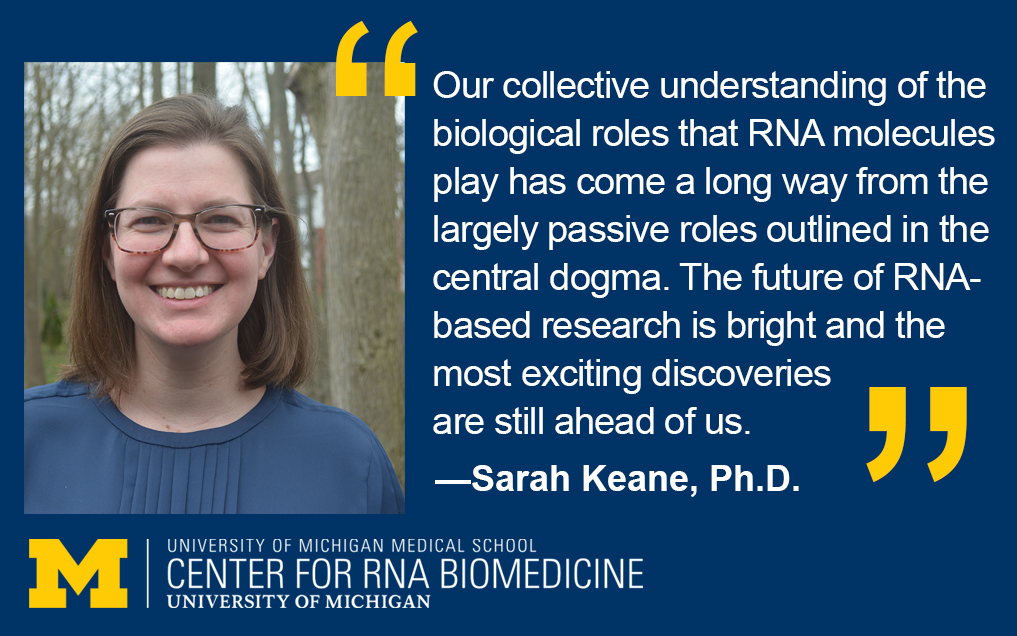
Sarah Keane, Ph.D., serves as Assistant Professor of Biophysics and the William R. Roush Assistant Professor of Chemistry at the University of Michigan's College of Literature, Science, and the Arts (LSA). She leads the Keane Lab, which operates at the intersection of biophysics and chemistry with a focus on RNA structural biology and its implications in health and disease. Her research centers on deciphering how RNA molecules fold into three-dimensional structures and how these conformations dictate biological function. Using nuclear magnetic resonance (NMR) spectroscopy as a primary tool—complemented by small-angle scattering, computational modeling, and chemical probing techniques—her lab tackles historically challenging RNA targets including microRNAs, riboswitches, and viral RNA elements. Current investigations span microRNA processing mechanisms, RNA-small molecule interactions for therapeutic targeting, and the structural basis of RNA-protein complexes in gene regulation. Analysis of her 15 most recent publications reveals a dominant focus on microRNA structural dynamics (particularly miR-20a, miR-31, and oncomiR-1), riboswitch functionality in bacterial pathogens like Listeria monocytogenes , and methodological innovations in RNA structural analysis. Her work consistently bridges biophysical characterization with biomedical relevance, especially in cancer and infectious disease contexts. Pew Scholar in the Biomedical Sciences (2020) NSF CAREER Award: Mechanisms of RNA-mediated control of gene expression in bacteria (2020) Dr. Keane actively recruits undergraduate students, graduate students, and postdoctoral researchers for her lab, emphasizing passion for learning over prior technical expertise. Her NSF CAREER grant supports both cutting-edge RNA research and educational initiatives training the next generation of structural biologists. She is an integral member of the University of Michigan's vibrant RNA community, collaborating across departments through the Center for RNA Biomedicine. The Keane Lab maintains strong ties with the Center for RNA Biomedicine and leverages university core facilities including the Bru-Seq Lab and SMART Center for single-molecule analysis. Her research program combines wet-lab structural biology with computational approaches to tackle RNA targets previously considered 'undruggable,' positioning her team at the forefront of RNA therapeutics development.
Kenong Xu serves as Associate Professor in the Horticulture Section of Cornell University's School of Integrative Plant Science at Cornell AgriTech, where his research program focuses on discovering apple genes controlling horticultural and economic traits through plant genomics to advance breeding methodologies. His academic foundation includes: Doctorate in Plant Sciences from University of California, Davis (2000) Master of Science from Huazhong Agricultural University (1991) Bachelor of Science from Anhui Agricultural University (1983) Dr. Xu's research centers on tree fruit genomics with specialized expertise in apple gene regulatory networks. He investigates molecular mechanisms governing fruit quality, shelf life, stress responses, and architectural traits using genomic tools to identify target genes for cultivar improvement. His work bridges fundamental genetic discovery with practical applications for apple production systems. Analysis of his 2012-2016 publications reveals consistent focus on apple fruit quality regulation, particularly acidity and ethylene pathways, alongside structural traits like columnar growth. Key methodological approaches include gene network analysis, fine-scale genetic mapping, and transcriptome profiling, establishing genomic resources that support marker-assisted breeding for horticultural traits. His research excellence has been recognized through prestigious awards: Presidential Early Career Award for apple genomics studies (2016, The White House) Tech Award for Economic Development (2012, The Tech Museum of Innovation) CGIAR Science Award (2007, Consultative Group on International Agricultural Research) As a graduate field member in Horticulture and Plant Breeding, Dr. Xu mentors students in genomic approaches to fruit crop improvement. His research program has secured significant funding evidenced by major awards, particularly supporting genomic resource development for apple breeding and stress tolerance studies. Leading a dedicated research team at Cornell AgriTech, Dr. Xu's program maintains strong industry connections through extension activities that translate genomic discoveries into practical orchard applications, recently highlighted by the 2023 identification of a 'weeping' architecture gene mutation with implications for orchard management efficiency.
Carla Cohen is a computational biologist affiliated with the University of Oxford, working in the Computational Biology group at the Weatherall Institute of Molecular Medicine (WIMM) and the Soft Tissue Repair group at the Botnar Research Centre. She specializes in single-cell RNA-seq analysis and contributes to the Human Cell Atlas project, focusing on creating an ethnically diverse atlas of musculoskeletal tissues. Education: DPhil in Pathology, University of Oxford (William James); Postdoctoral work at Terry Fox Laboratory, Vancouver (Dixie Mager) Her research spans computational genomics, epigenetics of ankylosing spondylitis, 3D genome architecture, and musculoskeletal biology. Recent work involves single-cell transcriptomic profiling of tendon repair and RUNX3 gene regulation in autoimmune diseases. The 15 most recent publications highlight her expertise in single-cell RNA-seq, epigenomic profiling, and functional genomics, particularly in musculoskeletal tissues and inflammatory arthritis. These studies focus on enhancer polymorphisms, chromatin looping, and cell-type-specific gene regulation. Carla also trains researchers in computational methods (Linux, R, Python) through collaborations like the African Institute of Biomedical Science and Technology. Her work is funded by the Chan-Zuckerberg Initiative, supporting the global Human Cell Atlas project. She has contributed to the Botnar Research Centre's efforts on musculoskeletal repair and previously worked on ankylosing spondylitis genetics at the University of Oxford. Carla advocates for equality, diversity, and inclusion in science, alongside her technical contributions to genomics.