معرفی
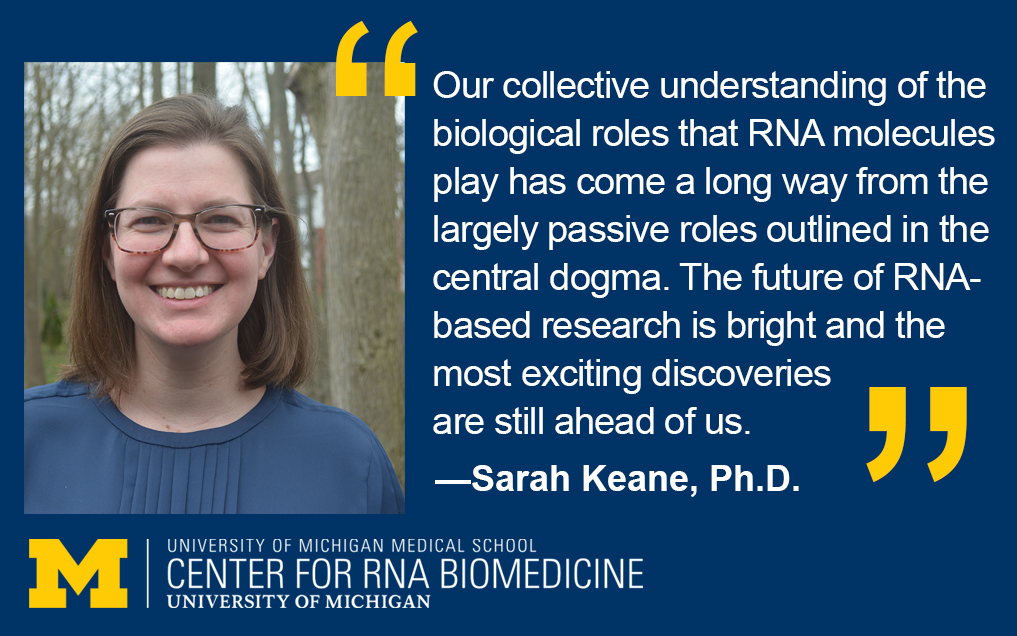
Sarah Keane, Ph.D., serves as Assistant Professor of Biophysics and the William R. Roush Assistant Professor of Chemistry at the University of Michigan's College of Literature, Science, and the Arts (LSA). She leads the Keane Lab, which operates at the intersection of biophysics and chemistry with a focus on RNA structural biology and its implications in health and disease.
Her research centers on deciphering how RNA molecules fold into three-dimensional structures and how these conformations dictate biological function. Using nuclear magnetic resonance (NMR) spectroscopy as a primary tool—complemented by small-angle scattering, computational modeling, and chemical probing techniques—her lab tackles historically challenging RNA targets including microRNAs, riboswitches, and viral RNA elements. Current investigations span microRNA processing mechanisms, RNA-small molecule interactions for therapeutic targeting, and the structural basis of RNA-protein complexes in gene regulation.
Analysis of her 15 most recent publications reveals a dominant focus on microRNA structural dynamics (particularly miR-20a, miR-31, and oncomiR-1), riboswitch functionality in bacterial pathogens like Listeria monocytogenes, and methodological innovations in RNA structural analysis. Her work consistently bridges biophysical characterization with biomedical relevance, especially in cancer and infectious disease contexts.
- Pew Scholar in the Biomedical Sciences (2020)
- NSF CAREER Award: Mechanisms of RNA-mediated control of gene expression in bacteria (2020)
Dr. Keane actively recruits undergraduate students, graduate students, and postdoctoral researchers for her lab, emphasizing passion for learning over prior technical expertise. Her NSF CAREER grant supports both cutting-edge RNA research and educational initiatives training the next generation of structural biologists. She is an integral member of the University of Michigan's vibrant RNA community, collaborating across departments through the Center for RNA Biomedicine.
The Keane Lab maintains strong ties with the Center for RNA Biomedicine and leverages university core facilities including the Bru-Seq Lab and SMART Center for single-molecule analysis. Her research program combines wet-lab structural biology with computational approaches to tackle RNA targets previously considered 'undruggable,' positioning her team at the forefront of RNA therapeutics development.