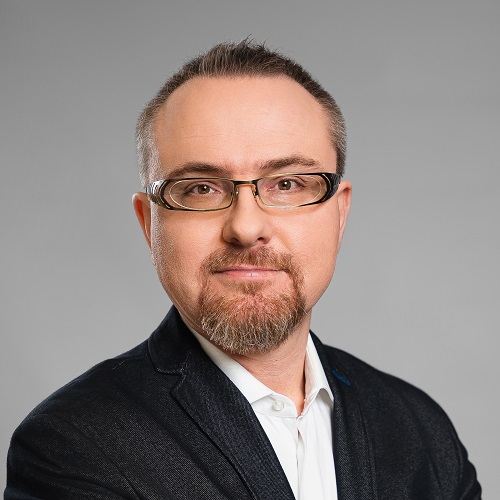
Janusz Bujnicki is a Professor and head of the Laboratory of Bioinformatics and Protein Engineering at the International Institute of Molecular and Cell Biology in Warsaw (IIMCB), Poland. He holds concurrent roles in science policy advisory bodies, including the European Commission's Group of Chief Scientific Advisors (2015-2020, then expert) and the Polish Academy of Sciences’ advisory panel (2024-). He is also a founding member of the Association of ERC Grantees (AERG) and serves on the Scientific Advisory Board of Life Science Center at Vilnius University. Academia Europaea Member (2018-) EMBO Member (2018-) Leadership Academy for Poland (2018) His research spans structural biology, RNA modification, computational biology, and molecular evolution. He has pioneered computational methods like ModeRNA, SimRNA, and ClaRNA for RNA structure prediction and analysis, and developed databases like MODOMICS for RNA modification pathways. His work has applications in understanding RNA function and drug design targeting RNA-processing enzymes. The 15 most recent publications focus on RNA structural modeling (e.g., ModeRNA, ClaRNA, SupeRNAlign), RNA-ligand interactions (LigandRNA), and RNA modification biology (MODOMICS database). These works bridge computational methods with experimental validation in RNA enzymology and structure-function relationships. Scientific Awards: ERC Starting Grant (2010), EMBO Member (2018), Crystal Brussels Sprout (2016), Prime Minister’s Award (2014), Knight’s Cross of Polonia Restituta (2014) Grants & Leadership: Founded RNA bioinformatics infrastructure at IIMCB, led EU science policy advisory groups, and organized international research competitions (RNA Puzzles)
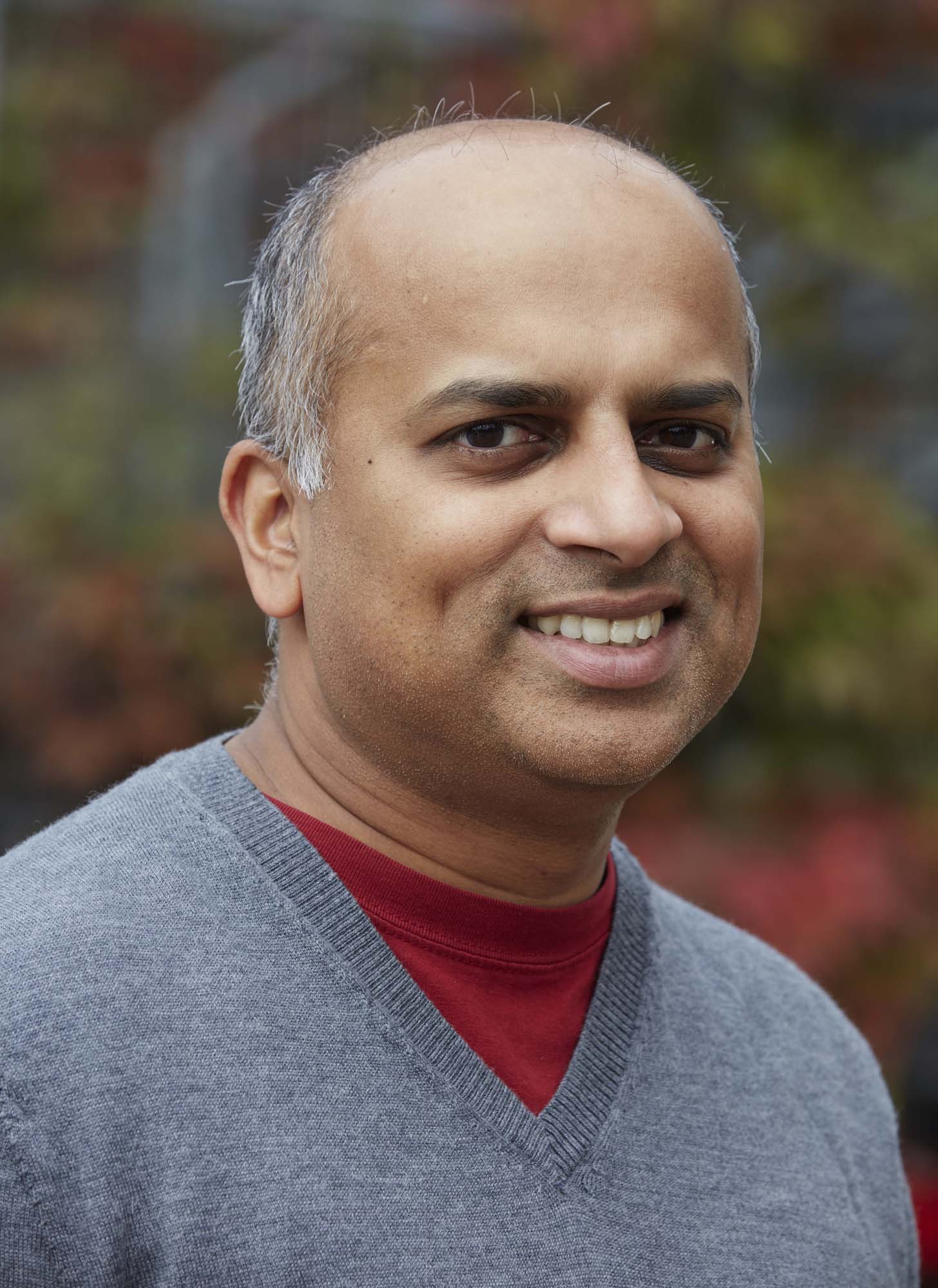
Ramesh Shanmughom Pillai is a Full Professor at the Department of Molecular Biology, University of Geneva, Switzerland. He holds additional roles as a Visiting Professor at the University of Kumamoto, Japan, and has been a Group Leader at EMBL Grenoble and a postdoctoral fellow at the Friedrich Miescher Institute. His research focuses on RNA modifications, epigenetics, and piRNA pathways in germline biology. Pillai has received prestigious awards including the ERC Consolidator Grant and The RNA Society Scaringe Award. Education: BSc Botany (University of Kerala, India) MSc Biotechnology (IIT Roorkee, India) PhD in Cell Biology (University of Bern, Switzerland) Research Interests: Pillai’s work centers on RNA biology, particularly the role of RNA modifications (e.g., m6A, m6Am) in development and fertility. He investigates piRNA biogenesis, transposon silencing, and the molecular mechanisms of RNA-protein interactions. His studies bridge biochemistry, genetics, and structural biology to elucidate how RNA molecules regulate critical biological processes. Teaching & Service: At the University of Geneva, he teaches Molecular Biology courses (BSc/MSc levels) and advises 5 PhD students and 4 postdocs. He chairs the ERC Consolidator Grant Review Panel and organizes major conferences like the PIWI/piRNAs Meeting and Swiss RNA Workshop. Pillai also serves on editorial boards for Nucleic Acids Research and RNA . Awards: ERC Consolidator Grant (2015) Best PhD Thesis Award (2003) RNA Society Scaringe Award (2005) Grants & Labs: Funded by ERC Starting and Consolidator Grants, his lab explores RNA modification networks in germ cells. Former trainees include Professors Simon Conn (Flinders University) and Hao Wu (CAS, China).
Professor Thierry Langer is a Full Professor of Pharmaceutical Chemistry at the University of Vienna’s Faculty of Life Sciences (Department of Pharmaceutical Sciences). He leads research in computational drug design, with a focus on pharmacophore modeling, 3D-QSAR analysis, and AI-driven molecular design. His work bridges theoretical and experimental chemistry, addressing targets like viral proteases (e.g., SARS-CoV-2), GABA receptors, and dopamine transporters. Research interests include: Pharmacophore-guided drug discovery for anti-viral and CNS therapies Development of next-generation computational tools (e.g., PharmacoMatch, QPhAR) Protein-ligand interaction modeling using neural networks and graph-based algorithms Recent studies focus on: Inhibitors for herpesvirus nuclear egress complexes, AI-optimized antivirals, and dopamine transporter inhibitors for cognitive enhancement. His lab collaborates on projects like the NeuroDeRisk initiative to de-risk neurotoxic compounds. Publications emphasize drug repurposing, metabolic pathway analysis, and scalable synthesis methods for promising drug candidates.
Matthias Peter is a Professor of Biochemistry at ETH Zurich, leading research into mechanisms governing cell growth and division. His laboratory focuses on ubiquitin-dependent regulation of DNA replication and mitosis, and autophagy's role in cellular quality control. He chairs the Department of Biology (2011-2015) and holds leadership roles in Switzerland's research infrastructure, including Vice Chair of ScopeM's microscopy platform. His academic career includes roles at ISREC (1996-2002) and postdoctoral training at UCSF (1991-1996). Education: PhD in Biochemistry from ISREC (1991), ETH Zurich diploma in Gene Technology (1987). Research interests span molecular mechanisms of cell division, ubiquitin systems, and autophagy. Awards include ERC Advanced Grant (2011) and UBS Excellence in Research (2002). Leadership: Member of Swiss National Research Council, SNF selection committee, and SWTR council. Over 20 years of committee service in national research programs. His lab's work is published in top journals like Science, Nature, and Molecular Cell.
Theresa Scharl-Hirsch is a Senior Scientist and Deputy Scientific Director at the Core Facility Bioinformatics, University of Natural Resources and Life Sciences, Vienna (BOKU). She holds concurrent appointments at the Institute of Statistics, BOKU, and has extensive experience in bioprocess modeling, machine learning, and statistical computing. Her work bridges biochemical engineering with advanced data science methodologies. Her research focuses on real-time monitoring of biopharmaceutical processes, clustering of high-dimensional data (particularly RNA sequencing), and application of explainable machine learning techniques. She has developed statistical models for process optimization and quality prediction in antibody capture and protein purification, with a strong emphasis on industrial implementations using R programming. Key trends in her publications include three-way data analysis, matrix-variate Gaussian mixture models, and permutation-based variable importance methods for deep learning architectures. Her work spans bioprocess engineering, bioinformatics, and industrial data science applications.
Ulrike Kutay is a Full Professor of Biochemistry at ETH Zurich, Switzerland, with a research focus on nuclear biology and dynamics. Her work investigates nuclear envelope structure/function, ribosome biogenesis, and nucleo-cytoplasmic transport. Diploma in Biochemistry (Free University Berlin, 1992) PhD in Natural Sciences (Humboldt University Berlin, 1996) Research interests center on nuclear compartmentalization, including mitotic nuclear envelope breakdown and reassembly, ribosome assembly pathways, and the molecular mechanisms governing nuclear transport. Her lab explores how nuclear dysfunction contributes to diseases like ribosomopathies and cancer. Recent publications highlight her work on SUN/KASH proteins in nuclear envelope dynamics, ribosome biogenesis steps, and nuclear pore complex regulation. Collaborations with groups like the Spahn lab in Berlin underscore her interdisciplinary approach. EMBO Member (2010) Leopoldina Member (2012) ERC Advanced Grant (2012) As a mentor, she has supervised PhD students including Chiara and Roja. She actively participates in editorial boards, grant review panels (e.g., ERC, DFG), and institutional leadership roles at ETH Zurich and the Biochemistry Center Heidelberg. The Kutay Group at ETH Zurich combines proteomics, functional analyses, and structural studies to unravel nuclear processes, fostering a collaborative environment with recent achievements in mitotic nuclear disassembly and ribosome maturation research.
Andreas Richter is a Professor affiliated with the Department of Microbiology and Ecosystem Science and the Department of Analytical Chemistry within the Faculty of Chemistry. His research focuses on soil microbiology, climate change impacts, microbial ecology, and biogeochemical processes. Key interests include soil organic carbon dynamics, microbial responses to environmental stressors (e.g., drought, warming), and permafrost thaw effects on nitrogen cycles. He has led or co-led 12 projects, including studies on permafrost nitrogen cycling, Arctic microbial growth, and European polar research coordination. His research contributes to UN Sustainable Development Goals related to climate action and life on land. Richter’s recent work explores drought impacts on plant-soil carbon allocation, microbial community shifts under climate change, and metatranscriptomic techniques for quantifying soil microbiomes. His activities include keynote lectures and presentations on soil systems ecology and Arctic microbiology. His publications (285+ articles) span journals like Global Change Biology , Soil Biology and Biochemistry , and Molecular Ecology Resources , emphasizing interdisciplinary approaches to environmental challenges.
Javier Caceres is a Professor of RNA and Gene Expression holding a Personal Chair at the MRC Human Genetics Unit within the Institute of Genetics and Molecular Medicine (IGMM) at the University of Edinburgh. He has served as Head of the Genome Regulation Section since 2015, leading research on RNA-mediated genetic mechanisms. His educational background includes a Ph.D. in Molecular Biology (1989) and an MSc. in Biology (1985), both obtained from the University of Buenos Aires. These degrees established his foundation in molecular genetics before his postdoctoral work at Cold Spring Harbor Laboratory and the University of Wisconsin-Madison. Dr. Caceres' research centers on RNA biology with emphasis on post-transcriptional gene regulation. His work investigates alternative splicing mechanisms, nonsense-mediated decay pathways, microRNA functions, and RNA-protein interactions. These studies provide critical insights into genetic disorders and potential therapeutic targets, particularly in splicing-related diseases. His experimental approaches combine biochemical, genomic, and cellular techniques to dissect RNA regulatory networks. Analysis of his publication record reveals consistent focus on RNA processing mechanisms across three decades. His work demonstrates evolving technical sophistication from foundational splicing studies to contemporary systems-level analyses of RNA regulation, with sustained contributions to understanding how RNA dysregulation causes human disease. Key themes include RNA-binding proteins, mRNP dynamics, and quality control pathways. His major scientific recognitions include: Election as Fellow of the Royal Society of Edinburgh (FRSE) in 2011 Award of the Wellcome Trust Senior Investigator Award in 2011 Membership in the European Molecular Biology Organization (EMBO) since 2008 Dr. Caceres actively shapes scientific discourse through editorial leadership as Associate Editor of RNA (since 2011) and service on editorial boards of EMBO Journal and Nucleic Acids Research. He has evaluated research proposals for major funding bodies including the European Research Council (ERC Starting Grants panel), German Research Foundation (DFG), and Swiss National Foundation, focusing on molecular biology and RNA research initiatives. He directs the Genome Regulation Section at the MRC Human Genetics Unit, where his team employs cutting-edge methodologies to investigate RNA-mediated gene regulation mechanisms and their roles in human disease pathogenesis.
Thomas Carell is a Professor of Organic Chemistry at the Faculty of Chemistry and Pharmacy, Ludwig Maximilian University of Munich, Germany, a position he has held since 2003. He has established himself as a leading researcher in the fields of epigenetics, DNA repair mechanisms, and prebiotic chemistry. His work bridges chemistry and biology, with significant contributions to understanding epigenetic modifications and the origins of life. Dr. Carell's educational background includes chemistry studies at Münster and Heidelberg Universities, where he completed his PhD under Professor Staab. He then pursued postdoctoral research at MIT with Professor J. Rebek, focusing on chemical compound libraries and projects bridging chemistry and biomedicine. Professor Carell's research interests center on the chemical analysis of epigenetic modifications and processes, particularly focusing on DNA/RNA lesion processes using nucleotide analogues, tracers, and high-end mass spectrometry. His laboratory has made groundbreaking contributions to understanding prebiotic chemistry and the origins of life, developing innovative technologies for non-canonical nucleoside and nucleotide synthesis. A significant portion of his work explores the organic chemistry of modified nucleosides and nucleotides, with implications for understanding fundamental biological processes and potential therapeutic applications. His research has evolved from early work on nucleic acid chemistry at ETH Zurich to pioneering studies on photolyase reactions and DNA repair at Marburg, culminating in his current work on epigenetic control mechanisms and prebiotic chemistry at LMU Munich. His extensive publication record demonstrates a consistent trajectory of high-impact research, with articles appearing in top-tier journals including Nature, Science, and Cell. The research themes span from fundamental organic chemistry to biological applications, with a particular emphasis on epigenetic mechanisms and prebiotic chemistry. His most recent work suggests an early RNA-peptide world, potentially revolutionizing our understanding of life's origins, building on his earlier discoveries regarding DNA lesion-induced mutations, DNA repair mechanisms, and epigenetic control via oxidative DNA methylation. Professor Carell's scientific achievements have been recognized with numerous prestigious awards: Supervisory Board member of BASF SE (2019) Alexander Todd-Hans Krebs Lectureship, Royal Society of Chemistry (2017) Windaus Memorial Lecture, Göttingen (2017) Inhoffen-Medal for Excellence in Natural Product Research of the Helmholtz Society (2016) Gait-Lecture Award, Royal Society of Chemistry (2014) Werdelmann Lecture, University-Essen Duisburg (2013) Melvin Calvin Lecture in Organic Chemistry, University of California, Berkeley (2011) Šorm Award of the Academy of Sciences of the Czech Republic (2011) Order of Merit from the Federal Republic of Germany (2010) Van 't Hoff Lecture, Royal Dutch Academy of Sciences (2009) Ferdinand Lecture, University of Sheffield (2008) Otto Bayer Award, Bayer Schering Foundation (2008) Philip Morris Research Award (2006) Gottfried Wilhelm Leibniz Award of the DFG (2004) Lady Davis Award, Technion, Israel (2004) Pasteur Medal of the JCO, Ecole Polytechnique (2001) Professor Carell leads an active research group (the Carell Group) at LMU Munich, supervising numerous PhD and Master's students working at the intersection of chemistry and biology. His laboratory has secured significant research funding to support their innovative work on epigenetic modifications, DNA repair mechanisms, and prebiotic chemistry. The group maintains strong international collaborations, as evidenced by Professor Carell's numerous visiting professorships at institutions worldwide, including University Descartes in Paris, Australian National University, Consiglio Nazionale delle Ricerche in Bologna, and Technion Israel Institute of Technology. The Carell laboratory operates state-of-the-art facilities for organic synthesis, mass spectrometry, and molecular biology, enabling their interdisciplinary research approach. The group consists of chemists, biochemists, and molecular biologists working collaboratively to address fundamental questions in chemical biology. Professor Carell's election to the Supervisory Board of BASF SE in 2019 highlights the translational impact of his research and his standing in both academic and industrial chemistry communities.
Sebastian Falk is an Associate Professor at the Max Perutz Labs, part of the University of Vienna, within the Department of Structural and Computational Biology. His research focuses on the biogenesis and action of small RNAs, particularly piRNAs, employing structural biology and biochemical approaches to elucidate molecular mechanisms. He received the prestigious EMBO Young Investigator award in 2022. His lab investigates RNA surveillance pathways, mRNA splicing, and the interplay between RNA processing and degradation. Key projects include studying the MTR4-NRDE2-CCDC174 complex and piRNA processing factors in C. elegans. Falk has organized major symposia on RNA biology and contributed to high-impact publications in journals like Nature and Nucleic Acids Research . EMBO Young Investigator (2022) Grants: 'Characterization of piRNA processing factors in C. elegans' (2023-2026)
Jory Lietard is an Assistant Professor in the Department of Inorganic Chemistry at the Faculty of Chemistry. His research focuses on nucleic acid chemistry, RNA/DNA microarray synthesis, and light-directed chemical synthesis. He leads three major research projects: FANArrays (2022–2025), RNA arrays: die nächste Generation, and Large libraries of base-modified RNA for Nanopore sequencing (2021–2024). His work contributes to UN Sustainable Development Goals related to sustainable innovation in biosensors and biotechnology. Education: PhD (Privatdozent title) Key Projects: FANArrays: High-throughput platform for nucleic acid synthesis (2022–2025) RNA arrays: Next-generation RNA microarray development Base-modified RNA libraries for nanopore sequencing (2021–2024) Research interests include nucleic acid photolithography, biosensor design, and enzymatic synthesis of oligonucleotides. Recent advancements include color-corrected optical systems for high-resolution nucleic acid printing and accelerated RNA microarray synthesis. Collaborations span material science, optics, and synthetic biology. Media contributions include expert commentary on RNA chip innovations and DNA-based art (e.g., 16 million color palette creation). He actively engages in scientific presentations, including posters at international conferences on photolithography and enzymatic synthesis.
J. S. Sinninghe Damsté is a Professor of Organic Geochemistry at Utrecht University and a Senior Scientist at the NIOZ Royal Netherlands Institute for Sea Research. His research bridges biology, geology, and chemistry, focusing on microbial ecology, paleoclimate proxies, and lipid biomarkers. He pioneered techniques like the TEX86 sea surface temperature proxy and MAT index for continental paleothermometry. Education: PhD in Organic Geochemistry from TU Delft (1988), specializing in organically-bound sulfur in the geosphere. Key roles include department headships at NIOZ and leadership in major grants like ERC Advanced Research Grants (2008, 2016) and Dutch Gravitation Awards (2013). Research highlights include discovering archaeal nitrification, tetraether/ladderane lipids, and biomarkers for Thaumarchaeota. His work has transformed understanding of oceanic nitrogen cycles and diatom evolution. Awards include the Heineken Prize (2014) and Treibs Medal (2005). Advising: Supervised PhD students such as Wuchter C., Abbas B., and Witkowski C.R., contributing to studies on archaeal nitrification and paleoclimatic CO2 trends. Grants include €28M for the Netherlands Earth System Science Centre. Labs/Teams: Leads the Marine Microbiology & Biogeochemistry group at NIOZ, integrating lipidomics with environmental and evolutionary studies.
Joan Steitz is the Sterling Professor of Molecular Biophysics and Biochemistry at Yale University and an Investigator at the Howard Hughes Medical Institute. She holds affiliations with the Yale School of Medicine, the Center for RNA Science and Medicine, and the Yale Cancer Center. Her career includes roles such as Department Chair and leadership in organizations like the American Society for Cell Biology. Education: PhD in Biochemistry from Harvard University (1967); BS from Antioch College (1963). Postdoctoral training at the MRC Laboratory of Molecular Biology, Cambridge. Research focuses on RNA-protein complexes, particularly snRNPs and their roles in RNA processing, viral oncogenesis, and gene expression. Notable discoveries include defining mRNA splicing mechanisms and characterizing noncoding RNAs in herpesviruses. Publications highlight advancements in RNA biology, viral RNA interactions, and stress-induced transcription. Over 300 peer-reviewed articles span molecular biology, virology, and biochemistry. Awards include the Wolf Prize (2021), Lasker Award (2018), and membership in the National Academy of Sciences (1983). Her lab at Yale explores RNA structure-function relationships and viral RNA mechanisms.
Bojan Zagrovic is a Professor at the Department of Structural and Computational Biology , University of Vienna. His research focuses on the interplay between protein structure, RNA interactions, and molecular dynamics, particularly in phase separation, enzyme mechanisms, and disease-related mutations. Key research areas: Structural Biology, Computational Biophysics, RNA-Protein Interactions, Phase Separation, and Protein Aggregation. Recent work includes studying FUS RGG3 phase separation, α-mannosidase pathophysiology, and SPOC domain interactions. His publications span molecular dynamics simulations, RNA modifications (e.g., N6-methyladenosine), and structural insights into ciliary proteins like CFAP410. He teaches courses in computational structural biology, molecular biophysics, and quantitative biology.
Kristina Djinovic Carugo is a Full Professor of Structural Biology at the University of Vienna , affiliated with the Department of Structural and Computational Biology at Max F. Perutz Laboratories. Her career spans leadership roles including Head of Department (since 2009), Director of the Laura Bassi Center for Optimized Structural Studies (2010-2016), and Head of Structural Biology and Crystallography Unit at Sincrotrone Trieste (1999-2004). Education : PhD in Chemistry (1992, University of Ljubljana); Master's (1989, University of Ljubljana); Diploma in Chemistry (1986, University of Ljubljana) Her research focuses on structure-function analysis of metallo-enzymes involved in cellular protection, structural biology of actin-based cytoskeleton with emphasis on muscle Z-disk assembly, and X-ray induced radiation damage in protein crystals. Key techniques include X-ray crystallography, cryo-EM, and integrative structural approaches. Recent work explores liquid-liquid phase separation in sarcomeric Z-disc formation, Filamin C regulation by HSPB7 , and automated structural analysis tools like chalcogen bond detection in AlphaFold models. She has contributed to understanding protein interactions in hemidesmosomes, sarcomere mechanics, and redox-sensitive structural dynamics. Scientific Recognition : EMBO long-term postdoctoral fellowship (1995) Laura Bassi Center of Expertise (2010) EMBO member (2016) Her institutional roles include appointment committee memberships for tenure-track and professorship positions at Austrian universities and leadership in the Protein Technology Facilities user committee. Publications span high-impact journals including Science Advances, Cell, and PNAS, with over 145 peer-reviewed papers and an H-index of 44.