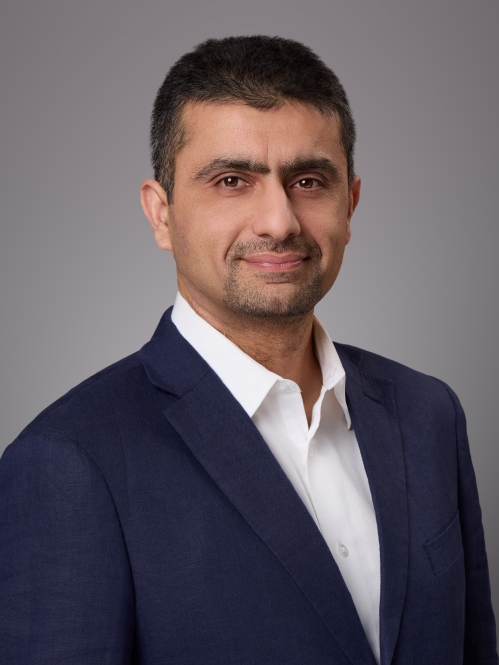
Paweł Ślaski is an Assistant Professor at the Military University of Technology. His research focuses on security logistics, military logistics, supply chain planning, and inventory management. He has published 54 articles, supervised 72 theses, and contributed to 1 project. His work addresses challenges in logistics processes, including eco-efficiency in transportation, pandemic-driven inventory management, and strategic material stockpiling for national security. Key research areas include process modeling using BPMN/eEPC, RFID technology applications in logistics, and economic analysis of supply chains under inflation. He has explored creative educational methods for logistics students and applied Monte Carlo methods to spare parts management. His publications span topics like defense technology assessment, crisis management in education during pandemics, and optimization of group order processes. Dr. Ślaski’s contributions include developing models for defense systems, analyzing transportation GHG emissions, and improving emergency preparedness through inventory strategies. His interdisciplinary approach bridges logistics, environmental science, and national security.
Dr. Mahmut Ahmet GÖZEL is an Assistant Professor at the Department of Electrical and Electronics Engineering, Suleyman Demirel University. He holds a BSc (2011), MSc (2015), and PhD (2020) from the same university. His research focuses on RF circuit design, microwave engineering, and energy harvesting with applications in environmental monitoring, biomedical systems, and wireless communication. He has been actively involved in academic roles since 2013, transitioning to his current faculty position in 2022. Education: BSc: Electronics and Communication Engineering, Suleyman Demirel University (2011) MSc: Electronics and Communication Engineering, Suleyman Demirel University (2015) PhD: Electronics and Communication Engineering, Suleyman Demirel University (2020) His research interests include antenna design, RF energy harvesting, and frequency-selective surface applications. Notable projects involve 3D-printed microwave probes for water level detection, adaptive RF filters using varactor diodes, and biomaterial-based electromagnetic absorption studies. He has contributed to over 15 peer-reviewed articles in journals like Sensors and Actuators A: Physical and Microwave and Optical Technology Letters. His work emphasizes practical applications such as automotive oil level monitoring systems and recycling Tetra Pak waste for electromagnetic shielding materials. Collaborations with industry highlight his commitment to bridging theoretical research with real-world engineering challenges.
Kip Coonley, Ph.D., is an Assistant Professor of the Practice at Duke University, holding joint appointments in the Thomas Lord Department of Mechanical Engineering and Materials Science and the Department of Electrical and Computer Engineering. He has been at Duke since completing his Ph.D. there in 2023, following earlier degrees from Bates College (B.S., 1997) and Dartmouth College (M.S., 1999). His work focuses on interdisciplinary engineering education, with emphases on microelectronics, energy harvesting systems, and innovative laboratory curriculum design. He has pioneered hands-on learning initiatives like the BYOE (Build Your Own Electronics) program and contributed to Duke’s ECE curriculum redesign, emphasizing integrated sensing and information processing themes. His research also explores electrostatic oscillators, thermoelectric materials, and RF data link systems. Over 25 years, Dr. Coonley has taught 10+ courses, including foundational labs in electrical fundamentals, signals and systems, and microelectronic devices. His 40+ publications span educational pedagogy, device physics, and engineering systems, with notable contributions to ASEE conferences and IEEE Transactions on Education . He collaborates extensively on NSF-funded curriculum projects and maintains active partnerships with industry for applied research.
Jun-Chau Chien is an Assistant Professor of Electrical Engineering and Computer Science at the University of California, Berkeley, and holds the Weber Family Engineering Faculty Fellowship. He is affiliated with the Berkeley Sensor & Actuator Center (BSAC) and the Berkeley Wireless Research Center (BWRC). His research bridges integrated circuits with bio- and quantum technologies, focusing on biosensors, molecular engineering, and mm-wave ICs for biomedical and quantum applications. Education: B.S. and M.S., National Taiwan University Ph.D. in Electrical Engineering, UC Berkeley (2015) Postdoctoral Training, Stanford University (2016–2017) Prior Experience: Research Engineer, Stanford EE (2017–2021) Assistant Professor, National Taiwan University Industrial roles at Xilinx, InvenSense, LifeSignals, and INanobio Research Interests: Analog/mixed-signal IC design for biomedical applications Bioelectronics and implantable/ wearable sensors RF/mm-wave circuits for quantum interfaces and medical imaging CMOS-microfluidics integration for point-of-care diagnostics Advanced calibration techniques for high-frequency devices Awards: 2022 IEEE BioCAS Best Paper Award 2019 IEEE CICC Outstanding Paper Award NSF CAREER Award (2025) MTT-S Graduate Fellowship (2014) Lab & Outreach: Chien Lab focuses on bio-IC convergence and quantum interfaces Develops wearable/implantable biosensors and mm-wave imagers Hosts community outreach programs for junior high/high school students He teaches EE 194 and EE 290 on integrated circuit testing and is actively involved in ISSCC technical committees.
Vivek Subramanian is a professor of electrical engineering, currently affiliated with Ecole Polytechnique Federale de Lausanne (EPFL), Switzerland, while maintaining an adjunct appointment at UC Berkeley. He holds a B.S. from Louisiana State University (1994), and M.S./Ph.D. from Stanford University (1996/1998). He co-founded Matrix Semiconductor in 1998 and joined UC Berkeley’s EECS faculty in 2000, progressing through ranks of Assistant (2000–2005), Associate (2005–2011), and Full Professor (2011–2020) before his move to EPFL. His research focuses on physical electronics, power systems, and integrated circuits, particularly in printed electronics, semiconductor materials, and flexible devices. Notable contributions include gravure-printed transparent conductors, solution-processed transistors, and RFID technologies. He has authored/co-authored over 200 publications and patents, earning awards like the IEEE Kiyo Tomiyasu Award (2015), NSF CAREER Award, and MIT TR100 (2002). Education: Ph.D. Electrical Engineering, Stanford University, 1998 M.S. Electrical Engineering, Stanford University, 1996 B.S. Electrical Engineering, Louisiana State University, 1994 His publications span advanced materials, transistor fabrication, and sensor technologies, reflecting expertise in both fundamental science and applied engineering. He has supervised numerous students and holds leadership roles in interdisciplinary research teams.
Mehdi Javanmard is a Professor and Paul S. & Mary W. Monroe Endowed Faculty Scholar at Rutgers University's Department of Electrical and Computer Engineering. He leads the NanoBioElectronics Laboratory, focusing on integrating micro/nanotechnologies with biomedical applications to develop low-cost, rapid diagnostic tools. His work emphasizes point-of-care diagnostics, biomarker detection, and microfluidics-based solutions. Education: PhD (Electrical Engineering) from Stanford University (2008), MS (EE) from Stanford (2004), BS (EE) from Georgia Tech (2002 with Highest Honor). Research Interests: Nanobiotechnology and BioMEMS Point-of-care diagnostics Microfluidics and electrokinetic phenomena Applications of nanotechnology in medicine Key Achievements: Recipient of DARPA Young Faculty Award (2020) and NSF CAREER Award (2019) Founded RizLab Health (2018), a startup commercializing lab-on-a-chip technologies Developed wearable biosensors and wireless diagnostic platforms Published over 50 peer-reviewed articles on microfluidics, impedance cytometry, and biosensor integration Lab Focus: The lab's innovations include nanowell-based impedance sensors, smartphone-integrated diagnostics, and wearable health monitoring systems. Current projects include DARPA-funded research on continuous biomarker monitoring and NSF-supported work on environmental sensor integration.
Prof. Dr. Senem Kurşun is a faculty member at Istanbul Technical University (ITU), currently serving as a Professor in the Department of Mechanical Engineering within the Faculty of Mechanical Engineering. She has held academic positions in both the Department of Mechanical Engineering and the Department of Textile Engineering at ITU, and has been promoted through the ranks from Research Assistant to full Professor. PhD, Computer Engineering, Université Lille 1 - Sciences et Technologies (2009) Master of Science, Industrial Engineering, Istanbul Technical University (2007) Bachelor of Science, Textile Engineering, Istanbul Technical University (2005) Her research is centered on wearable and intelligent systems, with a strong focus on e-textiles, flexible sensors, signal processing, and smart materials . She integrates machine learning and control systems into textile-based technologies for applications in healthcare, agriculture, and robotics. Her work bridges mechanical engineering, electronics, and material science to develop innovative sensor solutions. Her recent publications (2022–2023) demonstrate a consistent trend in developing textile-based sensors for humidity, temperature, and wetness detection, often using RFID and flexible electronics . These are applied in smart agriculture and human motion monitoring, reflecting her interest in real-world, interdisciplinary applications of intelligent textiles. She has received numerous scientific awards, including: Marie Skłodowska-Curie Fellowship (European Commission, 2020) ITU Academic Performance Awards (2022, 2023) Théophile Legrand International Award for Textile Innovation (2011) Systex International Student Award (1st prize, 2011) ITU ARI Teknokent Graduation Project Award (2017) Prof. Kurşun has been the Principal Investigator (PI) on multiple research projects funded by TÜBİTAK and ITU’s BAP program, focusing on developing smart textile structures for robotics, environmental sensing, and wearable electronics. She has supervised student projects and likely advises graduate students, though specific names are not listed. She has also held administrative roles, including Vice Dean and Deputy Head of Department at ITU. She is actively involved in research labs and teams focusing on e-textiles, wearable sensors, and intelligent systems , particularly through her leadership in ongoing projects like the development of textile-based motion control systems for robotic arms and low-cost flexible humidity sensors.
Jan Schöpfel is a Researcher in the Integrated Systems department at the Faculty of Electrical Engineering and Information Technology, Ruhr-Universität Bochum. His research focuses on advanced microwave and millimeter-wave systems, particularly in automotive radar technology, high-frequency integrated circuits, and SiGe-based solutions. He has contributed significantly to the development of compact, energy-efficient radar systems for automated driving applications, including innovations in power amplifiers, mixers, and phase-locked loops. His work spans topics such as harmonic radar for vulnerable road user detection, subharmonic mixing techniques, and inharmonic radar concepts for future automotive bands. Collaborations include projects on over-the-air synchronization for radar networks and low-phase-noise signal sources. He has published extensively in top journals like IEEE Transactions on Microwave Theory and Techniques and conferences such as the International Microwave Symposium (IMS). Key technical areas include SiGe BiCMOS technology, frequency multipliers, and MIMO antenna systems. His research addresses challenges in bandwidth optimization, power efficiency, and precision signal processing at millimeter-wave frequencies, with direct applications in next-generation automotive and 6G communication systems.
Premjeet Chahal is a Professor in the Department of Electrical and Computer Engineering (ECE) at Michigan State University's College of Engineering, serving as Associate Chair for Undergraduate Studies. His research focuses on terahertz and millimeter-wave electronics, flexible electronics, RFID systems, and additive manufacturing for electronics. He holds a Ph.D. from Georgia Institute of Technology (1999). Research interests include: Terahertz (THz) Electronics, Millimeter-wave Systems, RF-MEMS, BioMEMS, Flexible Substrate Technologies, and Aerosol Jet Printing applications. His work spans sensor integration, wireless communication, and advanced packaging techniques for high-frequency circuits. Recent publications (2023–2025) emphasize additive manufacturing of RF components, flexible electronics, and RFID-based sensor systems. Key themes include miniaturization, low-power design, and environmental robustness. His work bridges material science, antenna design, and IoT applications in automotive, agriculture, and health monitoring domains. No scientific awards explicitly listed in provided texts. Advising and grants: No student names or grant details explicitly stated. However, his roles suggest active involvement in undergraduate mentoring and research leadership. Lab/Team: Not explicitly named, but research interests imply collaboration in ECE's advanced electronics and sensor integration initiatives.
Huacheng Zeng is an Associate Professor in the Department of Computer Science and Engineering (CSE) at Michigan State University (MSU), part of the College of Engineering. His research focuses on computer networking, wireless communication systems, and sensing technologies with applications in IoT security, signal processing, and machine learning. He received his Ph.D. in Computer Engineering from Virginia Tech in 2015 and was awarded the NSF CAREER Award in 2019. Dr. Zeng’s work spans innovative areas such as radar-based human motion tracking (e.g., RadEye), acoustic emotion decoding, and mmWave network optimization. His recent publications address challenges in device localization, vehicular communication, and secure RFID systems. His research often integrates machine learning techniques with traditional signal processing to enhance system performance and security. Education: Ph.D., Computer Engineering, Virginia Tech (2015) Awards: NSF CAREER Award (2019) His contributions to interference management, jamming-resilient communications, and distributed inference frameworks have advanced both theoretical and applied aspects of wireless networks. While no specific grants or advising details are listed, his extensive publication record reflects active collaboration in cutting-edge research domains.
Maurizio Rebaudengo is a Full Professor at the Department of Control and Computer Science (DAUIN) of the Polytechnic University of Turin. He is a member of the PIC4SeR Interdepartmental Center for Service Robotics and holds expertise in embedded systems, fault tolerance, and sensor network applications. Research Interests: Embedded systems, fault tolerance, precision agriculture, RFID technology, wireless sensor networks, and system dependability Scientific Awards: Ramamoorthy Best Paper Award (1997) Leadership Roles: Program Chair for the 4th International EURASIP Workshop on RFID, Committee Member for Public Administration Agreements (2020-2024) Projects: Scientific Director for HONEY (Hybrid ONline tEchnologY for particle therapy), FDM (Food Digital Monitoring), IDEM (Internet of Data for Environmental Monitoring), and OPLON (Healthy Longevity Opportunities). Teaching: Course lecturer for Electronic Calculators, Computer Science, Systems Programming, and Cybersecurity at both undergraduate and postgraduate levels. His work spans IoT applications in agriculture and healthcare, focusing on low-cost sensor networks , RFID-based traceability , and cyber-physical system resilience . Recent publications emphasize particulate matter monitoring and secure communication protocols in wireless environments.
Renato Ferrero is an Associate Professor at the Department of Control and Computer Science (DAUIN), Politecnico di Torino (Polito) , with key roles as contact person for training activities and member of the PIC4SeR Interdepartmental Center for Service Robotics . His research spans Wireless Sensor Networks (WSN) , Internet of Things (IoT) , and Environmental Monitoring , supported by competitive grants like AGRITech Spoke 6 (2022-2025) and MIUR funding (2017). He has published extensively on topics including air pollution monitoring , quantum-inspired security , and agricultural technology , with recent work focusing on deep learning for mask/respirator detection and biofertilizer analysis . As an IEEE Access Associate Editor and program committee member for conferences like COMPSAC and RFID-TA, he contributes to academic governance. His teaching includes Computer Architecture (2019-2025) and Ubiquitous Computing (2019-2021) at Polito. He advises PhD students Chiara Panico and Nicola Dilillo , with projects in Data Science , Computer Vision , and AI Life Sciences .
Ertan Zencir is an Assistant Professor in the Department of Electrical and Electronics Engineering at Turk Hava Kurumu University. His research focuses on CMOS circuit design for wireless applications, including V2X communication systems, analog amplifiers, and RFID protocols. His research interests include: Analog and RF Integrated Circuit Design CMOS Technology Optimization Vehicle-to-Everything (V2X) Systems Wireless Sensor Networks Signal Processing for Communication Receivers Ertan Zencir's recent publications demonstrate expertise in high-speed op-amps, mixer linearization, and radar cross-section measurement systems. His work emphasizes low-power, high-performance designs applicable to automotive communication and wireless sensing. Scientific contributions include: Development of pole duplication technique for bandwidth extension in CMOS amplifiers IM2 injection linearization for 5.9 GHz V2X mixers Self-calibrated microbolometer readout circuits Loop sampling filters for spur reduction in frequency synthesizers He collaborates with institutions like TUBITAK, Istanbul Technical University, and Aselsan, working on both analog circuit design and RFID protocol optimization.
Ronan Farrell is a Professor in the Department of Electronic Engineering at Maynooth University’s Faculty of Science & Engineering and currently serves as Vice President Academic and Registrar. He earned a BE and PhD from University College Dublin (1993, 1998) and previously worked at ICI/Zeneca Chemicals (1993–1995) and Parthus Technologies (1998–2001) as a mixed-signal ASIC designer. His academic career at Maynooth spans from Lecturer to Professor (2016), with leadership roles as Head of Department (2012–2019) and Director of the Callan Institute (2008–2015). He leads SFI research initiatives in radio frequency electronics and sensor networks. Education: BE (1993), PhD (1998) – University College Dublin Leadership: Head of Electronic Engineering (2012–2019), Director of Callan Institute (2008–2015) Research Focus: Wireless system design, RF/mixed-signal electronics, technology transfer, and innovation. His work bridges theoretical advancements (e.g., MIMO capacity optimization) with practical applications (e.g., 5G transmitters, digital predistortion techniques). Publication Trends: Recent articles emphasize 5G wireless systems, power amplifier linearization, OFDM signal processing, and behavioral modeling. Collaborations span institutions in Ireland, Europe, and Asia, with a focus on hardware implementation and system optimization. Students & Collaborations: Mentions co-authors in publications but no explicit student list provided. Collaborates with researchers in Ireland, Germany, and China.
Nadeem Rather is a Research Fellow at the Wireless Communications and AI Research Lab, Tyndall National Institute, University College Cork (UCC), Ireland, where he has conducted research since 2019. His work focuses on developing AI-driven electromagnetic systems with emphasis on RF technologies and intelligent antenna design. His academic background includes: Bachelor’s degree in Electronics and Communication Engineering Research Master’s degree in Communication Systems PhD from University College Cork (2024) Dr. Rather’s research integrates advanced AI algorithms with electromagnetic systems to optimize RF components for emerging IoT applications. His work spans chipless RFID, NFC sensor networks, and adaptive antenna design, addressing challenges in spectrum efficiency, robust detection, and practical implementation across agriculture, healthcare, and cultural heritage domains. He bridges theoretical electromagnetic modeling with real-world sensor deployment. His publication trend reveals a concentrated focus on machine learning for electromagnetic systems, particularly in chipless RFID and NFC applications. Recent works demonstrate innovative approaches to spectrum utilization, tag design, and robust detection techniques using deep learning architectures like U-Net, with significant contributions to agricultural monitoring, museum preservation, and animal health tracking. His scientific achievements have been recognized through: Best Application of AI in a Student Project (AI Awards Ireland) Wrixon Research Excellence Bursary Postgraduate Publication of the Year Awards (2020, 2023) Best Student Research Paper, International Workshop on Antenna Technology (2021) Best Demonstration Award, VistaMilk Conference (2023) As an active IEEE Member, Dr. Rather contributes to the Wireless Communications and AI Research Lab’s mission of advancing electromagnetic systems through AI. His current projects include transparent epidermal antennas for human-centric IoT and battery-less NFC sensors for health monitoring, with demonstrated impact in cattle health tracking and museum artifact preservation.