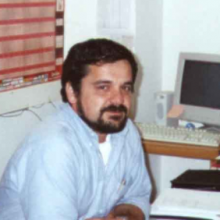
Matthias Bucher is a Professor at the Department of Electronics and Computer Architecture , School of Electronic & Computer Engineering , Technical University of Crete, Greece. His research focuses on analog/RF integrated circuit design, compact modeling, and semiconductor device physics. Education : PhD (1999) and MSc (1993) in Electrical Engineering from EPFL, Switzerland Research Areas : EKV3 MOSFET compact modeling, RF characterization, nanoscale CMOS, and high-voltage device modeling Courses Taught : Electronics II, Analog CMOS Circuit Design, Special Topics in Analog CMOS Circuit Design His work emphasizes compact modeling for RF and analog circuits, with applications in nanoscale devices and radiation-hardened electronics. Recent publications highlight open-source PDK initiatives, Verilog-A standardization, and noise modeling in advanced transistors. He leads the Electronics Laboratory at TUC and collaborates with microelectronics companies. Bucher is a member of IEEE and the Technical Chamber of Greece, with over 45 publications and two book chapters to his credit.
Michalas Loukas is an Assistant Professor in the Department of Electrical and Computer Engineering at Democritus University of Thrace since May 2024. His research focuses on the intersection of nanotechnology, microelectronics, and artificial intelligence applications, with particular expertise in RF MEMS and memristive systems. Dr. Loukas received his PhD in Physics from the University of Athens in 2009. His academic journey includes postdoctoral positions at: Institute for Theoretical Physics (2020-2024), Heraklion, Greece University of Southampton (2016-2019), United Kingdom IMM-CNR (2014-2016), Rome, Italy University of Athens (2011-2014), Greece His research spans several cutting-edge areas in nanoelectronics, with significant contributions to understanding memristive systems, RF MEMS reliability, and applying AI to nanotechnology challenges. Dr. Loukas has developed methodologies for characterizing TiO2-based memristors and RF MEMS switches, addressing critical issues in device performance and sustainability. His work bridges fundamental device physics with practical applications in next-generation electronics. Dr. Loukas leads significant research initiatives including: AIMS5.0: Artificial Intelligence in Manufacturing leading to sustainability and Industry 5.0 (HORIZON-KDT-JU-2022-1-IA, GR. No. 101112089, Period: 2023 – 2026) as Principal Investigator PRIME: Predictive reliability for high power RF MEMS (H2020-MSCA IF-2020, GR. No. 101032925, Period: 2021 – 2023) as Marie-Sklodowska Curie Individual Fellow He teaches undergraduate courses in Materials Science, Sensors, and Special Chapters in Microelectronics, as well as a postgraduate course in Modeling and Simulation of Semiconductor Devices. Beyond his research and teaching, Dr. Loukas is actively engaged in science outreach activities to promote and disseminate scientific knowledge to the general public, reflecting his commitment to broader societal impact of scientific research.
Dr. Konstantinidis George is a Research Professor and Research Director at the Microelectronics Research Group of the Institute of Electronic Structure and Laser (IESL) at FORTH, Greece. He specializes in high-frequency electronics, semiconductor heterostructures, and advanced sensor technologies. His career spans over three decades at FORTH, where he has held progressively senior roles since 1988. Education: Ph.D. in Solid State Electronics (1988), University of Salford, UK M.Sc. in Solid State Electronics (1985), University of Salford, UK B.Sc. in Applied Physics (1982), University of Salford, UK Research Interests: His work focuses on III-nitride and III-arsenide-based devices, including high-power/high-frequency transistors (FETs, HEMTs), THz diodes, quantum technologies (GaN qubits), and MEMS-based sensors. He explores 2D materials, nanowire transistors, and spin wave computing, with applications in photovoltaics, biosensing, and energy harvesting. Awards: Recipient of the Tudor Tanasescu Prize (2003) Key contributor to EU Descartes Prize-winning projects (2005, 2002) Leadership roles in national and international scientific councils Projects & Grants: European Innovative GaN Advanced Microwave Integration 3D Heterogeneous Integration for RF Power Transceivers Quantum Computing Hardware Technologies Labs/Teams: Leads the Microelectronics Research Group at IESL, collaborating on advanced packaging, 3D system integration, and smart nanoelectronics platforms.
George Souliotis is an Associate Professor at the Department of Electrical and Computer Engineering, University of Peloponnese, where he has been a faculty member since 2019. With over twenty years of professional and research experience in analog integrated circuit design, he has worked for multinational microelectronic companies and continues to serve as a consultant to companies in Greece and abroad. His expertise spans multiple domains of electronic circuit design including high-speed interfaces, RF circuits, and biomedical applications. Dr. Souliotis received his B.Sc. in Physics from the University of Ioannina in 1993, followed by M.Sc. and Ph.D. degrees in Electronics from the University of Patras in 1998 and 2003, respectively. Prior to his current position, he served as a Lecturer at the Department of Electrical Engineering, TEI of Western Greece (2015-2019), and as an Adjunct Lecturer there from 2002 to 2015. He was also a specialized technical and teaching laboratory staff member at the Department of Physics, University of Patras from 2005 to 2015. His research focuses on analog and mixed signal integrated circuit design , with particular expertise in high-speed serial interfaces (USB2, USB3, BLE, M-PHY), RF circuits operating up to 80 GHz, and low-power design. Dr. Souliotis has made significant contributions to circuits for communication protocols, precision analog design, and biomedical instrumentation. He has published over 60 papers in prestigious journals and conferences and holds two patents in the field, demonstrating consistent research productivity through 2024. Analysis of his recent publications reveals three dominant research streams: high-precision comparators and data converters, power-efficient DC-DC solutions, and biomedical interface circuits. His work consistently addresses challenges in speed, accuracy, and power consumption across diverse applications from consumer electronics to medical devices. The integration of traditional analog design with modern communication protocols represents a unifying theme across his research portfolio. Senior Member of IEEE Two patents in analog circuit design Dr. Souliotis serves as a reviewer for more than 10 international journals and conferences, contributing to scholarly discourse in his field. His industry consulting work demonstrates the practical applicability of his research, while his role in the ECSA Laboratory supports both undergraduate and graduate education in hardware design. His collaborations span academic and industrial partners in Greece and internationally. As a core member of the ECSA Laboratory (Electronics Circuits, Systems and Applications) at the University of Peloponnese, Dr. Souliotis contributes to research in FPGA and ASIC design, analog/mixed signal circuits, RF design, and digital systems for security applications. The laboratory provides essential infrastructure for advancing research in integrated circuit design while training students in state-of-the-art techniques across the analog-digital spectrum.
Yannis Papananos is a Professor at the National Technical University of Athens (NTUA) in the Department of Electrical and Computer Engineering, where he heads the Microelectronic Circuit Design Group. He holds a Diploma (1983) and Ph.D. (1988) in Electrical Engineering from NTUA, and an M.S.E.E. from Columbia University (1984). His academic career includes roles as Lecturer (1991–1995), Assistant Professor (1995–2000), Associate Professor (2000–2004), and full Professor since 2004. Research Interests: Professor Papananos specializes in analog & RF integrated circuit design, CAD for IC design, and silicon RF IC applications. His work spans wireless communication systems, microelectronics technology, and solid-state circuits, with emphasis on practical implementations for telecommunications. Publications & Projects: He has authored/co-authored over 60 technical papers and two books: Radio-Frequency Microelectronic Circuits for Telecommunication Applications (Kluwer Academic) and Design of Active Analog Filters (Greek edition). He has led multiple ESPRIT, IST, and nationally-funded research projects, collaborating with industry leaders like Siemens, Toshiba, and Hewlett-Packard. Teaching & Advising: At NTUA, he teaches courses including Electronics I/II, Analog VLSI Design, RF IC Design, and Sensors Technology. He has supervised numerous Ph.D. candidates and diploma theses. Professional Activities: Senior IEEE Member; Technical Committee member for IEEE ICECS; educational advisor for Hewlett-Packard; consultant for microelectronics firms across Europe, the US, and Japan.
Dr. Deligeorgis George is a Principal Researcher (Grade B) at the Institute of Electronic Structure and Computer Technology (IESL) of the Foundation for Research and Technology Hellas (FORTH) since 2015. He concurrently holds an Adjunct Professor position in the Physics Department of the University of Crete. His research expertise spans 2D materials, high-frequency electronics, and carbon nanotube-based devices. He earned his PhD in Physics from the University of Crete in 2008, followed by postdoctoral research at FORTH and LAAS-CNRS in France (2010–2014). His work focuses on semiconductor lasers, graphene applications, and polariton optoelectronics. He leads FORTH’s 2D materials activities and the High Frequency Measurement Facility, contributing to EU and national projects in photonics and RF device fabrication. Education: PhD in Physics (University of Crete, 2008); M.Sc. in Microelectronics/Optoelectronics (University of Crete, 2002); B.Sc. in Physics (University of Athens, 2000). Research interests include nano-electronics fabrication, microwave antennas, and nanophotonics. He has published over 60 peer-reviewed articles and co-founded Greece’s Graphene Center. His awards include IEEE membership and roles in international journals as a reviewer. His grants and projects involve EU-funded initiatives in metamaterials and RF phase shifters. He advises on nanotechnology commercialization via Micro & Nano, a tech company, and holds leadership roles in collaborative research groups.
Aperathitis Elias is a Senior Scientist and Safety Manager at the Microelectronics Research Group of the Institute of Electronic Structure and Laser (IESL), Foundation for Research and Technology - Hellas (FORTH) in Greece. He concurrently serves on the Health & Safety Committee of FORTH-Heraklion. His academic career includes Adjunct Professor roles at the University of Crete (1992–2000) and Technological Educational Institute of Crete (2000–2005). Education: Ph.D., Applied Physics, Hull University, UK (1989) M.Sc., Physics, Dundee University, UK (1984) B.Sc., Physics, University of Patras, Greece (1983) Research Interests: Focus on oxide-based materials for optoelectronic applications, including transparent photovoltaics, smart window technologies, and energy-efficient materials. Specializes in thin film deposition (e.g., sputtering), characterization of materials like VO₂ and NiO, and development of nanostructured oxides for energy storage and environmental sensing. Key themes include defect engineering in semiconductors and advanced heterostructure design for optoelectronics. Publications: Recent work emphasizes anion/cation co-doping of NiO for smart windows, Mg-doped VO₂ films for optical switching, and long-term stability analysis of ZnO homojunctions. His research bridges materials synthesis, device fabrication, and application-driven innovation in energy and environmental sectors. Awards: No specific prizes mentioned. Advising/Grants: No student advisees or grant details provided. Active in laboratory management and safety protocols within FORTH-IESL's Microelectronics Group. Labs/Teams: Core member of the Microelectronics Research Group, collaborating on projects like smart glazing materials and all-oxide optoelectronic systems.
Ioannis Papananos is a Professor at the National Technical University of Athens (NTUA), leading the Microelectronic Circuit Design Group. His roles include academic leadership, research, and teaching within the School of Electrical and Computer Engineering. He holds a PhD (1988) and M.S.E.E. (1984) from Columbia University and a Diploma in Electrical Engineering (1983) from NTUA. Research focuses on analog/RF integrated circuits, CAD tools for IC design, and wireless communication systems. He has authored/co-authored over 60 papers and books, including Radio-Frequency Microelectronic Circuits for Telecommunication Applications . Teaching responsibilities include undergraduate and postgraduate courses in electronics, VLSI design, and RF IC design. Professional activities include EC-funded research projects, collaborations with industries like Hewlett Packard and Siemens, and roles as a reviewer for IEEE journals. He has supervised numerous diploma theses and PhD students. His lab, Microelectronic Circuit Design Group, is located at NTUA’s Zografou Campus, with office B.1.11 and lab 11.24.