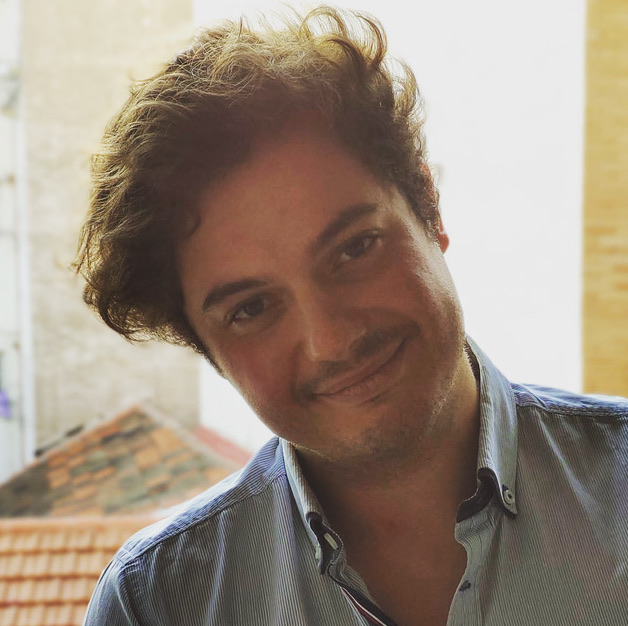
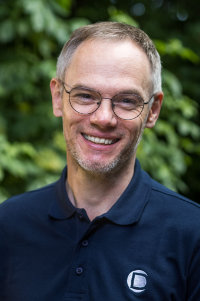
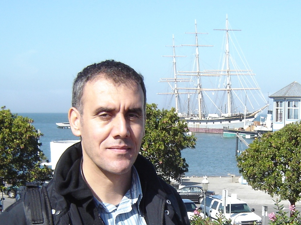
Zoi Kaoudi is a researcher at the IT University of Copenhagen , specializing in Data Management , Knowledge Graphs , and Machine Learning . Her work focuses on cross-platform data processing, query optimization, and scalable systems for graph analytics. She has published extensively in venues like SIGMOD , VLDB , and ISWC , with recent contributions to Apache Wayang , DORIAN , and Space-Efficient Graph Algorithms . Her research bridges theoretical advancements with practical frameworks for data science pipelines. Collaborations include Volker Markl, Jorge-Arnulfo Quiané-Ruiz, and Ioana Manolescu. She has explored topics such as Parameter Servers , Knowledge Graph Embeddings , and RDF Data Management in the cloud. Her work emphasizes open science and system integration.
Shqiponja Ahmetaj is an Assistant Professor in the Department of Knowledge-Based Systems at the Faculty of Informatics, TU Wien. She specializes in semantic web technologies, knowledge representation, and graph data management. Her research focuses on SHACL validation, ontology integration, and formal methods for constraint satisfaction in graph databases. Education: PhD in Computer Science, TU Wien (2019): 'Rewriting approaches for ontology-mediated query answering.' MSc in Computer Science, TU Wien (2013): 'Planning in graph databases under description logic constraints.' Roles: Course instructor for 'Introduction to Artificial Intelligence,' 'Knowledge-based Systems,' and 'Semantic Technologies.' Principal investigator in projects like FRESH (2021–2026) and SEE (2012–2016). Research Interests: Her work addresses challenges in semantic web validation, ontology semantics, and graph data evolution. She develops formal methods for SHACL constraint validation, explanation generation for non-validation, and repair algorithms. Her contributions bridge the gap between semantic web standards and practical database systems. Her recent publications focus on SHACL validation of evolving graphs , ontology-ontology interoperability , and consistent query answering under constraints . Projects like FRESH emphasize theoretical and applied aspects of SHACL in knowledge graphs. Grants & Projects: FRESH (FWF, 2021–2026): 'Shapes in Graph Data: Theory and Implementation.' SEE (WWTF, 2012–2016): 'SPARQL Evaluation and Extensions.' Advising: Supervised theses such as 'SHACL validation of evolving RDF graphs' (2023) and 'A metaheuristic approach to crowdsourced package delivery' (2023). Labs/Teams: Active in TU Wien's research groups on semantic technologies and knowledge representation, collaborating with international institutions on projects like OMEGA and KtoAPP.
David Chaves-Fraga is an Assistant Professor at Universidade de Santiago de Compostela (Spain), affiliated with CiTIUS (Center for Intelligent Technologies) and a research collaborator at KU Leuven's DTAI group. His expertise lies in Knowledge Graph Construction (KGC), focusing on declarative mapping rules, data integration, and semantic web technologies. He completed his PhD at Universidad Politécnica de Madrid in 2021, researching Knowledge Graph Construction from heterogeneous data sources. Education PhD in Artificial Intelligence, Universidad Politécnica de Madrid (2016–2021) Master in Artificial Intelligence, Universidad Politécnica de Madrid (2015–2016) Bachelor in Computer Science, Universidade de Santiago de Compostela (2011–2015) Research Interests Dr. Chaves-Fraga specializes in optimizing data integration systems using declarative rules (e.g., RML), scalable KG materialization, and benchmarking tools like KROWN. He emphasizes reproducibility and sustainability in KG creation, advocating for community-driven standards. His work bridges theory and practice, addressing challenges in real-world KG adoption. Contributions He co-chairs the W3C Knowledge Graph Construction Community Group, organizes workshops like KGC and Sem4Tra, and coordinates initiatives like Open Summer of Code. His tools (e.g., SDM-RDFizer, RMLdoc) are widely used in the semantic web community. Key themes include RDF-star generation, SHACL constraint extraction, and ontology-mapping interoperability.
Dr. Md Jobair Bin Alam is an Assistant Professor of Civil & Environmental Engineering at Prairie View A&M University, specializing in geotechnical and geo-environmental engineering. His research focuses on sustainable waste management systems, transportation infrastructure, hydro-geotechnical modeling of embankments, and problematic soil behavior. NSF Research Initiation Award ($299,267) for synthetic turf landfill closure systems Multiple Tran-SET awards ($70k, $60k, $66.687k) for rainfall-embankment interaction RISE grants ($10k) for slope stability and desiccation cracking research He leads projects involving advanced geotechnical laboratories and collaborates with Prairie View A&M's Research and Demonstration Farm (RDF) featuring an eddy covariance flux tower for environmental monitoring.
Petra Hermankova serves as an Assistant Professor in Classical Archaeology at Aarhus University's School of Culture and Society, where she also contributes to the Social Resilience Lab. Her academic appointment is active with ongoing projects through 2025 and recent publications in 2025 confirm her current faculty status. Her research focuses on digital epigraphy and the application of computational methods to ancient inscriptions. She employs text mining, machine learning, and social network analysis to study inscription functions across Graeco-Roman societies, economic history patterns, and labor specialization. Her work emphasizes FAIR and Open Science principles in archaeological data management, particularly through leadership in the Epigraphy.info initiative which develops international standards for digital epigraphy. Hermankova's publication trends reveal increasing engagement with computational approaches to ancient social networks and epigraphic big data , with recent work integrating SPARQL querying, RDF modeling, and network visualization techniques. Her research bridges traditional archaeological methods with cutting-edge digital humanities tools, focusing on Mediterranean communities from Thrace to the Roman Empire. She actively participates in major collaborative projects including The Past Social Networks Project (Carlsberg Foundation, 2022-2025), PPAP: Perachora Peninsula Archaeological Project (2019-2024), and SDAM: Small data - Big Challenges (2019-2023). Hermankova regularly organizes international workshops through Epigraphy.info and teaches practical courses in digital epigraphy methodology.
Joachim Baumeister is a Professor at the Chair of Computer Science VI - Artificial Intelligence and Knowledge Systems within the Institute of Computer Science at the University of Würzburg's Faculty of Mathematics and Computer Science. While his primary employment since September 2010 has been at denkbares GmbH, a company specializing in knowledge-based systems, he continues to regularly give lectures at the university. His research focuses on Semantic Information Systems, Knowledge Graphs, Deep Learning applications, Natural Language Processing, and Knowledge-based Configuration for Industry 4.0. Professor Baumeister's work bridges theoretical AI research with practical industry applications, particularly in knowledge-based configuration systems and semantic technologies. His recent publications (2020-2024) reveal a strong emphasis on product configuration systems, semantic knowledge representation, regulatory document processing, and knowledge-based systems. His research has evolved from foundational work on semantic wikis and knowledge engineering to more recent applications involving deep learning and large language models, demonstrating adaptability to emerging technologies while maintaining focus on practical knowledge representation problems. Professor Baumeister's work demonstrates significant contributions to case-based reasoning, knowledge configuration, and semantic technologies, with applications spanning regulatory compliance, industrial configuration systems, and document processing. His current research areas include: Semantic Information Systems and Knowledge Graphs Deep Learning for Image Recognition and Language Understanding Knowledge-based Configuration for Industry 4.0 Natural Language Processing Intelligent Personal Assistants and Chat Bots Though specific students aren't listed in the provided information, Professor Baumeister actively invites students to contact him regarding projects, bachelor theses, and master theses in his areas of expertise. His work at denkbares GmbH focuses on the design, implementation, and evolution of knowledge-based systems and semantic information systems.
Alessandro Russo is a researcher at the Institute of Cognitive Science and Technologies (ISTC) of the National Research Council (CNR) in Italy, where he contributes to the Semantic Technology Laboratory (STLab). Since 2015, he has been engaged in EU-funded projects like MARIO (Managing active and healthy aging with caring service robots), SMART VORTEX, and WORKPAD, focusing on knowledge-driven cognitive robot architectures, ontology engineering, and process-aware systems. He earned a PhD in Engineering in Computer Science from Sapienza Università di Roma (2010–2015), where he explored data-centric methodologies for Business Process Management. His research spans semantic technologies, assistive robotics, and healthcare informatics, with a strong emphasis on ontology-based knowledge management for geriatric assessment and reminiscence therapy. Alessandro has authored influential works in these domains, including foundational articles on social robot architectures and ontology design patterns for cognitive agents. His work often intersects with applications in emergency management, clinical workflows, and financial systems. Recent projects highlight his expertise in neurosymbolic AI, multimodal data integration, and software quality modeling. While no formal awards are listed, his involvement in high-impact EU initiatives underscores his role in advancing semantic and robotic technologies for societal benefit. He collaborates with interdisciplinary teams and contributes to tools like the Text2AMR2FRED pipeline for knowledge graph generation.
Vladimir Mironov is a Senior Scientist at the Norwegian University of Science and Technology (NTNU), specializing in Semantic Web technologies and their application in systems biology and bioinformatics. His work focuses on knowledge graph integration, biological data modeling, and semantic network construction. Email: vladimir.mironov@ntnu.no Email: vladimir.n.moronov@gmail.com His research interests include: Development of Semantic Web tools for gene regulatory network analysis Ontology engineering for biological knowledge management Integration of chromosome location data with functional genomics Triple store evaluation for biological datasets Recent publications highlight his contributions to: Knowledge graph frameworks for gene regulation Network analysis tools in bioinformatics Ammonia-tolerant microbial communities in biotechnology Orthology prediction algorithms Semantic data modeling for biological datasets He has actively contributed to projects like DrugLogics and Crossover Research since 2008, developing semantic tools for biomedical research, including the Cytoscape BioGateway App and Cell Cycle Ontology (CCO).
Khalid Belhajjame is a Lecturer at Paris Dauphine University, where he is a member of the LAMSADE research laboratory. His academic career spans multiple prestigious institutions, having previously worked as a researcher at the University of Manchester and completed his PhD at the University of Grenoble. His research focuses on information and knowledge management systems with applications across various scientific domains. Belhajjame's research interests center on information and knowledge management, with specific contributions to pay-as-you data integration, e-Science, scientific workflow management, provenance tracking and exploitation, and semantic web services. His work bridges theoretical computer science with practical applications in astronomy, biodiversity, and life sciences. He has developed innovative approaches to workflow management, data integration, and provenance tracking that enhance scientific reproducibility and data transparency. His publication record shows a clear trajectory of advancing scientific workflow systems and data management techniques. Recent work focuses on workflow validation, knowledge graph maintenance, bioinformatics data analysis, and privacy-aware workflows. His research demonstrates increasing sophistication in handling complex data provenance while maintaining usability and transparency. The interdisciplinary nature of his work is evident in applications spanning genomics, business process analytics, and cloud computing. Belhajjame actively contributes to the scientific community through multiple roles. He serves on the editorial board of the MethodX Elsevier journal and has participated in numerous European, French, and UK-funded projects. His leadership extends to co-leading ProvBench, a provenance benchmarking initiative, and participating in influential working groups including the W3C Provenance working group and the NSF-funded DataONE working group on scientific workflows and provenance. He has established himself as a key contributor to research object frameworks and scientific workflow standards. His collaborations span multiple continents and disciplines, reflecting the broad applicability of his work in data management and workflow systems. His current research continues to push boundaries in making scientific workflows more transparent, reusable, and privacy-preserving.
Dario Colazzo is a Professor at Université Paris-Dauphine, affiliated with the LAMSADE laboratory. His research focuses on database systems and programming languages, particularly in cloud databases, type systems for semi-structured data, and query processing optimizations. He has contributed extensively to XML and XQuery research, including parallel query execution and static analysis techniques. His teaching includes courses on programming (Java), UML, database systems, and semantic web technologies at both undergraduate and graduate levels (in French). Key research interests span XML/XQuery optimization, JSON processing, distributed systems, and type systems for safe and efficient data handling. His work emphasizes scalable cloud-based solutions and efficient query execution models. Publications highlight advancements in parallel query processing (e.g., PAXQuery), type-based optimizations for XML updates, and semantic graph analytics. He has collaborated with institutions like EDBT, WWW, and VLDB conferences.
Tim Holzheim is a researcher at the Department of Computer Science, Faculty of Mathematics, Computer Science and Natural Sciences, RWTH Aachen University, affiliated with Lehrstuhl Informatik 5 (Database and Information Systems Group). He is actively involved in teaching and research, particularly in the areas of Knowledge Graphs, Semantic Web, and data integration technologies. Institution: RWTH Aachen University School: Faculty of Mathematics, Computer Science and Natural Sciences Department: Department of Computer Science Research Group: Lehrstuhl Informatik 5 (DBIS) Email: holzheim@dbis.rwth-aachen.de His research focuses on Knowledge Graphs , Semantic Web technologies , Wikidata , RDF , and GraphQL for semantic data access . He explores methods for knowledge extraction, data integration, and enabling efficient querying and hosting of large-scale semantic datasets. His work bridges theoretical semantic modeling with practical implementation in data systems. The recent publications highlight a consistent research trajectory in semantic data engineering, particularly in making knowledge graphs more accessible, interoperable, and usable through tools for bootstrapping APIs, analyzing property structures, and semantifying academic data. His contributions appear in workshops co-located with top-tier conferences such as ISWC and ESWC. There are no listed scientific awards or honors in the provided information. Tim Holzheim is involved in academic advising and teaching, offering courses such as Datenbanken und Informationssysteme and Knowledge Graph Lab . While no formal students are listed, his supervision likely includes thesis projects and lab participants. He is also engaged in research projects such as NFDI4DS, contributing to national data infrastructure initiatives. He is a member of the Database and Information Systems (DBIS) research group led by Prof. Dr. S. Decker, which focuses on scalable and semantic data management solutions. The group is active in developing tools and methodologies for knowledge graphs, data spaces, and semantic integration.
Prof. Magnus Pfeffer is a faculty member at Hochschule der Medien Stuttgart, affiliated with the Faculty of Information and Communication and the Department of Information Science. He holds the academic rank of Professor and is actively engaged in research and teaching in information science, digital libraries, and semantic technologies. His research interests include: Semantic Web and Knowledge Graphs Metadata Management and Interoperability Knowledge Organization and Classification Systems Information Retrieval in Heterogeneous Environments Digital Humanities, particularly Japanese Visual Media (Anime, Manga, Otaku Culture) Integration of Fan-Created and Community Data His recent publications (2022–2018) reveal a strong focus on the Japanese Visual Media Graph project, which builds domain-specific knowledge graphs by integrating data from enthusiast communities using RDF, ontologies, and semantic web standards. This work bridges library science with digital humanities and addresses challenges in licensing, data harmonization, and research utility of crowdsourced metadata. Earlier works focus on automated indexing, classification system mapping, and metadata enrichment in library contexts. Scientific contributions include: Development of ontologies for anime characters, visual novels, and fan databases Legal and technical integration of open-licensed community databases Innovations in retro-classification and metadata provenance Curriculum development in information science, especially IT competencies and pandemic-era teaching He has collaborated with researchers such as Martin Roth, Senan Kiryakos, Heidrun Wiesenmüller, and Kai Eckert. While no formal list of students is provided, his supervisory role is implied through research projects and student co-authorships. He has contributed to major conferences including Dublin Core, TPDL, ECDL, and Digital Humanities. His ORCID (2-2141-6721) and GND (102572836X) identifiers confirm his scholarly presence. No awards or grants are explicitly mentioned in the provided text.
Werner Nutt is a Professor at the Free University of Bozen-Bolzano , Italy, affiliated with the Faculty of Computer Science since 2005. He previously held academic positions as a Reader at Heriot-Watt University (2000-2005), Visiting Professor at Hebrew University of Jerusalem, and Research Scientist at DFKI (1992-2000). Current Role: Professor, Free University of Bozen-Bolzano Past Roles: Reader (Heriot-Watt), Visiting Professor (Hebrew University), Research Scientist (DFKI) Research Interests focus on Data Management , Knowledge Representation , and Intelligent Information Extraction , with emphasis on modeling Construction Processes and ensuring Data Quality . His work bridges Semantic Web technologies with Business Process Management , notably through the COCkPiT project (2017-present) for construction process optimization. Key Contributions include foundational work on Query Completeness in databases, SPARQL Reasoning , and Semantic Diagnostics . He has published extensively in venues like ISWC , BPM , and CIKM , with an h-index of 35 on Google Scholar. His 154+ publications span topics from Probabilistic XML to Construction Process Modeling .
Paolo Ceravolo is an Associate Professor of Computer Science at State University of Milan, affiliated with the SEcure Service-oriented Architectures Research Lab. His research spans process mining, fairness in AI, knowledge representation, and inclusive technologies. At Human Hall, he directs the Inclusive Artificial Intelligence project and HH4AI initiative focused on human rights impact assessment under the EU AI Act. Publications address fairness assurance in data augmentation, gender bias detection in translation systems, and process mining frameworks for fraud reduction. Technical contributions include the CoSMo simulation framework for business processes and ReJOOSp for SPARQL optimization. His work combines theoretical research with practical applications in criminal investigations, healthcare systems, and regulatory compliance. Ceravolo co-founded Inpolitix (political platform development) and contributed to the Smart Bear project for elderly care monitoring.
Fabio Mogavero is an Associate Professor in Theoretical Computer Science at the Department of Electrical Engineering and Information Technology, Università degli Studi di Napoli Federico II. His research spans formal specification, verification, and synthesis of systems, with a strong focus on logics, automata, games, and database theory. Ph.D. in Computer Science, Università degli Studi di Napoli Federico II, 2011 M.Eng. in Computer Science Engineering, Università degli Studi di Napoli Federico II, 2007 B.Eng. in Computer Science Engineering, Università degli Studi di Napoli Federico II, 2005 His primary research interests include formal verification, temporal and strategic logics, automata over infinite structures, decidability, and database theory—particularly bag semantics. He has made significant contributions to the theory of parity and mean-payoff games, strategy logic, and SHACL/RDF validation. His recent work explores fragments of first-order and monadic second-order logic, and he actively publishes in top venues such as LICS, ICALP, and IJCAI. The most recent articles highlight a sustained focus on logical characterizations (e.g., automata-theoretic models for temporal logics), game-solving algorithms, and foundational database theory, especially around SHACL and multiset semantics. His work bridges theoretical computer science with practical formal methods. Scientific Awards and Recognition: Erdös number at most 3 (via Erdös → J.H. Spencer → M.Y. Vardi → F. Mogavero) Fabio Mogavero has served on the program committees of major conferences including IJCAI, AAMAS, ECAI, and LICS. He has co-edited proceedings for the Strategic Reasoning (SR) and OVERLAY workshops. He has collaborated with leading researchers such as Moshe Y. Vardi, Orna Kupferman, and Michael Benedikt. He has held postdoctoral and teaching positions at the University of Oxford and Università di Verona. He is actively involved in the theoretical computer science community through conference organization and editorial work. He maintains research collaborations across Europe and the U.S. and continues to contribute to foundational and applied aspects of logic in computer science.