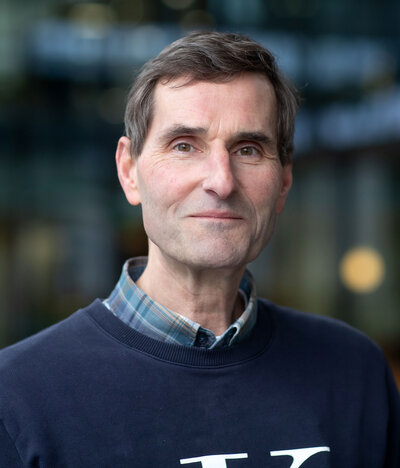
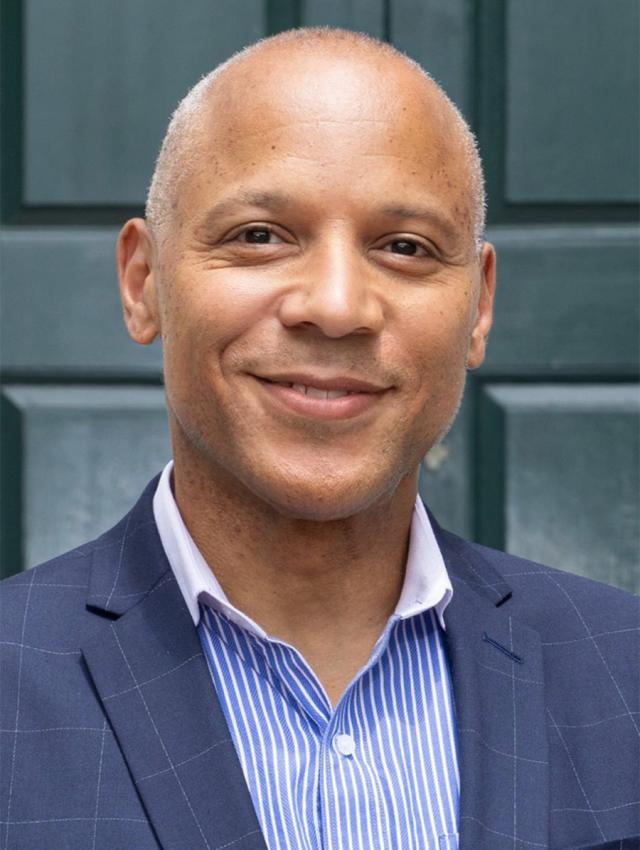
Paul Vrancken is a University Lecturer at Eindhoven University of Technology's Department of Mechanical Engineering, specializing in Control Systems Technology and Dynamics & Control. He teaches courses including Design Principles and Applications of Design Principles , while supervising Master’s and PDEng students on graduation projects related to mechanical design. Education: MSc in Mechanical Engineering (Cum Laude) from Eindhoven University of Technology (1983) Professional Background: 32 years as R&D Manager at Klaruw B.V. (road maintenance innovations), brief R&D role at Tobroco, and 3 years lecturing at Avans University of Applied Science His research focuses on applying design principles to mechanical systems and production processes, fostering innovation through education and industry collaboration. He actively advises student teams on complex engineering projects. Professional activities include: Teaching Mechanical Design Project and Principles of Design and Programming Successor to Nick Rosielle in the Constructions and Mechanism group Former R&D leadership roles in road maintenance technology development
Lauren Steimle is the Harold R. and Mary Anne Nash Early Career Professor and an Assistant Professor in the H. Milton Stewart School of Industrial and Systems Engineering at the Georgia Institute of Technology. Her expertise applies operations research and industrial engineering to public health challenges through optimization, simulation, and predictive modeling for disease prevention and healthcare system design. Dr. Steimle's educational background includes: Ph.D. in Industrial and Operations Engineering (2019), University of Michigan M.S.E. in Industrial and Operations Engineering (2016), University of Michigan B.S. in Systems Science and Engineering (2014), Washington University in St. Louis Her research focuses on operations research applications for infectious disease control (polio, COVID-19), maternal healthcare access, and medical decision making. She develops equity-centered models addressing population-level disease prevention and individual clinical strategies, with recent work emphasizing facility location, network analysis, and Markov decision processes for health system optimization. Analysis of her 15 most recent publications reveals strong thematic continuity in applying operations research to maternal health systems and infectious disease outbreaks, particularly using facility location modeling for obstetric access and simulation for polio eradication. Her work consistently integrates patient behavior and cost-awareness in low-resource settings. Dr. Steimle has received significant recognition: Best Paper of IISE Transactions Focus Issue on Operations Engineering & Analytics INFORMS Service Science Best Cluster Paper Award (Finalist) National Science Foundation Graduate Research Fellowship Georgia Tech ISyE Outstanding Teaching Award (Early Career) She actively mentors PhD students including Jingyu Li, Meghan Meredith, Abel Sapirstein, Yuming Sun, and Amaya McNealey, whose work has earned multiple conference awards including Outstanding Oral Presentations and First Place Posters at the Southeast Regional Clinical and Translational Science Conference. Her research is supported by competitive grants enabling real-world health system interventions. Dr. Steimle collaborates extensively with the Georgia Tech Center for Health and Humanitarian Systems and Emory University on maternal/child health initiatives, leveraging interdisciplinary teams to translate optimization models into actionable public health strategies for vulnerable populations.
Peter B. Flemings is a Research Scientist at the University of Texas Institute for Geophysics (UTIG) and Professor in the Department of Earth and Planetary Sciences at the Jackson School of Geosciences, University of Texas at Austin. He holds the Leonidas T. Barrow Centennial Chair in Mineral Resources and is a leading expert in geopressure, methane hydrates, and fluid flow in sedimentary basins. B.A., Geology, Dartmouth College (1984) M.S., Geology, Cornell University (1987) Ph.D., Geology, Cornell University (1990) Dr. Flemings investigates crustal fluid flow at human and geologic timescales, focusing on pore pressure prediction, methane hydrate formation, and the role of fluid dynamics in continental margin morphology. His work integrates theoretical analysis with field studies, laboratory experiments, and industry collaboration through the UT GeoFluids research consortium. His research group simulates methane hydrates in the GeoMechanics Laboratory and develops downhole technologies for ocean drilling. Recent projects include a Gulf of Mexico methane hydrate drilling initiative and studies on mudstone permeability and deformation. Scientific Awards: Robert R. Berg Outstanding Research Award Dr. Flemings leads the Genesis of Methane Hydrate Project, a multi-disciplinary effort supported by the U.S. Department of Energy, and contributes to international ocean drilling programs. He is the author of the landmark textbook A Concise Guide to Geopressure , published in 2021 by Cambridge University Press.
Ruta Mehta is an Associate Professor in the Department of Computer Science at the University of Illinois at Urbana-Champaign . Since 2016 she has led a vibrant research program in algorithmic game theory, market design, and fair division, while actively shaping the community through service roles such as Program Co-Chair of WINE 2020 and Area Chair of EC 2021. Education Ph.D. in Computer Science & Engineering, Indian Institute of Technology Bombay, 2012. (Advisors: Prof. Milind Sohoni & Prof. Bharat Adsul; ACM India Doctoral Dissertation Award 2012) M.Tech. in Computer Science & Engineering, Indian Institute of Technology Bombay, 2005 B.E. in Computer Engineering, Maharaja Sayajirao University (MSU) Baroda, 2003 Research Interests Mehta’s work lies at the intersection of theoretical computer science , mathematical economics , and social choice theory . She investigates the computability and complexity of equilibria—both market and Nash—under a variety of utility models, and designs provably efficient algorithms that are practical for real-world resource-allocation tasks. Current themes include: Algorithmic Game Theory: equilibrium computation, smoothed analysis, learning in games Fair Division: envy-freeness up to any good (EFX), mixed manna, competitive equilibrium with chores Interdisciplinary Applications: genetic evolution, machine-learning markets, climate-aware allocation Publication Trends Her 15 most recent works (2017–2025) span Operations Research , Mathematics of Operations Research , STOC, SODA, EC, ITCS, AAMAS, and NeurIPS. The articles cluster around three thrusts: (i) rigorous hardness and approximation results for market equilibrium in Leontief and PLC exchange economies, (ii) algorithmic advances toward guaranteed EFX allocations and competitive equilibrium with mixed manna, and (iii) novel game-theoretic analyses of genetic diversity and strategic resource allocation under budget constraints. Scientific Awards & Honors NSF CAREER Award (2018) Outstanding Post-Doctoral Researcher Award, Georgia Tech (2014) Rising Stars in EECS (2013) ACM India Doctoral Dissertation Award (2012) Google India Anita Borg Memorial Scholarship (2012) IBM PhD Award (2010) IBM PhD Fellowship (2009–2010) Grants, Advising, and Community Leadership Mehta currently mentors a growing group of graduate students and post-docs. She is PI on an NSF CAREER grant and has served on federal panels reviewing NSF CISE proposals. Beyond research, she founded the EC (AGT) Mentoring Workshop , co-located with the ACM Economics & Computation conference, to broaden participation of women and under-represented minorities in algorithmic game theory. Labs & Teams Her research group operates within the Theory & Algorithms cluster at UIUC, leveraging ties with the Decision & Control group and the Social & Algorithmic Thinking initiative. She is an active member of ACM SIGecom and regularly organizes reading groups on algorithmic game theory and fair division.
Professor Otto Toivanen is a Professor in the Department of Economics at Aalto University's School of Business, specializing in industrial organization with expertise in competition, innovation, and regulation. His research focuses on: Pharmaceutical market regulation R&D and innovation policy Patent systems Cartel behavior and competition policy He employs rigorous empirical methods to analyze real-world market dynamics and policy impacts. Recent publications reveal a consistent emphasis on welfare implications of regulatory interventions, particularly in pharmaceutical markets and innovation ecosystems. His work leverages micro-level data to examine R&D team dynamics, price regulation effects, and patent system reforms, bridging theoretical economics with practical policy design. Professor Toivanen teaches Introduction to econometrics and PhD-level Industrial Organization courses, training the next generation of economists in empirical methodology and industrial organization theory.
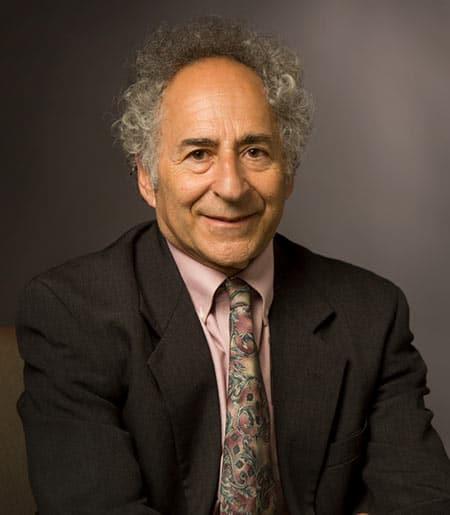
Daniel R. Schwarz is the Frederic J. Whiton Professor of English Literature and Stephen H. Weiss Presidential Fellow at Cornell University's College of Arts and Sciences, where he has taught since 1968. He holds dual affiliations with the Literatures in English department and Jewish Studies Program. His research spans British High Modernism (1890-1950), Holocaust Studies, narrative theory, and the relationship between visual arts and literature. Key interests include James Joyce, Joseph Conrad, Wallace Stevens, and the evolution of the European novel. His work emphasizes humanistic criticism and pluralistic reading approaches. Schwarz's publications reveal trends toward interdisciplinary cultural criticism, with recent work examining media transformation ( Endtimes? ) and educational methodology ( How to Succeed in College ). His scholarship consistently bridges literary analysis with contemporary cultural concerns. Cornell's Russell Award for Distinguished Teaching (1998) Stephen H. Weiss Presidential Fellow (1999) Directed nine NEH seminars Honored with festschrift Reading Texts, Reading Lives (2012) Schwarz advises the English Club and Men's Varsity Tennis Team while contributing to Presidential Research and College Scholar programs. His teaching philosophy emphasizes critical thinking, writing skills, and the enduring value of humanities education. He maintains active scholarship through Huffington Post columns on media and higher education, and continues research on European novel traditions.
Julie Chong is a Full Professor at the University of Haute-Alsace (UHA) in Colmar, France, affiliated with the Faculty of Marketing and Agrosciences. She directs the Laboratory of Vine, Biotechnologies and Environment (LVBE) and holds key administrative roles including leadership of the Master 1 'Valorization and Transformation of Agricultural Products' program and the Agronomy pole at UHA. Her academic qualifications include a Habilitation to Supervise Research (2012) from UHA on induced plant defenses in grapevine resistance to cryptogamic diseases, and a PhD in Cellular and Molecular Biology (2001) from the CNRS Institute of Molecular Plant Biology in Strasbourg, where her doctoral research focused on salicylic acid biosynthesis and pathogen-induced glucosyltransferases. Professor Chong's research program investigates molecular mechanisms of grapevine defense against trunk diseases, particularly Botryosphaeria dieback. Her laboratory characterizes defense signaling pathways (notably VvNPR1), studies the role of sugar transporters (SWEET family) in pathogen interactions, and explores resistance sources in wild grapevine species ( Vitis vinifera subsp. sylvestris ). She employs advanced techniques in molecular biology, metabolomics, and pathogen characterization to dissect host-pathogen dynamics and identify sustainable disease control strategies, with emphasis on fungal virulence factors and plant immune responses. Analysis of her 15 most recent publications (2016-2025) reveals consistent focus on effector-triggered immunity, metabolic reprogramming during infection, and biotechnological enhancement of grapevine resilience. Key themes include characterization of fungal secreted proteins, symbiotic interactions with mycorrhizal fungi, and engineering of disease resistance through transporter overexpression, demonstrating translational applications for viticulture. Her scientific contributions have been recognized with: Prime d'Excellence Scientifique (2014) from University of Haute-Alsace Innovative Project Grants from University of Haute-Alsace Professor Chong actively supervises Master's students in the 'Sciences and Technologies of Agriculture, Food and Environment' program, guiding internships and R&D projects. She serves on doctoral committees (EDSC222) and contributes to academic governance as an elected faculty council member. Her research is supported by institutional grants for innovative projects and collaborative initiatives with the regional wine industry. As Director of LVBE, she leads a multidisciplinary team investigating viticultural challenges, maintaining strong connections with the University of Strasbourg doctoral school and Alsace winegrowers to address trunk disease epidemics through integrated molecular and ecological approaches.
Timo Tammi is a Visiting Researcher at the Business School, Faculty of Social Sciences and Business Studies, University of Eastern Finland. He actively contributes to the Applied Business, Law and Economics Research Group (ABLE) and has been involved in research projects since 2018, focusing on public procurement of innovations and SME competitiveness. Role: Researcher Affiliation: Business School, University of Eastern Finland Research Interests: Tammi’s scholarly work spans public procurement, innovation management, wellness tourism, and behavioral economics. His studies explore SMEs' strategic procurement capabilities, trust dynamics in cooperative memberships, and cross-cultural motivations in wellness tourism. His research often integrates quantitative analysis with policy evaluation, addressing how e-procurement platforms and training programs can mitigate barriers for SMEs in public sector contracts. Recent Publications: His 15 most recent articles (2016–2024) cover topics such as SME market orientation in public procurement, contractual preferences in innovation projects, and wellness tourism preferences across Finland, Russia, and Lithuania. These works employ empirical methods to analyze how network partners, incentives, and cultural factors influence procurement success and tourist behavior. Grants and Projects: Tammi has participated in funded initiatives like the Karelian Wellness project (Karelia CBC programme) and research supported by the Finnish Cultural Foundation. His collaborations extend to institutions in Sweden, France, and Lithuania, reflecting his international research engagement.
Barry Rowlingson is a Research Fellow at Lancaster University Medical School , affiliated with the Chicas Research Group and DSI-Health . He specializes in spatial statistics applied to disease epidemiology and geospatial software development . Teaches Geospatial Data module for MRes in Global Health Developed online course on Spatial Statistics in R with DataCamp Focuses on open-source geospatial tools for public health Research Interests: His work bridges spatial statistical methodology and infectious disease modeling , with applications in antimicrobial resistance mapping , wastewater-based pandemic surveillance , and health inequality analysis . Recent projects include modeling ESBL-producing bacteria in Malawi and developing spatio-temporal frameworks for COVID-19 wastewater monitoring . Scientific Contributions: Over 15 years, he has developed critical R packages like stpp for spatio-temporal analysis and rgdal for geospatial data abstraction. His 2023 publications address health workforce disparities and disease transmission dynamics using advanced statistical methods. Collaborations: Works with multidisciplinary teams across Lancaster Medical School , DataCamp , and SAVSNet Agile research projects. Supervises PhD student Charlotte Appleton in biostatistics.
Sung Kyun Park, ScD, MPH is a Professor in both Epidemiology and Environmental Health Sciences at the University of Michigan School of Public Health, with additional affiliation at the Kresge Hearing Research Institute within the University of Michigan Medical School. His academic journey began at Seoul National University where he earned his BS in Food Science and Technology (1998) and MPH in Environmental Health (2000), followed by an ScD in Environmental Epidemiology from Harvard University (2005). Dr. Park's research focuses on environmental epidemiology with particular emphasis on multi-pollutant exposures and their impact on human health. His work spans several critical health domains including cardiometabolic diseases, reproductive aging in women, and neurodegenerative conditions like Alzheimer's disease. He has developed innovative statistical approaches for assessing chemical mixtures through his Environmental Risk Score (ERS) methodology. His laboratory, the Michigan Multi-Pollutant Epidemiology Group (MPEG), leads major research initiatives including the Study of Women's Health Across the Nation Multi-Pollutant Study (SWAN-MPS) and the Study of the Environment and Alzheimer's Disease and related Dementias (SEAD). These projects investigate how environmental exposures individually and as mixtures affect health outcomes across the lifespan. Analysis of Dr. Park's recent publications reveals a strong focus on chemical mixtures, particularly PFAS, heavy metals, and endocrine disruptors, and their associations with metabolic disorders, women's health outcomes, cognitive function, and neurodegenerative diseases. His work frequently employs sophisticated statistical methods to address the complexities of multi-pollutant exposures. Dr. Park serves as Principal Investigator on multiple NIH-funded research projects including R01 grants examining environmental factors in Alzheimer's disease (AG070897) and metabolic disease (ES026578), demonstrating sustained research excellence and funding success. In addition to his research, Dr. Park is actively involved in student mentorship and education, teaching advanced courses in environmental epidemiology data analysis using R programming language. His commitment to training the next generation of environmental health scientists is evident through his course development and teaching of EHS675/EPID675, EPID798, and EPID815.
Cathrine Arntzen is a Professor at the Department of Health and Care Sciences, UiT The Arctic University of Norway, and Academic Director at the Center for Care Research North. Her work spans health services research, occupational therapy, and rehabilitation within municipal healthcare systems. She contributes to projects like RehabLos and engages in co-design methodologies. Affiliation: UiT The Arctic University of Norway Directorship: Center for Care Research North Research: Rehabilitation, occupational therapy, e-health, and service co-design Her research focuses on person-centered rehabilitation, service coordination across sectors, and digital health systems. She explores user involvement, organizational factors in care delivery, and innovative models for chronic disease management, particularly in rural contexts. Recent publications address unplanned hospital admissions among elderly, digital rehabilitation tools, stroke recovery, and supported employment integration. She employs qualitative methods, mixed-method designs, and action research to analyze healthcare challenges in Northern Norway. Arntzen collaborates with multidisciplinary teams on projects such as RehabLos, which emphasizes community-based rehabilitation models for individuals with acquired brain injuries. Her work bridges academic research with municipal healthcare practice.
Professor Maurice R. Dyson is a scholar, attorney, and policy expert at Suffolk University Law School , with affiliations spanning Columbia University, Southern Methodist University, and international institutions. He specializes in Education Law , Artificial Intelligence , and Civil Rights , focusing on systemic inequality, algorithmic bias, and legal reform. Dyson's career bridges mergers and acquisitions practice with pro bono litigation , including a landmark $14 billion school finance judgment in New York City. Harlan Fiske Stone Scholar, Columbia Law School King's Crown Scholar, Columbia College His research explores AI's racial justice implications , constitutional law , and criminal justice reform , particularly in pre-sentencing algorithms and bias amplification. Articles highlight intersections between technology , equity , and legal frameworks . Scientific awards include the King's Crown Award , Kluge Award , and C. Clyde Ferguson Jr. Keynote . Dyson co-founded the Crawford Legal Institute Mentorship Bond (CLIMB) program, recognized by the White House and California State Bar , addressing the school-to-prison pipeline through mentorship and equity initiatives.
Alva H. Taylor serves as Associate Professor of Business Administration at the Tuck School of Business, Dartmouth College, where he has been tenured since 2010. He holds the dual leadership roles of Senior Associate Dean for Executive Learning and Faculty Director of the Glassmeyer/McNamee Center for Digital Strategies, Tuck's flagship initiative examining how digital technology impacts business strategy. Previously, he served as Assistant Professor (2000-2005) and Associate Professor (2005-2009) at Tuck, and as Visiting Assistant Professor at Kellogg Graduate School of Management (1997-2000). Professor Taylor earned his PhD from Stanford University's Graduate School of Business in 2000, following an MBA, ME, and BS from Cornell University in 1984, 1983, and 1982 respectively. Before academia, he worked as a Senior Manager at KPMG's consulting division, specializing in business strategy and information technology for growing companies. His research focuses on innovation processes, entrepreneurship, technological change, and strategic decision-making in fast-changing environments . Taylor has made significant contributions to understanding how organizations manage creative groups for sustained innovation, organizational learning in information-rich environments, and digital transformation in traditional enterprises. His work with comic book creators demonstrated that creators with cross-genre experience achieve greater success than specialists, highlighting the value of diverse experience in creative fields. His recent scholarship examines how nonprofits can implement digital-first strategies to enhance social impact, emphasizing the importance of aligning technology with organizational mission. Taylor teaches courses including Design Thinking for Strategic Innovation and Strategic Change in the Turbulent Digital Age in both MBA and Executive Education programs. He designed and directs the Digital Excellence for Minority Entrepreneurs Executive Education Program in partnership with Google, demonstrating his commitment to inclusive digital transformation. His research has been featured in prominent publications including the Wall Street Journal and Stanford Social Innovation Review, where he emphasizes that digital strategy must begin with a clear understanding of organizational goals before technology implementation. As Faculty Director of the Center for Digital Strategies, Taylor leads initiatives that bring together executives, academics, and students to advance management theory and practice in the networked economy. The Center explores technology's impact on product development, supply chains, marketing, and business model transformation, addressing challenges throughout the extended enterprise including globalization, information security, and organizational change. Under his leadership, the Center has hosted events like the Dartmouth AI Conference and developed programs that bridge academic research with corporate application.
Mathieu Quet is a sociologist and research director at IRD, affiliated with Ceped (University Paris Cité). His work focuses on technoscientific globalization in the Global South, with current projects including pharmaceutical uses of animal life in the Indian Ocean and "technological globalization from below." Co-responsible for Ceped's Research Axis 3: Knowledge and Markets in the South Teaches STS modules in the Population and Development Master's program at University Paris Cité Supervises 4 PhD theses applying STS approaches to South Asia and Sub-Saharan Africa His research spans pharmaceutical markets, digital studies, and postcolonial technoscience, with fieldwork in India, Kenya, and the Indian Ocean. Recent projects include GLOBALSMOG (air pollution in Global South cities) and vaccine R&D for neglected diseases. Key publication trends address biocapital extraction, digital empires, pharmaceutical regulation, and South-South circulation. He co-edits Science, Technology and Society and organizes seminars like Covid Cafes in the South and Technological Globalization from Below .
Peter Debaere is the Tipton R. Snavely Professor of Business Administration at the University of Virginia's Darden Graduate School of Business, where he serves as faculty leader for the Executive MBA program. He teaches the core Global Economies and Markets course and developed electives on Global Economics of Water and Managing International Trade and Investment. An international economist with dual expertise in trade policy and water economics, Debaere leads UVA's Global Water Initiative. His educational background includes: B.A. from KUL, Belgium M.A. and Ph.D. from the University of Michigan, Ann Arbor Debaere's research investigates fundamental questions about trade theory applicability, multinational operations, and the global economics of water scarcity. His current work examines water market mechanisms as solutions to scarcity, building on his analysis of U.S. water use patterns and cross-border water dependencies. This research bridges theoretical economics with urgent policy applications in resource management. His publication trajectory shows a strategic evolution from foundational trade theory (2003-2010) toward applied water economics (2012-2014), consistently appearing in top journals like Journal of Political Economy and American Economic Journal. Recent work integrates environmental concerns with international economics, reflecting growing policy relevance of water security issues. Debaere has received significant recognition: Multiyear Outstanding Teacher Award for consistent top 10% performance at Darden He directs the Global Water Initiative, securing a Rockefeller Grant to study water markets with The Nature Conservancy across the U.S., Chile, and Mexico. His advisory roles include the Center for German Studies' board where he addresses transatlantic environmental policy. While specific students aren't listed, his EMBA leadership involves extensive student mentorship in global business contexts. Debaere co-organizes UVA's World Water Day symposia and maintains cross-disciplinary ties through affiliations with Darden's Institute for Business in Society and the university's Economics department, fostering collaborative approaches to water challenges.