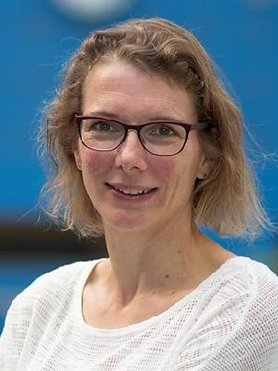
Lourens Waldorp is an Associate Professor at the University of Amsterdam within the Faculty of Social and Behavioural Sciences , specifically the Department of Psychological Methods . His research focuses on network theory, causal inference, and statistical modeling in psychology and neuroscience. University of Amsterdam IAS Fellow (2024) His research interests include: Network psychometrics Causal inference in psychological models High-dimensional statistical methods Dynamical systems in psychopathology Graph theory applications Signal processing for biophysical data The trends in his recent publications center on causal modeling, network analysis of psychopathology, and statistical techniques for time-series data. He has developed methods for perturbation graphs, moderated network models, and dynamic intervention frameworks. Notable scientific awards : IAS Fellowship for 6 months (2024) He advises PhD students like Kyra Evers and collaborates with researchers across disciplines, including J. Haslbeck , D. Borsboom , and O. Ryan . His work intersects with network theory and clinical psychology .
Karsten Lambers is Professor of Digital and Computational Archaeology at the Faculty of Archaeology, Leiden University, where he leads research and teaching in the application of computational methods to archaeological data. His work integrates machine learning, remote sensing, text mining, and citizen science to advance archaeological prospection and heritage management. He is affiliated with the Department of Archaeological Sciences and plays key roles in research groups and university-wide initiatives such as SAILS and ARCHON. His research interests span Digital Archaeology , Machine Learning in Archaeology , Remote Sensing , Geoarchaeology , and Human-Environment Interaction . He investigates how computational tools can extract meaningful archaeological information from large datasets, including LiDAR imagery and excavation reports. His fieldwork spans Central Europe and Latin America, with a focus on prehistoric landscapes and cultural heritage. The analysis of his recent publications reveals a strong trend toward automated detection using deep learning (e.g., R-CNN, WODAN), named entity recognition in archaeological texts (e.g., ArcheoBERTje), and citizen science integration for data validation. His work bridges archaeology with computer science, geomatics, and environmental science, emphasizing interdisciplinary collaboration and methodological rigor. His scientific awards include: Best Thesis Award (University of Zurich, 2005) EUROPA NOSTRA Award (2020, 2022) Membership in the German Archaeological Institute (since 2022) Lambers actively supervises students and leads major research projects such as ABMA, EXALT, and Heritage Quest. He has secured substantial research funding and collaborates widely with computer scientists, geophysicists, and palaeoecologists. His teaching includes digital methods, modeling, and simulation, often linked to ongoing research. He has also contributed to open educational resources and digital textbooks in archaeology. He leads or participates in several research labs and teams, including the Digital Archaeology Research Group (which he chairs), the Heritage Quest citizen science project, and interdisciplinary teams focusing on alpine terraces and Iraqi prospection. His work emphasizes the integration of digital tools into practical archaeological workflows, advocating for complementary human-computer strategies.
Dr. Wim Biemans is an Associate Professor at the Faculty of Economics and Business of the University of Groningen, specializing in Innovation Management and Marketing. He holds a PhD from Eindhoven University of Technology (1989) and has over 25 years of experience in research, teaching, and consulting. His work focuses on service innovation, B2B marketing, customer involvement in innovation, and the marketing-sales interface. He has authored over 100 peer-reviewed articles and books, including the best-selling Dutch B2B marketing textbook. His research has been recognized with awards like the Thomas P. Hustad Best Paper Award. He serves as Triage Editor for the Journal of Product Innovation Management and editorial board member for Industrial Marketing Management and Journal of Business & Industrial Marketing. Biemans teaches at the University of Groningen and multiple international institutions, including guest professor roles in Europe, Asia, and the U.S. He also designs executive programs for managerial training in innovation management and customer value creation. His recent research explores humor’s impact on creativity, digital tools in sales-marketing integration, and bridging technology-to-product development gaps. He emphasizes end-to-end value creation through intra-organizational collaboration and has published on the Valley of Death ecosystem challenges in innovation commercialization.
Prof. Dr. Madalina Busuioc is a Full Professor of Public Governance at the Department of Political Science and Public Administration, Vrije Universiteit Amsterdam. She serves as Director of the Graduate School of Social Sciences and co-Director of the R&I Lab on Artificial Intelligence and Digital Governance. Her ERC-funded research explores public accountability in the AI era, with a focus on algorithmic governance and cognitive biases in administrative decision-making. She holds a PhD cum laude from Utrecht University (2010). Her research interests center on public power dynamics, algorithmic governance, and institutional accountability. Notable contributions include work on AI's impact on citizen-state interactions, reputational authority in bureaucracy, and regulatory oversight mechanisms. Her book European Agencies: Law and Practices of Accountability (Oxford UP) and peer-reviewed articles in Public Administration Review , Journal of Public Administration Research and Theory , and Governance highlight her scholarly impact. Teaching contributions include designing the MSc Public Administration: Artificial Intelligence and Governance program, which integrates technical and governance perspectives. Awards include the Haldane Prize (2016) and Fernand Braudel Fellowship (2021). She advises on AI policy through ancillary roles like membership in the Meijers Commission on international law. Her research projects address AI ethics, algorithmic accountability, and regulatory innovation. Recent work explores behavioral dimensions of human-AI collaboration in public services and the societal implications of AI adoption in administrative systems.
Ibo van de Poel is a Full Professor at Delft University of Technology , within the Faculty of Technology, Policy and Management , specifically in the Section Philosophy . He holds the prestigious Antoni van Leeuwenhoek professorship , awarded to excellent young researchers, and is a leading figure in Design for Values , engineering ethics , and technology as social experimentation . Education: Van de Poel studied Philosophy of Science, Technology and Society at the University of Twente , with a propaedeutic exam in Mechanical Engineering . He earned his PhD in Science and Technology Studies (STS) in 1998 from the University of Twente , under the supervision of Prof. Dr. A. Rip. Research Interests: His research spans three major themes: Design for Values : Investigating how moral values can be integrated into engineering design, including empirical studies on how engineers handle value conflicts. Moral Responsibility in R&D Networks : Exploring the "problem of many hands" in large-scale research and development projects, developing formalizations and empirical methods. Ethics of Emerging Technologies : Examining ethical issues in new technologies like nanotechnology and synthetic biology , with a focus on technology as social experimentation . Publications and Impact: Van de Poel has authored over 25 international peer-reviewed articles and 15 book contributions . He is co-editor of major works including the Handbook of Philosophy of Technology and the Engineering Sciences (Elsevier, 2009), Philosophy and Engineering (Springer, 2010), and Ethics, Engineering and Technology (Wiley-Blackwell, 2011). His recent work includes leading the VICI project "New Technologies as Social Experiments" , funded by NWO. Scientific Awards: Antoni van Leeuwenhoek Professorship (TU Delft) VICI Grant for "New Technologies as Social Experiments: Conditions for Morally Responsible Experimentation" Advising and Grants: Van de Poel has led and contributed to multiple high-impact projects, including: NWO Project on "Moral Responsibility in R&D Networks" (2007–2012) EU Project on ethical issues in synthetic biology (2009–2011) VICI Project on "New Technologies as Social Experiments" (ongoing) He has also supervised PhD students and contributed to educational innovations, including the development of the AGORA web-based program and the first Dutch textbook on ethics and technology . Labs and Teams: Van de Poel is an active member of 4TU.Ethics & Technology , a federation of Dutch technical universities focused on ethics and technology. He contributes to the Simon Stevin Series in the Ethics of Technology and participates in various reading groups and PhD communities within the network.
Prof. Dr. Dennis Herhausen is a Full Professor of Marketing and Head of the Marketing Department at Vrije Universiteit Amsterdam’s School of Business and Economics. Previously, he held positions as Associate Professor at KEDGE Business School, Visiting Professor at the University of St. Gallen, and Assistant Professor at the University of St. Gallen. His research focuses on digital communication, customer journeys, multichannel management, and social media strategies, with publications in top-tier journals like the Journal of Marketing and Journal of Marketing Research. His work addresses critical issues such as online firestorm mitigation, complaint de-escalation, and gig economy communication. He has been awarded multiple prestigious prizes, including the 2021 CBSIG Consumer Research Award and the 2019 William R. Davidson Award. Education: PhD in Marketing from University of St. Gallen (2011) Teaching: Courses on Customer Experience Management, Survey Research Methods, and Thesis Guidance Research Interests: His work explores digital marketing strategies, customer-centric innovations, and the dynamics of online platforms. Recent studies address topics like business-to-investor marketing signals, privacy orientation measurement, and machine learning biases in marketing. He actively contributes to editorial boards of journals including Journal of Marketing and Journal of Interactive Marketing. Awards: 2021 CBSIG Consumer Research in Practice Award 2021 Retail & Pricing SIG Best Paper Award 2021 SERVSIG Best Services Article Award 2020 William R. Davidson Award Grants & Editorial Work: His research has been funded by national/international grants, and he serves on multiple editorial boards. Notable datasets include studies on online retailer strategies and virtual brand sabotage responses.
Roger J.E. Jaspers is an Associate Professor at Eindhoven University of Technology (TU/e) and a part-time Professor at Ghent University in Belgium, affiliated with the Applied Physics and Science Education school and specializing in the Science and Technology of Nuclear Fusion. His research focuses on spectroscopic diagnostics of ion processes in fusion plasmas, particularly energetic alpha particles in fusion-born reactions. Collaborations include international fusion experiments like W7-X (Germany), JET (UK), and KSTAR (South Korea). He leads the scientific R&D for the ITER CXRS instrumentation system and has authored over 90 peer-reviewed papers. His work spans topics such as: Relativistic electrons Plasma energy transport Magneto-hydrodynamics (MHD) Fusion reactor instrumentation He contributes to educational initiatives like the TU/e Fusion Master program, FUSENET, and the Erasmus Mundus Programme FUSION-DC.
Charles E.H. Berger serves as Professor by Special Appointment in Criminalistics at Leiden University's Institute for Criminal Law and Criminology since November 2011, a position funded by the Stichting Leerstoel Criminalistiek. He concurrently holds a principal scientist position at the Netherlands Forensic Institute (NFI), where he contributes to education, R&D strategy, and research on forensic evidence interpretation. His research program centers on logically sound interpretation of forensic evidence through probability theory and computational methods. Berger specializes in applying Bayesian statistics to forensic anthropology, personal identification, and evidential evaluation. His work emphasizes moving forensic science toward activity-level interpretations while managing contextual information to prevent bias. Berger plays a pivotal international role as member of ISO technical committee TC272, serving as lead editor for Part 4 (Interpretation) of the ISO-21043 Forensic Sciences standard. His scholarly contributions focus on improving forensic reasoning frameworks and establishing objective evaluation methodologies. His publications demonstrate consistent engagement with foundational forensic science challenges, particularly in developing statistically rigorous approaches to evidence interpretation that maintain scientific integrity within legal contexts. Berger actively promotes scientifically sound practices across the criminal justice system, emphasizing the importance of clear communication between forensic scientists, legal professionals, and other stakeholders to ensure proper understanding and application of forensic evidence.
Jan van den Ende is a Full Professor of Management of Technology and Innovation at the Rotterdam School of Management (RSM), Erasmus University. He is also Professor of Horticulture Innovation and a Visiting Professor at LUISS Università Guido Carli in Rome, Italy, reflecting his broad academic engagement across disciplines and institutions. His research centers on the development of new products and services, with a focus on idea management , control of NPD projects , design management , and sustainable innovation . His work is deeply interdisciplinary, spanning innovation management, organizational studies, and strategic management, as reflected in his publications in top journals such as Research Policy , Harvard Business Review , and IEEE Transactions on Engineering Management . The trends in his recent publications highlight a sustained focus on innovation processes in complex environments, including project-based organizations, multinational enterprises, and high-tech industries like video games. His research increasingly explores socio-organizational dynamics such as status, resource scarcity, and entrepreneurial incubation. He has held long-standing editorial roles in leading journals including: Research Policy (Editor since 2003) IEEE Transactions on Engineering Management (Editor since 2007) Journal of Management Studies (Editor since 2009) Service Business (Editor since 2012) He teaches in MBA and Executive Education programs for global firms such as ASML, FrieslandCampina, IFF, and MAN, bridging academic research with industry practice. He has supervised 25 academic works, indicating a strong commitment to mentoring the next generation of scholars. His work contributes to UN Sustainable Development Goals, particularly those related to sustainable economic growth and innovation. He earned his PhD from Delft University of Technology.
Prof. Jacco Wielhouwer is a Full Professor of Economics of Accounting and Tax at Vrije Universiteit Amsterdam (since 2013), holding dual appointments in the School of Business and Economics and the Amsterdam Business Research Institute. He earned his PhD in Operations Research from Tilburg University in 2002. His research focuses on taxation, regulatory compliance, disclosure strategies, and trust in financial markets. He also serves as academic director of the postgraduate Compliance and Integrity Management program (since 2021). Teaching responsibilities include Master courses in Financial Accounting Theory and Profit Taxation, Bachelor Accounting courses, and Executive Education programs at Duisenberg School of Finance and TiasNimbas. His editorial roles include membership on the European Accounting Review editorial board since 2016. Awards include the 2020 Best Reviewer Award from the European Accounting Review. Research themes emphasize tax compliance dynamics, regulatory enforcement, and the interplay between corporate strategy and taxation. Recent work explores distrust effects on compliance, reputational costs of political connections, and multinational tax-tariff planning. His articles span journals like the Journal of Public Administration Research and Theory, Journal of Accounting & Economics, and Regulation and Governance. Professional experience includes senior roles in the financial industry (ING) and regulation (AFM), alongside part-time academic engagement. His datasets and media contributions demonstrate impact on policy discussions around tax strategies, import tariffs, and financial crime prevention.
Prof. Dr. ir. Hans Heesterbeek is a full Professor of Theoretical Epidemiology at Utrecht University's Faculty of Veterinary Medicine. He holds a dual appointment in the Department of Farm Animal Health within the Population Health Sciences sector. His research focuses on the dynamics of infectious diseases at the intersection of biology, medicine, and mathematics, with emphasis on wildlife epidemiology and complex systems. He chairs Utrecht University's Committee for Research Integrity and has held leadership roles in departments like Animals in Science and Society. Education: MSc Phytopathology (Wageningen University, 1986), MSc Mathematics (University of Amsterdam, 1988), PhD in Mathematical Biology from Leiden University (1992) Affiliations: Editor-in-Chief of Epidemics journal, Senior Editor at Proceedings of the Royal Society B , Chair of ZonMw's Open Competition grant program Research interests include: Mathematical modeling of disease spread Ecological epidemiology of zoonotic pathogens Role of wildlife in disease transmission Historical analysis of epidemic understanding Key contributions: Co-developer of the R₀ reproduction number framework, foundational to global epidemiological modeling. Active in interdisciplinary work linking theoretical ecology to societal systems. Currently writing a book on the history of epidemic science. Grants: Vici laureate (€1.3M, 2005-2010). Organizes biannual Epidemics conferences. Advises on public health policy during outbreaks like the 2020 COVID-19 pandemic.
Prof. Philip Joos is a Full Professor of Accounting at Tilburg University's Tilburg School of Economics and Management (TiSEM) and academic director of the Tilburg Institute for Private Debt since 2020. He is affiliated with the TIAS Finance LAB and previously served as vice dean education (2013-2018), academic dean of TIAS School for Business & Society (2010-2013), and Research Coordinator of CentER's Accounting Research Group until 2010. Prior to Tilburg, he held professorships at the University of Rochester's Simon School of Business. His academic credentials include a Business Economics degree from Ghent University, Master of Science in Finance from Vlerick School of Management, and Master in Statistics/PhD in Accounting from Stanford University. Doctoral work focused on earnings prediction, equity valuation in biotech/pharmaceuticals, and real options modeling using R&D metrics. Research centers on empirical financial accounting with sustained expertise in corporate governance, CSR, capital markets, and ESG reporting. Key contributions examine default risk in IPOs, IFRS adoption effects across Europe, and sustainable investment frameworks. Current projects analyze economic impacts of ESG disclosures, bridging accounting theory with finance and business strategy. Recent publications reveal evolving focus from traditional financial reporting (e.g., stock option disclosures, IFRS impacts) toward sustainability-driven topics like ESG performance during crises and pharmaceutical R&D valuation. Work consistently intersects capital markets, corporate strategy, and regulatory frameworks across Accounting, Finance, and Business journals. Scientific recognition includes: TIAS Best Teacher Award (December 2009) TIAS Best Teacher Award (June 2018) He teaches PhD-level courses in TiSEM's Research Master program, MSc financial accounting theory, and executive programs at TIAS. Leadership roles encompass directing academic programs and shaping global accounting education through the European Accounting Association (EAA), where he served as President (2017-2019) and founded initiatives supporting young scholars. Core affiliations include the TIAS Finance LAB and Tilburg Institute for Private Debt, which he established to study non-bank lending markets. His EAA presidency and chairmanship of the Education Committee since 2019 demonstrate active influence in accounting education innovation and international scholarly networks.
Johannes Kruisselbrink is a Researcher at Biometris , a department within Wageningen University & Research , specializing in food safety and cumulative risk assessment. His work focuses on pesticide residues, dietary exposure, and computational modeling for regulatory compliance. Key Collaborations: European Food Safety Authority, EFSA Projects: Active in pesticide exposure analysis (2024-2028), cumulative risk assessment tools (2019-2023), and regulatory frameworks (2018-2019). His research integrates data modeling and statistical software to enhance risk assessment methodologies. Recent projects emphasize interoperability and accessibility of platforms like MCRA and PARC. Scientific Contributions: Developed AMIGA Power Analysis tool for equivalence testing Authored reports on pesticide risk surveillance in fruits and vegetables Advancing EFSA standards for acute reference dose calculations
Sonja Paus-Buzink is an Assistant Professor in Human Factors at TU Delft’s Faculty of Industrial Design Engineering, specializing in the Human-Centered Design department. Her research focuses on integrating human factors/usability evaluation into medical device and healthcare service design, emphasizing inclusive design perspectives. She teaches courses on human factors, usability, and medical device regulation, supervising students in research and graduation projects. Academic Background: PhD from TU Delft (Medisign Research Group), co-funded by Catharina Hospital, focusing on patient safety in image-based surgical procedures and VR/AR simulation tools. Postdoctoral work on surgical skillslabs and scientific coordination of the European Laparoscopic Surgical Skills Program. Previously a Managing Human Factors Specialist at UL-Wiklund R&D, advising medical device manufacturers on regulatory compliance. Research Interests: Human factors, ergonomics, medical device design, patient safety, inclusive design, surgical training, and healthcare technology. Her work bridges clinical, engineering, and psychological disciplines to enhance healthcare outcomes. Awards: Summa Cum Laude MSc in Industrial Design Engineering (TU Delft). Best IDE Graduate of the Year award at TU Delft. Grants & Collaborations: Collaborations with medical institutes, simulator companies, and organizations like the European Association for Endoscopic Surgery (EAES). Her research emphasizes cross-disciplinary teamwork to address challenges in surgical training and medical device usability. Labs/Teams: Engaged with TU Delft’s Medisign research group and skillslab initiatives. Active in developing tools for surgical training and patient safety in operating rooms.
Robert Verburg is an Associate Professor in Technology and Innovation Management at Delft University of Technology, Faculty of Technology, Policy and Management. He is affiliated with the Department of Values, Technology and Innovation and the Section of Economics of Technology and Innovation. He currently serves as the director of the international Master of Technology (MOT) program and teaches courses such as Leadership and Technology Management and strategic leadership for responsible innovation. His research focuses on leadership, managing people, knowledge management, and the future of management, with a strong emphasis on responsible innovation and sustainability. His work bridges qualitative and quantitative methodologies and has been published in leading management journals including the Journal of Management , Leadership Quarterly , and International Journal of Project Management . His recent publications explore organizational trust, innovation barriers in financial firms, virtual project management, and knowledge sharing networks. These works reflect consistent themes in responsible innovation, leadership in technological contexts, and strategic human resource practices. Associate Professor, TU Delft Director, MSc Management of Technology Researcher in Leadership & Innovation Robert Verburg has supervised over 100 Master’s thesis projects and has been involved in curriculum development for the MOT program. He leads an online course on strategic leadership for responsible innovation offered through KIVI. He has participated in the NWO project on Sustainable Business Models, a collaboration between Delft, Erasmus, and Leiden universities, focusing on transformational leadership and shared value measurement. He is affiliated with the research group on Economics of Technology and Innovation and contributes to advancing responsible innovation through both research and education. His work supports the integration of ethical, sustainable, and strategic leadership practices in technology-driven organizations.