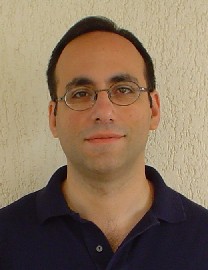
Kostas Magoutis is Professor and Chair of the Computer Science Department at the University of Crete and collaborating researcher with FORTH-ICS. His research focuses on distributed systems, scalable data processing, IoT, and cloud computing, with projects including GreenInCities for urban regeneration and STREAMSTORE for stateful stream processing systems. Research interests include: Distributed computer systems architecture Elastic stream processing platforms Quantum-enhanced computing applications Multi-cloud application lifecycle management Recent publications demonstrate strong focus on federated data systems, quantum computing applications, and IoT-enhanced infrastructure, with consistent output in high-impact conferences and journals. Awards and distinctions: Multiple best paper awards from USENIX conferences Grand Challenge Audience Award at DEBS 2022 Marie Curie Fellowship and IBM Research awards Advises over 20 PhD and MSc students in distributed systems research. Leads multiple EU-funded projects and serves on program committees for top conferences including SOSP, EuroSys, and IEEE BigData. Directs research groups in distributed systems and cloud computing at FORTH-ICS.
Professor Konstantinos Politis is a distinguished academic in the Department of Statistics and Actuarial Science at the University of Piraeus, where he has served since 2004, progressing from Assistant Professor to his current position as Professor (2025-present). His academic career spans prestigious institutions including the University of Manchester, University of Southampton, and the University of Cambridge where he earned his PhD. Education: B.A. in Mathematics, University of Athens (1989) MSc in Statistics, University of Sheffield, UK (1991) PhD in Statistics, University of Cambridge, UK (1997) Professor Politis specializes in stochastic processes with particular focus on ruin theory, risk analysis, and actuarial mathematics. His research examines complex probability models related to insurance risk, surplus processes, renewal theory, and failure rate analysis. He has made significant contributions to understanding the mathematical properties of insurance risk models, particularly in the Sparre Andersen framework and compound Poisson processes. His work bridges theoretical probability with practical applications in actuarial science and financial risk management. His extensive publication record demonstrates consistent contributions to leading journals in probability and actuarial science. The research trajectory shows evolution from foundational work on ruin theory and risk models toward more sophisticated analyses of renewal processes, failure rate functions, and stochastic bounds. His recent work focuses on precise mathematical characterizations of recurrence times, convolution properties, and monotonicity in stochastic systems. Professor Politis has co-authored significant textbooks including Introduction to Probability: Models and Applications (2019) and Introduction to Probability: Multivariate Models and Applications (2021) with Balakrishnan and Koutras, as well as his Greek-language work Introduction to the Theory of Collective Risk (2012, 2nd ed. 2016). In teaching, Professor Politis has contributed to both undergraduate and graduate education, offering courses including Probability I, Special Topics in Probability, Variance Analysis, Loss Distributions, Generalized Linear Models, and Risk Theory II. His academic journey reflects a deep commitment to advancing statistical theory while maintaining practical relevance to actuarial science and risk management.
Manolis G.H. Katevenis is a Professor at the Department of Computer Science, University of Crete, and the founder and Head of the Computer Architecture and VLSI Systems (CARV) Laboratory at the Institute of Computer Science (ICS), Foundation for Research and Technology – Hellas (FORTH) in Heraklion, Crete, Greece. He has held academic positions since 1986 and played a pivotal role in establishing the Computer Science Department at the University of Crete. His research spans computer architecture, interconnection networks, VLSI systems, and high-performance computing, with a strong focus on scalable, low-power, manycore systems and RISC-V. He has led numerous European R&D initiatives, including serving as Coordinator of the ExaNeSt project. PhD in Computer Science, University of California, Berkeley (1983) MSc in Electrical Engineering and Computer Science, University of California, Berkeley (1980) Diploma of Electrical Engineering, National Technical University of Athens (1978) Manolis Katevenis's research focuses on advancing scalable system architectures for high-performance and big data computing. His work in computer architecture includes RISC-V, exascale computing, and manycore systems. He has made foundational contributions to interprocessor communication, particularly through remote-write, remote-DMA, and remote-enqueue mechanisms, and has pioneered innovations in interconnection networks and low-latency network interfaces. His research integrates hardware and software co-design to optimize performance, energy efficiency, and scalability in large-scale computing systems. The recent publications highlight a strong trend in exascale computing, interconnection networks, and FPGA-based prototyping of manycore systems. His work emphasizes scalable, low-power architectures, with recurring themes in congestion management, fair scheduling, crossbar design, and hardware-software integration for HPC. The articles span high-impact journals such as IEEE/ACM Transactions on Networking, IEEE Micro, and Computer Networks, reflecting sustained contributions to computer architecture and networking. ACM Doctoral Dissertation Award (1984) David J. Sakrison Memorial Prize (1983) IBM PhD Fellowship (1981–1983) Greek State Fellowship (1973–1978) Stelios Pichoridis Award for Outstanding University Teaching (2015) Member of Academia Europaea (elected 2012) Award by the Secretary General of the Region of Crete (2003) IEEE Milestone recognition for the RISC Project (2015) Manolis Katevenis has supervised over 50 graduate theses and mentored many prominent Greek computer architects, including recipients of the ACM Maurice Wilkes Award. He has served as Principal Investigator or co-PI in over 30 R&D projects with a total budget exceeding 18 million euros, including major European initiatives such as ExaNeSt (which he coordinated), EuroEXA, EcoScale, SARC, ENCORE, and multiple HiPEAC Network of Excellence projects. His leadership extends to project coordination, architectural design, FPGA prototyping, and systems software development. Katevenis founded and leads the CARV Laboratory at FORTH-ICS, a major research team with 80–100 members focused on computer architecture and VLSI systems. The lab has spun off the Distributed Computing Systems (DCS) Laboratory and is central to European exascale computing efforts, including participation in the European Processor Initiative. CARV has developed large-scale prototypes such as the 768-core ExaNeSt system and the Formic FPGA platform for manycore research.
Apostolos Burnetas is a Professor of Stochastic Operations Research in the Department of Mathematics at the National and Kapodistrian University of Athens (UOA). He holds a Diploma in Electrical Engineering from the National Technical University of Athens (1986), an MBA (1992), and a Ph.D. in Operations Research (1993) from Rutgers University’s Graduate School of Management. Prior to his current position, he served as an Assistant and Associate Professor at Case Western Reserve University (1994–2004). At UOA, he has held roles as Associate Professor (2003–2012) and full Professor (2012–present). He has also served as Vice-Director and Director of the UOA-Ioannina University joint Biostatistics graduate program (2008–2014). His research focuses on Operations Research, Adaptive Optimization, Stochastic Modeling, and their applications in production/service systems. Notable areas include strategic customer behavior in queueing systems, dynamic pricing, inventory management, and supply chain coordination. He has authored over 60 peer-reviewed articles in journals like Management Science and Operations Research , and organized international conferences in stochastic modeling. His teaching spans Operations Research, Probability, and Stochastic Processes, with graduate courses in Linear Models and Queueing Theory. Burnetas has supervised over 30 master’s theses at UOA and 9 doctoral theses (7 at Case Western Reserve, 2 at UOA). His work emphasizes practical applications, such as optimizing service systems and addressing information asymmetries in supply chains.
Dr. Evangelos Mennis is a researcher affiliated with the University of the Aegean, holding a PhD in Business Administration with a focus on maritime systems. His academic work bridges stochastic modeling and 3D printing technologies. Doctoral Dissertation: "Stochastic modeling for the assessment risks and the reliability study of maritime systems" (2009) Bachelor’s Degree in Business Administration (1996) Master’s Degree in Shipping (2005) His research spans maritime risk assessment, stochastic systems, and 3D printing applications in manufacturing. Key methodologies include Markov modeling and performability analysis for safety-critical systems. Publications highlight trends in maritime safety, reliability engineering, and efficiency optimization in container terminals and ship systems. Recent work explores 3D printing integration into manufacturing post-COVID-19 (co-authored with Maria Mavri).
Ioannis Dimitriou is an Assistant Professor at the Department of Mathematics, University of Patras, Greece, since August 2019. Previously, he held academic positions at Imperial College London, FORTH Greece, Aristotle University of Thessaloniki, and INRIA Sophia Antipolis. Research Interests: His work focuses on Queueing theory Applied probability Stochastic processes Stochastic performance modeling Wireless network analysis Recent Publications: His recent work explores multidimensional queueing models, stability analysis in cooperative networks, and stochastic resource allocation with applications in IoT and 5G networks. Key trends include Retrial queue systems Markov-modulated random walks Network-level cooperation Power-saving mechanisms Stable throughput regions Scientific Awards: Marie Curie Fellow (ERCIM ABCDE program) Postdoctoral 'Research Excellence' Fellowship at Aristotle University Travel Grant for StochMod 2018 Teaching & Mentorship: He teaches Probability, Stochastic Processes, and Queueing Theory at both undergraduate and MSc levels. Mentored 9 MSc/BSc students, focusing on queueing applications in wireless networks, stochastic models, and performance evaluation.
Dr. Panagiota Fatourou is a Professor in the Department of Computer Science at the University of Crete and a senior researcher at the Institute of Computer Science (ICS), Foundation for Research and Technology - Hellas (FORTH). She holds a dual affiliation, contributing significantly to both institutions. She has previously served as faculty at the University of Ioannina and held postdoctoral positions at the Max-Planck-Institut für Informatik and the University of Toronto. She has also been a visiting professor at École Polytechnique Fédérale de Lausanne (EPFL). Her research spans the theoretical and practical foundations of parallel and distributed computing. She is a leading expert in concurrent data structures, transactional memory, and the use of persistent memory in system design. Her work integrates theoretical rigor with practical implementation, often publishing in top-tier venues like PPoPP, PODC, SPAA, and PVLDB. Recent publications highlight her focus on efficient garbage collection for multiversioning, persistent data structures, and distributed data series similarity search, reflecting a trend towards high-performance, fault-tolerant systems for modern hardware. Best Paper Award, PPoPP 2022 Marie-Curie Individual Fellowship FSMP Distinguished Professor Fellowship ACM Distinguished Speaker Featured ACM Member Dr. Fatourou has a strong record of leadership and mentorship. She has advised numerous MSc and PhD students and is actively recruiting for her PERSIST project, funded by HFRI. She has led major research initiatives, including the EU-funded TransForm network and the GreenVM project. Her leadership extends to the broader community, where she has served as Past Chair of the ACM Europe Council, Chair of the Greek ACM-W Chapter, and on the steering committees of PODC and OPODIS. She has also co-organized key events on gender equality in computing, such as the Summits on Gender Equality in Computing (GEC) and the WISTEM Summer School. She is deeply involved in the academic service, frequently serving on program committees for premier conferences such as SPAA, NETYS, and SRDS. Her laboratory and research team at FORTH ICS and the University of Crete focus on building the theoretical underpinnings and practical implementations of next-generation concurrent and distributed systems.
Christoph Kirsch is Professor and Chair of the Department of Computer Science at the University of Salzburg, Austria since January 2022, and Chair of the Computational Systems Group since April 2004. He also serves as Chair of the Programming Research Laboratory at Czech Technical University in Prague since October 2022. Dr. Kirsch earned his Dr.-Ing. from Saarland University in 1999 while at the Max Planck Institute for Computer Science. He worked as Postdoctoral Researcher at UC Berkeley (1999-2004) and later returned as Visiting Scholar (2008-2013) and Visiting Professor (2014). His research focuses on: Principled design of programming languages and runtime systems Server, quantum, embedded, real-time, and mobile systems Symbolic reasoning, memory management, and concurrency Dr. Kirsch co-invented embedded programming languages (Giotto, HTL, Embedded Machine) and has designed high-performance concurrent data structures. His recent work centers on symbolic execution frameworks like Selfie, with publications spanning efficient model checking, program analysis, and memory management systems. Professional recognitions include ACM Distinguished Speaker (2017-present). He co-founded EMSOFT (2001), served as ACM SIGBED chair (2011-2013), and was associate editor for IEEE TCAD and ACM TODAES. He has supervised 5 postdocs, 10 PhD students, and 18 Masters students since 2004, teaching undergraduate and graduate courses in Compiler Construction, Systems Engineering, and Introduction to Computer Science. Dr. Kirsch leads the Computational Systems Group at University of Salzburg, advancing programming language design, runtime systems, and formal verification methods.
Antonis Dimakis is an Assistant Professor in the Department of Informatics at Athens University of Economics and Business. He holds a B.Sc. and M.Sc. in Computer Science from the University of Crete, and a Ph.D. in Electrical Engineering and Computer Sciences from UC Berkeley. Research Focus: His work centers on stochastic modeling and optimization of networked systems, with specific interests in: Queueing theory and applied probability Optimal control strategies for network congestion Internet protocol design for efficient data transmission Game-theoretic approaches to resource allocation Publication Trends: Recent publications demonstrate strong focus on transportation networks and cloud computing, employing advanced mathematical frameworks like mean field games to model complex system behaviors under uncertainty. Laboratory & Advising: Leads research initiatives in network optimization and advises graduate students in stochastic modeling applications.
Athanasia Manou is an Assistant Professor in the Section of Statistics and Operations Research at the Department of Mathematics, National and Kapodistrian University of Athens. Previously, she served as Assistant Professor in the Industrial Engineering Department of Koç University (2016–2019) and held a postdoctoral position at Koç University under the AXA Research Fund fellowship (2014–2016). She holds B.Sc., M.Sc., and Ph.D. degrees in Mathematics and Statistics from the University of Athens (2006, 2009, 2014). Her research focuses on queueing theory , game theory , stochastic processes , and transportation economics . She explores strategic customer behavior in queueing systems, pricing strategies, and optimization of service systems. Her work often integrates game-theoretic models to analyze decision-making in dynamic environments. Her publications span topics like transportation station pricing, reneging effects in queues, and fluid queue models, emphasizing real-world applications in service systems and transportation. No scientific awards are explicitly listed in the provided information. She has advised no students or grants are mentioned, though her academic trajectory suggests active involvement in research and teaching. Labs/Teams: No specific lab affiliations or teams are detailed in the provided text.
Dimitriou Ioannis is a researcher affiliated with the Department of Mathematics at the University of Ioannina. He holds a PhD in Mathematics from the same institution, with a thesis on Queueing Theory/Applied Probability under the supervision of Assoc. Prof. Christos Langaris. His research interests focus on Queueing theory, Applied probability, and Stochastic operations research. His work spans theoretical and applied aspects of stochastic systems, particularly in queueing models and their applications in telecommunications and computer networks. Education: Undergraduate: Department of Mathematics, University of Ioannina MSc: Department of Mathematics, University of Ioannina PhD: Department of Mathematics, University of Ioannina (Thesis: New results on the theory of retrial queueing systems) His research trends reflect a deep engagement with stochastic processes, retrial queueing systems, and their applications in network performance analysis. Recent work explores topics like Markov-dependent processes, reflected autoregressive models, and cooperative IoT networks. His publications often bridge theoretical stochastic analysis with practical engineering challenges in telecommunication systems and resource management. No scientific awards are explicitly mentioned in the provided texts. His advising and grant activities are not detailed here. His work contributes to the understanding of complex systems through advanced mathematical modeling, with applications in both academic and industry contexts.
Stergios Anastasiadis is a Professor at the University of Ioannina's Department of Computer Science and Engineering, with visiting appointments at Cambridge and EPFL. His research focuses on core systems innovation spanning operating systems, distributed storage, and cloud infrastructure. Research interests include multitenant isolation, concurrent data structures, storage I/O optimization, and filesystem design. His work develops novel approaches to resource management in cloud environments, emphasizing security, efficiency, and reliability in distributed systems. Recent publications reveal sustained focus on storage subsystem optimization, with contributions to journaling techniques, isolation mechanisms, and I/O performance tuning. Key innovations include lock-free concurrency models, client-side storage innovations, and cross-platform memory management techniques. Educational background includes Ph.D. from University of Toronto and international research collaborations. No specific advising relationships or scientific awards are documented. Laboratory affiliations include distributed systems research groups at University of Ioannina, with collaborations extending to cloud computing initiatives across Europe.
Michael Boutsikas is an Associate Professor in the Department of Statistics and Insurance Science at the University of Piraeus. His academic career includes roles such as teaching Statistics II: Hypothesis Testing, Reliability Theory, and Stochastic Finance. He holds a PhD in Applied Probability from the University of Athens (2000), an MSc in Statistics and Operations Research (1998), and a Mathematics Diploma (1995). His research focuses on stochastic orders, probability metrics, reliability theory, and extreme value theory. Key contributions include work on scan statistics, compound Poisson approximation, and risk models. Recent studies address surplus processes in jump diffusion models and exit time analysis under barrier conditions. Teaching spans courses like Multivariate Statistical Analysis and Statistical Software Packages. His work often intersects actuarial science and financial modeling, with applications in insurance mathematics and risk management. Office hours are arranged via email.
Antonis Economou is a Professor of Operations Research in the Department of Mathematics at the National and Kapodistrian University of Athens. He holds a BSc in Mathematics from the University of Athens (1993), an MA in Pure Mathematics from UCLA (1994), and a PhD in Mathematics from the University of Athens (1998). His research focuses on Operations Research, Applied Probability, Queueing Theory, and Mathematical Biology, with a particular emphasis on strategic customer behavior, stochastic systems, and epidemic models. He has held academic positions since 1999, progressing from Lecturer to Full Professor. His work has been published extensively in journals like European Journal of Operational Research and Queueing Systems . Education: BSc, Mathematics, University of Athens, 1993 MA, Pure Mathematics, UCLA, 1994 MSc, Statistics and OR, University of Athens, 1997 PhD, Mathematics, University of Athens, 1998 Research interests include stochastic processes, game theory applications in service systems, and mathematical modeling of epidemics. His recent work explores strategic customer behavior in queues, particularly under varying information structures and service dynamics. Notable contributions include analysis of fluid queues, vacation models, and epidemic models in random environments. Awards include scholarships from the National Scholarship Foundation of Greece for his studies and recognition in international mathematical competitions. He has supervised numerous graduate students and contributed to editorial roles in top journals such as Queueing Systems and Annals of Operations Research .
Georgios Goumas is an Associate Professor in the Division of Computer Science at the School of Electrical and Computer Engineering, National Technical University of Athens. His research focuses on high-performance computing, parallel systems, and efficient resource management for modern computing platforms. Research domains: Serverless computing scalability and memory management Quantum algorithm design for classification Virtual memory optimization Hardware acceleration for sparse computations NUMA-aware concurrent data structures Recent innovations include DaeMon for disaggregated systems, eBPF-based Linux memory management, and multi-GPU matrix multiplication optimizations. Publications demonstrate consistent advancement in low-level system efficiency across quantum, serverless, and heterogeneous computing domains. Dr. Goumas teaches undergraduate and graduate courses on Operating Systems, Parallel Processing, and Code Optimization Techniques. His lab develops open-source tools like Paralia runtime for auto-tuning linear algebra and FPGA-based accelerators for scientific computing.