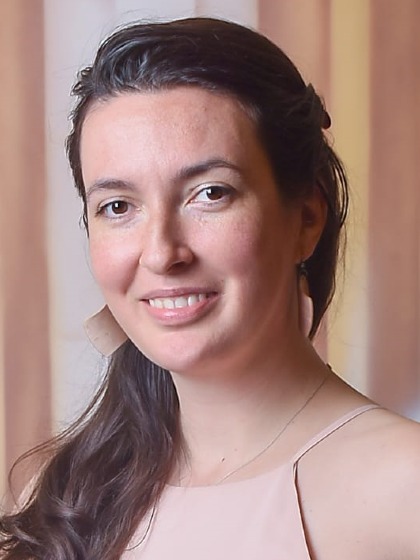
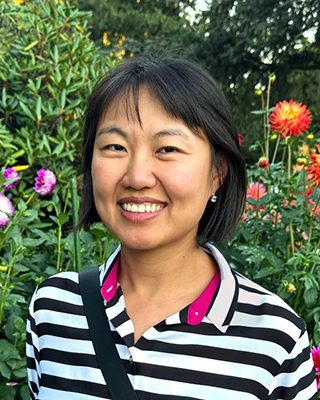
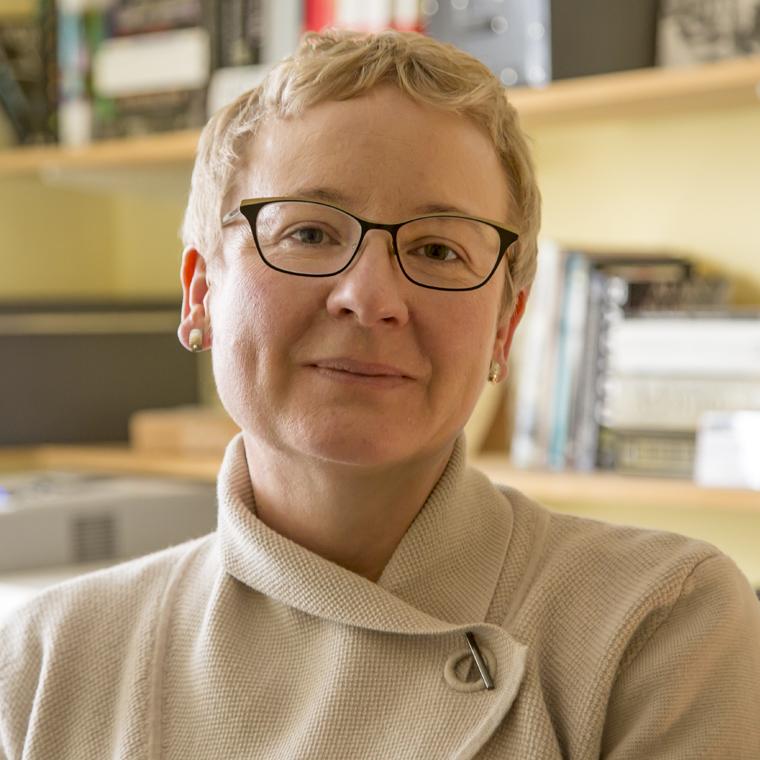
Andreea Sburlea is an Assistant Professor in Human Centered Intelligence at the Faculty of Science and Engineering, University of Groningen . Her expertise focuses on Brain-Computer Interfaces , Machine Learning , and Neuroprosthetics , with a particular emphasis on uncertainty quantification in BCI systems. Research Trends : Recent publications highlight her work in applying machine learning and deep learning to motor imagery BCI, transfer learning for P300-based systems, and quantifying classification uncertainties in biosignal applications. Collaborations : Active in international research networks, she collaborates with institutions like the German Research Center for Artificial Intelligence (DFKI) and contributes to conferences such as the Graz Brain-Computer Interface Conference . Contact : Email a.i.sburlea@rug.nl | ORCID
Dr. C. Maria Keet is a Professor in the Department of Computer Science at the University of Cape Town, South Africa. With a PhD from the Free University of Bozen-Bolzano (2008), she has established herself as a leading researcher in ontology engineering and multilingual natural language processing, particularly for African languages. Her research interests span Ontology Engineering , Knowledge Representation , Natural Language Processing for African languages (especially isiZulu), Conceptual Data Modeling , and Temporal Data Modeling . She has developed significant frameworks for ontology modularization, competency questions, and multilingual knowledge representation. Her work bridges theoretical computer science with practical applications for linguistic diversity in Africa, addressing the critical need for technology that serves low-resourced languages. Her recent publications (2023-2025) reveal a strong focus on advancing ontology engineering methodologies, improving multilingual language processing capabilities, and developing tools for temporal data modeling. She has pioneered approaches for representing African languages in computational systems, with particular attention to noun classification, verb conjugation, and part-whole relations in Bantu languages. Dr. Keet has made substantial contributions to educational resources in her field, including her 2023 book The What and How of Modelling Information and Knowledge - From Mind Maps to Ontologies , which serves as a comprehensive guide to knowledge representation techniques. She actively supervises graduate students and has developed in-house tools specifically for ontology engineering education, demonstrating her commitment to advancing both research and teaching in her field.
Martin Theobald is a Professor in the Department of Computer Science at the University of Luxembourg's Faculty of Science, Technology and Communications. Previously affiliated with University of Ulm, Germany, his research spans database systems, information retrieval, and knowledge extraction with over 120 publications since 2002. His work bridges theoretical database foundations with practical applications in large-scale data processing. His research focuses on: Probabilistic and uncertain database systems Stream processing frameworks (notably the AIR architecture) Knowledge extraction from heterogeneous data sources Integration of machine learning with database systems Efficient query processing for structured and semi-structured data Recent publications demonstrate an evolving research trajectory toward real-time data stream processing with machine learning integration. His work on the AIR (Asynchronous Iterative Routing) framework and its extensions (TensAIR, OPTWIN) addresses critical challenges in concept drift detection, neural network training on streaming data, and efficient resource utilization. These contributions sit at the intersection of database systems, distributed computing, and machine learning, with applications in knowledge graph construction and question answering systems. Martin Theobald has mentored numerous researchers including Mauro Dalle Lucca Tosi, Alessandro Temperoni, and Vinu E. Venugopal, who have become active contributors to the database community. His collaborative network spans institutions across Europe, with frequent partnerships with researchers from University of Ulm, Max Planck Institute, and other European universities. His laboratory work focuses on developing scalable systems for processing evolving data streams, with particular emphasis on creating lightweight architectures that maintain high performance while minimizing resource consumption. Current projects involve integrating knowledge graphs with real-time analytics and developing adaptive systems that can handle concept drift in streaming environments.
Otavio A Bueno is a Professor and Chair of the Philosophy Department at the University of Miami's College of Arts and Sciences, holding the distinguished position of Cooper Senior Scholar in Arts and Sciences. His academic leadership spans teaching, research administration, and interdisciplinary collaboration across multiple institutions including the University of South Carolina and California State University, Fresno. Education: Ph.D. in Philosophy, University of Leeds, UK (1999) M.A. in Philosophy, University of São Paulo, Brazil (1996) B.A. in Philosophy, University of São Paulo, Brazil (1993) Bueno's research bridges philosophy of science, mathematics, and logic through an empiricist framework compatible with mathematical nominalism. He investigates visual evidence in scientific reasoning through microscopic imaging, explores logical pluralism tied to modal epistemology, and develops frameworks for understanding scientific continuity via styles of reasoning. His work on quantum mechanics connects identity to fundamentality while his revival of Pyrrhonism offers a non-dogmatic empiricist approach to skepticism. The integration of philosophy of art with scientific representation demonstrates his interdisciplinary reach across metaphysics, epistemology, and aesthetics. His publication trends reveal sustained engagement with foundational questions in mathematics and logic, increasingly focusing on heuristic methods, counterpossibles, and conceptual engineering. Recent work emphasizes the process-oriented nature of mathematical practice while challenging traditional ontological assumptions through deflationary approaches. Scientific Awards: Distinguished Achievement in Research Award, CSU Fresno (2001-2002) Multiple Research, Scholarship, and Creative Activities Awards Teaching Innovation Awards for course development Prestigious Research Fellowships from CAPES Brazil and UK academic bodies Bueno has secured substantial research funding including NSF grants totaling over $2.8 million for nanotechnology projects and Brazilian CNPq funding for styles of scientific reasoning research. His collaborative projects with medical ethicists like Robin Neiman demonstrate applied philosophy in evidence-based medicine. As department chair and frequent course developer across all academic levels, he has mentored numerous graduate students while creating innovative curricula in philosophy of science, logic, and interdisciplinary studies. Current projects focus on conceptual engineering and the epistemology of mathematical practice within his research group at the University of Miami.
Leonard Edward White is an Associate Professor in Neurology at Duke University, with additional appointments in Psychology and Neuroscience, Orthopaedic Surgery, and Neurobiology. He serves as Associate Director of the Duke Institute for Brain Sciences and Director of Undergraduate Studies of Neuroscience. His academic career spans over three decades since earning his Ph.D. from Washington University in St. Louis in 1992. Dr. White's research focuses on the structure and function of the mammalian brain, particularly through the development of advanced magnetic resonance methods for interrogating brain structure. His work combines light sheet microscopy with MRI techniques to provide new insights into microscopic brain structure, whole-brain connectivity, and how neural tissue constrains connectivity in animal models. He maintains a sustained interest in how early sensorimotor experience influences neural circuit formation and maturation in the cerebral cortex, as well as the intersection of brain sciences with humanities. His recent publications (2020-2025) reveal a strong emphasis on high-resolution brain imaging techniques, particularly MRI and light sheet microscopy for creating detailed brain atlases. His work spans multiple species (mouse, rat, human) and addresses fundamental questions in neuroanatomy, connectomics, and developmental neuroscience. Notably, he has been developing the Duke Mouse Brain Atlas and exploring the impact of prenatal drug exposure on brain development. Dr. White has secured significant research funding, including the current 'Ultra-high Resolution Structural Connectome Atlases of the Animal Brain' grant (2022-2026) from the University of Pittsburgh, and previously led NIH-funded projects on visual cortex development spanning nearly two decades. He is deeply involved in medical education, serving as Director of Undergraduate Studies of Neuroscience and developing innovative approaches to teaching neuroanatomy. His educational scholarship includes work on integrating art into medical education and revitalizing neuroanatomy teaching methods. He also maintains an active presence in neurohumanities, exploring the intersection of neuroscience with arts and humanities.
Lucy Lu Wang is an Assistant Professor at the University of Washington Information School and holds adjunct appointments in Biomedical Informatics & Medical Education , Human Centered Design & Engineering , and Computer Science & Engineering . She leads the LARCH lab focused on language accessibility research. Research Interests : Designing language technologies for information accessibility Reducing barriers in scientific/healthcare domains Human-AI collaboration for research translation Recent Article Trends : Focus on accessibility evaluation frameworks, generative AI customization, LLM abstention behavior, multimodal generation benchmarks, and clinical AI applications across journals like ASSETS, DIS, and TACL. Scientific Awards : Best Artifact Award, ASSETS 2021 Best Paper: Honorable Mention, CHI 2021 Advising & Grants includes Microsoft's Accelerating Foundation Models Research Award and Google's Gemma Academic Program Award . She contributes to open-access tools like FigurA11y and PaperPlain .
Keya Maitra is the Lenney Distinguished Professor of Philosophy at the University of Hawai'i Mānoa. Previously, she served as a professor and the Thomas Howerton Distinguished Professor of Humanities at the University of North Carolina Asheville, where she also directed the Humanities Program from 2018-2022. Her academic journey spans continents, with educational roots in both India and the United States. Dr. Maitra holds two Ph.D.s—one in Philosophy of Language from the University of Hyderabad and another in Philosophy of Mind from the University of Connecticut. This dual training has positioned her at the intersection of Eastern and Western philosophical traditions, enabling her to bridge cultural and disciplinary divides in innovative ways. Her research spans multiple areas of philosophy with a distinctive focus on cross-cultural dialogue. Maitra's work in feminist philosophy of mind explores how socio-cultural factors shape mental content and consciousness. She has made significant contributions to the interpretation of Indian philosophical texts, particularly the Bhagavad Gita, examining its relevance to contemporary philosophical issues in consciousness, ethics, and epistemology. Her scholarship in comparative ethics brings together Western and non-Western ethical frameworks, with special attention to decolonizing moral landscapes through the inclusion of Buddhist, Hindu, feminist care ethics, and indigenous perspectives. Maitra's recent work on governance ethics develops a "toolbox" of ethical frameworks for policy decision-making that acknowledges the complexity of moral dilemmas in public administration. Maitra's publications reveal consistent engagement with bridging philosophical traditions. Her recent articles demonstrate a trajectory from examining specific concepts in Indian philosophy (like attention in the Bhagavad Gita) to developing broader applications in contemporary ethical and political contexts. A unifying thread is her commitment to creating philosophical frameworks that respect cultural specificity while addressing universal human concerns. Her work increasingly focuses on practical applications of philosophical insights to real-world governance challenges. Lenney Distinguished Professor at University of Hawai'i Mānoa Thomas Howerton Distinguished Professor of Humanities at University of North Carolina Asheville (2018-2022) While specific details about her advising are not provided in the available text, Maitra's collaborative work on edited volumes like "Feminist Philosophy of Mind" and "The Ethics of Governance" suggests active mentorship of junior scholars. Her research on governance ethics appears to have practical applications that may connect with policy-making communities.
Cecilia Åse is a Professor of Gender Studies at the Department of Ethnology, History of Religions and Gender Studies at Stockholm University. Her work bridges gender studies, political science, and international relations with a focus on how gender operates in contexts of insecurity, crisis, and war. Åse's research centers on gender and sexualities in relation to insecurity and war, particularly examining how gender is used when normalizing violence and justifying state capacity for violence. She approaches these questions through investigations of military memory-making and cultural heritage, as evidenced in her book "In the wake of the Cold War. Threats, violence and protection as cultural heritage" (Kriterium, 2023). She leads the ongoing interdisciplinary project "The changing significance of cultural heritage in times of uncertainty and military preparedness" (VR 2025-2027), which examines how war in neighboring regions and deteriorating security situations affect collective memory production and historical narratives about conflict. Her scholarly work reveals consistent patterns across publications: a feminist critique of how military heritage shapes national identity and security perceptions, analysis of gendered narratives in war contexts, and examination of how emotional and spatial arrangements at heritage sites reinforce particular security understandings. Her research demonstrates how heterosexuality and hierarchical gender norms emerge as prerequisites for national security, limiting critical reflection on security politics and militarism. Major Publications: "Gendering Military Sacrifice. A Feminist Comparative Analysis" (Routledge, 2019), "Monarkins makt. Nationell gemenskap i svensk demokrati" (2009) on the Swedish monarchy, and numerous journal articles in International Feminist Journal of Politics, Cooperation and Conflict, Critical Military Studies, and Journal of Cold War Studies Current Projects: Analysis of how Russia's invasion of Ukraine affects Swedish memorialization practices and security narratives As part of her academic engagement, Åse is affiliated with "The Language and Power Network," which focuses on language and power as a field that has gained renewed relevance due to populism's success and social polarization. Her methodological approach combines feminist international relations with critical heritage studies to unpack the material, affective, and embodied underpinnings of security produced at military heritage sites.
Burghard Baltrusch is a Professor of Galician and Latin Philology at the University of Vigo's Faculty of Philology and Translation in Galicia, Spain. Since 2015, he has directed the International José Saramago Chair at the University of Vigo, an institution funded internationally by the Instituto Camões and the Universidade Lusófona de Humanidades e Tecnologias. He coordinates the BiFeGa research group in Cultural Studies, Translation and Interpretation, recognized as a GRC group by the Xunta de Galicia since 2019, and collaborates with the Institute of Comparative Literature Margarida Losa at the University of Porto. Baltrusch obtained his doctorate (doctor philosophiae) from the University of Bonn in 1996 after studying at the Universities of Bonn and Cologne (Germany), Nova de Lisboa (Portugal), and Complutense (Spain). His academic journey has been dedicated to Lusophone literatures, particularly focusing on the intersection of literary studies, cultural analysis, and political discourse within Portuguese-speaking contexts. His primary research interests center on contemporary poetry and its relationship to political discourse, with special attention to the works of Fernando Pessoa and José Saramago. Baltrusch has pioneered studies examining how poetic expression functions in public spaces, the hermeneutics of translation, and the political dimensions of literary works. His scholarship demonstrates a consistent engagement with how literature interacts with social movements, critiques of neoliberal capitalism, and questions of identity and resistance. The researcher has particularly focused on Galician and Portuguese literary traditions while maintaining a comparative perspective that spans Iberian and Lusophone contexts. Analysis of Baltrusch's recent publications reveals a sustained exploration of the intersection between poetic expression and political discourse, particularly in contemporary Iberian and Lusophone contexts. His work consistently examines how poetry engages with social conflicts, political movements, and cultural resistance. A significant portion of his recent scholarship focuses on José Saramago's legacy, Adília Lopes' feminist poetry, and the visual-literary dialogue between writer José Saramago and artist Graça Morais. His research demonstrates increasing attention to intermedial approaches, examining how poetry interacts with visual arts, performance, and digital media in contemporary cultural production. Burghard Baltrusch has directed the International José Saramago Chair since 2015 and established the JANGADA network in 2019, which connects nine José Saramago chairs worldwide along with five additional chairs and four research centers. He has served as principal investigator for two significant research projects on "Contemporary Poetry and Politics" funded by the Spanish Ministry of Science and Innovation. His academic leadership extends to coordinating the BiFeGa research group and formerly serving as coordinator of the Interuniversity Doctoral Program in Literary Studies. Through these roles, he has mentored numerous graduate students and fostered international academic collaborations across Iberian and Lusophone institutions. As director of the International José Saramago Chair and coordinator of the BiFeGa research group, Baltrusch leads initiatives that bridge academic research with public engagement. His work with the JANGADA network has created a global platform for Saramago studies, while his research group focuses on interdisciplinary approaches to literary studies, translation, and cultural analysis. The researcher has organized numerous conferences, exhibitions, and collaborative projects that bring academic scholarship into dialogue with contemporary cultural and political issues, particularly through events examining the 50th anniversary of Portugal's Carnation Revolution and exhibitions exploring the relationship between Saramago's literary work and Graça Morais' visual art.
Vikki Bell is Professor of Sociology at Goldsmiths, University of London. She has been teaching across all levels at Goldsmiths since 1993 and has convened the MA Critical & Creative Analysis. She has also been a Visiting Scholar at Berkeley, Yale University, University of Buenos Aires, and the International Institute for the Sociology of Law (Oñati, Spain), and is a Research Associate in the Faculty of Humanities at Universidad de San Martin (Buenos Aires, Argentina). Professor Bell earned her PhD at Edinburgh University in 1992 after studying Social & Political Sciences at Cambridge. Her academic journey has been marked by significant contributions to sociology, cultural theory, and transitional justice studies, particularly focusing on Latin American contexts. Her research interests span transitional justice, cultural theory, aesthetics, ethics, and subjectivity, with a particular focus on post-dictatorship societies in Argentina and Chile. Professor Bell has extensively explored the cultural-aesthetic dimensions of transitional justice, examining how societies process and represent historical violence through artistic and memorial practices. Her work bridges theoretical frameworks with empirical research, drawing on contemporary social and cultural theory, particularly the works of Michel Foucault and Hannah Arendt, while also engaging with feminist theory and the concept of performativity. Professor Bell's publications demonstrate a consistent engagement with questions of ethics, aesthetics, and politics across the social sciences and theoretical humanities. Her work has been funded by prestigious organizations including the Arts & Humanities Research Council and the Economic & Social Research Council. Her most recent research projects have focused on archiving and curating the violent past in Argentina, Chile, and Colombia, for which she received significant funding including a British Academy Sustainable Development Programme grant and a Newton Prize award. Among her notable achievements is having her "Mass political violence" research shortlisted for the Newton Prize in 2018. This recognition highlights the significance of her work on documenting and understanding political violence in Latin America. Professor Bell has supervised numerous students and has been actively involved in academic collaborations across institutions. Her work extends beyond traditional academic boundaries, engaging with artists, activists, and human rights organizations to explore the intersections of memory, politics, and representation in post-conflict societies. She has established herself as a leading scholar in the field of transitional justice studies, particularly known for her innovative approach that combines sociological analysis with cultural and aesthetic considerations. Her research continues to influence both academic discourse and practical approaches to dealing with historical violence and memory in contemporary societies.
François Recanati is a distinguished Professor holding the Chair of Philosophy of Language and Mind at Collège de France, where he leads significant research initiatives at the intersection of analytical philosophy, linguistics, and cognitive science. His work centers on the philosophy of language and philosophy of mind, with particular emphasis on mental representation and indexical thought. Principal Investigator of ERC-funded project 'Mental Files: New Foundations' (2024-2029) Director of 'Mind and Language' team at Jean-Nicod Institute (CNRS/ENS/EHESS) Lead researcher on ANR-funded project 'Essential Indexicality and Thoughts about Experience' (2023-2025) Recanati's research primarily focuses on the mental files framework, which examines how we think about particulars through mental representations whose reference depends on environmental relations rather than descriptive content. His work addresses foundational questions about identity and persistence conditions for mental files, seeking to resolve what he identifies as a 'foundational crisis' in the framework. He has significantly contributed to understanding indexicality, phenomenal consciousness, and the transparency of mental contents. His influential publications include the books 'Mental Files' (OUP 2012) and 'Mental Files in Flux' (OUP 2016), which have shaped contemporary debates in philosophy of mind. A recent special issue of the journal Klēsis (2025) was dedicated to his work, featuring contributions from leading scholars in the field. Gay-Lussac Humboldt Prize (2024) Extensive collaborative network across European institutions Regular contributions to major philosophy journals and conferences Recanati actively mentors doctoral and postdoctoral researchers, including recent addition Kyle Landrum to his ERC project team. He also collaborates on joint postdoctoral positions, such as the one with University Grenoble-Alpes focusing on applications of the mental file framework in philosophy of perception. His research program continues to evolve through symposia and international collaborations, with an upcoming symposium at the SoPhA Congress in Nantes University (July 2025) dedicated to 'Modes of presentation, Concepts & Mental Files'.
Prof. Dr. Anita Schilcher is a Professor of Didactics of German Language and Literature at the University of Regensburg, Faculty of Languages, Literature and Cultural Studies, Institute of German Studies. She has held this position since 2007 and also serves as Director of the Regensburg University Center for Teacher Education (RUL) since 2013. Her work focuses on German language and literature didactics, with particular emphasis on reading and writing promotion, children's and young adult literature, and teacher education. Her educational background includes: 1987: Abitur at the Gymnasium Pfarrkirchen 1987-1993: Studies for primary school teaching, Master's degree in German Literature with minors in Psychology and General Pedagogy 1992-1994: Preparatory service for primary school teaching 1997-2000: Doctorate in Didactics of German Language and Literature at the University of Passau 2007: Habilitation on writing didactics Prof. Schilcher's research interests span multiple areas of German didactics and language education. She has made significant contributions to the understanding of narrative competence, literary education, and the development of reading and writing skills in primary education. Her work on writing didactics has led to innovative teaching approaches that bridge theoretical understanding with practical classroom application. She has also conducted extensive research on children's and young adult literature, examining gender representation and the educational potential of popular culture texts. Her current research focuses on evidence-based reading promotion, teacher competencies, and the integration of media in literary education. Her recent publications reveal a strong focus on practical applications of educational research, particularly in developing and evaluating reading and writing promotion programs. She has been instrumental in large-scale projects like FiLBY (integrated reading promotion in Bavaria) and ELiS (evidence-based reading promotion in schools), which combine theoretical research with practical implementation in classrooms across Germany and Europe. Her work consistently bridges the gap between educational theory and classroom practice, with a particular emphasis on developing evidence-based teaching strategies that can be effectively implemented by teachers. Her scientific recognition includes: Karl-Heinz-Pollok Memorial Prize for her habilitation Prof. Schilcher has supervised numerous doctoral students, with completed dissertations covering topics such as ancient mythology in contemporary children's literature, linguistic-cognitive activation through teacher questions, narrative abilities in primary and secondary education, and oral competencies of teacher trainees. She has been involved in significant research grants including FALKO (subject-specific teacher competencies), FiLBY (integrated reading promotion in Bavaria), RESTLESS (Regensburg self-regulation training for reading and writing strategies), and ELiS (evidence-based reading promotion in schools), demonstrating her leadership in large-scale educational research initiatives. She leads the research network for "didactic-empirical writing research" (dieS) and is a member of the project team of ZSK Regensburg. Her work with the Regensburg University Center for Teacher Education (RUL) has positioned her as a key figure in shaping teacher education in Bavaria, particularly through her involvement in the development and implementation of the new primary school curriculum (LehrplanPlus).
Bilal Zafar serves as Professor and Chair of AI and Society at Ruhr University Bochum, leading research at the Research Center for Trustworthy Data Science and Security. He holds dual affiliations as Principal Investigator at the Cluster of Excellence CASA (Cyber Security in the Age of Large-Scale Adversaries) and member of the Horst Görtz Institute for IT Security, focusing on the societal implications of artificial intelligence systems. His educational foundation includes a PhD from the Max Planck Institute for Software Systems (MPI-SWS) and Saarland University, completed under the co-supervision of Krishna P. Gummadi and Manuel Gomez Rodriguez. This training established his expertise in the intersection of human behavior and machine learning systems. Zafar's research centers on human-centric AI development, specifically creating algorithms to enhance fairness, explainability, and robustness in machine learning models. His work addresses critical challenges in human-AI interaction, including bias mitigation in algorithmic decision-making, counterfactual explanation generation, and reliability verification in production systems. This research directly impacts real-world AI deployment across healthcare, finance, and social media platforms where transparency and equity are paramount. Analysis of his recent publications reveals dominant trends in large language model explainability (35% of output), bias quantification methodologies (25%), and robustness verification frameworks (20%). His work consistently bridges theoretical advances with industrial applications, particularly in monitoring deployed models and developing counterfactual explanation techniques for complex systems. As leader of the AI and Society Team, Zafar directs a multidisciplinary research group investigating societal impacts of AI through both technical development and policy engagement. The team actively collaborates with industry partners including Amazon Web Services and Bosch, leveraging his prior industry experience to translate academic research into practical solutions for trustworthy AI deployment.
Ebru Arisoy Saraçlar serves as an Assistant Professor in the Department of Electrical and Electronics Engineering at the Faculty of Engineering, MEF University, Istanbul, Turkey, a position she has held since 2014 following her post-doctoral research at IBM T. J. Watson Research Center. Her academic credentials include: B.S. in Electrical and Electronics Engineering from Bogazici University (2002) M.S. in Electrical and Electronics Engineering from Bogazici University (2004) Ph.D. in Electrical and Electronics Engineering from Bogazici University (2009) Dr. Arisoy's research specializes in bridging theoretical signal processing with practical educational applications through automatic speech recognition systems, statistical language modeling frameworks, and spoken question answering technologies. Her work focuses on developing adaptive language processing tools specifically designed for educational technology platforms, with emphasis on creating accessible learning interfaces through speech-based interactions. She actively contributes to the academic community as a member of the IEEE Signal Processing Society Speech and Language Technical Committee, influencing research directions in speech and language processing. Dr. Arisoy's professional activities include collaborative research with industry partners, particularly building on her prior experience at IBM, though specific grant details and student mentorship records are not documented in the available materials.
Max Goplerud is an Assistant Professor in the Department of Government at the University of Texas at Austin, where he teaches courses in political methodology and Bayesian statistics. He received his Ph.D. from Harvard University in 2020, where he was an affiliate of the Institute for Quantitative Social Science and the Minda de Gunzberg Center for European Studies. His educational background includes: Ph.D. in Government, Harvard University (2020) Goplerud's research spans two primary areas. First, he develops new statistical methods at the intersection of Bayesian statistics and machine learning to address limitations in existing approaches for political science research. His methodological work focuses on solving problems related to heterogeneous effects, hierarchical models, and ideal point estimation. Second, he applies text-as-data methods to study legislative behavior across different political contexts, including Europe, the United States, and Japan. His research combines advanced statistical techniques with substantive political questions, creating tools that enhance empirical analysis in political science. His publications reveal a strong focus on methodological innovation in political methodology. Goplerud frequently publishes in top political science and statistics journals, with recent work appearing in the American Political Science Review, American Journal of Political Science, Journal of Politics, Biometrika, Political Analysis, and Bayesian Analysis. His research bridges the gap between statistical methodology and political science applications, with particular emphasis on Bayesian approaches, variational inference, and machine learning techniques adapted for political science research questions. Goplerud has developed several R packages that implement his methodological contributions: vglmer - for estimating hierarchical models using variational inference FactorHet - for estimating heterogeneous effects in factorial and conjoint experiments gKRLS - for kernel regularized least squares estimation He teaches graduate courses including Bayesian Statistics and Statistical Analysis in Political Science, as well as undergraduate research methods courses. His teaching spans institutions including the University of Texas at Austin and the University of Pittsburgh, where he previously taught courses on measurement, Bayesian statistics, and social data visualization.