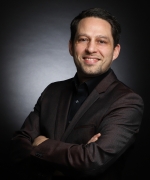
Prof. Dr. Michael Martin is a Professor at the Professorship of Data Management , Faculty of Computer Science , Chemnitz University of Technology . His work focuses on Knowledge Graphs , Large Language Models (LLMs) , and Semantic Web Technologies , with specific emphasis on RDF/SPARQL optimization , geospatial data integration , and dataset versioning . Keywords: Knowledge Graphs, Semantic Web, LLMs, GeoSPARQL, Dataset Versioning Collaboration: Co-authors include Lars-Peter Meyer, Claus Stadler, Sara Todorovikj, and Claus Stadler Research Trends Recent publications demonstrate his leadership in LLM-KG-Bench benchmarking frameworks and CoyPu knowledge graph projects for resilience research. His work bridges Apache Spark with semantic technologies for scalable knowledge graph construction and develops domain-specific ontologies for industries like steel and copper manufacturing. Projects & Tools Martin's team created open-source platforms such as: Quit Store for distributed RDF dataset management CubeViz.js for statistical data visualization Structured Feedback protocol for decentralized data governance
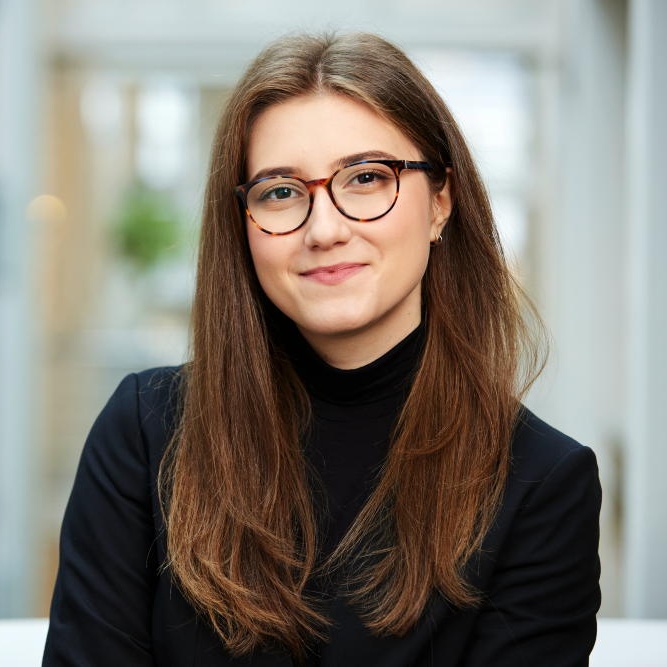
Sareh Aghaei serves as a Research Fellow at the Institute of Management Sciences within the Faculty of Mechanical Engineering and Industrial Management at Vienna University of Technology (TU Wien), focusing on knowledge-driven solutions for industrial maintenance and healthcare systems. Her academic credentials include: Ph.D. in Computer Science from the University of Innsbruck (2023) M.Sc. in Computer Science from the University of Isfahan Dr. Aghaei's research integrates knowledge graphs with natural language processing and machine learning to develop explainable AI systems. Her work spans industrial maintenance optimization, clinical decision support, and tourism information systems, emphasizing ontology engineering and question-answering frameworks that transform unstructured data into actionable knowledge. Analysis of her 2021-2025 publications reveals a strategic shift toward domain-specific knowledge graph applications, particularly in maintenance management (2022-2025) and health informatics (2023-2024). This evolution demonstrates increasing specialization in medical knowledge representation while maintaining foundational contributions to semantic web technologies established in earlier works like her 2011 Web services architecture research. Her scholarly recognition includes: netidee Grant Call 17: Austria's award for most innovative doctoral theses Dr. Aghaei's doctoral research was funded through the netidee scholarship. Current documentation indicates no active student supervision or major grant leadership beyond her postdoctoral position at TU Wien. Within TU Wien's Institute of Management Sciences, she contributes to research bridging production engineering and artificial intelligence, developing knowledge-based systems for predictive maintenance and industrial process optimization through interdisciplinary collaboration.
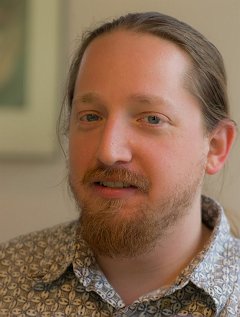
Dr. Fabio Valdés is a researcher at FernUniversität in Hagen's Faculty of Mathematics and Computer Science, specializing in spatial databases and trajectory data analysis. He teaches core modules including Softwaresysteme, Databases and Security on the Internet, and Data Mining while leading advanced research in metric space indexing and pattern recognition. His research focuses on symbolic trajectories , efficient pattern matching for time-dependent data, and metric space indexing . Key contributions include the N-tree index structure for trajectory similarity search and frameworks for spatio-textual trajectory mining. His work bridges theoretical foundations with industrial applications in aircraft tracking, wildlife monitoring, and industrial image processing systems. Analysis of his 15 most recent publications reveals an evolution from foundational symbolic trajectory models (2013-2017) to advanced indexing structures (2020-2025). Current work integrates machine learning for neural network interpretability and energy price forecasting, maintaining strong ties to ACM SIGSPATIAL and IEEE venues while expanding into AI-driven applications. Best Demo Award at DASFAA 2013 Dr. Valdés has supervised over 40 Master's and Bachelor's theses since 2013, covering machine learning, reinforcement learning, and data engineering across finance, autonomous systems, and medical applications. His students have developed solutions for investment decision systems, autonomous agricultural robots, and medical NER systems while addressing industrial challenges in packaging machinery optimization and cockpit staffing.
Sonia-Florina Horchidan is a doctoral researcher at the KTH Royal Institute of Technology in Stockholm, Sweden. She is affiliated with the Division of Software and Computer Systems within the School of Electrical Engineering and Computer Science (EECS), working under the supervision of Associate Professor Paris Carbone in the Data Systems Lab . Her academic activities include teaching assistant roles for courses in distributed systems and data storage paradigms. Research Focus: Graph Databases Machine Learning on Graphs Stream Processing Federated Learning with Privacy Guarantees Approximate Query Processing via ML Serverless Streaming Graph Analytics Scientific Contributions: Her recent publications at venues like EDBT, VLDB, and AI4DB explore intersections between graph data management and machine learning. Key themes include ML inference optimization in streaming systems, privacy-preserving health data forecasting, and innovative graph query execution models. Honors & Service: Co-authored Best Paper at DEEM 2022 Best Paper Award at VLDB 2023 PhD Workshop Program Committee Member, aiDM 2024 Reproducibility Committee Member, ACM SIGMOD/PODS
Matthew Lease is a Professor at the School of Information, University of Texas at Austin, where he serves as Director of Doctoral Studies and Assistant Graduate Advisor. He is a Distinguished Member of the Association for Computing Machinery (ACM), a Senior Member of the Association for the Advancement of Artificial Intelligence (AAAI), and an Amazon Scholar. Lease co-directs the $20M NSF-Simons AI Institute for Cosmic Origins (CosmicAI) and is a faculty founder and leader of UT's Good Systems, an eight-year, $20M university-wide Grand Challenge aimed at designing responsible AI technologies. In 2023-2024, he was invited four times to address the Texas Legislature on responsible AI. Ph.D. Computer Science, Brown University, 2010 M.Sc. Computer Science, Brown University, 2004 B.Sc. Computer Science, University of Washington, 1999 Lease directs the UT Austin Laboratory for Artificial Intelligence and Human-Centered Computing (AI&HCC), where his research spans artificial intelligence modeling and human-computer interaction design. His work focuses on creating novel datasets, building AI models, and evaluating both model performance and their impact on end-users. When automated AI falls short, his team designs human-in-the-loop approaches, leveraging AI model explanations and creative user interfaces. To promote fair AI, they focus on better annotation techniques to avoid bias and develop modeling strategies to mitigate dataset biases. Their work tackles real-world problems as part of UT Austin's Good Systems Grand Challenge, with an ongoing emphasis on content moderation—exploring automated, human-in-the-loop, and human-safe practices to combat disinformation, hate speech, and online polarization. Lease's recent publications (2021-2024) demonstrate a strong focus on human-centered AI, particularly in the areas of fair and explainable AI, content moderation, fact-checking, and crowdsourcing. His research integrates technical AI development with human factors considerations, emphasizing the importance of designing AI systems that work effectively with human users. The publications reveal a consistent theme of addressing bias in AI systems, improving human-AI collaboration, and developing methods to ensure the ethical deployment of AI technologies in sensitive domains like content moderation and misinformation detection. His work shows progression from foundational techniques in crowdsourcing and human computation toward more sophisticated approaches that consider psychological impacts and ethical implications. 2024 Test of Time Paper Award, AAAI Conference on Human Computation and Crowdsourcing (HCOMP) 2024 Most Influential Paper Award, IEEE/ACM International Conference on Automated Software Engineering (ASE) 2024 Best Paper Honorable Mention, ACM Conference on Computer Supported Cooperative Work (CSCW) 2022 Best Student Paper, Conference on Information Systems and Technology (CIST) 2020 Conference Award Track, Journal of Artificial Intelligence Research (JAIR) 2019 Best Student Paper, European Conference for Information Retrieval (ECIR) Early Career awards from DARPA, NSF, and IMLS Lease has secured significant funding for his research, including the $20M NSF-Simons AI Institute for Cosmic Origins and the $20M Good Systems Grand Challenge. His lab, AI&HCC, has developed numerous tools and methodologies for human-AI collaboration, particularly in the context of content moderation and fact-checking. He has advised numerous students who have gone on to publish in top-tier conferences and journals in AI, HCI, and NLP. Lease actively collaborates with industry partners including Amazon, where he serves as an Amazon Scholar, and has served on advisory boards for JASIS&T, Texas Advanced Computing Center (TACC), and UT Austin-Amazon Science Hub. His research has led to practical tools like SQUARE for aggregating crowd responses and methods for transparent AI evaluation. Lease leads the UT Austin Laboratory for Artificial Intelligence and Human-Centered Computing (AI&HCC), which has developed innovative approaches to human-AI collaboration. The lab's work on content moderation addresses critical challenges in online safety, including the psychological well-being of content moderators who face traumatic material. Their research on fair and explainable AI has produced methods for detecting toxic speech while maintaining accuracy across demographic groups. The lab actively collaborates with fact-checking organizations through co-design processes to create tools that meet real-world needs. As part of UT Austin's Good Systems initiative, the lab is developing AI technologies that prioritize human values and social responsibility from the outset of the design process.
Cameron Freer is a Research Scientist in the MIT Probabilistic Computing Project , with prior roles including Instructor in Pure Mathematics at MIT, Postdoctoral Fellow at CSAIL, and Project Associate Professor at Keio University. His work bridges probabilistic computing, logic, and theoretical computer science. Education PhD in Mathematics, Harvard University, 2008 (Thesis: Models with High Scott Rank ) Research Interests Freer's research explores the deep interplay between randomness and computation , focusing on: Foundations of probabilistic programming languages and systems Efficient samplers for discrete and continuous distributions Mathematics of random structures like graphons and exchangeable processes Computability in measure theory and probabilistic inference Publications Overview His recent work (2020–2024) advances probabilistic programming systems (e.g., GenSQL), theoretical frameworks for random graphs via Markov categories, and computable approaches to PAC learning. Earlier contributions include exact sampling algorithms, computable exchangeability, and algorithmic barriers in conditional probability. Academic Service Steering Committee Member, LAFI (formerly PPS) workshop series (2017–2025) Program Committee Chair/Co-chair, PPS 2017–2018 Session Chair, POPL 2017 (PPS track) Industry & Visiting Roles Chief Scientist, Remine (2017–2018) Research Scientist, Gamalon Labs (2013–2016) Lyric Labs Visiting Fellow, Analog Devices (2013–2014) Project Associate Professor, Keio University (2021–2024) Labs & Collaborations Freer collaborates extensively with the MIT Probabilistic Computing Project, Harvard Logic Group, and international partners in Oxford, CMU, and Keio University. His work integrates theoretical insights with practical systems in AI and probabilistic inference.
Fritz Henglein is a Professor at the Department of Computer Science, University of Copenhagen (DIKU), with affiliations also at Deon Digital. His career spans over three decades, with notable roles including Head of the Algorithms and Programming Languages (TOPPS) research group and Director of the HIPERFIT research center. Research interests include Programming languages and type systems Functional programming and DSLs High-performance computing Contracts and distributed ledger technology Algorithmic logic and formal semantics His work often bridges theoretical rigor with practical applications, particularly in financial information technology and compiler design. Collaborations include leadership in conferences like POPL, ICFP, and PEPM, with a focus on mentoring through academic events and community-building initiatives.
Tej Chajed is an Assistant Professor in the Department of Computer Science at the University of Wisconsin-Madison. His research focuses on formal verification of systems software, particularly addressing concurrency and crash safety in file systems and distributed protocols.
Jia Li is an Assistant Professor at the College of AI, Tsinghua University, where they lead the Tsinghua University Programming Language Processing Group (THU-PLP). They completed their PhD at Peking University in 2025 under the supervision of Prof. Zhi Jin and Prof. Ge Li. Dr. Li's research focuses on Programming Language Processing (PLP), which aims to develop artificial intelligence techniques for understanding and generating source code. Their work spans two main areas: foundation models for PLP and applications of PLP in software development and beyond. They develop new model architectures, training strategies, inference approaches, and evaluation metrics to improve code understanding and generation capabilities. Their application research explores how PLP can enhance software development efficiency through code generation, test generation, and code optimization, as well as its applications in embodied AI and neuroscience. Dr. Li's recent publications demonstrate a strong focus on advancing code generation and understanding through large language models. Their work addresses key challenges in repository-level code completion, class-level code translation, vulnerability detection, and benchmarking evolving code generation capabilities. They've made significant contributions to developing efficient models like aiXcoder-7B and creating comprehensive benchmarks like EvoCodeBench and ClassEval-T. NeurIPS 2025 Spotlight Paper (3.2% acceptance rate) for "SATURN: SAT-based Reinforcement Learning to Unleash Language Model Reasoning" Dr. Li actively mentors students and researchers, seeking highly-motivated interns to join the THU-PLP research group. They have established collaborations with researchers at Peking University, as evidenced by their joint publications with supervisors Prof. Zhi Jin and Prof. Ge Li. Dr. Li leads the Tsinghua University Programming Language Processing Group (THU-PLP), which focuses on cutting-edge research at the intersection of programming languages and artificial intelligence. The group maintains active GitHub repositories for their research projects, including EvoCodeBench, SkCoder, and CodeEditor, demonstrating their commitment to open science and reproducible research.
Christian Pölitz is a researcher specializing in artificial intelligence and machine learning with current affiliation at Microsoft Research. Previously associated with Dortmund University of Technology where he completed his PhD in 2016, his research bridges theoretical machine learning with practical applications in programming assistance and data manipulation. His publication record demonstrates sustained contributions to the field spanning over 15 years. Dr. Pölitz's research focuses on the intersection of AI systems and human workflows, particularly examining how large language models can effectively assist with data-centric tasks and programming activities. His recent work (2022-2025) investigates critical aspects of LLM evaluation, human-AI collaboration in programming contexts, and the development of benchmarks for natural language interfaces to data tools like Excel. This represents an evolution from his earlier work (2010-2017) which centered on domain adaptation, topic modeling, and semantic relatedness. Analysis of his publication trends reveals a strategic shift toward contemporary AI challenges, with significant contributions to understanding how generative AI transforms knowledge work. His collaborations with Microsoft researchers including Advait Sarkar, Ben Zorn, and Andrew Gordon indicate his integration into teams exploring the practical implications of AI 'copilots' in professional environments. His work often features in top-tier venues including AAAI, NAACL, EMNLP, and IEEE/ACM conferences. While specific awards aren't documented in the provided information, his consistent publication record in prestigious venues demonstrates recognition within the AI research community. His collaborative approach is evident through numerous co-authorships across academic and industrial research settings, suggesting an active role in interdisciplinary research teams focused on advancing practical AI applications.
Trevor Cohn is a Professor at The University of Melbourne's Computing and Information Systems Department, with a dual appointment at Google Research Australia. His research focuses on Natural Language Processing (NLP), probabilistic machine learning, and machine translation. He leads the Natural Language Processing group and has held roles including Director of the ITTC on medtech and Local Chair for ACL 2018. His research interests include automatic language processing, handling uncertain data, structured prediction, and cross-lingual systems. Recent work addresses backdoor attacks, reward modeling, and fairness in AI. He teaches courses like Statistical Machine Learning and Web Search & Text Analysis, advising students such as Thinh Truong and Nitika Mathur (award recipients). His 15 most recent articles span topics like LLM-based planning systems, mitigation of adversarial attacks, and cross-lingual NLP challenges. His work emphasizes practical applications of NLP in multilingual contexts and robust AI systems.
Thilo Spinner is a Researcher affiliated with the Department of Computer Science at ETH Zürich, contributing to the Professorship for Computer Science. His work focuses on visual analytics, explainable AI, and machine learning interpretability. He has developed tools like iNNspector for deep model debugging and explAIner for interactive machine learning frameworks. His research spans topics such as uncertainty-aware dimensionality reduction, language model explainability, and pandemic data visualization (e.g., Coronavis for Covid-19 tracking). Key contributions include frameworks for model interpretability, real-time parameter optimization, and emergency response analysis tools like NEAT. His articles highlight innovations in visualizing complex AI systems and addressing challenges in model transparency and pandemic management. Education details are not explicitly provided in the text. His research trends emphasize bridging technical AI systems with human-understandable insights through visualization and interactive tools. He has explored diverse applications from healthcare crisis analysis to neural network debugging.
Dr. Yang Deng is a tenure-track Assistant Professor at the School of Computing and Information Systems, Singapore Management University, and a Lee Kong Chian Fellow. Previously, he was a Postdoctoral Research Fellow at NExT++ (National University of Singapore). His research focuses on Natural Language Processing, Information Retrieval, and Large Language Models, with special interests in Proactive Conversational AI, Trustworthiness of LLMs, and Human-Centered Information Seeking. He has published over 40 papers in top-tier venues including ACL, EMNLP, WWW, and SIGIR. PhD from The Chinese University of Hong Kong (2023) Research Advisor to CHEANG Chi Seng Research Domains: Natural Language Processing Information Retrieval Large Language Models Human-Agent Interaction Digital Transformation Trustworthy AI Scientific Recognition: Lee Kong Chian Fellowship Google South Asia & Southeast Asia Research Awards 2024 EMNLP 2024 Outstanding Area Chair NeurIPS 2024 Best Reviewer
Dr. Xiangmin Zhou is a Senior Lecturer at the School of Computing Technologies, RMIT University, located at City Campus Australia. His research focuses on artificial intelligence, data management, distributed computing, and multimedia systems. He actively supervises Masters and PhD students in areas such as fairness-aware task recommendation in spatial crowdsourcing and adaptive multi-participant analytics. His teaching interests include social media analysis, multimedia databases, query optimization, and cloud data management. Dr. Zhou’s research interests span information systems, AI-driven recommendation frameworks, privacy-preserving techniques, and distributed computing solutions. His work emphasizes context-aware systems, ethical AI, and scalable data processing. Recent publications highlight innovations in federated learning, privacy preservation, and social media-based disaster detection. He is open to supervising students interested in his core research areas and collaborative projects. Dr. Zhou’s academic contributions include developing novel algorithms for recommendation systems, social media analysis, and real-time event detection. His projects often bridge theory and practice, addressing challenges in spatial crowdsourcing, video novelty detection, and multi-platform coordination. His work aligns with RMIT’s focus on technology-driven solutions for societal challenges.
Bin Gu is a professor at Mohamed bin Zayed University of Artificial Intelligence (MBZUAI), specializing in machine learning and artificial intelligence. Previously affiliated with institutions including Nanjing University of Information Science and Technology (former position) and Nanjing University of Aeronautics and Astronautics (PhD 2011). His research focuses on optimization algorithms, spiking neural networks, federated learning, kernel methods, adversarial robustness, and neuromorphic computing. Education: PhD in Computer Science (2011) from Nanjing University of Aeronautics and Astronautics. Prior affiliations include Tianjin University, Boston University, University of Science and Technology of China, and Southeast University. Research Interests: Extensive work on machine learning theory and applications, including robust learning, federated systems, neural architecture design, and privacy-preserving techniques. Over 200 publications in top venues such as AAAI, NeurIPS, ICLR, ICML, KDD, and IEEE journals. Publications Trends: Recent focus on spiking neural networks (SNNs), federated learning frameworks, and optimization methods for handling adversarial attacks and privacy constraints. Notable contributions include scalable algorithms for kernel-based learning, robust SVM formulations, and neuromorphic computing architectures. Labs/Teams: Active in AI research groups focused on neural networks, optimization, and distributed learning systems. Collaborates with industry and academic partners on applied AI solutions.