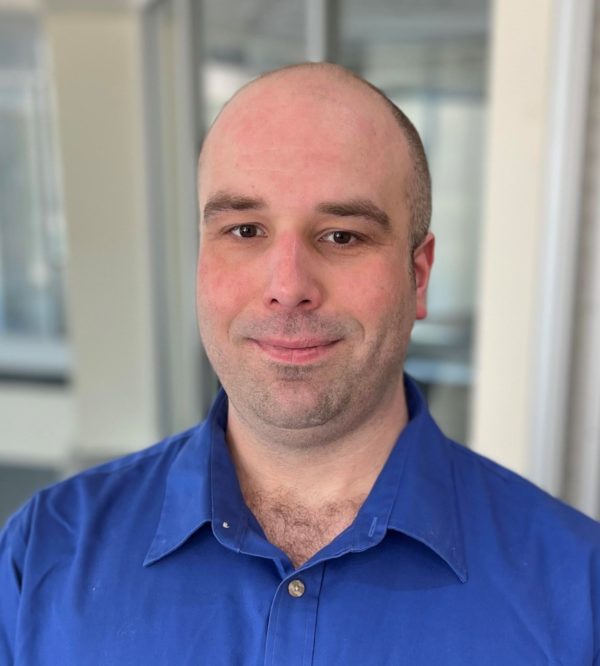
Michael Kordell is a Lecturer at Texas A&M University, specializing in high-energy physics and particle physics. His research focuses on jet quenching, quark-gluon plasma dynamics, and Bayesian analysis of jet-medium interactions. He collaborates extensively with the JETSCAPE framework to simulate jet evolution in heavy-ion collisions. Key contributions include studies on photon-triggered jets, hybrid hadronization models, and multistage energy-loss mechanisms. His work spans 2013–2025, with over 30 publications. Major topics include jet substructure analysis, heavy flavor propagation in nuclear media, and parameter estimation techniques for QGP transport coefficients. His studies utilize both theoretical models and experimental data from small and large collision systems. Notable collaborations involve the JETSCAPE project, focusing on computational frameworks for jet shower simulation and in-medium effects. His research bridges particle physics with nuclear physics, particularly in understanding medium-induced effects on jet dynamics.
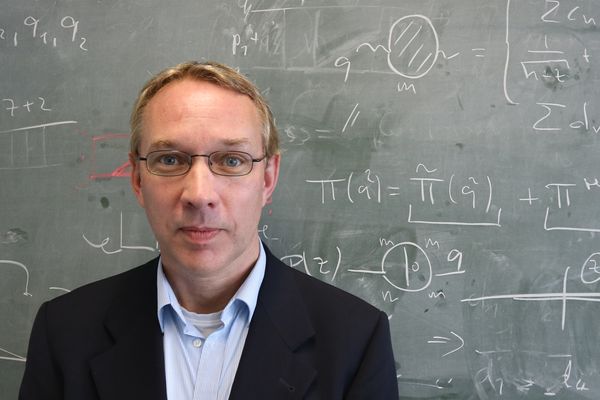
Prof. Dr. Matthias Steinhauser is a faculty member at the Karlsruhe Institute of Technology (KIT), affiliated with the Institute for Theoretical Particle Physics (TTP) since October 2004. His research focuses on precision calculations in particle physics, particularly in Higgs boson production, rare B meson decays, non-relativistic QCD, and multi-loop corrections. Research Interests: Higgs boson production at the LHC Rare B meson decays as probes for physics beyond the Standard Model Non-relativistic QCD and QED Massive and massless form factors Automation of multi-loop calculations Prof. Steinhauser’s recent publications (2025–2024) emphasize next-to-leading and next-to-next-to-leading order QCD corrections for Higgs boson production, B meson mixing, and decay rates. His work includes advanced computational techniques and high-order quantum corrections. Contact Information: Room: 11/11 Phone: +49 (0)721 608 - 47149 Email: Matthias.Steinhauser@kit.edu Office hours: Tuesday 13:30–14:30 and by request
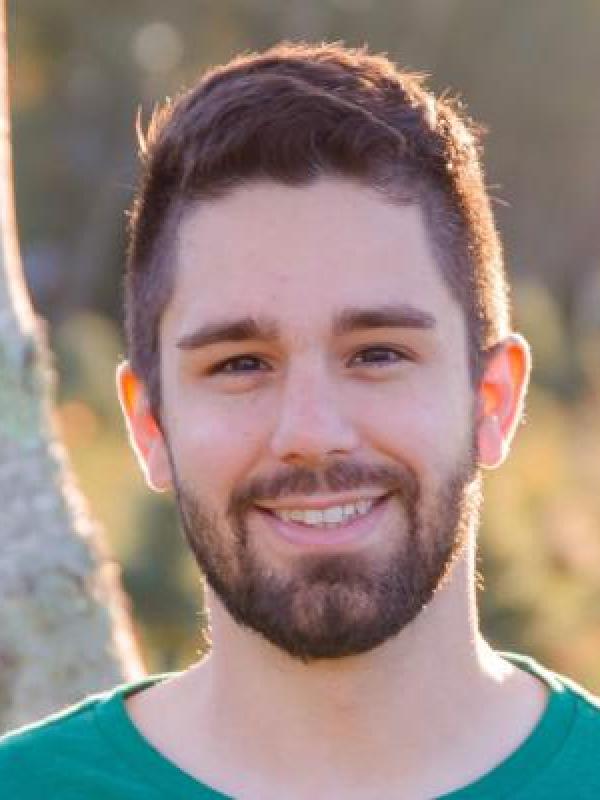
Daniel Brandenburg is an Assistant Professor of Physics at Ohio State University, affiliated with the Physics Research Building. His research focuses on studying nuclear matter under extreme conditions via relativistic heavy-ion collisions, particularly creating and analyzing the quark-gluon plasma (QGP). He is a key member of the STAR Experiment at RHIC and the EPIC Collaboration for the Electron Ion Collider (EIC). His work explores ultra-strong electromagnetic fields generated in collisions to probe QGP dynamics and search for physics beyond the Standard Model. Brandenburg holds a B.S. in Physics from the University of Florida (2013), followed by an M.S. (2015) and Ph.D. (2016) in Physics from Rice University. He has received notable awards including the Blavatnik Regional Award (2022), Elsevier Young Scientist Award (2019), and Goldhaber Fellowship (2020). His research interests span QGP imaging using high-energy photons, gluon tomography in nuclei, and precision measurements with the upcoming EIC. Recent work includes studies on charge-parity symmetry breaking in baryons, entanglement-based interferometry, and observation of antimatter hypernuclei. His group actively develops detector technologies for STAR and EPIC collaborations. Key achievements include publishing over 50 peer-reviewed articles since 2023, focusing on flow coefficients, strangeness production, and jet modifications in heavy-ion collisions. His 2025 work on QGP photon imaging and 2024 discoveries in ultra-peripheral collisions highlight his contributions to advancing frontier physics.
Thomas Cohen is a Professor and Associate Chair in the Department of Physics at the University of Maryland. He holds a B.A. from Harvard College (1980) and a Ph.D. from the University of Pennsylvania (1985). A Fellow of the American Physical Society, he was also an NSF Presidential Young Investigator from 1990 to 1995. His teaching accolades include the Celebrating Teaching Award, Dean's Award for Excellence in Teaching, and Distinguished Scholar-Teacher Award. Cohen's research focuses on quarks, hadrons, and nuclei, with affiliations to the Maryland Center for Fundamental Physics. His work explores QCD dynamics, exotic hadrons, and quantum algorithms for particle physics. Recent contributions include studies on gauge invariance, heavy-ion collisions, and adiabatic quantum computing. His research spans theoretical particle physics, nuclear physics, and computational methods, with notable publications on QCD phase diagrams, tetraquark states, and adiabatic state preparation. Cohen actively collaborates on projects involving quantum simulations and high-energy physics phenomena. His awards reflect both scholarly and pedagogical excellence.
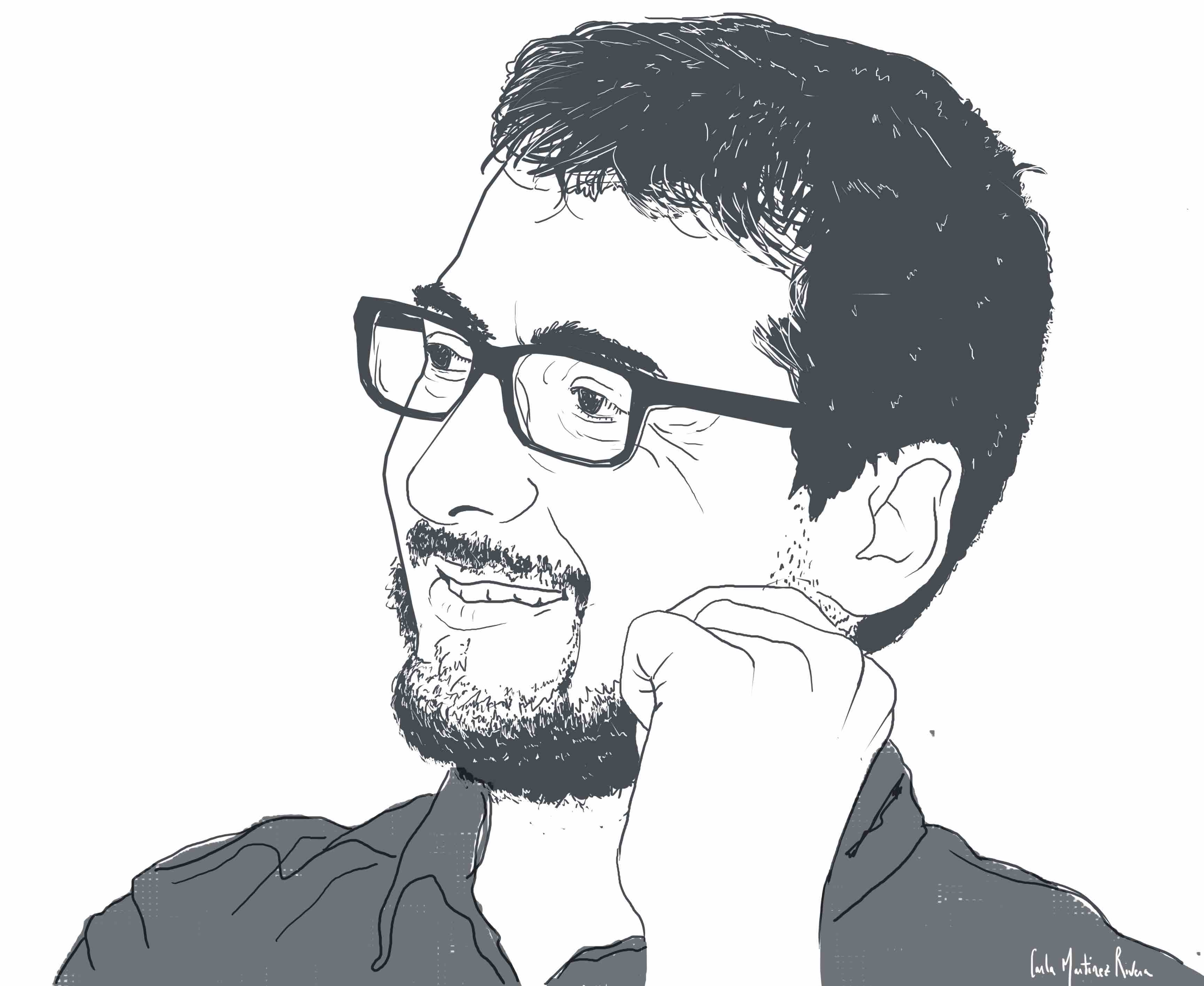
Dr. Gines Martinez is a Director of Research at CNRS/IN2P3 and Director of SUBATECH laboratory at IMT Atlantique. His research focuses on experimental study of quark-gluon plasma using relativistic heavy ion collisions at ALICE (LHC) and PHENIX (RHIC) experiments. He teaches Experimental Physics of Strong/Weak Interactions at Université de Nantes and electromagnetism/quantum mechanics at IMT Atlantique. Research Interests: Quark-gluon plasma formation, particle production in hadronic collisions, deuteron formation mechanisms, and ultra-relativistic nuclear collisions. Recent Publications: Focus on femtoscopy, flow harmonics, and QCD phase diagram using LHC data. Research reveals insights into nucleosynthesis in hadronic collisions and QCD matter behavior under extreme conditions. Outreach: Featured in Ouest-France and El País, with seminars on physics education in prisons and schools.
Didar Dobur is an Associate Professor at the Department of Physics and Astronomy , Faculty of Sciences , Ghent University . His research focuses on Experimental Particle Physics , particularly High-Energy Physics and Collider Studies . He leads projects at the CERN Large Hadron Collider using the CMS detector , investigating New Physics Beyond the Standard Model , including axion-like particles, supersymmetry, and Higgs-top couplings. Current projects: AxiTop , FLAMENCO , Unlocking the charm-Higgs coupling Grants: Research Foundation - Flanders (FWO) , Special Research Fund His recent publications (2023-2025) analyze top quark interactions , Higgs boson decays , and long-lived particle signatures using LHC data. Key subfields include Effective Field Theory , Muon Radiography , and Neutrino Experiments . As a PhD supervisor and promotor , he has guided researchers like Bob Oeyen and Luka Lambrecht in studies of CERN experiments and detector development . Current lab collaborations involve CMS Phase-2 Upgrade and SHiP experiment R&D.
Saroj Pokharel is an Instructor in the Department of Physics and Astronomy at the University of Mississippi. He holds an M.A. in Physics from the same institution (2023). His research focuses on experimental particle physics, particularly using data from the Belle and Belle II experiments. Key areas include CP violation studies, lepton flavor violation searches, dark matter physics, and precision measurements of quark mixing parameters (CKM matrix angles). His work involves analyzing B-meson decays to probe physics beyond the Standard Model, including searches for axion-like particles, dark Higgs bosons, and rare tau decays. He contributes to experiments at high-energy colliders, focusing on topics like flavor physics, hadron spectroscopy, and precision measurements of branching fractions and asymmetries. Recent studies highlight investigations into singly Cabibbo-suppressed decays, tests of lepton flavor universality, and CP violation in Bs and B meson systems. His experimental techniques include advanced flavor tagging methods and analysis of semileptonic decays.
Mitchell Wayne is a Professor in the Department of Physics and Astronomy at the University of Notre Dame. His research centers on proton-proton collisions at the CMS detector at CERN's Large Hadron Collider, including Higgs boson studies and searches beyond the Standard Model. Honors include American Physical Society Fellowship and multiple teaching awards. His detector R&D focuses on fiber tracking, calorimetry, and Silicon Photomultipliers for CMS upgrades. Awards: Fellow of APS, Joyce Teaching Award (2019), Shilts-Leonard Teaching Award (2002), Kaneb Teaching Award (1999) Student Advising: Supervised 5 PhD students in particle physics and detector development
Professor Guennadi Borissov is affiliated with the Department of Physics at Lancaster University , actively participating in the ATLAS experiment at CERN . His research focuses on CP violation in particles containing b quarks , aiming to explain the universe's matter-antimatter imbalance. Research Interests: Dr. Borissov investigates deviations from lepton flavor universality (LFU) using top quark decays to tauons. His work involves precision measurements of branching fractions and testing Standard Model predictions through ATLAS detector data . Recent Publications (2025): His contributions include studies on jet track functions, Higgs boson decays, W-boson cross-sections, and searches for new physics phenomena like heavy neutral leptons and long-lived particles. These articles emphasize Standard Model validation , CP violation , and detector performance . Grants & Projects: He is involved in responsive and consolidated grants funded by the STFC , supporting Lancaster's Experimental Particle Physics group and ATLAS-related research (2022–2026). PhD Supervision: Dr. Borissov supervises Beltran Fernandez Barbadillo , focusing on top quark decay measurements. Contact: Department of Physics, B016, B-Floor, Physics Building, Lancaster University. Email: g.borissov@lancaster.ac.uk .
Adam K. Leibovich serves as the Dean of the Kenneth P. Dietrich School of Arts and Sciences at the University of Pittsburgh. He holds the rank of Professor and specializes in particle physics, focusing on Standard Model interactions, gravitational waves, and LHC physics. His research employs effective field theory techniques to study quarkonia, radiation reaction in compact binaries, and dark matter constraints. Key awards include AAAS and APS Fellowships (2018 and 2017), the Bellet Teaching Excellence Award (2010), and NSF CAREER and Cottrell Scholar Awards (2006). His work spans over 150 publications, with recent contributions on Higgs boson decays to charmonia and gravitational wave dynamics. Leibovich advises graduate students in theoretical physics and has contributed to LHCb experiments on quarkonium production. His leadership emphasizes interdisciplinary education and cutting-edge research in physics and astronomy.
Zohreh Davoudi is an Associate Professor in the Department of Physics at the University of Maryland, College Park. She holds additional roles as a Fellow of the Joint Center for Quantum Information and Computer Science (QuICS) and Associate Director for Education at the NSF Institute for Robust Quantum Simulation. Her research focuses on simulating strongly interacting systems using lattice quantum chromodynamics (LQCD), quantum simulation, and quantum computing. She earned her B.Sc. and M.Sc. from Sharif University of Technology in Iran, followed by a Ph.D. in Theoretical Physics from the University of Washington (2014), and served as a postdoctoral researcher at MIT's Center for Theoretical Physics before joining UMD in 2017. Her research interests include developing computational frameworks to study nuclear and particle physics phenomena, such as neutrino interactions, dark matter scattering, and neutron star dynamics. She has pioneered efforts to leverage quantum computing to address the 'sign problem' in fermionic systems and simulate real-time dynamics of early universe matter. Notable awards include the 2025 Presidential Early Career Award, 2024 Simons Emmy Noether Fellowship, and 2019 Alfred P. Sloan Fellowship. Her educational contributions include leading training programs in quantum information science and fostering collaborations across institutes like RIKEN (2017–2021) and the NSF Quantum Simulation Institute. She supervises a dynamic research group focused on lattice gauge theory, quantum algorithms, and interdisciplinary applications such as neutrinoless double-beta decay calculations.
Prof. Rainer Wallny is a Full Professor of Physics at ETH Zurich and Head of the Institute for Particle Physics and Astrophysics. His research focuses on high-energy particle physics, particularly through the CMS experiment at the Large Hadron Collider (LHC), emphasizing Higgs boson studies and detector upgrades. He leads projects on Higgs boson characterization in photon and b-quark final states, as well as CMS pixel detector upgrades for Phase-2. His group also explores future collider technologies and contributes to teaching at all academic levels. Education: Studied Physics at Universities of Tübingen, Washington (M.Sc., 1994), and Heidelberg (Diplom, 1996) PhD in Physics from University of Zurich CERN Research Fellow (2001–2003) Faculty at UCLA (2003–2010), promoted to Full Professor in 2010 Joined ETH Zurich as Full Professor in 2010 Research Interests: Higgs boson properties and decay channels Supersymmetry searches in CMS data Detector development for CMS (pixel trackers, diamond sensors) Phase-2 LHC upgrade technologies Experimental particle physics at high-luminosity colliders Grants and Advising: Supervised over 20 PhD students since 2010 Leadership roles in CMS collaboration and detector R&D initiatives Active in curriculum design for physics education at ETH Labs & Teams: Wallny Group at ETH Zurich Institute for Particle Physics and Astrophysics (D-PHYS) Collaborations with CERN and global CMS teams
Cynthia Yan is a Visiting Professor in the Physics Department at Stanford University, affiliated with the School of Humanities and Sciences. Her academic appointment was noted for the 2019 academic year. Her research focuses on theoretical physics with an emphasis on quantum gravity, string theory, supersymmetry, and black hole physics. She explores topics such as BPS black hole microstates, entanglement in quantum systems, and holographic dualities. Her work bridges advanced mathematical techniques with foundational questions in high-energy physics, including studies on wormholes, topological quantum field theories, and the interplay between QCD effects and particle physics observables like the Z boson forward-backward asymmetry. While specific grants or awards are not listed, her publications reflect engagement with cutting-edge theoretical frameworks and interdisciplinary methods. Though no student advisees are explicitly documented here, her contributions to areas like matrix theory and emergent spacetime suggest involvement in graduate-level research training. Contact information specific to her role is not provided in the available data.
Allen Mincer is a Professor of Physics and Collegiate Professor at New York University's College of Arts and Science, Department of Physics. He leads research in experimental high energy particle physics and astrophysics as a member of the NYU Experimental Particle Physics Group, with major contributions to the ATLAS and Milagro collaborations. His educational background includes a Ph.D. from the University of Maryland, College Park (1984) and a B.S. from Brooklyn College (1978). Mincer's research spans particle physics discoveries (top quark, Higgs boson) and cosmic ray astrophysics. He specializes in detector development, data analysis for high-energy collisions, and cosmic ray observations. His work integrates experimental physics with innovative educational approaches, particularly in physics pedagogy. Analysis of his publications (2020-2005) reveals dual research trajectories: LHC-focused studies on Higgs physics, supersymmetry searches, and trigger systems via ATLAS, alongside Milagro-based cosmic ray research mapping TeV emissions and anisotropies in the Galactic plane. His scientific recognition includes: Teach/Tech Award, New York University (2018) Collegiate Professor appointment at NYU (2008) Golden Dozen Teaching Award, NYU (1995, 2000) Mincer mentors undergraduate and graduate researchers while pioneering physics education through flipped classrooms, experimental pedagogy courses, and curriculum development for courses ranging from introductory physics to graduate particle physics. He actively contributes to the NYU Experimental Particle Physics Group, maintaining leadership roles in ATLAS detector operations and Milagro cosmic ray data analysis.
Corbin E. Covault serves as Professor and Chair of the Department of Physics at Case Western Reserve University (CWRU), leading experimental research in particle astrophysics and cosmic ray physics through major international collaborations including the Pierre Auger Observatory and Cherenkov Telescope Array (CTA). B.A., Massachusetts Institute of Technology (1985) Ph.D., Harvard University (1991) Covault's research centers on experimental particle astrophysics with emphasis on ultra-high energy cosmic rays, gamma-ray astronomy, and advanced instrumentation. His group develops photodetection systems, GPS timing solutions, and wireless communications for cosmic ray detectors. Key projects include investigating macroscopic dark matter using Auger fluorescence telescopes, designing a 100+ meter diameter 'flat' telescope for exoplanet detection, and pioneering spectral CT imaging with quantum dot X-ray detectors. His instrumentation work directly impacts next-generation observatories like CTA, where his team deploys silicon photomultiplier camera systems. Analysis of Covault's 15 most recent publications (2016-2019) reveals dominant research trends in cosmic ray mass composition, anisotropy studies, and multi-messenger astrophysics. His work consistently bridges particle physics and astrophysics through ultra-high energy cosmic ray observations, neutrino follow-ups of gravitational wave events, and development of novel detection methodologies. Key thematic areas include hadronic interaction modeling at extreme energies, radio-based cosmic ray detection, and searches for exotic particles like magnetic monopoles. Covault leads the CWRU group in the Pierre Auger Collaboration as a member of its 15-person Technical Board, overseeing instrument performance and data integrity. His group received MRI grant funding for CTA camera development starting August 2018, focusing on GPS timing synchronization and rapid trigger processing. Collaborative projects include spectral CT imaging with Philips and Wayne State University, optical SETI telescope development, and macro dark matter investigations with Glenn Starkman. His laboratory activities center on the Auger and CTA observatories, with instrumentation specialties in photodetection systems, GPS timing networks, and wireless data transfer. The CWRU group maintains active roles in Auger's science analysis teams and CTA's prototype deployment at Mt. Hopkins Observatory, Arizona.