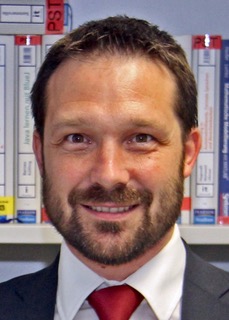
Professor Carsten Welsch is a leading physicist in accelerator science and technology at the University of Liverpool. He founded the QUASAR Group in 2008 and served as Head of the Physics Department from 2016 to 2023. His work bridges cutting-edge research in antimatter physics, beam diagnostics, and innovative accelerator design with strategic leadership in education and international collaboration. PhD in Accelerator Physics, University of Frankfurt Postdoc, Max Planck Institute for Nuclear Physics CERN Fellow (2005) His research focuses on low-energy antimatter physics , plasma wakefield acceleration , and dielectric laser accelerators , with applications in medicine and global challenges. Recent publications highlight advancements in betatron radiation modeling, positronium cooling, and plasma-driven acceleration techniques. He has secured over 25M€ in EU funding for networks like AVA and EuPRAXIA, trained 100+ Marie Curie Fellows, and founded D-Beam Ltd for beam instrumentation. Awards include the Viddy Platinum Award (2022) and Helmholtz-University YIG Award (2006). As Director of the LIV.INNO Center for Doctoral Training, he champions data-intensive science education. His outreach efforts have impacted millions globally, emphasizing discovery science and accelerator technology's societal benefits.
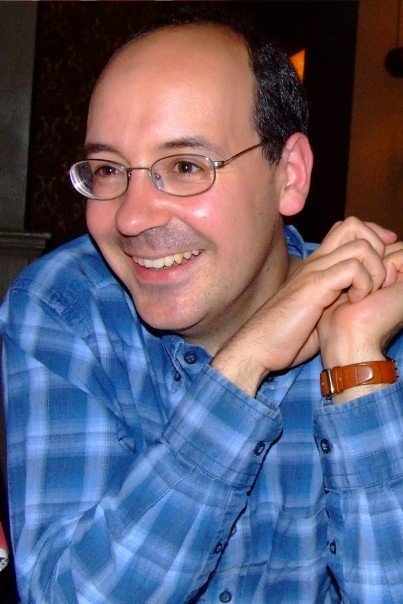
Victor Flynn is a Professor at the Mathematical Institute, University of Oxford, specializing in Number Theory and Arithmetic Geometry. He holds a PhD from the University of Cambridge and leads research in the Number Theory group at Oxford's Mathematical Institute, located at the Andrew Wiles Building. His research focuses on: Abelian varieties and Jacobians of curves Structure and visualization of Shafarevich-Tate groups Brauer-Manin obstructions in Diophantine equations Cryptographic applications of isogenies in genus two curves Arithmetic properties of algebraic surfaces and coverings Recent publications demonstrate a consistent focus on Tate-Shafarevich groups, with 2023-2024 works exploring p-torsion growth and Kummer surface isogenies. His research connects arithmetic geometry with post-quantum cryptography, particularly through genus two isogeny constructions.
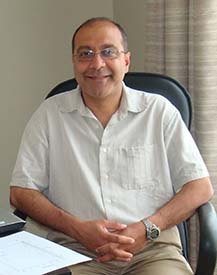
Witold "Witek" Nazarewicz is a John A. Hannah Distinguished Professor in the Department of Physics & Astronomy at Michigan State University and serves as the Chief Scientist at the Facility for Rare Isotope Beams (FRIB). He is also a Corporate Fellow Emeritus at Oak Ridge National Laboratory (ORNL) and maintains a professorship at Warsaw University, Poland. Nazarewicz previously held positions as James McConnell Distinguished Professor at the University of Tennessee and served as Scientific Director of ORNL's Holifield Radioactive Ion Beam Facility from 1999-2012. His academic career spans multiple international institutions including Lund University, University of Cologne, Kyoto University, University of Liverpool, and Peking University. Nazarewicz's research focuses on theoretical nuclear physics with particular emphasis on exotic nuclei at the limits of nuclear existence. His work spans quantum many-body problems, physics of open quantum systems, superheavy elements, and nuclear fission. He has pioneered approaches to unify structure and reaction aspects of nuclei based on open quantum system many-body formalism, including the Gamow Shell Model. His research connects nuclear physics with high-performance computing, developing comprehensive descriptions of all nuclei through theoretical and experimental investigations of rare atomic nuclei. An analysis of Nazarewicz's recent publications reveals a strong focus on cutting-edge nuclear structure research, particularly concerning exotic nuclei near the driplines, charge radii measurements, superheavy elements, and the development of advanced computational methods. His work increasingly incorporates machine learning and Bayesian analysis techniques to address nuclear physics challenges. The publications demonstrate his leadership in connecting fundamental nuclear physics with applications in nuclear astrophysics, while also addressing foundational questions about the limits of nuclear existence and the nature of nuclear forces. Fellow of the American Physical Society Fellow of the U.K. Institute of Physics Fellow of the American Association for the Advancement of Science 2008 Carnegie Centenary Professor Honorary Doctorates from University of the West of Scotland (2009) and University of York (2019) 2012 Tom W. Bonner Prize in Nuclear Physics 2012 ORNL Distinguished Scientist 2013 UT-Battelle Corporate Fellow 2017 G.N. Flerov Prize 2025 Marian Smoluchowski Medal Nazarewicz has authored approximately 500 peer-reviewed publications with over 37,000 citations and an h-index of 103 (Web of Science). He has delivered over 220 invited talks at major international conferences and organized approximately 70 scientific meetings. His research has been supported by numerous grants from the Department of Energy, National Science Foundation, and international funding agencies. Nazarewicz plays a leadership role in major nuclear physics initiatives including the UNEDF, NUCLEI, and BAND collaborations, and has contributed to several National Academies reports on nuclear physics. As FRIB Chief Scientist, Nazarewicz leads theoretical efforts at one of the world's premier facilities for rare isotope research. His research group at MSU collaborates extensively with experimentalists worldwide, bridging theoretical predictions with cutting-edge measurements. He directs the FRIB Theory Alliance, fostering international collaboration in nuclear theory, and has established strong connections between nuclear physics and other disciplines including quantum information science and machine learning.
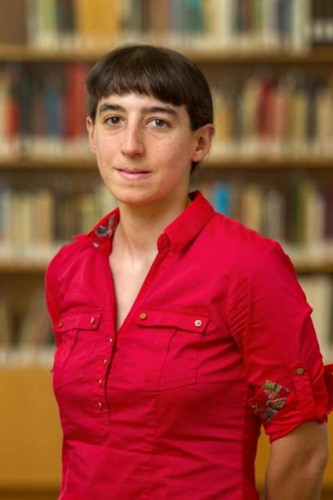
Dr. Éric Hébrard is a Senior Lecturer in Astrophysics at the University of Exeter since 2018, with prior academic roles including NASA Goddard Senior Research Fellow and CNRS Research Associate. His work bridges planetary atmospheres, astrochemistry, and combustion modeling with expertise in 3D chemical simulations. PhD in Physics and Chemistry of Planetary Atmospheres, Université Paris 7 (2006) Magna cum laude Magistère Interuniversitaire de Chimie, ENS Paris (2003) Research focuses on: Exoplanetary atmosphere modeling (hot Jupiters, TRAPPIST-1e) Photochemical kinetics and UV absorption Coupling of atmospheric circulation and chemistry Cross-disciplinary combustion-atmosphere analogs Chemical validation strategies for model accuracy Scientific contributions include: NASA-funded research on organic-rich habitable zones Development of KIDA kinetic database for astrochemistry STFC Consolidated Grant for multi-dimensional chemical models Quantum chemistry integration for Titan atmosphere studies Awards: Higher Education Academy Fellowship (ASPIRE program) NASA Postdoctoral Fellowship (2015-2017) CNES Postdoctoral Fellowship (2007-2009)
Prof. Dr. Ferdinand Evers is a Chair of Computational Condensed Matter Theory at the Institute of Theoretical Physics , University of Regensburg. His research spans quantum transport , spintronics , molecular electronics , and many-body localization , with a focus on ab initio and DFT-based modeling of nanostructures and low-dimensional systems . Key Research Areas: Quantum transport in molecular junctions Spin-orbit coupling and chiral effects Multifractality at quantum phase transitions Electronic structure of topological materials Ultrafast laser-driven electron dynamics Anderson localization and disorder Recent Article Trends (2021–2024): High-harmonic generation in topological insulators Spin-selective transport in chiral systems Mechanical torque in molecular rotors Self-consistent GW methods for molecular electronics Quantum interference in graphene nanoribbons Teaching: Lecturer for Theoretical Physics I-IV , Advanced Quantum Mechanics , and Scientific Perspectives courses at the University of Regensburg Focus on statistical mechanics , quantum transport , and computational nanoscience
Jiří Novotný is a Professor at the Faculty of Mathematics and Physics of Charles University in Prague, Czech Republic. He is affiliated with the Institute of Particle and Nuclear Physics , where his research focuses on theoretical particle physics, quantum field theory, and low-energy QCD phenomena. He is actively involved in teaching and research, with a strong publication record in high-impact journals. Research Interests Prof. Novotný's research spans a wide range of topics in theoretical physics, with a particular emphasis on: Quantum Field Theory : Anomalies, effective Lagrangians, and chiral perturbation theory. Low-Energy QCD : Chiral symmetry breaking, order parameters, and meson decays. Scattering Amplitudes : Soft theorems, celestial holography, and modern amplitude techniques. Effective Field Theories : Galileon theories, DBI actions, and their generalizations. Publications and Research Impact His recent work has significantly advanced the understanding of soft theorems in gauge and gravity theories, the structure of scattering amplitudes in chiral perturbation theory, and the application of celestial holography to flat-space physics. His publications often appear in top-tier journals such as Journal of High Energy Physics (JHEP) , Physical Review D , and Physical Review Letters . Teaching and Outreach Prof. Novotný teaches advanced courses in Quantum Field Theory I & II and Selected Parts of Quantum Field Theory . He is also involved in the Physics Olympiad to promote physics education among students.
Rupert Frank is a Professor of Mathematics at the University of Munich (LMU Munich) . He has held academic positions at Caltech (2013–2021) and Princeton University (2009–2013). His research spans Mathematical Physics , Spectral Theory , and Functional Inequalities , with a focus on quantum many-body systems, stability of matter, and nonlocal operators. Research Themes : Analysis of eigenvalues for Schrödinger and Pauli operators with complex potentials Semi-classical spectral asymptotics and effective theories for quantum systems Matrix inequalities and quantum information theory Calculus of variations in models like the liquid drop problem Geometric inequalities and their applications to quantum mechanics Magnetic field effects on spectral properties Recent Publications : 2025: Sharp stability for Sobolev/log-Sobolev inequalities with dimensional dependence 2025: Endpoint Schatten class properties of commutators 2024: Degenerate stability of Caffarelli-Kohn-Nirenberg inequality 2024: Hardy inequalities for large fermionic systems 2023: Review on Scott conjecture for Coulomb systems Scientific Awards : Young Scientist Prize in Mathematical Physics (2009) Grants and Collaborations : Principal Investigator in CRC TRR 352 (2023–) PI in Munich Center for Quantum Science and Technology (2019–) Multiple NSF grants (2009–2020) DFG and DAAD grants Editorial and Conference Leadership : Editorial boards: Communications in Mathematical Physics , Journal in Mathematical Physics , Journal of Spectral Theory , SIAM Journal on Mathematical Analysis , Springer Lecture Notes Organized conferences/workshops on quantum many-body systems, spectral methods, and functional inequalities (2018–2025)
Dr. Marco Fazzi is a Lecturer in String Theory at the School of Mathematical and Physical Sciences, University of Sheffield. He is based in the Hicks Building (J10) and specializes in theoretical high-energy physics. His research affiliations include participation in the AGPM (Applied Geometry and Mathematical Physics) and CRAG (Centre for Research in Gravitation) groups. Dr. Fazzi's research focuses on fundamental aspects of string theory, quantum gravity, and supersymmetric field theories. Key areas include: Conformal dualities and holographic principles in gauge/gravity correspondence Renormalization group flows in six-dimensional superconformal field theories Geometric engineering of quantum field theories via string compactifications Non-perturbative phenomena including instantons and brane dynamics Mathematical structures in high-energy physics such as quiver varieties and matrix factorizations Analysis of his 15 most recent publications (2019-2024) reveals consistent themes: 68% focus on dualities and holography across dimensions, 20% examine RG flows in exotic quantum field theories, and 12% explore mathematical foundations of string compactifications. Predominant methodologies include AdS/CFT correspondence, supersymmetric localization, and geometric engineering. Dr. Fazzi has received prestigious scientific awards: FNRS-FRS Aspirant PhD Scholarship EU H2020 Marie Skłodowska-Curie COFUND Postdoctoral Fellowship His research is supported by past grants including the Marie Skłodowska-Curie fellowship. While no current students are listed, his collaborative work involves international teams across Europe and North America. Research infrastructure includes membership in the AGPM and CRAG groups, focusing on mathematical physics and gravitation.
James Martin is a Lecturer at the Department of Statistics, University of Oxford . He is affiliated with St Hugh's College and has been actively involved in organizing probability seminars since 2018. Research Interests Probability theory Random graphs and percolation Interacting particle systems Models of random growth and coagulation-fragmentation Queueing networks Combinatorial games Teaching Courses: Prelims Probability , Part A Probability , Part B Statistical Lifetime Models , Part C Probabilistic Combinatorics His publications focus on probability theory , statistical physics , and combinatorial structures . Recent work includes studies on last-passage percolation, multispecies exclusion processes, and integrable probability models. James Martin collaborates with researchers from institutions such as Uppsala University, University of Cambridge, Imperial College London, and Kyoto University. He has been a key organizer for the Oxford Probability Seminar since 2018.
Christian Hirsch is an Associate Professor for Data Science and Statistics at Aarhus University, where he studies random networks motivated from biology and health sciences through techniques from topological data analysis and stochastic geometry. He is a member of the Stochastics group at the Department of Mathematics and holds additional affiliations as an Associate Fellow of the Aarhus Institute for Advanced Studies, and with the AU DIGIT Centre and the AU Quantum Campus. Current Position: Associate Professor for Data Science and Statistics, Aarhus University Previous Positions: Assistant Professor at University of Groningen and University of Mannheim Postdoctoral Experience: Aalborg University, LMU Munich, WIAS Berlin Education: PhD from Ulm University Christian Hirsch's research focuses on the statistical foundations of topological data analysis, large deviations theory in stochastic geometry, and percolation theory of spatial random networks. His work bridges theoretical mathematics with practical applications in data science, particularly in analyzing complex structures through topological methods. He investigates how topological features form and disappear in growing data structures, developing statistical tests to determine whether observed patterns are significant or merely random occurrences. His recent publications reveal a strong trend toward applying topological data analysis to increasingly complex structures, with significant focus on statistical validation of topological features. Hirsch has made substantial contributions to understanding the probabilistic behavior of persistent homology, developing functional central limit theorems and large deviation principles for topological functionals. His work spans theoretical foundations in stochastic geometry while finding applications in materials science, neural networks, and wireless communication systems. As an educator, Hirsch teaches graduate courses including Topological Data Analysis, Stochastic Geometry, Monte Carlo Simulation, Markov Decision Processes, Probability Theory, and Stochastic Processes. He has supervised numerous PhD, MSc, and BSc students, with several of his former students securing academic positions at institutions like University of Leiden, Tokyo Institute of Technology, and Budapest University of Technology. Hirsch leads a research group within the Stochastics group at Aarhus University, collaborating extensively with researchers across Europe and North America. His work demonstrates how topological methods can provide rigorous statistical insights into complex data structures, making significant contributions to both theoretical mathematics and practical data analysis techniques.
Al-Amin Dhirani is an Associate Professor in the Department of Chemistry at the University of Toronto, located in the Lash Miller Chemical Laboratories. His research focuses on nanoengineered materials, particularly quantum nanoengineered materials (q-NEMS), which exhibit emergent quantum phenomena. Key themes include bottom-up synthesis of nanostructured materials, development of novel fabrication techniques for 2D materials like MoS₂, and applications in green technologies and electrochemical sensing. Research interests emphasize hybrid molecule-nanostructure states (HYMNS) that enhance optical/electrical properties, as well as advanced applications such as conductivity meters and water electrolysis materials. His lab has pioneered methods for defect healing in exfoliated MoS₂ and scalable assembly of nanostructured films. Recent achievements include student milestones like Steven Gravelsins’ PhD completion and Monique’s NSERC postdoc fellowship. Located at 80 St. George Street, the Dhirani Lab collaborates on projects ranging from fundamental quantum transport studies to applied sensor technologies. The group actively publishes in top journals like ACS Nano and Communications Chemistry , with a focus on interdisciplinary material science and physics.
Karin A Dahmen is a Professor in the Department of Physics at the University of Illinois at Urbana-Champaign, affiliated with the Carl R. Woese Institute for Genomic Biology. Her research focuses on disordered systems, avalanche dynamics, and plasticity in metallic glasses. She explores material deformation mechanisms, critical phenomena, and the interplay between structure and mechanical properties in complex materials. Her work bridges condensed matter physics and materials science, with emphasis on slip avalanches in bulk metallic glasses, serration statistics in high-entropy alloys, and nanoscale magnetic ordering dynamics. Recent studies include experimental investigations of muscovite mica micromechanics and novel methods for analyzing compressive ductility in metallic glasses. Key achievements include the discovery of universal avalanche statistics across materials from nano-crystals to earthquakes, and the development of theoretical frameworks explaining memory effects in cyclically deformed glasses. Her honors include the APS Fellowship (2013), Guggenheim Fellowship (2016), and Sloan Research Fellowship (2001). Research trends show sustained focus on critical phenomena in materials under stress, with recent emphasis on seismic analogs in slip events and chemo-mechanical weakening mechanisms. Over 170 publications demonstrate her leadership in understanding deformation dynamics across multiple length scales.
Dr Maximilien Barbier serves as a Lecturer at the University of Surrey's School of Computing, Engineering and Physical Sciences, maintaining active research output through 2025. His academic profile is anchored in theoretical quantum mechanics with a distinctive focus on quantum backflow phenomena. Research interests center on quantum backflow , non-equilibrium statistical mechanics , and microreversibility principles . His work bridges fundamental quantum theory with practical applications, particularly in time-dependent quantum systems and transport phenomena. Key contributions include extending quantum backflow concepts to multi-particle systems and relativistic frameworks, while developing experiment-friendly formulations for observable quantum effects. Analysis of his 12 publications (2015-2025) reveals consistent focus on quantum measurement theory, with increasing emphasis on multi-dimensional systems and experimental validation pathways. His fingerprint profile shows 100% specialization in quantum backflow and microreversibility, with strong connections to non-equilibrium systems (87%) and fluctuation relations (41%). Scientific awards: None documented Dr Barbier collaborates extensively with researchers including Goussev, Fewster, and Srivastava across international institutions. His research demonstrates sustained funding through consistent publication output, though specific grants aren't detailed. Current work explores two-dimensional quantum backflow and time-of-arrival distributions, suggesting active laboratory or computational research environment despite no explicit lab description.
David Lewis is the Head of the Department of Materials and Professor of Materials Chemistry at the University of Manchester. His research focuses on energy-generation materials, including inorganic thin films and nanomaterials for applications in thermoelectrics, photocatalysis, and photovoltaics. He leads an internationally collaborative group exploring solution-phase synthesis routes and additive manufacturing techniques. Lewis holds editorial roles at Scientific Reports and Materials Science in Semiconductor Processing . Education: PhD in Chemistry MSc in Chemistry (1st Class Hons), University of Birmingham Research Interests: Lewis’s work centers on designing low-temperature syntheses of nanomaterials using molecular precursors. Key areas include layered and 2D materials (e.g., MoS2, black phosphorus), high-entropy materials, and superhydrophobic nanomaterials. His lab pioneers scalable methods like aerosol-assisted CVD and liquid-phase exfoliation. Grants & Awards: Lewis has secured £3.1M+ in funding, including EPSRC grants for nanofabrication and corrosion-resistant electrocatalysts. He received the IAAM Medal (2021) and FIMMM fellowship. His group hosts students via scholarships like the Presidential Doctoral Scheme. Labs & Teams: His lab collaborates globally on energy materials. Capacity-building initiatives include the Royal Society-funded CaGSUMI project for African solar cell development.
Brenda Rubenstein is an Associate Professor of Chemistry and Physics at Brown University and Director of the Data Science Institute. Her research bridges quantum chemistry and materials science, developing stochastic electronic structure methods for accurate large-scale simulations. She also explores molecular computing and computational biophysics. Her group emphasizes diversity, collaboration, and work-life balance. Recent work includes quantum Monte Carlo techniques for materials discovery, machine learning approaches for protein dynamics, and quantum computing applications. She received a named professorship in 2025 and leads the Levermore Global Scholars program. Her publications focus on computational methods across chemistry, physics, and materials science.