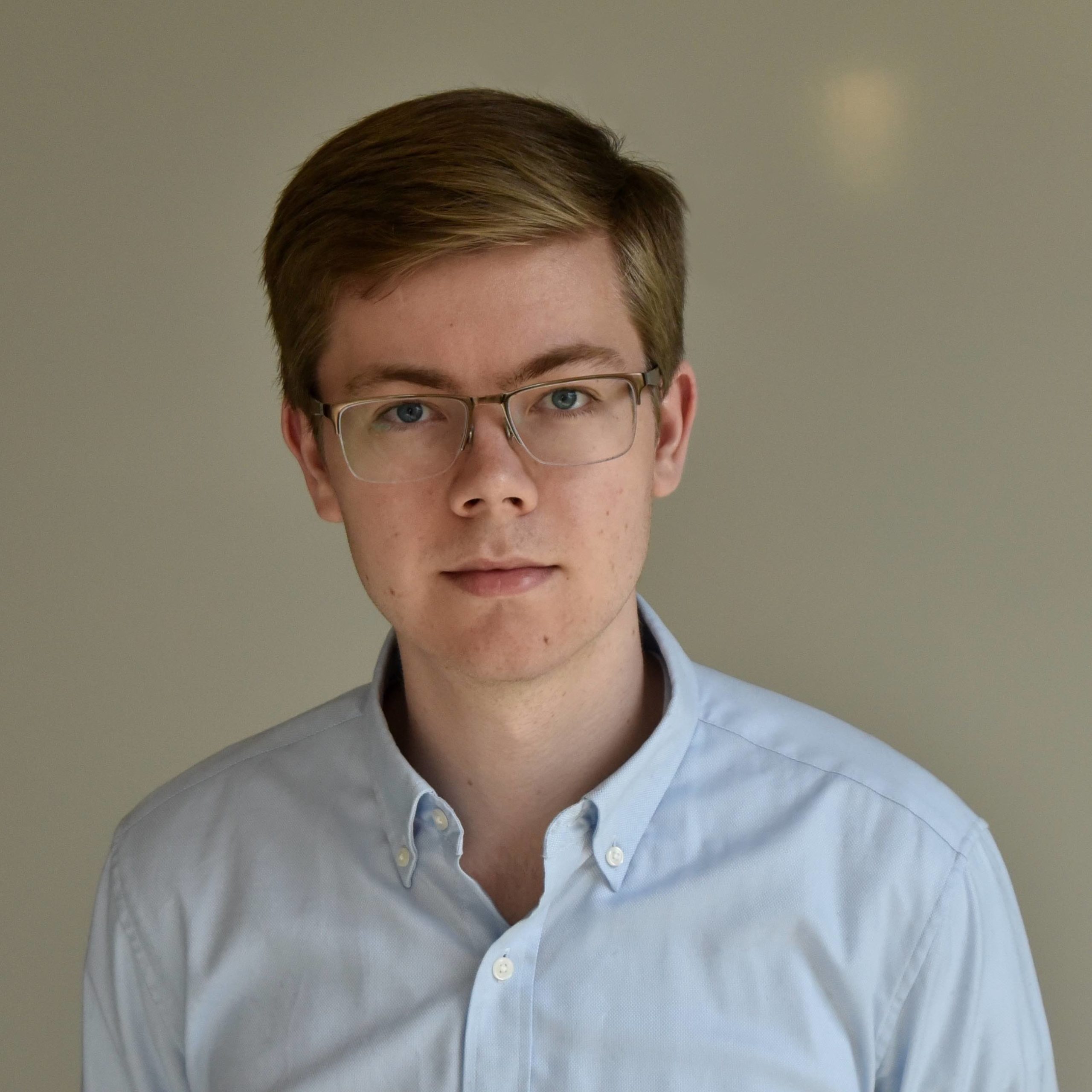
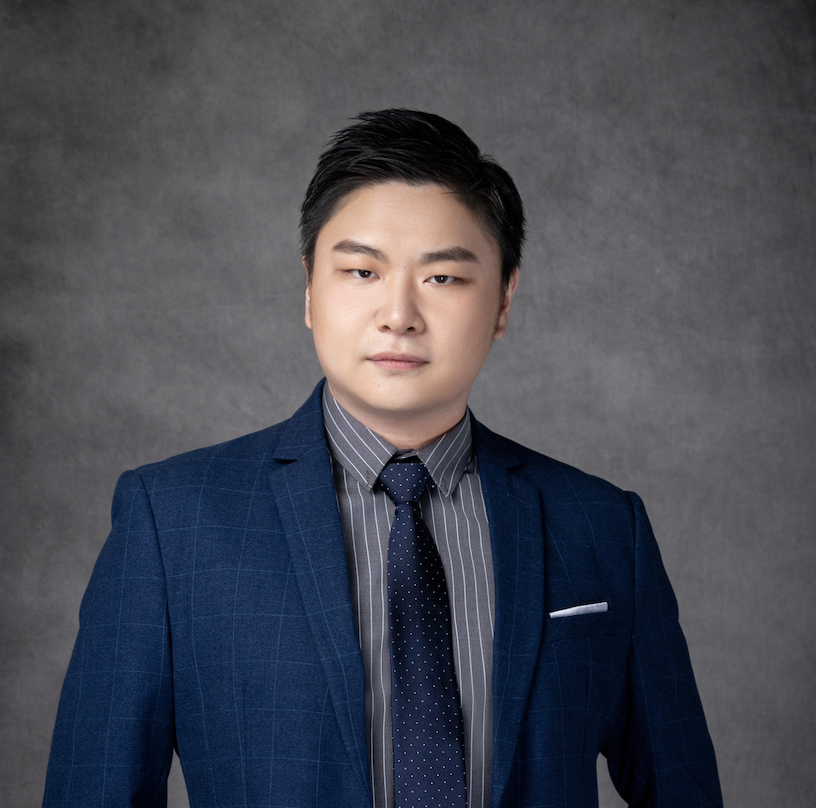
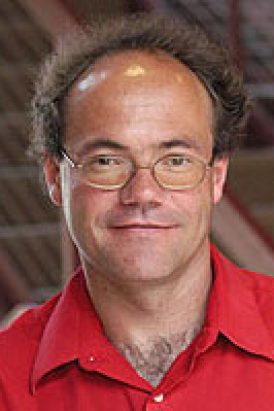
Michael McAlpine is a Professor in the Mechanical Engineering department at the University of Minnesota . He also holds affiliations with the Biomedical Engineering and Electrical and Computer Engineering departments. His research focuses on 3D printing functional materials & devices , Nanoscale inks , Biomedical devices , Bioelectronics , and Flexible Microsystems . Research Interests : 3D Printing, Biomedical Engineering, Nanotechnology, Flexible Electronics, Microfluidics Labs : ME 361/363 Contact : mcalpine@umn.edu , (612) 626-3303, ME 117 Recent Research Trends include 3D Printed Biomedical Devices , Flexible Electronics , and Bioprinting Applications . His work spans from Spinal Organoid Formation to Programmable Drug Release Capsules . Scientific Award : Circulation Research 2020 Best Manuscript Award
Caterina Consani is a Professor of Mathematics at Johns Hopkins University's Krieger School of Arts & Sciences. She holds a PhD from the University of Chicago (1996) and a Dottore di Ricerca in Matematica from the Universities of Genoa and Turin (1993). Her research focuses on arithmetic geometry, non-commutative geometry, and the development of absolute geometry over the 'absolute point.' She has contributed to foundational work on the BC-system, the Arithmetic Site, and the Scaling Site, linking number theory with geometric frameworks. Education: PhD in Mathematics, University of Chicago (1996); Dottore di Ricerca in Matematica, Universities of Genoa & Turin (1993). Prior to Johns Hopkins, she taught at MIT (1996–1999) and the University of Toronto (1999–2005). Research Interests: Arithmetic geometry, non-commutative geometry, absolute geometry in characteristic one, connections to number theory and the Riemann Hypothesis. Collaborations include work with Alain Connes on adele class spaces and non-commutative algebraic geometry. Awards: Fellow of the American Mathematical Society (2024); 2025 Best Paper AOFA Award (Annals of Functional Analysis). Editorial roles include the Journal of Number Theory and Journal of Noncommutative Geometry. Teaching: Offers advanced courses in algebraic geometry and number theory, including topics like étale cohomology and the yoga of weights in 'Weil II.' Grants: Supported by the Simons Foundation. Organized major conferences such as the JAMI Conference on Riemann-Roch in Characteristic One (2019).
Prof. Peter Scholze is a leading mathematician at the Max Planck Institute for Mathematics in Bonn, specializing in algebraic geometry and arithmetic geometry. He holds the academic rank of Professor and is part of the Arbeitsgruppe Algebraische Geometrie und Darstellungstheorie. His research focuses on foundational questions in algebraic geometry, number theory, and representation theory, particularly through the lens of the Langlands program, p-adic Hodge theory, and perfectoid spaces. Scholze has pioneered geometric approaches to the local Langlands correspondence and introduced revolutionary concepts like prismatic cohomology and condensed mathematics. He actively contributes to academia through advanced courses on topics such as geometrization of the Langlands program, étale cohomology, and condensed mathematics. His work bridges algebraic geometry with representation theory, addressing fundamental problems in arithmetic geometry and p-adic analysis. Scholze’s research outputs include seminal papers on perfectoid spaces, prismatic cohomology, and the geometrization of local Langlands correspondence. He collaborates extensively with leading mathematicians globally, contributing to collaborative research initiatives like the ARGOS seminar and the Habiro ring project. His teaching engagements include advanced lectures on algebraic geometry, representation theory, and p-adic geometry, reflecting his commitment to training the next generation of researchers. Despite no explicitly listed awards in the provided text, Scholze is widely recognized as a Fields Medalist (2018) and a leading figure in modern mathematics.
Professor Mikko Haataja is a distinguished faculty member in the Department of Mechanical and Aerospace Engineering at Princeton University's School of Engineering and Applied Science. Holding a Ph.D. from McGill University (2003), he leads the Haataja Research Group focused on theoretical and computational approaches to materials science and physical biology. His office is located in D404C Engineering Quadrangle, and he serves as an advisor to numerous graduate students working at the intersection of physics, materials science, and biology. Professor Haataja's research spans multiple domains including theoretical and computational materials science, physics of materials, and physical biology. His work examines microstructure formation during solid-solid phase transformations and solidification, growth of electrodeposited thin films and quantum heterostructures, dynamics of driven interfaces with mobile impurities, recrystallization kinetics, cell signaling mechanisms, and the regulation & self-organization of 'lipid rafts' in plasma membranes. His group has pioneered concepts in 'dynamically programmable electromechanical 2D materials' and investigates phase separation phenomena in biological systems. His publication record demonstrates significant contributions across several key areas: intracellular phase transitions and biomolecular condensates, 2D transition metal dichalcogenide materials, lipid bilayer membrane physics, solid oxide fuel cells and batteries, and organic semiconductor thin films. His most recent work focuses on amyloid-like fibril formation, liquid-liquid phase separation in biological contexts, and defect engineering in 2D materials, reflecting his interdisciplinary approach that bridges physics, materials science, and biology. Professor Haataja actively mentors graduate students and postdoctoral researchers, with numerous co-authored publications indicating strong advising relationships. His research program encompasses multiple funded projects investigating materials for energy conversion and storage, intracellular organization mechanisms, and novel 2D material systems. The Haataja Group maintains strong collaborations with other Princeton researchers and external institutions, particularly in the fields of biophysics and advanced materials. The Haataja Group operates as a dynamic research laboratory employing computational modeling and theoretical approaches to address fundamental questions in materials science and biophysics. Their work spans from atomic-scale simulations to continuum modeling, with particular emphasis on phase-field crystal models, membrane biophysics, and 2D material systems. The group maintains specialized computational infrastructure for multiscale modeling and collaborates extensively with experimental groups to validate theoretical predictions.
Hugo de Lasa is a Full Professor at the Department of Chemical and Biochemical Engineering, Faculty of Engineering, University of Western Ontario. He holds a Bachelor in Chemical Engineering (1968) from Universidad Nacional del Sur, Argentina, and a Doctoral degree (1971) from Université de Nancy, France. Research Focus: Catalysis, Photocatalysis, Chemical Reactor Engineering, Fluidization, Biomass Gasification Awards: Research Excellence Prize (1998), Fellow of the Chemical Institute of Canada (2000), Medal of Research and Development (2000), Doctor Honoris Causa (2004, 2018) His work spans chemical reactor design , photocatalytic hydrogen production , and fluidized bed technologies . Recent publications highlight machine learning applications in chemical equilibrium modeling and CO2 capture using microalgae. He founded the Chemical Reactor Engineering Centre (CREC) and Recat Technologies Inc. , a university spin-off commercializing reactor innovations. Awards include the Vanguard Award (2019) and Commemorative Issue in Catalysts Journal (2020). His research has generated 389 peer-reviewed publications , 14 patents , and over 10,000 citations .
Jungsang Kim is the Schiciano Family Distinguished Professor of Electrical and Computer Engineering and Professor of Physics at Duke University. He serves as Associate Director of the Duke Quantum Center and leads the Multifunctional Integrated Systems Technology group. Quantum Computing with Trapped Ions Quantum Information Science Photonic Device Development Quantum Communication Networks His research focuses on scalable quantum information processors using trapped atomic ions and advanced photonic technologies. Key innovations include microfabricated ion traps, optical MEMS, and cryogenic systems for quantum integration. Recent publications highlight trapped ion quantum simulation, high-fidelity gate design, and photonic error mitigation. His group develops practical quantum hardware and co-founded IonQ, the first publicly traded pure-play quantum computing company. Fellow, American Physics Society (2021) Stansell Family Distinguished Research Award (2016) Fellow, National Academy of Inventors Fellow, Optica (formerly OSA) Kim's work bridges quantum physics and engineering, with over 80 patents and leadership in Duke's quantum computing initiatives. He recently stepped down as IonQ's CTO while maintaining active research and strategic roles at Duke.
Cherie Kagan serves as the Stephen J. Angello Professor at the University of Pennsylvania, holding primary appointment in the Department of Electrical and Systems Engineering within the School of Engineering and Applied Science, with secondary appointments in Chemistry and Materials Science and Engineering. Her interdisciplinary research bridges chemistry, materials science, and electrical engineering to develop novel functional materials and devices that integrate optical, electrical, magnetic, mechanical, and thermal properties. Professor Kagan's research group combines the flexibility of chemical synthesis and bottom-up assembly with top-down fabrication techniques to design innovative nanomaterials. They employ advanced characterization methods including spatially- and temporally-resolved optical spectroscopies, AC/DC electrical measurements, electrochemistry, and various microscopy techniques. Her recent work demonstrates particular strength in colloidal nanocrystals and quantum dots for applications in quantum information science, sensing technologies, and energy conversion devices. Scientific Recognition Induction to the American Academy of Arts and Sciences (2025) IEEE Fellow (2024) for contributions to colloidal nanocrystals and their integration in optical and electronic devices George H. Heilmeier Faculty Award for Excellence in Engineering (2024-25) Humboldt Research Award Fellowship (2024) MRS Fellow for distinguished research accomplishments in materials science National Academy of Inventors Fellow for innovation in nanomaterials Professor Kagan actively mentors PhD students across multiple departments, with recent graduates including Gary Chen, Chavez Lawrence, and Shobhita Kramadhati. Her research is supported by significant grants including the IoT4Ag project focused on precision agriculture sensing systems. She maintains active collaborations with Nobel Laureate Moungi Bawendi, her former PhD advisor at MIT, and works with institutions including the Max-Planck Institute for Chemical Physics of Solids through her Humboldt Fellowship. The Kagan Research Group operates comprehensive facilities for nanomaterials synthesis, characterization, and device fabrication, combining expertise across chemistry, physics, and engineering disciplines. Current team members include PhD students from Electrical and Systems Engineering and Chemistry departments, postdoctoral researchers like Anamika Singh and Akhila Mallavarapu, and undergraduate researchers supported through programs like CURF.
Takemichi Okui is a Professor of Physics at Florida State University (FSU), part of the Department of Physics within the College of Arts and Sciences. He holds a Ph.D. from the University of California, Berkeley (2003), and a B.Sc. from Hokkaido University, Japan (1998). His research focuses on High Energy Theory, with expertise in particle physics, cosmology, and quantum field theory. Okui has been recognized with awards such as the FSU Developing Scholar Award (2017) and University Teaching Award (2016). He has mentored multiple graduate students and postdoctoral researchers. Okui's academic roles include serving on FSU's Graduate Affairs Committee and organizing events like the Dirac Lectures. He has taught advanced courses in high energy physics, quantum field theory, and relativity. His research has been supported by grants from the U.S. Department of Energy (DOE) and Japan's JSPS, totaling over $10 million in funding. Key research interests include neutrino physics, dark matter, and axion models. Recent work explores primordial black holes and B-meson decays at the Belle II experiment. Okui actively contributes to professional services, reviewing grants for NSF/DOE and refereeing top journals like Physical Review Letters.
Dr. Can Bayram is an Associate Professor in the Department of Electrical and Computer Engineering at the University of Illinois at Urbana-Champaign. He serves as a resident faculty member at the Nick Holonyak, Jr. Micro and Nanotechnology Laboratory and leads the Innovative Compound Semiconductor Laboratory (ICORLAB). His research focuses on semiconductor technologies, particularly cubic GaN and diamond-based devices for next-generation electronics and photonics. Current research includes cubic GaN quantum wells for green LEDs Diamond semiconductor devices for high-power applications Photonic technologies and nanoscale device fabrication Investigation of efficiency cliff phenomena in micro-LEDs Recent Article Trends : His work spans photonic devices, power electronics, and nanoscale systems, with particular emphasis on diamond photoconductive switches and cubic GaN efficiency improvements. Notable contributions include record-breaking diamond diodes and efficiency droop mitigation in green LEDs. Scientific Awards : IEEE Electron Devices Society Early Career Award NSF CAREER Award AFOSR Young Investigator Award Dean's Award for Early Innovation (2024) SPIE Fellow (2025) Editor's Pick & Front Cover Article, Applied Physics Letters (2024) Dr. Bayram teaches courses in electronics, including ECE 110: Introduction to Electronics, ECE 443: LEDs and Solar Cells, and ECE 500: ECE Colloquium.
Connor Coley is the Henri Slezynger (1957) Career Development Assistant Professor at the Massachusetts Institute of Technology (MIT) School of Engineering. His research bridges chemistry and machine learning, focusing on autonomous molecular discovery, predictive chemistry, and laboratory automation. Education: Ph.D., MIT (2019) M.S.CEP., MIT (2016) B.S., Caltech (2014) Research Interests: Dr. Coley’s work centers on domain-informed machine learning for chemistry, computer-aided molecular design, and autonomous laboratories. Key themes include predictive modeling of chemical reactivity, optimization of synthesis pathways, and integration of AI with experimental data for drug discovery and materials science. Publications: His recent articles highlight advancements in AI-driven reaction prediction, molecular representation learning, and laboratory automation. Trends include applications of Bayesian optimization, contrastive learning, and diffusion models to chemical discovery. Scientific Awards: Camille Dreyfus Teacher-Scholar Award (2025) James W. Swan Outstanding Faculty (2025) Schmidt Futures AI2050 Early Career Fellow (2022) NSF CAREER Award (2021) Forbes 30 Under 30: Healthcare (2019) Software & Tools: He leads the open-source ASKCOS software suite for synthesis planning, adopted by 35,000+ chemists and deployed at 15+ pharmaceutical companies. His team also develops tools for metabolomics and molecular representation learning.
Hyunghoon Cho is an Assistant Professor at Yale School of Medicine in the Department of Biomedical Informatics & Data Science, with a secondary appointment in the Department of Computer Science. He received his PhD in Electrical Engineering and Computer Science from MIT (2019) and MS/BS in Computer Science from Stanford University (2013). His research focuses on computational challenges in biomedical data privacy, single-cell genomics, and network biology. Assistant Professor (Primary): Biomedical Informatics & Data Science Assistant Professor (Secondary): Computer Science Appointments: Yale School of Medicine | Broad Institute (Schmidt Fellow) Research Themes: Privacy-Enhancing Technologies for genomic and health data Scalable AI/ML tools for omics data analysis Structured biological modeling for system-level discovery His work includes secure GWAS, transcriptomic privacy assessment, and sfkit - a federated genomic analysis toolkit. He received the NIH Director's Early Independence Award and leads NSF-funded projects on confidential genome analytics. Awards: NIH Director's Early Independence Award Lab Members: Haris Smajlović (Postdoc), Vincent Angelo (CBB MS), Denis Loginov (Senior Software Engineer), Lucy Zheng (CBB PhD)
Peter Selinger is a Professor in the Department of Mathematics and Statistics at Dalhousie University , with a cross-appointment in Computer Science. He specializes in mathematical methods in computer science, particularly quantum computing and combinatorial game theory . His work on quantum programming languages like Quipper and foundational research in category theory has garnered international recognition. Education : Ph.D. in Mathematics (University of Pennsylvania, 1997), undergraduate studies in Mathematics (Technische Universität Darmstadt). Research Interests span quantum computing, category theory, and combinatorial game theory. He has pioneered formalisms for quantum programming languages, developed categorical models for quantum mechanics, and analyzed game-theoretic structures in games like Hex. His recent work includes linear dependent type theory , quantum circuit synthesis , and combinatorial game classification . Publications demonstrate expertise in quantum programming languages, categorical semantics, and game theory. Key trends include Hamiltonian simulation , Clifford+T circuits , and monotone game realization . Scientific Honors include the Killam Professorship (2017–2022), Faculty of Science Award for Excellence in Teaching (2023), and fellowships from the Alfred P. Sloan Foundation and German National Scholarship Foundation . Students he has supervised include PhD graduates Xiaoning Bian , Francisco Rios , and Neil J. Ross , along with MSc students like Fahimeh Bayeh and Seth Greylyn . He has advised 16 postdoctoral researchers.
Geng Yuan is an Assistant Professor at the University of Georgia's School of Computing, specializing in AI systems, energy-efficient deep learning, and hardware-software co-design. His work bridges machine learning algorithms with emerging hardware technologies like superconducting circuits and ReRAM. He holds a Ph.D. in Computer Engineering from Northeastern University (2023) and a Master's in Electrical & Computer Engineering from Syracuse University (2016). Doctor of Philosophy (Ph.D.) in Computer Engineering, Northeastern University (2023) Master of Science (M.S.) in Electrical & Computer Engineering, Syracuse University (2016) Bachelor of Science (B.S.) in Electrical Engineering, Beijing University of Technology (2014) His research focuses on optimizing deep learning systems for edge computing and mobile platforms through techniques like model compression, sparse training, and hardware-aware neural architecture search. Recent projects include adapting large language models via hybrid-grained pruning and developing ultra-low-power AQFP circuits for binary networks. Geng Yuan's publications span top venues like NeurIPS, CVPR, ICML, ICLR, ISCA, and DAC, with notable awards including a Best Paper Award at ICLR Workshop 2021, Spotlight Papers at ICLR 2023 and NeurIPS 2021, and a Design Contest 1st Place at ISLPED 2020. Best Paper Award (ICLR Workshop'21) Spotlight Paper Award (ICLR'23, NeurIPS'21) Design Contest 1st Place (ISLPED'20) Best Paper Nomination (DATE'21, ISQED'18) He actively recruits Ph.D., Master's students, and interns to his research group, focusing on advancing AI systems through interdisciplinary approaches combining machine learning, computer architecture, and electronic design automation.
Dr. Muhammad Gulzari is an Assistant Professor at the School of Civil Engineering, University College Dublin (UCD). Previously, he held positions as Lecturer/Assistant Professor at the University of Galway (2023–2024), Adjunct Assistant Professor at Trinity College Dublin (2022–2023), and a Research Fellow at Trinity College Dublin (2021–2023). He earned his Ph.D. in Civil Structural Engineering from City University of Hong Kong (2021) and a B.Sc. in Civil Engineering from the University of Engineering and Technology Lahore (2017). Education: Bachelor of Engineering, Civil Engineering, University of Engineering and Technology Lahore Ph.D., Civil Structural Engineering, City University of Hong Kong Research Interests: His work focuses on structured materials and dynamics, including finite element modeling, phononic crystals, acoustic and mechanical metamaterials, vibration and noise control, and applications in structural health monitoring. He leads the Structured Materials and Dynamics Lab at UCD, exploring nonlinear and nonreciprocal metamaterials. Teaching and Awards: He has taught courses in Fluid Mechanics, Thermodynamics, and Combustion Engineering. Notable recognitions include the Seal of Excellence Award from the EU-Horizon MSCA Postdoctoral Fellowship (2021) and nominations for teaching excellence awards at Trinity College Dublin and University of Galway. Grants: TimberFlow: Enhancing Efficiency in Mass Timber Construction (Enterprise Ireland, 2025) Indoor Acoustic Quality via Acoustic Metamaterials (Enterprise Ireland, 2025) RUBBERPAVE: ELT Integration in Pavement Construction (Enterprise Ireland, 2024–2026) Deep Learning for Metamaterial Design (Irish Research Council, 2021–2023) Labs and Collaborations: His research group collaborates with industry partners like Amplitude Acoustics and G-frame Structures Ltd. Key projects include developing metamaterials for noise/vibration control and sustainable construction materials.
Georg Raithel is a Professor in the Department of Physics at the University of Michigan, Ann Arbor, where he has been a faculty member since 1997 following postdoctoral research at NIST as an Alexander von Humboldt Fellow. His research focuses on experimental atomic, molecular, and optical physics, specializing in Rydberg atom systems for quantum sensing and precision measurement applications. His academic background includes: Habilitation, University of Munich, Germany (1995) Ph.D., University of Munich, Germany (1990) Diploma, University of Munich, Germany (1987) Raithel's work centers on Rydberg atoms and their applications in quantum sensing, precision spectroscopy, and quantum information. His group investigates electromagnetically induced transparency in vapor cells, atom interferometry, ultracold plasmas, and Rydberg-atom-ion molecules. Recent breakthroughs include tractor atom interferometry for rotation sensing and SI-traceable electric field probes, bridging fundamental physics with practical quantum technologies. His publication trends show increasing focus on applied quantum systems, particularly Rydberg-atom-based sensors for electromagnetic field measurement, quantum communication protocols, and precision metrology devices. This evolution reflects a strategic shift from fundamental Rydberg physics toward engineered quantum solutions for real-world measurement challenges. Major scientific recognitions include: Fellow of the American Physical Society Alexander von Humboldt Foundation Fellowship Raithel has mentored approximately thirty Ph.D. students who now hold positions across academia, industry, and government laboratories. His research has been supported by sustained funding from the National Science Foundation and Department of Energy, enabling development of advanced laser systems for cold atom manipulation and quantum control. The Raithel laboratory, housed in Homer A. Neal Laboratory (rooms SB149, SB283, SB290), maintains multiple experimental setups for laser cooling, optical trapping, and vapor-cell spectroscopy. His group actively collaborates with industry through Rydberg Technologies Inc., which he co-founded to commercialize atom-based sensing technology.