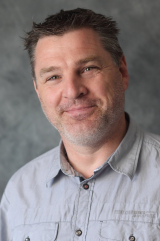
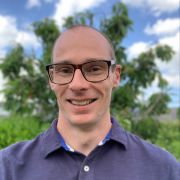
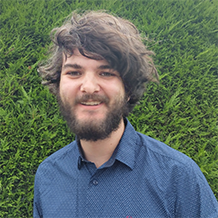
Rassel Raihan is an Assistant Professor in Mechanical and Aerospace Engineering at the University of Texas at Arlington. He holds a Ph.D. from the University of South Carolina and directs research on composite materials performance prediction. Research expertise includes: Multi-physics modeling of damage progression Dielectric spectroscopy for material state assessment Machine learning for composite prognosis Recycling of composite materials He leads the $3.3M 'Modeling for Affordable, Sustainable Composites' project and received the SAMPE Young Professionals Emerging Leadership Award (2019). Advising and service: Supervises 16+ graduate students in mechanical engineering and materials science Faculty advisor for SAMPE student chapter Session chair for ASME and SAMPE conferences
Leo Stein is an Associate Professor in the Department of Physics and Astronomy at the University of Mississippi, affiliated with the College of Liberal Arts. He holds a B.S. from Caltech (2006) and a Ph.D. from MIT (2012). His research focuses on Einstein's theory of gravity, particularly using astrophysical observations to test general relativity through gravitational wave studies of black hole systems. He has contributed to numerical simulations and analytical modeling of black hole mergers, exploring theories beyond GR and their observational signatures. Dr. Stein's expertise includes gravitational wave physics, numerical relativity, and post-Newtonian approximations. Key recognitions include the Sloan Research Fellowship (2023–25), NSF CAREER Award (2021–2026), and MIT's Henry Kendall Teaching Award (2011). His work bridges theoretical predictions with cutting-edge detector technology, aiming to advance fundamental physics through gravitational wave astronomy. His teaching spans graduate and undergraduate courses in electromagnetism, mechanics, and gravitational physics. Stein’s research also involves developing open-source tools like GWSurrogate and collaborating with the SXS Collaboration for black hole simulations. Future directions include refining waveform models for next-generation detectors and probing modified gravity theories via merger signals.
Dr. Kaihang Shi is an Assistant Professor in the Department of Chemical and Biological Engineering at the University at Buffalo (UB), School of Engineering and Applied Sciences. He leads the Digital Porous Materials Laboratory (DP Lab) and serves as an affiliate member of the Acceleration Consortium. His research integrates machine learning, atomistic simulations, statistical mechanics, and mathematical modeling to study molecular adsorption, reaction, and transport in porous media for energy, sustainability, and healthcare applications. Education: PhD in Chemical Engineering (North Carolina State University, 2020), BS in Polymer Materials and Engineering (East China University of Science & Technology, 2015) Professional Affiliations: American Institute of Chemical Engineers (AIChE), American Association for the Advancement of Science (AAAS), International Adsorption Society (IAS) Dr. Shi's research focuses on computational discovery of nanoporous materials, particularly metal-organic frameworks (MOFs), using quantum chemical modeling, molecular simulations, and interpretable machine learning. His group develops tools like gRASPA for GPU-accelerated simulations and MOFX-DB for computational adsorption data sharing. Recent trends in his publications span: Machine learning for adsorption prediction in nanoporous materials Molecular transport mechanisms in MOFs and composites Microscopic pressure tensor analysis in confined systems CO2 capture and methane activation catalysts GPU algorithms for efficient simulation Scientific honors include: ACS PRF Doctoral New Investigator Award (2024) Best Poster Award, Diffusion Fundamentals XI (2025) Team Science Contest Winner, US Department of Energy (2021) James K. Ferrell Outstanding Ph.D. Graduate Award (NCSU 2020) Multiple teaching and conference presentation awards Dr. Shi mentors students in computational materials science, with Master’s graduates Asritha and Asha contributing to molecular transport studies. His group actively collaborates on CO2 capture projects and has secured grants from NSF, UB, and ACS for advanced materials research.
Dr. Thomas E. Baker is an Assistant Professor and Canada Research Chair in Quantum Computing for Modelling of Molecules and Materials at the University of Victoria. He holds joint appointments in the Departments of Physics & Astronomy and Chemistry. His research focuses on quantum computing, quantum algorithms, and entanglement renormalization, with applications to quantum chemistry and density functional theory. He leads the sensing and quantum materials cluster under the Office of the VPRI and is a member of Quantum BC and the Centre for Advanced Materials and Related Technology. Education: M.Sc. (California State University Long Beach), PhD (University of California, Irvine), postdoctoral fellow at the Institute for Quantum Computing (IQ) at Université de Sherbrooke, and Fulbright U.S. Scholar at the University of York, UK. Research interests include quantum information processing, quantum error correction, and tensor networks. His team develops the DMRjulia library, a Julia-based tool for entanglement renormalization computations. Recent work emphasizes quantum algorithm design for near-term quantum computers and theoretical foundations of quantum materials. Scientific Awards: Fulbright U.S. Scholar (2018). Teaching includes graduate courses on quantum physics, computational methods, and tensor networks. He actively mentors students across physics, chemistry, and computer science backgrounds. Labs/Teams: Principal Investigator of the sensing and quantum materials cluster, co-developer of DMRjulia, collaborator in Quantum BC.
Yu Du is Interim Discipline Director and Associate Professor of Business Analytics at CU Denver Business School. She holds a Ph.D. in Operations Research from Rutgers University, M.S. in Quantitative Finance from Rutgers, and B.S. in Economics from Central South University. Her research develops optimization algorithms for large-scale problems in machine learning, quantum computing, and combinatorial optimization. She has published extensively on QUBO models, quantum-inspired optimization, and statistical learning methods. Outstanding Research Award (2022) Faculty Research Productivity Award (2022) CIBER Faculty Grant (2021) Excellence Fellowship, Rutgers University (2012)
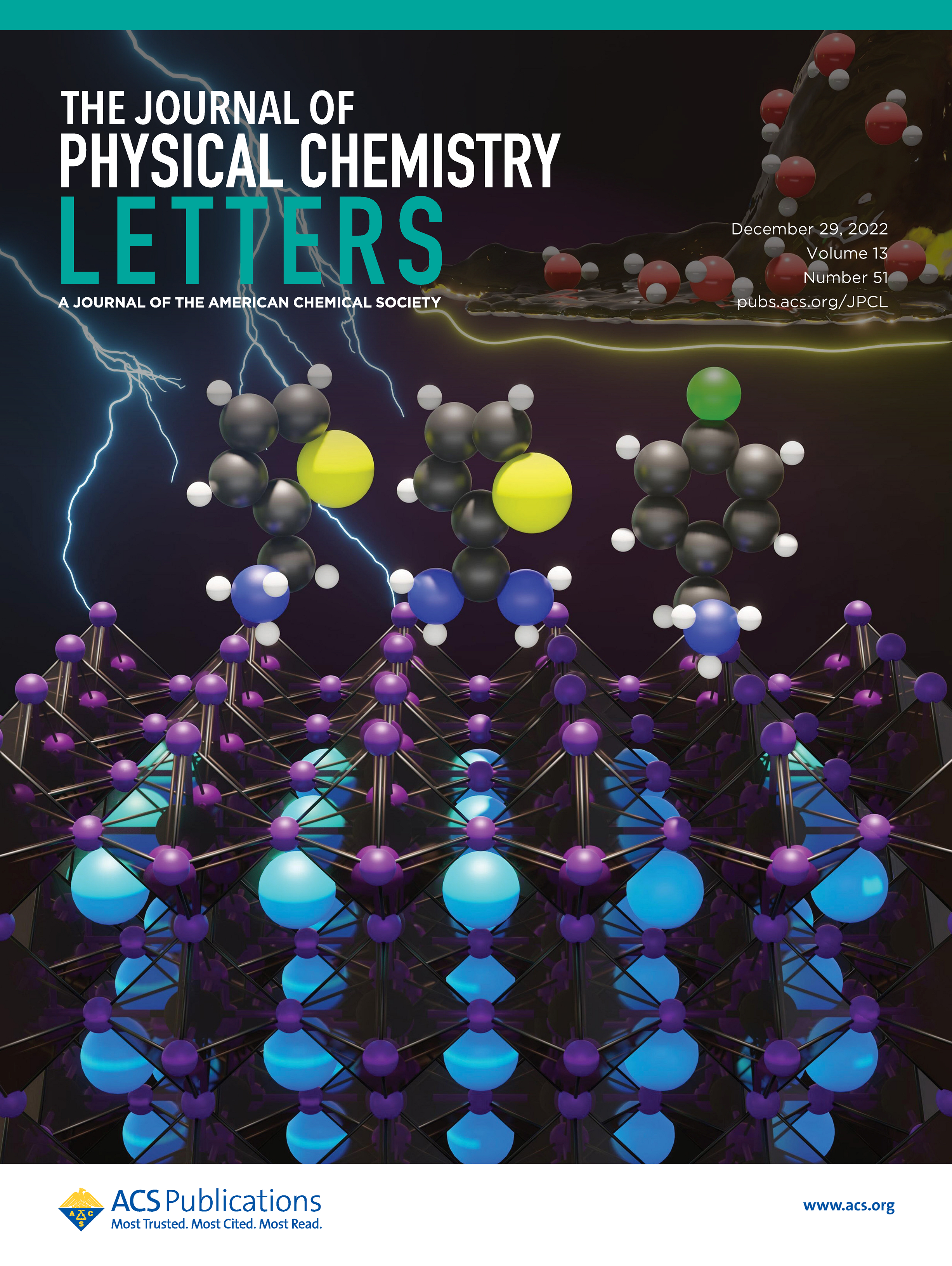
Dhara Trivedi serves as Assistant Professor in Physics at Clarkson University's Coulter School of Engineering & Applied Sciences, leading interdisciplinary research at the intersection of condensed matter physics, materials science, and computational chemistry. Her work focuses on atomistic-level modeling of charge/energy transfer processes in next-generation materials for energy and environmental applications. Her academic foundation includes: Ph.D. in Physics from University of Rochester (2015) M.Sc and B.Sc in Physics from Gujarat University, India Trivedi's research program develops quantum-classical computational frameworks to investigate electronic processes in perovskites, 2D materials, and metal-organic frameworks. Key thrusts include plasmon-enhanced energy transfer, characterization of nanoscale interfaces, and non-adiabatic dynamics in photoexcited systems. This work bridges fundamental physics with practical applications in solar energy harvesting and environmental remediation, leveraging time-domain ab initio methods to simulate real-world material behaviors. Analysis of her recent publications reveals a strategic pivot toward computational materials discovery, with dominant themes in perovskite photovoltaics (35%), MOF-based environmental applications (30%), and quantum dynamics methodology development (25%). Her group increasingly employs high-throughput screening and data mining techniques to accelerate materials design, particularly for solar cells and water purification systems. The Trivedi Research Group maintains active projects on spacer engineering in 2D perovskites, toxic oxoanion capture using functionalized MOFs, strain effects in hybrid perovskites, and plasmonic nanolaser mechanisms. The team operates at the physics-chemistry-engineering nexus, utilizing advanced simulation tools to address critical challenges in renewable energy and environmental sustainability.
Scott Brande is an Associate Professor at the University of Alabama at Birmingham (UAB), holding appointments in the Department of Chemistry (College of Arts and Sciences) and the Department of Electrical & Computer Engineering (School of Engineering). He transitioned from the closed geology department in 1998 to chemistry, emphasizing interdisciplinary collaboration. His research focuses on geoscience education technology, cognitive science applications in teaching, and innovative educational software. He co-invented web-based teaching tools recognized in the 2012 Alabama Launchpad competition. Brande also serves on graduate committees across disciplines and engages in public outreach. Education: Ph.D. in Earth and Planetary Sciences from Stony Brook University (1979). His career spans geology, paleontology, and educational technology, with collaborations in Turkey and Israel. Professional highlights include discovering the fish species Sterropterygion brandei and analyzing the Jordan River's prehistoric hippopotamus fossils. Research interests bridge geology, education systems, and technology, emphasizing cross-disciplinary approaches. His articles explore 3D models in geoscience education, cognitive science in learning, and digital media in student engagement. He advocates against knowledge silos, integrating geology, biology, and engineering in teaching. Publications (2024) reflect ongoing contributions to analytical chemistry, environmental science, and materials innovation. His work addresses challenges in education during disruptions, such as the pandemic's impact on teaching methods. Brande remains active in entrepreneurship and community education through speaking engagements and K-12 outreach.
Anthony Estey is an Assistant Teaching Professor and Acting Experiential Learning Coordinator in the Department of Computer Science at the University of Victoria. His work focuses on innovative educational technologies, quantum computing pedagogy, and studio-based learning models in game design. He holds roles in both the Faculty of Engineering and Computer Science and coordinates experiential learning initiatives. Research interests include developing interactive tools to lower learning barriers in quantum computing (e.g., QNotation/QGrover), applying extended reality for immersive education, and analyzing student behavior through programming workflows. His publications span educational technology, game design pedagogy, and interdisciplinary collaboration strategies. Recent work emphasizes real-time systems for motion capture in performances and predictive analytics for student support. Though no scientific awards are listed, his contributions to educational tool development are highlighted through publications in 2024-2010. He coordinates experiential learning programs but no grants or specific lab affiliations are noted in available data.
Ulrike Stege is an Associate Professor and Director of the Master of Engineering in Applied Data Science (MADS) at the University of Victoria's Faculty of Engineering and Computer Science. She holds a PhD from the Swiss Federal Institute of Technology (ETH Zurich). Her research spans computational biology, parameterized complexity, algorithm design, graph theory, and cognitive psychology. She leads initiatives in quantum computing frameworks and educational tools, including projects like SCOOP (quantum optimization) and QGrover (quantum algorithm visualization). Her work also addresses RNA pseudoknot structure prediction and the integration of quantum computing into combinatorial optimization software. Key educational contributions include developing browser-based quantum learning tools (e.g., QNotation and QuantumCrypto) and promoting computational thinking in K-12 education. Her research bridges theoretical computer science with practical applications in biology and quantum systems, emphasizing algorithmic innovation and interdisciplinary collaboration. Her publications focus on advancing quantum computing frameworks, optimizing bioinformatics algorithms, and creating accessible educational resources. Recent work addresses quantum annealing for constrained optimization, structural biochemistry of viral RNA, and hybrid quantum-classical problem-solving methods.
Professor Hua Harry Li serves in the Department of Computer Engineering at San José State University, teaching specialized courses including Embedded Hardware Systems (CMPE 242), Embedded Software (CMPE 244), and Embedded Wireless Systems (CMPE 245). His academic profile spans semiconductor physics, real-time control systems, and multimedia hardware implementation. Education Background: Doctor of Philosophy, University of Iowa, 1989 Master of Science in Electrical and Computer Engineering, University of Iowa, 1984 Bachelor of Science in Electronics Engineering, Tianjin University, 1981 Graduate Studies in Electronic/Electrical Engineering, Tsinghua University, 1982 Li's research integrates embedded systems with intelligent control methodologies , particularly focusing on fuzzy logic applications in semiconductor manufacturing and neural network implementations for real-time processing. His work bridges theoretical algorithms and hardware constraints, evidenced by publications on vision chips, wafer defect detection, and pH neutralization control systems. The Encyclopedia of Electrical and Electronics Engineering features his contributions to neural fuzzy control techniques for semiconductor equipment. Analysis of his 1993-2005 publications reveals three distinct phases: early neural network applications (1993-1994) in wafer manufacturing and radar systems, mid-career expansion into video compression and vision chips (1995-1997), and mature work on embedded video processing systems (2001-2005). This trajectory demonstrates consistent focus on hardware-constrained intelligent systems while adapting to emerging technologies in wireless communications and multimedia computing. Key Honors: Industrial Neural Network Award (1994 World Congress Neural Network Conference) Who’s Who in Science and Engineering (4th Edition, 1999) Who is Who in America (53rd Edition) Professor Li contributes significantly to academic discourse as Guest Editor for IEEE Transactions on CPMT Special Emerging Technology Section (1994, 1996) and encyclopedia contributor. While specific grant details aren't documented, his sustained publication record and industry-recognized awards indicate substantial research funding, particularly in semiconductor process control and embedded vision systems. His teaching portfolio reflects direct alignment with research expertise through advanced embedded systems courses. Current work appears focused on embedded multimedia hardware systems with practical applications in semiconductor manufacturing and real-time control, though explicit details about active research teams or laboratory facilities aren't provided in available materials.
Nicolas Moitessier is a Professor in the Department of Chemistry at McGill University, specializing in computational and experimental approaches to drug discovery. He earned his Maîtrise (1994) and Ph.D. (1998) from the University of Nancy, France, followed by postdoctoral research at the University of Montreal (1998-2000) and a Research Senior position at CNRS Nancy (2001-2003). His research integrates computer-aided drug design with organic synthesis, focusing on developing predictive software platforms (FITTED, IMPACTS, FORECASTER) for drug binding, metabolism prediction, and asymmetric catalyst design. Current projects include covalent inhibitor development for viral proteases and RNA-targeted therapeutics. Professor Moitessier teaches CHEM 222 (Introductory Organic Chemistry 2) and CHEM 552 (Physical Organic Chemistry). His interdisciplinary work bridges chemical biology, catalysis, and computational chemistry to accelerate molecular discovery.
Professor Peter Gill holds the Schofield Chair in Theoretical Chemistry at the University of Sydney's Faculty of Science. He is a member of the University of Sydney Nano Institute. His academic journey includes positions at Massey University, University of Cambridge, University of Nottingham, and Australian National University. He specializes in theoretical chemistry and computational methods, with contributions to density functional theory and electronic structure calculations. Education includes a BSc (1983) and MSc (1984) from the University of Auckland, followed by a PhD in 1988 from the Australian National University. Postdoctoral work with John Pople at Carnegie Mellon University (1988–1993) further shaped his expertise. Research focuses on theoretical chemistry, including density functional theory (DFT), quantum chemistry, and computational methods. Key areas include electronic structure calculations, efficient modeling of electron densities, and software development like Q-Chem. Interdisciplinary work spans security intelligence and ethical debates in science. Awards and honors: While specific awards are not listed, his contributions to theoretical chemistry and computational methods are widely recognized in the scientific community. He has supervised several research students and led grants such as the 2015 Australian Research Council-funded project on generalized density functional theory. Collaborative efforts include membership in the Sydney Nano Institute and involvement in interdisciplinary research groups.
Dr. J. Grant Hill is a Senior Lecturer in Theoretical Chemistry at the University of Sheffield's School of Mathematical and Physical Sciences. He specializes in computational chemistry, machine learning applications, and self-driving labs for materials discovery. His research focuses on developing novel computational methods, such as linear-scaling interaction energy calculations and basis set optimizations, alongside collaborations with industry on automation in chemistry. He leads the Chemistry Programme and Digital Experience initiatives at the university. Dr. Hill holds an MChem (2002) and PhD (2006) from the University of York. His career includes postdoctoral research at Cardiff University, Washington State University, and a Royal Society of Edinburgh Fellowship at the University of Glasgow before joining Sheffield in 2014. He was promoted to Senior Lecturer in 2022. His teaching excellence includes the 2024 University of Sheffield Education Award for Science Teaching, and he authored video tutorials for 'Atkins' Physical Chemistry.' Research highlights include contributions to basis set development (e.g., cc-pVnZ-PP-F12 for heavy elements) and AI-driven self-driving labs for sustainable chemistry. Key Research Areas: Machine Learning in Chemistry, Quantum Chemistry Methods, Automated Experimentation Notable Collaborations: Multinational companies, Cambridge Crystallographic Data Centre Professional Roles: Advisory Board Member, Centre for Machine Intelligence
Davide Rattacaso is a Research Fellow at the University of Padua's Department of Physics and Astronomy, funded by the European Project EuRyQa. His research focuses on quantum information, quantum many-body systems, and developing hardware-aware quantum compilers using tensor network techniques. Current projects include adiabatic quantum computation, inverse problems in quantum systems, resource theory, and information geometry. His work integrates advanced computational methods with theoretical frameworks to address challenges in quantum hardware optimization and quantum dynamics. Key themes across his research include understanding non-equilibrium quantum phenomena and leveraging geometric approaches to analyze quantum complexity and chaos. His contributions span foundational studies on Hamiltonian reconstruction, stabilizer entropy dynamics, and delocalized quantum state evolutions. The research is supported by grants emphasizing practical applications of quantum algorithms and architectures.
Alan Lewis is Lecturer in Digital Chemistry at the University of York, specializing in machine learning methods for electronic structure simulations. He develops computational tools to accelerate and interpret quantum mechanical calculations, including the SALTED ML package and contributions to FHI-aims. Research Focus: ML prediction of electron densities and response properties; interpretable models for spectroscopy; software development for condensed-phase systems. Combines quantum dynamics with data science to study excitonic materials and radical pair reactions. Education & Career: MChem and D.Phil from University of Oxford (2017). Postdoctoral work at University of Chicago and Max Planck Institute for the Structure and Dynamics of Matter (Hamburg). Joined York in 2023. Teaching: Leads modules in Physical Chemistry and Data Science, emphasizing computational methods across chemistry curricula.