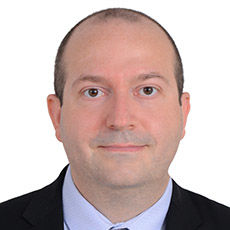
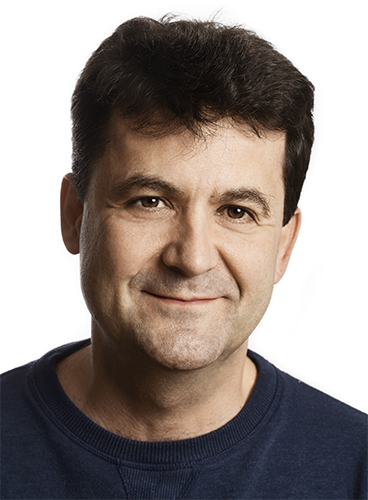
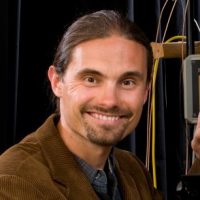
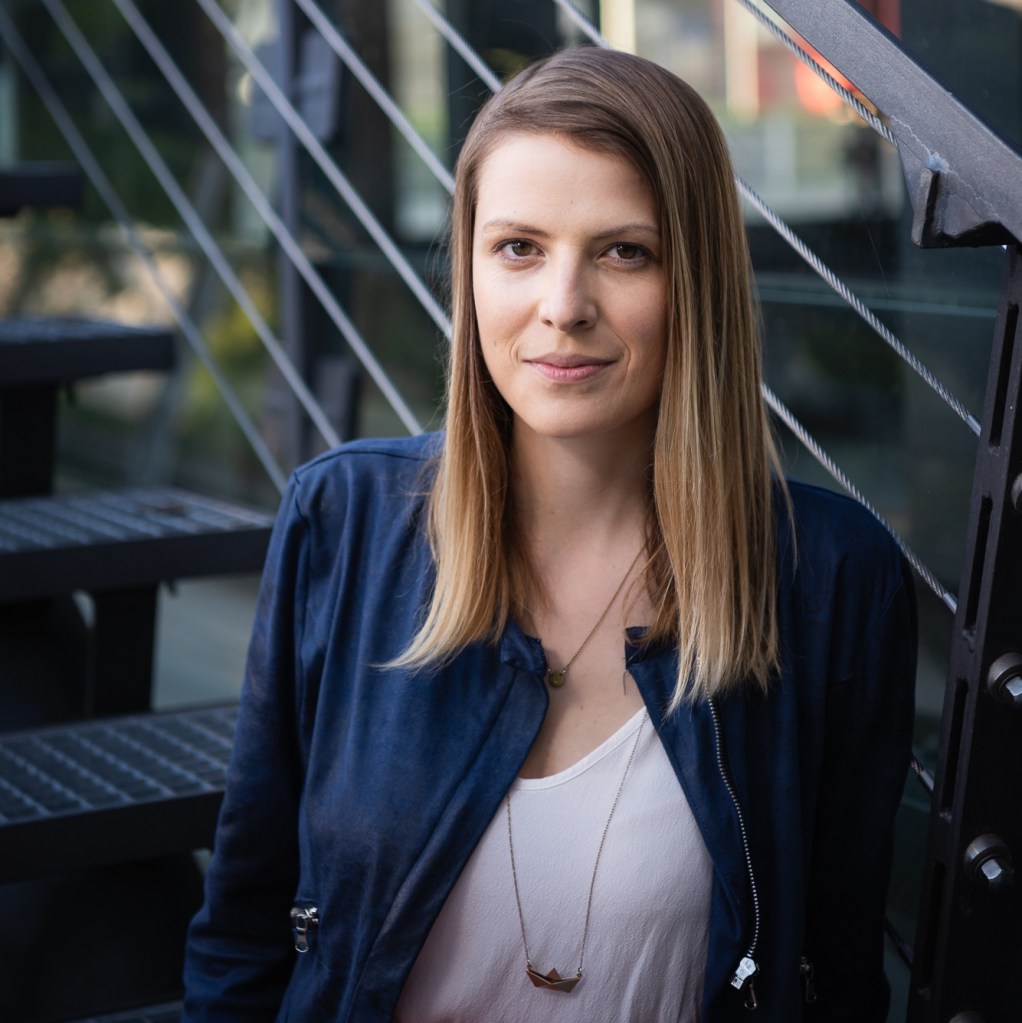
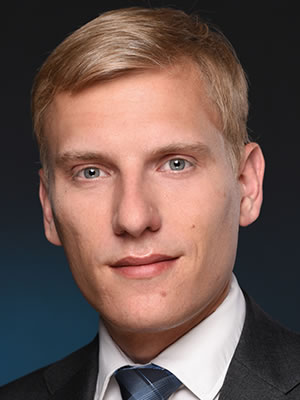
Prof. Dr.-Ing. Jasminko Novak is a Professor and Head of the Business Information Systems Department at Stralsund University of Applied Sciences HOST. He serves as Vice-Director of the IACS Institute for Applied Computer Science and leads the CC Human-centered Intelligent Systems & Sustainability research group. His roles include membership in the University's Research Commission. Research focuses on Human-centered AI, AI for Sustainability, and Digital Innovations. Projects include developing AI tools for sustainable energy management, interactive AI spaces for youth digital sovereignty (iKIDO), and quantum-assisted AI (PLANQK). Recent initiatives include the Applied Data Science and AI Master's program and the Data Compass MV data competence network. Key collaborations involve the European Institute for Participatory Media and European projects (EU FP7/H2020, BMBF). His work emphasizes ethical AI design, including the 'Reflective AI' initiative addressing societal impacts and user understanding. Teaches courses like Human-centered AI, Business Process Modeling, and Innovation Management. Active in public discourse through interviews on AI's societal risks and potentials (Die ZEIT), and lectures on AI-driven sustainability solutions.
Caterina Vigliar is an Assistant Professor in the Department of Electrical and Photonics Engineering at the Technical University of Denmark (DTU), affiliated with the High-Speed Optical Communications Centre of Excellence for Silicon Photonics for Optical Communications. Her work bridges quantum information science and integrated photonics, with a focus on developing scalable on-chip quantum technologies. Her research interests include quantum photonics , integrated quantum circuits , graph theory in quantum systems , quantum random number generation , and high-dimensional entanglement . She applies theoretical frameworks to practical photonic implementations, aiming to realize compact, efficient quantum devices. The recent publications highlight a strong trend toward very-large-scale integration of quantum photonic circuits , particularly using graph-based designs for multidimensional entanglement and quantum information processing. These works demonstrate advancements in on-chip quantum random number generators and multiphoton entanglement , contributing to the scalability of quantum technologies. Scientific Contributions: Active contributor to high-impact research in Nature Photonics and SPIE proceedings. Key collaborator in international quantum photonics projects. Supervisor of multiple PhD projects in quantum photonic computing and number generation. Advising and Grants: Dr. Vigliar supervises four active PhD projects related to quantum photonic reservoir computing, remote quantum computing, and integrated quantum number generation. These projects are supported by DTU and involve collaboration with leading researchers such as F. Da Ros, D. Bacco, and Y. Ding. While specific grant names are not listed, the funding context suggests support from national and institutional research bodies. Labs and Teams: She is part of the High-Speed Optical Communications Centre of Excellence for Silicon Photonics at DTU, a leading group in integrated photonics and quantum communications. Her work is embedded within a collaborative network involving experimental and theoretical researchers focused on advancing quantum technologies through photonic integration.
Luisa Siniscalchi is an Assistant Professor (tenure track) in the Department of Applied Mathematics and Computer Science at the Technical University of Denmark (DTU), affiliated with the Cybersecurity Engineering Center and the Center for Quantum Technologies. Her research lies at the intersection of cryptography, cybersecurity, and theoretical computer science. Her research interests focus on secure multiparty computation (MPC) , zero-knowledge proofs , non-malleable and deniable protocols , post-quantum cryptography , and cryptographic primitives . She investigates foundational aspects of secure computation under minimal assumptions, aiming to achieve optimal round complexity and strong security guarantees in both synchronous and asynchronous settings. The recent publications highlight a consistent trend in designing efficient, secure, and practical cryptographic protocols, particularly in MPC and deniable authentication. Her work often appears in top-tier venues such as EUROCRYPT, CRYPTO, and TCC, demonstrating strong theoretical rigor and innovation. Key themes include black-box constructions, post-quantum security, and privacy-preserving mechanisms. Scientific Awards: No awards listed in the provided text. Luisa Siniscalchi is actively supervising PhD students in cutting-edge projects related to proactive post-quantum cryptography, long-term security of protocols, and dynamic graph algorithms. She collaborates with principal investigators such as Claudio Orlandi, Ivan Damgård, and Carsten Baum, indicating integration into major research initiatives at DTU. While specific grants are not detailed, her involvement in multi-year PhD projects suggests active grant funding. Labs and Research Groups: Cybersecurity Engineering Center, DTU Center for Quantum Technologies, DTU Active research in cryptographic protocols and algorithms
Battulga Munkhbat is an Associate Professor in the Department of Electrical and Photonics Engineering at the Technical University of Denmark (DTU), where he conducts cutting-edge research in quantum photonics and nanomaterials. His work focuses on developing quantum light sources using two-dimensional materials, particularly transition metal dichalcogenides such as WSe₂, for applications in optical quantum information technology. His research interests lie at the intersection of quantum optics, materials science, and nanophotonics. Key areas include: Quantum emitters in 2D materials Single-photon sources for quantum communication Strain and defect engineering in monolayer and bilayer systems Integration of quantum emitters with photonic devices Nanoengineering of TMD-based photonic platforms The recent trend in his publications highlights a strong focus on high-purity single-photon emission from bilayer and monolayer WSe₂, utilizing phonon-assisted excitation and strain control. His work often involves collaboration with experts in nanofabrication and theoretical modeling, aiming to enhance the performance and scalability of quantum photonic devices for future quantum networks. He is actively supervising multiple PhD students and leading projects that bridge fundamental physics with practical quantum technologies. His research is supported by active grants in quantum photonics and nanomaterial engineering, particularly in projects related to: Quantum Dot Emitters Integrated with SiN Devices for Remote Quantum Computing Nanoengineered 2D TMDs-based Photonic Devices for Optical Quantum Information Technology Quantum Light Sources for Optical Quantum Information Processing Dr. Munkhbat is part of a vibrant research lab at DTU that specializes in quantum light source development, working closely with Prof. Niels Gregersen and other collaborators in the field of integrated quantum photonics.
Dr. Alessio Faccia is an Assistant Professor in Finance at the School of Business and Law, University of Birmingham Dubai, with a strong international academic and professional background. He holds a PhD in Business Economics (Accounting & Finance) from Università Politecnica delle Marche and has taught at institutions in Italy, UAE, UK, and Malta. He is also a qualified Chartered Accountant and Auditor in Italy, with prior experience at Accenture and as founder of an independent audit firm. Education: PhD in Business Economics (Accounting & Finance), Università Politecnica delle Marche, 2012 MBA (Hons) in Business Economics & Accounting, Università Roma TRE, 2006 BSc in Business Economics and Accounting, Università Roma TRE, 2004 LLM, Pegaso University, 2019 MSc in Criminology, Pegaso University, 2017 CA (Chartered Accountant and Auditor), Italy, 2009 Fellow of the Higher Education Academy (FHEA), 2021 Certified Management & Business Educator (CMBE), 2020 His research spans interdisciplinary domains including blockchain, accounting information systems, machine learning, fraud examination, and sustainable finance. He explores how emerging technologies like AI, blockchain, and cognitive computing can enhance transparency, resilience, and innovation in financial systems. His work often bridges theory with practical applications in fintech, auditing, and regulatory compliance. His recent publications reflect a strong trend toward leveraging big data, blockchain, and AI to transform traditional finance and accounting practices. Topics include blockchain for supply chain risk, NLP for financial transparency, generative AI in education, and quantum fintech. These contributions appear in high-impact journals such as Annals of Operations Research , Sustainability , and Big Data and Cognitive Computing . Scientific Awards and Recognition: Fellow of the Higher Education Academy (FHEA), 2021 Certified Management & Business Educator (CMBE), 2020 Dr. Faccia actively contributes to the academic community as a reviewer for top-tier journals including Technovation , Chaos, Solitons & Fractals , PLoS ONE , and International Journal of Production Economics . He serves on the editorial board of the International Journal of Accounting & Finance Review and Journal of Risk and Financial Management . He has also acted as Guest Editor for special issues and Publicity Chair for international conferences, demonstrating leadership in academic dissemination. He supervises MSc students’ dissertations in finance and accounting and teaches postgraduate modules such as Financial Statement Analysis, Risk Management, and Alternative Finance. His advisory role extends to guiding research on blockchain, fraud, and sustainable business models. He has no listed grants, but his collaborative research indicates strong engagement with international scholars. Dr. Faccia is involved in cutting-edge research teams focused on blockchain, AI in finance, and digital transformation. He contributes to initiatives like the International Conference on Cloud and Big Data Computing and participates in technical research on ERP integration, semantic web applications, and cybersecurity resilience, positioning him at the forefront of technological innovation in business education.
Eduard A. Jorswieck is a University Professor of Communication Systems at the Institute of Communications Engineering , Technical University of Braunschweig, since 2019. He has previously held a professorship at TU Dresden (2008–2019) and has been a lecturer at TU Berlin (2005–2008). Currently, he serves as the Geschäftsführender Leiter (Managing Director) of the Institute of Communications Engineering. Education: Dipl.-Ing. in Computer Engineering (2000), Doctorate (2004) from TU Berlin. Research Interests: His work bridges information theory and wireless communications, focusing on physical layer security , energy efficiency , reconfigurable intelligent surfaces (RIS) , NOMA , MIMO systems , and machine learning for network optimization . He explores stochastic orders, game theory, and fractional programming for resource allocation in 5G/6G networks. Publications & Trends: Recent articles emphasize RIS-aided URLLC , STAR-RIS , 6G security , and AI-driven resource management . His studies span multi-antenna systems , terahertz ISAC , and multi-agent reinforcement learning for UAV networks. Awards: IEEE Signal Processing Society Best Paper Award (2006) IEEE Fellow (2020) Fellow of Industry Academy (AIIA, 2024) Best Paper Award at IEEE ICC 2024 Students & Collaborations: He has mentored researchers like K.-L. Besser, P.-H. Lin, and M. Mross. His lab collaborates on projects involving quantum communication , industrial IoT , and multi-agent systems .
Henrik Bruus is a Professor and Section Head in the Department of Physics at the Technical University of Denmark (DTU). He leads the Section of Biophysics and Fluids and the Theoretical Microfluidics Group, focusing on theoretical modeling in microfluidics, acoustofluidics, and nanofluidics. His academic journey began at the Niels Bohr Institute, University of Copenhagen, where he earned his B.Sc., M.Sc., and Ph.D. in physics. He has held research and faculty positions at NORDITA, Yale University, CNRS-CRTBT, and DTU, transitioning from DTU Nanotech to DTU Physics in 2012. He has held visiting professorships at Harvard, MIT, Princeton, and several French institutions. B.Sc. in Mathematics and Physics, University of Copenhagen (1984) M.Sc. in Physics, University of Copenhagen (1986) Ph.D. in Physics, University of Copenhagen (1990) Henrik Bruus's research lies at the intersection of theoretical physics and engineering, with a strong emphasis on microfluidics, acoustofluidics, and biophysics . His work explores acoustic radiation forces, electrokinetics, streaming, and particle manipulation in microsystems. He is renowned for his Acoustofluidics tutorial series published in Lab on a Chip. His research contributes to UN Sustainable Development Goals in energy and innovation. He has published over 248 works, including in Physical Review , Lab on a Chip , and Science Advances . The recent publications highlight a consistent focus on acoustofluidic phenomena , particularly the modeling and control of acoustic streaming, radiation forces, and thermoviscous effects in microchannels. His work bridges theoretical analysis with experimental validation, often involving collaborations across disciplines. Key themes include ultrasound manipulation of particles and cells, optimization of microreactors, and development of novel acoustofluidic devices using thin-film transducers. Scientific Awards: DTU Teacher of the Year (2013) Elected Fellow of the American Physical Society (since 2011) Henrik Bruus actively supervises Ph.D. students and leads multiple research projects in biophysics and microfluidics. He has been the main supervisor or co-supervisor on projects related to plant biophysics, micro- and nanochannel flows, and electroacoustic actuation. His international collaborations span across Europe and the U.S., and he has delivered numerous conference presentations, including at APS meetings and specialized workshops. He is a central figure in the global acoustofluidics research community. He leads the Theoretical Microfluidics Group at DTU Physics, which focuses on computational and analytical modeling of fluid behavior at micro- and nanoscales. The group collaborates closely with experimental teams to develop and validate theoretical frameworks for lab-on-a-chip systems. Their work supports applications in biomedical diagnostics, cell sorting, and material science.
Lukas Chrostowski is a Professor in the Department of Electrical and Computer Engineering at the University of British Columbia (UBC). He earned his BEng in Electrical Engineering from McGill University (1998) and a PhD in electrical engineering and computer science from the University of California, Berkeley (2004). Since joining UBC in 2005 and being promoted to full Professor in 2015, his work focuses on silicon photonics, optoelectronics, and VCSEL design for optical communication systems and biophotonics. Education: BEng, Electrical Engineering, McGill University (1998) PhD, Electrical Engineering and Computer Science, UC Berkeley (2004) Chrostowski leads cutting-edge research in silicon photonic device design, nanofabrication, and quantum computing applications. He directs the NSERC CREATE Silicon Electronic-Photonic Integrated Circuits (Si-EPIC) training program and co-directed the AMPEL Nanofabrication Facility (2008–2016). His contributions span biomedical sensor development, high-speed optical switches, and cryogenic photonic packaging. Key Research Areas: Silicon photonics enables low-cost, scalable integration of optical components for applications in biophotonics, quantum computing, and optical communications. His team explores sub-wavelength grating waveguides, photonic wire bonding for chip-scale integration, and feedback control systems using photoconductive heater-detectors. Scientific Awards: Killam Teaching Prize (2014) NSERC Discovery Accelerator Supplements Award (2015) Chrostowski actively teaches graduate and undergraduate courses, including semiconductor lasers, nanophotonics fabrication, and active silicon photonic design. His research group is affiliated with the Quantum Matter Institute, ICICS, and the Quantum Computing Research Cluster. He also pioneered the first online silicon photonics course on edX and the SiEPIC workshops.
Dr. Kingshuk Majumdar is a Professor in the Department of Physics at Grand Valley State University within the College of Liberal Arts & Sciences. His academic journey began with a Ph.D. from the University of Florida in 1999, followed by M.S. and B.S. degrees from Indian institutions. Dr. Majumdar's research interests are centered on Theoretical Condensed Matter Physics, specializing in low-dimensional quantum spin systems and frustrated magnets. He also explores Quantum Information Science and Quantum Computing, contributing to the understanding of quantum spin dynamics and phase transitions. His scholarly publications reflect expertise in spin-wave theory, magnetic phase diagrams, and quantum fluctuations. The articles span topics such as Heisenberg antiferromagnets, bilayer magnetism, and quantum critical points, indicating a strong focus on theoretical modeling of magnetic and quantum systems. NSF-MRI Award ($97,383) to acquire a HPC Cluster at GVSU XSEDE Award: 50,000 CPU supercomputing hours Regional Michigan Science Olympiad Service Award Kavli Institute of Theoretical Physics (KITP) Scholar Award Cottrell College Science Award from Research Corporation Award for paper presentation in the Graduate Student Forum, University of Florida Outstanding Academic Achievement Award by an International Student, University of Florida Dr. Majumdar mentors undergraduate researchers, guiding projects on quantum spin systems, thin film conductivity, and spin-wave analysis. He also serves as a referee for American Physical Society (APS) and Institute of Physics (IOP) journals, contributing to the academic community through peer review and grant evaluation.
Dr. Lisa Kohl is a tenured Researcher in the Cryptology Group at CWI Amsterdam since October 2020. Her work focuses on secure computation and practical post-quantum secure protocols . Prior to CWI, she was a postdoctoral researcher at Technion with Yuval Ishai and completed her PhD at Karlsruhe Institute of Technology under Dennis Hofheinz in 2019. She also spent eight months at the FACT center, IDC Herzliya during her PhD and wrote her master’s thesis at CWI Cryptology Group as a visiting student in 2015. PhD in Cryptology (2019, Karlsruhe Institute of Technology) Postdoctoral Researcher (Technion, 2019-2020) Research Visit Fellow (FACT Center, 2015-2019) Visiting Student (CWI Cryptology Group, 2015) Her research spans secure multi-party computation , homomorphic secret sharing , post-quantum cryptography , and pseudorandom correlation generation . Articles demonstrate expertise in optimizing oblivious transfer , improving Σ-protocol efficiency , and constructing cryptographic primitives from lattice problems and LPN assumptions . Contact: Lisa.Kohl@cwi.nl
Peter Lodahl is a Professor in quantum physics and technology at the Niels Bohr Institute, University of Copenhagen, and serves as Director of the Hybrid Quantum Networks Hy-Q Center of Excellence. He leads the Quantum Photonics Group and holds the position of Deputy Section Leader of Quantum Optics at the institute. Lodahl has established himself as a leading researcher in quantum optics and quantum information processing with solid-state systems. His research focuses on developing fundamentally new quantum hardware for quantum-information science, specifically deterministic single-photon sources, spin-photon interfaces, and photonic quantum gates. His work has pioneered the demonstration that light emission can be fully controlled through intricate photonic nanostructures, enabling deterministic quantum interfaces between light and matter. His research spans quantum simulators, quantum repeaters, and quantum key distribution, all contributing to the development of a quantum internet. Lodahl's publication record shows a strong focus on quantum networks, photonic quantum technologies, and quantum information processing. His recent work demonstrates significant advances in deterministic photon sources, quantum entanglement generation, waveguide quantum electrodynamics, and practical implementations of quantum technologies. His research has shifted from fundamental demonstrations toward practical quantum applications and hardware development. EliteForsk Price (2016) ERC Advanced Grant (2015) ERC Consolidator Grant (2010) Young Researcher's Award by the Danish Research Council (2005) Lodahl has supervised 25 MSc students, 23 PhD students, and 17 postdocs since 2005. He has attracted over 200 MDKK in research funding from sources including ERC, Danish Research Council, VILLUM Foundation, Innovation Fund DK, and A.P.Møller Foundation. As Director of the Hy-Q Center of Excellence and Scientific Director for the Center of Quantum Innovation, he oversees significant research infrastructure and initiatives in quantum technology. He leads the Quantum Photonics Group at the Niels Bohr Institute and was PI for the Quantech infrastructure proposal accepted on the Danish Roadmap for Research infrastructure with a total budget of 40 MDKK. His group collaborates internationally and has developed numerous technologies including 5 patents in photonic quantum technology and a co-founded quantum-tech start-up company.
Prof. Simon Adrian holds the Chair of Theoretical Electrical Engineering at the Institute of General Electrical Engineering, University of Rostock, Germany. His research focuses on computational electromagnetics with critical applications in antenna design, electromagnetic compatibility, and medical technology. He serves as Associate Editor for the IEEE Transactions on Antennas and Propagation and contributes to the IEEE Antennas and Propagation Society Education Committee, demonstrating significant academic leadership in the global electromagnetics community. His primary research addresses low-frequency instability challenges in electromagnetic integral equations through innovative numerical techniques. Key areas include Calderón preconditioners, quasi-Helmholtz projectors, B-spline discretizations, and adaptive cross approximation methods. These approaches enable robust simulations across diverse applications from radar systems and antenna design to biomedical problems like deep brain stimulation and electroencephalography. Recent work emphasizes broadband stability and efficient solvers for multiply-connected geometries. Analysis of Prof. Adrian's publication trends (2023-2025) reveals a concentrated effort on overcoming fundamental limitations in electromagnetic modeling. His work consistently targets low-frequency regimes where traditional methods fail, developing mathematically rigorous stabilization techniques while expanding into biomedical applications. The integration of isogeometric analysis with specialized discretization strategies represents a cutting-edge direction in computational electromagnetics. Professional engagement includes active membership in the Institute of Electrical and Electronics Engineers (IEEE), IEEE Antennas and Propagation Society, and Union Radio-Scientifique Internationale (URSI), reflecting his commitment to advancing the field through collaborative research and scholarly communication.
Yuri Rzhanov is a Research Professor at the Center for Coastal and Ocean Mapping at the University of New Hampshire , where he focuses on numerical modeling and image processing for marine applications. His work bridges semiconductor physics foundations with modern underwater 3D scene reconstruction and habitat classification. Education : Ph.D. in Semiconductor Physics, Academy of Science of Russia M.S. in Semiconductor Physics, Novosibirsk State University Research Interests center on 3D modeling/visualization , underwater image processing , refractive effect compensation , and benthic habitat classification using conventional/multispectral imagery. His career evolved from semiconductor quantum effects to solid-state nonlinear phenomena, then to marine signal/image processing. Key Collaborators : Co-investigators: Larry Mayer, Brian Calder, Jennifer Dijkstra, May-Win Thein Co-authors: John Hughes Clarke, Kim Lowell, Thomas Butkiewicz Grants include projects funded by the US Geological Survey , NOAA , and US Navy (2004–2024) related to seafloor mosaicing, unmanned underwater vehicle coordination, and marine acoustic/image data processing.
Johannes Geier is a Researcher at the Chair of Design Automation at the Technical University of Munich (TUM). His work focuses on electronic design automation, fault injection simulations, and security countermeasures for RISC-V processors. University: Technical University of Munich Department: Chair of Design Automation Email: johannes.geier@tum.de Research Interests Electronic Design Automation (EDA) for analog and digital circuits Fault tolerance and reliability in RISC-V architectures Security analysis of post-quantum cryptographic systems Timing analysis and microfabrication techniques Optical Networks-on-Chip (NoC) and emerging technologies Compiler-assisted hardware security implementations Recent Research Trends Specializes in fault injection methodologies for hardware security validation Develops open-source tools like vRTLmod for RTL simulation acceleration Explores RISC-V vector extensions for post-quantum cryptography Investigates differential fault effect equivalence checks for efficiency Designs compiler-based security countermeasures against instruction skip attacks Works on concurrent multi-node XCP proxy server architectures
Hans Briegel is a Professor at the Institute for Theoretical Physics, University of Innsbruck, and a Corresponding Member of the Division of Mathematics and Natural Sciences in Austria since 2013. His research focuses on quantum information, computation, and entanglement. Research Interests Professor Briegel's work spans Quantum Information , Quantum Computing , and Entanglement , with notable contributions to measurement-based quantum computation and projective simulation in AI. His research explores theoretical models and practical applications in quantum systems. Scientific Awards Senior Fellowship of the Descartes Centre for the History and Philosophy of the Sciences and the Humanities, Utrecht University Honorary Visiting Professor at the University of Bristol Feodor Lynen-Forschungsstipendium der Alexander von Humboldt-Stiftung Contact: hans.briegel@oeaw.ac.at , Hans.Briegel@uibk.ac.at .