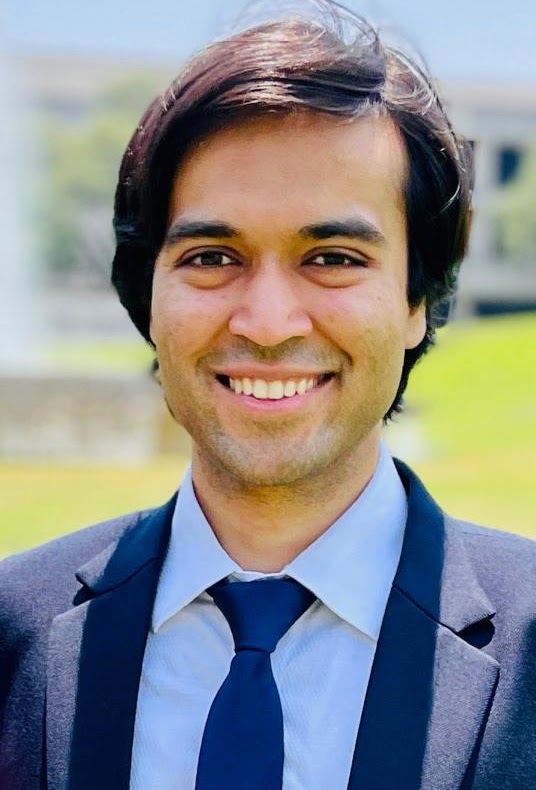
Rishab Goyal is an Assistant Professor in the Computer Sciences Department at the University of Wisconsin-Madison , affiliated with the School of Computer, Data & Information Sciences . His research spans Cryptography , Computer Security , and Theoretical Computer Science , with a focus on post-quantum cryptography , lattice-based systems , and the policy implications of advanced cryptography . Research interests include secure systems with advanced capabilities and cryptographic proof systems. Teaching graduate and undergraduate courses in cryptography and theoretical computer science. His work on functional encryption , traitor tracing , and obfuscation has been published in top venues like CRYPTO, STOC, and FOCS. He has served on program committees for EUROCRYPT, TCC, PKC, FOCS, and ASIACRYPT. Scientific Awards : Invited to STOC 2018 special issue in SIAM Journal on Computing. Rishab collaborates with PhD students including Jiaqi Cheng , Abtin Afshar , and Saikumar Yadugiri , and hosts visiting researchers from institutions like GMU and IIT Madras.
Raouf Boutaba is a Professor at the University of Waterloo , serving as Director of the David R. Cheriton School of Computer Science since July 2020. He holds prestigious fellowships including FRSC , FIEEE , FIEC , and FCAE . 2024: Inaugural Rogers Chair in Network Automation 2024: Ontario Research Fund–Research Excellence (ORF–RE) $2M grant for next-gen mobile networks 2021: University Professor title, University of Waterloo Research Interests span network automation, resource management in wired/wireless networks, network function virtualization (NFV), software-defined networking (SDN), cloud computing, blockchain, future Internet architecture, and cybersecurity. His work focuses on zero-touch networks, 5G/B5G slicing, and AI-driven orchestration. Scientific Contributions include 15+ recent publications on topics like reinforcement learning for RAN slicing, encrypted traffic classification, quantum network optimization, and self-driving infrastructure. His projects 5G LEAP and 5G ELITE explore network isolation and Open RAN principles. 2024: IFIP/IEEE CNOM Test of Time Paper Award 2024: Graduate Supervision Excellence Award 2021: Kenneth C. Sevcik Outstanding Student Paper Award (advisor) Teaching includes co-developing the NSERC CREATE Network Softwarization program, offering courses like Network Softwarization: Principles and Foundations (Winter 2024) and Technologies and Enablers since 2018. He emphasizes hands-on training in SDN, NFV, Open RAN, and 5G. Students and Collaborations : Supervised PhD students such as Shihabur R. Chowdhury (2021), Nashid Shahriar (2020), and undergrad Leni Aniva (2022 Gov. Gen. Silver Medal ). His team includes researchers working on 5G, blockchain, and AI-driven network management. Professional Leadership : Organized Rogers TEP Workshops (2024-2025), delivered keynotes at IEEE Globecom, ColCom, and BalkanCom, and served on expert panels for AI orchestration and 5G cybersecurity at major symposia.
Gavin Brennen is a Professor in Quantum Information Science (Core) at Macquarie University's School of Mathematical and Physical Sciences. He leads the Macquarie Centre for Quantum Engineering (MQCQE) and serves as a Chief Investigator at the Australian Research Council (ARC) Centre of Excellence for Engineered Quantum Systems (EQUS). He is also an Executive Board Member of the Sydney Quantum Academy (SQA). His research focuses on quantum computing, quantum sensing, and atomic physics, with a particular emphasis on quantum error correction and quantum LDPC codes. Key roles and affiliations include directorship of MQCQE, leadership in ARC EQUS, and SQA board membership. He has secured funding for multiple research projects, including Sydney Quantum Academy scholarships (e.g., Brennen/Gharat and Brennen/Vedl) and the Engineered Quantum Matter initiative. His work addresses quantum technologies' applications in sensing, computing, and communication. Research interests span quantum computing architectures, quantum error correction protocols, and atomic systems. Notable projects include high-rate quantum LDPC codes for neutral atom registers, cavity-based quantum gates, and quantum internet protocols. His contributions to quantum crypto-economics and blockchain security further highlight his interdisciplinary impact. He has advised on projects such as the Australian Dark Matter Detector for High-Mass Axions and collaborates internationally. Current efforts prioritize scalable quantum systems, fault-tolerant protocols, and quantum networking. His lab and teams drive innovation in quantum hardware and theoretical frameworks for emerging technologies.
Cecilia Boschini is a Researcher affiliated with the Institute for Theoretische Informatik (Theoretical Computer Science) at ETH Zürich. Her work focuses on advanced cryptographic systems, particularly in post-quantum cryptography, lattice-based protocols, and privacy-preserving technologies. She contributes to developing secure digital signature schemes, threshold cryptography, and efficient cryptographic algorithms resistant to quantum computing threats. Her research bridges theoretical foundations with practical applications in cybersecurity and distributed systems. Key contributions include innovations in fail-stop signatures, two-round threshold signatures (Ringtail), and lattice-based multi-signature systems (MuSig-L). Boschini’s work emphasizes balancing security with efficiency, often addressing challenges in mobile device security and memory encryption. She has published extensively in top-tier venues, with a focus on cryptographic protocols that enhance privacy and data integrity without compromising usability.
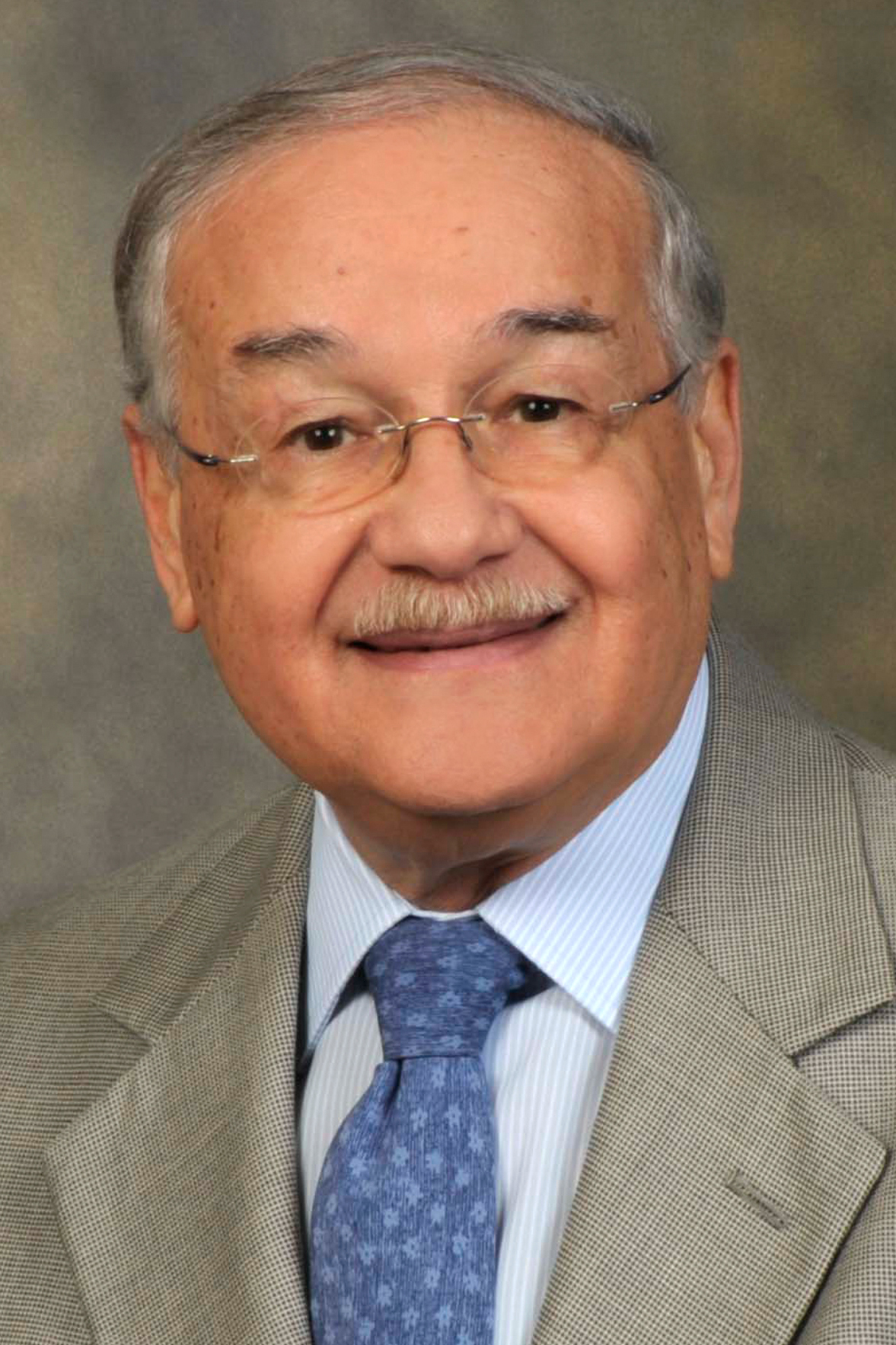
Bahaa E. A. Saleh is a UCF Distinguished Professor of Optics and Photonics at CREOL, The College of Optics and Photonics, University of Central Florida, and former Dean of CREOL (2009–2019). He holds a B.S. from Cairo University (1966) and a Ph.D. from Johns Hopkins University (1971), both in Electrical Engineering. His career includes roles as Chair of the Department of Electrical and Computer Engineering at Boston University (1994–2007) and Deputy Director of the NSF-funded Gordon Center for Subsurface Sensing and Imaging Systems (2000–2008). His research spans quantum optics, statistical optics, nonlinear optics, and optical communication. He authored three influential books, including Fundamentals of Photonics , and has published over 600 papers. He founded the Optical Society (OSA) Advances in Optics and Photonics and held editorial leadership roles in major optics journals. Awards include the 2013 C.E.K. Mees Medal, 2006 Kuwait Prize, and multiple fellowships from SPIE, IEEE, and OSA. Current research focuses on quantum information applications, such as entangled photon generation and quantum imaging. He advises students in optics and photonics, with notable alumni including Seth Smith-Dryden and Walker Larson. His work emphasizes interdisciplinary contributions to optics education and technology.
Serge Fehr is a Senior Researcher in the Cryptology Group at CWI (Centrum Wiskunde & Informatica) in Amsterdam and a part-time Professor at the Mathematical Institute of Leiden University. His research focuses on foundational aspects of cryptology, including post-quantum cryptography, information-theoretic security, zero-knowledge proofs, and secure multiparty computation. He participates in AMSec (Amsterdam Cyber Security Center) and leads work packages in the NWO-funded HAPKIDO consortium. Education: M.Sc. in Mathematics from ETH Zürich (1998) Ph.D. in Cryptography from ETH Zürich and University of Aarhus (2003) Postdoc at Macquarie University (2003-2004) Research Interests: Post-quantum cryptographic primitives (e.g., digital signatures, lattice-based schemes) Quantum-resistant protocols (e.g., non-resignable signatures, Fiat-Shamir transforms) Foundational security proofs in the quantum random oracle model (QROM) Secure multiparty computation and privacy-preserving healthcare systems Key Activities: Editorial Board Member: Journal of Cryptology , IEEE Transactions on Information Theory Program Committee Co-Chair: EUROCRYPT 2025 Steering Committee Member: Beyond IID Information Theory, QCrypt Co-organizer: Symposium Series on Post-Quantum Cryptography Grants/Awards: NWO Cybersecurity consortium grant (HAPKIDO - 2021) NWO Veni Grant (2005) NWO Open & Free Competition Grants (2008, 2013) Students/Advising: Supervised or served on committees for over 15 Ph.D. students, including work on post-quantum signatures, MPC applications, and lattice-based cryptography. Labs/Teams: Active in CWI’s Cryptology Group and Leiden’s Mathematical Institute, collaborating with industry partners (e.g., KPN, Microsoft) in cybersecurity initiatives.
Mikkel N. Schmidt is an Associate Professor in the Department of Applied Mathematics and Computer Science at the Technical University of Denmark (DTU). His research focuses on statistical modeling, Bayesian methods, and their applications in science and industry. He has held visiting roles at Columbia University (2007) and Cambridge University (2008-2009). His work integrates probabilistic modeling with computational inference to address complex problems in diverse fields such as molecular discovery, optical communication, and brain connectivity analysis. Education highlights include visiting scholar and postdoctoral experiences at top-tier institutions. Research interests span statistical methodology development, machine learning applications, and interdisciplinary problem-solving. Current projects involve Bayesian neural networks for molecular discovery and federated learning optimization. Advising efforts include supervising multiple PhD students in areas like molecular discovery and denoising diffusion models. Notable collaborations involve work on materials science, quantum communication, and medical signal processing. His contributions bridge theoretical advancements with practical industrial applications, emphasizing interdisciplinary innovation.
Jonathan Barrett is a Professor of Quantum Information Science at the University of Oxford, affiliated with Wolfson College. He holds roles as Director of Graduate Studies and Governing Body Fellow. His research focuses on quantum foundations, quantum information science, and interdisciplinary work spanning computer science and physics. He explores quantum systems' applications in computation, cryptography, and addressing conceptual problems in quantum theory through information science tools. Recent publications include foundational work on quantum states, thermodynamics in quantum theory, and causal models. His contributions to quantum cryptography include device-independent protocols and security analysis. Notable collaborations involve experimental tests of quantum state ontology and theoretical explorations of generalized probabilistic theories. Barrett advises numerous graduate students and has mentored researchers in quantum information and foundational studies. His work bridges theoretical insights with practical implications in quantum technologies. He is a co-author of the influential book *Many Worlds? Everett, Quantum Theory, and Reality* (2010), reflecting his engagement with philosophical aspects of quantum mechanics.
Amy C. Foster is an Associate Professor in the Department of Electrical and Computer Engineering at Johns Hopkins University, affiliated with the Whiting School of Engineering. She leads the Integrated Photonics Laboratory, focusing on nanoscale design of silicon-based photonic devices for optical communication systems and security applications. Her work emphasizes CMOS-compatible fabrication techniques for integrated photonic devices with applications in sensing, imaging, and high-speed processing. Education: BS (Electrical Engineering, University at Buffalo, 2003); MS & PhD (Electrical and Computer Engineering, Cornell University, 2007 & 2009) Postdoctoral Research: Cornell University (2009–2010) Professional Roles: Associate Editor of Optics Express (OSA), Chair of OSA Frontiers in Optics Committee, IEEE Photonics Conference Committee Member Her research interests center on silicon photonics, nonlinear optics, and photonic physical unclonable functions (PUFs). Key areas include developing secure authentication systems using chaotic microcavities, optimizing high-index materials like NbTiOx for visible light photonics, and advancing integrated photonic interconnects for multi-layer systems. Recent work explores machine learning-resistant PUFs and parametric nonlinear effects in sputtered metal oxides. Foster's publications highlight advancements in optical frequency combs, autofluorescence analysis of waveguides, and GHz-rate optical parametric amplifiers. Her lab’s innovations address challenges in quantum photonics, secure communications, and ultra-low-power signal processing. Awards: 2016 Johns Hopkins Catalyst Award, 2012 DARPA Young Faculty Award Grants: IARPA, NSF, APL, DARPA Her lab develops cutting-edge photonic devices for applications in space communications, neural stimulation, and security. Current projects aim to enhance multi-layer photonic integration and leverage nonlinear effects for novel signal processing architectures.
Damien Stehlé is a Professor at the École Normale Supérieure de Lyon (ENS Lyon), affiliated with the Laboratoire LIP (CNRS, ENSL, INRIA, UCBL, U. Lyon) and a member of the AriC team. He is also a member of the Institut Universitaire de France. His research focuses on cryptography, computational number theory, and computer algebra, particularly lattice-based cryptography and its applications in post-quantum security. He has held editorial roles at the Journal of Cryptology and Designs, Codes and Cryptography, and served on committees for major conferences like ASIACRYPT and CRYPTO. His work has led to advancements in lattice reduction algorithms, cryptographic protocols (e.g., signatures, encryption schemes), and security proofs in the quantum random oracle model. Stehlé has supervised numerous PhD students, including Alice Pellet-Mary and Miruna Rosca, and has contributed to open-source lattice reduction software like fplll. His awards include Best Paper Awards at ASIACRYPT 2021 and 2015. He teaches advanced courses on post-quantum cryptography and cryptanalysis at the Master’s level.
Mehrdad Nojoumian is an Associate Professor at Florida Atlantic University's College of Engineering and Computer Science, specializing in Security, Privacy, Trust, and Human-Autonomy Interaction. His research bridges computer science with FinTech and autonomous systems, focusing on cryptographic protocols, blockchain, and IoT security. PhD, University of Waterloo (Computer Science, 2012) MSc, University of Ottawa (Computer Science, 2007) BSc, Islamic Azad University (Computer Engineering, 2002) His research explores privacy-preserving mechanisms in autonomous systems, trust modeling in blockchain, and cross-disciplinary applications of cryptography. Recent work includes patents on adaptive driving modes and ongoing studies on IoT vulnerabilities and autonomous coordination. Notable awards include the Excellence and Innovation in Undergraduate Teaching Award (2023), NAI Induction (2022), and multiple Best Paper Awards . His publications span journals like Information and Computation and conferences such as GameSec and IEEE Blockchain . He mentors graduate students in cybersecurity bootcamps, high school outreach programs, and collaborative research projects funded by NSF , ARO-AFOSR , and AFRL . His lab emphasizes diversity and inclusion, particularly supporting underrepresented groups in STEM.
Alexander Russell is a Professor of Computer Science and Mathematics at the University of Connecticut, serving as Director of Graduate Affairs in the School of Computing and Director of the UConn Voting Technology Research Lab. He holds a Ph.D. in Mathematics and an S.M. in Computer Science from MIT, alongside dual B.A. degrees in Mathematics and Computer Science from Cornell University. His research focuses on cryptographic protocols, blockchain security, quantum computing, algorithms, and election auditing. Key areas include consensus algorithms, complexity-theoretic cryptography, and applied cryptography in voting systems. Recent work emphasizes low-variance risk-limiting audits and adaptive security mechanisms for blockchains. Notable contributions span provably secure blockchain protocols (e.g., Ouroboros), election integrity methods, and smartphone-based depression prediction models. His articles address topics like settlement bounds in longest-chain consensus, Byzantine-resilient gossip protocols, and energy-efficient neighbor discovery in mobile networks. Russell advises on interdisciplinary projects at the Voting Technology Research Center and collaborates on grants involving quantum-resistant cryptography and healthcare analytics. His work bridges theoretical computer science with practical applications in secure systems and public infrastructure.
Carles Padro Laimon is a Professor at the Universitat Politècnica de Catalunya (UPC), affiliated with the Department of Mathematics and the School of Telecommunications Engineering. He is a leading researcher in cryptography and information security, focusing on secret sharing schemes, combinatorial structures, and cryptographic protocols. His work integrates discrete mathematics, coding theory, and algorithmic design to address security challenges in digital systems. Padro leads the MAK Research Group (Mathematics Applied to Cryptography) and the ISG-MAK Information Security Group. He has been involved in numerous competitive research projects, including initiatives on post-quantum cryptography and secure multi-user systems. His contributions span over 211 documented activities, including articles, theses, and conference participations. His research interests include the theoretical foundations of cryptography, with a focus on optimizing secret sharing schemes, analyzing matroid-based structures, and developing secure communication protocols. He has collaborated extensively with institutions like the UPC and European research networks, contributing to both academic and practical advancements in cybersecurity. Padro holds a PhD in Mathematics from UPC and has supervised doctoral theses and mentored researchers in his field. His work frequently appears in top journals like IEEE Transactions on Information Theory, Designs, Codes and Cryptography, and SIAM Journal on Discrete Mathematics.
Avi Wigderson is the Herbert H. Maass Professor in the School of Mathematics at the Institute for Advanced Study, Princeton. He is a leading authority in theoretical computer science, particularly computational complexity theory. Wigderson organizes the Computer Science and Discrete Mathematics (CSDM) program at the Institute, fostering interdisciplinary research at the intersection of mathematics and computer science. Wigderson earned his Ph.D. (1983), M.A. (1982), and M.S.E. (1981) from Princeton University. Prior to his current position, he held appointments at The Hebrew University of Jerusalem (1986-2003), Princeton University (1990-1992), Mathematical Sciences Research Institute, Berkeley (1985-1986), IBM Research (1984-1985), and University of California, Berkeley (1983-1984). Wigderson's research spans computational complexity theory, randomness and computation, algorithms and optimization, circuit complexity, proof complexity, quantum computation and communication, and cryptography. His work explores fundamental questions like whether mathematical creativity can be automated (P vs NP problem), the security of electronic commerce, the role of randomness in computation, and the potential of quantum mechanics to enhance computation. He has made significant contributions to understanding the power and limitations of efficient computation. Analysis of Wigderson's recent publications reveals a strong focus on optimization, complexity theory, and their mathematical foundations. His work connects diverse areas including non-commutative algebra, geometric complexity, graph theory, and quantum computing. A recurring theme is exploring whether fundamental computational problems like P vs NP can be addressed through optimization techniques such as gradient descent. His research shows increasing interdisciplinary connections between theoretical computer science, mathematics, and physics. ACM A.M. Turing Award (2023) Abel Prize (2021) Donald E. Knuth Prize (2019) Gödel Prize (2009) American Mathematical Society's Levi L. Conant Prize (2008) Rolf Nevanlinna Prize (1994) Yoram Ben-Porat Presidential Prize for Outstanding Researcher (1994) Bergman Fellowship (1989) Member, American Academy of Arts and Sciences Member, National Academy of Sciences While specific details about Wigderson's students are not provided in the source material, his extensive lecture series, workshops, and program organization suggest significant mentorship activities. His book "Mathematics and Computation" published by Princeton University Press serves as an educational resource for students and researchers. Wigderson has organized major programs at the Institute for Advanced Study including "Lower Bounds in Computational Complexity" (2018) and "Pseudorandomness" (2017), creating research opportunities for numerous scholars. Wigderson leads the Computer Science and Discrete Mathematics (CSDM) program at the Institute for Advanced Study, which brings together researchers from mathematics and computer science to explore fundamental questions in computation. His work with collaborators across multiple institutions has established connections between theoretical computer science and diverse fields including quantum information theory, algebraic geometry, and optimization. Recent projects focus on non-commutative optimization and its applications to computational complexity problems.
Professor Paul Skrzypczyk is a distinguished theoretical physicist at the University of Bristol's School of Physics, where he leads cutting-edge research in quantum information theory. His work bridges fundamental quantum mechanics with practical applications in quantum technologies. He serves as Principal Investigator for multiple significant research projects and holds the prestigious CIFAR Azrieli Global Scholar position (2022-2024). Dr. Skrzypczyk's research primarily focuses on quantum nonlocality, measurement incompatibility, and quantum thermodynamics. His investigations explore how quantum theory enables 'nonlocal' effects where actions in one location seemingly affect distant places instantaneously, challenging classical physics understanding. His thermodynamics research examines how traditional thermodynamic laws apply at quantum scales, particularly for small systems far from their original realm of applicability, with implications for future quantum technologies. His publication record demonstrates consistent high-impact contributions to quantum information science, with recent work spanning quantum measurement theory, quantum resource theories, quantum thermodynamics, and quantum foundations. His research output shows a clear trajectory toward increasingly sophisticated applications of quantum information principles to fundamental physics questions. Among his notable recognitions is the CIFAR Azrieli Global Scholar award, reflecting his standing in the international quantum research community. His work has generated substantial scholarly attention, with numerous highly-cited publications including the influential 2014 Nature Communications paper on work extraction from individual quantum systems. Professor Skrzypczyk actively secures research funding, currently leading the "Software Enabling Early Quantum Advantage" project (2023-2025) and previously directing the "Investigating Measurement Incompatibility in Quantum Theory" initiative (2017-2021). His media engagement includes contributions to the widely covered "quantum Cheshire cats" research, which garnered attention across multiple news outlets, blogs, and academic platforms. As a member of the Bristol Quantum Information Institute, he contributes to one of the UK's leading quantum research centers, collaborating extensively across international networks as evidenced by his diverse research partnerships. His theoretical work provides foundational insights that inform the development of practical quantum technologies.